Buyer Fit Snapshot
| Best fit | Custom Display Cartons MOQ projects where brand print, material claims, artwork control, MOQ, and repeat-order consistency need to be specified before quoting. |
|---|---|
| Quote inputs | Share finished size, material target, print colors, finish, packing count, annual reorder estimate, ship-to region, and any compliance wording. |
| Proofing check | Approve dieline scale, logo placement, barcode or warning zones, color tolerance, closure strength, and carton packing before bulk production. |
| Main risk | Vague material claims, crowded artwork, missing packing details, or unclear freight terms can make a low unit price expensive after revisions. |
Fast answer: Custom Display Cartons MOQ: Pricing, Specs, and Quotes should be specified like a repeatable production item. The safest quote records material, print method, finish, artwork proof, packing count, and reorder notes in one written spec.
Production checks before approval
Compare the actual filled-product size with the drawing, then confirm tolerance on folds, seals, hang holes, label areas, and retail display edges. Reserve space for logos, QR codes, warning copy, and material claims before decorative graphics fill the panel.
Quote comparison points
Review material grade, print process, finish, sampling route, tooling charges, carton quantity, and freight assumptions side by side. A quote is only useful when the supplier can repeat the same color, closure quality, and packing count on the next order.
Custom Display Cartons MOQ: Pricing, Specs, and Quotes That Actually Work
If you are trying to pin down custom display cartons MOQ, start with the real drivers. Setup, sheet yield, board choice, and finishing usually move the minimum more than the word “custom” ever will. A brand launching 500 units for a countertop display does not need a warehouse full of cartons. It needs a display that prints cleanly, ships intact, and does not burn cash for sport.
That is where a lot of buyers trip up. A simple, well-planned dieline can beat a “small run” idea that looks cheap on paper and gets ugly the moment you add odd folds, heavy ink coverage, or a fussy finish. From a packaging buyer’s angle, the best display carton balances shelf impact, unit cost, and inventory risk without turning the project into a lab experiment.
A display carton is not just a printed box. It is a shipping unit, a merchandising unit, and a sales surface all at once. If one of those jobs fails, the bill shows up later.
Why custom display cartons MOQ is lower than you think
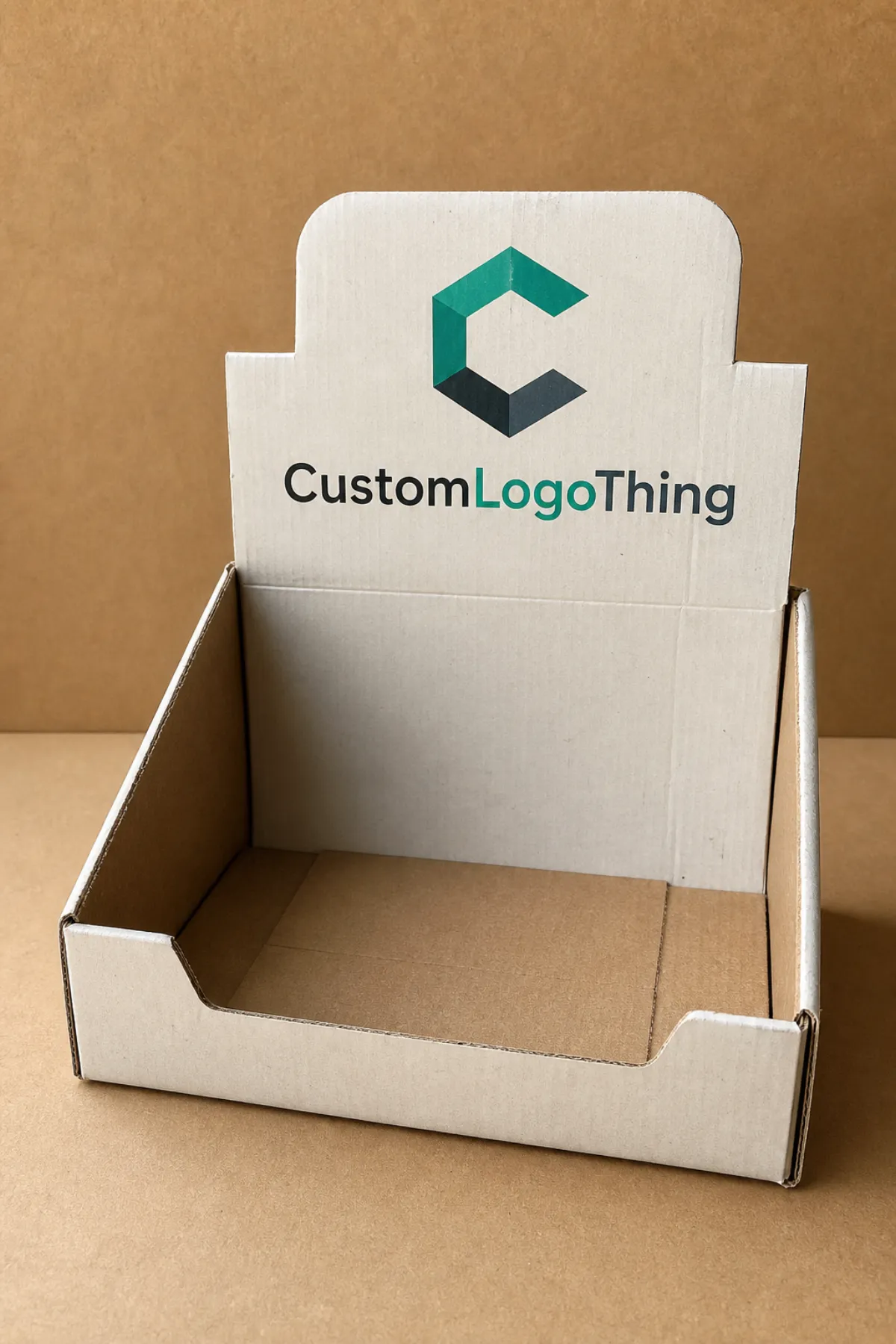
The phrase custom display cartons MOQ sounds harsher than it is. Most of the time, the floor comes from how efficiently the carton fits on a parent sheet, how much setup the supplier absorbs, and whether the structure needs real tooling. Not some mysterious tax on the word “custom.” Packaging factories are not allergic to small runs. They are allergic to waste.
Picture a snack brand getting ready for a retail launch. They need a countertop display that holds 12 or 24 units, looks good from three feet away, and survives shipping without collapsing into a sad pile of cardboard. They do not need 20,000 cartons sitting in a corner of the warehouse. They need enough cartons to cover a sell-through window, a repeat run if the product moves, and a buffer for the inevitable mistake nobody wants to talk about.
A “small run” can cost more than a better-planned production run. A display with angled side walls, a custom insert, and several spot colors may still need the same die-cut setup as a larger job. If the sheet yield is poor, the unit cost climbs fast. If the footprint is standard, the flute is sensible, and the print layout is clean, the supplier can often keep the minimum lower than buyers expect.
That matters to founders, procurement teams, and marketers for different reasons. Founders want to protect cash. Procurement wants predictable lead times and fewer surprise charges. Marketers want branded packaging that looks sharp without turning into a storage headache. All three are buying packaging that has to earn its keep.
Simple rule: less complexity usually means more room to reduce MOQ without blowing up pricing. That does not mean stripping the carton down to cardboard and prayers. It means cutting unnecessary cost drivers. Good suppliers know the difference. Mediocre ones throw adjectives at the quote and hope nobody asks why the number is so high.
What custom display cartons actually include
Custom display cartons come in more forms than most buyers expect. Countertop displays, floor displays, retail-ready shippers, PDQs, and display sleeves all live in the same family, but each one behaves differently on cost, assembly, and MOQ. A countertop display may use lighter board and a compact footprint. A floor display often needs reinforced panels, a stronger base, and a different pack-out method because it carries more weight and takes more abuse in transit.
There is also a big gap between a shipping carton and a carton that doubles as retail packaging. One is built mainly to move product. The other is built to move product and sell it. That changes the packaging design immediately. A sales-facing carton needs clearer graphics, better panel hierarchy, and a structure that keeps the product visible or easy to access. That is why some Custom Printed Boxes look great in a warehouse and flat on a shelf.
Structure choices matter more than people think. A tuck-end box is simple and cheap, but a die-cut front opening, reinforced base, tear-away panel, or inserted tray changes labor and board use. Pre-glued assembly can save time on the line, but it can also raise manufacturing cost. Inserts improve presentation and stop product movement, but they add material and complicate packing. There is no magic answer. There is only the right answer for the product weight, shelf life, and sales channel.
Cosmetics usually need presentation first. The carton has to feel clean, controlled, and easy to read. Supplements often need more compliance copy, clearer dosage information, and stronger structure because the product can be heavier than it looks. Snacks want shelf efficiency and fast replenishment. Electronics accessories need protection, visibility, and a retail-ready form that keeps small parts from disappearing in transit. One carton family. Four very different jobs.
The tradeoff is blunt. The more a carton does, the more it tends to cost. Windows, special folds, heavy ink coverage, foil, and complex insert systems all improve shelf appeal. They can also push MOQ and unit cost up quickly. That does not make them bad choices. It just means they need a job worth doing. Fancy for the sake of fancy is how budgets get wrecked.
If you are comparing options across a larger packaging program, it helps to look at the full line of Custom Packaging Products instead of treating each carton as a one-off. A display unit often needs to coordinate with shipper cartons, inner packs, and printed sleeves. Package branding works better when the whole system looks like it belongs together.
Specifications that change fit, strength, and shelf impact
The first spec that matters is board choice. SBS, corrugated, chipboard, and kraft each behave differently in strength, print quality, and cost. SBS and chipboard are often used for cleaner print and a sharper display on custom display cartons. Corrugated, especially E-flute or B-flute, makes more sense when the carton needs structure and transit durability. Kraft can fit a natural look, but it is not the same as “cheap.” In some builds, it is the smarter option because it reduces finishing complexity and supports a cleaner brand story.
Then comes size. Finished dimensions are not a minor detail. They decide sheet yield, how many units fit per carton, and whether the design uses material well. If the display needs to hold 12 units at 2.5 ounces each, that is a different structure from one holding 24 units at 6 ounces each. Product weight matters. Stack strength matters. Fill method matters. If the carton will be loaded by hand, the opening needs to be friendly to production staff. If it will be packed by a machine, the design needs to respect that reality too.
Print and finish options are where a lot of quotes start drifting apart. CMYK is standard for many jobs. Spot colors help with brand consistency when a logo or signature panel has to match tightly. Matte coating can feel more premium and cuts glare. Gloss coating pushes color and shine, but it can also reveal scuffs. Aqueous varnish is common because it gives practical protection without turning into a diva. Soft-touch lamination and foil look good, and they can strengthen package branding, but they are not free. They affect the quote, the lead time, and sometimes the MOQ because they add another process step.
Retail and compliance details should be locked early. Barcode placement, legal copy, food-contact concerns, retailer pack specs, and transit durability belong in the first round of questions, not the last one. A display carton that passes visual approval but fails a retailer loading rule is a waste of time. If the product sits in a grocery or club-store environment, the carton may need to survive repeated handling, pallet movement, or shelf replenishment. That is where standards matter. For transit testing, look at common methods used by the International Safe Transit Association at ista.org. If the material is tied to responsible sourcing, FSC guidance at fsc.org is useful for chain-of-custody basics.
Structural details decide whether the display survives the real world. Glue tabs affect assembly strength. Perforations determine how cleanly a tear-away front opens. Tear strips can make store setup easier, but they need to sit in the right place. Pre-glued construction saves labor, but the factory has to control folding accuracy. Load-bearing trays matter when the product stack is tall or heavy. A weak display does not fail politely. It folds, bulges, or gets ignored by store staff. That is not a feature.
For buyers comparing formats, a useful mental model is simple: the carton is part packaging, part logistics, part display fixture. Ignore any one of those roles and the others pay for it later. That is why product packaging specs should be handled like a production document, not a mood board.
Custom display cartons MOQ, pricing, and unit cost
This is the part buyers usually care about most, and for good reason. Custom display cartons MOQ sits right where the supplier’s setup burden meets your inventory risk. The minimum order quantity is not just a number pulled from a drawer. It reflects tooling, print method, sheet yield, finishing steps, and packing requirements. If a factory has to cut a new die, set up print plates, and handle a tricky fold pattern, they need a run size that makes the job worth scheduling.
Pricing usually breaks into a few buckets: board or substrate, printing, finishing, labor, proofing or sampling, freight, and tooling if the supplier does not absorb it. Quote comparison gets messy fast. One supplier may quote a lower unit price but hide the die fee and proof cost. Another may post a higher line-item price and include more of the project cost up front. If you compare only headline unit cost, you are comparing apples to a shopping cart full of pears.
| Option | Typical MOQ | Unit Cost Range | Best For | Tradeoff |
|---|---|---|---|---|
| Standard dieline, digital print, simple finish | 250-500 units | $1.10-$2.40 | Launches, pilot programs, short retail tests | Lower setup burden, but fewer price breaks |
| Custom dieline, offset print, matte or aqueous finish | 500-1,500 units | $0.55-$1.20 | Recurring retail programs and broader distribution | Better unit cost, more spec lock-in required |
| Complex display with inserts, foil, or lamination | 1,000-3,000 units | $1.80-$4.50 | Premium branded packaging with strong shelf presence | Higher MOQ and more process steps |
| Heavy-duty retail-ready shipper | 300-800 units | $1.30-$3.00 | Transit-heavy programs and club-store distribution | Stronger structure, more board usage |
The unit-cost curve is real. Bigger runs usually lower the cost per piece because setup gets spread over more cartons. There is a point where inventory risk starts eating those savings. If the product changes, the branding refreshes, or the retailer shifts the display spec, old cartons become dead stock. I have seen too many teams celebrate a lower unit cost while quietly paying for storage, damage, and write-offs. That is not savings. That is pain with a longer timeline.
Here is the quote checklist I would use:
- Compare the same board grade and thickness.
- Confirm whether the quote includes die-cut tooling and proofing.
- Match the print method, finish, and color count.
- Ask whether the carton ships flat or pre-assembled.
- Check freight terms and destination.
- Ask about overruns, underruns, and replacement policy.
If you want to lower MOQ without wrecking the design, start with a standard dieline or a near-standard footprint. Then simplify the color count. Skip special finishes unless they truly support retail performance. Combine SKUs if the dimensions are close enough to share the same shell. And do not ask for a display that needs five unique parts if one tray and one wrap can do the job. The goal is not to make the carton boring. The goal is to make it manufacturable.
This is also where internal process matters. If your team is still deciding between formats, comparing the display to other packaging structures can help. The difference between branded packaging that looks good in a deck and retail packaging that survives a distributor’s dock is bigger than most people expect. A good supplier should explain that difference instead of hiding behind vague language.
As a rule, quote the project with at least three quantity tiers. One at the lowest practical MOQ. One at a middle run. One at the unit-cost sweet spot if storage allows. That gives you a real picture of how the price behaves. A single number is not a strategy. It is a guess dressed up as a spreadsheet.
Process, timeline, and lead time from proof to delivery
Good packaging work follows a predictable path. First comes the brief. That should cover product dimensions, unit weight, display style, target quantity, finish preference, and shipping destination. Then comes the dieline or structure review. Next is artwork setup, proofing, sample approval, production, quality check, packing, and freight booking. If a supplier skips these steps in the explanation, be careful. They may still do the work, but they may also leave you guessing while the clock runs.
Realistic timing depends on the job. A clean, simple display with locked dimensions and ready artwork can move quickly after approval. A more complex custom structure with sample revisions and special finishes needs more time. The main delay points are usually the same: unclear dimensions, missing barcode files, color-matching issues, structural changes after proofing, and late copy edits. Packaging design does not forgive indecision. It punishes it with lead time.
For most projects, the fastest way to shorten lead time is to lock the spec sheet early. Send print-ready files if you have them. If not, send a clean layout and exact content. Approve artwork in one pass if possible. Confirm shipping details before production starts, not after the cartons are done. Every late change adds friction. Some changes are fine, but a surprise front-panel revision two days before press is the sort of thing that makes everyone stare at the ceiling.
It helps to ask for separate timing on sample production and mass production. A sample may be ready quickly, but the full run still needs scheduling, cutting, printing, drying or curing, finishing, and pack-out. Shipping time is its own line item. That matters more than people admit. A job that is “done” in the factory is not the same as a job that has landed in your warehouse.
From a buying perspective, the real question is not “Can you do it fast?” It is “Can you do it fast without changing the spec?” That is the better test. Fast is easy if you accept whatever the factory feels like making. Fast and accurate is the part worth paying for.
If you need support during the early stage, our FAQ is a useful place to sanity-check common questions before you send a full brief. It will not replace a quote review, but it can keep you from making avoidable mistakes in the first round.
Why choose us for custom display cartons
People shop packaging on price, then get annoyed when the carton fails on the floor. Fair. Budgets are real. But the cheapest supplier is not automatically the right fit. For custom display cartons, the supplier should understand structure, print, assembly, and retail behavior, not just how to fire off a number quickly. Straight answers matter more than dramatic promises.
What should you expect from a serious packaging partner? Custom dielines that fit the product instead of forcing the product into a generic shape. Print options that match the brand and the retailer. Finishing choices that support the display instead of distracting from it. And a production process that checks dimensions and print consistency before the cartons leave the floor. That sounds basic because it is basic. Packaging should be competent before it tries to be clever.
Quality control is not glamorous, but it saves money. Dimensional checks prevent fit problems. Print consistency prevents a shelf run from looking patchy. Sample signoff reduces the odds of finding a mistake after production. Packaging tests matter too. A display that feels sturdy at sample stage may still need verification for transit vibration, compression, or drop exposure. Common industry methods such as ISTA transit profiles exist for a reason. Retail does not care about your mood. It cares whether the box holds up.
Commercially, flexible MOQ options help teams buy the right quantity instead of guessing. Honest price breaks show you when a slightly larger run gives real value and when it just creates storage. Clear communication prevents the familiar nightmare of “We thought you meant the other board.” That kind of confusion burns more money than a slightly higher material grade ever will.
We also pay attention to the broader packaging program. A display carton should not feel disconnected from the rest of the line. The same product may need custom printed boxes for e-commerce, tray packs for wholesale, and a retail-ready display for launch. If the branding is coherent across all of them, the shelf story reads faster. That is package branding doing its job.
For teams that need a broader view, our Custom Packaging Products page is a good place to compare related formats before you lock the structure. That can save you from overbuying one style when another style would do the work for less.
In practice, the best supplier is the one that helps reduce risk. Not the one that tells you everything is possible. Everything is possible until the cartons arrive too weak, too glossy, too heavy, or too expensive to repeat. Then the “best price” starts looking very average.
Next steps to get a sharper custom display cartons MOQ quote
If you want a tighter quote, start with the basics and do not improvise. Send the product dimensions, unit weight, display style, target quantity, board preference, finish preference, and shipping destination. If you have a physical sample or an existing carton, include it. Real-world samples beat vague descriptions every time. A photo helps. A spec sheet helps more. Both together usually cut down on back-and-forth.
Then make the decision path simple. First, define the shelf footprint. Second, choose a structure. Third, decide how much print complexity you actually need. Only after that should you ask for pricing at multiple quantity breaks. That sequence sounds boring. It is also how you get a quote that still makes sense after the first revision.
Ask for side-by-side options. One should show the lowest practical MOQ. Another should show the mid-run price break. A third should show the best unit cost if you can support the inventory. That comparison tells you whether the run size is being driven by the structure, the finish, or the supplier’s setup assumptions. If every option jumps sharply at the same point, you are probably looking at real production economics. If the numbers are all over the place, somebody is guessing.
Do not be shy about asking what is included. Freight, tooling, samples, overrun policy, and assembly state all matter. A lower quote that excludes half the project is not cheaper. It is incomplete. Buyers get burned because they compare the wrong line item. Avoid that. Compare total landed cost and commercial risk, not just unit cost in a vacuum.
Use the spec sheet as the single source of truth. If the team is still debating print finish or panel copy, wait before locking the order. Packaging design is not the place for “we will figure it out later.” Later is where lead times go to die.
For a clean first pass, send the request in this order:
- Product size and weight
- Display type and quantity target
- Board preference and finish
- Artwork files or reference sample
- Ship-to address or region
That gives a supplier enough information to stop guessing and start quoting. If you do that well, the custom display cartons MOQ question gets much easier to answer, and the quote is based on reality instead of wishful thinking.
Here is the practical takeaway: choose the simplest structure that still protects the product and sells on shelf, then ask for three quantity tiers with all costs included. That is the fastest way to find the right balance of shelf impact, production efficiency, and cash control. In the end, custom display cartons MOQ is not about chasing the lowest number. It is about getting the right number for your product, your launch timing, and your budget.
What is the typical custom display cartons MOQ?
It depends on structure, print method, and whether the design uses a standard dieline or fully custom tooling. Simple digital-print jobs on standard board usually allow lower minimums than complex offset or laminated builds. Ask suppliers for quantity tiers so you can see where the unit price drops without guessing. In many buyer conversations, the real floor is set by setup time, not raw material cost.
Can I lower my custom display cartons MOQ without hurting shelf appeal?
Yes, if you simplify the structure, reduce finish complexity, and use a standard board size that fits the product cleanly. Limiting colors, skipping expensive embellishments, and combining SKUs can also help. The goal is to remove waste, not strip the display so far that it stops selling product. A cleaner build often looks more intentional anyway.
How fast can custom display cartons be produced after artwork approval?
Lead time usually depends on sampling, print method, and how quickly the artwork is approved without revisions. A clean project with locked specs moves faster than one still changing dimensions or retail copy. Shipping time is separate from production time, so ask for both. Factory completion is not the same as warehouse delivery.
What do I need to request an accurate custom display cartons MOQ quote?
Provide dimensions, product weight, carton style, quantity target, finish preferences, and delivery location. Include artwork files or at least a reference sample if you want a tighter price and fewer revisions. If you need multiple options, ask for several quantity breakpoints in the same quote. The better the brief, the less time everyone wastes.
Why do two suppliers quote different MOQ and unit costs?
One supplier may include tooling, proofing, or freight while the other leaves those out. Material grade, print process, assembly state, and overrun policy all affect the final number. Always compare the full spec, not just the headline price. A cheap quote with missing pieces is not a bargain. It is a future invoice.

