Buyer Fit Snapshot
| Best fit | Custom Drawer Boxes with Printed Logo projects where brand print, material claims, artwork control, MOQ, and repeat-order consistency need to be specified before quoting. |
|---|---|
| Quote inputs | Share finished size, material target, print colors, finish, packing count, annual reorder estimate, ship-to region, and any compliance wording. |
| Proofing check | Approve dieline scale, logo placement, barcode or warning zones, color tolerance, closure strength, and carton packing before bulk production. |
| Main risk | Vague material claims, crowded artwork, missing packing details, or unclear freight terms can make a low unit price expensive after revisions. |
Fast answer: Custom Drawer Boxes with Printed Logo: Board, Finish, Dieline, and Unit Cost should be specified like a repeatable production item. The safest quote records material, print method, finish, artwork proof, packing count, and reorder notes in one written spec.
Production checks before approval
Compare the actual filled-product size with the drawing, then confirm tolerance on folds, seals, hang holes, label areas, and retail display edges. Reserve space for logos, QR codes, warning copy, and material claims before decorative graphics fill the panel.
Quote comparison points
Review material grade, print process, finish, sampling route, tooling charges, carton quantity, and freight assumptions side by side. A quote is only useful when the supplier can repeat the same color, closure quality, and packing count on the next order.
Custom Drawer Boxes with Printed Logo: A Practical Guide
Custom Drawer Boxes with printed logo do more than move a product from a warehouse shelf to a customer’s hands. They shape the first few seconds of the experience, and those seconds carry more weight than people usually admit. A sliding tray, a snug fit, and a clean branded surface can make a product feel considered before the product itself is even seen.
From a packaging buyer’s point of view, this style earns attention because it joins product protection and package branding without feeling forced. The box style changes how the logo is viewed, how the drawer opens, how the product is revealed, and how the package performs in retail displays, subscription sets, and gift programs. That is a lot of work for one piece of packaging, but a good drawer box is kind of doing three jobs at once.
That is also why Custom Drawer Boxes with printed logo sit in a useful middle ground between structure and storytelling. They can be quiet and functional. They can also feel like a small event when opened. The difference comes from details that are easy to miss in a mockup and very hard to ignore in hand: board thickness, print coverage, drawer pull, insert style, and finish all shape whether the box reads as ordinary packaging or as a branded object with intent.
Why custom drawer boxes with printed logo feel premium
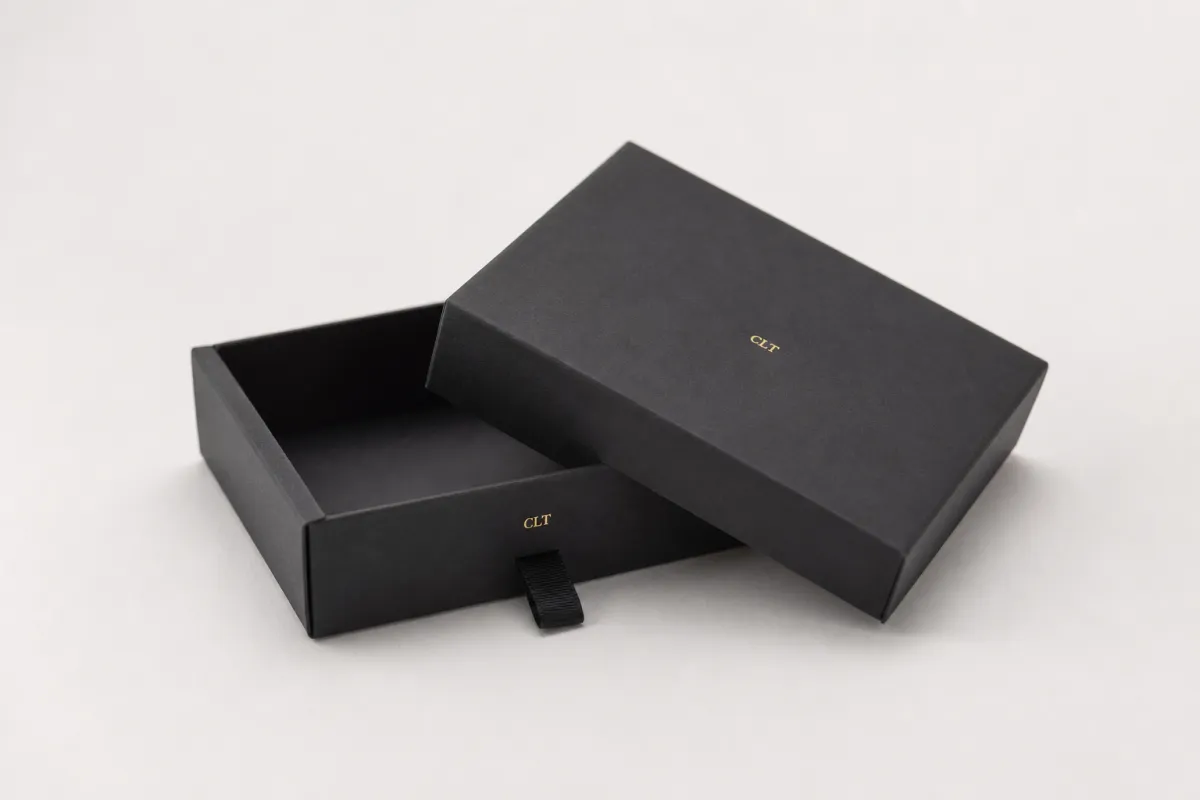
People often judge packaging with their hands before they read it with their eyes. That’s one reason custom drawer boxes with printed logo work so well in jewelry, cosmetics, candles, premium food, and corporate gifting. The sleeve stays still while the inner tray slides out. That small motion creates a reveal that feels controlled, tidy, and a little ceremonial. In packaging, that matters. Ceremony changes how value is perceived.
The structure is simple to picture. A drawer box usually includes an outer sleeve, a sliding tray, and sometimes an insert or ribbon pull. The logo can sit on the sleeve, the drawer face, the top panel, or all three. Good packaging design does not treat the logo as decoration added at the end. It places the mark where the hand lands, where the eye pauses, and where the product story begins.
Custom drawer boxes with printed logo are especially effective when the item benefits from a staged reveal. A lipstick set, a bracelet, a tea sampler, a candle, or a fragrance kit all gain presence when the package opens in layers. The box says something before the customer even sees the product: this item was meant to be experienced, not simply received.
That same quality makes the format useful in retail packaging and gift packaging. A rigid-looking sleeve with a crisp logo can signal quality before anyone opens it. Then the drawer motion reinforces the message. Buyers notice that the product stays put inside the box and does not tumble forward the way a loose tuck-end carton can. Stability is not a minor benefit; it is part of the premium effect.
A logo on a drawer box is not just printing. It becomes part of the reveal, part of the handling, and part of the memory the customer carries away.
My own view, after reviewing a lot of packaging samples over the years, is that custom drawer boxes with printed logo work best when the branding is restrained. The box does not need to shout. A clean mark, a precise finish, and a structure that fits properly often signal more value than heavy graphics or too many effects. That matters especially in product categories where trust, cleanliness, and detail shape the buying decision.
When buyers compare drawer boxes with mailers, folding cartons, or simple lids, two things stand out quickly: motion and fit. The motion feels deliberate. The fit feels engineered. Those two traits explain why custom drawer boxes with printed logo keep showing up in premium lines, private-label launches, subscription programs, and gift sets.
Readers comparing styles can use the broader Custom Packaging Products selection to see where drawer construction makes sense and where a simpler format will do the job. If you are building a line of custom printed boxes or branded packaging options, the drawer style is worth a close look any time the unboxing moment is part of the sale.
How custom drawer boxes with printed logo are made
The build starts with structure, not artwork. Custom drawer boxes with printed logo are usually made from rigid board, heavy paperboard, or a folded construction with a wrapped surface, depending on budget and the feel you want in hand. The board gives the box shape, the wrap paper carries the print, and the glue-up process determines whether the finished box feels crisp or careless.
At production level, the sequence usually follows the same pattern: confirm internal dimensions, approve a dieline, print the wrap or board, cut and crease the components, glue and form the sleeve, assemble the tray, then fit the insert and finish the surface. The steps are familiar. The quality lives in the execution. Clean corner wraps, a square tray, and a sleeve that slides with controlled resistance separate a premium box from one that feels rushed.
Custom drawer boxes with printed logo can be produced with several print methods, and each one changes the visual result. Offset printing suits sharp registration and consistent brand color across larger runs. Digital printing works well for shorter runs or artwork that changes often. Foil stamping adds a reflective accent that can make the logo stand out on matte stock. Embossing gives the mark a raised tactile feel. Spot UV creates a glossy contrast area that catches light without covering the whole surface.
Artwork placement matters as much as the decoration method. On custom drawer boxes with printed logo, the mark might be centered on the sleeve for a formal feel, set lower on the drawer face for a more modern look, or repeated as a fine pattern for a stronger branded packaging effect. A small logo can feel expensive when the stock and print quality are right. A large logo can feel flat if the proportions are off. The design choice should follow the product story, not a template someone reused because it was sitting in a folder.
Board thickness and construction details change the result more than many buyers expect. A 1.5 mm rigid board feels different from 2.0 mm board. A snug drawer rail feels different from a loose one. A ribbon pull changes the opening motion, while a thumb notch keeps the silhouette cleaner. Those decisions affect how custom drawer boxes with printed logo slide, carry weight, and hold up after repeated openings.
Inside the box, inserts define the experience. Paperboard inserts are useful when the goal is a cleaner recyclable build. Foam inserts protect fragile items, though some buyers avoid them for environmental or visual reasons. Molded pulp can sit in the middle for many product packaging programs because it supports the item and still looks considered. The right insert depends on the product weight, the shipping method, and how much movement the item can tolerate.
If you want a practical rule, it is simple: the more premium the logo treatment, the more disciplined the structure has to be. A foil-stamped mark on a crooked sleeve does not rescue the box. A well-built tray with careful logo placement usually does.
Cost and pricing for custom drawer boxes with printed logo
Pricing for custom drawer boxes with printed logo is rarely one fixed number because several decisions change the cost at once. Box size, board grade, print coverage, finish, inserts, and quantity all affect the quote. A compact jewelry box with a single-color logo is a very different job from a large rigid drawer box with foil, embossing, and a custom insert.
Quantity usually has the biggest impact. Setup labor, print preparation, cutting tools, and finishing steps get spread across the run, so a larger order generally lowers the unit cost. At lower volumes, custom drawer boxes with printed logo tend to cost more per unit because the preparation work does not shrink just because the order is small. That is normal. It is how packaging production works, not a sign that the supplier is padding the number.
Minimum order quantities matter too. Many suppliers set an MOQ because custom packaging is rarely efficient at very low volume, especially when the job includes multiple decoration passes or special die-cut features. For custom drawer boxes with printed logo, minimums often begin around 300 to 500 units, though the exact number depends on construction, print method, and whether the box is rigid or a lighter folding style.
The table below gives a practical pricing picture. These are broad ranges, not promises, and they move with size, finish, and market conditions. Even so, they are useful when you are comparing options for branded packaging.
| Box option | Typical unit cost at 1,000 pcs | Typical unit cost at 5,000 pcs | What drives the price |
|---|---|---|---|
| Printed folding drawer style | $1.20-$2.10 | $0.60-$1.20 | Board weight, print coverage, basic insert options |
| Rigid drawer box with one-color logo | $2.40-$4.50 | $1.10-$2.20 | Rigid board, wrap paper, tray assembly, cleaner slide fit |
| Rigid drawer box with foil or embossing | $3.80-$6.50 | $1.80-$3.80 | Special finishing, tighter registration, premium visual impact |
| Rigid drawer box with insert and soft-touch finish | $4.50-$7.50 | $2.20-$4.50 | Extra coating, custom insert, more assembly time, higher material cost |
Those figures make more sense as a relationship than as a quote sheet. If your box is close to a standard size, uses one or two print colors, and skips specialty finishing, custom drawer boxes with printed logo stay easier to manage. Add foil, soft-touch lamination, or a precision insert, and the cost rises because the production sequence becomes more complex.
Artwork correction is one of the most common hidden costs. If the dieline is not reviewed carefully, the logo may land too close to a fold, the print may need adjustment, or a repeated pattern may not align across the sleeve and tray. Those problems cost time and can change the quote. Careful packaging design saves money in ways that are easy to miss on the first estimate.
Structural tolerance is another driver. If the product dimensions are unusual, the insert may need tighter tooling or more sampling. A standard candle or cosmetic set is usually easier to price than an irregular object that needs a custom nest and a very precise drawer fit. With custom drawer boxes with printed logo, the shape of the product often matters as much as the logo itself.
When buyers ask whether they should choose a cheaper structure or a premium finish, the better question is often which details customers will actually notice. A clean slide, a readable logo, and a stable insert matter more than a surface effect that only shows up in a mockup. That is the real tradeoff in custom printed boxes.
Process, timeline, and production steps
The workflow for custom drawer boxes with printed logo is predictable when approvals are clean. It usually starts with product dimensions and a brief on the brand look, then moves to dieline preparation, artwork placement, proof review, sampling if needed, production, finishing, and shipment. When each step stays in order, the process remains organized and the timeline is much easier to protect.
A strong dieline review is worth more than many teams expect. It shows where the folds sit, where the edges land, and how the logo will appear on the sleeve and drawer face. For custom drawer boxes with printed logo, that matters because a shift of only a few millimeters can change how the box reads in hand. A logo can look perfect on screen and still feel off if it sits too close to the crease or the drawer opening.
Sampling helps when the layout or finish is sensitive. If the mark has to land on a specific panel, or if the tray pull must align with the logo, one physical sample gives more certainty than a digital mockup alone. A proof can confirm color placement, but a sample shows friction, stiffness, and the way the box closes. That is why many teams approve a sample before moving into full production of custom drawer boxes with printed logo.
Lead time depends on print complexity and order size. A simple one-color run with a standard insert may move faster than a box with foil, embossing, and multiple interior components. In practice, many custom packaging projects land in the range of 12 to 20 business days after proof approval, with sampling adding extra time when needed. Large runs, imported materials, or late changes can stretch that schedule.
Delays tend to show up in three places: late artwork changes, unclear approvals, and material substitutions. If the product dimensions are still shifting while the box is in pre-production, everything slows down. If the print file is missing bleed or safe margins, the artwork may need correction. If a specified wrap stock is unavailable, the supplier may propose a substitute, and that can affect both appearance and timing. None of this is unusual. It is simply how custom drawer boxes with printed logo behave when the project is rushed.
The most useful planning habit is to build packaging into the launch calendar early. If the box has to support a retail introduction, seasonal campaign, or wholesale ship date, start the packaging conversation before the final artwork deadline. That leaves enough time for revisions, sample approval, and transit planning without forcing anyone to choose speed over quality.
For teams that want an outside benchmark, the guidelines and testing references from the International Safe Transit Association are worth reviewing when the packaging will ship through parcel channels, while FSC certification can support responsible paper sourcing conversations when the brand wants to speak clearly about fiber origin.
Key factors that affect fit, finish, and durability
Fit is the first thing to get right. Custom drawer boxes with printed logo should hold the product snugly, but not so tightly that the user has to force the tray open or crush the insert. Internal dimensions, insert cutouts, and board thickness all work together. If the product rattles, the box feels cheap. If the product is jammed in, the packaging feels frustrating. Good fit sits in the middle.
Durability is not only about board weight. Glue quality, corner integrity, sleeve friction, and the way the tray handles repeated opening matter just as much. A drawer box that feels crisp on day one can become loose if the rails or wrapped edges are weak. That is why production checks matter. For custom drawer boxes with printed logo, a premium look means little if the box begins to split at the corners after a few uses.
Finish changes perception quickly. Matte paper feels calm and modern. Gloss brings brightness and visual punch. Soft-touch lamination creates a velvety surface that many buyers associate with luxury, though it wears differently than a harder finish. Textured paper adds character, and metallic accents can give the logo more movement under light. The right choice depends on the category and the story you want the product to tell.
Brand consistency matters just as much as finish. If your packaging design already uses a specific color system, typography style, or retail display language, custom drawer boxes with printed logo should match that system instead of drifting away from it. A box that feels out of step with the rest of the line can confuse customers, especially when the product sits beside other items in a set or collection.
The logo itself should remain readable at the distance customers actually use. That sounds obvious, yet mockups can hide the problem. A mark that looks strong on a 27-inch monitor may vanish on a dark textured wrap or appear too small once the tray is in hand. On custom drawer boxes with printed logo, the best artwork is the artwork that still reads clearly after print, lamination, and folding have all done their work.
There is also a sustainability angle to consider. Many brands now ask for recyclable paperboard, responsibly sourced wrap stock, or lower-waste insert solutions. Those goals can be met without sacrificing presentation when the structure is planned well. A drawer box with a paperboard insert can feel polished and still support a lighter material story than a mixed-material option.
If you are comparing structures, do not judge only by appearance. Ask how the box behaves after ten openings, how the tray moves under load, and whether the printed logo stays aligned from one side to the other. Those are the details that separate average packaging from custom drawer boxes with printed logo that actually support the brand.
Common mistakes with custom drawer boxes with printed logo
One of the biggest mistakes is designing around artwork before the product size is locked. That usually creates problems later: loose inserts, wasted board, awkward tray movement, or a sleeve that looks oversized. Custom drawer boxes with printed logo are easier to get right when the structure comes first and the visual layout follows the actual dimensions.
Another common issue is over-finishing. A logo does not need every effect available. Foil, embossing, and spot UV can be useful, but too much decoration can flatten the brand story if the category calls for restraint. A clean mark on a carefully chosen stock often feels more premium than a crowded surface. Packaging design usually improves when someone edits instead of adds.
Proofing mistakes cost real money. Small typography, thin rules, barcode placement, and repeated logo alignment all deserve a careful check before production starts. If a logo lands one panel too far to the left or if the drawer face line is not accounted for, the correction can delay the whole run. With custom drawer boxes with printed logo, even a minor file error can turn into a visible packaging defect.
Many buyers also underestimate transit stress. A box can look beautiful on a table and still fail in shipping if the board is too light, the glue lines are weak, or the insert does not support the product during vibration and drop impact. If the boxes will move through parcel systems or wholesale distribution, think about compression, edge wear, and stackability. Testing against distribution expectations, including common ISTA-style scenarios, is a better habit than hoping the box will hold up on its own.
Contrast is another common problem. A dark wrap with a low-contrast logo can look elegant in design review and nearly invisible once printed. Highly textured papers can create the same issue. If the logo is the main branding element, it needs enough contrast to read at arm’s length and on the actual stock, not just in the artwork file. That lesson comes up again and again with custom drawer boxes with printed logo.
Finally, some teams ask the supplier to solve too much at the last minute. If the structure is not confirmed, the artwork is not final, and the deadline is fixed, the project becomes harder in ways that are completely avoidable. The cleaner the brief, the cleaner the box. It really is that simple.
Expert tips and next steps for custom drawer boxes with printed logo
Start with the product sample or exact dimensions before you talk about finish. That is the fastest way to keep custom drawer boxes with printed logo both attractive and economical. A right-sized structure usually uses less material, needs less adjustment, and creates a better fit, which improves the first impression immediately.
Ask for the dieline early and map the logo, product copy, and any regulatory marks before design work gets too far along. That keeps revisions small. It is far easier to move a logo a few millimeters at the concept stage than after artwork approval. For custom drawer boxes with printed logo, early dieline work is one of the cheapest ways to reduce risk.
When the logo has to land in a very specific place, request a sample or proof that shows actual print position, not just the artwork in isolation. That is especially useful when the logo needs to align with a pull tab, a drawer front, or a sleeve edge. Custom drawer boxes with printed logo reward precision, and a single approved sample can save a surprising amount of rework later.
Choose only the finishing details that support the product story. A restrained surface with one strong brand element often feels more considered than a box with too many effects. In the premium category, clarity can beat complexity. That is a practical observation from both the production floor and the buyer side: the boxes people keep, gift, or photograph are usually the ones that feel clean and intentional.
Use a written checklist before release. Confirm quantity, timeline, shipping method, artwork approval, insert spec, and packing method. That simple habit keeps custom drawer boxes with printed logo moving from draft to delivery without confusion. It also makes quotes easier to compare, because you are comparing the same structure and finish instead of slightly different assumptions.
If you are still narrowing the right format, review related custom packaging products alongside your drawer box concept. Some products only need a straightforward carton. Others benefit from the reveal, the stability, and the presentation that drawer construction brings. Either way, the box should serve the product, the brand, and the way the item will be handled in real life.
My honest advice is to treat custom drawer boxes with printed logo as a packaging system, not a decoration task. When the structure, print method, insert, and finish all support the same brand message, the result feels more premium than the budget line suggests. That is where the format earns its keep.
As you move forward, keep the decision points simple: fit first, then finish, then budget, then schedule. If those four pieces are aligned, custom drawer boxes with printed logo are easier to quote, easier to produce, and much easier to sell through because the customer feels the quality the moment the tray starts to slide.
What makes custom drawer boxes with printed logo different from other box styles?
The sliding drawer format creates a reveal that feels more premium than a simple lift-off lid or mailer. The outer sleeve and inner tray can both carry branding, which gives you more control over package branding, and the structure is especially useful when you want the package to look refined while still protecting a fragile product.
How much do custom drawer boxes with printed logo usually cost?
Price depends on size, board thickness, print coverage, and finish choices like foil or embossing. Higher quantities usually lower the unit cost because setup and production are spread across more boxes, and inserts, specialty papers, and tight tolerances can raise the quote even when the box looks simple.
What artwork files work best for custom drawer boxes with printed logo?
Vector files such as AI, EPS, or PDF are best for logos and text because they stay sharp at any size. Images should be high resolution if raster art is used, especially for photo-heavy product packaging, and bleeds, safe margins, and dieline alignment should be checked before approval so the logo does not land too close to a cut edge.
How long does production take for custom drawer boxes with printed logo?
Timeline depends on proof approval, artwork readiness, material availability, and finishing complexity. Simple runs can move quickly, while custom inserts, multiple print finishes, or sampling can add time, so the fastest way to stay on schedule is to approve the dieline and artwork early and avoid late-stage changes.
Can custom drawer boxes with printed logo include inserts or special finishes?
Yes, inserts can be made from paperboard, foam, molded pulp, or other materials depending on the product weight and protection needs. Special finishes like foil stamping, embossing, soft-touch coating, and spot UV can highlight the logo, and the best combination balances appearance, protection, and budget instead of adding every effect at once.
Custom drawer boxes with printed logo work because they combine structure, branding, and handling into one package that feels intentional from the first touch. If you get the fit right, keep the logo readable, and choose finishes with discipline, the box does more than protect the product; it helps sell the product. The most practical next step is also the simplest: lock the product dimensions first, then place the logo on the dieline, then decide which finish actually earns its keep. That order saves time, reduces waste, and usually produces a better box.

