Buyer Fit Snapshot
| Best fit | Custom Edge Protectors for Pallets projects where brand print, material claims, artwork control, MOQ, and repeat-order consistency need to be specified before quoting. |
|---|---|
| Quote inputs | Share finished size, material target, print colors, finish, packing count, annual reorder estimate, ship-to region, and any compliance wording. |
| Proofing check | Approve dieline scale, logo placement, barcode or warning zones, color tolerance, closure strength, and carton packing before bulk production. |
| Main risk | Vague material claims, crowded artwork, missing packing details, or unclear freight terms can make a low unit price expensive after revisions. |
Fast answer: Custom Edge Protectors for Pallets: Material, Print, Proofing, and Reorder Risk should be specified like a repeatable production item. The safest quote records material, print method, finish, artwork proof, packing count, and reorder notes in one written spec.
Production checks before approval
Compare the actual filled-product size with the drawing, then confirm tolerance on folds, seals, hang holes, label areas, and retail display edges. Reserve space for logos, QR codes, warning copy, and material claims before decorative graphics fill the panel.
Quote comparison points
Review material grade, print process, finish, sampling route, tooling charges, carton quantity, and freight assumptions side by side. A quote is only useful when the supplier can repeat the same color, closure quality, and packing count on the next order.
Custom Edge Protectors for Pallets: A Practical Guide
Custom edge protectors for pallets rarely get attention until a shipment arrives with one flattened corner and a dock team staring at the damage. The center of the load may look fine. The edges usually tell the real story. Straps bite there, stretch film pulls hardest there, forklifts nick there, and stacked weight compresses the exact points that keep the pallet square. A formed board looks simple because it is simple. That simplicity is useful when freight is trying to ruin the day.
Buyers usually notice the economics before the engineering. Fewer crushed cartons mean fewer claims, less repacking, steadier stacks, and less labor spent rebuilding freight that should have arrived intact. The choice also sits inside broader packaging design decisions, whether the job involves product packaging for bulk freight, retail packaging for shelf-ready goods, or branded packaging that still has to survive a trailer ride and a dock transfer. Even a box built with Custom Printed Boxes can look sharp and still arrive tired if the pallet corners fail first.
Why one crushed corner can ruin the whole pallet
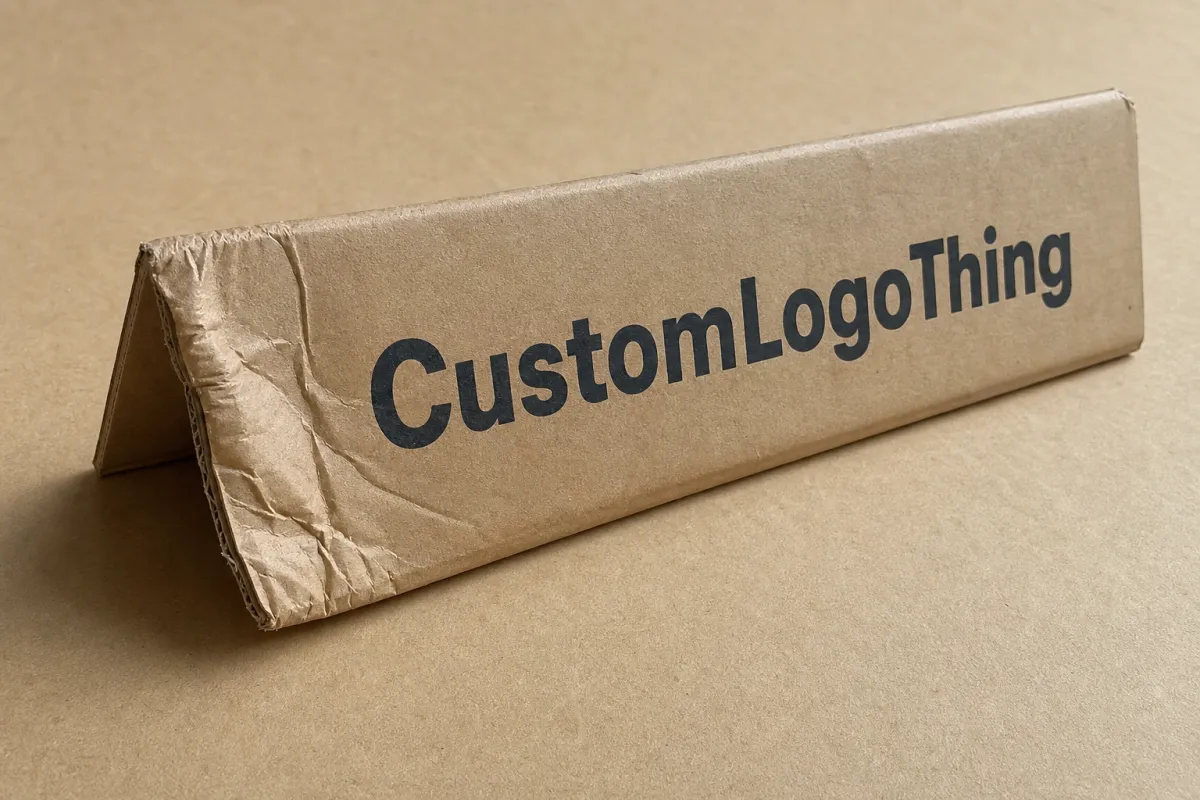
Pallet failures usually begin at the corners. That is where straps concentrate force, where stretch wrap pulls tight, and where handling equipment tends to strike with enough pressure to dent, split, or fold the edge. A load can be stable in the middle and weak at the perimeter. Once an outside corner collapses, the stack loses stiffness. The whole pallet starts to behave like a house of cards with shipping labels.
Custom edge protectors for pallets are built to change that outcome. They stiffen the corners, spread force across a wider area, and keep straps or film from digging straight into cartons, drums, pails, or finished goods. The protector does not replace wrap or strapping. It gives both of them a better surface to press against, which is a small design change with an outsized effect.
Picture a pallet of bottled product. Every bottle may still be upright, but one crushed corner can shift the outer cartons enough to tilt the stack. Now think about boxed electronics. The product inside may remain untouched while the outer case looks battered enough to trigger a receiving dispute. People notice that immediately. Customers notice it later. Cosmetic damage has a habit of becoming an accounting issue before the conversation is over.
The financial logic is easy to follow. Corner protection can reduce claims, cut the time needed to square a load, and lower the labor cost of repairing freight at the dock. A warehouse team that has to rebuild a pallet, add fresh wrap, or replace damaged cartons is spending money that never needed to move. Cheap damage still costs money. It usually costs more once labor enters the picture.
A good corner protector is boring in the best way: it disappears into the shipment, holds the line, and keeps damaged freight out of the conversation.
There is also a presentation effect. Clean, firm corners make the pallet look deliberate. That matters in wholesale shipping, retail supply chains, and any program where the outer pack reflects the brand before the inner product gets opened. A protected pallet will never be glamorous. It does make the operation look organized, which is often the more useful standard.
How custom edge protectors for pallets work in shipping
The mechanism is straightforward. A corner protector creates a rigid L-shape or V-shape that receives strap and film pressure instead of letting that pressure crush the cartons underneath. Tighten the strap and the protector spreads the force along a longer line. Pull the wrap and the protector keeps the edge from caving inward. The board earns its keep by giving the load a broader contact surface.
Fit matters more than most buyers expect. Leg length, wing width, and board thickness all shape performance. A short, thin protector can work for lightweight retail cartons. A tall stack of dense industrial product needs more crush resistance. Too small, and the strap still lands too close to the edge. Too large, and the piece can interfere with wrapping or pallet handling. Size is not a cosmetic detail. It is the difference between protection and expensive paperwork.
Custom edge protectors for pallets also need to match the packing method. Stretch wrap and plastic strapping remain common, but some freight lanes still rely on steel strapping for heavier product. Each method loads the corner differently. Wrap can draw the edge inward over time. Straps can create a concentrated bite. Overhang changes the equation again because the protector may need to stabilize product extending past the pallet deck. The board has to fit the line it serves, not a theoretical line in a presentation deck.
Material choice decides how far the protector can go. Lightweight loads often do well with single-wall corrugated or formed paperboard. Heavier stacks usually need a thicker board or a more rigid laminated profile. Moisture-resistant options make sense for export lanes, cold-chain shipments, or routes where humidity lingers long enough to soften ordinary board. A shipment crossing an ocean, sitting at port, and then rolling through a cooler warehouse does not live in ideal conditions. The material spec should not pretend otherwise.
These protectors do the most work on tall pallets, mixed-SKU loads, fragile cartons, and freight that gets handled more than once before delivery. That last point matters. Plenty of loads look perfect after the first wrap. They fail after the second or third touch. If your freight passes through several hands, corner protection stops looking optional and starts looking like basic control.
For buyers building a wider packaging stack, it helps to keep the corner spec aligned with the rest of the order. That can mean standardizing carton dimensions, choosing the right stretch film, or pairing the protectors with other Custom Packaging Products that help keep the shipment square from the packing line to the consignee.
Cost, pricing, and MOQ: what changes the quote
Price usually moves with a handful of variables: board grade, thickness, dimensions, quantity, print coverage, coating, and whether the design needs moisture protection or export treatment. A plain protector in a standard size usually lands at the low end. Thicker board, custom scoring, logo printing, and tougher surface treatment all push the unit cost up. That is not a penalty. It is the cost of better material and extra production work.
MOQ is not a sales trick. It reflects the point where a production run becomes efficient instead of awkward. Small runs carry more cost per piece because cutting, forming, bundling, and packing are spread across fewer units. A quote that looks unusually cheap on a small order deserves a second look. Ask what it excludes. Freight? Tooling? Packaging? All of them? A tidy price can turn messy the moment the invoice arrives.
Shape complexity changes the math as well. Standard profiles are straightforward. Unusual angles, extra scores, or an exact fit for a custom pallet layout add setup time and production risk. Branding changes the number again. Printed Edge Protectors can support package branding, but print still means another production step, and every extra step introduces time, material, and cost.
Freight and storage are easy to ignore and hard to forget later. Large protectors may be inexpensive to make but awkward to ship if they do not nest efficiently. A bulky profile can also eat up warehouse space faster than expected. If floor space is tight, a slightly denser board may be the smarter buy, even if the unit cost looks less friendly on paper. Landed cost decides the winner, not the line item.
Ask for tiered pricing, sample charges, and lead-time differences every time. A lower unit price at 10,000 pieces may not beat a slightly higher price at 5,000 pieces if the smaller order keeps cash from sitting in inventory. The real question is landed cost per usable unit. Spreadsheet vanity is not a supply-chain strategy.
| Option | Typical use | Price signal | Main tradeoff |
|---|---|---|---|
| Standard unprinted corner protector | Routine warehouse moves, light to medium loads | Lowest unit cost, especially at higher volume | Less brand presence, fewer custom fit advantages |
| Custom-sized protector, no print | Mixed-SKU pallets, odd overhang, tighter fit needs | Moderate unit cost | Better performance, higher setup and spec effort |
| Custom printed protector | Branded shipping programs, retail packaging supply chains | Highest unit cost among the three | Stronger presentation, but print adds lead time and budget |
| Moisture-resistant or export-grade protector | Cold chain, humid routes, export lanes | Higher than standard due to material choice | Better durability in rough environments |
As a rough buying range, lighter custom edge protectors for pallets can land in the low tens of cents per unit on higher-volume runs, while heavier or printed versions may move into a higher band depending on size and finish. Small orders widen that spread fast. If a supplier gives a quote that looks too neat, ask what load weight, board grade, and print coverage it assumes. The assumptions usually hold the real story.
Industry groups such as the ISTA testing standards are useful when you want to look past unit price and examine how the load performs in transit. If the pallet fails the route, the cheapest component was never cheap in the first place.
Process and lead time: from spec to shipment
Good ordering starts with dimensions rather than artwork. Gather pallet size, product height, load weight, carton construction, overhang, and the most common failure point. Is the corner crushed by strap tension? Is the film cutting into the board? Is the stack shifting in transit? Once the failure mode is clear, the supplier can build a protector that solves the real problem instead of guessing at it.
The approval step should turn those measurements into a dieline or spec sheet. A serious supplier will show leg length, thickness, board type, and any score or fold detail before production begins. Buyers should slow down there and check fit. If a sample or proof does not match the pallet geometry, fix it before the run starts. Rework after production is expensive, and people love to call it bad luck when it is really a spec problem.
Production is mostly mechanical: cutting, scoring, folding, gluing or forming if the style requires it, quality checks, bundling, and final packing for shipment. The sequence varies by product style, but the logic is the same. Clean specs make the process predictable. Predictable is good. Predictable means less chance of a load coming apart on the road.
Lead time depends on volume and complexity. Simple repeat orders move faster than fully custom builds because the tooling and setup already exist. New designs usually add sampling and approval time before production even starts. Rush jobs carry a premium because they disrupt the schedule. Factories tend to prefer planning over emergency theater.
Internal delay can be just as damaging as production delay. I have seen schedules slip because a buyer held a sample for a week while everyone waited on sign-off. If the turnaround matters, keep the spec simple and respond quickly on the proof. That sounds obvious. It still gets missed.
For buyers managing broader packaging design programs, it helps to keep one contact path and one spec record. If the same product line uses carton board, film, labels, and edge protection, the cleanest route is to keep those details together. Repeat orders get easier. Packaging changes stay in sync. The same custom packaging product range can often support the carton, the shipper, and the pallet layer in one system.
Environmental responsibility can also shape the timeline discussion. The EPA points buyers toward source reduction and material efficiency, which makes sense for packaging that protects product without adding unnecessary bulk. Better fit usually means less waste. Less waste is good. Less damage is better.
How to choose the right board, size, and profile
Begin with measurement basics. Record pallet height, carton overhang, corner exposure, whether the load is uniform or mixed, and whether the stack has to sit in storage before it ships. A pallet that looks square on paper can change shape after compression and wrap tension. Measure the packed load, not just the carton spec. That small habit removes a lot of avoidable mistakes.
Fit matters because the protector has to cover the exposed edge without blocking pallet jacks, forklifts, or the wrap pattern that keeps the stack together. Too short, and the strap still bites into the carton. Too long, and the piece can interfere with handling or make the load look awkward. Good fit is not about chasing perfection. It is about making the pallet easier to move without damage.
Thickness and strength should track the load. Lighter cartons can use thinner board with enough stiffness to stop denting. Taller or heavier loads usually need a stronger profile with better crush resistance and compression performance. A supplier should be able to explain the difference without hiding behind vague language. Ask what the board is meant to do: resist strap tension, hold a corner square, or support stacked weight. The answer should shape the spec.
Environment belongs in the selection too. Humidity softens fiber. Cold storage changes handling behavior. Export lanes add time, moisture, and rough transfers that domestic freight may never see. If a shipment sits for days before it moves, the board has to survive the wait as well as the ride. That is where moisture-resistant or treated board earns the extra cost.
Good buyers test against real handling conditions, not warehouse theory. A design that looks fine on a table can still fail when a driver tightens the strap too hard or a dock worker slides the pallet against a rail. One pilot run in a real lane tells you more than several meetings about it. That matters even more if the product sits inside a wider package branding or retail packaging system, because the outer pack has to protect and present at the same time.
When the load needs presentation as well as protection, coordinate the corner spec with the rest of the pack. Branded pallets, custom printed boxes, and protective board should not compete with one another. They should act like one stack, because they are literally stacked. Treat them as separate decisions and you end up paying for one system while damaging another.
Common mistakes that make pallet corners fail
The biggest mistake is guessing dimensions from memory. People remember the pallet they saw last week, not the one that actually ships today. Loads change. Carton counts change. Overhang changes. A spec built from a mental sketch instead of measured data will miss more often than it hits.
Another mistake is choosing the cheapest board and assuming stretch film will carry the load. Film holds product together. It does not add real compression strength to a weak corner. That is why some pallets look tight but arrive crushed. The film is doing its job. The corner is not. Those are different functions, and they are often confused by accident or by wishful thinking.
Humidity and route conditions matter more than many teams expect. Export shipments, refrigerated freight, and long storage windows can all change board behavior enough to affect performance. A protector that works in a dry local lane may soften or scuff badly in a damp environment. If the shipment moves through multiple climates, do not spec the board as if every mile were identical. That is how a small oversight turns into recurring complaints.
Strap placement is another failure point that gets overlooked until damage appears. If the strap lands in the wrong spot, it can defeat the protector and create a pressure line anyway. The same problem shows up in wrap patterns that leave the corner under-supported. The right corner board on the wrong packing line is still the wrong answer. Packaging is a system, not a pile of add-ons.
Skipping a pilot run creates expensive surprises. One poor spec can turn into repeated damage across every SKU on that lane. If the freight moves in volume, even a small failure rate becomes real money. Test one full cycle first. Then decide whether the design belongs in standard use. That is far cheaper than learning the lesson after the third claim.
If the route is rough, test the load the way it is actually handled. Standards such as ISTA and compression methods such as ASTM give the discussion a reference point instead of letting everyone argue from instinct. A lab test is not necessary for every order, but a repeatable check before volume ramps up is a lot cheaper than a warehouse full of damaged freight.
Expert tips and next steps for your first order
Start with a pilot order. Enough pieces to test one full lane, one warehouse cycle, and one outbound shipment is usually enough to show whether the spec works. Do not buy a year’s supply until you know the edge protector survives the route. Buyers often get pulled in by a good unit price and then discover the profile only works when everyone handles the pallet gently. That is not a strategy. That is optimism wearing a hard hat.
Build a one-page spec sheet and keep it tight. Include pallet dimensions, load weight, carton material, wrap pattern, strap type, overhang, moisture exposure, and any handling notes. If future orders need to match the first one, that sheet becomes the memory. Human memory is a poor inventory system.
Ask for samples that match the exact use case. A generic corner piece on the wrong pallet says very little. You want the sample that matches the carton height, the strap tension, and the route conditions you actually use. Otherwise you are testing a clean-looking piece of board in a scenario that never happens.
Set a review loop with operations, purchasing, and receiving. Each group sees the load from a different angle. Operations wants fewer delays. Purchasing wants a stable spec and predictable pricing. Receiving wants the pallet to arrive intact and easy to unload. If all three agree on the success criteria before production begins, the odds of a useful spec rise quickly.
Here is the order of operations I recommend:
- Measure the packed pallet, not the empty carton.
- Define the failure mode, such as strap crush, corner denting, or wrap cut-through.
- Choose board grade and thickness based on load and handling.
- Approve a sample or dieline before mass production.
- Pilot the design on one real lane.
- Standardize the spec only after the pilot passes.
If the rest of the packaging program needs attention too, keep the conversation tied to the broader supply chain. A strong order can combine corner protection, shipping cartons, and branded outer packaging so the whole load behaves as one system. That is where the best packaging design work tends to pay back the fastest. It is not flashy. It simply breaks fewer things.
Custom edge protectors for pallets are worth standardizing when the load is valuable, the route is rough, or the corners keep telling the same expensive story. Lock the spec, verify the fit, and use the same design across the SKUs that actually need it. The practical takeaway is simple: measure the packed load, match the protector to the real handling conditions, and pilot the design before you commit volume. That is how pallet corners stop failing quietly and start holding their shape from dock to destination.
FAQ
How thick should custom edge protectors for pallets be?
Match thickness to load weight, strap tension, and how much corner crush the shipment needs to resist. Light cartons can use thinner board, while tall or dense loads usually need a stronger profile. If the route includes humidity or long transit times, move up the spec instead of gambling on the cheapest option.
Can custom edge protectors for pallets be reused?
Yes, if they stay dry, straight, and uncrushed after the first trip. Reuse works best for internal warehouse moves or closed-loop shipping lanes. Export routes and high-damage lanes usually call for single use, since a weakened protector is only delayed failure with neater bookkeeping.
What information do I need for an accurate quote on pallet edge protectors?
Provide pallet dimensions, product height, overhang, total load weight, and the type of wrap or strap you use. Include quantity, print requirements, and whether the load faces moisture, cold storage, or export handling. The more exact the spec, the less likely the quote changes later.
Do custom pallet edge protectors reduce stretch film use?
They can reduce wasted film by helping the load hold its shape better. They do not replace proper wrapping, but they can let the line use film more efficiently. The real benefit is fewer corner failures, not just less plastic.
How long does the process usually take for custom edge protectors for pallets?
Simple repeat orders move faster than fully custom builds with new sizing or print. Sampling and approval usually take longer than production when buyers move slowly. If you want a shorter lead time, keep the design simple and respond quickly on samples.
For buyers who want one supplier to support the broader packaging stack, the cleanest next step is to review the current pallet spec, compare it against the shipping lane, and move the approved version into the standard order file. That is how custom edge protectors for pallets stop being a one-off fix and start doing steady work.

