Buyer Fit Snapshot
| Best fit | Custom Embossed Rigid Boxes projects where brand print, material claims, artwork control, MOQ, and repeat-order consistency need to be specified before quoting. |
|---|---|
| Quote inputs | Share finished size, material target, print colors, finish, packing count, annual reorder estimate, ship-to region, and any compliance wording. |
| Proofing check | Approve dieline scale, logo placement, barcode or warning zones, color tolerance, closure strength, and carton packing before bulk production. |
| Main risk | Vague material claims, crowded artwork, missing packing details, or unclear freight terms can make a low unit price expensive after revisions. |
Fast answer: Custom Embossed Rigid Boxes: Board, Finish, Dieline, and Unit Cost should be specified like a repeatable production item. The safest quote records material, print method, finish, artwork proof, packing count, and reorder notes in one written spec.
Production checks before approval
Compare the actual filled-product size with the drawing, then confirm tolerance on folds, seals, hang holes, label areas, and retail display edges. Reserve space for logos, QR codes, warning copy, and material claims before decorative graphics fill the panel.
Quote comparison points
Review material grade, print process, finish, sampling route, tooling charges, carton quantity, and freight assumptions side by side. A quote is only useful when the supplier can repeat the same color, closure quality, and packing count on the next order.
Custom Embossed Rigid Boxes: Sustainable Packaging Guide
Custom Embossed Rigid Boxes solve a packaging problem that looks simple until the sample arrives and the freight bill follows. They add tactile impact, strengthen shelf presence, and often reduce the need for heavy ink coverage or stacked decoration. That matters when the box has to do more than hold a product. It has to signal value in seconds, then survive freight, warehousing, and retail handling without collapsing into something forgettable. A raised logo or a pressed border can communicate more authority than a crowded printed surface, which helps explain why this format keeps turning up in premium branded packaging and retail packaging.
The mechanics are straightforward. A rigid box starts with dense paperboard, usually greyboard or chipboard, then gets wrapped in printed or specialty paper. After that, a die presses the surface to create raised or recessed detail. The result changes the way the box feels in the hand, the way it catches light on a shelf, and the way it behaves in transit. Cost, timeline, and material choices all shift with that structure. Managed well, custom embossed rigid boxes can sit in the narrow space where a premium look and paper-based recovery still make sense.
That space is narrower than it sounds. A rigid box is not a folding carton with thicker walls. It is not a mailer box either. The board is stiffer, the opening experience is more deliberate, and the presentation value is much higher. Used with discipline, custom embossed rigid boxes can support package branding without turning into ornament for its own sake. Used carelessly, they become expensive decoration with little structural payoff. The difference usually shows up in production, not in the rendering.
This piece stays with that production reality. Process, pricing, sustainability, durability, and the small decisions that shape outcomes all matter. A pretty sample is not the same thing as a packaging system. Custom embossed rigid boxes deserve to be evaluated as a system, not as a single finish choice.
Custom embossed rigid boxes: what they are and why they stand out
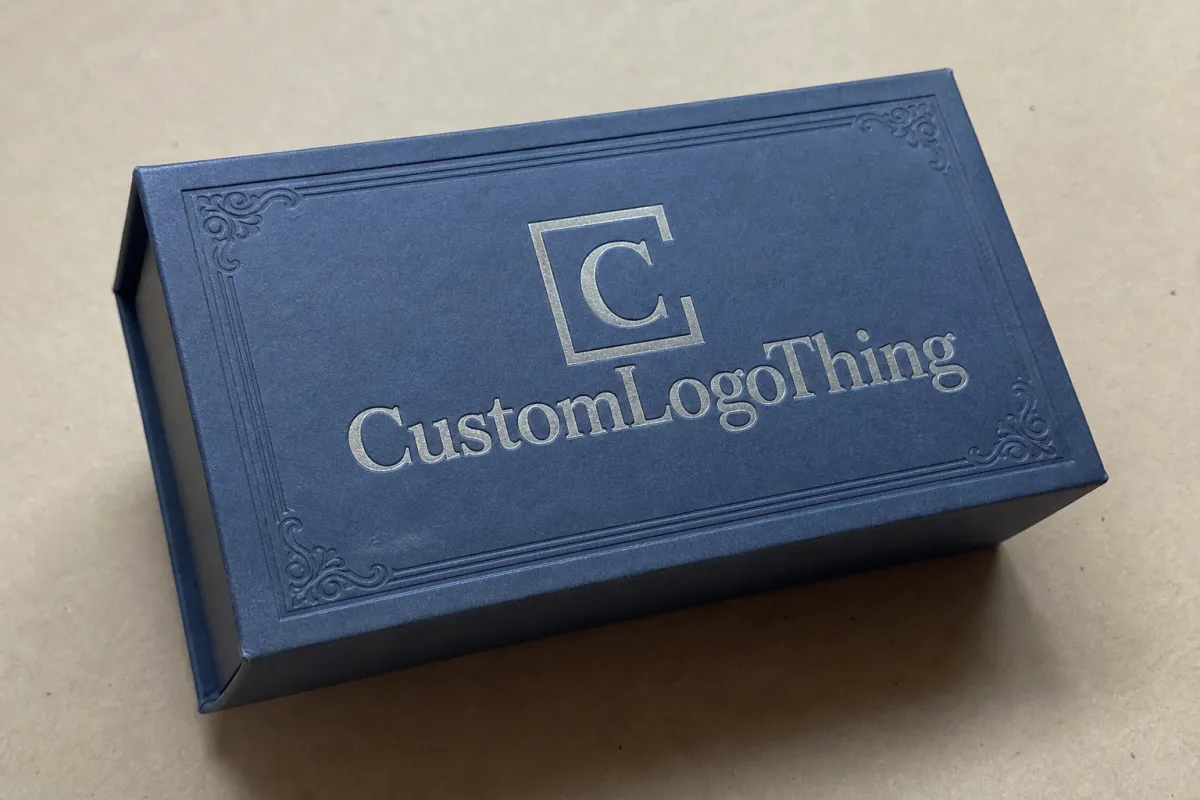
At the base level, custom embossed rigid boxes are stiff boxes made from chipboard or greyboard, wrapped in printed or specialty outer paper, then finished with raised or recessed design areas pressed into the surface. The board carries structure. The wrap carries the visual language. The emboss adds texture. That combination gives the box a different presence from standard Custom Printed Boxes or a simple folding carton.
What surprises many buyers is how little ink is needed to create a premium signal. A blind emboss on uncoated paper can feel more refined than a full-coverage metallic design because the hand notices the texture before the eye fully registers the graphic. Packaging has a short attention window. In that window, a quiet surface can do more work than a loud one. It cuts visual clutter, gives the logo breathing room, and makes the box feel more deliberate. Custom embossed rigid boxes tend to look strongest when that restraint is planned, not accidental.
From a buyer's perspective, the advantage is control. With the right spec, custom embossed rigid boxes can be adapted for cosmetics, confectionery, apparel, jewelry, gift sets, and seasonal launches. The structure may be lid-and-base, magnetic closure, drawer style, shoulder box, or book-style format. The emboss can sit on the lid, the sleeve, or a central panel. That flexibility makes the format useful across categories where the customer is paying for care, not just contents.
Sustainability enters the discussion quickly, and usually with more confusion than facts. A paper-based rigid box can still be a responsible choice if the board, wrap, adhesive, and insert are selected with end-of-life in mind. FSC-certified paper wraps, recyclable board, water-based adhesive, and minimal mixed materials keep the spec closer to a paper recovery stream. FSC certification does not prove recyclability by itself, but it does signal responsible fiber sourcing. That distinction matters when procurement and sustainability teams are sitting in the same meeting.
Custom embossed rigid boxes also change perceived product value. Customers rarely know board caliper or paper stock name, but they know the difference between a package that opens with friction and one that feels flimsy. That moment matters. It shapes first impression, giftability, and repeat purchase behavior. A folding carton can carry a product. A rigid embossed box can carry a brand story.
None of this means the format is automatically better. Some brands overbuild a package in pursuit of luxury and then discover the cost landed hard in freight, fulfillment, and damaged margin. A smarter approach matches the box to the product, the channel, and the damage risk. That is why custom embossed rigid boxes need a production-first conversation, not only a mood-board conversation.
"A raised logo is not the strategy. It is the proof that the strategy survived production."
I have watched that lesson play out more than once. A team falls in love with a sample, then loses the feeling of it when the design gets squeezed by shipping costs or a rushed launch date. The most successful programs keep the box in the same room as the rest of the operating plan.
If you are comparing formats before committing, it helps to look at the broader Custom Packaging Products range alongside your rigid-box options. Sometimes rigid is still the right answer. Sometimes a lighter structure protects both the product and the margin.
Custom embossed rigid boxes process and timeline: from dieline to delivery
The production path for custom embossed rigid boxes looks simple on paper. The real work sits inside each stage. It starts with a brief: box size, product weight, target retail price, shipping method, brand position, and the tactile effect the emboss should create. That brief should exist before artwork is locked, because structural choices often change the layout more than people expect.
Size confirmation and structural design come next. The dieline has to account for the product, any insert, the wrap allowances, and board thickness. A 1.5 mm board behaves differently from a 2 mm or 3 mm board, especially at corners and folds. Too little clearance and the product scuffs. Too much and the premium feel drops away. Custom embossed rigid boxes work best when they are engineered as systems, not as art files with dimensions attached.
Artwork setup and emboss mapping follow. This is the stage where many projects drift. Embossed areas cannot sit casually over tiny type or dense linework because depth can distort legibility. A deep emboss may also need spacing adjustments so the raised area does not collide with folds, seams, or turns at the edge. Coated wrap paper may crack under pressure, which means the substrate choice matters as much as the graphic. The deeper the emboss, the more sensitive the paper becomes.
Die creation adds another layer of timing. Emboss tooling has to be made, checked, and often tested with a sample press run. Too much pressure bruises the paper. Too little pressure makes the effect vanish under lighting. In packaging terms, this is where the concept stops being abstract. For custom embossed rigid boxes, a tiny die change can move the visual hierarchy by a lot.
The timeline is worth planning with realism. Simple projects often need 10-15 business days after proof approval. More involved builds can stretch to 20-30 business days or longer once sample rounds, finishing, and freight are included. If the launch is tied to a retail reset or a seasonal promotion, the structure should be locked early. Late changes create churn. They also create scrap, which is the opposite of a responsible packaging plan.
Transit testing should be part of that early discussion. The ISTA standards are widely used for distribution testing because a beautiful box that fails in shipping is not a luxury box; it is a claim waiting to happen. A supplier worth working with should be able to discuss drop tests, compression, and handling expectations before full production starts. That matters even more for custom embossed rigid boxes with inserts, magnets, or delicate wraps.
The most efficient projects treat sustainability as part of scheduling. Good planning reduces rework. It reduces sample shipping. It reduces last-minute substitutions. It also lowers the pressure to swap in whatever material is available that week, which is how eco goals quietly unravel. A disciplined timeline is not glamorous, but in packaging it saves more waste than most people realize.
Key factors that shape sustainability, durability, and shelf appeal
The full material stack matters more than any single claim on the spec sheet. With custom embossed rigid boxes, board thickness, wrap paper, adhesive, print method, and insert material all shape how the box performs in the real world. A 2 mm greyboard core wrapped in 120-157 gsm paper behaves differently from the same board wrapped in heavier specialty stock. Add foil, lamination, or plastic film, and the end-of-life story changes again.
Sustainability belongs in construction decisions, not slogans. A rigid box can be paper-based and still be difficult to recycle if the wrap is heavily laminated or the insert uses mixed materials that do not separate cleanly. A more careful build usually relies on paper wrap, water-based glue, minimal coating, and a fiber-based insert if the product can support it. In many cases, that is enough to keep custom embossed rigid boxes aligned with broader recycling systems.
Durability sits on the same spectrum. A premium box that collapses at the corners is not premium. Cosmetics and gifting usually want crisp edges and a polished feel, while confectionery and apparel often need better crush resistance for warehouse and transport handling. Jewelry may need tighter insert fit. Apparel may need a cleaner opening sequence. Each use case shifts the structural spec, which is why custom embossed rigid boxes should be matched to the product's handling profile, not only its shelf appearance.
Shelf appeal tends to improve when the design uses contrast instead of clutter. A tactile mark, a restrained foil accent, a clear type system, and a subtle paper texture often outperform a surface crowded with finishes. Embossing creates light and shadow on its own. That already gives the box depth. In practice, the box usually looks more expensive when the rest of the surface is quieter. Teams often discover this after trying to decorate every available square inch.
There is a practical comparison worth keeping in mind:
| Build option | Typical structure | Approximate unit cost at mid-volume | What it does well | Tradeoff |
|---|---|---|---|---|
| Simple embossed lid-and-base | 2 mm board, printed wrap, blind emboss | $1.20-$2.40 | Clean branding, solid presentation, easier production | Less dramatic opening experience |
| Drawer rigid box | Outer sleeve with sliding tray and insert | $2.10-$4.50 | Strong unboxing feel, good for gifting and sets | More parts, more assembly time |
| Book-style magnetic box | Hinged look, magnetic closure, specialty wrap | $3.80-$7.50 | High perceived value, strong for premium launches | Higher tooling and material cost |
| Large presentation set box | Custom insert, multiple compartments, complex finish | $5.00-$10.00+ | Best for curated kits and limited editions | Heavier, harder to optimize for shipping |
The exact figures move with size, board, paper market, print coverage, and geography. Even so, the table shows why custom embossed rigid boxes should be judged as part of a value system, not only by unit cost. A box that lowers damage, returns, and secondary packaging can outperform a cheaper option that fails in distribution.
Documentation matters if sustainability claims are public. Ask for recycled content percentages, FSC paper options, adhesive information, and confirmation about which finishes can still support paper recovery. The EPA recycling guidance is useful because it reminds teams that recoverability depends on the full package, not a single label on a spec sheet. That reality shows up repeatedly in custom embossed rigid boxes.
The most sustainable presentation is often the simplest one that still does the job. If the emboss carries the brand, let it carry the brand. If the paper texture already gives enough depth, leave the extra finishes out. Better packaging design usually means fewer materials, not more. That is a practical way to think about custom embossed rigid boxes.
Custom embossed rigid boxes pricing: what drives cost and MOQ
Pricing for custom embossed rigid boxes depends on several variables at once, and the interaction between them matters more than any single line item. Board thickness changes material cost. Box size changes board consumption and shipping density. Emboss depth affects tooling and press time. Print coverage affects setup. Specialty paper affects both cost and waste. Inserts add labor. Finishes add risk. When a buyer asks for a number without those inputs, the answer is usually only a placeholder.
MOQ changes the math just as much. At low quantities, setup charges and tooling are spread across fewer units, which pushes unit price up fast. At higher quantities, per-box cost usually drops because production becomes more efficient and waste per unit falls. That is why custom embossed rigid boxes make the most sense when there is a clear volume plan rather than a single one-off product drop.
Embossing itself is rarely the most expensive part. It is the part most likely to reveal hidden costs. A shallow blind emboss on a simple lid may add only a modest tooling fee. A deep, highly registered emboss on specialty paper can require more sample rounds and more machine time. Dense artwork slows setup because the press team has to align type and raised areas carefully. That is one reason custom embossed rigid boxes should be quoted with proofing included, not treated as an afterthought.
Tiered quotes help separate real value from teaser pricing. Ask for 1,000, 3,000, and 5,000 units. Ask for tooling separately. Ask for sample costs separately. Ask whether freight, cartons, and palletizing are included. A quote that hides those details can look cheap right up until the final invoice arrives. A quote that breaks them out gives a cleaner basis for comparing custom embossed rigid boxes.
Useful pricing benchmarks, with the usual warning that size and finish can move everything:
- Simple lid-and-base with blind emboss: often around $1.20-$2.40 per unit at modest volume.
- Drawer style with printed wrap and insert: often around $2.10-$4.50 per unit.
- Book-style magnetic box with specialty paper: often around $3.80-$7.50 per unit.
- Presentation set with multiple compartments: often $5.00-$10.00+ per unit.
Tooling and sample charges usually sit outside those figures. An emboss die may be small relative to the box itself, but it still changes launch economics when the volume is low. That is why custom embossed rigid boxes often fit premium goods, limited editions, or product lines where packaging is part of the margin story rather than a hidden cost center.
There is an indirect cost worth tracking too: damage. A sturdier box can lower returns, replacement shipments, and fulfillment complaints. That cost rarely appears in the sample quote, yet it shows up in operations very quickly. If the product is fragile or high value, the right rigid box can save more than it costs. The wrong one can do the reverse.
If you are comparing alternatives, it can help to look at Custom Packaging Products across rigid, folding, and mailer formats before deciding where embossing actually adds value. Sometimes the premium route is the right one. Sometimes it is not. Good procurement stays selective.
Step-by-step guide to ordering custom embossed rigid boxes
The cleanest way to order custom embossed rigid boxes is to start with a precise brief. Include product dimensions, unit weight, shipping route, target audience, shelf environment, and the exact premium cue the embossing should create. Are you aiming for craftsmanship, quiet luxury, heritage, or modern minimalism? Those are not interchangeable goals. They should not produce the same box.
Structure selection comes next. Lid-and-base boxes are efficient and familiar. Drawer styles feel more deliberate. Book-style boxes create ceremony around opening. Shoulder boxes add an architectural feel. Each one changes the customer experience and the production sequence. The structure should be chosen before decoration. That keeps the packaging design anchored in function rather than drifting toward style alone.
Artwork preparation follows. Map the emboss zone clearly so the logo, typography, and graphic elements do not crowd the raised area. Leave a clean margin around the emboss. Use vector art. Specify whether the effect is blind, registered, or paired with print. If the box includes product claims, make sure they remain legible after embossing is applied. The strongest custom embossed rigid boxes often feel simple because the layout does the hard work quietly.
Sampling deserves real attention. Digital renderings help, but they cannot show the exact shadow depth, edge crispness, or hand feel that a physical sample gives you. Review the sample under retail lighting. Hold it with the product inside. Place it into a shipping carton. Open it while wearing gloves if that reflects your operations. A sample is not just a visual approval; it is a workflow test for custom embossed rigid boxes.
Quote confirmation comes next. Before production begins, confirm unit cost, tooling cost, sample cost, timeline, and acceptance criteria for color, texture, and emboss alignment. Ask what happens if a proof needs revision. Ask whether the quoted board is FSC-certified or recycled-content. Ask whether the adhesive supports the intended end-of-life path. Those questions are not tedious. They keep the project honest.
It also helps to use a short decision list:
- Does the structure protect the product without extra filler?
- Does the emboss add meaning, not just decoration?
- Can the full construction be explained clearly to buyers and retailers?
- Does the quote match the target margin?
- Will the box still make sense after freight and fulfillment are added?
That checklist turns a vague packaging discussion into a measurable one. It also helps teams compare suppliers for custom embossed rigid boxes without getting distracted by one attractive sample or one low teaser price. If you want a broader starting point for format decisions, the Custom Packaging Products page is a useful place to compare options before locking structure.
Common mistakes when buying custom embossed rigid boxes
The first mistake is over-embossing. More texture does not automatically mean more luxury. If the surface becomes too busy, the logo loses authority and the design starts to feel noisy. Deep embossing can also weaken fine detail, especially on coated stocks or at tight radii. The most effective custom embossed rigid boxes often use one strong tactile moment rather than several competing effects.
The second mistake is mixing sustainability language with an incompatible build. A rigid box made mostly from paper can still be hard to recover if it uses plastic lamination, foil-heavy wraps, or mixed-material inserts that are difficult to separate. Buyers sometimes assume paper-based means recyclable by default. It does not. Ask for specifics on the board, wrap, adhesive, and finish, then verify whether the exact spec supports the end-of-life pathway you want. That is the only reliable way to keep custom embossed rigid boxes aligned with credible sustainability claims.
The third mistake is skipping the physical sample. This is where a lot of packaging design programs lose accuracy. On screen, a blind emboss looks crisp. In hand, it may disappear under paper texture or create a wrinkle near a seam. The sample exposes those problems early, before they become expensive. For custom embossed rigid boxes, a sample is not a luxury; it is the only real proof that structure, finish, and tactile effect work together.
The fourth mistake is changing dimensions or finishes too late. Once tooling begins, even a small adjustment can trigger new sample rounds, schedule delays, and extra cost. Late changes also create waste, which undermines the sustainability story. If the launch calendar is tight, lock structure first and freeze decoration second. That order tends to save time and frustration on custom embossed rigid boxes better than any rush fee.
The fifth mistake is forgetting logistics. A box that looks beautiful but ships poorly is not a good box. If the corners crush during transit or the insert does not hold the item securely, savings from a lower-cost spec disappear fast. In some programs, the outer carton and pallet pattern matter almost as much as the box itself. Good product packaging thinks in layers. The rigid box is only one of them.
Another issue appears often in retail programs: teams choose a premium box, then print too much on it. The result feels less elevated than a simpler spec would have. Embossing works because it can carry the brand with very little visual noise. If the surface is already speaking loudly, the tactile cue has less room to matter. That is a design judgment call, but it matters a lot for custom embossed rigid boxes.
"If the unboxing needs three finishes to feel premium, the structure probably was not doing its job."
The mistakes are rarely dramatic. They accumulate. A little too much texture. A little too much decoration. A little too little testing. A little too much assumption about recyclability. That combination can turn custom embossed rigid boxes from a strategic packaging choice into an expensive lesson.
Expert tips for a smarter rollout and stronger final result
My strongest recommendation is simple: sample first, scale second. Compare two or three structural options before you commit to a full run. One may look slightly less glamorous on paper but perform better in hand, ship more cleanly, and cost less to produce. In packaging, the prettier spec is not always the better spec. That is especially true with custom embossed rigid boxes, where material choice and tactile detail can shift the economics quickly.
Let the emboss be the hero. Remove decoration that does not support the story. If the logo already gives enough brand recognition, avoid adding extra foils or oversized graphics just to fill the surface. A disciplined layout often improves both shelf appeal and sustainability because it reduces ink load and unnecessary finishing. For custom embossed rigid boxes, restraint usually reads as confidence.
Test the box in real handling scenarios, not only on a desk. Warehouse stacking, courier drops, retail shelf loading, and customer unboxing each reveal different weaknesses. A box can survive a hand-feel test and still fail in transit. That is why project teams should look beyond the sample room. If the box is going into a distribution network, the packaging needs to behave like a shipping object as well as a brand object.
Build a short vendor checklist and use it every time. Confirm recycled content. Confirm adhesive compatibility. Confirm print method. Confirm lead time. Confirm what happens if artwork or tooling needs revision. Confirm whether the supplier can show a paper specification, not only a sales sheet. That kind of checklist sounds mundane, but it is exactly how professional buyers reduce surprises and keep custom embossed rigid boxes on track.
A final practical tip: think about the box as part of the product's total cost of ownership. A slightly more expensive rigid box can reduce damages, improve perceived value, and support a higher shelf price. A cheap box that weakens the launch can cost much more later. The right answer depends on margin, channel, and product fragility, so be honest about what the packaging is supposed to do.
For teams building a launch plan, I usually suggest three actions in sequence:
- Write a one-page spec sheet with size, board, emboss style, insert needs, and sustainability targets.
- Request sample quotes from at least two suppliers so you can compare material stack and tooling assumptions.
- Review the physical sample under shipping and retail conditions before signing off on full production.
That sequence keeps the project grounded. It also keeps the final decision connected to the actual business case, which is where custom embossed rigid boxes earn their place.
If you are comparing formats for a wider product line, it may help to view your Custom Packaging Products as a family rather than a single box type. The best packaging programs are usually coordinated across SKUs, not designed one box at a time.
Ultimately, custom embossed rigid boxes are not just a luxury effect. They are a measurable packaging choice with implications for protection, cost, shelf presence, and end-of-life recovery. When the structure is right, the emboss is restrained, and the materials are specified with care, custom embossed rigid boxes can deliver premium branding and responsible construction in the same package. The most useful takeaway is practical: start with the product's handling needs, then choose the structure and emboss only after the sample proves the box can carry both the brand and the shipment.
Frequently asked questions
Are custom embossed rigid boxes recyclable?
Often yes, if the structure is paper-based and the wrap, adhesive, and finish are selected with recyclability in mind. The catch is that mixed materials can change the outcome quickly. Foil-heavy laminations, plastic coatings, and non-fiber inserts may reduce recoverability, even when the outer shell looks paper-based. If you are ordering custom embossed rigid boxes, ask the supplier to confirm the end-of-life pathway for the exact spec, not a generic material label.
How much do custom embossed rigid boxes usually cost?
Pricing depends on size, board thickness, emboss depth, print coverage, inserts, and finishing choices. MOQ also changes the math because tooling and setup are spread across the volume. For many programs, custom embossed rigid boxes may start around the low single dollars per unit at scale and move higher as the build becomes more complex. The safest move is to request tiered quotes at several quantities so you can see where the best value sits.
How long does the process for custom embossed rigid boxes take?
Most projects include artwork approval, die making, sampling, and full production. Simple runs can move relatively quickly once the spec is locked, while complex embossing or late revisions can add days or even weeks. If custom embossed rigid boxes are tied to a launch or seasonal promotion, build in extra time for sample review and freight. Time saved early is usually money saved later.
What products work best in custom embossed rigid boxes?
They work especially well for premium cosmetics, gifts, apparel, jewelry, confectionery, and limited-edition sets. The rigid structure protects fragile or high-value items during handling and shipping, while the embossing strengthens the brand signal. Custom embossed rigid boxes are strongest when the unboxing moment is part of the product story and the customer is meant to notice the packaging before the product.
What should I ask for in a quote for custom embossed rigid boxes?
Ask for unit cost, tooling fees, sample cost, MOQ, production time, freight assumptions, and the exact material stack. You should also request emboss specifications, finish options, and any insert details included in the quote. Comparing quotes line by line helps prevent surprises. For custom embossed rigid boxes, the cheapest quote is not always the best one if it hides setup or material tradeoffs.

