A custom reflective logo Beanies Bulk Order works because it combines warmth, visibility, and branding in one item. That makes it useful for crews, event staff, campus teams, and winter kits where buyers want something people will actually wear. The purchase decision usually comes down to a few practical questions: how the logo is applied, what the beanie is made from, how much it costs at scale, and how long production will take.
Reflective decoration is not the same as standard embroidery. Under indoor light it can look subtle, but in headlights or streetlight spill it becomes much more noticeable. That makes it more useful for low-light settings than a plain knit cap, even though it is not a substitute for certified high-visibility gear. For larger programs, the same buying logic applies to Wholesale Programs and broader Custom Packaging Products when the beanie is part of a bundled order.
Why Reflective Beanies Outsell Standard Winter Giveaways
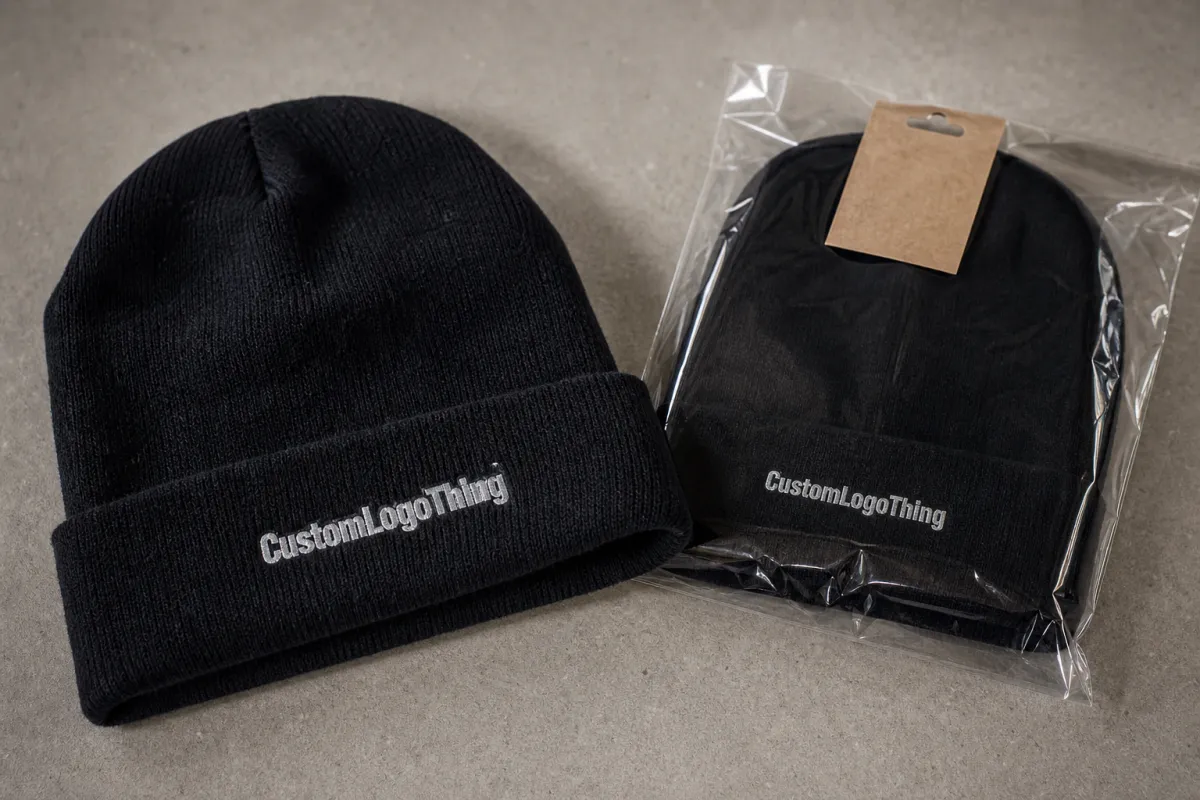
Standard winter giveaways often fail because they are either warm but forgettable or branded but not useful enough to stay in rotation. Reflective beanies solve both problems at once. They are practical in cold weather and still give the logo a chance to stand out in low light. In bulk buying, that matters because actual wear rate is more valuable than a low sticker price.
They also simplify approval. One item can cover warmth and visibility better than buying separate pieces for each job. That is especially useful for route-based teams, outdoor staff, and seasonal events where buyers need a single item that feels purposeful. The reflective element should be treated as a visibility aid, not PPE, but it can still improve recognition enough to justify the spend.
Headwear also gets repeated use. People keep beanies in vehicles, coat pockets, and bags, which means a logo can get seen many times over a season. A promo item that is worn repeatedly usually delivers better value than a one-time handout.
"If the logo stays visible after dark, the item is doing more than decoration."
That is why reflective beanies tend to outperform generic winter merch. They feel more considered, and they fit more real-world use cases without looking overly technical.
Custom Reflective Logo Beanies Bulk Order Details
The decoration method determines most of the outcome. Reflective embroidery gives a stitched appearance and works best for bold, simple artwork. Woven reflective patches handle sharper edges and smaller text better. Heat transfer film is useful for larger reflective shapes and flatter logos. Applique adds weight and dimension, which can suit premium or retail-style beanies. Each method changes the hand feel, durability, and unit cost.
Placement matters just as much as decoration type. The cuff front is usually the safest location because it keeps the logo readable and centered. Side placement is quieter and works for brands that want a lower-profile look. Center-front reflective panels offer stronger low-light visibility, but they can limit fine detail. Thin lettering and tiny icons need to be checked at actual production size, not just in a mockup.
The proof should show the final logo size, exact placement, and the reflective material being used. If the artwork is too small, the reflective effect gets lost. If it is too large, the beanie can start to look more like a novelty item than a wearable uniform piece. The best result is simple, legible, and balanced on the knit surface.
For mixed programs, the beanie should match the broader visual system instead of competing with it. That is especially important in a custom reflective logo Beanies Bulk Order for field teams, campuses, or branded event kits.
| Decoration method | Best use case | Typical added cost per unit | What to watch |
|---|---|---|---|
| Reflective embroidery | Simple logos, cuff fronts, everyday wear | $0.60-$1.50 | Needs bold artwork and enough stitch space |
| Woven reflective patch | Sharper edges, smaller logos, repeat orders | $0.70-$1.80 | Patch size affects detail and visibility |
| Heat transfer film | Larger reflective areas, flat logo shapes | $0.45-$1.20 | Confirm wash resistance and hand feel |
| Applique | Premium look, layered branding, heavier knits | $0.80-$2.00 | Can feel thicker and may slow production |
Before production starts, ask for a proof that answers three things clearly: where the logo sits, how large it is, and what material carries the reflective effect. Share Pantone references early if color matters. Also confirm how the reflective finish will read against the base knit color, since black, charcoal, and heathered knits behave differently.
Materials and Build Specs to Compare Before Ordering
Material choice affects comfort, warmth, and cost. Acrylic is the most common option because it is economical and easy to decorate. Acrylic-wool blends feel warmer and more premium, but they raise the price. Fleece lining changes the wearing experience even more: it adds warmth, but it can reduce stretch and affect fit for smaller heads or youth sizes.
Knit construction matters too. Rib knits hold shape well and usually wear better over time. Tighter gauges look cleaner and more retail-ready. Looser knits can feel softer at first, but they may distort logo placement if the decoration area is too close to a seam or stretch point. Buyers should review the actual knit face under normal light, not just rely on a photo.
Fit is easy to underestimate in bulk orders. One-size beanies still sit differently depending on head shape, hair volume, and whether the style is lined. Cuff depth controls how much room there is for decoration. Crown height changes the silhouette. If the order will go to a mixed group, ask for measurements rather than assuming the size label is enough.
Durability questions should be specific. Ask how the reflective area holds up after repeated washing, whether the knit rebounds after stretching, and how the seam and trim hold up over time. Buyers who usually check retail packaging for finish and consistency should apply the same standard here: the material, construction, and decoration method need to work together.
If the beanie will ship with inserts, hang tags, or boxes, the materials should fit the rest of the system. A premium knit in weak packaging design loses impact fast. A simple, well-finished beanie packed cleanly usually reads more intentional than a flashy item with poor presentation.
Pricing, MOQ, and Unit Cost Drivers
Bulk pricing drops as quantity rises, but the savings are not always linear. Setup, sampling, and decoration complexity can flatten the discount at lower volumes. For a stock-color acrylic beanie with a small reflective logo, pricing may land roughly in the $3.50-$6.50 range per unit at higher quantities. Add fleece lining, custom knit features, or larger reflective coverage, and the range can move into the $6.50-$12.00 bracket or higher.
MOQ depends on how custom the build is. A standard beanie with one decoration position may start around 50 to 100 pieces. Add custom yarn colors, woven labels, special trims, mixed colorways, or custom packaging inserts, and the minimum can rise to 150, 300, or more. That is usually a production requirement, not a penalty.
Read quotes carefully. Separate blank product cost from decoration cost. Check whether sampling is credited back. Confirm freight, carton fees, and rush charges. If the order includes branded packaging, ask whether it is bundled or billed separately. A quote that looks good at first can change once those costs are itemized.
A useful quote should show:
- Blank unit price for the beanie itself
- Decoration setup for art or stitch programming
- Sample or proof charge if applicable
- Freight and carton fees
- Rush or split-ship charges
That breakdown is especially important when the beanies are part of a larger apparel or packaging budget. The real comparison is the full landed cost, not just the headline unit price.
Process, Timeline, and Lead Time Expectations
Most orders move through the same sequence: art intake, digital proof, sample or photo approval, production, inspection, packing, and shipping. Proofing is usually the fastest part. Production and freight take longer, especially when the order includes custom decoration or presentation packaging. Buyers who plan around that schedule avoid most deadline problems.
A realistic timeline for many bulk reflective beanie orders is 1 to 3 business days for proofing, 3 to 7 additional days if sample review is needed, 12 to 25 business days for production, and shipping on top. If the order is tied to a launch, holiday rollout, or field deployment, add buffer time. Late artwork changes can push the schedule back more than buyers expect.
Artwork revisions matter because they affect multiple production steps. Changing logo geometry affects stitch files or transfer dies. Changing color can affect material sourcing. Changing packaging can affect carton planning. Small edits are rarely small once production has started, so the most efficient buyers lock artwork early.
If the order ships in printed cartons or custom sleeves, ask whether those items are on the same production timeline as the beanies. Packaging often becomes the slowest step in the chain, especially when it is custom.
Quality Checks, Wash Testing, and Sampling Risks
Quality control should start with the proof and continue through the first sample. Reflective film, embroidery, woven patches, and applique age differently, and some methods hold up better through washing than others. A logo that looks bright on day one may not keep the same finish after repeated laundering unless the application method is chosen carefully.
Inspection should cover the first article, not just the final cartons. Check placement, color consistency, seam alignment, stitch density, and trim quality before the run is released. Then confirm carton counts against the agreed tolerance. If the expected quantity is 1,000 units, the acceptable overrun or shortfall should be stated before production begins.
For public-facing teams and municipal programs, documentation matters. Fiber content, care instructions, and country of origin should be available before approval. If the order includes printed inserts or carton sleeves, FSC-certified paper can be a reasonable requirement for the packaging pieces. For transport testing, ISTA provides widely used packaging test protocols, and FSC is the standard reference for responsible paper sourcing.
Sampling also has limits. A sample can confirm color, placement, and hand feel, but it may not reflect every production variable if materials are later substituted. Treat the approved sample as a control point, not permission for unapproved changes.
How to Vet a Bulk Supplier Before You Commit
Credibility shows up in the documentation. Ask for spec sheets, production photos, reorder examples, and a clear explanation of what is stock versus fully custom. If the supplier cannot explain what changes MOQ, lead time, or decoration quality, that is a warning sign.
Useful suppliers also explain tradeoffs without hiding behind sales language. They should be able to say the minimum logo size needed for readability, whether the reflective area should be stitched or applied, and how packaging affects cost. They should also separate product cost from freight and packaging so the quote is easy to evaluate.
Flexibility matters, but so does consistency. Ask whether the supplier can support mixed colorways without rebuilding the art file, and whether repeat orders can be produced without starting from scratch. For ongoing programs, that matters more than a one-time low quote.
"A trustworthy bulk quote reads like a spec sheet, not a promise."
If your organization buys across apparel, kits, and packaging, use the same standards everywhere. Clear specs reduce errors, and clear approvals reduce back-and-forth.
Next Steps to Finalize Size, Art, and Delivery
Start with the four variables that shape the order fastest: quantity, color, decoration method, and delivery deadline. Those determine most of the quote. After that, request the proof pack. It should include the mockup, recommended logo size, any sample option, tiered pricing, and the estimated ship date.
Use this checklist before approving the run:
- Confirm beanie fabric, fit, and cuff depth.
- Approve logo placement and reflective area size.
- Check Pantone or thread references.
- Review MOQ, freight, and rush charges.
- Lock the delivery window and carton count.
If the beanies are part of a larger branded rollout, make sure the hat fits the rest of the system so the presentation stays consistent. That is where Custom Packaging Products can support the packaging side, and where matching branded packaging can keep the whole order aligned.
Once the art, material, and timeline are approved, the order is ready to move. For teams that need warmth, visibility, and a strong logo impression in one purchase, a custom Reflective Logo Beanies bulk order is often the most practical option because it is useful, scalable, and straightforward to spec.
FAQs
What is the usual MOQ for reflective logo beanies in bulk?
MOQ depends on the build. Stock-color beanies with standard decoration can start at lower quantities, while fully custom knit programs usually require more volume. Custom yarn colors, labels, or packaging often raise the minimum. Tiered pricing helps show where unit cost drops as quantity increases.
Can custom reflective beanies be embroidered?
Yes, if the logo area is large enough for stitch detail and the knit can support it. For smaller marks or larger reflective zones, a patch or transfer may hold shape better. The right method depends on the artwork, not just the beanie style.
How long does a bulk reflective beanie order usually take?
Simple proofing can move quickly, but the full schedule depends on quantity, decoration type, and packaging requirements. Build in time for sample approval, production, inspection, and freight. Add buffer time if the order is tied to a fixed event date.
What artwork file should I send for a quote?
Vector files such as AI, EPS, or PDF are best because they scale cleanly for proofing and production. Include Pantone references, logo placement notes, and any minimum size concerns. If you only have a JPG, ask for a redraw before approving the final proof.
Will the reflective logo survive washing?
Ask for wash-test guidance or results for the exact decoration method being quoted. Heat-applied films, patches, embroidered thread, and reflective yarn can age differently. Follow the recommended wash cycle and drying settings to protect the finish.

