A fixed event date changes the math behind Custom Event Hats lead time and moq. The job is no longer just finding a cap that looks good on screen; it is lining up stock availability, decoration capacity, proof approval, and freight so the hats arrive before the team does.
For trade shows, sponsor activations, employee launches, and store openings, hats are often the more practical branded item. They do not require size runs the way apparel does, they stay visible in a crowd, and they work across mixed groups without a fitting problem. Buyers who also manage packaging projects already know the pattern: structure first, then graphics, then ship date. The same discipline that keeps custom printed boxes on schedule keeps headwear orders from drifting into last-minute chaos.
That is why the fastest orders usually start with a standard silhouette, a limited color palette, and one clean logo placement. If the hats are part of a larger kit with display cartons, insert cards, or other Custom Packaging Products, the smartest move is to treat the whole package as one production brief instead of three separate jobs. For common ordering questions, the FAQ helps keep the basics aligned.
Why custom event hats make sense when the deadline is fixed
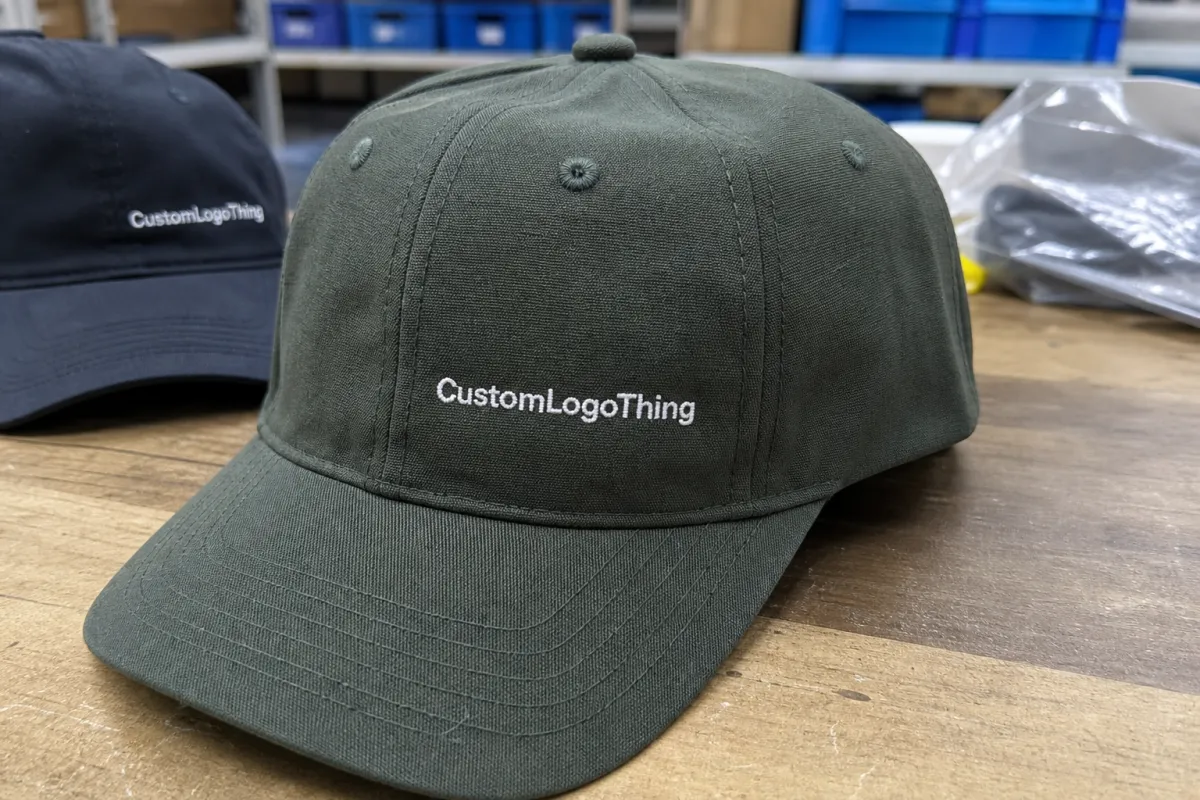
Hats solve a problem that apparel often complicates. A cap can be ordered without size breakdowns, handed out at a booth in seconds, and worn immediately. That sounds small, but in a live event environment the difference is real. A shirt program can get slowed down by fit approvals, gender splits, or late changes in size distribution. Caps rarely create that kind of delay.
The more limited the decoration, the cleaner the production path. One-location embroidery on a stocked cap is usually faster than a multi-location build or a patch-heavy design, because there are fewer steps and fewer opportunities for rework. Add a woven patch, a second logo position, or a custom fabric run, and the schedule starts to stretch even if the hat body itself is common.
Buyers should think in terms of blank availability, decoration queue, and proof approval. Those three factors decide most event deadlines. A product photo may look simple, but a cap that appears “basic” on a website can still require a specialized stitch file, a patch production run, or a longer hold in line if the factory is busy.
The simplest brief is usually the strongest: a standard cap body, a short list of acceptable colors, and a logo placement that can be executed cleanly the first time. For a launch, sponsor reveal, or retail opening, a reliable plan beats a complex concept that looks clever in a mockup but adds time at every stage.
The fastest hat order is usually the simplest one that still looks intentional in the room.
Hat styles, fabrics, and decoration methods that hold up
Hat construction changes both the finished look and the production speed. Cotton twill, brushed chino, washed cotton, foam-front truckers, and performance polyester all wear differently and accept decoration differently. A brushed chino cap gives a crisp, classic finish. Washed cotton feels softer and more casual. Foam-front truckers carry bold graphics well, but they are not the right answer for every logo or every audience.
Structured caps keep the front panel upright, which helps embroidery sit cleanly and gives the logo more visible space. Unstructured caps feel relaxed and less corporate, which can work better for lifestyle promotions, staff gifts, or retail programs that need a softer tone. Mesh backs, curved bills, snapback closures, and fabric straps all change comfort and presentation in ways people notice as soon as they put the hat on.
Decoration choice matters just as much as the cap body. Embroidery is still the most familiar option for a polished appearance. Woven patches help when a logo has tiny text or fine detail. Printed patches work well for bold graphics and controlled color. Heat transfers are useful for short runs or lighter branding. Screen print can make sense on foam fronts or flat panels when the art is simple and the budget is tight.
If a logo depends on gradients, small type, or thin outlines, embroidery may not be the best fit. In those cases, a patch or transfer can protect legibility better than stitched thread. The decoration method should follow the artwork, not force the artwork to behave like something it is not.
| Decoration method | Typical MOQ | Typical timing | Cost impact | Best fit |
|---|---|---|---|---|
| One-location embroidery | 48-100 pcs | Fastest on stocked caps | Low to moderate | Clean logos, team wear, event giveaways |
| Woven patch | 100-250 pcs | Moderate | Moderate | Fine detail, small text, premium retail feel |
| Printed patch | 100-250 pcs | Moderate | Moderate | Bold graphics, colorful marks, short campaigns |
| Screen print | 100+ pcs | Moderate | Low | Simple art on foam fronts or flat panels |
| Leather patch | 100-300 pcs | Slower | Moderate to high | Lifestyle branding, premium retail packaging themes |
There is a reason packaging teams study structure before they study graphics. The same logic applies here. If you want a hat to feel premium, the base style, the stitch or patch method, and the trim all need to point in the same direction. Buyers who approach hats the way they approach branded packaging usually get a cleaner result.
Specifications that affect fit, comfort, and brand visibility
Crown height, bill shape, closure type, and sweatband construction all affect fit and the way a hat holds its shape after distribution. A deeper crown gives more room for decoration and usually feels more traditional. A lower-profile crown looks modern, but it can shrink the visual space for the logo and make the front panel feel smaller than expected.
For outdoor events, ventilation matters almost as much as appearance. Mesh backs, embroidered eyelets, and moisture-managing sweatbands are often worth the modest price increase if the hats will be worn in heat or under stage lighting. A cap that feels uncomfortable gets left in a bag, handed off, or worn for an hour and forgotten. That is a poor return on any branded item.
Brand visibility is strongest when decoration size matches the front panel and the logo stays readable from a few feet away. A mark that looks elegant in a close-up mockup may disappear in a crowd if it is too small or too detailed. That is why buyers should ask for exact placement dimensions rather than a vague “front logo” note.
For larger event programs, the hat should also fit the rest of the set. If it will sit beside printed inserts, bottles, or apparel in a gift kit, the decoration needs to coordinate with the full package instead of competing with it. Material consistency matters too. If the kit includes paper tags or sleeves, FSC-certified stock may be a good fit, and the reference standards at FSC are useful. If the goods will be repacked, stacked, or redistributed before delivery, testing guidance from ISTA can help buyers think through shipping durability rather than treating it as an afterthought.
Those details sound technical because they are. But they are also where the surprises live. A cap may look right in a proof and still disappoint if the closure feels flimsy, the sweatband is rough, or the logo sits too close to a seam. The best buyers ask about those points early, before they approve the art.
Pricing, MOQ, and unit cost drivers buyers should compare
MOQ usually follows the decoration method, the cap body, and the number of steps required to finish the order. Two hats can look nearly identical in a catalog and still have different minimums because one uses a stock body with a standard stitch file while the other needs special patch prep, color matching, or a slower decoration line. That is why a clear quote matters more than a polished mockup.
Unit cost falls as quantity rises because setup, digitizing, patch production, and proofing get spread across more pieces. A 48-piece run can easily cost 30-50 percent more per unit than a 250-piece order with the same artwork, even when the blank cap is basic. Short runs are not wrong; they simply carry more fixed cost per piece.
Here is a practical comparison buyers can use:
| Order profile | Typical finished unit cost | MOQ tendency | What drives the price |
|---|---|---|---|
| Simple embroidered cap | $4.50-$8.50 | Lower | Blank style, stitch count, thread colors |
| Patch cap with one logo | $6.25-$10.50 | Moderate | Patch build, border style, application method |
| Premium retail-style cap | $8.50-$14.00 | Moderate to higher | Leather patch, washed cotton, specialty trim |
| Rush event order | Varies widely | May stay the same | Expedited queue, freight upgrade, reduced style choice |
Special finishes such as tonal embroidery, extra thread changes, mixed decoration locations, custom inside labels, or special packing instructions usually raise the price. Split shipments do the same. So does individual polybagging. If the hats need to arrive as part of a kit, the quote should include all of that work up front, the same way a good packaging brief includes carton count, packout, and labeling before production begins.
The cleanest estimate comes from a precise spec sheet rather than a general request. Style, quantity, decoration location, art file, shipping address, and delivery window all matter. If one of those changes later, the cost may change too. That is not a supplier trick; it is a production reality.
Custom event hats lead time and MOQ for production planning
Lead time is shortest when the cap is stocked, the artwork is final, and the decoration is limited to one location with a straightforward stitch or print count. That is the cleanest path through the factory. A virtual proof can often be turned around in 24-48 hours, while a physical sample or sewn pre-production sample can add several business days depending on the method and the queue.
In practice, Custom Event Hats lead time and moq are shaped more by process than by silhouette. A standard six-panel cap with one embroidered logo may move in roughly 10-15 business days after proof approval. Patch-heavy builds, multi-location decoration, or specialty fabrics can push the order closer to 15-20 business days or more. Rush service can shorten that window on select stocked styles, but it usually narrows the available options and can raise freight or handling costs.
The production path is usually simple: artwork review, proof creation, blank allocation or sourcing, decoration, inspection, packing, and freight booking. If the order needs a sample, a color adjustment, or a revised placement, the timeline shifts. That is why buyers should build in approval time before they lock the event date. A production team can only move as fast as the slowest decision in the chain.
Complex orders do not automatically mean long delays. They do, however, require earlier decisions. If you know the style, colors, quantity, and decoration position early, the order can move in a straight line. If those details keep changing, the schedule gets soft and the quote gets less stable.
If the event date is fixed, buy the schedule first and the decoration second.
That advice is blunt, but it saves the most trouble. A buyer who asks the supplier to confirm blank stock, decoration capacity, and freight timing at the same time is far more likely to hit the date than one who asks for a mockup first and deals with logistics later. Hats are not custom printed boxes, but the production logic is similar: raw materials, artwork, and packing plan have to line up early.
Artwork approval, proof checks, and reorder protection
Send vector artwork whenever possible, along with Pantone references, placement notes, and any must-match brand colors. A proof should show more than a logo floating on a blank cap. It should show scale, exact location, thread or print treatment, and the visual weight of the mark relative to the panel.
Check the proof for logo size, stitch density, patch border width, and placement on the crown or front panel. Small changes on paper can create large changes in the finished piece. A logo that sits too close to a seam may look crooked once the cap is worn. A patch border that is too thin may not hold up the way the art director expected.
Speed matters here, especially for launch calendars. If the order is tied to an opening or conference, approve quickly and keep one decision-maker in the loop so revisions do not stretch the timeline for no practical gain. A slow proof cycle is one of the easiest ways to lose a production window.
Save the final spec sheet, decoration file, and approved proof for reorders. That is the best protection against future drift. The fastest second order is the one that does not require rediscovering the same details. It also keeps package branding more consistent across multiple event runs, store openings, or seasonal rollouts.
If the hats are part of a broader launch set, the same discipline should apply to everything else in the kit. That means consistent naming, consistent color references, and a clear packing note for each destination. Buyers who manage this way tend to spend less time chasing answers and more time moving product.
How to judge a supplier for event-cap programs
A dependable supplier explains materials, decoration options, minimums, and timing in plain language, then backs that up with a quote that separates blank cost, decoration cost, and freight. That simple discipline makes comparisons easier because it shows exactly where the money is going.
The best partner will suggest alternate cap bodies or decoration methods when the first choice is too expensive or too slow. If a supplier only says yes to everything, that is not necessarily a strength. Good suppliers know when to recommend the more practical option, especially if a simpler build can still protect the brand look.
Quality control should cover panel alignment, stitch cleanliness, color consistency, and packaging accuracy. Those are the details buyers notice when the order lands. A cap can carry a strong logo and still disappoint if the stitching is messy, the closure feels inconsistent, or the cartons are labeled poorly.
When timing matters, ask the supplier to identify the critical path. Is the delay in artwork approval, blank stock, patch production, or decoration capacity? Once that is clear, the buyer can decide whether to wait, simplify, or switch styles. A direct answer is usually more useful than broad reassurance.
It also helps to ask how the supplier handles the rest of the program. Can they coordinate with insert cards, tags, or kitted packaging? Can they keep the same artwork file for a future reorder? Can they support split destinations without confusion? Those details separate a transactional quote from a partner who understands production flow.
Next steps to order without delays or budget surprises
Pick the hat silhouette, target quantity, and decoration method before requesting a quote so pricing, MOQ, and timing are based on the same assumptions from the start. A request that says “need hats for an event” is too loose. A request that says “200 structured black caps, one-color front embroidery, delivery in four weeks, shipped to one address” gives a supplier something real to work with.
Gather the logo file, brand colors, shipping address, and delivery deadline in one message. Incomplete details are one of the most common reasons quotes drift or slow down. If you already know the budget ceiling or preferred minimum, include that too. It helps the supplier steer toward a realistic option instead of building a quote that cannot be approved.
Ask for the MOQ, lead time, setup charges, and rush options in writing, then compare those details against the event date before approving the art. If the schedule is fixed, keep a backup cap style or decoration option ready so the order can still move if the preferred blank runs short. That backup can be the difference between a clean arrival and a scramble.
For programs that tie hats to launch kits, employee gifts, or retail packaging, think one step ahead about how everything will be packed and distributed. The same planning that keeps Custom Packaging Products organized can keep hat orders on track too, especially if cartons are going to multiple stores or event sites.
Before releasing the proof, reconfirm custom event hats Lead Time and MOQ one last time so production starts cleanly and the shipment stays aligned with the event window. That final check is small, but it protects the whole order.
What affects custom event hat lead time the most?
Decoration complexity usually has the biggest effect, followed by proof approval speed and whether the selected cap body is already in stock. One-location embroidery on a stocked style is typically faster than multi-location decoration, specialty patches, or custom panel builds. A complete artwork file and one decision-maker can remove a lot of back-and-forth from the schedule.
What MOQ should I expect for custom event cap orders?
MOQ usually depends on the decoration method, cap style, and how many colors or production steps are involved. Simple front embroidery often supports lower minimums than patch-based designs or special-order fabrics. If your quantity is close to the minimum, ask whether a different decoration method can reduce the threshold.
Can I rush custom event hats without changing the MOQ?
Sometimes yes, but rush service is easiest when the artwork is final, the cap color is stocked, and the decoration is straightforward. A tighter deadline may limit style choices or raise the quote if production has to interrupt a normal queue. If the date is fixed, ask for a backup style so the order can still move if one blank is unavailable.
What changes the unit cost on logo hats the most?
Extra thread colors, patch construction, multiple decoration locations, and short runs are the most common cost drivers. Special packing, split shipping, and rush handling can also raise the per-piece number even when the hat itself is basic. A clean spec sheet is the best way to compare real pricing across suppliers.
What should I send for an accurate quote on custom event hats?
Send the hat style, quantity, logo file, decoration location, brand colors, shipping destination, and required delivery date. If you already know the expected MOQ or budget target, include that too so the quote can be shaped around the right options. The more complete the brief, the less likely the pricing or lead time will change later.

