Buy Custom Flat Handle Paper Bags for Event Merch Tables if you want the packaging to pull its weight, not just look nice in a photo. Custom flat handle paper bags for event merch tables can speed up a packed line, keep shirts and add-ons under control, and turn every handoff into a small brand impression. The best versions do three jobs at once: they protect the order, clean up the table, and make the booth feel organized even when the crowd is not.
That matters more than people expect. A merch table is not a showroom shelf. It is a work surface, a payment counter, a packing station, and often the last chance to leave a guest with a physical reminder of the brand.
Why custom flat handle paper bags for event merch tables earn their place at busy merch tables
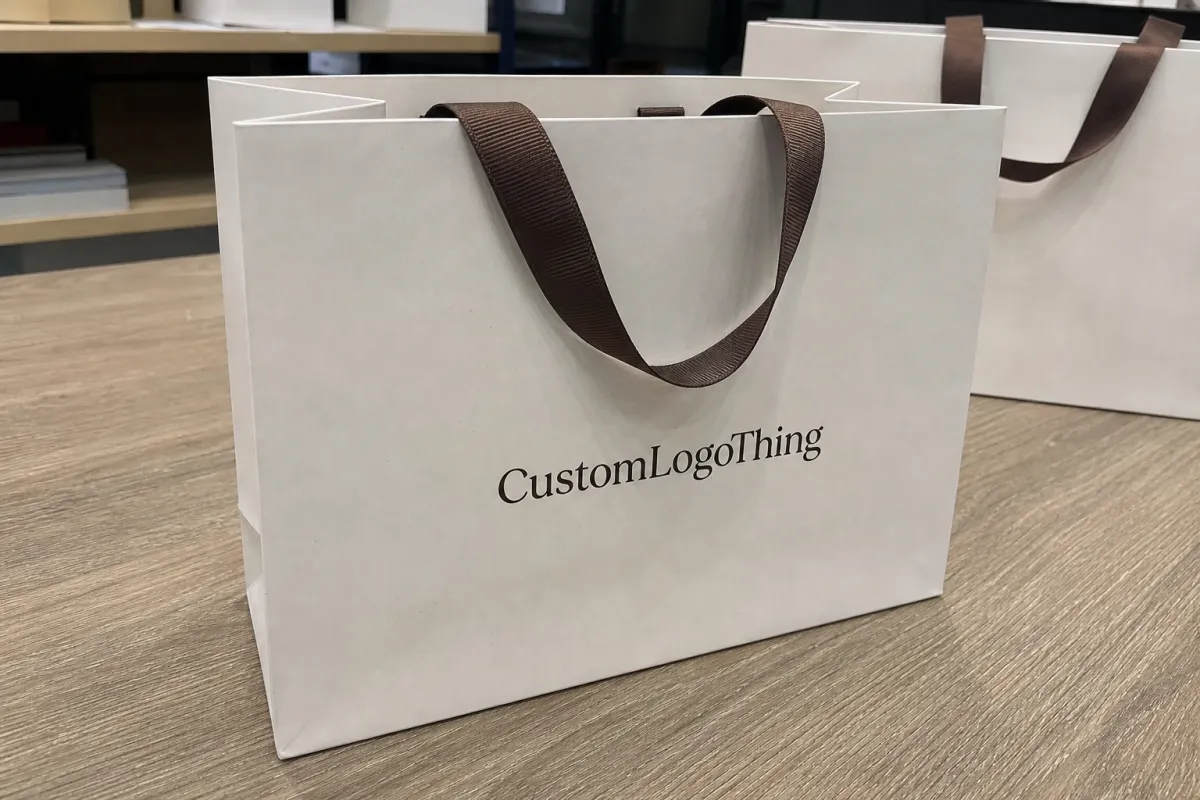
The counterintuitive truth is that a stack of custom flat Handle Paper Bags for event merch tables can reduce clutter faster than bins or totes when the line starts moving. A box looks efficient until staff are digging for sizes, folding awkwardly, or trying to keep receipts, stickers, and apparel separate. A flat-handle bag gives the team one clean container shape, one motion to open, and one place to place the order.
From a packaging buyer's point of view, that speed is not cosmetic. If one staffer is taking payment while another is packing shirts, zines, and add-ons, the bag becomes the handoff point between the two jobs. That handoff has to happen in seconds, not minutes. The bag is also part of package branding: it travels through the venue, then often ends up in a car, on a train, or in a guest's photo.
In practice, the strongest merch bags are the ones people barely notice while the line is moving. They keep the table tidy, keep the order intact, and still look intentional when someone posts a booth shot later.
"The best merch bag is the one staff can open, fill, and hand off without thinking. If it slows the line, it is not doing its job."
That is why custom flat handle paper bags for event merch tables have become a practical staple in event retail packaging. They are not trying to be the fanciest piece of the display. They are trying to make the display work under pressure.
How the flat-handle structure speeds packing, stacking, and handoffs
The appeal starts before the event even opens. Flat-handle bags ship and store flat, so a case of 250 or 500 pieces takes far less room than rigid packaging or a pile of pre-built containers. That matters in small booth footprints where every inch is already claimed by a register, a tote of backup stock, a card reader, and the event's never-ending pile of tape, pens, and receipt rolls.
Once the show starts, the structure does the work. A paper bag with a predictable gusset opens fast, stands upright long enough to load, and closes without a wrestling match. If the handle attachment is clean and the paper caliper is right, staff can pack a folded tee, a sticker pack, and a postcard bundle without tearing the top seam or crushing the corners.
Compared with rope-handle bags or reusable totes, flat-handle bags usually win on three things:
- Storage density: more units per carton, less backstock bulk.
- Setup time: staff can grab and open them in one motion.
- Staff fatigue: lighter to stage, easier to move, easier to flatten after the event.
For a long merch day, that adds up. A slower bag format does not just delay one sale; it compounds across the whole line. If the handoff is smooth, fewer customers set items down, fewer items get damaged, and the packout stays cleaner from start to finish.
Many teams also use flat-handle bags as a bridge between product packaging and booth operations. They are simple enough to store with other event supplies, but intentional enough to feel like part of the brand system rather than a generic carry-out solution.
Custom flat handle paper bags for event merch tables: spec choices that matter
The right size depends on what actually leaves the table. Folded tees fit well in medium formats, but hoodies, posters, books, and VIP bundles push the dimensions quickly. A bag that looks roomy for one shirt can fail once a second item, a tissue wrap, and a sponsor card are added. I usually tell buyers to size around the heaviest realistic order, not the average one.
Common planning sizes often fall into these rough buckets:
- Small: folded tees, sticker sets, buttons, and lightweight inserts.
- Medium: most single apparel items, zines, and small accessory bundles.
- Large: hoodies, books, posters, or mixed merch kits.
Paper stock matters just as much as size. A lighter kraft can be fine for a shirt-only program, but the second you start adding heavier books or bundled items, the bottom seam and handle attachment need more support. For that reason, buyers often move toward 135-180 gsm paper for lighter merch and 170-200 gsm or stronger when the order mix gets heavier. That is not a hard rule; it is a practical starting point.
Print space deserves equal care. Logo placement, event name, sponsor marks, and QR codes should stay visible without crowding the panel. A clean one- or two-color layout often beats a dense full-panel design because it reads faster across a busy room. That is especially true if the bag is part of broader branding packaging across the booth, from signage to ticket inserts.
Kraft versus white stock changes the tone. Kraft feels warmer and more casual, and it can hide handling marks better. White stock gives sharper contrast and often feels closer to polished packaging design, especially if the booth graphics are bright or high-contrast. Matte and uncoated finishes usually feel more natural in event settings, while gloss can push the bag toward retail packaging aesthetics. Neither is universally better; the right choice depends on the merch, the venue lighting, and how premium you want the carryout moment to feel.
| Spec | Typical use | Illustrative unit price at 5,000 pcs | Main tradeoff |
|---|---|---|---|
| Standard kraft, 1-color print | Single tees, small accessory orders | $0.14-$0.22 | Lower visual contrast than white stock |
| White stock, 2-color print | Mixed merch and sponsor-branded handouts | $0.18-$0.30 | Cleaner print, slightly higher cost |
| Heavier paper, wider gusset | Hoodies, books, bundled kits | $0.24-$0.38 | Better hold, more material cost |
| Custom size, full-coverage print | Premium event packs or multi-item bundles | $0.32-$0.55 | Most flexible, highest setup and print cost |
If your booth uses other printed materials, it can help to keep a single artwork system across bags, wraps, and inserts. Buyers who already source from Custom Packaging Products often save time by building one spec sheet for bags and another for items like mailers or custom printed boxes. The more consistent the system, the less likely a last-minute mismatch slips through.
Cost, MOQ, and quote variables that move the unit price
Unit price usually moves in predictable ways. Quantity is the biggest lever: larger runs spread setup costs across more bags and often reduce the per-unit number faster than any design tweak. Number of ink colors matters next, followed by paper weight, handle construction, and whether the bag is a stock size or a custom dimension. If the buyer wants a nonstandard gusset or a wider panel for larger bundles, the quote often shifts immediately.
MOQ matters because event teams rarely buy for one show. They buy for a season, a sponsor package, or a series of pop-ups. That is where custom flat handle paper bags for event merch tables can become surprisingly efficient: one approved spec can cover multiple dates if the bag size is smart enough to handle the heaviest order.
There are also hidden costs that people miss in the first quote. Freight can wipe out a modest print saving. Warehousing matters if the bags arrive months before the event. Rush charges can be steep, and split shipments can turn a neat unit price into a messy landed cost. That is why I like to compare not just the factory quote, but the full delivered number.
Here is the budgeting lens I use: choose the cheapest spec that still survives the heaviest realistic order. Not the lightest order. Not the prettiest mockup. The heaviest one.
For buyers who care about fiber sourcing, asking for FSC-certified paper can be a smart filter, especially if the bag sits inside a broader branded packaging program. The FSC system is useful because it gives procurement teams a clearer way to check chain-of-custody claims rather than taking a sales sheet at face value.
Process, proofing, and lead time from artwork to dock delivery
The cleanest orders follow a simple sequence: confirm dimensions and quantity, build the dieline, place the artwork, then proof the file before production starts. Skipping steps usually creates the same three problems: a logo that sits too low, a sponsor lockup that gets cramped, or a bag size that does not match the actual merch mix.
Proofing is less about polishing and more about risk control. It catches color mismatch, copy errors, barcode placement, and the sort of tiny layout issue that becomes obvious only after 1,000 bags are already printed. If the event is high-profile, ask for a mockup that shows the front, back, and gusset together so the team can verify how the bag reads in use, not just on a flat screen.
Lead time should be planned backward from the show date, not forward from the order date. Standard runs often need 12-15 business days after proof approval, and that is before transit. More complex jobs can take longer, especially if the bag is custom sized or the print has multiple colors. If the calendar is tight, ask early what stock and print options are actually available rather than assuming a rush run will preserve every feature.
If the bags are riding inside cartons with other event materials, transit testing starts to matter more than people expect. A vendor who understands ISTA thinking can help you think through how packaging holds up in cartons, under pallet pressure, and during repeated handling. That is not the same as testing the bag itself, but it is part of the same delivery chain.
Event buyers who coordinate bags alongside custom printed boxes, inserts, and shipper cartons should keep the artwork schedule tight. One late approval can delay the whole packaging stack.
Common mistakes that make merch bags fail on event day
The most common mistake is undersizing the bag for the bundle. A shirt may fit perfectly, then the customer adds a poster and a zine and suddenly the gusset is strained, the handles pull, and the handoff looks awkward. The second mistake is assuming the lightest paper option will survive because the bag is only "for one event." Event day does not care how short the lifespan is; it cares whether the bag performs right now.
Artwork can fail just as quickly. Dense copy becomes unreadable from a few feet away. Small logos disappear once the bag is folded or carried. Important sponsor marks get placed where hands cover them during the handoff. A design that looks polished in a mockup can lose its value if it does not read in motion.
Another mistake is forgetting the extras. Inserts, tissue, bracelets, or sponsor cards all take space. If those pieces are part of the customer experience, they need to be counted in the bag spec from the start. Otherwise, the final pack closes badly and the whole table slows down.
Here is the shortest possible checklist for avoiding the usual failure points:
- Test the heaviest bundle, not the lightest.
- Check the handle attachment for real carry weight.
- Keep key graphics visible after the bag is folded.
- Count every insert, not just the core product.
Custom flat handle paper bags for event merch tables should behave like part of the system, not a last-minute accessory. If the spec is off by even a little, the problem shows up immediately in the line.
Expert tips for a smoother merch-table handoff and stronger branding
Stage the bags in the same order the line moves. That sounds obvious, but it is one of the easiest ways to speed up a table. If the staff member packing orders does not have to sort through sizes or rotate stock, every handoff gets faster. A neat stack also makes it easier to see when a carton is running low before the line gets ugly.
Place QR codes or social handles where they stay visible after the bag is held, carried, or set on the floor. The side panel is often better than the front if the front panel gets covered by folded merch. That is a small detail, but it can improve the life of the print beyond the event itself.
Match the bag color to the booth graphics so the packaging feels like it belongs. When the bag echoes the signage, tablecloth, or shirt graphics, it reinforces the brand without shouting. That consistency is part of the same thinking that drives good branding packaging and better overall product packaging.
I also like a short handoff script. Something as simple as "Here you go, and thanks for stopping by" keeps the process consistent, especially when multiple staffers rotate through the booth. It also makes the packaging feel a little more premium without slowing the flow.
If your program includes retail sell-through after the event, custom flat handle paper bags for event merch tables can carry over into the store or into shipping prep. That reuse can improve the perceived value of the bag and reduce the amount of one-off material you need to source for each show.
For teams building a broader supply list, it is worth aligning the bag spec with the rest of the booth package. A clean system across bags, inserts, and shipping cartons means fewer surprises and less rework.
Next steps: build a repeatable bag spec for your next event
Start by auditing the actual dimensions and weights from your last event. Not the idealized version. The real one. Measure the folded tee stack, the heaviest bundle, the poster length, and any inserts that need to ride with the sale. Then build your bag around that data instead of memory.
Ask for sample sizes and a print proof before production, especially if the bag will carry mixed items or premium bundles. A sample helps you see how the gusset behaves and whether the handle feels comfortable in the hand. A proof helps you catch layout mistakes before they become inventory.
Create one reusable spec sheet with size, stock, print colors, quantity, finish, and delivery date. That sheet should be good enough to quote quickly for future events, because the real value in custom flat handle paper bags for event merch tables is repeatability. The better your spec, the less time you spend re-explaining the same requirements every season.
Then set a reorder calendar. Peak event periods compress everything: approvals, freight, warehouse space, and staff attention. If you know the next show cycle, lock the bag spec early and keep a backup plan in reserve for rush periods. That is how you turn custom flat handle paper bags for event merch tables from a one-off purchase into a reliable part of your packaging system.
For brands balancing merchandising, retail packaging, and booth logistics, the goal is simple: one bag that can carry the sale cleanly and keep working after the crowd moves on. Build the spec once, test it well, and custom flat handle paper bags for event merch tables become one of the easiest wins in the whole event package.
FAQ
What size flat handle paper bags work best for merch tables?
Most folded T-shirts fit well in medium sizes, but hoodies, posters, and bundle kits usually need a wider gusset and a taller bag. Size the bag around the heaviest realistic order, not the smallest item, so staff do not fight the fit during a rush.
How much weight can flat handle paper merch bags hold?
Capacity depends on paper weight, handle reinforcement, and bottom construction, so two bags with the same footprint can perform very differently. A good rule is to test the heaviest bundle you expect at the event, including inserts or tissue, before approving the final spec.
What affects the price of custom merch table paper bags the most?
Quantity, paper stock, print coverage, number of colors, and custom sizing usually have the biggest effect on unit price. Freight and rush production can change the real landed cost more than a small change in print detail.
How long does production usually take for event merch bags?
Standard runs need time for artwork setup, proof approval, production, and shipping, so buyers should plan from the event date backward. If the schedule is tight, ask what stock and print options are available first, because rush work can narrow the choices.
Can flat handle paper bags be reused after an event?
Yes, if the stock is strong enough and the print holds up, the bags can be reused for retail, storage, or future event packaging. Reusability improves brand exposure and can make the bag feel more valuable than a single-use giveaway.

