Buyer Fit Snapshot
| Best fit | Custom Folding Cartons Factory Direct Pricing Explained projects where brand print, material claims, artwork control, MOQ, and repeat-order consistency need to be specified before quoting. |
|---|---|
| Quote inputs | Share finished size, material target, print colors, finish, packing count, annual reorder estimate, ship-to region, and any compliance wording. |
| Proofing check | Approve dieline scale, logo placement, barcode or warning zones, color tolerance, closure strength, and carton packing before bulk production. |
| Main risk | Vague material claims, crowded artwork, missing packing details, or unclear freight terms can make a low unit price expensive after revisions. |
Fast answer: Custom Folding Cartons Factory Direct Pricing Explained should be specified like a repeatable production item. The safest quote records material, print method, finish, artwork proof, packing count, and reorder notes in one written spec.
Production checks before approval
Compare the actual filled-product size with the drawing, then confirm tolerance on folds, seals, hang holes, label areas, and retail display edges. Reserve space for logos, QR codes, warning copy, and material claims before decorative graphics fill the panel.
Quote comparison points
Review material grade, print process, finish, sampling route, tooling charges, carton quantity, and freight assumptions side by side. A quote is only useful when the supplier can repeat the same color, closure quality, and packing count on the next order.
Custom Folding Cartons Factory Direct Pricing Explained
Custom Folding Cartons factory direct pricing can look tidy on a quote sheet and still behave a little stubbornly once production starts. Two cartons can share the same footprint, the same overall style, even the same artwork, and still land in different cost brackets because one uses a heavier board, another needs tighter color control, and a third asks for a finish that slows the line. Packaging budgets rarely blow up in one obvious moment. They drift off course in the details, which is exactly why a low number by itself does not tell the full story.
Buyers usually ask for the cheapest quote first. I get why. But the better question is what sits inside that number. A quote for Custom Folding Cartons factory direct pricing may include board, ink, coatings, setup, cutting, gluing, packing, freight assumptions, and waste allowance. Change one of those variables and the price can move. Change three and the difference can get big fast.
I've seen a one-millimeter panel change turn a straightforward carton into a remake. It was a small thing on screen, almost laughably small, but on press and on the folder-gluer it became a nuisance that cost more than the original savings. That is the part people miss. The number is not just a number; it is a production promise.
What custom folding cartons factory direct pricing really means
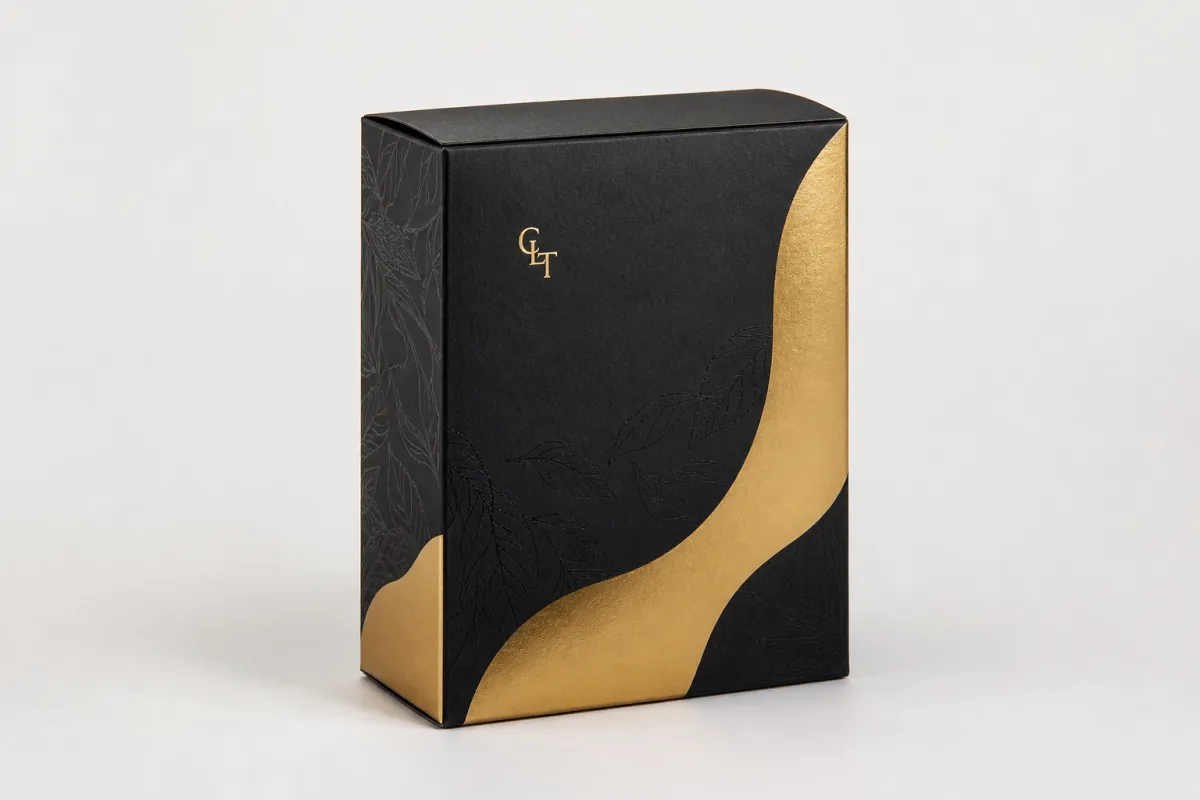
At its core, Custom Folding Cartons factory direct pricing means the quote comes from the plant that actually makes the carton, not from a middle layer that adds margin before the number reaches you. The factory is pricing its own board purchases, machine time, labor, finishing, packing, and shipping assumptions. There is no reseller markup folded in, which is good for clarity, but it also means the buyer is seeing the manufacturing math more directly.
That direct view matters because the plant sees the job the way production sees it. A simple tuck-end carton in standard board can price leanly. Add foil, embossing, a soft-touch coating, or a specialty substrate, and the estimate climbs because each step affects speed, spoilage, and setup time. The shelf result may still look elegant. The route to get there changes completely.
The cheapest line on paper is rarely the least expensive carton in practice. Custom folding cartons factory direct pricing also reflects proof cycles, remake risk, file cleanup, and the waste created when an untested dieline meets a real product. A single missed dimension can trigger a new die, a second proof, and a delay that costs more than the "cheap" quote ever saved. That is why experienced procurement teams read a carton quote the way a press operator reads a job ticket: not just for the total, but for the hidden motion underneath it.
Read the pricing as a production system, not a number. A good quote ties structure, board grade, print method, finishing, packing, and shipment together so the job can move without surprises. That is the difference between a number that looks good in an inbox and one that survives contact with the factory floor.
How custom folding cartons factory direct pricing works from quote to shipment
Custom folding cartons factory direct pricing starts with information, not a guess. The plant needs dimensions, carton style, product weight, print count, finish, quantity, and delivery window before it can build a serious estimate. A vague email usually returns a rough range. A complete RFQ returns something a buyer can compare without squinting at the fine print.
- Spec review and structure confirmation.
- Estimating based on board, press setup, and finishing.
- Dieline and artwork review.
- Proofing, either digital or physical.
- Production, die cutting, gluing, and finishing.
- Packing, palletizing, and freight booking.
- Shipment and delivery coordination.
Each stage can move the price. A change in dimensions after the estimate may force a new die. Artwork that arrives without bleed or with the wrong fonts can send prepress back to the files. A crowded production calendar can push the lead time out and alter freight timing. Custom folding cartons factory direct pricing is stable only when the inputs stay stable.
Factories usually build the number from a set of core buckets: board cost, setup, die cutting, coatings or lamination, labor, yield, and freight assumptions. Yield deserves special attention. A carton that nests efficiently on the sheet creates less waste; one with awkward proportions leaves more board behind. That leftover board is not invisible. It shows up in the unit price immediately, and on busy lines it can show up in the schedule too.
Lead times follow the same logic. A clean request with final dimensions and print-ready art might move from inquiry to proof in a couple of business days. More complex custom folding cartons factory direct pricing requests, especially those involving custom closures, inside print, or premium finishing, usually need more review before anyone commits material. That caution is not red tape for its own sake. It is the factory trying to avoid an expensive mistake before board is cut.
For brands comparing packaging formats, a structured product page such as Custom Packaging Products can help frame the conversation before the RFQ goes out.
Cost, pricing, and MOQ factors that change your unit price
The fastest way to read custom folding cartons factory direct pricing is to watch the variables that move it. Board stock usually leads the list. A 16pt SBS carton does not behave like a 24pt or 28pt structure on press, on the folder-gluer, or in transit. Recycled content, coating holdout, and caliper consistency also matter, especially in premium product packaging and retail packaging where the front panel has to look the same from carton to carton.
Size and structure come next. A small tuck-end carton often runs easier than a large lock-bottom design. A standard reverse tuck usually costs less than an auto-lock bottom or a carton with a display feature. That is why custom folding cartons factory direct pricing can rise sharply even when the artwork looks simple. The structure under the artwork carries more weight than most buyers expect.
Quantity changes the math even faster. Low MOQ runs spread setup cost across fewer units, which pushes the per-carton price up even if the box itself is not especially difficult to make. A 2,500-piece order may carry a much higher unit cost than a 10,000-piece order because the tooling, setup, and waste are divided by a smaller run. In custom folding cartons factory direct pricing, volume still rewards the buyer. Not always dramatically, but enough that the breakpoint is worth seeing before you approve the run.
| Carton Type | Qty | Spec Snapshot | Typical Unit Price | Cost Driver |
|---|---|---|---|---|
| Simple tuck-end carton | 5,000 | 18pt SBS, 2-color outside, aqueous coating | $0.23-$0.34 | Low setup, efficient sheet use |
| Mid-range retail carton | 10,000 | 24pt SBS, 4-color outside, matte lamination | $0.31-$0.48 | More print coverage and finishing |
| Premium branded carton | 5,000 | 28pt board, foil, emboss, soft-touch finish | $0.68-$1.15 | Multiple finishing steps and slower throughput |
Print complexity is another major swing factor in custom folding cartons factory direct pricing. A one-color layout is easier to control than a full-bleed, four-color image with fine gradients and reverse type. Add inside printing, spot colors, foil, embossing, UV, or a specialty coating, and the job becomes longer, slower, and more prone to spoilage. That matters even more for custom printed boxes that must hold the same visual standard across multiple SKUs.
Commercial details can nudge the final invoice just as hard. Tooling, samples, palletization, freight distance, and whether the quote is factory-only or landed all affect the total. A quote can look attractive at the plant gate and lose its edge after shipping, duty, or warehousing are added. Experienced buyers compare landed numbers, not just the headline custom folding cartons factory direct pricing.
Custom folding cartons factory direct pricing also changes with how cartons pack on a pallet. Tight, square stacks save cubic space. Odd dimensions increase freight cost and can trigger extra handling. If the cartons sit inside a larger branded packaging program, those logistics choices can matter as much as the printed surface. A strong-looking carton that ships inefficiently still behaves like an expensive one.
There is also a practical difference between what is technically possible and what is sensible. A premium finish can elevate a box, sure, but if the coating slows cure time and pushes the schedule into an expensive freight window, the "better" carton may not be better at all. That tradeoff is where a lot of buyers get surprised.
Step-by-step production steps for ordering directly from the factory
Ordering straight from the plant improves visibility, but it also demands cleaner input. In custom folding cartons factory direct pricing, the quote only matches the spec sheet if the spec sheet is precise. Start with final dimensions, product weight, closure style, finish, print method, quantity, and ship-to location. If the carton includes a handle, a display panel, or a tuck that has to land on a specific face, say that upfront. If you do not, the factory has to assume, and assumptions are where pricing drifts.
Artwork and dieline submission come next. Send both together. The factory needs to check bleed, safety margins, font handling, panel orientation, and prepress requirements before files enter production. A missing outline or a mismatched dieline can force another proof cycle, and that can move custom folding cartons factory direct pricing because it adds time, review, and possible remake costs.
Estimate review deserves real attention. Read the quote line by line. Check what is included, what is estimated, and what is excluded. Ask whether tooling, samples, freight, and extra proof rounds are already in the number. A solid direct quote should make the production path easy to follow. If the scope is vague, the invoice often will be too, and comparison shopping becomes guesswork.
Proof approval is one of the few moments where a team can still save money before the press starts running. A digital proof works for basic color checks. A physical sample makes more sense for cartons that need exact fit, a precise tuck, or a premium print look. In custom folding cartons factory direct pricing, proofing is not administrative overhead. It is the last inexpensive chance to catch a structural error.
For buyers comparing carton styles for retail packaging or subscription kits, it helps to name one owner for each handoff. Spec approval, prepress approval, print approval, finishing approval, and freight booking should all have a clear decision-maker. That keeps the timeline predictable and helps the factory hold the price it quoted. If you need a broader reference point for carton formats, the Custom Packaging Products page can help before you request bids.
One practical rule saves more money than most procurement tricks: the cleaner the file set, the calmer the job. Teams that send final copy, final dimensions, and one decision-maker tend to see fewer surprises in custom folding cartons factory direct pricing. Teams that send partial files, changing priorities, and late artwork swaps usually pay for that uncertainty somewhere else in the production chain. In plain English, the factory is gonna quote the job you give it, not the job you meant to give it.
Common mistakes that distort custom folding cartons factory direct pricing
The biggest mistake is comparing quotes that do not match. A carton quoted in 18pt board with aqueous coating is not the same job as a carton quoted in 24pt board with matte lamination and foil. Buyers make that comparison all the time, then complain that custom folding cartons factory direct pricing looks inconsistent. The pricing is usually consistent. The specs are not.
Another error is approving artwork before the structure is locked. It sounds harmless, yet it can trigger reproofs, extra handling, and a more expensive die change. For custom folding cartons factory direct pricing, structure is the skeleton of the project. Once the board is cut, every millimeter matters, and small mistakes become expensive quickly.
Freight gets ignored more often than it should. A low factory quote can turn into a painful landed cost after duty, storage, warehousing, or a second shipment is added. If the cartons are tied to a product launch, the cost of missing the launch window can dwarf the gap between two estimates. That is one reason custom folding cartons factory direct pricing should always be judged alongside transit and inventory costs.
Inventory planning cuts both ways. Order too few cartons and the unit price rises because the setup cost is spread over too little volume. Order too many and cash gets trapped in cartons sitting in storage. Better custom folding cartons factory direct pricing is not about chasing the absolute lowest number. It is about finding the quantity that balances price, cash flow, and shelf demand. That middle ground is often less glamorous than a hero quote, but it is the one that holds up in real operations.
"A low unit price can hide a costly spec mismatch. The cleaner the RFQ, the closer the quote matches the invoice."
A branding mistake shows up in premium lines too. Teams sometimes over-spec the carton because they want it to feel elevated, yet not every surface needs foil, emboss, and soft-touch film. Strong package branding can come from disciplined typography, restrained color, and a well-tuned structure. Custom folding cartons factory direct pricing climbs quickly when every panel is treated like a luxury finish zone, even if the product itself does not need that level of theater.
There is a second branding trap, and it is quieter. A carton can look rich in a render and still feel generic in hand if the board is wrong or the fold quality is soft. I have watched teams spend extra on decoration and then underfund the substrate. The result looked expensive online and kind of ordinary on shelf, which is not a bargain at any price.
Expert tips for better value without cutting box quality
If you want better value, change one variable at a time. That is the clearest way to understand custom folding cartons factory direct pricing. Start with a standard board. Compare a simpler coating. Then compare a lighter print approach. If you change board, finish, size, and structure all at once, the cost drivers blur together and the real cause stays hidden.
Design for press and gluer efficiency. Clean layouts, repeatable sizes, and efficient nesting usually cut waste more than buyers expect. A carton that fits well on the sheet often costs less to run than a visually similar carton that leaves more scrap around the edges. Practical packaging design pays off here. The best-looking carton is not always the cheapest one to manufacture, and custom folding cartons factory direct pricing reflects that truth.
Ask for tiered quotes at multiple quantities. A 3,000-piece quote, a 5,000-piece quote, and a 10,000-piece quote often reveal the breakpoints that matter most. Sometimes the jump from 5,000 to 10,000 is small. Sometimes it is not. Either way, custom folding cartons factory direct pricing becomes easier to manage once the setup curve is visible.
Use samples or previous production references before adding embellishments. A carton already performing well in the market may not need more finishing. If the structure is sound and shelf presence is already doing the job, one coating or one foil detail might be enough to trim. That logic works especially well for custom printed boxes used in seasonal lines, promotions, or fast-moving product packaging programs where speed matters as much as presentation.
Standards help keep the process disciplined. For transit testing, buyers often look at ISTA procedures or related ASTM methods to understand how a carton or shipper might hold up under real handling. For paper sourcing, FSC certification can support chain-of-custody claims. Neither one replaces a smart spec sheet. Both can reduce guesswork, and less guesswork usually improves custom folding cartons factory direct pricing.
Ask the factory which version of your carton runs most efficiently. A good plant will often point to a board caliper, a panel adjustment, or a finish change that lowers waste without hurting the shelf look. That is not compromise. It is production knowledge. The best factories price cartons from the floor up, not just from a spreadsheet, and that is where custom folding cartons factory direct pricing becomes more honest.
One more thing: do not confuse "premium" with "overbuilt." A lot of brands think they need a thicker board or a more complicated closure to look credible, but the better move is often a cleaner structure with sharper graphics. That kind of restraint is not cheap-looking. It is controlled.
Next steps: request a quote and compare options
The quickest route to reliable custom folding cartons factory direct pricing is a one-page RFQ package. Include dimensions, quantity, board, print count, finish, closure style, and delivery window. Add product weight or fit notes if the carton must protect a specific item. A crisp spec sheet usually does more for pricing accuracy than a long email thread ever will.
Ask for at least two line-item quotes so tooling, shipping, and MOQ can be compared on the same basis. A fair comparison looks at landed cost, not just the factory number. If one supplier offers a lower unit price but charges more for freight, samples, or setup, the savings can disappear fast. Good custom folding cartons factory direct pricing should be readable, not merely low.
Get one sample or proof review before production starts, especially if the carton is structural, premium, or tied to a launch date. Fit, print quality, and board feel are hard to judge from a PDF alone. That holds true for branded packaging, retail packaging, and any carton carrying heavy shelf pressure. If the sample passes, the run usually moves with fewer surprises.
If you are comparing suppliers now, start with the specs you already know, leave room for one alternate board or finish, and review landed price alongside lead time. That is the most honest way to approach custom folding cartons factory direct pricing. Gather the details, compare the real production fit, and choose the option that supports the product instead of just the quote.
You can also use Custom Packaging Products as a starting point for organizing your request before it goes out for bids.
Custom folding cartons factory direct pricing works best when the buyer thinks like a production manager: lock the structure first, compare the same spec across suppliers, and judge the carton by total landed cost, not by the headline number alone. If a quote looks unusually low, ask which assumption is doing the hiding.
FAQ
How does custom folding cartons factory direct pricing compare with broker pricing?
Factory direct pricing removes the broker margin, so the quote usually tracks the plant's actual production cost more closely. The tradeoff is that the buyer has to manage specs, approvals, and file quality more carefully. For highly customized jobs, direct factory communication often reduces confusion and rework, which can improve custom folding cartons factory direct pricing over the full project timeline.
What MOQ usually applies to custom folding cartons factory direct pricing?
MOQ depends on setup cost, board size, print complexity, and how efficiently the cartons nest on press sheets. Simple structures can support lower MOQs, while foil, embossing, or unusual closures often push the minimum higher. Ask for price breaks at multiple quantities so you can see where custom folding cartons factory direct pricing starts to improve.
How long does a factory-direct carton quote usually take?
Simple requests with clear specs can sometimes be quoted within a day or two. Complex structures, missing measurements, or custom finishes usually extend the quote window because estimating and prepress need more review. A complete file set, final quantity, and dieline usually speed up custom folding cartons factory direct pricing the most.
Are tooling, samples, and freight included in factory direct pricing?
Not always, which is why every line should be checked before approval. Some factories include tooling or samples as separate items, while freight may be estimated rather than fixed. To compare suppliers accurately, focus on landed cost, not factory price alone, because that gives a truer picture of custom folding cartons factory direct pricing.
How can I lower custom folding cartons factory direct pricing without lowering quality?
Use standard sizes and substrates when possible, because custom tooling and unusual materials push the price up fast. Reduce embellishments only where they do not affect shelf impact, and tighten artwork before the run starts. Ordering at a quantity that hits a better breakpoint is one of the most practical ways to improve custom folding cartons factory direct pricing without sacrificing box quality.

