Buyer Fit Snapshot
| Best fit | Custom Folding Cartons With Perforation projects where brand print, material claims, artwork control, MOQ, and repeat-order consistency need to be specified before quoting. |
|---|---|
| Quote inputs | Share finished size, material target, print colors, finish, packing count, annual reorder estimate, ship-to region, and any compliance wording. |
| Proofing check | Approve dieline scale, logo placement, barcode or warning zones, color tolerance, closure strength, and carton packing before bulk production. |
| Main risk | Vague material claims, crowded artwork, missing packing details, or unclear freight terms can make a low unit price expensive after revisions. |
Fast answer: Custom Folding Cartons With Perforation: Uses & Design should be specified like a repeatable production item. The safest quote records material, print method, finish, artwork proof, packing count, and reorder notes in one written spec.
Production checks before approval
Compare the actual filled-product size with the drawing, then confirm tolerance on folds, seals, hang holes, label areas, and retail display edges. Reserve space for logos, QR codes, warning copy, and material claims before decorative graphics fill the panel.
Quote comparison points
Review material grade, print process, finish, sampling route, tooling charges, carton quantity, and freight assumptions side by side. A quote is only useful when the supplier can repeat the same color, closure quality, and packing count on the next order.
Custom Folding Cartons With Perforation: Uses & Design
A carton has a hard job. It has to hold its shape under compression, survive a truck ride, still look polished on a shelf, and then open the way the buyer expects. That is a narrow target. Custom Folding Cartons with perforation solve part of that problem by building a controlled tear into the structure itself. The result can be practical, tidy, and honestly a little elegant when the tear line is engineered well. Get it wrong and the box fails early. Get it too stiff and people end up attacking it with a fingernail, a key, or plain irritation.
I have watched this play out more than once on press checks and sample reviews. The carton looks fine in a clean conference room, then the filled version bows just enough to change the tear path. That gap between the mockup and the real thing is where packaging decisions either earn their keep or kinda fall apart. In retail packaging, product packaging, and branded packaging programs, Custom Folding Cartons with perforation are usually chosen for function first and visual appeal second, though the two are often linked. A clean tear line can create a sample window, a display panel, an easy-open front, or a one-time access point that removes the need for loose inserts and extra assembly steps.
That matters in a factory. It matters on a co-packer's line. It matters in the buyer's hand, which is the only place the box truly gets judged.
What Are Custom Folding Cartons With Perforation?
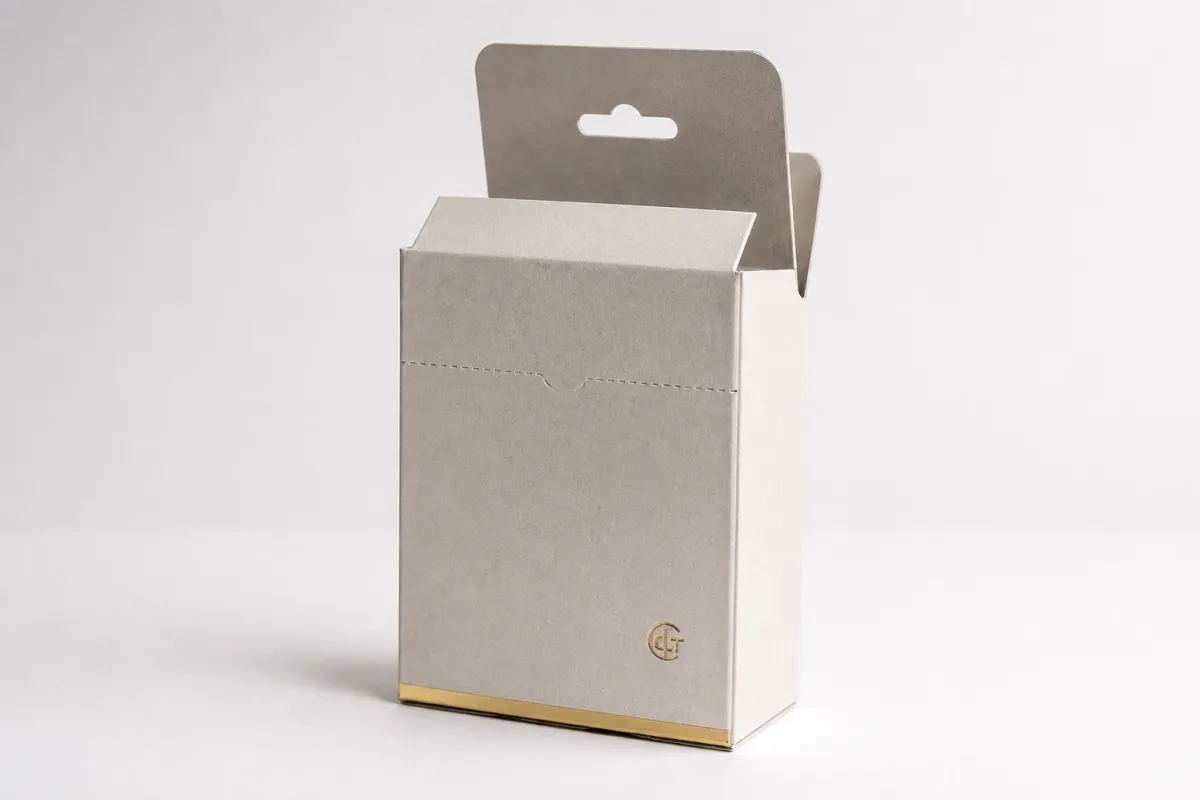
Perforation is a series of tiny cuts in paperboard that lets a panel tear along a planned route. It is not a score, and it is not a die-cut opening. A score is meant to bend. A die-cut removes material. A perforation sits in between, acting like a release point that stays intact until someone applies enough force. Custom folding cartons with perforation use that behavior to keep a carton closed during shipping and predictable during opening.
That is why you see them in tear-away display panels, coupon access points, sample compartments, promotional reveal sections, and easy-open retail packs. They also show up in packaging meant for older buyers, busy shoppers, or anyone who values an opening motion that does not feel like a fight. Custom folding cartons with perforation let the structure do more than hold the product. They make the package part of the user experience.
The design appeal is straightforward. Instead of adding a separate insert, a tear strip, or a secondary component, brands can fold the function into the carton itself. That can reduce sourcing complexity and often cuts assembly steps too. If a line is moving 30,000 units a week, one eliminated hand motion can add up fast. Packaging buyers notice that. Operations teams notice it even faster.
There is also a shelf impact. A carton that opens in the intended place feels intentional, not improvised. Buyers may not describe it that way, but they feel the difference. Custom folding cartons with perforation can support package branding by making the first interaction feel controlled instead of awkward. The box does not need to shout. It only needs to behave.
Common use cases include:
- Tear-away sample panels for demo access or product reveal areas
- Easy-open retail packaging for consumer goods, cosmetics, and health products
- Promotional cartons with coupon, card, or insert access
- Display cartons that convert from shipper to shelf presentation
- Controlled-open designs for one-time access or tamper-aware structures
If you are comparing structural options before placing an order, browsing broader Custom Packaging Products can help you see where a perforated carton fits beside sleeves, trays, and other folded formats. Not every product needs this feature. Some absolutely do. The real work is separating the two.
How Custom Folding Cartons With Perforation Work
The perforation is designed into the dieline from the start. It is not something that gets casually added after artwork is approved. People ask for that more often than they should, as if a die can simply be nudged at the end of the process without consequences. Custom folding cartons with perforation depend on the geometry of the panel, the placement of the tear line, and the direction the user is expected to pull. Miss any of those and the tear can wander off course.
Perforation strength comes from cut size, cut spacing, and the stock itself. Custom folding cartons with perforation may use micro-perfs, standard perforations, or hybrid constructions that combine score lines with tear lines. Micro-perfs keep more of the board connected, so they hold longer before opening. Standard perforations release faster. Hybrid setups appear when one part of the panel needs to fold and another needs to tear, which is common in packaging that serves more than one purpose.
Board choice changes the outcome more than many buyers expect. SBS, kraft, and coated paperboard do not behave the same way. A heavier board may resist tearing more strongly, yet still deliver a cleaner opening if the perf pattern is tuned correctly. Coatings shift the feel too. Gloss aqueous, soft-touch coating, and film lamination can alter how a tear begins and whether it tracks in a straight line. Custom folding cartons with perforation are not just a cut pattern. They are a system of material, machine, and motion.
Grain direction deserves real attention. If the tear runs against the grain in the wrong way, the carton may open unevenly or split past the intended edge. If the perforation sits too close to a crease, the board can weaken early. Heavy print coverage changes stiffness again. Dark solids, spot coatings, and dense graphics all influence the way paperboard flexes. That is why experienced converters test custom folding cartons with perforation using real board, real print, and real product load instead of relying on a blank proof and optimism.
During converting, the process usually runs like this:
- The dieline is approved with the tear path marked clearly.
- The die is built with the perforation pattern in the tooling.
- The press setup is checked for board caliper, cut quality, and fold integrity.
- Samples are assembled and tested for opening force and tear consistency.
- The full run is produced, then inspected for registration, tear accuracy, and finish.
The sample stage is not a box-checking exercise. It is the point where a concept turns into a functioning carton or into a lesson in why structural testing exists. If the product is heavy, oddly shaped, or packed with internal pressure points, custom folding cartons with perforation should be tested with the product inside. An empty carton on a table tells only part of the story. The filled carton tells the truth.
For shipment validation, many packaging teams use ISTA methods or related distribution tests. That is especially useful when the perforation sits near a stress point or the carton will face compression, vibration, or repeated handling before the buyer opens it. I have seen a carton pass a hand-open test and then fail after one pallet cycle. That is not a design mystery; it is a load-path problem pretending to be a packaging problem.
"If the tear line has not been tested with the filled carton, it is not a feature. It is an assumption."
Process, Timeline, and Production Steps for Custom Folding Cartons With Perforation
The smoothest projects still follow a fairly ordinary path. Custom folding cartons with perforation tend to move from brief to structure, then artwork, then prototype, then production. Rush one stage and the rest of the job pays for it. A tear line placed an eighth of an inch too close to a fold can trigger a rerun, and reruns are expensive in the quiet, unglamorous way that gets missed during planning meetings.
A practical workflow usually looks like this:
- Specs brief: product size, weight, fill method, shelf use, shipping conditions, and opening behavior.
- Structural design: carton style, board grade, tear path, glue flap placement, and panel dimensions.
- Artwork and compliance: graphics, barcode zone, legal copy, warning text, and finish selection.
- Prototype or white sample: used to check fit, tear behavior, and panel interaction.
- Customer approval: the point where everyone discovers what they should have flagged earlier.
- Production and conversion: die cutting, perforating, folding, gluing, and packing.
- Shipping and receiving: carton count, pallet pattern, and damage checks.
Structural approval usually takes the longest. Custom folding cartons with perforation often need one extra round of testing because the tear line can affect shelf appearance, fold strength, and the way the carton opens after product insertion. If a brand wants a crisp front panel and a tear-away section, the converter may need to adjust perf density or shift the seam. That takes time. It is still less painful than finding out the box works in sample form and fails on production board.
A simple carton with one short tear line may move through proof approval and production in roughly 12 to 18 business days after artwork is locked, depending on plant load and board supply. More complex custom folding cartons with perforation jobs, especially those with multiple tear paths, foil, specialty coatings, or unusual die geometry, can stretch to 3 to 5 weeks or longer. Rush work exists. So do quality problems created by rush work. A supplier who says yes too quickly is not always being helpful.
Delays usually show up in a few repeatable places: artwork changes after dieline approval, missing compliance copy, changing the opening mechanism after prototype sign-off, and last-minute board substitutions. That last one matters more than people think. Custom folding cartons with perforation tuned for 16pt SBS may act differently on 18pt board or kraft-finished stock. One switch can change tear balance enough to require another sample cycle. If your product is going into a contract packer's line, confirm the board early; otherwise, the neat little tear line can become a schedule tax.
Before requesting quotes, send this checklist:
- Product dimensions, weight, and quantity per carton
- Desired open style: tear-away panel, reveal window, easy-open flap, or insert access
- Board preference, if you have one
- Print specs, finish, and any special effects
- Deadline, shipping destination, and expected sell-through environment
- Any compliance, warning, or barcode requirements
Tell the supplier how the carton will be filled. Hand-packed, semi-automated, and fully automated lines create different demands on custom folding cartons with perforation. A carton that behaves nicely in a hand-pack setup may misbehave on a folding and gluing line if the tear zone interferes with tabs, registration, or machine timing. That detail gets missed more often than you'd think.
Cost and Pricing Factors for Custom Folding Cartons With Perforation
Pricing moves for the same reason packaging pricing always moves: material, tooling, labor, and quantity do not stay in lockstep. Custom folding cartons with perforation usually cost more than a plain folding carton because the die is more complex, setup takes longer, and the testing phase adds real labor. Not outrageous. Just enough to matter. A feature should justify itself. If it does not, it becomes a line item that looks clever and acts expensive.
For a basic carton at 5,000 units, a standard folding box might land around $0.18 to $0.35 per unit depending on size, board, print coverage, and finish. Add a perforation and the same job can rise to roughly $0.24 to $0.48 per unit. If the carton has multiple tear zones, foil, soft-touch coating, or a more complicated die structure, the range can climb further. Smaller runs are less forgiving. At 1,000 units, custom folding cartons with perforation can move to roughly $0.55 to $1.25 per unit because setup gets spread across fewer pieces. That is not a supplier being dramatic. That is arithmetic with a press invoice attached.
Setup and tooling usually include die creation, plate or file prep, sample cutting, and press make-ready. Those charges can range from a few hundred dollars on a simple run to well over $1,000 for more involved structural work. If you want custom folding cartons with perforation to behave properly, the supplier may also recommend a structural sample or an extra proof cycle. That adds cost, but it also lowers the risk of spending money on a full run that tears incorrectly.
| Option | Typical Run Size | Unit Price Range | Best For | Notes |
|---|---|---|---|---|
| Standard folding carton | 5,000+ | $0.18-$0.35 | Simple product packaging and shelf display | Lowest complexity, fewer setup variables |
| Custom folding cartons with perforation | 5,000+ | $0.24-$0.48 | Easy-open retail packaging, tear-away panels, sample access | More tooling and testing, but better functionality |
| Carton with tear strip or added opening feature | 5,000+ | $0.28-$0.60 | Very obvious pull points or stronger tamper evidence | Can add assembly or separate components |
The table does not mean one format is always best. It means you should pay for the function you actually need. Sometimes a plain carton is enough. Sometimes custom folding cartons with perforation save labor because they remove a separate insert or opening piece. Sometimes a tear strip is the better choice because it creates a clearer pull point or stronger opening indication. The right answer depends on the product, the fill line, and the channel where the carton will sell.
Ask for line-item pricing if you want a quote that can actually be compared. Separate setup, tooling, print, coating, and unit cost. If you are weighing board options, request each substrate separately. A quote that says “pricing TBD” is usually a sign that the scope has not been pinned down yet. For sourcing programs with fiber requirements, FSC certification may matter if your brand needs chain-of-custody or recycled-content documentation.
Key Design Factors for Custom Folding Cartons With Perforation
Design is where the carton earns or loses its value. Custom folding cartons with perforation need to balance structure, branding, handling, and the opening motion. A line that is too visible can make the box look overdesigned or weak. A line that is too hidden can leave buyers guessing and tearing the wrong panel. Either problem can be fixed before production, which is fortunate because both problems are annoying.
Material choice matters first:
- SBS works well for crisp print quality and premium retail packaging.
- Kraft paperboard gives a more natural look and can hide handling marks better.
- Corrugated or microflute makes sense when protection matters more than a sleek shelf face.
Each stock behaves differently around a perforation. A smoother board may tear more cleanly but show scuffs more easily. A kraft surface can look more rugged and tolerate rougher handling, yet the tear can be less uniform if the board structure varies. For custom folding cartons with perforation, the stock should suit the product, not the art direction mood board.
Placement matters just as much. The tear line should stay away from glue seams, high-stress corners, and heavy folds. If the product weight sits near one end, the perforation should not be the first part carrying the load. If the customer will pull from the top right corner, the tear path should support that motion. Custom folding cartons with perforation open better when the design guides the hand instead of resisting it.
Graphics and compliance copy need their own planning. Avoid placing a barcode, ingredient panel, UPC quiet zone, warning statement, or legal copy across a tear zone. That sounds obvious until someone tries to “make the front cleaner” and accidentally puts critical text where the tear will travel. Pretty does not scan. Compliance does not bend to layout preferences. Custom folding cartons with perforation should protect essential information from the tear path, not gamble with it.
Functional details matter too: tamper evidence, hand grip, and opening feel all shape the experience. Should the tear be visible or subtle? Should the user peel a tab or rip a straight line? Should the perforation stop short so the panel stays attached after opening, or should it fully release? Those decisions change how the product feels on first contact, and first contact is a large part of package branding whether the brand likes that phrasing or not. I have seen one small shift in tear length change consumer test scores more than a full graphics refresh. Packaging can be sneaky like that.
For brands exploring broader carton formats, our Custom Packaging Products page is a useful starting point. Some products need a feature-rich perforated carton. Others need a simpler structure with stronger print presence. Good packaging starts with the use case, not with the fanciest option in the room.
Common Mistakes With Custom Folding Cartons With Perforation
The first mistake is making the perforation too weak. It often looks fine during prototyping because the carton opens too easily in your hand, which feels convenient at the moment. Then shipping starts, the box flexes under load, and the tear opens early. That is how custom folding cartons with perforation fail before a buyer even sees them. A weak line is not user-friendly. It is vulnerable.
The opposite mistake is just as common. A perforation that is too strong frustrates the buyer, especially if the opening motion is supposed to feel clean and deliberate. The feature turns into an obstacle. Custom folding cartons with perforation should invite controlled opening, not require a utility knife and a short internal debate. Nobody wants a package that behaves like it is holding a grudge.
Another classic error is designing the tear line without the actual product inside the carton. Empty cartons and filled cartons behave differently. Weight changes fold pressure. Product corners change how the board flexes. Inserts, trays, and protective pads can all push against the tear path. If you do not test custom folding cartons with perforation with the real contents, you are guessing about the part that matters most.
Grain direction and coating are easy to overlook until they damage a run. Ignoring grain can create a wandering tear. Ignoring coating can make opening inconsistent from carton to carton. Soft-touch or film-laminated surfaces may change how the tear begins, especially at the first cut. Custom folding cartons with perforation are sensitive to those details, and that sensitivity is part of the material, not a defect.
There are also production mistakes that sound small and become expensive quickly:
- Skipping a structural sample because the timeline feels tight
- Changing artwork after dieline approval
- Moving the perforation without rechecking panel balance
- Assuming every board stock will tear the same way
- Placing important copy too close to the tear line
None of that is dramatic. It is just the usual inventory of preventable problems. If you are buying custom folding cartons with perforation for a launch, a refill pack, or a retail reset, the safest move is to validate the carton under the same conditions it will actually face. A desk sample is useful. It is not the verdict.
Expert Tips and Next Steps for Custom Folding Cartons With Perforation
Request a structural sample before full production. That single step saves more money than almost anything else. Custom folding cartons with perforation should be tested with the real product, the real fill method, and as much of the real handling path as possible. If the box will sit in a warehouse for two weeks, stack it. If it will ship through parcel networks, move it through parcel-style handling. If it will be opened in-store, check the look after a rougher first touch.
Give the supplier exact specs. Vague briefs create vague cartons, and vague cartons tend to cost time. Provide product dimensions, target quantity, board preference, print coverage, coating choice, and opening behavior. Say whether the tear line should be subtle or obvious. Say whether the carton is for retail packaging, subscription packaging, or an internal promotional use. Custom folding cartons with perforation work better when the supplier understands the actual job rather than inferring it from a few reference photos.
Ask for a quote that separates setup, tooling, print, and unit cost. That makes comparison possible. It also shows whether the supplier understands the scope. If they can break out SBS, kraft, and other board types, you get a cleaner read on tradeoffs. If they can quote alternative tear patterns, even better. That lets you compare custom folding cartons with perforation against a simpler carton or a tear-strip option without pretending all packaging structures solve the same problem.
Here is the practical buying advice I would give any packaging team:
- Measure the product with enough clearance for inserts or headspace.
- Decide exactly how the customer should open the carton.
- Choose the tear path before artwork is finalized.
- Request a sample and test it under real use conditions.
- Approve production only after the carton performs the way you need.
That path is not glamorous. It is effective.
If your project includes sustainability requirements, ask about FSC-certified board and how the finish affects recyclability or recovery in your target market. If the carton needs distribution proof, ask about EPA guidance for packaging material choices alongside transit testing so you are not improving one variable while ignoring another. Custom folding cartons with perforation should fit the supply chain, not just the render.
My short version: use custom folding cartons with perforation when you want integrated convenience, controlled access, and less assembly overhead. Do not use them only because the idea sounds clever. A good perforated carton earns its place by opening cleanly, shipping safely, and supporting the product without adding extra labor. If it does all three, it belongs. If it does only one, it is decoration with a technical vocabulary.
The clearest next step is simple: measure the product, define the opening motion, request a structural sample, and compare quotes with setup and tooling separated out. Then move forward only after custom folding cartons with perforation prove they can handle the real product, the real shipping path, and the real buyer experience. That is how packaging works in practice, not just in a meeting.
FAQ
What is the difference between perforation and scoring in custom folding cartons with perforation?
Scoring creates a fold line. Perforation creates a controlled tear line. Many cartons use both together so the box folds cleanly and still opens on cue. If the goal is easy opening, a score alone usually is not enough. In custom folding cartons with perforation, the score handles the bend and the perf handles the break.
When should I choose custom folding cartons with perforation instead of a tear strip?
Use perforation when you want a clean integrated opening without adding a separate component. A tear strip is better when you need a more obvious pull feature or stronger tamper evidence. Custom folding cartons with perforation often fit cartons that need one-time access or a display-style opening.
How do I keep custom folding cartons with perforation from tearing too early?
Match the perforation strength to the board stock and product weight. Keep the tear line away from stress points like folds, seams, and heavy corners. Test samples under shipping and handling conditions, not just on a desk. That is the practical way to keep custom folding cartons with perforation from failing before use.
Do custom folding cartons with perforation cost more to produce?
Usually yes, because the dieline, tooling, and setup are more complex. The per-unit increase depends heavily on order quantity and how intricate the perforation is. The added cost is often small compared with the value of better usability or faster retail opening. For many brands, custom folding cartons with perforation pay for themselves by removing extra labor or improving the first opening experience.
What should I send to get an accurate quote for custom folding cartons with perforation?
Send product dimensions, carton style, board preference, print requirements, and expected quantity. Include a description or sketch of where the perforation should start, stop, and open. If you have a deadline, say it up front so the supplier can quote realistic lead time. The more complete the brief, the better the quote for custom folding cartons with perforation.

