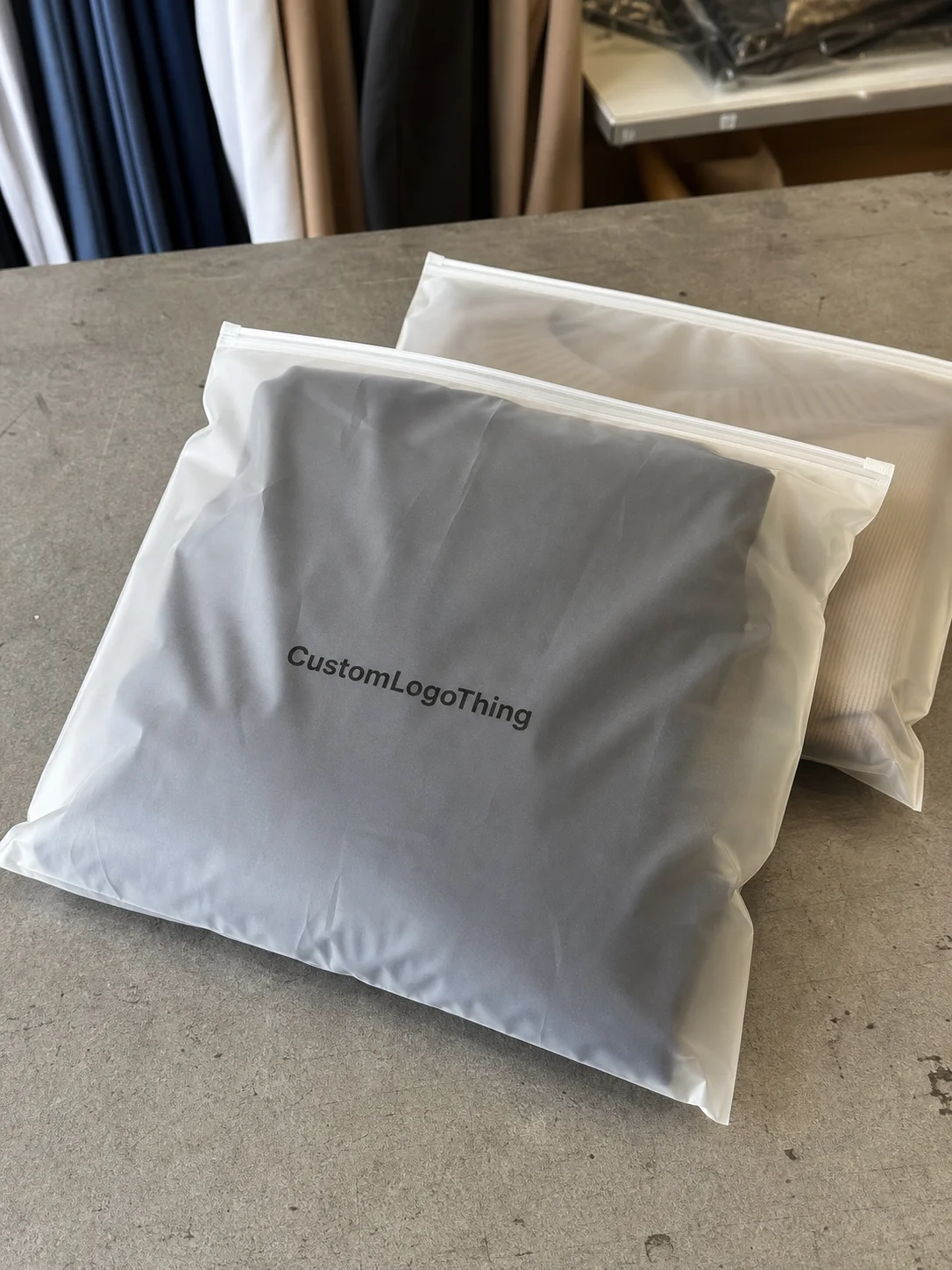
A premium hoodie can lose a little of its shine the second it arrives inside a loud, crinkly, generic poly sleeve. Custom Frosted Zipper Bags for apparel brands close that gap between basic protection and a more considered presentation, giving folded garments a softer matte finish while keeping fulfillment practical.
What Custom Frosted Zipper Bags for Apparel Brands Actually Do
Picture a customer opening a mailer and pulling out a $90 hoodie, a satin blouse, or a small run of limited-release activewear. The garment may be beautifully cut and neatly folded, but if it is packed in a thin, noisy, clear sleeve with no logo and a weak flap, the presentation drops before the customer even touches the fabric.
Custom Frosted Zipper Bags for apparel brands sit in a useful middle lane. They are not rigid gift boxes, and they are not basic warehouse poly bags either. They give folded apparel a soft, matte appearance, reduce the visual clutter of wrinkles and fold shadows, and still allow enough visibility for a packer, retailer, or customer to confirm color, size, or style.
The format is straightforward: a flexible plastic apparel bag made with frosted or translucent film, usually finished with a reclosable zipper track and optional custom printing. That printing might be a one-color logo, size mark, care note, QR code, barcode zone, recycling language, or compliance copy such as a suffocation warning.
Common uses include t-shirts, knitwear, activewear, swimwear, children’s clothing, socks, scarves, belts, sample kits, influencer mailers, and boutique stock organization. For ecommerce, the bag protects the folded garment inside a shipping mailer. For retail or wholesale distribution, it helps back-room teams keep SKUs clean, separated, and easier to handle.
The buyer-facing benefits are practical rather than decorative: less dust, fewer handling marks, neater fulfillment, easier returns, and a more polished unboxing moment without the freight cost or storage bulk of rigid boxes. For brands comparing inner sleeves against custom packaging products such as mailers, labels, tissue, and printed boxes, Frosted Zipper Bags often become the quiet workhorse of the apparel packing line.
Packaging floor note: A frosted zipper bag is inner packaging first. It improves presentation and handling, but it should not be treated as a substitute for an outer shipping mailer, corrugated shipper, or protective carton when the order needs transit protection.
How Frosted Zipper Apparel Bags Work From Film to Finish
Most frosted zipper apparel bags begin as plastic film supplied in rolls. The film is extruded or sourced to a target thickness, converted through bag-making equipment, cut to size, heat sealed along the sides or bottom, and fitted with a reclosable zipper profile near the opening. It sounds simple, but small differences in film formulation, seal temperature, zipper alignment, and print registration can change how the bag feels in the hand.
Common materials include LDPE, CPE, PE blends, soft-touch EVA-style films, and recyclable mono-material PE options. LDPE is familiar, flexible, and widely used. CPE often has a softer, slightly more premium hand. PE blends can be adjusted for stiffness, opacity, and cost. A mono-material PE structure may support a clearer recycling claim, though local recycling access still matters, and brands should be careful not to overstate environmental performance.
The frosted effect can come from the film formulation, surface texture, or finish treatment. Instead of presenting the garment through a glass-clear layer, frosted film diffuses light and softens what the eye sees. A black t-shirt still looks dark, and a bright red swimsuit still reads red, but fine wrinkles and uneven fold shadows appear less harsh.
Zippers vary more than many buyers expect. A standard press-to-close zipper is common and cost-efficient. Slider zippers appear in some formats, though they add cost and bulk. Reinforced zipper tracks can be useful for showroom samples, warehouse picking, returns handling, or boutique display stock that may be opened several times before the garment reaches the final customer.
Printing depends on order size, artwork, and supplier capability. Screen printing works well for bold logos and shorter branded runs. Flexographic printing is common for larger production because it can run faster once plates are prepared. Digital sampling may be available for proofing or limited runs. Hot stamping can create a premium accent, but it is not suitable for every film or every artwork style, especially where flexibility and rub resistance matter.
Functional options include vent holes to release trapped air during packing, hang holes for retail pegs, bottom gussets for bulky garments, writable panels for samples, tamper-evident seals, size stickers, barcode labels, and suffocation warning copy. If your apparel will enter retail, wholesale, or third-party logistics, barcode readability and carton labeling should be considered together with the bag design, not after the bags are printed.
Key Specs That Matter: Size, Thickness, Opacity, and Zipper Feel
Start with the folded garment, not the flat garment. A good bag lets the folded item slide in smoothly, close without tension, and sit squarely on a packing table. Too much empty space looks sloppy and encourages wrinkles. Too little space makes the zipper fight the fabric and slows packers down.
As a rough guide, socks and small accessories may use compact flat bags around 4 x 6 inches to 6 x 9 inches. T-shirts, kidswear, and lightweight tops often land near 9 x 12 inches or 10 x 13 inches. Hoodies, sweaters, pants, robes, and multi-piece sets can move into 12 x 15 inches, 14 x 18 inches, or larger, especially if the fold is thick.
Film thickness is usually discussed in microns or mils. Many apparel bags sit somewhere around 2 to 4 mil, or roughly 50 to 100 microns, depending on the product and price point. Thinner film saves cost and packs tightly, but it can wrinkle more and feel less substantial. Thicker film gives better structure, stronger zipper support, and a more premium feel, though carton weight and unit cost rise.
Opacity deserves real thought. A light frost helps warehouse teams identify garment color and pattern quickly. A heavier frost creates a cleaner, more private presentation for direct-to-consumer orders. Many brands over-frost ecommerce bags and then discover that pickers struggle to confirm colorways at the packing bench. The right answer depends on whether the bag is mostly for the customer, the warehouse, or both.
Zipper quality is not decoration. The track should close evenly from end to end, resist splitting under normal handling, and avoid catching lace, satin, mesh, or fine knits during insertion. A stiff zipper on a delicate blouse bag feels mismatched. A weak zipper on a heavyweight hoodie bag feels cheap.
Print placement also matters. Logos usually work best centered on the front panel or placed low enough that they do not compete with folded garment shapes, hangtags, or size labels. If the apparel is dark, ask how the ink will read against a dark object behind frosted film. White ink, metallic effects, and tone-on-tone print can all behave differently on flexible film than they do on paperboard.
For sustainability, look at actual specifications rather than broad claims. Mono-material PE, reduced overpackaging, reusable zipper formats, and right-sized bags can all improve the packaging design. For general guidance on packaging waste and recycling considerations, the EPA recycling resources are a useful reference point, although local programs vary widely.
Cost, Pricing, MOQ, and What Changes the Unit Cost
Pricing is usually driven by seven things: dimensions, film thickness, material type, order quantity, print color count, print coverage, and zipper style. Added features such as hang holes, gussets, vent holes, writable panels, special labels, or tamper-evident strips can also move the price.
A plain or lightly customized frosted zipper bag may have a lower minimum order quantity than a fully printed, custom-sized, multi-color run. Standard sizes are often more economical because the supplier may already have tooling, film widths, or common setup parameters available. Exact custom dimensions can make the garment presentation cleaner, but buyers should expect more setup work.
For a practical range, a standard-size frosted zipper bag with one-color printing might land around $0.18 to $0.35 per unit at 5,000 pieces, depending on size, film, and print coverage. Larger hoodie bags or thicker premium films can move closer to $0.40 to $0.75 or more at similar quantities. Small runs may be higher because setup, proofing, and machine time are spread across fewer bags.
| Option | Typical Best Use | Cost Impact | Production Notes |
|---|---|---|---|
| Standard size, one-color logo | T-shirts, kidswear, activewear basics | Lowest custom route | Often faster because setup is simpler |
| Custom size, one-color logo | Premium folded presentation | Moderate | Reduces loose space and improves fit |
| Thicker film with reinforced zipper | Hoodies, sweaters, showroom samples | Moderate to high | Better hand feel and repeated-use performance |
| Multi-color or full-panel print | Retail-facing package branding | Higher | Requires tighter registration and more proofing |
Larger quantities lower unit cost because plate or screen preparation, artwork setup, machine changeovers, and material purchasing are spread across more bags. That does not mean bigger is always better. If your garment line is changing size ranges or branding soon, tying up cash in 50,000 outdated bags can cost more than paying a slightly higher unit price on a smaller run.
Print color has a direct effect. A one-color logo is often the sweet spot because it keeps the frosted look clean and controls setup cost. Full-panel artwork, multiple spot colors, or heavy ink coverage can look excellent, but registration tolerance and ink opacity need closer review.
Ask what the quote includes. Digital mockups, physical samples, pre-production proofs, revision rounds, freight, and defect tolerance are not always handled the same way by every supplier. Compare total landed value, not only unit price. A slightly higher quote from a supplier who understands apparel packing, zipper feel, and folded garment dimensions may save headaches during launch week.
Process and Timeline: From Artwork Approval to Packed Bags
A clean production flow usually runs in this order: inquiry, size recommendation, material recommendation, quote, artwork setup, digital proof, optional sample or pre-production approval, full production, quality check, packing, and shipment. Each step is simple on paper. Delays usually come from unclear details, not from the bag itself.
Before requesting a quote for Custom Frosted Zipper Bags for apparel brands, prepare the garment type, folded dimensions, estimated quantity, target film thickness, desired print colors, logo files, deadline, and delivery location. If the folded garment is 9.5 x 11.5 inches with a 1.25-inch thickness, say that. Those numbers help much more than “medium shirt bag.”
Vector artwork is preferred. AI, EPS, or clean PDF files allow the logo to be scaled without fuzzy edges. Brand colors should be specified with Pantone references or clear color standards, especially if the logo sits on a frosted film where the garment color behind the bag can influence the visual impression. Tiny text should be reviewed carefully; what reads well on a screen may fill in or disappear on matte translucent plastic.
Timeline depends on complexity. Standard-size, one-color bags may move through proofing and production faster than custom-dimension, multi-color, specialty-finish, or high-volume work. As a practical planning window, many custom apparel bag projects need about 12 to 20 business days after proof approval for production, with shipping time added separately. Sampling can add another week or more, depending on the method and freight.
A physical sample is worth considering for premium apparel launches. It lets you check frost level, zipper feel, film stiffness, logo scale, and garment fit under real lighting. Digital mockups can look polished while hiding problems that only show up once the garment is packed, such as a cloudy film, a zipper that feels too rigid, or a bag that is slightly too tight at the corners.
Common causes of delay include late logo revisions, unclear measurements, missing suffocation warning copy, barcode changes, color matching adjustments, and freight timing during peak production periods. For shipment testing and transit performance, especially if apparel bags are part of a larger ecommerce packaging system, standards and resources from ISTA can help teams think beyond appearance.
Start packaging development before final garment production finishes. That gives your team time to confirm fold method, labeling process, carton pack count, and fulfillment workflow before the launch clock gets uncomfortable.
Step-by-Step Guide to Choosing the Right Frosted Zipper Bag
- Fold the actual garment. Use the same fold your packing team will use, then measure width, height, and thickness. Do not guess from the flat garment pattern.
- Define the bag’s job. Is it for warehouse organization, ecommerce unboxing, retail display, sample presentation, return handling, or several of those jobs at once?
- Choose the film feel and frost level. A boutique satin blouse may call for a softer, heavier frost. A color-heavy activewear line may need lighter frost so pickers can see patterns clearly.
- Select thickness carefully. Heavier garments and repeated handling usually benefit from stronger film in the 3 to 4 mil range, while lightweight tees may not need that much structure.
- Confirm zipper placement. Packers should be able to insert garments efficiently, close the track without forcing it, and keep the folded presentation undisturbed.
- Plan artwork with breathing room. Avoid tiny reverse text, overly fine lines, and logo placements that disappear against dark folded clothing.
- Request a proof. If budget or timing allows, order a physical sample to test fit, closure, print visibility, and overall presentation.
The best results come from treating the bag as part of the product packaging system. A frosted zipper sleeve may sit alongside tissue, a branded sticker, a thank-you card, an outer mailer, or printed boxes for higher-value bundles. If you want inspiration across packaging formats, Custom Logo Things keeps broader examples and product ideas under packaging case studies and project references.
One more practical detail: think about pack speed. A beautiful bag that takes 18 seconds longer to load may be fine for a limited capsule drop, but painful for a 10,000-unit replenishment run. Opening width, zipper smoothness, vent holes, and film stiffness all affect labor.
Common Mistakes Apparel Brands Make With Frosted Bags
The first mistake is choosing the bag from the unfolded garment size. Folded thickness changes everything. A sweatshirt that looks manageable flat can become bulky once folded, pushing against the zipper and creating strained corners.
The second mistake is going too thin to save a few cents. On a large run, pennies matter. But if the bag wrinkles heavily, tears near the zipper, or feels out of step with a $120 garment, the savings are visible to the customer.
Artwork is another common trouble spot. Designs created for hangtags, paper mailer inserts, or printed boxes may not translate cleanly to flexible frosted film. Transparency, distortion, ink opacity, and the color of the garment behind the bag can all change the finished look.
Some brands ignore zipper quality because they focus on the logo. That is backwards. The zipper is one of the first physical interactions the customer has with the package. If it splits, catches, or feels flimsy, the whole presentation feels disposable.
Overprinting can also hurt the clean matte look. Too much copy competes with size stickers, fulfillment labels, barcode zones, and product visibility. A restrained logo with one functional information area usually works better than filling every available inch.
Compliance should not be an afterthought. Depending on the market and use case, you may need suffocation warnings, recycling marks, country-specific labeling language, or readable barcodes for warehouse and retail workflows. If the bag is used for children’s apparel, be especially careful with warning language, opening dimensions, and any loose components that may be added during packing.
The last big mistake is ordering too close to launch. No sample review. No time for color adjustment. No buffer for freight. Packaging has a way of becoming urgent only after the garments are ready, but the strongest apparel launches build the bag, label, carton, and fulfillment plan together.
Next Steps Before You Request Samples or a Quote
Create a simple spec sheet before contacting a supplier. Include garment category, folded dimensions, target bag size, film preference, thickness target, frost level, zipper style, print color count, quantity, and delivery deadline. One page is enough if the information is clear.
Gather real packed garment photos. A supplier can make better recommendations when they see whether the product is bulky, delicate, flat, slippery, structured, or part of a set. Hoodies, robes, satin garments, swimwear, and multi-piece children’s outfits all behave differently during packing.
Decide what is fixed and what can move. Maybe the price target is firm, but the exact bag size is flexible. Maybe the premium feel matters more than a few cents. Maybe sustainability claims are a priority, which means the material specification needs to support them. Good packaging design is usually a set of tradeoffs, not a single perfect answer.
Prepare vector artwork and decide the personality of the logo treatment. Do you want subtle tone-on-tone package branding? A bold retail-facing mark? A logo paired with size, SKU, care, or QR information? Those choices affect print method, ink coverage, and proofing.
Ask for standard size recommendations before paying for full custom dimensions. Many apparel brands can get very close with an existing size, saving setup time and cost. If the standard fit looks loose or awkward, then custom sizing may be worth it.
Custom frosted zipper bags for apparel brands work best when they are treated as part of the garment presentation, not just a protective sleeve. Measure one folded product, choose two target quantities for pricing comparison, decide whether one-color or multi-color printing fits your launch, and request a proof before production.
FAQs
What size custom frosted zipper bags do apparel brands usually need?
The right size depends on the folded garment, not the flat garment pattern. Measure the folded width, height, and thickness, then add enough clearance for easy insertion and zipper closure. T-shirts, kidswear, and accessories often fit smaller flat bags, while hoodies, sweaters, pants, and sets usually need larger or thicker options.
Are frosted zipper bags better than clear poly bags for clothing?
Frosted bags usually feel more premium and provide more privacy than clear poly bags. Clear bags are better when warehouse teams or retail staff must see exact colors and prints quickly. Many apparel brands choose frosted bags when unboxing experience, branded packaging, and presentation matter more than full product visibility.
How much do custom frosted zipper bags for apparel brands cost?
Cost depends on size, film thickness, material, order quantity, print colors, zipper type, and special features. One-color printing on a standard size is generally more economical than a custom size with multiple colors or heavy ink coverage. Ask for pricing at two or three quantities so you can see where the unit cost improves.
Can frosted zipper apparel bags be recyclable or reusable?
Some frosted zipper bags can be made with mono-material PE structures that are more recycling-friendly, depending on local recycling programs. The zipper closure also makes the bag reusable for storage, returns, travel, or closet organization. Any sustainability claim should match the actual material specification and recycling guidance available in your market.
What artwork works best on custom frosted apparel zipper bags?
Simple logos, strong line weights, and one or two print colors usually reproduce cleanly on frosted film. Avoid tiny reverse text, very fine details, and artwork that depends on exact background color. Request a proof or sample to confirm logo scale, ink opacity, and visibility against the garment inside.