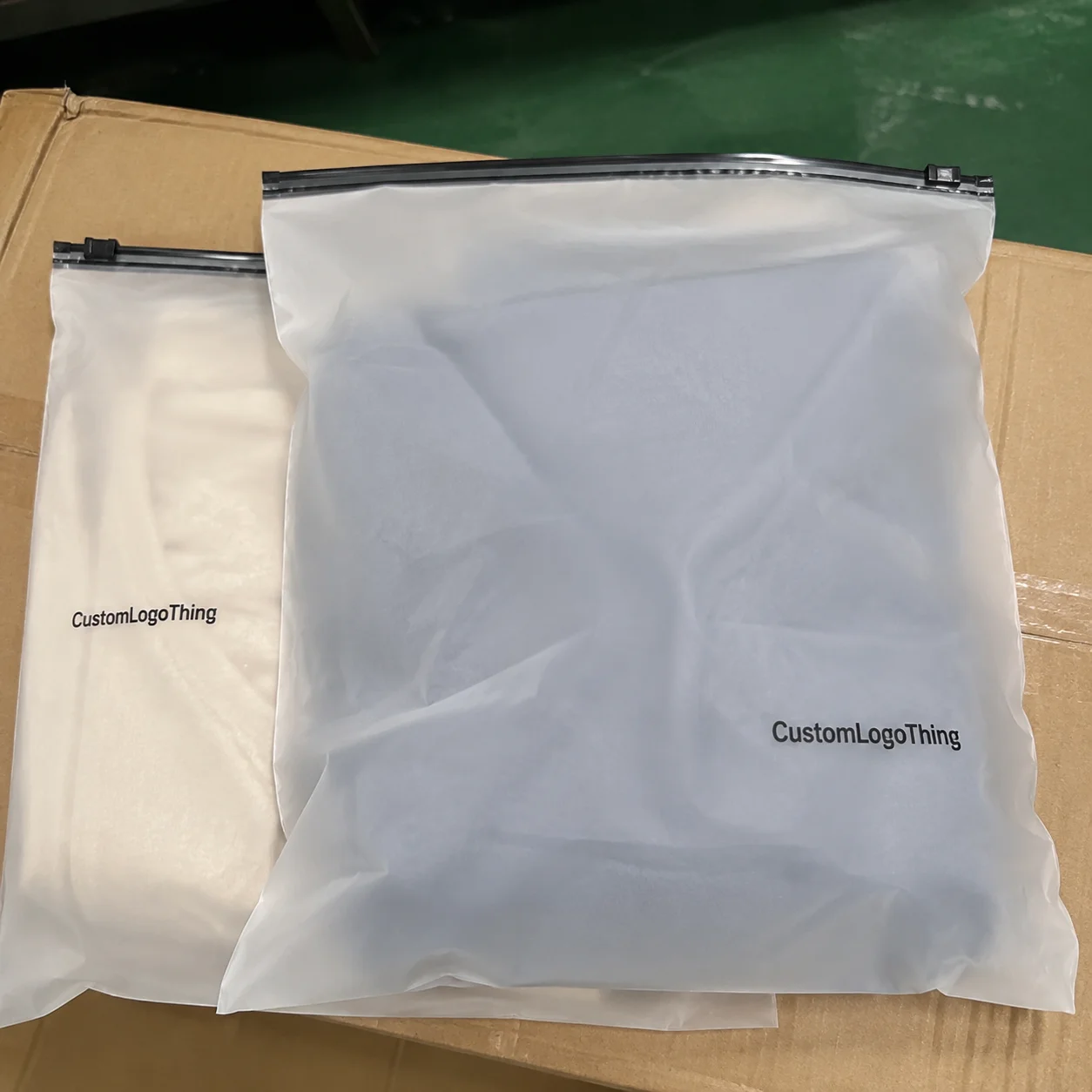
Custom Frosted Zipper Bags for food brands are resealable pouches with a translucent matte finish, usually built from PE, CPP, PET, or laminated film structures. Under store lighting, they tend to read quieter and more deliberate than glossy clear bags, which is one reason they show up so often in premium snack lines.
The effect is practical, not decorative. Frosting softens visual clutter, hides minor fill variation, and still leaves enough product visible to support trust. That balance matters in packaging because the bag has to protect the food, present the brand, and survive production without creating avoidable cost or waste. A pouch that solves only one of those jobs is usually a poor packaging decision.
A bag can look premium on a proof and still fail in filling, sealing, or shipping. Packaging only earns its keep when all three stages hold up.
What Custom Frosted Zipper Bags for Food Brands Really Do
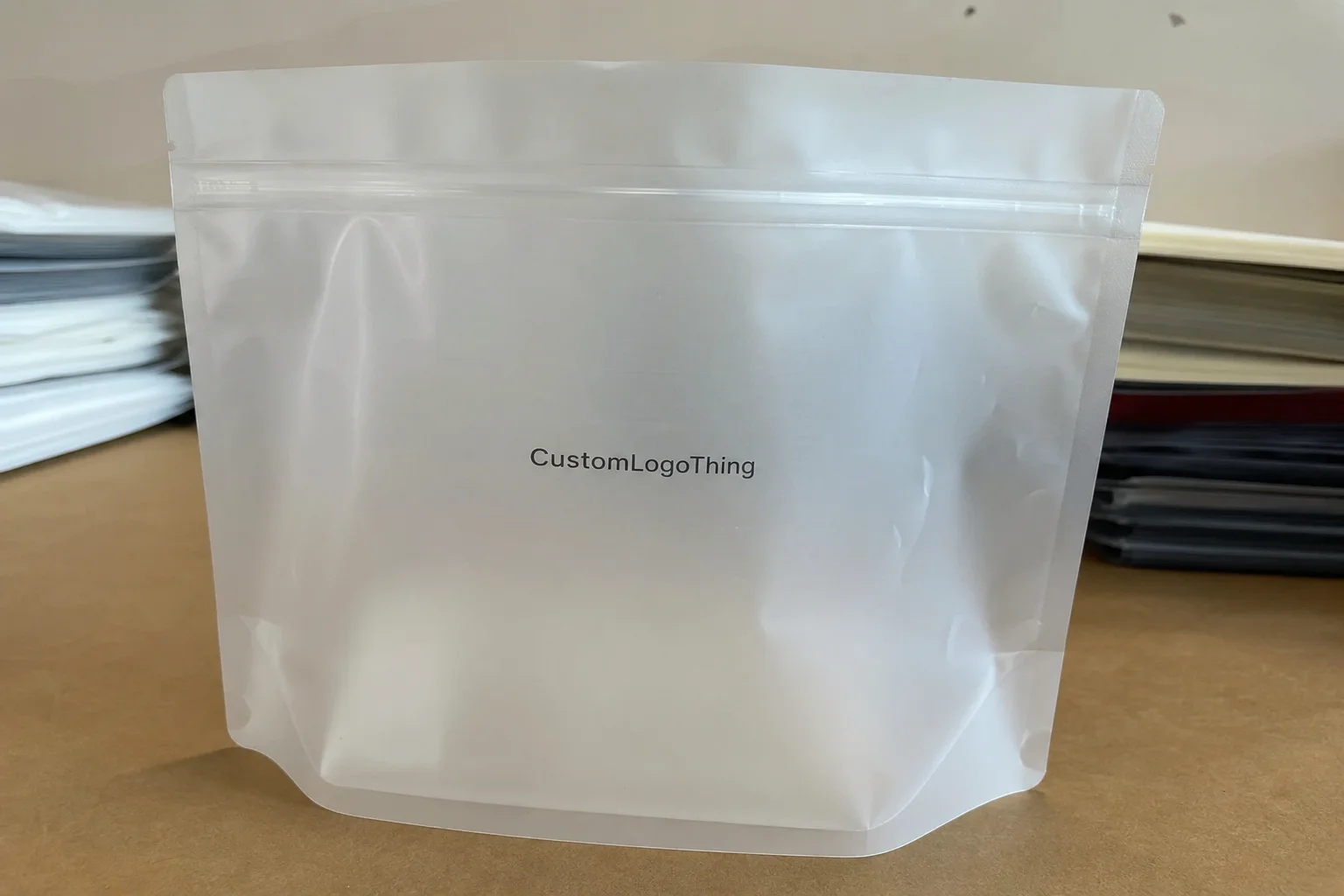
Frosted packaging sits between clear, opaque, and metallized formats. A clear pouch exposes every detail, which works well for uniform products but can also make crumbs, broken pieces, or uneven fill levels more noticeable. A fully opaque bag gives privacy and more space for branding, but it removes the product from the sales story. Metallized structures lean hard toward barrier and shelf impact, yet they can feel more aggressive than many food brands want.
Custom Frosted Zipper Bags for food brands make the product visible without making it the whole visual story. That is useful for candy, nuts, granola, dried fruit, powdered mixes, coffee samples, bakery snacks, supplements, and pet treats. The shopper can see shape, color, and freshness cues, but the packaging still feels considered. The result is often calmer and more premium than a standard clear pouch.
There is also a merchandising benefit that gets overlooked. Frosted film reduces the visual noise that can happen when a product is inconsistent from piece to piece. A loose snack mix can look more curated. A mixed-color candy blend can feel more intentional. The package becomes part of the product experience rather than a transparent container with a label attached.
That said, the finish is not a fix for the wrong structure. If the contents are oxygen-sensitive, grease-heavy, or strongly aromatic, barrier performance matters more than appearance. A matte surface will not extend shelf life by itself. The film stack, seal strength, zipper performance, and storage conditions all need to match the actual food.
How Frosted Film, Zippers, and Food-Safe Layers Work
The frosted look can come from the film itself, from a surface treatment, or from a laminated structure. Those choices affect print quality, scuff resistance, hand feel, and how the bag behaves in transit. A matte surface usually gives a softer visual result, but it can also dull small type or fine detail if the print system is not built for it. Laminated structures usually improve stiffness and image clarity, though they add cost and process complexity.
Common layer choices usually fall into three groups:
- Monolayer polyethylene for simple dry goods, sample packs, and lower-cost runs.
- PET/PE laminates for better stiffness, sharper graphics, and stronger shelf presence.
- Barrier laminates for moisture control, oxygen resistance, aroma retention, and longer shelf life targets.
Zippers are simple in concept and unforgiving in practice. A press-to-close track gives repeat access, but closure performance depends on film gauge, seal width, zipper placement, and how much headspace is left above the fill. If the zipper sits too close to the top seal, filling becomes awkward. If the film is too light, the closure can deform under load. If seal temperature and dwell are not tuned for the chosen structure, the pouch may look correct and still fail later.
Food-contact compliance needs to be checked deliberately. Ask for food-safe materials where appropriate, confirm that inks stay outside the direct contact layer, and request migration or compliance documentation if the category requires it. A clean-looking pouch is not automatically suitable for food. Material declarations, testing records, and supplier paperwork matter more than the gloss of the sample.
Visibility is another variable with real commercial impact. A light frost gives a softened view of color and shape. A heavier frost creates more privacy and usually feels more upscale, but it hides more detail. That tradeoff is especially important for categories where the product itself does part of the selling. A clear window, a partial transparent panel, or a narrow viewing strip can help, but only if the layout does not interfere with seals, gussets, or barcodes.
Optional features should be settled early because they change both packaging performance and line handling:
- Hang holes for peg display
- Tear notches for cleaner opening
- Bottom gussets for stand-up shelf presentation
- Euro slots for retail hooks
- Vent holes for bakery or fresh-fill applications
- Child-resistant zippers for regulated or sensitive categories
For granola, moisture control often matters more than anything else. For gummies, aroma retention can matter more than stiffness. For bakery items, short-run flexibility and easy filling may matter most, because launch quantities are often modest and artwork revisions happen more often than teams expect.
Key Specs That Decide Whether the Bag Performs
The difficult part of package specification is that weak decisions do not always show up right away. A pouch can print cleanly, stack neatly, and still underperform once it is filled, shipped, and handled on shelf. That is why the spec sheet should be treated as a risk-control document, not just an order form for custom Frosted Zipper Bags for food brands.
Size should be set from fill volume, product shape, headspace, and display method, not from weight alone. A 200 gram snack with a bulky, airy fill behaves differently from a dense powdered mix at the same weight. If the pouch is too small, closing gets awkward and the zipper line looks stressed. If it is too large, the bag loses shelf discipline and can look underfilled.
Thickness is another lever with tradeoffs. Thinner films cost less and can work well for basic dry goods, but they may feel flimsy and show handling damage sooner. Thicker films improve stiffness, puncture resistance, and shelf presence, though they can increase cost and demand more forgiving sealing conditions. There is no universal best number, but many snack applications are compared in the 2.5 mil to 5 mil range before the final structure is chosen.
Print on frosted film needs extra attention. White ink underlays often rescue brand colors, especially reds, blues, and dark neutrals, which can otherwise look muted against a translucent background. Barcodes need enough contrast to scan reliably. Nutrition panels, ingredient lists, and allergen statements should sit where glare and scuffing will not hurt readability. A beautiful package that scans poorly is still a bad package.
A few practical checks help reduce surprises:
- Confirm bag width against the widest product dimension, not just the fill weight.
- Leave enough headspace above the fill line for the zipper and top seal.
- Match tear notch placement to the actual opening motion.
- Make sure the fill opening works with scoops, funnels, or semi-automatic equipment.
- Reserve a clean print zone for batch codes and lot numbers.
Retail and compliance details should be locked before artwork is finalized. That includes ingredient statements, allergen declarations, net weight, country-of-origin language if required, and tamper-evident cues where the category calls for them. If the product will be distribution tested, ask for a plan based on ASTM or ISTA-style transit discipline so the bag gets evaluated against the route it will actually travel.
Packaging teams often blame print when the real issue is structure. On frosted film, the substrate is usually the first place to inspect.
Cost, MOQ, and Unit Cost Drivers to Check Before Ordering
The lowest quote is rarely the lowest-cost packaging decision. A bag that saves a few cents but breaks during filling, scans badly at retail, or creates repack work can erase the savings quickly. For custom Frosted Zipper Bags for food brands, the better measure is landed cost per finished unit, not empty-bag price alone.
Pricing usually moves with film structure, size, thickness, zipper type, print method, color count, setup fees, and finishing features. A simple frosted pouch with one or two colors behaves very differently from a barrier laminate with multiple print stations, matte finish, and a specialty zipper. Freight, duties, and overrun allowances matter too, even though they are often left out of the first spreadsheet.
| Ordering Route | Typical MOQ | Typical Unit Cost | Best Fit | Main Tradeoff |
|---|---|---|---|---|
| Stock frosted bag plus label | 500-1,000 units | $0.14-$0.30 empty bag, plus label cost | Very small launches, seasonal tests, pilots | Fast and flexible, but less premium and more manual labor |
| Digital custom print | 1,000-3,000 units | $0.22-$0.45 | Short runs, frequent artwork changes, multiple SKUs | Higher unit cost than scale printing, lower setup burden |
| Flexographic custom print | 5,000-10,000 units | $0.12-$0.28 | Stable artwork, larger launches, repeat orders | Better unit economics, but plate or setup costs are real |
Those numbers are directional. A small pouch with light print coverage can sit near the low end, while a larger stand-up pouch with a zipper, gusset, and barrier structure can land much higher. Ask for tiered pricing at quantities such as 3,000, 5,000, and 10,000 units so the break point is visible instead of guessed.
MOQ pressure comes from production economics. Stock frosted bags with labels usually start lower because the base bag already exists. Fully custom printed zipper bags usually require a higher minimum because film sourcing, printing, conversion, and inspection all need to be coordinated together. If artwork changes often, digital usually makes more sense. If the design is stable and the volume is real, flexo usually becomes the better value.
Hidden costs deserve their own line:
- Artwork revisions and proof corrections
- Physical sample and pre-production proof fees
- Freight and duty
- Storage for overrun cartons
- Rush production premiums
- Rework from label or barcode errors
If you are comparing this package against other branded packaging formats, keep the full system in view. A pouch that looks economical on its own may not be the best answer if it shifts labor downstream or creates extra handling at co-pack. The right choice is the one that fits the product, the line, and the channel together.
Process, Timeline, and Production Steps from Artwork to Delivery
Custom packaging follows a predictable sequence, but the schedule changes quickly if one step is weak. The usual flow is specification, artwork, proofing, material sourcing, printing, converting, quality control, and freight. Teams that treat this like a straight line usually get surprised by proof revisions or material delays.
Start with the product. Define the food type, fill weight, target shelf life, storage temperature, grease or moisture exposure, and whether the contents should remain partly visible. Those inputs drive the structure, and the structure drives the print method. If the pouch will run on a co-packer line, confirm whether the filling equipment needs a wider mouth, a different zipper placement, or a flatter top-seal area.
Artwork is where the details pile up. You need the dieline, safe zones, barcode placement, white ink layers, varnish or matte regions, nutrition panel, ingredient declaration, and lot-code space. If the package will be reviewed by a retailer, check the copy before the proof is signed. A polished proof with weak compliance still creates risk.
Proofing usually happens in three stages:
- Digital PDF proof for layout and copy checks.
- Physical sample for structure, hand feel, and seal behavior.
- Pre-production proof for higher-risk launches or retailer-bound programs.
Production itself is a chain of narrow steps. Film selection comes first. Printing follows. If the structure needs lamination, curing time gets added. Then the zipper is inserted, the bag is formed and cut, inspected, packed, and shipped. Each step can shift the calendar. Barrier structures, holiday production peaks, and slower freight methods can add meaningful time, so a launch buffer is not optional if photography, trade shows, or sell-in dates are fixed.
Simple digital runs are usually faster than high-barrier or specialty-finish jobs. A straightforward order may move in about 10-15 business days after proof approval, while more complex structures often need 20-30 business days before freight. That is a planning range, not a guarantee. Material availability, proof turnaround, curing time, and artwork changes can all move the finish line.
For food brands balancing launch timing with package branding, it helps to compare the pouch schedule against the rest of the packaging program. If cartons, labels, and secondary packs all land at different times, the rollout gets harder to coordinate. That is why a review of Custom Packaging Products and prior Case Studies can be more useful than a generic supplier brochure. Real examples tell you what tends to hold up under schedule pressure.
Common Mistakes That Make Frosted Food Bags Look Cheap
Premium matte packaging can look worse than basic clear packaging when the structure and artwork do not match. The idea is usually sound. The execution is where the trouble starts.
- Choosing frost level for aesthetics only. If the product is hidden too much, shoppers lose trust. If it is too visible, the package loses the premium effect.
- Skipping white ink under key graphics. Without an underlay, brand colors can fade into the film and look washed out.
- Ordering the wrong size. Weight calculations ignore product bulk, headspace, and zipper closure space.
- Using a weak barrier for sensitive goods. Moisture, aroma, oxygen, and grease each need different protection.
- Placing barcodes and labels on low-contrast areas. That creates scanning problems and makes the pack look rushed.
- Ignoring the filling line. A bag that is awkward to open slows co-packers and raises labor cost.
- Approving only a screen proof. Retail lighting and handling can change the final impression a lot.
The last point matters more than many buyers expect. A screen proof tells you the layout is correct. It does not tell you whether the frosted film will scuff, whether the matte finish will mute a brand color, or whether the zipper feels thin in hand. A physical sample under warehouse light or retail light is a more honest test.
Another common mistake is overdesigning for the wrong channel. A pouch that looks excellent in a boutique food store may feel excessive for a club pack, a sampler, or an e-commerce insert. Packaging should fit where the bag is actually seen, not where the team hopes it will be seen.
Next Steps: Build a Bag Spec You Can Actually Quote
If you want useful pricing, the brief has to be usable. That means defining the product first, then the structure, then the artwork, then the commercial terms. Once those pieces get mixed together, quotes turn vague and comparisons lose meaning.
Start with the product profile:
- Food type and fill weight
- Shelf life target
- Storage temperature
- Moisture, grease, oxygen, or aroma exposure
- Need for partial visibility
Then choose the structure direction. A simple frosted PE bag works for lower-risk dry goods. A laminated frosted film improves stiffness and shelf presence. A barrier structure makes more sense for products that need stronger freshness protection. If the bag has to stand upright, say that clearly. If it needs a gusset, hang hole, tear notch, or euro slot, include it before proofing, not after.
Artwork should be just as specific. Send the dieline, logo files, preferred PMS or CMYK values, white ink requirements, barcode, nutrition panel, ingredient panel, and lot-code space. If the package will sit next to other branded packaging programs, keep the visual language aligned so the line feels deliberate rather than pieced together.
For quotes, ask for:
- Quantity tiers
- Production lead time
- Sample options
- Freight estimates
- Food-contact documentation
That is the cleanest path to a real comparison. It also helps you decide whether frosted film is the right move versus another retail packaging route, or whether the same budget would do more work in another product packaging format. For many food brands, custom frosted zipper bags for food brands work best when appearance, freshness, filling workflow, and landed cost are specified together. Split those decisions apart, and the quote may look lower than the actual business result.
Are custom frosted zipper pouches safe for food packaging?
They can be food-safe when they are built from compliant food-contact films and the inks stay outside the direct contact layer. Ask for material specifications, compliance documentation, and confirmation that the structure matches your food type. Do not assume every frosted plastic bag is suitable for direct food contact.
What foods work best in custom matte frosted zipper bags?
They are strongest for dry and semi-dry products such as nuts, candy, dried fruit, granola, bakery snacks, powdered mixes, coffee samples, and pet treats. Products that need high oxygen, moisture, aroma, or grease protection may need a laminated barrier structure. Liquid or very oily products require extra testing before approval.
How much do custom frosted zipper bags usually cost?
Cost depends on size, film structure, thickness, zipper type, print method, number of colors, order quantity, and shipping. Digital short runs usually have higher unit costs but lower setup costs. Large production runs can reduce unit cost, but only if the specification is stable enough to justify the MOQ.
What is the typical lead time for frosted zipper bags with custom printing?
Lead time depends on artwork readiness, proof approvals, material availability, print method, lamination or curing requirements, and freight method. Simple custom printed runs are usually faster than complex barrier laminates or specialty finishes. Build in extra time for physical sampling, co-packer testing, and retailer label review.
Can custom frosted zipper bags for snacks include clear windows?
Yes, many designs use a frosted body with a clear window so shoppers can inspect the product while the package still feels premium. Window placement should avoid zipper seals, gusset folds, barcodes, and nutrition panels. Test the window size with the actual product because mixed textures, crumbs, or uneven fill levels can change the shelf impression.