Custom Frosted Zipper Bags for clothes do a lot more work than most people expect. Before a customer touches the fabric, the packaging has already said something about the brand: clean, organized, premium, careful, or, if it is poorly chosen, rushed.
That is why custom Frosted Zipper Bags for clothes have become such a practical choice for apparel brands, subscription programs, retail packaging teams, and fulfillment operations that need product protection without hiding the garment completely. They give you that soft, semi-translucent look that feels polished, while the zipper closure adds real usefulness for storage and reuse.
From a packaging buyer’s point of view, the appeal is simple: you get presentation, protection, and brand space in one format. The trick is choosing the right size, film thickness, and print method so the bag fits your clothing category instead of forcing the clothing to fit the bag.
Why frosted zipper apparel bags feel premium right away
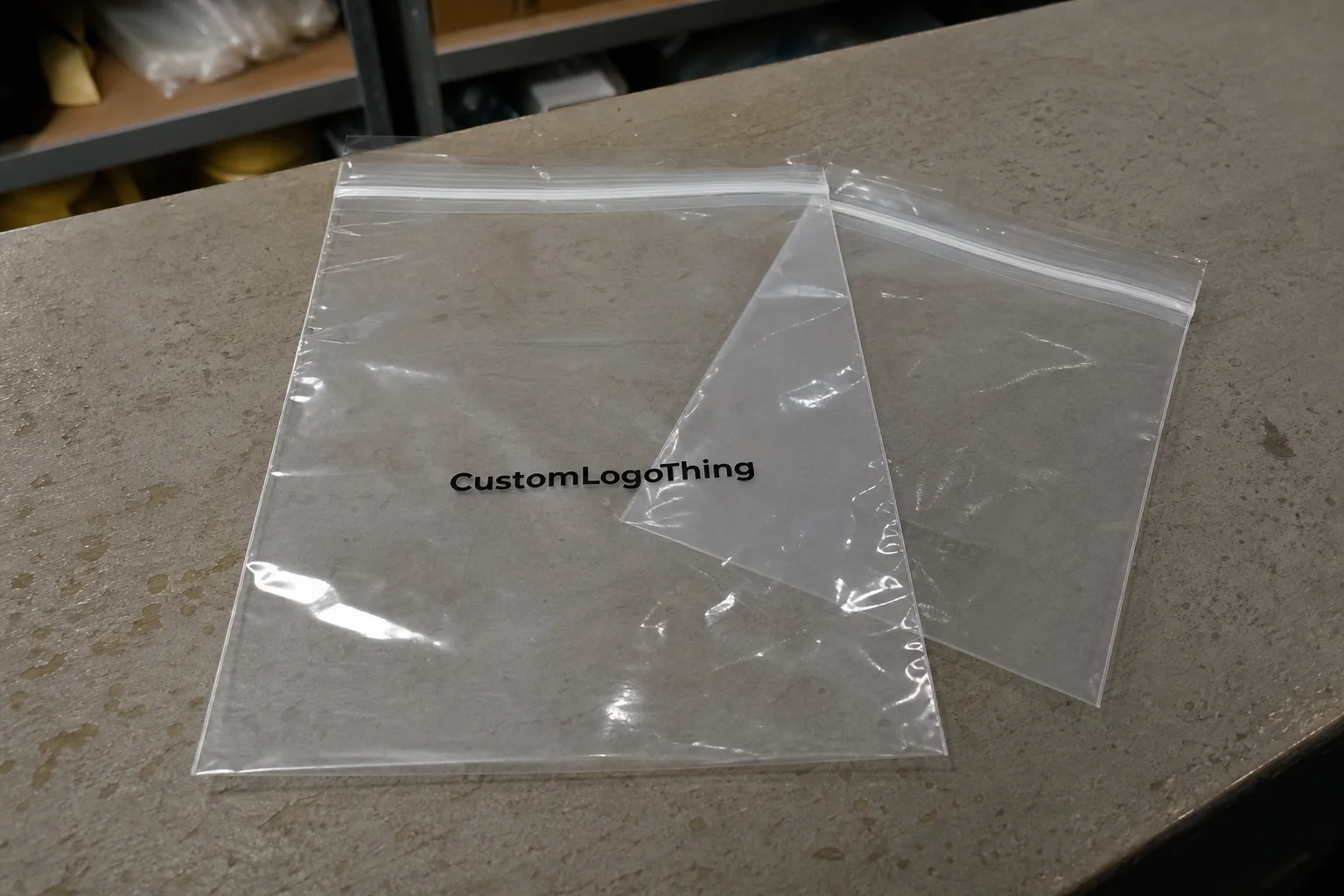
The first impression happens fast. A folded shirt in a frosted pouch feels more deliberate than a shirt tossed into a plain poly mailer, and it feels more refined than a fully clear bag that shows every crease, tag, and fold line. That soft white translucency signals care without screaming for attention.
So what are these bags, exactly? Custom Frosted Zipper Bags for clothes are flexible plastic apparel bags, usually made from PE film or a similar poly-based material, with a reclosable zipper at the top. They are commonly used for folded T-shirts, hoodies, pajamas, undergarments, loungewear, and multipiece sets that need both visibility and a little privacy.
The difference between frosted, clear, and opaque matters more than people think. Clear bags maximize visibility, which helps with quick identification, but they can also look more basic and expose everything inside. Opaque bags hide the contents completely, which can feel protective, but they remove the visual connection between package and product. Frosted film sits between those two, and that middle ground is often exactly what apparel brands want for branded packaging.
A frosted bag is not just a sleeve for storage. In practice, it is part of the product packaging story, and buyers usually notice that before they ever inspect the stitching on the garment itself.
If your brand cares about shelf presence, unboxing, or warehouse organization, these bags can support all three. They also work well when you want a cleaner package branding look without moving all the way into custom printed boxes for every item.
How the zipper closure and frosted film work together
The zipper is doing more than just closing the top. It lets the bag open, close, and reopen without tearing the seal area, which makes these bags practical for retail handling, customer returns, travel, closet storage, and repeated use after purchase. A good zipper should feel snug enough to stay closed, but not so tight that it becomes frustrating to use during packing.
The film matters just as much. Thicker film generally gives a firmer hand feel and better resistance to punctures, seam stress, and edge wear. Lighter film can still work well for basic retail packaging or lower-weight garments, but it usually feels less substantial in the hand. For apparel, that tactile difference can shape how premium the package feels even before the logo is noticed.
Closure style also changes performance. A single-track zipper is common and economical. A double-track or wider zipper profile can feel more secure and often stands up better to repeated opening. Press-to-close styles are also used in some runs, depending on the intended use and production line setup. The right choice depends on whether the bag is meant for display, storage, shipping, or all three.
Frosted film has one other advantage that buyers sometimes overlook: it softens glare. Under bright retail lighting or in product photography, a frosted surface can make printed logos look cleaner and more refined because the finish diffuses reflection instead of bouncing it back harshly.
For warehouses and fulfillment teams, the zipper format is a real operational plus. Bags that open and reseal easily make fold-and-pack workflows smoother, reduce handling time, and give teams a practical way to repack items after inspection or return processing.
Key specs that affect fit, durability, and brand presentation
Most problems with apparel bags start with fit. People often order by garment name instead of measuring the folded product, and that is where things go sideways. A medium T-shirt, a heavy hoodie, and a lounge set may all sound manageable, but once folded for packing, the thickness and width can vary a lot.
Inside dimensions matter more than outer dimensions because the garment has to slide in cleanly and the zipper has to close without straining the seams. A bag that is too small creates a lumpy presentation and can stress the closure. A bag that is too large may look sloppy and waste material. For many apparel categories, buyers often test one packed sample before committing to a full run.
Thickness is usually discussed in mils or microns. As a practical reference, lighter retail bags may sit around 2 to 3 mil, while more substantial apparel bags may run higher depending on the item and intended reuse. That does not mean thicker is always better. A 4 mil bag for a lightweight undershirt can feel excessive, while a 2 mil bag for a dense sweater may feel flimsy. The spec should match the garment weight and shipping use.
Print choices also affect both appearance and cost. A simple one-color logo is usually the most straightforward route. Spot-color branding can sharpen visual identity, and full-surface printing can create a stronger branded packaging effect, though it often adds setup complexity. Some buyers prefer tinted film or a lightly frosted base with a small logo because it keeps the presentation quiet and clean.
Useful extras that improve function
- Tear notches for easy opening at retail or during fulfillment.
- Hang holes if the bag needs to display on racks or hooks.
- Gussets for thicker folded garments or set packaging.
- Labels or SKU windows for sorting and warehouse control.
- Anti-static considerations for certain synthetic garments or sensitive environments.
The best packaging spec is not always the thickest one or the most decorated one. It is the one that fits the garment cleanly, supports the shipping method, and reflects the experience you want the customer to have. That is a basic product packaging rule, and it holds up every time.
Pricing, MOQ, and what drives your quote
Pricing for custom apparel bags depends on a handful of very concrete variables. Bag size is one of the biggest. Film thickness matters next, followed by zipper style, number of print colors, number of printed sides, and the total order quantity. If you change two or three of those at once, the quote can move more than people expect.
MOQ, or minimum order quantity, exists because custom production has setup work behind it. Material sourcing, print preparation, and line calibration all take time, so most custom runs require a minimum volume to make the job viable. Lower quantities usually carry a higher unit cost, while larger orders spread setup costs across more bags and improve pricing efficiency.
For planning purposes, it helps to think in ranges instead of vague promises. A small custom run may price significantly higher per piece than a mid-volume order, while a larger repeat order can move down meaningfully once the spec is locked in. If you are sourcing Custom Packaging Products for a collection launch, ask for pricing at several quantities so you can see where the breakpoints sit.
Printing also introduces tooling or plate costs in many cases. That is normal, and it is one reason first orders often cost more than reorders. Once artwork and specifications are finalized, repeat runs usually become more economical because the setup work is already done.
| Order profile | Typical cost drivers | Buyer takeaway |
|---|---|---|
| Small run | Higher setup share, fewer units to absorb tooling | Good for testing fit and presentation, but higher unit cost |
| Mid-volume order | Better spread of setup costs, more efficient material use | Often the sweet spot for growing apparel brands |
| Large repeat order | Lower per-unit setup burden, stable spec, easier forecasting | Usually the best value once the packaging is approved |
Unit price matters, but it should not be the only number you compare. A better bag can reduce damage, improve packing speed, and strengthen perceived value. That is real value, not marketing fluff. The right custom frosted zipper bags for clothes can pay back in operational ease and customer perception even when the unit cost is a little higher.
Process and timeline: from artwork to delivery
The production flow is usually straightforward, but every step needs clean information. It starts with a quote request, then moves to spec confirmation, artwork review, proof or sample approval, production, quality check, packing, and shipment. If any one of those steps gets fuzzy, the schedule can slip.
The fastest way to keep things moving is to send exact dimensions, closure style, quantity, print files, the intended garment type, and the shipping destination up front. If you know the bag is for a folded hoodie that will be distributed through ecommerce, say that. If it is for retail display, say that too. That context helps the supplier recommend the right material and closure.
Lead time depends on artwork revisions, material availability, print complexity, and whether a pre-production sample is needed. A simple one-color design on a standard bag can move faster than a multi-color job with custom sizing and special features. Repeat orders are usually faster because the core spec is already approved.
As a practical planning range, many custom runs take around 12 to 15 business days from proof approval, though that can stretch when the order is large, the artwork needs revision, or materials need to be sourced. Shipping time adds another layer, so seasonal collections and launch calendars should be mapped early rather than guessed.
If your packaging program ties into retail packaging or online fulfillment, it is smart to plan the bag order the same way you plan custom printed boxes: with enough lead time to review, revise, and approve before the launch window gets tight.
Common mistakes when ordering apparel zipper bags
One of the most common mistakes is sizing by garment label instead of the folded item. A size medium does not tell you how much space a folded sweatshirt actually needs. Measure the packed garment, then leave room for easy insertion and a smooth zipper close.
Another error is choosing a film that is too thin. A flimsy bag can tear during packing, stress at the corners, or simply feel cheap in hand. Even if the print looks fine, the package can undercut the product if the material feels weak.
Artwork problems show up quickly too. Low-resolution files, cluttered layouts, or inconsistent logo placement can make the final bag look uneven. The cleaner the artwork, the better it tends to reproduce on frosted film, especially if the logo is small and needs to stand out clearly.
Operations matter as much as appearance. A bag that looks good on a design sheet may be annoying in a real packing line if it opens awkwardly, does not stack well, or resists resealing after inspection. That is why samples are so useful. They reveal the handling experience, not just the visual one.
Buyers also sometimes forget labeling needs. SKU labels, warnings, care information, or retail identifiers may need to fit somewhere on the bag or on an attached label. Confirm those requirements before production starts so the final package supports compliance and internal sorting.
Expert tips for choosing the right spec and ordering smarter
Here is the simplest smart move: test one actual folded garment in a sample bag before approving the full run. That one step will tell you a lot about fit, zipper action, print visibility, and shelf presentation. It is low effort compared with correcting a bad order later.
Choose the frosted level based on the brand mood you want. A more translucent finish gives better product visibility, which can be useful for color recognition or size checking. A softer, more opaque frost creates a cleaner, more premium look and hides wrinkles and folds a bit better.
Keep logo placement simple and consistent. One well-positioned mark on the front panel often works better than multiple busy graphics, especially when bags are stacked, shipped, or viewed under retail lighting. That kind of restraint often reads as more polished in package branding.
Match the bag to the garment category. Delicate basics, premium loungewear, value multi-packs, and luxury apparel do not always need the same spec. A thicker zipper bag may be right for a heavy hoodie, while a lighter film works fine for a tee program where cost control matters more.
When you ask for pricing, request quantity tiers. A quote at 5,000 pieces can look very different from one at 10,000 or 20,000 pieces. Seeing those tiers helps you plan reorders instead of reacting to them, and it gives you a better sense of where the real cost sweet spot sits.
From an industry standards point of view, it also helps to think about transport and handling, especially if the bags will ship inside larger cartons. Packaging groups often evaluate distribution durability using methods aligned with ISTA test procedures, while material conversations may touch on recyclability and resin choices that connect to broader sustainability goals discussed by the EPA.
That does not mean every clothing bag needs a heavy-duty test protocol, but it does mean the packaging should be chosen with the real journey in mind, not just how it looks on a screen. That is where experienced buying usually beats guesswork.
Next steps for getting the right bag spec approved
Start by measuring the folded garment the way it will actually be packed. Then decide how much visibility you want, whether the bag needs to survive shipping or mainly serve retail display, and how much emphasis you want on privacy versus product recognition.
Gather your logo files, print preferences, target quantity, and labeling needs before requesting a quote. Clear inputs save a surprising amount of back-and-forth, and they usually produce a cleaner first proof. If you are unsure about thickness or zipper style, ask for a material recommendation instead of guessing.
For brands that want to compare suppliers or build out a broader packaging system, it helps to review whether the bag should coordinate with other custom printed boxes, hang tags, or tissue so the whole customer experience feels deliberate rather than pieced together.
Review one proof or sample against the actual garment, not just against a flat spec sheet. Then confirm production only after fit, look, and function all pass together. That order of operations saves money and avoids unpleasant surprises.
In the end, the most effective custom frosted zipper bags for clothes are the ones that fit cleanly, support the brand, and work smoothly in day-to-day packing. If you get those three things right, the bag stops being just a pouch and becomes a quiet, useful part of the product experience.
FAQs
What size should custom frosted zipper bags for clothes be?
Measure the garment after folding it the way it will be packed, not just by clothing label size. Leave enough room for easy insertion and zipper closure without forcing seams or corners.
Are frosted zipper bags better than clear bags for apparel?
Frosted bags give a softer, more premium look and reduce harsh glare from lighting. They still allow partial visibility, which helps with product identification while adding a more refined presentation.
What affects the price of custom frosted zipper bags for clothes?
Size, film thickness, print colors, zipper style, and order quantity all affect cost. Artwork complexity and any special features, like hang holes or gussets, can also change the quote.
How long does production usually take for custom apparel zipper bags?
Timing depends on artwork approval, material selection, order size, and whether a sample or proof is needed. Repeat orders usually move faster than first-time custom runs because the spec is already established.
Can custom frosted zipper bags for clothes be reused by customers?
Yes, the zipper closure makes them useful for storage, travel, or garment organization after purchase. Choosing a sturdy film and reliable zipper improves reusability and helps the package feel more valuable.


