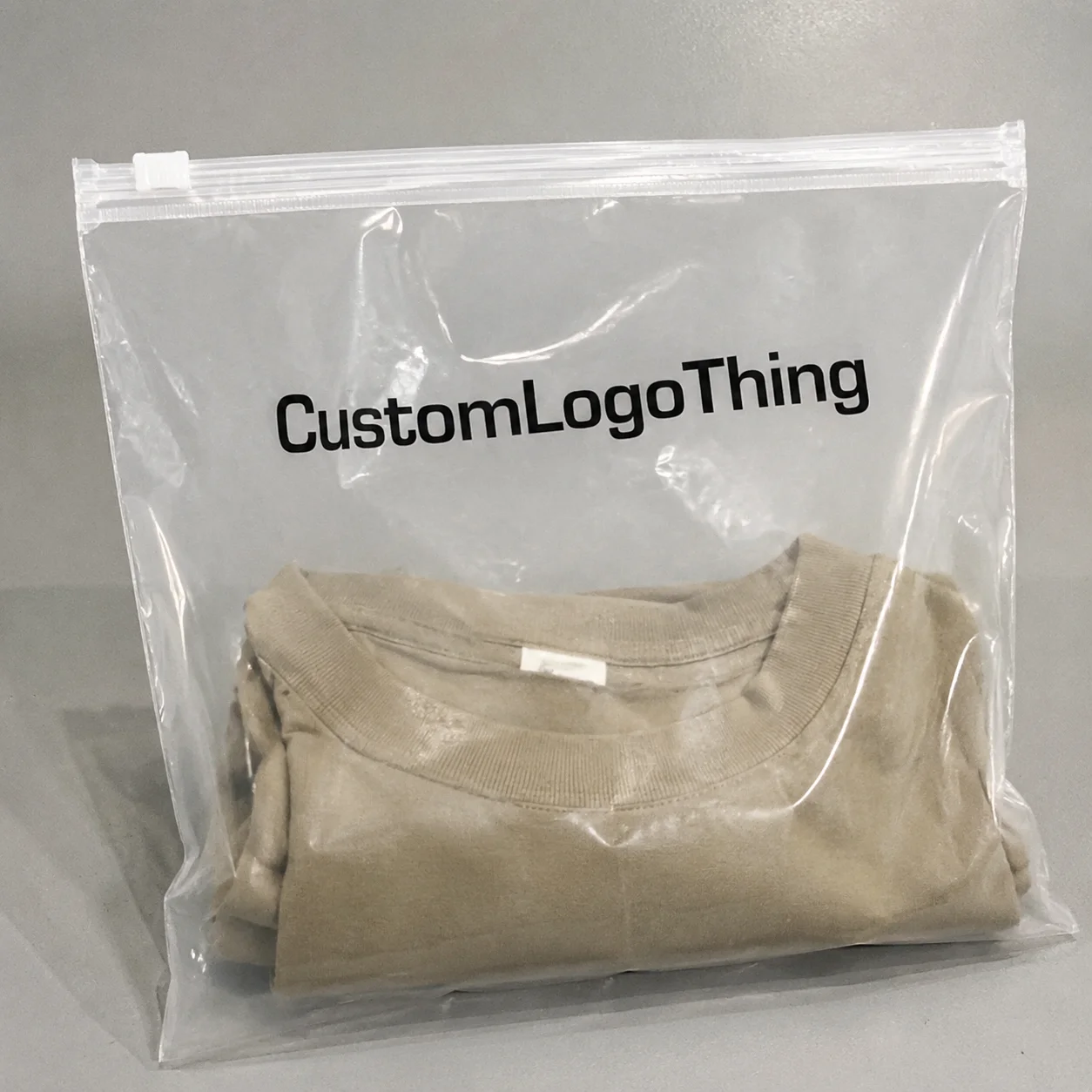
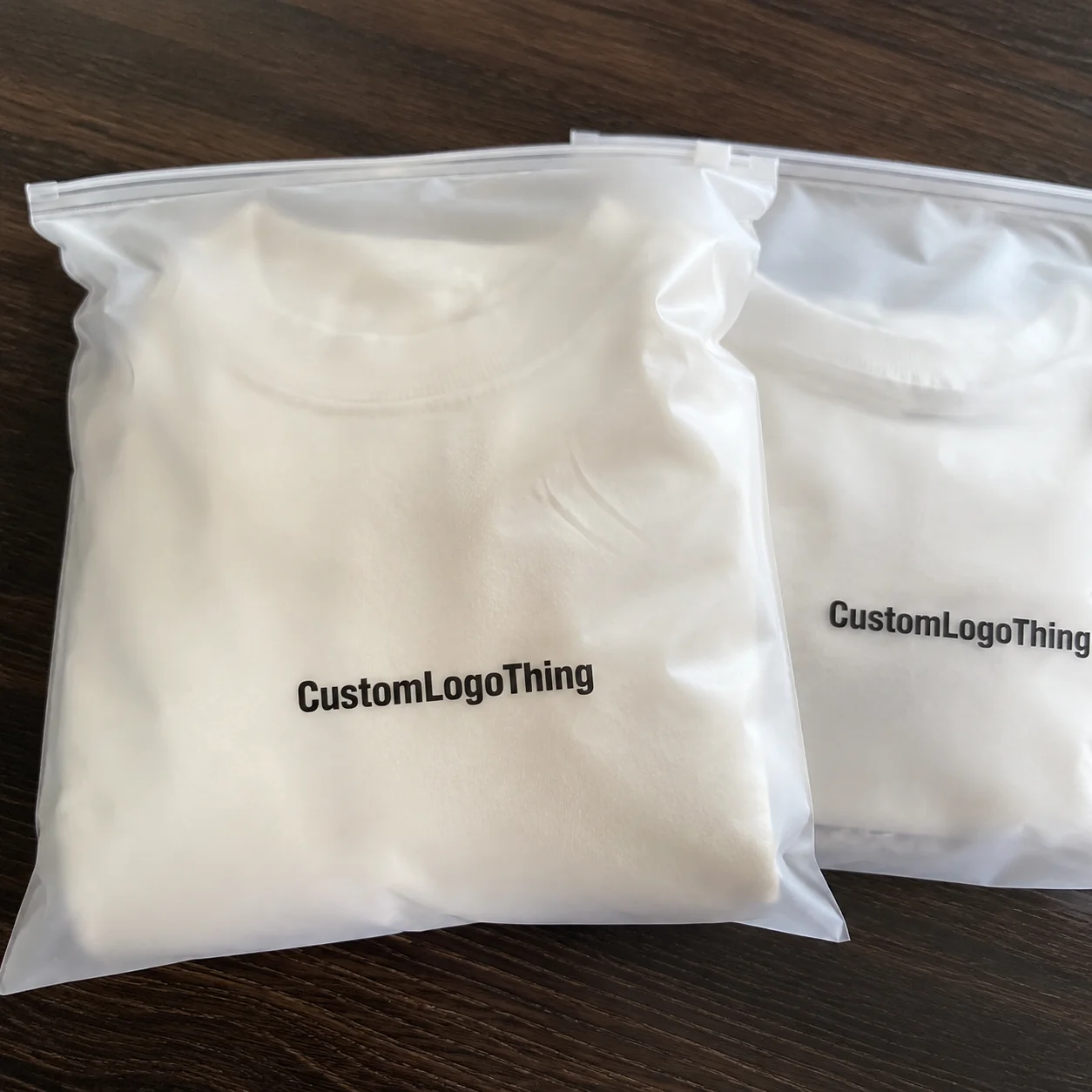
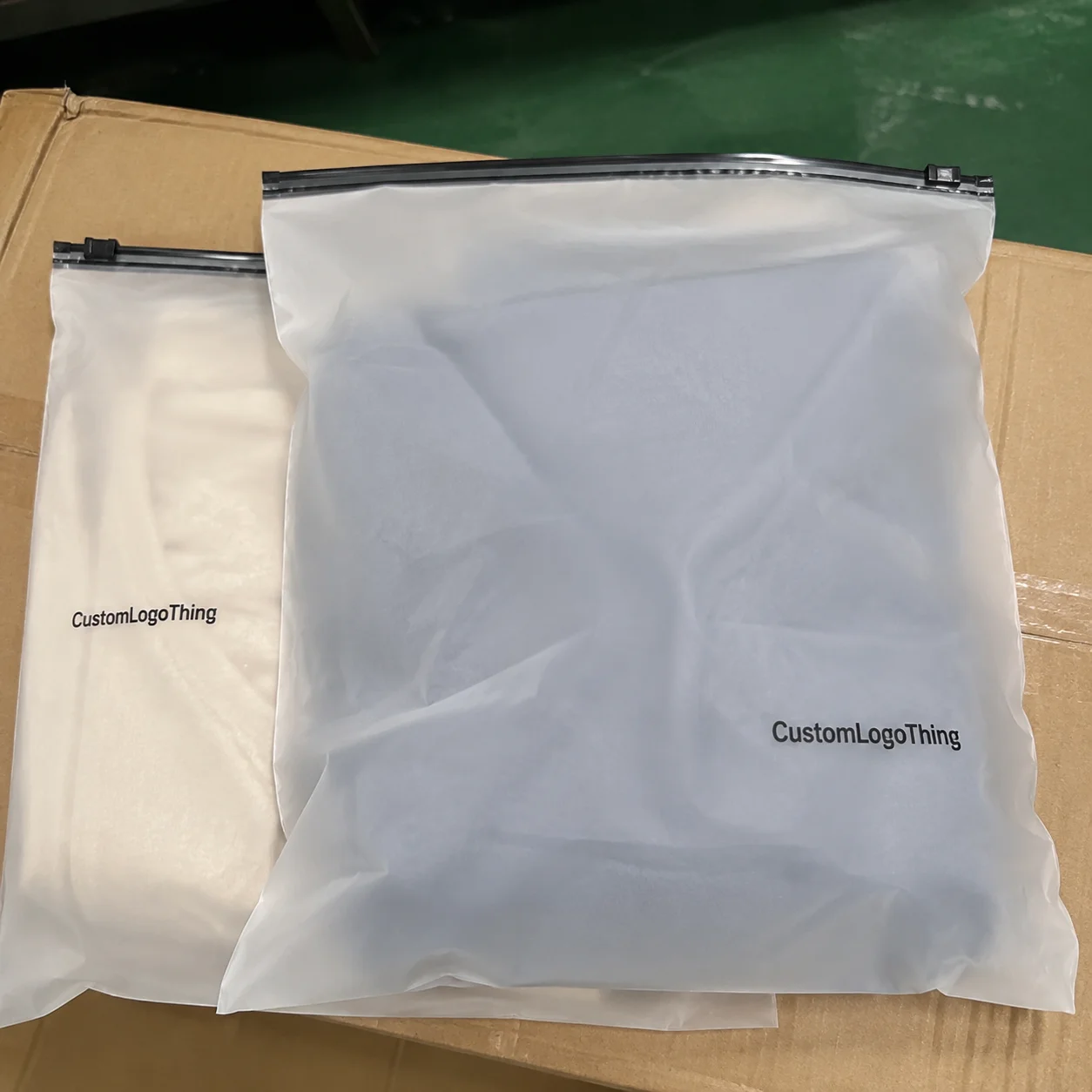
Buy Frosted Zipper Bags Wholesale Custom Logo Packs
Frosted Zipper Bags Wholesale Custom Logo: Why Buyers Switch
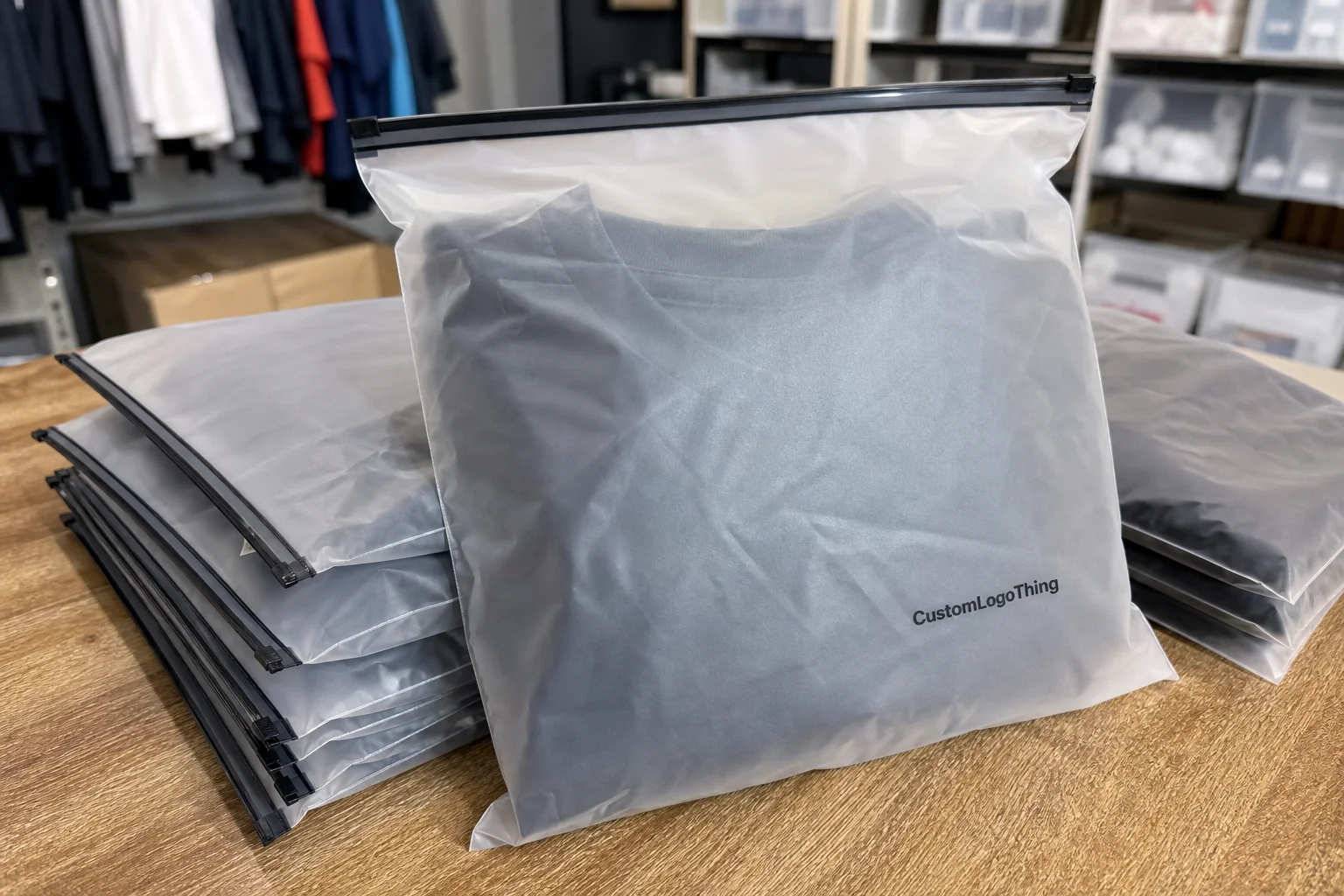
Put two identical products on a fulfillment table. One sits in a thin clear pouch with a loose label. The other sits in Frosted Zipper Bags wholesale custom logo packaging with a clean mark, a soft matte surface, and a closure that actually reseals. The product did not change. The buyer’s perception did.
That is the commercial reason brands move to frosted resealable packaging. Not because matte plastic is fashionable. Because it can make a lower-cost item feel more deliberate, more private, and more controlled without jumping straight to rigid boxes or elaborate retail packaging.
Clear zipper bags show everything: product color, wrinkles, inserts, dust, and every small mismatch in a mixed assortment. Matte frosted bags reveal just enough. Opaque bags hide the product entirely, which can be useful for privacy but risky for shoppers who want visual confirmation. Frosted film sits in the middle. It softens visibility, reduces glare in photos, and gives a logo more space to breathe.
The zipper does another job. It turns a disposable-looking pouch into packaging the customer may reuse for storage, travel, samples, or spare parts. A custom logo then converts a plain bag into controlled branded packaging. That matters for apparel accessories, cosmetics, wellness products, jewelry, stationery, samples, electronics parts, and event merchandise.
The real buyer question is not “Does this look nice?” It is “Will the bag look premium, protect the product, arrive on time, and still hit the unit-cost target?”
From a packaging buyer’s point of view, Frosted Zipper Bags Wholesale custom logo orders are usually about risk reduction. The bag needs to look polished enough for retail, practical enough for fulfillment, and consistent enough that the fifth carton matches the first.
Product Details Buyers Should Confirm Before Ordering
A frosted zipper bag is a flexible plastic pouch with a semi-translucent matte finish, a resealable closure, and either printed or labeled branding. Most are made from PE, PP, PET-based laminates, or blended films depending on clarity, stiffness, recyclability claims, and product weight. The finish is not fully transparent. It diffuses light, which gives the bag its softer appearance.
That frosted effect matters in real selling conditions. It cuts harsh reflection under retail lights, reduces glare in ecommerce photography, and hides small color variation in mixed products. For items such as scrunchies, sample packets, phone accessories, bead kits, socks, or cosmetic tools, that diffusion can make the whole pack look calmer.
The zipper should be judged as a functional component, not a decorative one. A weak closure can cause product loss during packing or transit. A better zipper gives repeat opening, stronger containment, and improved customer convenience. In categories where returns are triggered by missing small parts, a reliable closure can protect margin.
Buyers should compare four construction choices before approving a quote:
- Single-side frosted: usually one matte panel and one clearer panel, useful when partial inspection matters.
- Full frosted: both sides carry the diffused finish, stronger for privacy and premium presentation.
- Flat pouch: cost-efficient for slim goods, samples, jewelry cards, and stationery.
- Stand-up pouch: better shelf presence for kits, cosmetics, or heavier product bundles.
Logo placement also needs early decisions. Common options include a centered front logo, top header branding, back-panel instructions, QR code, care icons, warning text, or a barcode area. Keep the zipper track, seal zones, and tear notches clear. Dense overprinting can flatten the premium look, especially if the ink coverage fights the frosted surface instead of working with it.
Honestly, I think this is the most common mistake: buyers treat Frosted Zipper Bags wholesale custom logo packaging like a blank billboard. It is not. The best versions use restraint. A simple mark, strong contrast, and enough empty space often outperform a full-panel graphic.
Material, Size, Thickness, and Print Specifications
A useful wholesale quote should capture more than width and height. Send bag size, usable inner dimensions, material type, film thickness, zipper style, opening orientation, print method, number of colors, finish, packing method, and delivery destination. If the product has sharp corners, a bulky insert, or a folded textile shape, include a photo with a ruler in frame.
Thickness is where cheap quotes often hide. Lighter gauges can work for soft goods, jewelry cards, paper samples, and small stationery kits. Heavier film is safer for cosmetics, hardware, electronics parts, and bundles that put pressure on the side seals. A typical lightweight retail pouch may sit around 2 to 3 mil. Heavier versions may move toward 4 mil or more, depending on the structure and use. For metric buyers, that is roughly 50 to 100 microns as a working comparison, though supplier specs vary by material.
Sizing should be based on the filled product, not the flat product. Small pouches suit jewelry, screws, pins, and samples. Mid-size bags fit skincare tools, cables, cosmetics, badges, and accessories. Larger frosted zipper bags support apparel, kits, multi-item retail packs, and Subscription Box Inserts. Add clearance for the zipper and top seal; a 6 by 9 inch outside size will not give 6 by 9 inches of usable fill space.
| Use Case | Common Size Range | Typical Film Choice | Practical Note |
|---|---|---|---|
| Jewelry, pins, small parts | 3 x 4 in to 4 x 6 in | 2 to 3 mil frosted PE or PP | Check barcode readability if the logo is close to the bottom edge. |
| Cosmetic tools, cables, samples | 5 x 7 in to 6 x 9 in | 3 to 4 mil film | Stronger zipper tracks help if the customer will reuse the pouch. |
| Apparel, kits, event merchandise | 8 x 10 in to 12 x 15 in | 3 to 5 mil film or laminate | Confirm carton count because larger empty bags still take up space. |
Print method changes both price and appearance. Screen printing works well for simple bold logos, especially one-color marks. Digital printing is useful for lower-volume artwork, variable designs, and shorter trial runs. Flexographic or gravure printing can bring tighter unit costs at larger quantities, but plates and setup costs need to be spread across the order.
Color behaves differently on frosted film than it does on white paper or coated board. Dark logos usually read well. Fine gradients, pale colors, and thin serif type can disappear. A white ink base may be needed for contrast, especially for full-color marks. Request a dieline or proof before production so logo scale, zipper clearance, edge margins, and barcode scan areas can be checked before the order moves forward.
For broader specification discipline, many buyers also reference testing and packaging-performance resources from groups such as ISTA when shipping damage risk matters. Frosted zipper bags are not shipping cartons, but they still sit inside a wider product packaging system.
Cost, Pricing, MOQ, and Unit Cost Drivers
Wholesale pricing is driven by five variables: size, film thickness, order quantity, print complexity, and add-ons. Hang holes, vent holes, tear notches, reinforced zippers, euro slots, frosted window combinations, and individual carton packing can all move the number.
MOQ is not just a supplier preference. It is math. Setup labor, screens, plates, artwork checks, press time, waste allowance, and carton packing must be absorbed somewhere. A 1,000-piece test run can carry a much higher unit cost than a 10,000-piece reorder because the setup work is spread across fewer bags.
As a realistic buying range, simple Custom Frosted Pouches may land around $0.12 to $0.35 per unit at moderate wholesale quantities, depending on size, thickness, print count, and freight. Larger or heavier retail pouches can move beyond that. Small trial quantities with digital printing may price higher per unit but reduce inventory risk. These are planning ranges, not a promise; material markets, artwork coverage, and shipping mode can shift the final quote.
Artwork drives cost fast. One-color logos are usually more economical than full-panel multicolor graphics, particularly where screens, plates, or setup labor are required. A front logo plus small back-panel care copy is usually cleaner and cheaper than wrapping the entire bag in heavy ink. For many brands, that restraint also looks more premium.
Freight deserves attention. Empty flexible bags are lightweight, but bulky cartons still consume space. Air shipping can punish volume. Ocean or ground freight can reduce landed cost, but it adds calendar time. Compare total landed cost, not just ex-factory unit price.
| Cost Driver | Lower-Cost Direction | Higher-Cost Direction |
|---|---|---|
| Size | Small flat pouch | Large apparel bag or stand-up format |
| Thickness | Light film for soft goods | Heavy film for hardware or reuse |
| One-color centered logo | Full-panel multicolor artwork | |
| Quantity | Higher order volume | Small test batch with setup costs |
| Add-ons | Standard zipper and no hang hole | Reinforced zipper, venting, hang slot, special packing |
A thicker custom frosted pouch can still be the cheaper total system if it replaces a separate label, inner sleeve, printed card, or small retail carton. That is where package branding and cost control can align. To get a factual quote from Custom Logo Things, send target quantity, dimensions, material preference, logo file, print colors, delivery location, and desired in-hand date. Buyers comparing packaging categories can also review Custom Packaging Products to see whether bags, boxes, or mixed formats fit the order better.
Production Process, Proofing Timeline, and Lead Time
The ordering sequence should be plain: inquiry, specification check, quote, artwork review, digital proof, sample or pre-production approval when needed, mass production, quality control, packing, and shipment. Skip one of those steps and the risk usually reappears later as a fit problem, print issue, or schedule miss.
Simple stocked-size orders move faster. Custom dimensions, specialty materials, stand-up construction, heavy ink coverage, and exact color matching require more coordination. A straightforward logo order may often move through proofing in a few business days once usable artwork is supplied. Production might run around 12 to 20 business days after approval for many common orders, with transit added separately. Larger runs, custom tooling, or complex printing can take longer.
Proofing matters because a zipper bag has functional zones. Artwork must avoid seams, zipper tracks, heat-seal areas, hang holes, tear notches, and bottom gussets. A logo that looks centered on a flat dieline may feel too high once the bag is filled and sealed. Barcodes need quiet zones and contrast. QR codes need enough size to scan through real lighting conditions, not just on a bright monitor.
The approval bottleneck is often controlled by the buyer. Delayed artwork, low-resolution files, missing Pantone references, late copy changes, and shifting size requests stretch the timeline more than production itself. Vector logo files help. So do clear instructions: front logo size, back copy, barcode placement, and any warnings.
Build buffer time for launch dates, retail resets, subscription box schedules, trade shows, and seasonal promotions. Five extra business days can be the difference between a controlled inbound process and a warehouse team repacking under pressure. Custom Logo Things approaches frosted zipper Bags Wholesale Custom Logo projects by confirming production details early, so the buyer is not discovering size, print, or closure issues after the cartons arrive.
For buyers managing repeat orders, documented specs are also valuable. Keep the approved proof, material description, color references, carton count, and packing notes. The reorder should not depend on someone remembering what was approved two campaigns ago.
Quality Checks That Separate Retail-Ready Bags From Cheap Bags
Sales photos can hide bad packaging. Inspection does not. Judge the bag by closure strength, seal consistency, print registration, surface finish, odor, scratch resistance, and carton packing. A frosted pouch that looks good for ten seconds but fails after three openings is not retail-ready.
Common failure points are predictable. Weak zipper tracks split or refuse to close evenly. Frosted film can look cloudy, streaked, or uneven. Ink can rub if adhesion is poor. Corners can split under pressure. Logos printed too close to the zipper look cramped and may distort during filling.
Use a receiving checklist for bulk orders:
- Count cartons and compare against the packing list.
- Pull random samples from multiple cartons, not just the top box.
- Open and close the zipper at least 10 times on selected samples.
- Rub the printed area with moderate pressure to check ink adhesion.
- Compare final bags with the approved proof for size, logo position, and color.
- Load the actual product into a sample bag before releasing the full batch to fulfillment.
Compliance depends on the product. Food contact may require material declarations. Children’s products may need specific warnings or testing. Suffocation warnings can be required for certain poly bag sizes and openings. Recyclable claims should be handled carefully; the EPA’s recycling guidance is a useful starting point, but local acceptance varies and supplier claims should be documented.
Here is the uncomfortable comparison: the cheapest bag is often cheap only until it causes repacking labor, product damage, customer complaints, or delayed launch timing. If a warehouse team spends 40 extra labor hours fixing weak closures, the unit price was never the real cost.
Clear specifications reduce disputes. A documented proof, material spec, tolerance range, and packing instruction give the buyer, manufacturer, and fulfillment team the same reference point. That is especially important for retail packaging, where small presentation failures can look larger on the shelf than they did in the conference room.
Next Steps to Place a Wholesale Custom Logo Bag Order
Start with the product, not the bag. Measure length, width, thickness, and filled shape. Then choose a bag style: flat, stand-up, single-side frosted, full frosted, standard zipper, or stronger zipper. Decide whether the item should be partly visible, mostly private, or clearly inspectable.
Set a target quantity and a delivery deadline. If the order supports a launch, retail reset, subscription box, or event, work backward from the in-hand date. Add time for proofing, possible sampling, production, quality control, and transit. A bag arriving two days after the product launch is not late by a little. It is late.
Prepare a vector logo file when possible, usually AI, EPS, or editable PDF. Add any required icons, care copy, barcode, QR code, legal warning text, lot code area, or country-of-origin copy. If color matters, send Pantone references or approved brand values, but remember that frosted film will not behave like coated paper, corrugated board, or custom printed boxes.
If product dimensions are uncertain, request two or three size options. The zipper, seal, and fill space change the final fit. A pouch that looks generous flat may become tight once the item has thickness. For apparel, folded height and trapped air matter. For cosmetics or hardware, edge pressure matters more.
To speed up a quote, send product photos, dimensions, quantity tiers, print color count, delivery ZIP code or country, and whether samples are required. Buyers with broader sourcing needs can review Wholesale Programs to align quantities, reorder planning, and packaging categories under one purchasing process.
Compare total landed cost before approving the cheapest line item. Include setup, freight, cartons, possible storage, and any savings from eliminating labels, inserts, sleeves, or secondary packaging. Good packaging design is not decoration alone; it is a cost structure, a presentation system, and a fulfillment tool in one small format.
If you are ready to source frosted zipper bags wholesale custom logo packaging, send Custom Logo Things your specs for a factual quote, realistic production timeline, and practical recommendations before the order moves into production.
FAQ
What is the usual MOQ for custom frosted zipper bags wholesale orders?
MOQ depends on size, material, print method, and whether the bag uses a stocked mold or fully custom dimensions. Lower quantities may be possible with simpler printing, while larger runs usually produce a better unit cost. Ask for pricing at two or three quantity tiers, such as 1,000, 5,000, and 10,000 pieces, to see where the cost break becomes meaningful.
Can frosted zipper bags with a custom logo be printed in full color?
Yes, full-color printing is possible, but the best method depends on order size, artwork complexity, and color accuracy requirements. Simple logos often perform well with one or two colors. Full-color artwork may require digital, flexographic, or gravure printing. Because frosted film diffuses light, proofs should confirm contrast, white ink needs, and barcode readability.
How thick should wholesale frosted resealable bags be?
Lightweight products such as jewelry cards, samples, and stationery can often use thinner film. Heavier or sharper products may require thicker material, stronger seals, or reinforced construction. The safest approach is to match thickness to product weight, edge profile, shipping method, and expected reuse rather than choosing the lowest gauge on the quote.
How long does production take for frosted zipper bags with logo printing?
Lead time depends on artwork approval, bag specifications, order quantity, material availability, and print method. Stocked sizes with simple logos usually move faster than custom dimensions or high-coverage printing. Allow extra time for proofing, sampling if required, quality control, and transit, especially if the order is tied to a launch date or retail delivery window.
Are frosted zipper bags better than clear zipper bags for branded packaging?
Frosted bags create a softer, more premium look while still giving customers partial product visibility. Clear bags are better when full inspection or color matching is the priority. For many retail and ecommerce brands, frosted bags strike a useful balance between privacy, presentation, logo visibility, and practical reuse.