For apparel buyers, the phrase Custom Garment Bags Plastic china factory sounds narrow. In practice, it points to a surprisingly broad sourcing decision: protection, presentation, unit cost, and how tightly a brand can control packaging from the warehouse to the retail floor.
A thin plastic garment bag can do more than cover clothing. It can reduce dust pickup, limit scuffing in transit, cut moisture exposure, and keep a suit or dress from arriving wrinkled after return handling. That is a lot of work for what looks like a simple film sleeve.
Brands, wholesalers, laundry chains, and uniform programs all use different versions of the same basic item. The real decision is not “bag or no bag.” It is choosing the right thickness, seal, finish, closure, and print method for the use case. Once those variables are set, pricing becomes more understandable and quality disputes become less common.
As a sourcing rule, the five variables that matter most are clarity, thickness, finish, seal type, and branding method. Define those early and supplier quotes become comparable. Leave them vague and every quote becomes a different product.
Why plastic garment bags still matter for protection and presentation
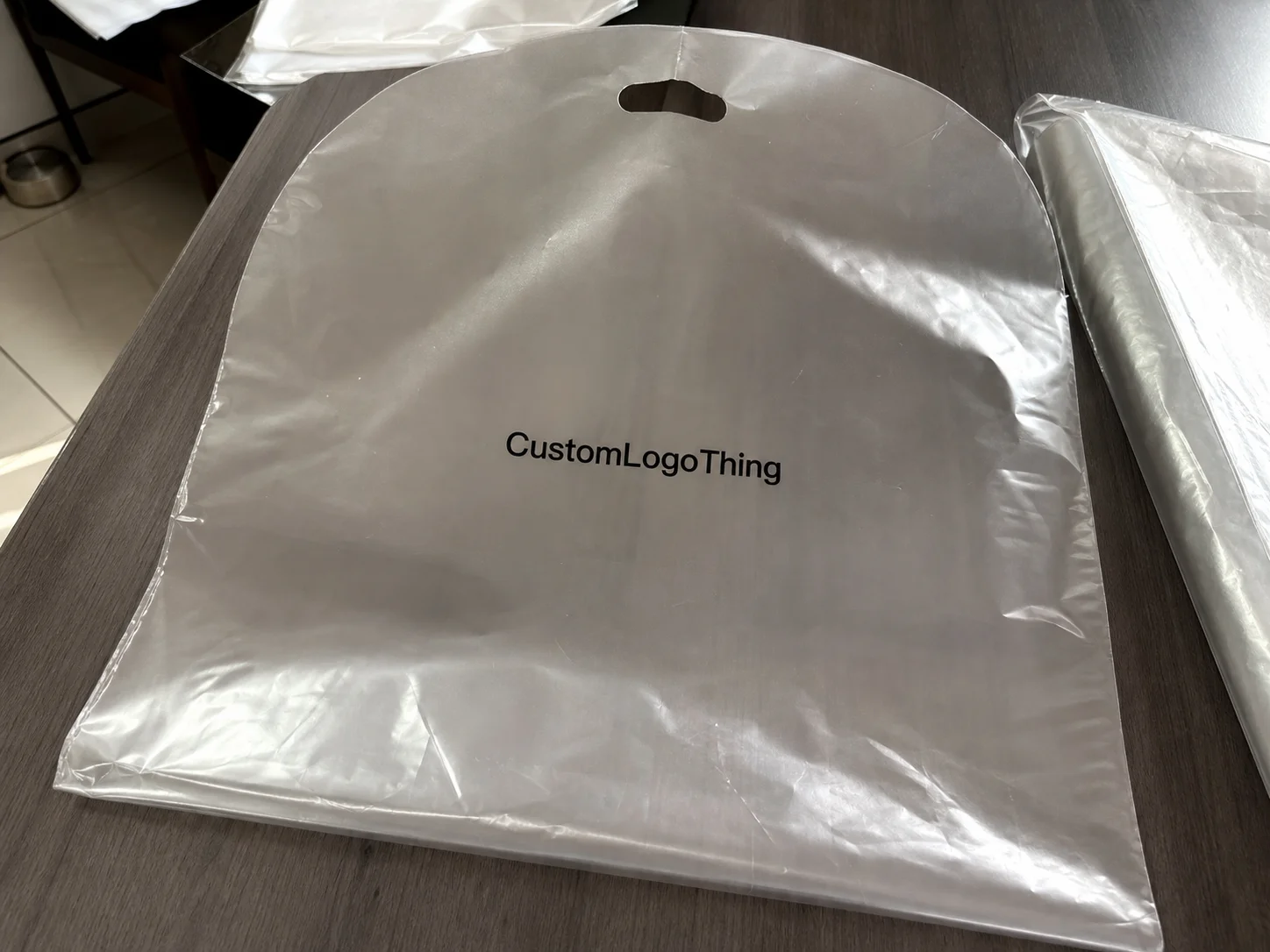
Plastic Garment Bags remain popular because they solve a practical problem cheaply. A clear LDPE cover around a jacket or dress keeps dust off during storage, reduces abrasion from carton movement, and makes garments look cleaner at first touch. For retail packaging, that first impression matters more than many buyers want to admit.
From a packaging buyer’s point of view, the appeal is simple: the item is functional, visible, and repeatable. Unlike some branded packaging formats, a garment bag does not need a complex structural design to make an impact. A logo print, a hanger slot, and a consistent clear finish can already improve presentation.
Plastic also wins on handling. It is light, takes little carton space, and can be folded or packed flat without much waste. Compared with paper or fabric alternatives, the per-unit cost is usually easier to control, especially at scale. The trade-off is obvious: plastic is not the right answer for every brand story, and it is not the best option when sustainability claims need to be central rather than secondary.
China factories matter because they can convert resin at scale, print in multiple formats, and keep unit costs low once volumes rise. For many apparel programs, the economics are hard to ignore. A custom garment bags plastic china factory can often offer better price tiers at 5,000, 10,000, or 50,000 pieces than a local converter working from smaller resin lots.
That price advantage can disappear if the spec is unstable. A bag that is overbuilt for the garment, overprinted for the brand, or packed inefficiently can eat into margin quickly. In packaging, the hidden costs are often not the resin itself; they are the setup, waste, rework, and freight decisions attached to it.
How custom garment bags are made in a China factory
A custom garment bags plastic china factory usually starts with resin selection, then moves through film extrusion or roll conversion, printing, cutting, sealing, hole punching, zipper installation if needed, inspection, and carton packing. The details vary by factory type, but the production sequence is broadly the same.
Material choice changes everything. LDPE is soft, flexible, and generally clearer, which makes it a favorite for apparel covers. HDPE is crisper and can be lower cost, but it may not have the same drape or visual softness. CPP gives more gloss and a cleaner premium look. Some buyers specify EVA blends when they want extra flexibility or a softer feel.
Printing method is the next big fork. Gravure printing suits larger runs and gives stable color consistency once the plates are approved. Flexo is usually better for simpler graphics and can be more economical on lower to mid-volume jobs. For plain clear bags, some buyers skip printing entirely and use separate branding elements elsewhere, which can be the smarter choice for lower MOQ orders.
Structurally, garment bags can be built with side gussets, center seams, bottom seals, hanger openings, ventilation holes, zipper closures, or flap-style fronts. A suit cover for premium retail is not the same as a laundry bag or bulk shipping sleeve. The difference shows up in the closure, seam placement, and how the garment sits once packed.
The factory can control some variables tightly and others only partly. Print registration, cut accuracy, and thickness tolerance are usually manageable if the line is well run. Resin market swings, energy costs, and freight conditions sit outside the factory’s full control, which is why landed cost can move even when the quote itself looks stable.
One practical observation from sourcing is that the same product description can produce two very different results depending on whether the factory is primarily a film producer, a printing converter, or a packaging assembler. A factory with strong extrusion capability may deliver more consistent thickness. A converter with better finishing equipment may handle closures and carton packing better. Asking where the factory is strongest avoids surprise weak points later.
Specs that shape performance, shelf appeal, and compliance
Thickness is usually described in microns or mils, and it affects puncture resistance, drape, clarity, and perceived quality. A heavier bag is not automatically better. If a bag is too thick for the garment, it can look stiff, waste resin, and raise cost without adding meaningful protection.
For lightweight shirts or dresses, a thinner bag may be enough. For coats, uniforms, or export packing, buyers often move to a thicker film. In practical terms, many apparel programs sit somewhere around 18–40 microns, but the right number depends on garment weight, storage duration, and whether the bag will be handled repeatedly.
Thickness tolerance is easy to ignore and expensive to miss. If a supplier quotes 25 microns and delivers film that regularly drifts down toward the low end, the bag can feel weaker than expected even when it technically meets a broad description. Asking for a tolerance range and sample measurement method is more useful than asking for “better quality.”
Size planning is another place where mistakes happen. Buyers should define shoulder width, body length, hem allowance, and whether the garment will hang or be folded. If a coat is packed with accessories or multiple pieces, the bag needs extra room. Too short, and hems crease. Too tight, and seams are stressed.
Printing and branding choices affect both shelf appeal and cost. A one-color logo on clear film can look neat and disciplined. Full-surface artwork creates stronger package branding, but it also raises print complexity. Matte finish can reduce glare under retail lighting, while glossy film often reads more premium on the hanger. Transparent windows are useful when the garment itself is part of the selling story.
Compliance is less visible, but it matters. If the bags are heading into regulated markets, ask about odor control, restricted substances, recycled-content claims, and any destination-market packaging requirements. Buyers who make environmental claims should check whether the supplier can support them with documentation. For broader packaging sustainability guidance, the EPA’s packaging and product stewardship resources are a useful reference point.
Functional details matter in daily use too. Anti-static performance can help in dry climates. Tear notches improve opening speed. Resealability matters for wardrobe storage. And if the bag is only for short-term transit, the spec can be simpler than one intended for seasonal storage or repeated handling in a distribution center.
| Option | Typical use | Common thickness range | Branding level | Relative cost |
|---|---|---|---|---|
| Plain clear LDPE bag | Basic apparel storage and transit | 15–25 microns | Low | Lowest |
| Printed LDPE or HDPE bag | Retail packaging and branded programs | 18–35 microns | Medium to high | Mid-range |
| Premium zipper or gusseted bag | Coats, suits, uniforms, long-term storage | 25–40+ microns | High | Highest |
Custom garment bags plastic china factory: cost, pricing, and MOQ
Pricing is driven by a handful of variables: resin grade, bag dimensions, thickness, print colors, tooling or plate setup, zipper or hanger hardware, and how the bags are packed for export. If you want a clean quote, you need to spell those out. A vague request like “custom bag for dresses” will produce vague numbers.
MOQ is where many buyers first feel the economics. Larger print runs reduce per-unit cost because setup gets spread across more pieces. Smaller orders are not impossible, but they usually carry higher unit pricing because the factory still has to pay for plates, machine changeover, scrap, and labor.
Here is the broad pricing logic buyers usually see:
- Plain clear bags are usually the cheapest.
- Branded printed bags sit in the middle.
- Premium zipper, gusseted, or specialty-finish bags cost more.
For example, a plain clear garment bag at 5,000 pieces may land far below a printed version with two colors and a zipper closure. Exact figures depend on size, material, and market conditions, but the difference can be large enough to change a product line’s margin. That is especially true in apparel, where packaging can quietly eat into profit if it is over-specified.
Typical buyers should expect price bands rather than fixed numbers. A basic unprinted cover can be priced very tightly at volume, while a fully branded premium bag can move into a noticeably higher bracket once print plates, extra sealing, and stricter finish requirements are added. For reference only, lower-spec programs often stay near the bottom of the market, mid-tier printed bags usually sit in the middle, and specialty zippered bags can command a meaningful premium. The exact gap depends on resin cost and whether the order is standard or fully customized.
Quote structure also varies by factory. Some quotes are ex-works, meaning you still need to add freight, duties, local delivery, and possibly customs brokerage. Others bundle cartons or printed labels. That is why a “cheap” quote can become expensive once landed cost is calculated. A buyer comparing only unit price is often comparing the wrong number.
I also recommend asking for two quotes: one at your target MOQ and one at a higher volume. The second quote shows the savings curve. Sometimes the jump from 5,000 to 10,000 pieces barely changes the unit cost. Other times it drops enough to justify planning a longer order cycle. That kind of comparison is more useful than chasing the lowest line item.
Resin cost deserves special attention because it moves more than many buyers expect. A factory may hold labor stable, but raw material shifts can change the quote from one month to the next. If a supplier warns that pricing is valid for only a short period, that is usually not a sales trick. It is a reflection of how plastic pricing works.
If you are expanding your sourcing list, it can help to review broader Custom Packaging Products so the garment bag is not treated as an isolated purchase. Many teams discover that custom printed boxes or hang tags should be aligned with the same brand color logic and carton labeling rules.
Production steps and lead time: from inquiry to shipment
A typical order begins with a specification brief, then artwork submission, sample approval, order confirmation, production, inspection, packing, and export booking. That sounds straightforward. The delays usually happen in the middle, not at the beginning. Sample approval is often the first bottleneck, especially if the buyer keeps changing dimensions or print details.
Standard items can move quickly, but custom work needs more patience. If new printing plates are required, or if the bag structure is unusual, the timeline stretches. In many cases, sample development may take several business days, while mass production may follow in roughly 12–20 business days after proof approval, depending on factory loading and order size.
Buyers should send the factory a complete set of information early:
- Target size and garment type
- Thickness in microns or mils
- Material preference
- Print colors and artwork files
- Closure style and hanger opening
- Carton count and packing preference
- Shipping destination and delivery date
That list may sound basic, but missing one item can create days of back-and-forth. And in sourcing, days become money quickly. If you are using the bag as part of a larger branded packaging program, it also helps to align approval timing with any related packaging design work so that color and logo usage stay consistent across product packaging.
One more common mistake: assuming the fastest factory reply means the fastest shipment. Sometimes it does. Sometimes it means the sales team is aggressive, while production is already full. Always ask about sample timing and mass-production timing separately. Then ask how freight booking will be handled, because the shipping window can matter as much as the manufacturing window.
In practice, the cleanest orders are the ones that arrive with final artwork, a confirmed sample, and a realistic ship date. Buyers who rush approval but neglect the packing details often spend more time fixing carton counts, label placement, or pallet requirements than they saved at the beginning.
Common sourcing mistakes that lead to quality problems
The most frequent mistake is vague language. “Good quality” and “strong plastic” are not specifications. They do not tell a factory what thickness, seal strength, clarity level, or print result you actually want. Measurable requirements are safer.
Pre-production samples or reference samples are worth requesting every time the order is new or the supplier is new. They help lock down how clear the film looks, how the seal behaves, and how the logo appears on the substrate. The gap between a sales image and a real sample can be larger than buyers expect.
Thickness drift and weak seals are two quality problems that show up often. If the factory is trying to reduce resin usage, the bag may feel thinner than promised. If machine settings are off, the seal can split under load. That is why specifications, tolerance ranges, and inspection criteria matter more than a polished quotation.
“The lowest quote is rarely the cheapest bag. The cheapest bag is the one that arrives on spec, in the right carton count, and without a second round of rework.”
Artwork mistakes are another common issue. Logos with thin lines can disappear on transparent film. Low-resolution files blur when enlarged. Colors can shift depending on substrate and print process. If brand accuracy matters, test the visual result before mass production. This is especially true when the garment bag is part of a wider branded packaging system that includes cartons, tissue, and swing tags.
Shipping and storage can create their own problems. Cartons crushed in transit can deform bags, and heat can cause odor or sticking. Apparel buyers should also think about how sensitive their garments are to smell. Some fabrics absorb odors easily, which is a good reason to ask the factory about packaging environment and post-production handling.
Another issue that appears late is overpromising on environmental performance. If a supplier says a bag is recycled, recyclable, or compostable, that claim should be backed by real documentation and a clear material breakdown. Mixed-material construction can complicate the claim quickly. Buyers who need a sustainability statement should get the wording reviewed before printing anything on the bag.
Better factory communication and cleaner approvals
A one-page spec sheet saves time. Keep it simple, but include dimensions, material, thickness, print method, closure type, carton count, and acceptable tolerances. If you have a reference sample, name it. If you need a certain finish, define it. “Matte but still clear” and “glossy premium look” are useful descriptions, but they work best when tied to an actual sample or image.
For higher-value orders, ask for video or photo confirmation during production. That can catch print alignment issues, cut problems, or packing errors before shipment. It is not intrusive if you frame it correctly; most factories are used to documenting key stages for buyers.
Request a comparison sample if you are deciding between two materials or two finishes. Under retail lighting, a film that looks fine on a desk can look too shiny or too cloudy on a hanger rack. That kind of practical test is cheap compared with discovering the mismatch after a full run ships.
Negotiate around value, not just price. A slightly higher unit cost may be worth it if the factory offers stricter inspection, better carton labeling, or a shorter lead time that helps you avoid air freight. In packaging, downstream savings often matter more than the quote itself.
And keep the approval trail tidy. Signed artwork, approved sample, and final packing details reduce disputes. They also make repeat orders faster. Once a garment bag spec is locked, a good supplier can repeat it with far less friction.
For factories that are serious about quality control, it helps to ask how they check thickness, seal strength, print alignment, and carton counts. Some factories use spot checks only. Better ones measure at defined intervals and keep simple records by lot. That small difference often shows up in repeatability.
Industry references can be useful too. Packaging professionals often look to standards bodies and material guidance from groups such as ISTA for transport testing principles and FSC when paper-based components or environmental claims enter the picture.
Build a quote-ready spec and shortlist suppliers
Before contacting suppliers, build a buyer checklist with the exact bag size, target thickness, printing needs, closure style, and annual order estimate. If you do not know the annual volume, give a range. Factories can work with a forecast. They struggle with guesses.
Then request three comparable quotes and normalize them by unit cost, MOQ, sample fee, carton configuration, and incoterms. That last point matters more than most new buyers think. The cheapest offer on paper may be the most expensive once freight, duty, and handling are added.
Shortlist factories that can show relevant production photos, material options, and quality-control methods. A supplier who can discuss print plates, seal checks, and thickness tolerance is usually more credible than one who only talks about low price. You want a partner that understands both product packaging and production reality.
If the order is strategic, ask for a sample pack and a production timeline in writing before you pay a deposit. A written timeline is not a guarantee, but it gives you something to manage against. That is especially useful if the garment bag is part of a larger retail packaging launch or seasonal collection.
Finally, balance brand presentation, protection, and landed cost. That is the real decision. Not “plastic or not,” and not “cheap or premium.” It is whether the bag supports the garment, the brand, and the shipment without waste. A well-specified order from a custom garment bags plastic china factory can do all three, and repeat orders become easier once the spec is locked.
A strong shortlist usually includes more than one factory type. If one supplier is best at extrusion and another is better at printing, that difference can matter depending on whether the job is simple or highly branded. Buyers who only compare final price often miss the production capability underneath it.
FAQ
What should I ask a custom garment bags plastic china factory before ordering?
Ask for material options, thickness ranges, print methods, MOQ, sample Costs, Lead Time, and whether the quote includes cartons and export packing. Also request proof of similar garment-bag production so you can judge clarity, sealing quality, and branding consistency.
How do I choose the right thickness for custom garment bags?
Match thickness to use case. Lightweight apparel storage needs less material than heavy coats, long-term warehouse storage, or export packing. Ask for measured thickness in microns or mils and confirm whether the factory’s tolerance is acceptable for your product.
Why do quotes from China factories vary so much for garment bags?
Price changes with resin grade, bag size, print colors, tooling, MOQ, closures, and packaging format. Freight, duty, and carton configuration can also change the real landed cost more than the base unit quote suggests.
How long does custom garment bag production usually take?
Standard orders can move quickly, but custom artwork, new sizing, or specialty closures add sample and production time. The safest plan is to confirm sample lead time, mass-production turnaround, and shipping transit separately.
What are the most common quality issues with custom garment bags?
The biggest problems are weak seals, inconsistent thickness, poor print alignment, and bags that arrive with odor or damage from rough packing. Pre-production samples and clear written specs reduce these risks dramatically.
Do buyers always need printed garment bags?
No. In some programs, a plain clear bag performs better because it lowers cost and keeps the garment visible. Printing is worth it when the bag is part of the brand experience or when identification and retail presentation matter more than minimum spend.


