Most Custom Garment Polybags bulk order mistakes do not begin with the printer or the resin supplier; they start with a vague specification, a rushed approval, or a buyer assuming the bag only needs to look acceptable instead of actually working on the packing line and in transit. The bag itself is rarely the expensive part. The cost shows up later in returns, crushed garments, slow packing, repacking labor, and avoidable write-offs that can quietly erase margin.
The difficult part is that garment type changes everything. A folded tee, a woven shirt, a heavyweight hoodie, and a delicate knit each behave differently inside a polybag, and each one needs the right inner dimensions, film feel, closure method, and clarity level. If the bag is for retail packaging or e-commerce fulfillment, the goal is not simply to order a branded sleeve. The job is to match the packaging to how the garment is folded, handled, stacked, shipped, and displayed.
Buyers usually want a clean process, a fair quote, and a finished bag that protects the product without slowing operations. That is the practical standard. If you are trying to avoid Custom Garment Polybags bulk order mistakes, the most effective move is to confirm the specification before the PO, not after the first carton arrives.
Why bulk garment polybag orders go wrong so often
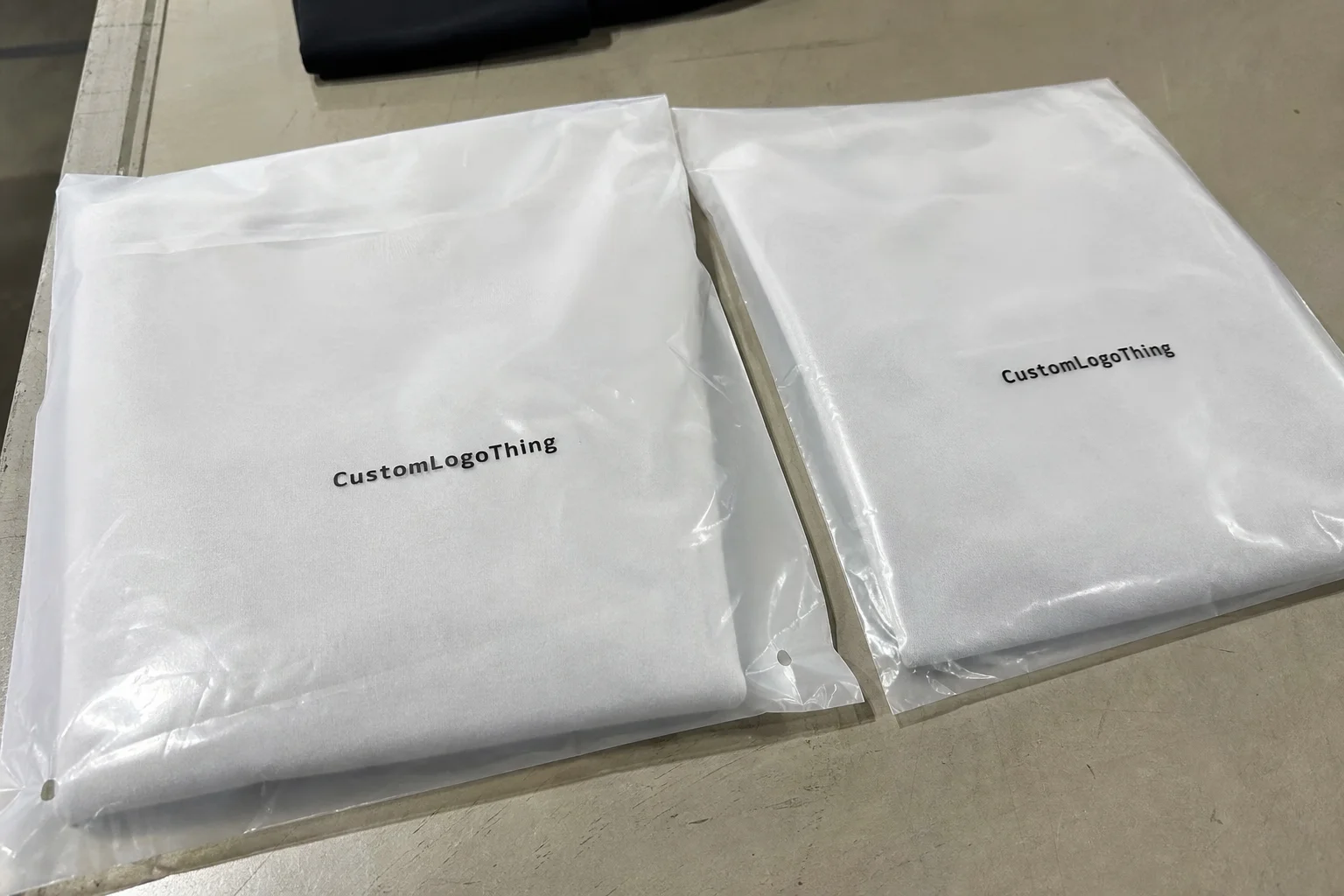
The most common surprise is simple: the bag price looks low, but the consequences of a bad fit are not. A polybag that is too narrow can wrinkle the garment, fight the fold, or tear at the seam. A bag that is too loose can look sloppy, shift around in carton packing, and give the impression that the product was handled carelessly. Once that happens across thousands of units, even a minor dimensional error becomes expensive.
Another reason Custom Garment Polybags bulk order mistakes keep happening is that buyers often approve a sample by eye. The sample may look clean on a table, but that does not mean it runs well at scale. On a real packing line, a slightly stiff film can slow workers down, a tight opening can snag cuffs or collars, and a slippery finish can make stacking harder. In practice, the sample needs to perform under speed, pressure, and repeated handling, not just photograph well.
Garment type matters more than many teams expect. Folded tees usually tolerate a simple flat polybag, while woven shirts often benefit from a more tailored fit that holds corners cleanly. Hoodies and fleece items often need extra width or a gusset so the bag does not compress the garment too aggressively. Fragile knits can be sensitive to abrasion and static cling, which means clarity, slip, and seal style all deserve attention before production starts.
Print placement, film clarity, and slip characteristics also affect warehouse speed and presentation. A centered logo that leaves enough room for seals and handling can keep things clean. A film that is too cloudy can hide the product, which matters in receiving areas and on retail shelves. A film that is too sticky can waste time when staff are separating bags or inserting folded pieces. These are small details, but they are exactly where mistakes tend to hide.
Better buying starts with a checklist, not a guess. Measure the folded garment, define the closure, confirm the film, and lock the print area before approval.
Choose the right bag style, film, and closure for your garments
There are a few standard bag formats worth knowing. Flat polybags are the simplest and work well for folded tees, lightweight tops, and many e-commerce garments. Side-gusset bags add expansion room, which is useful for bulkier items like sweatshirts or thicker woven apparel. Resealable bags help when the product may be opened and rebagged later, such as in returns handling or fulfillment centers that inspect and repack items. Perforated garment sleeves are common when speed matters and the operation wants easy opening without sacrificing presentation.
Material choice is usually between LDPE and PP, and each has a different feel. LDPE is flexible, softer, and often clearer in a way buyers like for practical garment display. PP tends to feel crisper, with more stiffness and a sharper look, which some brands prefer for package branding. Film gauge affects puncture resistance, stiffness, and how the bag handles under pressure. A thinner film may be fine for lightweight tees, while heavier garments or longer transit routes often justify thicker material.
Closure style changes both cost and workflow. A header seal or simple heat seal can be efficient for production runs where bags are sealed once and shipped. A self-seal strip gives flexibility for returns or staged packing. Adhesive flaps can be useful, but the adhesive quality and placement need to be consistent or the line slows down. Automated packing lines usually prefer predictable opening and sealing behavior, while hand packing can tolerate more variation as long as the bag does not fight the worker.
Special features should solve a real problem, not just add line items. Anti-static film can help when cling is causing handling trouble. Vent holes can reduce trapped air in bulkier folded items so cartons close properly. Resealable strips make sense if the customer or warehouse may reopen the package. If none of those issues exist, do not pay for them. The same rule applies whether you are buying polybags or any other packaging format: useful specification beats decorative extras.
One mistake I see often is using the garment label size as the bag size reference. A size medium shirt does not automatically mean a medium-sized bag. The right reference is the actual folded finished dimensions, including the fold style and any insert card or hanger component. If the fold is off by even half an inch on each side, the bag may suddenly feel too tight or too loose.
Specification details buyers should confirm before approval
Before approving any bulk run, lock in the core specs on paper. That means width, length, gusset depth if needed, material type, film thickness, finish, seal style, and exact print location. If the supplier is working from a vague description like “fits our shirts,” the order is exposed from day one. A signed spec sheet is the easiest way to keep the buyer, the sales team, and production aligned.
Tolerance ranges matter because bags are not made to perfect mathematical size. A small dimensional variance might not matter for one carton, but it matters a lot when bags are packed at high speed or stacked tightly in master cartons. If the opening is too tight by even a few millimeters, hand insertion slows down. If the seal area shifts, print can land too close to the edge, which looks messy and may create reject issues.
Surface finish also deserves attention. Clear bags are the most common because they show the garment and support fast receiving checks. Frosted surfaces can soften the visual appearance and hide small scuffs, but they can also reduce barcode readability. Printed surfaces are useful for package branding and privacy, but they reduce visibility and require careful artwork placement so the logo does not interfere with handling marks or warnings.
For compliance and handling, ask about suffocation disclaimer requirements, recycling marks, carton labels, and whether the bag needs warning text in a specific size or location. If the shipment goes into a retail chain, the buyer may also need consistent master carton labeling or barcode placement. For technical guidance on packaging and transport performance, industry references such as the ISTA test standards and packaging material references from the EPA recycling guidance can be useful when you are defining handling and environmental expectations.
Request a signed proof before bulk approval. A digital proof is usually enough for basic logo placement, but if the bag has a nonstandard size, special closure, or multiple print elements, a physical sample can save a lot of trouble. The cost of one approved sample is small compared with correcting an entire production run.
| Spec item | What to confirm | Why it matters |
|---|---|---|
| Width and length | Final bag size, not garment label size | Controls fit, speed, and presentation |
| Material and gauge | LDPE or PP, plus film thickness | Impacts clarity, stiffness, and puncture resistance |
| Closure style | Heat seal, self-seal, adhesive flap, or header seal | Changes packing flow and rebagging ability |
| Print details | Artwork size, ink colors, and print position | Protects branding and avoids seal interference |
| Compliance text | Warning copy, recycling note, carton labels | Reduces retail or receiving issues |
Custom garment polybags bulk order mistakes that drive up cost
The most expensive mistake is underestimating bag size. If the first batch is too small, the options are never pleasant: reprint, scrap, relabel, repack, or force workers to wrestle the garment into a bag that should have fit from the start. That is how a low-cost packaging item turns into a real margin leak. Among all Custom Garment Polybags bulk order mistakes, this one usually hurts the most because it hits labor, freight, and product presentation at the same time.
Artwork also drives cost in ways buyers underestimate. Every additional print color can add setup and press time, and complicated artwork may require more proof rounds. Special finishes can also increase unit price. If the logo does not need a full flood print or a large coverage area, simplifying the design often improves margin without weakening the brand presence. That is true for garment bags, retail packaging, and custom printed boxes alike.
MOQ matters because setup costs are spread across fewer pieces on smaller orders. A supplier might quote a lower unit price at 10,000 pieces than at 2,000 pieces simply because material waste, press setup, and handling labor are distributed more efficiently. For buyers comparing suppliers, it helps to ask whether the MOQ is tied to size, print count, or film type, because the answer changes the economics fast.
Custom features have predictable cost effects. Thicker film uses more resin. Larger dimensions require more material. Resealable strips and vent holes add production steps. Special print registration requirements can slow the line. None of that is bad; it just needs to be budgeted honestly. If a quote sounds unusually cheap, check whether it excludes one of these items or assumes a smaller bag than the product really needs.
Compare quotes line by line, not just by the final number. Look at material, print, packaging, freight, plate or tooling charges, and any packaging-specific rework fees. A quote that looks higher at first can still be the better total landed cost if it includes the right spec and fewer surprises. This is the part that often gets overlooked in Custom Garment Polybags bulk order mistakes: the cheapest quote is not always the cheapest order.
“A clean-looking sample is not enough. If the bag does not fit the folded garment and the packing line hates using it, the order is already costing you more than it should.”
Process, lead time, and production steps from proof to shipment
The normal workflow is straightforward: inquiry, spec confirmation, artwork review, digital proof or sample approval, production, quality check, carton packing, and dispatch. The part that saves time is not pushing harder; it is sending complete information up front. If the supplier knows the folded garment dimensions, fold style, print file format, target quantity, delivery location, and required window, the quote and schedule will usually be much tighter.
Lead time depends on a few things. Film availability matters. Print complexity matters. Custom sizes matter. If the order needs a new plate, die, or sampling round, that adds time too. A simple unprinted bag might move faster than a custom branded package with multiple colors and exact placement. For bulk orders, a production window around 12 to 15 business days after proof approval is common, but only when the material is in stock and the spec is settled.
Delays often come from artwork that is not press-ready. Low-resolution files, missing fonts, unclear color targets, or late-stage changes to dimensions can add days. Buyers sometimes also change the bag size after the proof is already approved, which forces a new setup and can reset the schedule. That is a preventable problem, and it shows up again and again in custom garment polybags bulk order mistakes.
A realistic production calendar should include buffer time for approvals, transit, and receiving inspection. That matters if the bags are tied to a launch date, seasonal drop, or retail replenishment. If the internal team assumes a courier delivery date is the same as a usable-in-stock date, someone eventually gets burned. The safest habit is to plan around the actual arrival window plus a short inspection cushion.
If a supplier can explain the process clearly, provide a dated proof, and give a transparent production calendar, that is usually a stronger sign than polished sales language. Process control is what keeps repeated bulk orders consistent.
Quality checks and supplier signals that protect your order
A trustworthy supplier should be able to confirm specs clearly, explain material options in plain language, provide samples, and share production updates without being chased for every detail. If requested, they should also be willing to send packaging photos before shipment so the buyer can check carton counts, label accuracy, and overall appearance. That level of communication is a strong sign that the operation understands recurring bulk work.
Incoming bags should be inspected quickly but consistently. Check seal integrity first, because a weak seal can create tears or open edges during packing and transit. Then check print registration, bag count accuracy, thickness consistency, and carton condition. If the outer cartons are crushed or the internal bag stacks are uneven, that is worth flagging before the material is put into circulation.
Watch for warning signs. Vague specs are bad. Refusal to confirm tolerances is bad. Inconsistent answers about MOQ, lead time, or material type usually mean the supplier is not managing the job tightly enough. Good vendors do not need to oversell; they need to translate garment requirements into a production-ready spec and then execute it the same way every time.
That is where technical clarity matters. Packaging mistakes often happen when the vendor cannot interpret the fold method, the required finish, or the warehouse packing method. A strong supplier asks practical questions because they know the bag is part of an operating system, not a standalone item. For teams that manage multiple packaging formats, that same mindset applies across product packaging, not only polybags.
If a vendor can explain the difference between a bag that looks correct and a bag that runs correctly, you are probably dealing with someone who understands repeatability rather than just selling units. That distinction saves money over time.
Next steps to place a cleaner bulk order
Start with a simple checklist. Measure the folded garment. Decide the closure style. Confirm the film type and thickness. Approve the artwork. Then request a written quote that itemizes every charge. That sequence sounds basic, but it prevents a lot of custom garment polybags bulk order mistakes before the order is even placed.
Ask for a sample or digital proof before full production, especially if the bag size or print layout is changing. A sample is most valuable when it is checked against the actual folded garment, not a mock-up that only resembles it. If the supplier offers multiple options, compare them by total landed cost rather than unit price alone. Freight, setup, and rework can change the real number more than buyers expect.
It also helps to share your packing method and carton limits. If the warehouse wants a certain pack count per carton, or if the bags need to fit a particular bin or shelf, the supplier can recommend a better spec. That is one of the easiest ways to improve efficiency without paying for unnecessary extras. In some cases, a slightly different size can make the whole line faster and reduce waste.
For buyers who manage more than one packaging category, keep the spec discipline consistent across garment polybags, custom printed boxes, and other branded packaging items. The same habit protects margin everywhere: define the job, confirm the material, approve the proof, and only then release the PO. If you want a quick reference later, our FAQ page can help answer common packaging questions before you commit.
Bottom line: the easiest way to eliminate custom garment polybags bulk order mistakes is to verify every specification before production starts, because correcting a bad fit after the run is always more expensive than approving the right fit the first time.
What are the most common custom garment polybag bulk order mistakes?
The biggest issues are choosing the wrong bag size for the folded garment, approving artwork before confirming print area and seal space, and ignoring MOQ, setup charges, and freight in the total cost. Those three mistakes account for a large share of avoidable overruns.
How do I choose the right thickness for garment polybags?
Match film gauge to garment weight and handling conditions. Thicker film makes more sense for heavier items, longer transit routes, or products that will be handled many times. The right choice balances clarity, flexibility, and puncture resistance instead of chasing thickness alone.
What information should I send for an accurate quote?
Send the finished bag dimensions, material preference, thickness, print artwork details, quantity, and closure style. It also helps to include packing requirements, delivery destination, and the target lead time so the quote reflects the real job.
How does MOQ affect garment polybag pricing?
Lower quantities usually raise unit cost because setup is spread over fewer bags, while higher quantities often improve pricing through material and production efficiency. Special sizes or print setups can also change MOQ requirements, so it is worth confirming that upfront.
How can I reduce lead time on a bulk polybag order?
Approve artwork quickly, keep specifications final before production starts, and provide exact garment measurements plus packing instructions up front. Asking for a clear proof and production schedule before placing the order also helps keep the project on track.