Buyer Fit Snapshot
| Best fit | Custom Insert Cards for Boxes projects where brand print, material claims, artwork control, MOQ, and repeat-order consistency need to be specified before quoting. |
|---|---|
| Quote inputs | Share finished size, material target, print colors, finish, packing count, annual reorder estimate, ship-to region, and any compliance wording. |
| Proofing check | Approve dieline scale, logo placement, barcode or warning zones, color tolerance, closure strength, and carton packing before bulk production. |
| Main risk | Vague material claims, crowded artwork, missing packing details, or unclear freight terms can make a low unit price expensive after revisions. |
Fast answer: Custom Insert Cards for Boxes: Design, Cost, and Fit should be specified like a repeatable production item. The safest quote records material, print method, finish, artwork proof, packing count, and reorder notes in one written spec.
Production checks before approval
Compare the actual filled-product size with the drawing, then confirm tolerance on folds, seals, hang holes, label areas, and retail display edges. Reserve space for logos, QR codes, warning copy, and material claims before decorative graphics fill the panel.
Quote comparison points
Review material grade, print process, finish, sampling route, tooling charges, carton quantity, and freight assumptions side by side. A quote is only useful when the supplier can repeat the same color, closure quality, and packing count on the next order.
Custom Insert Cards for boxes do more than fill dead air. A single printed card can act like a miniature sales rep, a care sheet, and a support deflector all at once, which is why good brands stop treating it like leftover paper. Paired with branded packaging or Custom Printed Boxes, custom insert cards for boxes make the package feel deliberate rather than patched together at the last minute.
Packaging buyers spot the difference faster than most shoppers admit. A well-made insert can explain setup steps, reinforce package branding, answer the first few support questions, and make a low-cost box feel considered. That matters in product packaging, where one piece of stock has to communicate, reassure, and sometimes sell again. No drama. Just useful packaging that earns its keep.
Cost plays a strange role here. Custom insert cards for boxes are often cheaper than adding another packaging component, yet they still need to fit the box, the product, and the message. A card that is too dense, too small, or too flimsy becomes decoration. A card sized properly can cut customer questions and make the packout feel intentional. That is a better use of budget than tossing in extra paper and hoping it feels premium.
New launches and packaging refreshes both benefit from the same mindset: the insert belongs to the system, not beside it. Good packaging design uses the insert to support the opening moment, the first use, and the first support issue. That is where custom insert cards for boxes prove their value. Not flashy. Just effective.
Custom Insert Cards for Boxes: What They Do and Why They Matter
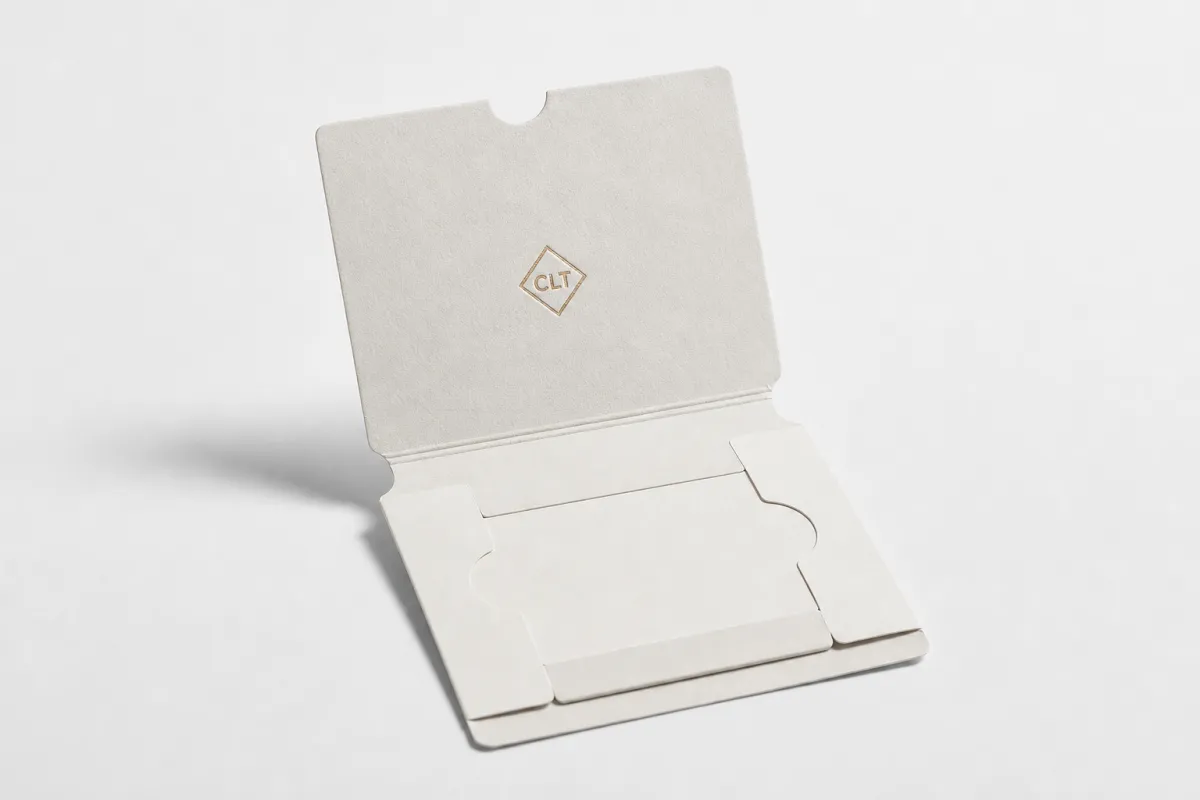
At the simplest level, custom insert cards for boxes are printed cards placed inside packaging to communicate, protect, or promote. They might sit on top of the product, slip under a lid, rest in a pouch, or slot into a die-cut insert. The format changes. The job stays the same: deliver the right message at the right moment without crowding the box.
That sounds tidy until you see how often brands overfill the space. A clean insert can carry a thank-you note, basic instructions, a QR code, a warranty reminder, and a discount offer. A poor insert tries to cram all of that into one breathless block of type. People do not enjoy decoding tiny copy after opening a package. Weirdly, they almost never do.
Custom insert cards for boxes matter because unboxing is physical. The card is one of the few parts of retail packaging that gets read before the product gets used. That gives it a chance to reduce friction immediately. A skincare brand can use it for directions and ingredient reminders. A candle brand can use it for burn safety. A clothing brand can use it for returns, fit guidance, or a referral code. Same object. Different job.
The perception effect is real too. A plain mailer with a thoughtful insert feels more deliberate than a larger box with no message. In practice, custom insert cards for boxes can make a package feel more expensive without adding much weight or shipping cost. That is one reason they show up so often in subscription sets, ecommerce kits, and premium package branding projects.
They also reduce support burden. A card that says how to use the item, what to expect, and where to get help can save a ticket later. That is not glamorous, but it is profitable. In a few packaging audits I have reviewed, simple instruction cards cut repeat “how do I use this?” emails by a noticeable chunk after launch. Not every brand needs the same result, of course, but the pattern is stubbornly consistent.
Sometimes a simple card beats a booklet or another packaging component. Booklets are useful, but they add folding, assembly, and print cost. Custom insert cards for boxes often win when the message is short, the product is simple, or the goal is to keep the packout clean. If the customer needs one code, three steps, and one offer, a card usually does the job better than a tiny brochure pretending to be a manual.
For brands building a packaging system, it helps to treat the insert as part of the broader set of Custom Packaging Products. The box, the insert, the label, and the finish should all support the same message. If one piece looks cheap or off-brand, the whole stack weakens. Packaging is unfair that way. It is also accurate.
Custom insert cards for boxes are often the last thing a customer touches before the package goes into a drawer, onto a counter, or straight into recycling. That gives the card more visibility than its cost suggests. Strong brands use that space with purpose. Weak brands use it because there was room.
Practical rule: if the card cannot explain its own purpose in five seconds, it probably needs a simpler layout or a clearer hierarchy.
How Custom Insert Cards for Boxes Work in a Real Packout
A real production flow starts with artwork, not printing. The team should define the box size, product dimensions, insert location, quantity, brand assets, and message before anyone opens a press file. That feels tedious because it is, but it prevents the usual mess: cards that fit the mockup and fail in the actual packout. Custom insert cards for boxes only matter if they survive the packaging line.
Typical production steps look like this: brief, layout, proof, material check, print, finish, trim, and pack. Folded pieces, die-cuts, or specialty coatings stretch the schedule. A simple flat card on standard stock moves faster. The boring parts matter most. That is where fit problems get caught before the run turns into expensive waste.
Placement changes the job too. A card on top of the product feels like a welcome note. A card under the lid can act like both message and buffer. A card tucked into a pouch may need to be smaller and sturdier. A die-cut slot can keep it from shifting during transit. In custom insert cards for boxes, placement is not just logistics. It changes how the customer reads the package.
Different formats do different jobs:
- Welcome note: short, friendly, brand-forward.
- Instruction card: step-by-step use, setup, care, or safety.
- Ingredient or compliance card: packed with required information and scanned quickly.
- Warranty or support card: contact info, registration, and claims process.
- Promo card: discount code, referral message, repeat purchase nudge.
The tricky part is keeping the card useful without making the customer work for it. Stock weight, trim size, folding, and coating do that heavy lifting. If the insert needs handwriting space, uncoated stock usually makes sense. If it needs stronger color and scuff resistance, coated stock often performs better. If the card will be handled often, a thicker sheet helps. Thin paper in a box with rigid product edges tends to curl, crease, or come out looking tired before the customer sees it.
Printers usually compare the insert against the box interior so the card does not buckle, curl, or disappear inside the package. That check matters more than many teams expect. A card that is technically the right size can still fail if the packout has a tight corner, a pouch seam, or a rigid insert that steals a few millimeters. Custom insert cards for boxes live or die on those millimeters.
In packaging design terms, the card should feel native to the package. If the box is sleek and minimal, the insert should not look like it came from a coupon flyer. If the package is bold and colorful, the insert can carry more personality. Consistency is the point. Product packaging works better when the card, box, and contents speak the same visual language.
Custom Insert Cards for Boxes: Key Factors That Change Results
Size is the first variable, and it affects everything else. Custom insert cards for boxes should match the inside footprint of the box or the reserved packout space, not just the size that looked nice in a layout file. Leave room for trim, folds, and any die-cut edge. If the card fights the box, the packing line notices immediately. Customers usually notice too, even if they cannot name the problem.
Proportion matters as well. A tiny card inside a large rigid box looks lost. A giant card in a slim mailer feels forced. The card should match both the available area and the amount of text you need to fit. If the message is dense, go larger rather than shrinking type below readable size. Tiny type is not a badge of efficiency. It is a layout losing the argument.
Stock and finish change the feel in hand. Common choices include 14pt, 16pt, 18pt, and heavier cardstock, depending on the use case. Uncoated stock feels softer and writes well. Matte coated stock reduces glare and looks calmer. Gloss can make color pop, but it also shows scuffs and fingerprints faster. For custom insert cards for boxes, the best finish is the one that matches handling, not the one that shouts the loudest in a sample deck.
The content itself changes the format. A card meant to teach should use short steps, icons, and clear hierarchy. A card meant to reassure should emphasize support, guarantees, and what to expect after opening. A card meant to sell should not act like a flyer from the bottom of a drawer. One primary message is enough. Two can work if the writing is disciplined. Three usually invite chaos.
Visual hierarchy is where many custom insert cards for boxes go wrong. The card needs readable type, enough white space, and one clear action. That usually means a headline, a short body, and a single next step. If customers have to hunt for the important part, the card already lost some of its value. Packaging design is not a puzzle box, and nobody opens a parcel hoping for one.
Sustainability matters, but not as a slogan. Right-sizing reduces waste, and a simple insert avoids extra bulk in shipping. FSC-certified paperboard is a solid option if you want a traceable paper source; you can review certification basics at FSC. If your packaging program needs transit testing or durability checks, the standards side deserves attention too; ISTA publishes packaging test guidance that many teams use when they are trying to avoid ugly surprises in fulfillment.
The balance is practical. A heavier card feels more premium, but it costs more and adds waste. A lighter card saves money, but may feel flimsy or arrive curled. Custom insert cards for boxes should be chosen like any other production item: match performance to the job, then stop. More expensive is not automatically better. Neither is greener if it fails in the first week.
For many brands, the card also needs to fit the voice. A playful DTC brand might use a conversational message and a discount code. A premium skincare line may want restrained copy and a calm design. A B2B kit might prioritize setup and compliance. The same package can contain all three styles, but not all at once. That is where thoughtful package branding earns its keep.
One more factor gets overlooked often: scannability. QR codes, short URLs, and support contacts need enough contrast and open space to work after printing. If you plan to send customers to a setup video or reorder page, test the code on the final stock. Custom insert cards for boxes are not the place to trust a screen preview and hope the printer makes it work. I have seen that gamble backfire more than once, and it is always avoidable.
Custom Insert Cards for Boxes: Process and Timeline From Brief to Delivery
A useful brief saves time later. At minimum, send the box size, product dimensions, quantity, finish, copy, brand assets, and launch date. If the card has to fit a slot or specific packout position, say so early. If the card needs to fit alongside other inserts, mention that too. Custom insert cards for boxes are easier to produce when the constraints are written down instead of hidden in someone’s memory.
Proofing is where most avoidable issues get caught. A good proof should show trim, live area, fold lines if any, and the actual placement of text and QR codes. If the project is sensitive, ask for a physical sample or material swatch. One or two revision rounds are normal. Five usually mean the brief was not ready. Late copy changes are the classic schedule killer. They always look small right before they become expensive.
Timing depends on complexity. Flat custom insert cards for boxes can move quickly, sometimes within a few business days after approval if the printer has stock on hand. Folded versions, die-cuts, foil, embossing, or specialty coatings add time. A straightforward standard run often lands around 12-15 business days from proof approval to shipment, though quantity and press availability can move that number. Rush jobs cost more. That is not a trick. It is what happens when a machine gets pulled off its normal schedule.
One practical sequence works for most teams:
- Lock the message and dimensions.
- Approve the design layout.
- Check proof files and material notes.
- Run a short sample or pre-production check if the packout is tight.
- Print, trim, and finish.
- Box the cards and ship to the fulfillment site or assembly team.
Where the cards land matters almost as much as how they are printed. If fulfillment is assembling the package, the cards should arrive clearly labeled and easy to count. If the boxes are being filled at a separate site, the carton labeling should match the packout instructions. Custom insert cards for boxes are not hard to manage, but they do require coordination. A beautiful card in the wrong warehouse is still a problem.
If the card is part of a larger launch, coordinate it with the rest of the packaging timeline. Boxes, labels, mailers, tissue, and inserts should arrive in a workable order. A cheap card that arrives too early and sits in storage for months has not saved anything. A well-timed card that matches the product release can make the launch feel coordinated and polished.
For brands buying both packaging and inserts, sourcing through a supplier that handles Custom Packaging Products can simplify the process. That does not mean every item must come from the same run, but it often makes fit checks, color matching, and delivery timing easier to manage. Fewer handoffs usually mean fewer chances for the packout to turn into guesswork.
Custom Insert Cards for Boxes: Cost, Pricing, and MOQ Basics
Pricing breaks down into a few parts: design setup, print run, stock, finishing, die-cutting or folding if needed, packing, and shipping. A low price on the card itself means little if setup, finishing, and freight wipe out the savings. For custom insert cards for boxes, the only useful number is landed cost, not the pretty number on the first quote.
The per-unit cost usually drops as quantity rises, but only up to the point where storage becomes annoying. A small digital run may cost more per piece, while a larger offset run lowers the unit price. The tradeoff is inventory. Order more than you can use and you have turned a packaging decision into shelf clutter. Hardly a victory.
MOQ, or minimum order quantity, is simply the smallest run a printer will accept. That number varies with size, stock, and finish. A basic flat card might have a low MOQ. A foil-stamped, die-cut insert usually has a higher one. Startups often care about MOQ because they want to test packaging before committing. Established brands care because they want the best unit cost without filling the storage room.
Here is a rough pricing view for custom insert cards for boxes. These are common market ranges, not a promise. Size, artwork coverage, paper choice, and shipping all shift the final number.
| Run size | Typical unit price | Best fit | Main tradeoff |
|---|---|---|---|
| 250-1,000 pieces | $0.40-$1.20 each | Product tests, launch pilots, short seasonal runs | Higher unit cost, lower inventory risk |
| 2,500-5,000 pieces | $0.15-$0.45 each | Growing ecommerce brands, recurring promotions, standard packouts | Better economics, more storage required |
| 10,000+ pieces | $0.05-$0.18 each | High-volume retail packaging, national promotions, recurring use | Lowest unit cost, biggest upfront spend |
Finishes change the math quickly. Full-color printing costs more than one-color work. Coating adds cost. Foil, embossing, and custom die lines add more. A simple matte card can be smart for a starter launch, while a premium line may justify a more detailed finish. Custom insert cards for boxes should not be overdecorated just because the option exists.
As a rough planning figure, many teams can expect setup or design help to range from about $75-$250 for a simple layout, with specialty preparation or structural work moving higher. Printing and finishing then layer on top of that. If a quote looks unusually low, check what it excludes. Shipping, setup, proofing, and finishing are the usual hiding places. Printers are not villains; they are just very inventive with line items.
The smartest quote request asks for multiple quantity breaks. Try 500, 2,500, and 5,000, or 1,000, 5,000, and 10,000 if your program is larger. That shows where the real savings sit. It also helps you see whether custom insert cards for boxes make more sense as a short test or as a standard inventory item.
If the card affects customer experience or compliance, do not chase the cheapest number without a sample. A slightly higher unit price on a better stock can save more money later if it reduces support tickets, reprints, or returns. That is the unromantic truth. The cheapest insert becomes expensive the moment it fails in use.
For buyers managing both boxes and inserts, the full order should be treated as one packaging design decision. Custom insert cards for boxes are part of the brand’s physical presentation, not a side purchase. Treat them that way and the budget usually makes more sense.
Common Mistakes with Custom Insert Cards for Boxes
The first mistake is stuffing too much copy onto the card. Brands do this because they want one insert to teach, sell, reassure, and cross-promote all at once. The result is a wall of tiny text nobody wants to read. Custom insert cards for boxes work best when the message is tight and the layout is disciplined. Long copy belongs in a manual, a landing page, or a support page. Not on a card that fits under a lid.
The second mistake is choosing a size that fights the box. A card that is technically printable but awkward in the packout will still create trouble. It may shift, curl, or require extra handling. That slows assembly and makes the result inconsistent. In retail packaging, consistency is part of the product. If the insert rattles around, customers notice even if they cannot explain why.
The third mistake is forgetting the card’s real job. If it needs to give instructions, the information must be clear and scannable. If it needs to handle legal or compliance information, the typography has to stay readable and the structure has to stay organized. If it needs to sell, the offer should be obvious. Custom insert cards for boxes do not need to do everything. They just need to do the right thing first.
The fourth mistake is ignoring print readiness. Low-resolution artwork, missing bleed, weak margins, and color expectations that do not match the stock create problems fast. A glossy screen mockup can hide issues that show up immediately on paper. That is why proofing matters. A clean file saves money. A sloppy file invites reprints. That is not theory; it is the regular cost of poor preparation.
The fifth mistake is forgetting fulfillment reality. A card may look elegant in a mockup and still warp, shift, or jam during packing. Heat, humidity, pallet pressure, and stack weight all affect paper. If the package is shipping through a rough network, the insert should be tested under conditions close to the real route. That is where ISTA testing guidance becomes useful, especially for products that need to arrive looking crisp.
Another common miss is treating the insert like a separate design project. It should support the box, not compete with it. If the outer packaging is minimal, the insert should feel clean and precise. If the box is bold and colorful, the insert can carry a little more energy. The whole package still needs one message. Custom insert cards for boxes get stronger when they feel like part of the same system as the box, label, and wrap.
One more thing: do not forget writing space if the card may be personalized. Some brands want room for a handwritten signature or a short note from the team. In that case, uncoated stock and a bit of blank area make sense. A card that looks beautiful but cannot be marked by hand may be the wrong tool for a relationship-driven brand.
The most expensive mistake is not buying the wrong paper. It is ordering custom insert cards for boxes without deciding what success looks like. If the goal is fewer returns, measure support tickets. If the goal is a better unboxing, test customer feedback. If the goal is repeat purchases, track code usage. Otherwise you are buying paper and calling it strategy.
Expert Tips for Better Custom Insert Cards for Boxes and Next Steps
The strongest custom insert cards for boxes usually do one primary job and one secondary job, no more. A card can welcome and instruct. It can instruct and upsell. It can reassure and route the customer to support. Once you ask it to sell, teach, and entertain at the same time, the layout starts to collapse under its own ambition. More text is not a strategy. It is just more text.
A simple decision path helps. If the card needs to explain a product, keep the copy short and make the steps visual. If it needs to support a premium feel, use calm typography, more white space, and a heavier stock. If it needs to drive repeat purchase, keep the code visible and the call to action blunt. Custom insert cards for boxes perform better when the reader can tell what to do in one glance.
Good packaging rule: if the card needs a paragraph to justify itself, the structure is probably overbuilt.
Before placing an order, run through a pre-production checklist:
- Final box dimensions and interior space.
- Exact card size, fold style, or die-cut shape.
- Approved copy, QR code, and legal text.
- Paper stock and finish choice.
- Quantity breaks and target unit price.
- Insert location inside the packout.
- Proof approval and shipping destination.
If the insert affects customer experience or compliance, order a sample or a short run first. That is especially true for custom insert cards for boxes used in regulated goods, fragile products, or high-return categories. Small tests catch big mistakes. Large runs magnify them. The math is simple.
It also helps to think in terms of the entire package, not just the insert. If the outer box is doing brand theater, the card should support that mood. If the box is utilitarian, the card should be practical and readable. If the package is part of a retail packaging program, the insert may need to fit store display, shelf info, or quick scanning. Everything inside the box becomes part of the customer’s memory of the product.
For brands still building their packaging system, custom insert cards for boxes are a sensible place to start because they are relatively low risk and easy to test. They can improve branded packaging without forcing a full redesign. They can also be updated faster than a full box run, which matters when copy, offers, or instructions change often.
That is why I usually suggest this order of operations: measure the box, draft the message, decide the stock, request a quote with quantity breaks, and review the proof for fit and clarity. Simple. Not glamorous. Effective.
Custom insert cards for boxes are not a tiny extra. They are a useful packaging component that can make the opening experience clearer, cleaner, and more memorable. Get the size right, Choose the Right stock, and keep the message focused, and custom insert cards for boxes can improve product packaging without wrecking the budget. The actionable takeaway is straightforward: lock the box dimensions, define one primary message, test the final stock, and approve a proof only after the card still makes sense in the actual packout.
Frequently Asked Questions
How big should custom insert cards for boxes be?
Match the card to the inside footprint of the box or the reserved packout space. Leave room for trim, folds, and any die-cut slot so the card does not buckle. If the message is dense, go a little larger instead of shrinking type below readable size.
How much do custom insert cards for boxes usually cost?
Pricing depends on size, stock, finish, color count, quantity, and shipping. Short digital runs usually cost more per piece; larger runs lower the unit cost. Ask for quote breaks at several quantities so you can see the real savings threshold.
How long does production take for custom insert cards for boxes?
Simple flat cards can move from proof to print quickly, while folds and specialty finishes add time. Approval speed matters as much as print speed, so final copy should be ready early. Build in shipping time and any packout testing before you commit to a launch date.
Do custom insert cards for boxes need special paper or coating?
Use uncoated stock if the card needs handwriting space or a softer premium feel. Use coated stock if you want sharper color and better scuff resistance. Choose finish based on handling, moisture risk, and how the card will survive shipping.
Can custom insert cards for boxes replace a manual or thank-you note?
Yes, if the message is short and the layout is organized by purpose. No, if the content is long, legal, or needs step-by-step instructions with diagrams. Many brands use the insert as a front page and send shoppers to a QR code or support link.

