Buyer Fit Snapshot
| Best fit | Custom Jar Labels with Logo projects where brand print, material claims, artwork control, MOQ, and repeat-order consistency need to be specified before quoting. |
|---|---|
| Quote inputs | Share finished size, material target, print colors, finish, packing count, annual reorder estimate, ship-to region, and any compliance wording. |
| Proofing check | Approve dieline scale, logo placement, barcode or warning zones, color tolerance, closure strength, and carton packing before bulk production. |
| Main risk | Vague material claims, crowded artwork, missing packing details, or unclear freight terms can make a low unit price expensive after revisions. |
Fast answer: Custom Jar Labels with Logo: Design, Cost, and Process should be specified like a repeatable production item. The safest quote records material, print method, finish, artwork proof, packing count, and reorder notes in one written spec.
Production checks before approval
Compare the actual filled-product size with the drawing, then confirm tolerance on folds, seals, hang holes, label areas, and retail display edges. Reserve space for logos, QR codes, warning copy, and material claims before decorative graphics fill the panel.
Quote comparison points
Review material grade, print process, finish, sampling route, tooling charges, carton quantity, and freight assumptions side by side. A quote is only useful when the supplier can repeat the same color, closure quality, and packing count on the next order.
Custom Jar Labels with logo usually get only a very short window to earn attention, often less than two seconds before a shopper reaches for something else. That tiny window is exactly why a label has to do more than sit on glass. It needs to identify the product fast, suggest quality without trying too hard, and give the brand a finished, credible presence whether the jar holds sauce, a candle, a cream, or a wellness blend.
That puts the label inside the packaging system, not outside it as a decorative extra. It sits at the intersection of packaging design, print production, and package branding. The strongest custom jar Labels with Logo act like a small piece of retail architecture, shaping how the jar is seen before the customer knows anything about the formula inside.
Brands often compare labels with Custom Labels & Tags and broader Custom Packaging Products for good reason. The same visual discipline that makes Custom Printed Boxes feel polished has to carry over to a jar, but jars bring their own constraints: curvature, condensation, small diameters, and the fact that people hold them in real hands, not just in mockups.
What Custom Jar Labels with Logo Actually Do
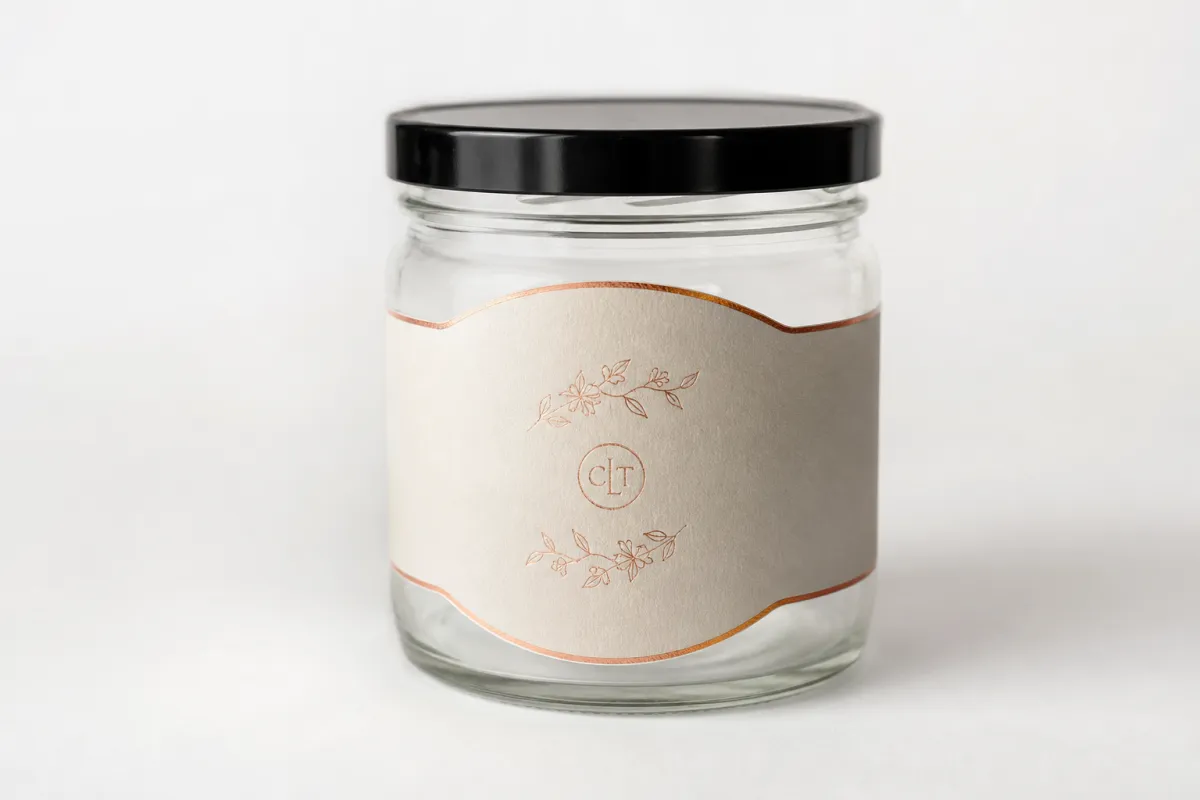
Custom Jar Labels with logo carry three jobs at once. They identify the product, they suggest quality, and they help a small or growing brand feel at home next to established names on a shelf. That matters because jars are usually judged from a slight distance, in motion, and under mixed lighting. A shopper may not read every line. They do notice whether the jar looks intentional or improvised.
The logo is not always the first thing that should speak. On a crowded shelf, the product name, scent, flavor, or benefit claim may need to do that first job. A clear label hierarchy makes room for all three without crowding the surface. That is one reason custom jar labels with logo are different from a decorative sticker. Decorative labels can look attractive. Strategic labels help move product. The difference is subtle on a screen and obvious in a store aisle.
Food, candle, cosmetic, and wellness jars also need labels that respect the viewing angle. A carton gives you a flat, predictable panel. A jar does not. Curvature changes the way type reads, condensation can soften contrast, and the customer often holds the package in one hand while reading with the other. custom jar labels with logo need to be designed for human grip and human behavior, not just for a tidy layout grid.
I think a lot of brands underinvest here. They treat the label as the last stop in production instead of a brand asset with a real job to do. Yet the label may be carrying the same communication weight that a carton or sleeve carries in other categories. Strong branded packaging is not about adding decoration. It is about making the message easier to trust.
Logo placement matters more on jars than many buyers expect. A logo pushed too close to the edge can wrap awkwardly around a small diameter. A logo placed too low can disappear under a hand. A logo that scales up too far can look impressive in a mockup and cramped on a curved wall. The best custom jar labels with logo keep visibility, legibility, and physical reality in balance.
A label that looks polished on screen can still fail on glass if the text is too small, the adhesive is wrong, or the curve was ignored.
When the label works, the whole package feels more credible. When it misses, the product can read as less expensive than it really is. In that sense, custom jar labels with logo are not just a print item; they are a signal system that shapes how the brand is perceived the moment the jar is picked up.
How Custom Jar Labels with Logo Work: From File to Jar
custom jar labels with logo move through a production chain that looks predictable from the outside, yet each stage can change the final result. Artwork setup comes first, then dieline confirmation, material selection, proofing, printing, finishing, and application testing. Skip one of those steps and the label may still print. It just might not perform the way the brand expects once it reaches the jar.
The logo file is the starting point. Vector artwork in AI, EPS, or print-ready PDF format usually gives the cleanest result because it scales without losing edge quality. Raster files can work if they are large enough and sharp enough, but blurry logos become a problem fast once the label size shrinks. Fonts should be outlined or embedded, and small legal text needs enough room to stay readable after trimming. For custom jar labels with logo, tiny type is often the first place quality slips.
The dieline comes next. It is the map of the printable area, including bleed, safe zones, and cut lines. On a jar, the dieline matters more than it does on many flat packages because the label may have to avoid shoulders, seams, taper, or a panel that narrows toward the base. If the jar has a small diameter, even a few millimeters can change how the label lands. custom jar labels with logo are much safer when the artwork is built around actual jar measurements instead of a guess from the product photo.
Proofing removes expensive surprises. A digital mockup can catch proportion issues, but a physical sample reveals things a screen cannot show: gloss reflection, edge lift, opacity, and the way the logo reads on curved glass. If the product will be sold in refrigerated retail packaging or handled during shipping, sample testing should include a cold soak, a wipe test, and a quick look for corner lift. For distribution benchmarks, the test families published by ISTA are a useful reference, especially for labels that need to survive pack-out and transit.
Material selection should match the product environment. A jar label for a dry spice blend solves a different problem from a label on an oily balm or a chilled yogurt jar. The finish then changes the visual read: matte can soften the look, gloss can sharpen color, and specialty coatings can improve handling. If the label uses paper stock, fiber sourcing may matter too. Many buyers now look for FSC-certified options as part of a broader responsibility story.
Application method changes the print spec as well. Hand-applied labels can allow a little more flexibility in roll format and spacing, while machine application needs consistent unwind, core size, and label tolerances. That is why custom jar labels with logo should be discussed alongside the application line, not after the artwork is finished. A label that is technically beautiful but awkward to apply is still a weak production choice.
Custom Jar Labels with Logo Cost: What Drives Pricing
The cost of custom jar labels with logo depends on a cluster of variables that move together: quantity, label size, stock, finish, ink coverage, and whether the labels are supplied cut-to-size or on rolls. A brand can lower the unit cost and still spend more overall if the minimum order is too high or the setup fees are repeated across several versions. Pricing needs to be read as a system, not as a single line item.
For a standard die-cut label on paper or film, the unit price often lands somewhere around $0.08-$0.30 at higher volumes, with smaller runs costing more per label. Premium finishes can push that higher. Add foil, soft-touch coating, embossing, or a multi-layer construction, and the unit cost rises quickly. custom jar labels with logo are usually affordable only when the design is simple and the run is large enough to absorb setup.
The most practical budgeting move is to compare at least three quantity tiers. A 1,000-piece run, a 5,000-piece run, and a 10,000-piece run can reveal very different economics. In many cases, the jump from one tier to the next lowers the label price enough to change the packaging plan. That is especially true for brands planning seasonal flavors, trial packs, or a new line extension. The same logic often applies across custom printed boxes and product packaging: the lowest unit price is not always the smartest cash decision.
| Material / Finish | Typical Use | Relative Unit Cost | Practical Notes |
|---|---|---|---|
| Paper label | Dry goods, short-life items, indoor shelf display | Lowest | Good print clarity, but weaker around moisture and abrasion |
| BOPP film | Food jars, bath products, general retail packaging | Low to medium | Durable, scuff-resistant, and a common choice for custom jar labels with logo |
| Clear film | Minimalist branding, glass-forward designs | Medium | Lets the jar show through, but contrast and white ink planning matter |
| Textured stock | Artisanal, premium, or gift-oriented jars | Medium to high | Adds tactile value, though fine detail can be less crisp than on smooth film |
| Foil or specialty finish | High-impact branded packaging and limited editions | Highest | Raises perceived value, but should be used where the design can support it |
Hidden cost drivers matter too. A heavily covered design may require more ink passes. A white underlay on clear film adds complexity. A custom shape can create a fresh cutting setup. Even a small change in label dimension can shift waste and make an order less efficient. custom jar labels with logo can look inexpensive on paper and expensive in production if the construction is fussy.
If the project has a launch date, ask for turnaround in business days after proof approval, not just a vague delivery promise. A typical run might be 12-15 business days after the final proof, but specialty materials, approval delays, or queue depth can extend that. Budget and schedule need to be discussed together. Good packaging design is never only visual; it is also operational.
Choosing Materials and Finishes for Custom Jar Labels with Logo
custom jar labels with logo should be matched to the product environment first, then to the visual style. That order matters. A label that looks great for a week and then lifts in the refrigerator is a failed label. The contents of the jar decide a lot: moisture, oil, temperature swings, and abrasion all affect how long the label stays put and how clean it looks after handling.
Paper labels still make sense for dry, short-life, or artisanal products where tactile character matters more than moisture resistance. BOPP and other film stocks are the safer default for many food and personal care jars because they resist smudging and handle wipe-downs better. Clear film can create a premium, almost label-less effect, while high-performance film constructions are often chosen for jars that will be chilled, handled often, or exposed to a rougher retail path. That is why custom jar labels with logo should be chosen as part of the full product packaging plan, not in isolation.
Finish changes perception quickly. Gloss reads vivid and clean. Matte often reads calmer, more organic, or more refined. Soft-touch can feel premium in hand, though it usually needs a design that can justify the tactile expense. A small logo on a matte textured label can feel understated and expensive; the same logo on a shiny film can feel louder and more commercial. Neither is better by default. The fit depends on the brand story and the channel.
Adhesive choice deserves more attention than it usually gets. On jars stored cold, the wrong adhesive can fail before the product even reaches shelf. On oily glass or jars handled repeatedly, edge lift can start early. On hand-applied runs, a forgiving adhesive may help the line move faster. On machine-applied runs, consistency matters more. custom jar labels with logo are often judged by print quality, but adhesion is what keeps the print visible.
If a brand wants a premium shelf cue without overbuilding the label, a few finish choices usually do the most work:
- Matte varnish for a softer, more restrained retail read.
- Gloss laminate for richer color and better wipe resistance.
- Foil accent for a controlled hit of shine instead of a fully metallic label.
- Clear film for a glass-forward look that keeps the jar visually light.
- Textured stock for craft, wellness, and gift packaging where hand feel matters.
The smartest material choice is the one that supports the logo, not just the adhesive. That sounds obvious. It is not. I have seen labels with technically correct print specs that still felt off because the surface finish fought the logo instead of framing it. custom jar labels with logo should make the brand feel clearer, not more complicated.
Step-by-Step Process for Custom Jar Labels with Logo
The process for custom jar labels with logo works best when the brand gathers the right inputs first. Before artwork begins, collect the logo file, jar dimensions, compliance text, target audience, and the actual conditions the jar will face. A label for pantry use is not the same as a label for refrigeration. A label for a candle jar is not the same as a label for a facial cream. The more specific the inputs, the fewer surprises later.
- Measure the jar carefully. Capture the flat printable panel, not just the overall height and width.
- Map the safe zones. Leave space away from seams, shoulders, curves, and areas likely to get finger contact.
- Set the hierarchy. Brand name first, product name second, supporting copy third.
- Check compliance text. Ingredients, net weight, warnings, and barcodes need real legibility.
- Select the construction. Stock, adhesive, finish, and roll format should match the application method.
- Review a proof. Check both the artwork and the physical behavior of the label on glass.
That hierarchy sounds simple, yet it changes how the eye moves. On a small jar, the brand should not fight the product name for attention. If the logo is too dominant, the label can feel like packaging theater. If the logo is too small, the jar loses its identity. The best custom jar labels with logo guide the eye in a few quick steps and stop there.
Proofing should never be treated as a formality. A digital proof can confirm layout and copy, but a real sample can reveal spacing issues, opacity problems, and how the label lands on the jar curve. If the line will apply labels by hand, check whether the label straightens easily. If the line uses a machine, confirm unwind direction, roll diameter, and consistent gap spacing. These details may sound minor until a production run starts moving at speed.
For brands that build a family of packs, the same discipline should run across the whole line. If the jar label uses a particular logo lockup, that lockup should echo on cartons, secondary cartons, or shipping packs. That is where package branding starts to feel coherent across custom jar labels with logo, product boxes, and other retail packaging elements.
Before printing begins, lock the final approval in writing, verify quantity, and confirm lead time. That may feel procedural, but it protects the launch. A small revision after approval can trigger a fresh proof cycle, a new setup, or a delayed ship date. The smoothest custom jar labels with logo projects are the ones where the brand treats the final proof as a production decision, not a design suggestion.
Practical checklist:
- Logo file in vector format
- Jar dimensions measured in millimeters or inches, not estimated
- All compliance copy finalized
- Material and finish matched to the product
- Application method confirmed
- Proof reviewed on-screen and, if possible, on a real jar
That checklist is boring in the best possible way. It prevents rework. It also makes custom jar labels with logo more predictable to buy, quote, and schedule.
Common Mistakes That Hurt Custom Jar Labels with Logo
The most common mistake with custom jar labels with logo is overcrowding. Brands want the logo, the product name, the story, the ingredients, the claims, the barcode, and the fine print to all feel equally important. On a jar, that usually creates a label that reads slowly or not at all. A customer standing a few feet away should understand the brand in seconds. If they need to lean in to decode the basics, the label has already missed part of its job.
Another frequent error is choosing the wrong material for the environment. A paper label on a chilled jar can soften or wrinkle. A weak adhesive on oily glass may fail early. A high-gloss finish can look great but make condensation or glare more noticeable under store lights. custom jar labels with logo should be tested against the jar's real life, not just the designer's render.
Artwork quality trips up many launches too. Low-resolution files, inconsistent brand colors, and poor contrast can all make the logo look less stable than it should. Curved surfaces magnify those problems. A thin font that works on a box panel may vanish on a small round jar. A dark logo on a dark background may look elegant in a mockup and unreadable in retail packaging. Good custom jar labels with logo usually rely on stronger contrast than people expect.
Compliance mistakes are expensive because they often force a reprint. Net weight, ingredient order, warning statements, and barcode placement all need room. Squeezing them into a corner because the design was not planned well is a false economy. If the label has to meet a formal standard or a retailer's spec, leave room early. That is cheaper than discovering the issue after delivery.
Skipping samples is another easy way to overspend. A label that looks balanced on a laptop can behave differently once it touches glass. Edge curl, opacity, and adhesive tack are hard to judge digitally. If the line is high speed, a sample is even more valuable because it shows whether the label feeds cleanly and sits straight. The best custom jar labels with logo projects catch problems before the full run.
The most expensive label is the one that has to be reprinted after launch.
If the order involves food-contact concerns, repeated handling, or a distribution path that includes long storage, the label specification should be tested as part of the whole system. That is where a print vendor, a packaging buyer, and a brand team need the same expectations. A label is not just a graphic. It is a working part of the package.
Expert Tips and Next Steps for Custom Jar Labels with Logo
My first piece of advice is simple: test two or three versions of custom jar labels with logo on real jars before locking the full run. Shelf context changes the result. A design that looks balanced on a white background can feel too pale next to competitors. A design that looks bold on a screen can look busy once it sits beside the product's texture, color, and cap shape. Real jars tell the truth faster than mockups.
Design for distance first, detail second. That sounds almost too obvious, but it is where many labels improve. If the logo reads clearly from a couple of steps away, the jar has a better chance of being recognized quickly. Then the supporting copy can do its job up close. This is how custom jar labels with logo support both retail packaging and direct-to-consumer fulfillment without trying to be everything at once.
Ask for pricing at multiple volumes, not just one. A quote at 2,000 pieces and a quote at 10,000 pieces can reveal whether the label should be treated as a short run or as a scaled production item. Also ask for material alternatives. Paper, film, clear stock, and textured stock may change the economics more than expected. The same request can uncover whether a slight finish change delivers better value without changing the brand story.
From a packaging buyer's point of view, the next steps are operational, and that is a good thing:
- Gather final jar measurements and photos.
- Confirm the logo file and brand color references.
- Decide whether the label will be hand-applied or machine-applied.
- Request a proof and, if possible, a physical sample.
- Verify the lead time against your launch or replenishment window.
If you are building a larger brand family, keep the label style in step with the rest of the system. That means the jar label, the outer carton, the shipping pack, and any display piece should speak the same visual language. custom jar labels with logo perform best inside a coherent set of branded packaging decisions, not as a disconnected embellishment.
One practical takeaway holds up across almost every category: measure the jar, choose the environment first, then ask for a proof on actual packaging before you approve the run. That order keeps the logo readable, the adhesive honest, and the finished jar easier to trust. Once those pieces are in place, the label stops feeling like a last-minute print job and starts doing the real work of the brand.
How much do custom jar labels with logo typically cost?
Pricing usually depends on size, quantity, material, finish, and whether the labels are cut-to-size or supplied on rolls. A standard run often drops in unit price as the quantity rises, but specialty finishes can push the total order higher. The safest move is to request quotes at several volume tiers so you can compare true value, not just the lowest sticker price.
What file format is best for custom jar labels with logo?
Vector files such as AI, EPS, or PDF usually give the cleanest result because they keep edges sharp at any size. High-resolution raster files can work, but they need to be large enough to avoid softness or pixelation. Fonts should be outlined or embedded so the logo and text reproduce consistently on the final label.
Are custom jar labels with logo waterproof?
They can be, but only if the substrate, adhesive, and finish are all chosen for moisture resistance. Film labels generally hold up better than standard paper labels, especially in chilled or high-handling environments. Always match the construction to the jar's actual conditions, including condensation, refrigeration, and cleaning.
How long does production take for custom jar labels with logo?
Turnaround depends on proof approval, artwork readiness, material availability, and the current print schedule. Straightforward orders can move quickly, while custom finishes or sample approvals add time. If the labels are tied to a launch date, build in extra margin so a proof revision does not delay the shipment.
What size should custom jar labels with logo be for small jars?
The right size depends on the jar diameter, the usable flat panel, and how much information must fit on the front. Measure the actual printable area rather than guessing from the jar's overall shape. Leave enough margin so the logo stays clear and the label does not wrinkle at the seam or curve.

