Buyer Fit Snapshot
| Best fit | Custom Jewelry Packaging Boxes projects where brand print, material claims, artwork control, MOQ, and repeat-order consistency need to be specified before quoting. |
|---|---|
| Quote inputs | Share finished size, material target, print colors, finish, packing count, annual reorder estimate, ship-to region, and any compliance wording. |
| Proofing check | Approve dieline scale, logo placement, barcode or warning zones, color tolerance, closure strength, and carton packing before bulk production. |
| Main risk | Vague material claims, crowded artwork, missing packing details, or unclear freight terms can make a low unit price expensive after revisions. |
Fast answer: Custom Jewelry Packaging Boxes: Design, Cost, and Fit should be specified like a repeatable production item. The safest quote records material, print method, finish, artwork proof, packing count, and reorder notes in one written spec.
Production checks before approval
Compare the actual filled-product size with the drawing, then confirm tolerance on folds, seals, hang holes, label areas, and retail display edges. Reserve space for logos, QR codes, warning copy, and material claims before decorative graphics fill the panel.
Quote comparison points
Review material grade, print process, finish, sampling route, tooling charges, carton quantity, and freight assumptions side by side. A quote is only useful when the supplier can repeat the same color, closure quality, and packing count on the next order.
Custom jewelry packaging boxes do far more than hold a ring or necklace; a 2 mm gap in the insert can be the difference between a piece that lands centered and one that slides in transit, and buyers notice that kind of thing long before they read a brand story.
For brands that care about presentation, Custom Packaging Products are not a side detail. They sit inside product packaging, retail packaging, and the price a shopper is willing to accept before they ever touch the piece itself. I have seen a very modest silver pendant read as “giftable” or “forgettable” almost entirely because of the box it arrived in, and that shift happens faster than most teams expect.
What Makes Custom Jewelry Packaging Boxes Worth It?
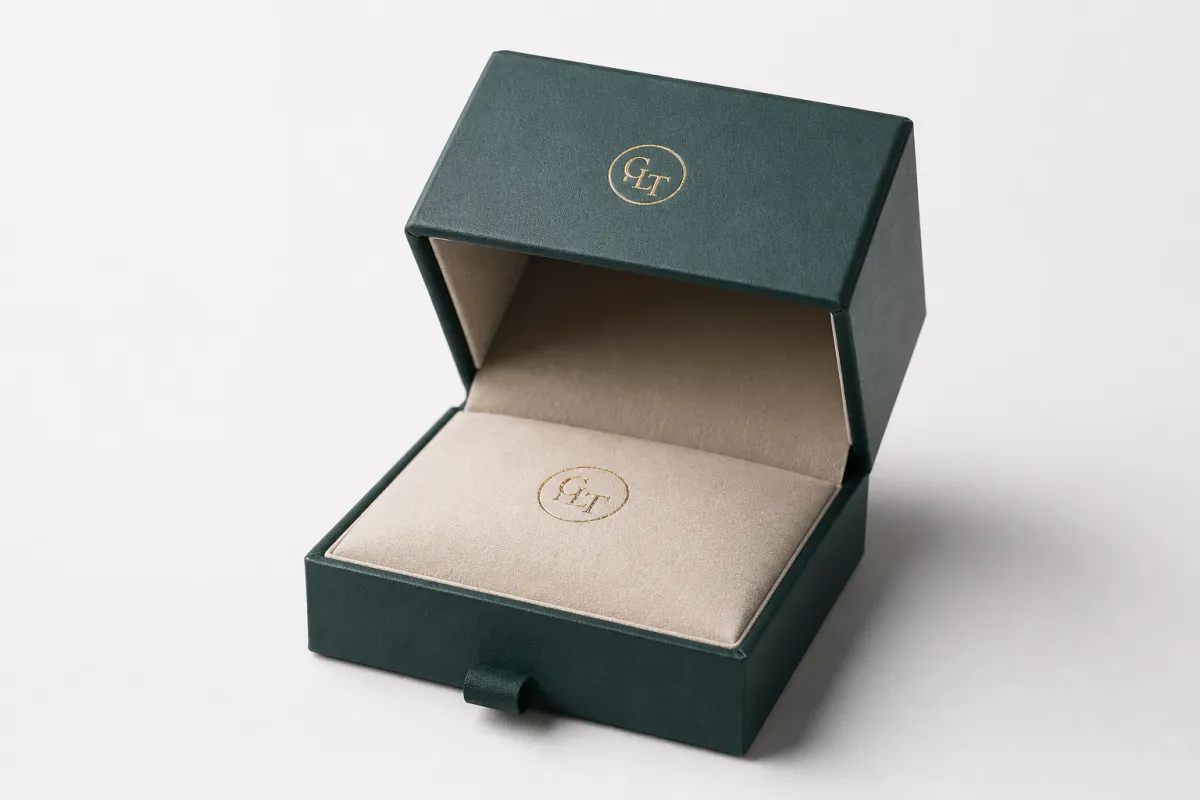
Custom jewelry packaging boxes often shape perceived value before the jewelry is even lifted from the tray. A small pendant in a soft, generic pouch can feel like an accessory; the same pendant in a rigid, well-finished box with a fitted insert feels closer to a gift, a keepsake, and a deliberate brand decision. That shift matters because jewelry buyers are buying emotion as much as metal, stone, or craftsmanship.
In day-to-day production, custom jewelry packaging boxes cover a wide family of formats. Rigid boxes are common for premium sets and gift programs because they hold their shape and present cleanly on shelves. Folding cartons work well for lighter, lower-cost lines and can move with less freight volume. Drawer-style boxes add a satisfying reveal, while hinged lids feel classic and secure. Sleeves, two-piece boxes, magnetic closure boxes, and specialty trays each solve different product packaging needs for rings, earrings, necklaces, bracelets, and coordinated sets.
The practical job stays simple: keep the item secure, reduce scratching and tangling, and make the product look finished. A necklace that slides around in transit can arrive knotted or bent, which turns a clean sale into a customer service issue. A ring that rattles inside an oversized cavity can mark the finish or make the unboxing feel cheap. Good custom jewelry packaging boxes protect the piece, and they also protect the brand from avoidable first impressions.
“If the box feels generic, the jewelry has to work harder. If the box feels intentional, the piece starts with an advantage.”
That is why custom jewelry packaging boxes sit right at the intersection of packaging design, package branding, and shipping performance. The rest comes down to choices: board thickness, insert type, print method, Finish, and Fit. When those parts line up, the box supports the jewelry instead of competing with it. When they miss, even beautiful custom printed boxes can feel disappointing the moment they are opened.
Repeatability adds another layer of value. Once a box size, finish, and insert are dialed in, custom jewelry packaging boxes create a consistent unboxing moment across collections, channels, and seasons. That consistency is hard to fake and easy for customers to remember.
How Custom Jewelry Packaging Boxes Are Built and Finished
The build starts with the structure. Custom jewelry packaging boxes usually begin as a spec sheet that lists inside dimensions, board choice, wrap material, insert style, closure type, and print coverage. A dieline is then created or adapted so the flat layout folds into the right geometry without crushing corners, stressing glue lines, or leaving visible gaps at the seams. For a rigid box, a paper wrap is mounted over chipboard panels. For a folding carton, the board is cut, scored, and folded into shape. Each path brings a different balance of cost, stiffness, and presentation.
Branding comes next. Offset printing works well for larger runs that need precise color control and clean solids. Digital printing is practical for shorter runs and faster sampling. Foil stamping adds metallic detail, embossing raises the logo above the surface, debossing presses it inward, and spot UV creates selected areas of contrast against matte stock. Soft-touch lamination is popular because it adds a velvety finish that immediately signals Premium Product Packaging. On custom jewelry packaging boxes, these finishes do more than decorate; they guide touch, reflection, and visual hierarchy.
Inside the box, the insert does the real holding. Foam is common for rings and stud earrings because it provides a snug cavity and stable support. EVA offers a cleaner cut edge and better consistency on tighter-fit programs. Molded pulp can work well for eco-focused lines. Velvet-lined trays and die-cut paperboard holders are often chosen when the display needs a warmer or more boutique feel. Custom jewelry packaging boxes should never rely on exterior style alone; if the insert does not control movement, the outer shell is only half the solution.
There is also a practical line between retail-ready packaging and shipping-protective packaging. A box that looks beautiful on a shelf may still need an outer mailer or corrugated carton if it will move through parcel networks, where compression, vibration, and drop risk are very real. If a shipping program matters, ask whether the pack-out was evaluated against relevant ISTA test methods or internal transit testing. Custom jewelry packaging boxes can be both attractive and durable, but only if the transportation path is part of the design brief.
That is the real build sequence: board, structure, print, finish, insert, inspection. When each step is coordinated, custom jewelry packaging boxes look intentional in the hand, not just in the mockup.
Key Factors That Shape the Look and Performance
Material selection drives both feel and cost. Paperboard is a strong fit for lighter lines, entry-level retail packaging, and programs where shipping weight matters. Rigid board gives custom jewelry packaging boxes a more substantial hand feel and better shelf presence, which is why it is common in gift sets and higher-priced assortments. Specialty wraps such as linen textures, soft-touch films, pearlized paper, and uncoated premium stocks can shift the personality of the box without changing the core structure.
Size and fit are not cosmetic details. Too much empty space lets the jewelry shift, tilt, or hide low in the cavity. Too little room can pinch a clasp, bend a chain, or make opening feel awkward. For custom jewelry packaging boxes, the fit should account for the jewelry itself, any display card, pouch, care insert, or authentication card, and the customer’s fingers when they remove the piece. A box that feels tight at sample stage will usually feel tighter once printing, wrapping, and lining are added.
Branding choices shape the outcome just as strongly. The exterior color palette should support the line, not fight it. Serif type can suggest heritage and craftsmanship; a clean sans serif may feel modern and direct. Logo placement, inner print, and tray color matter because shoppers notice what they see first and what they see last. A simple interior with a well-placed logo often looks more refined than a crowded exterior with too many visual ideas. Good custom jewelry packaging boxes make the piece the hero while still reinforcing package branding.
Sustainability now affects more purchase decisions than many teams expected. Recycled board, FSC-certified paper, plastic-free inserts, and right-sized packaging can reduce waste without making the box feel cheap. For buyers comparing materials, the FSC certification label helps signal responsible sourcing, while lower void space reduces freight volume and the amount of filler needed around the package. Custom jewelry packaging boxes do not have to choose between premium and responsible; the best programs usually balance both.
Here is the practical rule I use: if the material, size, and finish all support the same story, the box feels believable. If one element is trying to look luxury while another reads budget, shoppers feel the mismatch almost immediately. That is especially true with custom jewelry packaging boxes, where the product itself is small and every surface gets attention.
- Paperboard works best for lighter, cost-conscious retail lines.
- Rigid board suits premium collections and presentation-focused gift sets.
- Soft-touch or specialty wrap adds tactile value without changing the structure.
- Right-sized inserts control movement and keep the piece centered.
Custom Jewelry Packaging Boxes Process and Timeline
The process usually begins with a brief, and the brief should be more specific than “make it elegant.” For custom jewelry packaging boxes, the supplier needs dimensions, jewelry type, quantity, desired finish, target ship date, and whether the boxes will be sold in-store, shipped direct to consumer, or both. A good spec sheet saves time later because it reduces the back-and-forth that happens when the first sample is close but not quite right.
After that comes structural guidance. A packaging team may recommend a folding carton, a rigid magnetic box, a drawer format, or a two-piece lid-and-base based on the product and budget. Sampling is the first place the design becomes tangible. Color proofs, white samples, and pre-production samples each answer a different question. A white sample checks fit and structure. A printed proof checks color and logo placement. A production sample checks the complete build of custom jewelry packaging boxes before mass production starts.
Timing changes quickly once specialty details enter the job. Foil stamping can add setup time. Embossing or debossing may require a custom die. Unique inserts sometimes need tooling or an extra sample round. Color matching can add a few days if brand colors have to be adjusted under daylight conditions rather than office lighting. A simple run might move from proof approval to shipment in about 12-15 business days; a fully custom program with rigid construction, special finishes, and insert approval can take longer, especially if the artwork changes late. That is normal for custom jewelry packaging boxes and not a sign that the project is failing.
Buyers should separate sample lead time from production lead time. A sample may be ready in roughly 5-10 business days depending on complexity, while full production can take much longer because of wrapping, curing, finishing, assembly, inspection, and packing for shipment. If you are planning a launch, a photo shoot, or a store opening, build in room for revisions. The cleanest custom jewelry packaging boxes projects are the ones that leave time for the practical steps people forget: insert alignment, carton counts, master carton labeling, and final freight booking.
For companies already reviewing Custom Packaging Products, this is the stage where a short list of options can be narrowed down quickly. A clear path on structure, finish, and insert reduces decision fatigue and keeps the schedule realistic.
Custom Jewelry Packaging Boxes Pricing, MOQ, and Unit Cost
Pricing usually starts with a few core variables: size, structure, board thickness, print coverage, finish, insert material, and quantity. Custom jewelry packaging boxes become more expensive as the build becomes more complex. A simple printed folding carton with a paperboard insert may sit near the low end of the range, while a rigid magnetic box with foil, embossing, and a velvet tray will cost more because each additional step adds material, labor, or setup time.
MOQ matters because setup costs have to be spread across the run. A smaller order of custom jewelry packaging boxes may carry a higher unit price simply because the press setup, die cutting, wrapping, and proofing are being amortized over fewer pieces. That does not make the small run a bad decision; it just means the unit economics are different. Larger runs usually lower the cost per box, but they also create storage pressure and a bigger risk of over-ordering if the design changes before the inventory is used up.
A practical way to compare quotes is to ask every supplier for the same information: box style, inside dimensions, insert type, print method, finish, quantity, and shipping destination. Without those details, one quote may look cheaper only because it excludes the insert or uses a thinner board. For custom jewelry packaging boxes, apples-to-apples comparison is the difference between a useful quote and a misleading one.
Here is a simple reference table that buyers often find useful during early planning. The numbers are broad, but they help anchor expectations before a formal quote comes back.
| Box Style | Typical Use | Indicative Unit Cost | Common MOQ | Notes |
|---|---|---|---|---|
| Printed folding carton | Light retail lines, earrings, small pendants | $0.18-$0.45 | 500-1,000 units | Lower freight weight, faster to store, less premium in hand |
| Two-piece rigid box | Gift sets, mid-to-high value jewelry | $0.85-$2.20 | 300-500 units | Strong shelf presence, better for branded unboxing |
| Drawer-style rigid box | Rings, bracelets, small sets, premium collections | $1.10-$2.80 | 300-500 units | Higher perceived value, more assembly steps |
| Rigid box with specialty insert | Luxury lines, presentation pieces, limited editions | $1.40-$3.50 | 500+ units | Foil, embossing, and velvet or EVA inserts can move pricing up quickly |
These ranges are not fixed, because board grade, artwork coverage, and regional freight can swing the final number. Still, they give a fair starting point. A quote for custom jewelry packaging boxes that looks far below market should be checked carefully for missing details, while a quote far above market should be examined for over-specification. Sometimes the best value is not the cheapest line item, but the box that survives handling, looks right in person, and keeps returns low.
If the packaging program is for a seasonal collection or a line that changes often, it can be smarter to keep the structure consistent and vary only the artwork or sleeve. That approach keeps custom jewelry packaging boxes predictable in cost and makes replenishment easier to manage.
Common Mistakes When Ordering Custom Jewelry Packaging Boxes
The most common mistake is size, and it is a costly one. A box can look beautiful on screen and still fail in the hand if the jewelry sits too loose or gets pinched by the insert. Custom jewelry packaging boxes should be measured around the actual product, not around a guess based on photos. Include the chain length, card backing, pouch, clasp, or any display element that has to travel inside the box.
Another mistake is spending all the energy on the outer shell and forgetting the inside. A premium exterior cannot rescue a bad insert. If the jewelry is supposed to sit centered, upright, or suspended, the insert must do that job consistently. I have seen custom jewelry packaging boxes with beautiful foil and soft-touch lamination that still felt unfinished because the tray let the product drift to one side. Presentation starts inside, not just outside.
Skipping samples is another place projects get hurt. Colors shift, logo placement moves, and closures feel different once the real materials are assembled. A sample reveals whether the lid closes cleanly, whether the magnet lines up, whether the insert is too stiff, and whether the print looks balanced under natural light. With custom jewelry packaging boxes, one sample round can prevent a much larger problem later.
Operational mistakes also cause delays: vague specs, last-minute artwork changes, missing shipping instructions, and failing to confirm carton counts or master pack-out. A supplier cannot quote accurately if they do not know whether the boxes are going by air, sea, or parcel. If the job involves retail packaging and DTC shipping at the same time, say so early. Custom jewelry packaging boxes for store shelves and custom jewelry packaging boxes for mailer cartons often need different assumptions about crushing, fill, and carton sizing.
The common thread is simple: the best projects are specific. The more clearly the brief describes the jewelry, the channel, and the customer experience, the more likely the result will feel controlled and professional. That is where custom jewelry packaging boxes earn their keep.
Expert Tips and Next Steps for Custom Jewelry Packaging Boxes
Start with the piece itself. Measure the jewelry, then add the display card, insert, pouch, or accessory that travels with it. That one step solves more problems than any trend research. Custom jewelry packaging boxes should be drawn around real dimensions, not a hopeful estimate. If you have two product sizes, test both before committing to one box family.
Then decide what the box is supposed to do best. Some programs are built for luxury unboxing, some for lower cost, some for shipping protection, and some for strong shelf presence. A box can do more than one job, but it usually does one job best. If the goal is premium presentation, invest in finish and insert quality. If the goal is efficient retail packaging, simplify the structure and keep the print crisp. Custom jewelry packaging boxes become easier to specify once the primary goal is clear.
Ask for a sample and compare it in daylight, not just under office lighting. Look at the closure from the customer’s point of view, not only from the production table. Check whether the logo reads cleanly at arm’s length, whether the insert holds the piece in place, and whether the box still feels sturdy after several open-and-close cycles. Good custom jewelry packaging boxes feel deliberate in the first touch and reliable on the fifth. If something feels a little off in the sample, it is gonna feel louder in production.
If you want the quote to be useful, send the dimensions, quantity, finish preference, insert style, and target timeline together. That gives the packaging team enough information to recommend a realistic structure instead of guessing.
From there, the next step is straightforward: gather your measurements, decide whether you need rigid or folding construction, choose one finish direction, and request a sample or proof. If you are comparing suppliers, keep the brief identical across quotes so you can judge value instead of just unit price. For many brands, that is the point where Custom Packaging Products become a real planning tool rather than an abstract idea.
Done well, custom jewelry packaging boxes support the product, the brand, and the sale at the same time. Done carelessly, they add cost without adding confidence. The difference usually comes down to fit, finish, and a clear understanding of how the box will be used from the moment it leaves production to the moment the customer opens it. If you want a clean result, build the box around the jewelry first and the branding second, then verify it with a sample before anything is approved.
FAQs
What are the best materials for custom jewelry packaging boxes?
Rigid board gives the most premium feel and is usually the better choice for high-value pieces, gift sets, and presentation-heavy programs. Paperboard is lighter and more cost-effective for retail lines where shipping weight matters, and it can still look polished when the print, coating, and insert are chosen well. For many brands, the right answer depends on whether the main job is shelf presence, shipping efficiency, or a balance of both. In either case, custom jewelry packaging boxes should match the value of the jewelry inside, not fight it.
How long do custom jewelry packaging boxes usually take to make?
Simple printed boxes with standard inserts move faster than fully Custom Rigid Boxes with special finishes. Sampling, artwork approval, and insert selection are the steps that most often change the timeline. A straightforward project may move from approval to shipment in roughly 12-15 business days, while more complex custom jewelry packaging boxes can take longer because of wrapping, curing, proof revisions, and assembly. If the launch date is fixed, build in extra time for the first sample round.
What affects the price of custom jewelry packaging boxes the most?
Quantity, box structure, and finish choices usually have the biggest impact on unit cost. Foil stamping, embossing, custom inserts, and complex wrapping raise pricing faster than basic printing. Freight, destination, and storage needs can also matter more than buyers expect. When comparing custom jewelry packaging boxes, ask for the same specs from each supplier so the quote reflects the same build and not just a similar-looking box.
Do custom jewelry packaging boxes need inserts?
Yes, inserts are usually the difference between a box that simply looks nice and a box that actually holds jewelry safely. The insert keeps the item centered, reduces movement, and helps the presentation feel intentional when the customer opens it. Foam, EVA, paperboard, molded pulp, and velvet-lined trays each serve a different use case, so the best custom jewelry packaging boxes are the ones that choose the insert based on the product, not just the budget.
How do I choose the right size for custom jewelry packaging boxes?
Measure the jewelry piece, then include any card, pouch, or display component that must fit inside the box. Leave enough clearance for easy opening, but not so much space that the item shifts during handling or shipping. If you are unsure, request a white sample before print approval. For most buyers, the right custom jewelry packaging boxes are the ones that fit the piece, protect it, and still look like part of the brand story.

