Buyer Fit Snapshot
| Best fit | Custom Kraft Corrugated Boxes projects where brand print, material claims, artwork control, MOQ, and repeat-order consistency need to be specified before quoting. |
|---|---|
| Quote inputs | Share finished size, material target, print colors, finish, packing count, annual reorder estimate, ship-to region, and any compliance wording. |
| Proofing check | Approve dieline scale, logo placement, barcode or warning zones, color tolerance, closure strength, and carton packing before bulk production. |
| Main risk | Vague material claims, crowded artwork, missing packing details, or unclear freight terms can make a low unit price expensive after revisions. |
Fast answer: Custom Kraft Corrugated Boxes: Board, Finish, Dieline, and Unit Cost should be specified like a repeatable production item. The safest quote records material, print method, finish, artwork proof, packing count, and reorder notes in one written spec.
Production checks before approval
Compare the actual filled-product size with the drawing, then confirm tolerance on folds, seals, hang holes, label areas, and retail display edges. Reserve space for logos, QR codes, warning copy, and material claims before decorative graphics fill the panel.
Quote comparison points
Review material grade, print process, finish, sampling route, tooling charges, carton quantity, and freight assumptions side by side. A quote is only useful when the supplier can repeat the same color, closure quality, and packing count on the next order.
Custom Kraft Corrugated boxes tend to teach brands a blunt but useful lesson: shipping damage usually starts long before a parcel gets handed off to a carrier. The trouble often begins with a carton that is too loose, too light, or too hard to pack consistently. Once the product starts moving around inside the box, the filler gets blamed, the tape gets blamed, and the carrier gets blamed too, but the real problem is usually the spec. I treat Custom Kraft Corrugated Boxes as working packaging first and branding second. They can do both jobs well, but only if the structure matches the product and the route.
That point gets missed more often than people think. A kraft exterior does not automatically mean a stronger carton, and it definitely does not make a box better by default. Kraft is a liner choice, not a strength rating. What matters is the board grade, the flute profile, the internal dimensions, the print coverage, and the amount of abuse the carton has to survive between pack-out and delivery. Get those pieces aligned and the box behaves the way it should. Miss them and the cheap quote starts looking expensive in a hurry.
Custom Kraft Corrugated Boxes: What They Are and Why They Win
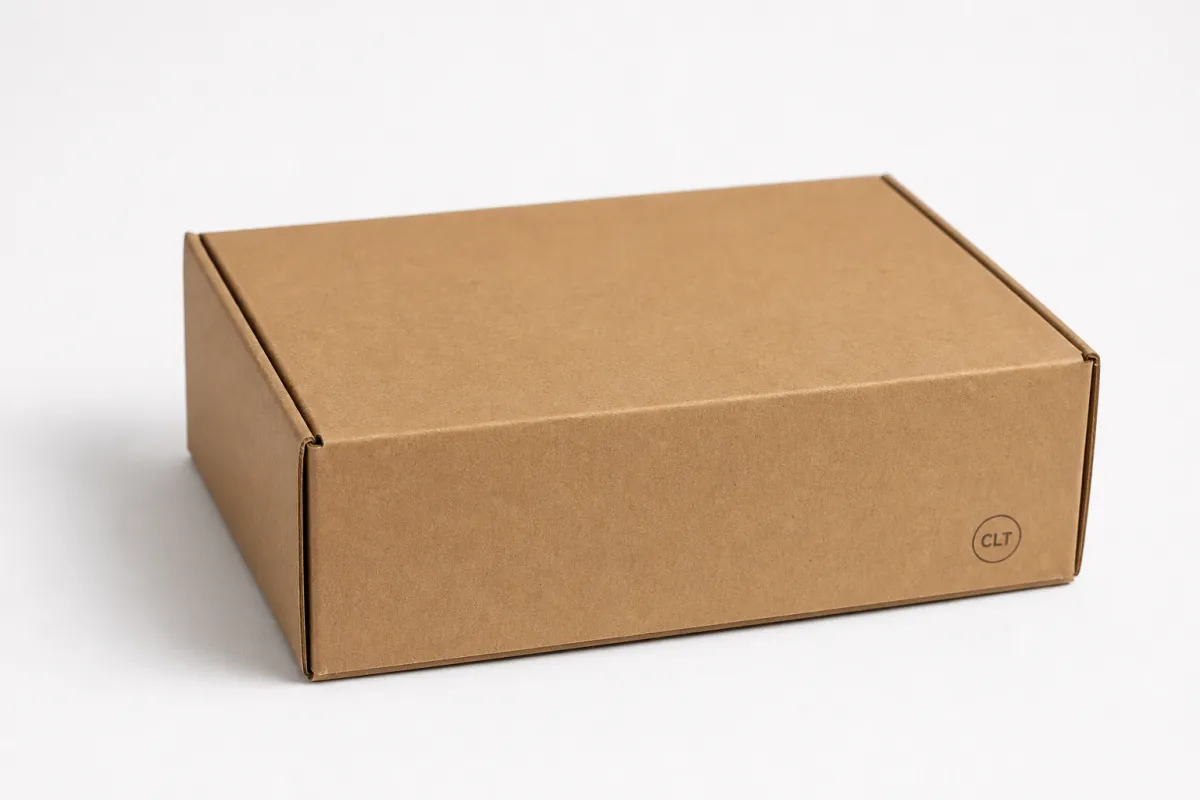
Custom kraft corrugated boxes are cartons built around a specific product size instead of a stock dimension pulled from whatever was available. The outer kraft liner gives the box that familiar natural brown surface, while the fluted corrugated medium inside provides structure and cushioning. Together, those layers create custom kraft corrugated boxes that can ship, stack, and present better than generic packaging that never really fit the product in the first place.
Brands usually choose them for three practical reasons. Fit comes first. A carton sized around the product reduces movement, which lowers the risk of dents, crushed corners, and excess filler. Appearance comes next. Kraft has a calm, grounded feel that works especially well for branded packaging with restrained typography and a clean layout. Cost matters too. Right-sizing can reduce dimensional weight charges, save warehouse space, and cut down on the amount of air shipped around with every order.
There is also a branding benefit that gets overlooked. A good box does not need loud artwork to feel intentional. A thoughtful print treatment on custom kraft corrugated boxes can look more considered than a carton overloaded with ink and visual noise. That is one reason so many Custom Printed Boxes now stay close to the kraft surface instead of covering it up. The material itself does part of the design work for you.
Kraft does not mean weak. I have seen oversized cartons fail because they were built around convenience rather than fit, while properly specified custom kraft corrugated boxes handled rough parcel routing with little drama. Board grade and structure matter more than the color of the liner. A strong box with poor dimensions is still a poor box. A moderate box with the right fit often performs better than a heavier carton nobody needed in the first place.
"If a box rattles, it is already telling you something is off."
That sounds simple because it is. Custom kraft corrugated boxes win when they protect the product, keep waste under control, and support the brand without pretending the carton is a luxury object. The goal is not to spend the most. The goal is to spend the right amount on the right construction.
How Custom Kraft Corrugated Boxes Are Made: Process and Timeline
The production path for custom kraft corrugated boxes usually starts with the dieline, which is the flat template that defines the shape, fold lines, glue areas, and panel sizes. After that, the supplier confirms the internal dimensions, board structure, print area, and any extras such as inserts or die-cut windows. Once the spec is locked, the board is selected, the liner is printed if needed, the blanks are cut and scored, glue is applied, and the finished cartons are packed for shipment. It sounds orderly on paper. The delays usually show up before the first sheet ever reaches the press.
Plain custom kraft corrugated boxes move faster because they skip artwork prep and reduce the number of production steps. Printed versions need file checks, color expectations, and sometimes a physical proof. Add custom inserts, embossing, a die-cut handle, or a special closure and the schedule stretches again. Nothing mysterious is going on there. Each extra feature adds another checkpoint, and each checkpoint adds another chance for a file to arrive in the wrong size or format.
Lead time depends on complexity. A simple unprinted run can often finish in 10 to 15 business days after proof approval. Printed custom kraft corrugated boxes usually land closer to 15 to 25 business days, especially if the plant is busy or the job needs a sample before production. New tooling adds more time. Artwork that needs cleanup adds more time again. The calendar does not care that the launch date feels urgent, which is irritating but true.
The step that slows most projects is approval. Buyers change a panel size after seeing the sample. A team notices the logo sits too close to the fold. Someone remembers the shipping label panel too late. Those revisions are normal, but they still affect the schedule. For custom kraft corrugated boxes, a clean spec and a clean file can save a week or more.
If you are still comparing packaging formats, browse Custom Packaging Products or review the options in Custom Shipping Boxes. Those pages help once you are deciding whether the job needs a mailer, a shipper, or a different carton style entirely.
One useful test is straightforward: if the supplier cannot explain what changes between plain kraft, printed kraft, and a custom die-cut version, keep asking. A reliable vendor should be able to talk through labor, tooling, lead time, and cost in direct terms. Custom kraft corrugated boxes are common, but the details still shape the result.
Custom Kraft Corrugated Boxes Pricing, MOQ, and Quote Basics
Pricing for custom kraft corrugated boxes comes from a stack of variables rather than one neat number. Board grade, box size, flute type, print coverage, finishing, inserts, and freight all push the final quote up or down. MOQ matters too. A 500-piece order and a 5,000-piece order can use the same design, yet the unit price behaves very differently because setup cost gets spread across a different number of cartons. That is why small orders often look expensive. On a per-unit basis, they usually are.
The buying trap shows up in quote comparisons. One supplier may quote a 32 ECT single-wall carton, another may quietly move you to heavier board, and a third may leave freight or insert costs off the page. A fair comparison needs the same size, the same internal dimensions, the same print coverage, and the same shipping terms. Without that, you are comparing apples to packing peanuts. I have watched buyers approve the lowest line item only to see the landed cost climb once the missing pieces appear.
| Box Spec | Typical Use | MOQ Range | Typical Unit Price | Notes |
|---|---|---|---|---|
| Plain single-wall kraft mailer | Light ecommerce items | 500-1,000 | $0.35-$0.75 | Works best with a tight fit and minimal print |
| Printed single-wall kraft shipper | Branded shipping orders | 1,000-3,000 | $0.55-$1.10 | Ink coverage and die-cut features push cost upward |
| Heavier 44 ECT kraft carton | Midweight to heavier products | 1,000-5,000 | $0.70-$1.40 | Useful when stacking or rough handling is part of the route |
| Custom kraft corrugated box with insert | Fragile kits and presentation sets | 2,000-5,000 | $0.95-$2.25 | Insert design and material choice can change pricing quickly |
Those figures are not universal, and they should not be treated like a fixed standard. A small simple order can land below those ranges if the factory is efficient and the print stays light. A complicated printed run can move above them without much effort. The table still helps as a reality check. If someone quotes custom kraft corrugated boxes at a price that feels unrealistically low, there is usually a reason. Sometimes that reason is thin board. Sometimes it is a charge that appears later.
The cleanest buying rule is straightforward: choose the lowest spec that safely survives shipping, then upgrade only where the product or the customer experience truly benefits. That keeps product packaging practical. It also keeps retail packaging and ecommerce packaging aligned instead of turning them into a vanity expense. If the product can ship safely in a basic kraft mailer, there is no reason to spec it like a museum crate. Save the budget for the part of the experience the customer actually sees and touches.
Key Material and Structural Factors That Change Performance
Flute choice comes first. Flute type affects crush resistance, box profile, and print surface quality. E-flute is thinner and often gives a cleaner print face. B-flute sits in the middle and works well for many shipping applications. C-flute is thicker and usually offers more cushioning. Double-wall board makes sense for heavier products, high stacking loads, or cartons that will live through rough freight. There is no single best answer for custom kraft corrugated boxes. The right flute is the one that matches weight, transit conditions, and handling.
Board grade matters just as much. People toss around 32 ECT, 44 ECT, and 200# test as if they mean the same thing. They do not. ECT measures edge crush resistance, which matters for stacking and compression. Mullen burst test measures puncture and burst strength. Some products care more about one than the other. If your custom kraft corrugated boxes will move through parcel networks, stack in a warehouse, or ship long distance, ask which standard makes the most sense for the route. The right answer depends on the load, not the sales pitch.
Dimensions shape performance more than many buyers expect. A carton that seems close enough can still fail if the interior is too loose or the insert leaves the product drifting around. I prefer a fit that lets the item enter without force but leaves only enough room for protection, not a pocket of dead space. Ask the supplier to state dimensional tolerances clearly. For custom kraft corrugated boxes, a clear tolerance discussion is more useful than a pretty mockup.
Closure style changes the job too. A regular slotted container is efficient and common. A roll-end mailer can present better for ecommerce. A die-cut self-locking style may improve presentation, but it can also introduce more tooling and more constraints. Inserts add another layer of control. A simple corrugated insert can keep a bottle, jar, or device from shifting. Foam may perform better in some cases, but it can change cost and sustainability goals fast. There is no prize for making the carton more complicated than the product needs.
The kraft liner itself affects both appearance and ink behavior. Kraft stock absorbs differently than white-lined board, so the same artwork can look warmer, duller, or more muted on custom kraft corrugated boxes. That is not a defect. That is the material speaking. If the design calls for a natural look, use that texture with intention. If the graphics need more brightness, test the print before full production. For sustainable sourcing questions, check the certification path through FSC so you know whether the board meets your procurement requirements.
Shipping standards matter too. If your product is moving through parcel distribution, ask whether the supplier has experience with ISTA test protocols or comparable transit testing. That does not mean every order needs a formal lab report. It means the carton should be designed for real motion, not a theoretical shelf life. Strong custom kraft corrugated boxes often come from a boring, disciplined spec rather than an overly fancy one.
Step-by-Step Guide to Ordering Custom Kraft Corrugated Boxes
Start with the product, not the packaging. Measure the item, note the weight, and write down whether it is fragile, scratch-sensitive, liquid, electronic, or awkwardly shaped. A supplier can build custom kraft corrugated boxes around almost anything, but only if the starting point is clear. Include accessories, cables, inserts, or labels in the measurement plan. A surprising number of fit problems come from the small parts no one remembered to count.
Next, choose the box style based on use case. A shipper is not the same as a retail-ready mailer. A presentation box is not the same as a transit carton. If parcel protection comes first, prioritize structure. If shelf presence comes first, prioritize visual control and the opening experience. That is where product packaging and retail packaging split apart. Custom kraft corrugated boxes can handle both, yet the spec should make the priority obvious.
Then collect the information the vendor actually needs:
- Inside dimensions, not just outside dimensions
- Product weight and any load concentration points
- Quantity, with a realistic reorder expectation
- Print colors, artwork files, and logo placement
- Need for inserts, windows, tape, or special closures
- Shipping method: parcel, freight, or mixed handling
Once you have that, request a dieline or structural proof. That checkpoint saves money. The dieline shows whether the panel sizes, fold lines, and glue area actually make sense. Do not skip it just because the first mockup looks acceptable on screen. I have watched custom kraft corrugated boxes fail because the product fit on paper but not in the actual carton. Paper optimism is cheap. Shipping damage is not.
If the product is valuable, odd-shaped, or sensitive to transit abuse, ask for a sample or prototype before full production. That is especially smart for custom printed boxes where logo placement, bleed, and color tone matter. A sample also helps you check how the box opens, closes, stacks, and presents. A packaging buyer should care about all four. If the carton works in the warehouse but feels awkward at unboxing, the job is not finished yet.
One simple sourcing habit pays off: keep a comparison note that tracks the quote, the spec, and the sample. That keeps custom kraft corrugated boxes from drifting during approval. A carton can change quietly when someone updates the board grade or adjusts the artwork. Nobody notices until the first pallet arrives and the numbers no longer match.
Common Mistakes With Custom Kraft Corrugated Boxes
The first mistake is buying on price alone. Cheap custom kraft corrugated boxes can be a fine decision if the spec is honest. They become a problem when the low quote hides weak board, loose sizing, or poor print control. The carton then saves a few cents and costs far more in product damage, returns, and rework. That is not savings. That is delayed expense wearing a smile.
The second mistake is using outside dimensions instead of inside dimensions. Corrugated cartons live and die by fit. If you measure the outer shell and forget the board thickness, dead space appears immediately. For shipping cartons, that extra room often becomes movement. For branded packaging, it becomes a customer experience problem. Custom kraft corrugated boxes should be built around the product, not the tape measure in somebody's desk drawer.
The third mistake is overprinting. Heavy ink coverage can hide the kraft texture, increase cost, and make the carton feel less natural. That may be fine if the goal is a bold look. It is not useful if the goal is a clean kraft-first presentation. A lot of custom kraft corrugated boxes look better with restrained typography, one accent color, and enough visual space for the material to breathe. Loud is not the same thing as effective.
The fourth mistake is ignoring the shipping route. A box that survives local hand delivery may fail in parcel networks or palletized freight. If the carton will be stacked, tossed, refrigerated, or exposed to moisture, say that early. Otherwise the spec may be too light. I would rather see a slightly stronger custom kraft corrugated box than a cheap one that falls apart on the first real test.
The fifth mistake is skipping the trial pack. People do this because they are busy and the mockup looks fine. Then the first live order reveals a gap, a flap issue, or an insert that shifts. Test one, test five, test ten. That small batch tells you more than a pile of assumptions. If you are still deciding between formats, the comparison on Custom Packaging Products can help, and Custom Shipping Boxes is useful when the job is clearly transit-first.
One more point deserves attention: sustainability claims do not replace performance. FSC sourcing, recycled content, and lighter board all matter, but none of them excuse a bad carton. The Best Custom Kraft corrugated boxes balance material responsibility with real-world durability. Anything less is just a story printed on a box.
Expert Tips and Next Steps for Better Packaging Decisions
If the product or budget is not fully settled, ask for two versions of the spec. Version A can be the economical build. Version B can be the stronger or more premium build. Compare them with a sample instead of guesswork. That is a much better way to choose custom kraft corrugated boxes than trying to predict transit damage from a spreadsheet and a hunch.
Ask the supplier to break the quote into box cost, print cost, setup cost, insert cost, and freight. That level of clarity shows where the money is going. It also makes it easier to decide which change is worth paying for. A cleaner logo placement might justify the extra print setup. A more complex insert might not. That judgment gets easier once the pricing is visible instead of hidden inside one mysterious number.
Watch the samples for four things: fit, stackability, shelf or shipping presence, and how the kraft surface handles your artwork. Those checks catch most of the practical risk. I also look at edge crush behavior and closure tension. If the carton flexes too much when lifted, the spec is probably too light. If the closure fights the operator, the design needs another pass. Custom kraft corrugated boxes should be easy to build, easy to pack, and hard to damage.
Here is a simple order sequence that keeps the process steady:
- Finalize product dimensions and weight
- Confirm the shipping method and handling risks
- Choose the box style and board grade
- Approve the dieline and artwork placement
- Review the sample or prototype
- Approve the quote and production schedule
That order matters because it keeps you from paying for mistakes twice. It also makes custom kraft corrugated boxes easier to source when several people are involved, which is common once finance, operations, and marketing all start editing the same packaging plan. Boxes get political surprisingly fast once more than one department gets a vote, and yes, that part is kinda familiar if you've ever sat through a packaging review.
My practical rule stays simple: specify the lightest box that still survives the real ship route, then improve only where the product or the brand experience earns a clear return. That keeps custom kraft corrugated boxes honest. It also keeps custom printed boxes from drifting into decorative overkill. Good packaging does not need to be dramatic. It needs to arrive intact, look intentional, and avoid wasting money. Keep the product, the route, and the quote aligned, and custom kraft corrugated boxes will do exactly what they should do.
One last reality check before you sign off on a spec: if the box feels "good enough" in a mockup but the measurements are vague, the carton is not ready yet. Tighten the inside dimensions, confirm the board grade, and test the first build against the actual product before you place the full run. That small pause saves a lot of rework later.
What are custom kraft corrugated boxes used for?
They are used for shipping, protection, and presentation when you need a carton built around a specific product size or weight. Custom kraft corrugated boxes work well for ecommerce, subscription kits, retail shipments, and fragile items that need structure plus a natural look. They are especially useful when stock sizes create wasted space or force you to use too much filler.
How do I choose the right flute for custom kraft corrugated boxes?
Start with the product weight and shipping method, not the box color or print style. Use a stronger flute or thicker board when the carton will be stacked, shipped long distance, or carry heavier contents. Use a lighter structure when the product is small, low-risk, and presentation matters more than brute force.
What affects the price of custom kraft corrugated boxes the most?
The biggest drivers are size, board grade, print coverage, quantity, and whether the design needs special tooling. Small orders usually have higher unit cost because setup is spread across fewer boxes. Inserts, coatings, and complex die cuts can raise the quote quickly, so keep the spec lean unless the product truly needs the extra work.
How long does it take to make custom kraft corrugated boxes?
Timeline depends on artwork readiness, dieline approval, sample needs, and factory capacity. Simple unprinted boxes can move faster than printed or highly customized versions. If you need a reliable schedule, confirm the proofing steps and sample approval window before you place the order.
Can custom kraft corrugated boxes be printed without losing the natural look?
Yes, but the design should stay restrained so the kraft texture still carries the visual weight. Minimal ink coverage, strong typography, and one or two colors usually preserve the clean kraft feel. Heavy coverage can hide the material, so decide whether you want a branded box or a true kraft-first look.

