Buyer Fit Snapshot
| Best fit | Custom Kraft Gift Bags projects where brand print, material claims, artwork control, MOQ, and repeat-order consistency need to be specified before quoting. |
|---|---|
| Quote inputs | Share finished size, material target, print colors, finish, packing count, annual reorder estimate, ship-to region, and any compliance wording. |
| Proofing check | Approve dieline scale, logo placement, barcode or warning zones, color tolerance, closure strength, and carton packing before bulk production. |
| Main risk | Vague material claims, crowded artwork, missing packing details, or unclear freight terms can make a low unit price expensive after revisions. |
Fast answer: Custom Kraft Gift Bags: Film, Print, MOQ, and Carton Packing should be specified like a repeatable production item. The safest quote records material, print method, finish, artwork proof, packing count, and reorder notes in one written spec.
Production checks before approval
Compare the actual filled-product size with the drawing, then confirm tolerance on folds, seals, hang holes, label areas, and retail display edges. Reserve space for logos, QR codes, warning copy, and material claims before decorative graphics fill the panel.
Quote comparison points
Review material grade, print process, finish, sampling route, tooling charges, carton quantity, and freight assumptions side by side. A quote is only useful when the supplier can repeat the same color, closure quality, and packing count on the next order.
Custom Kraft Gift Bags: Sustainable Packaging Guide
A brown paper bag can do something polished packaging often struggles to pull off: it can make a brand feel grounded. Not cheap. Grounded. That distinction matters, especially now that so many customers are fluent in the difference between a package that was selected thoughtfully and one that was ordered because it was available. Custom Kraft Gift Bags sit right in that gap. They are practical, yes, but they also carry a kind of visual restraint that reads as confidence.
Walk through a boutique district, a bakery counter, a gallery shop, or a holiday market and you will see the same pattern repeat. Custom Kraft Gift Bags show up wherever the brand wants the packaging to feel warm without turning theatrical. They are common for a reason. They can hold a logo, support a product, and still leave room for the material to look like itself. That balance is harder to achieve than people think.
For brands building a full packaging system, the bag should be considered alongside inserts, tissue, labels, and wrap. A look through Custom Packaging Products can help place other branded packaging options in context, which matters because packaging rarely succeeds as a lone object. It works as a set, and the bag is only one voice in that chorus.
What Are Custom Kraft Gift Bags?
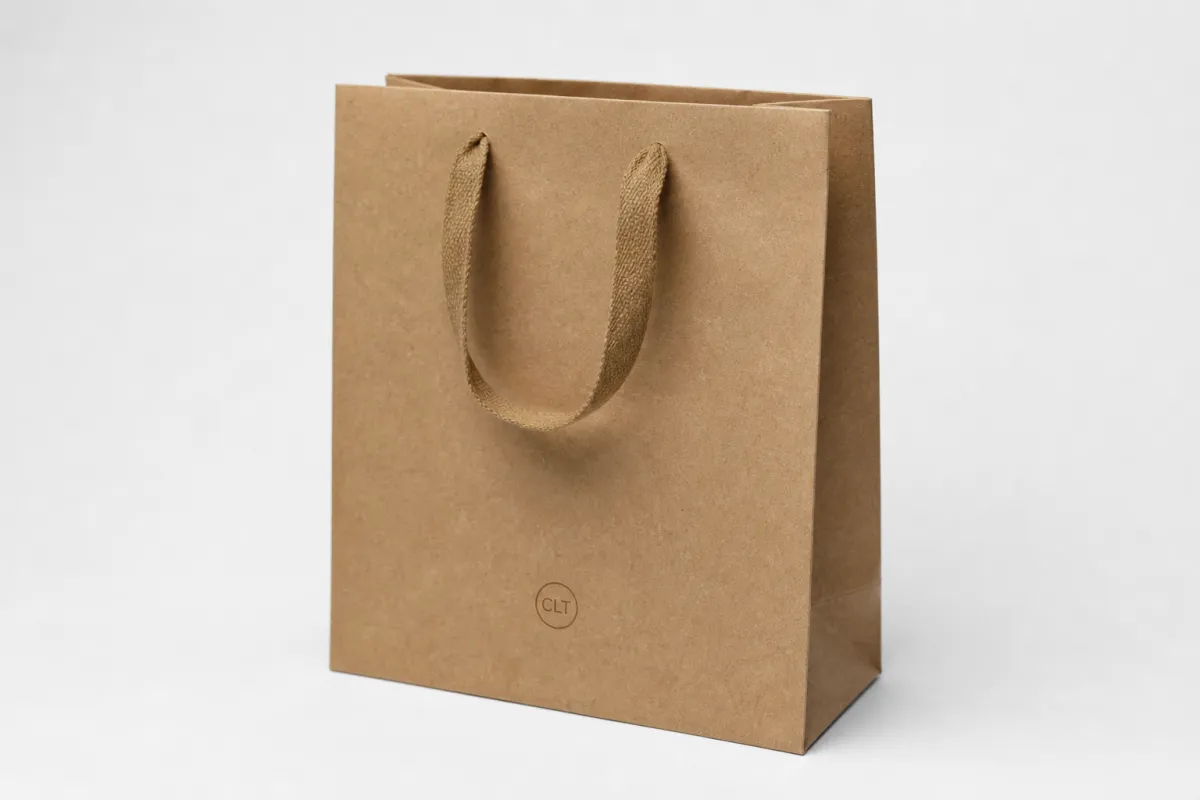
At the simplest level, custom kraft gift bags are paper carry bags made from kraft stock and printed with brand marks, seasonal graphics, product messages, or pattern work. They usually include front and back panels, gusseted sides, a pasted or locked bottom, and a handle style chosen for the intended load. The structure is ordinary on paper. In use, it is anything but. A bag that stands upright, opens cleanly, and survives normal handling creates a better first impression than a more decorative bag that slumps under its own weight.
Kraft is different from coated or glossy stock because it keeps the material visible. The surface is matte and slightly fibrous, so printed ink sits into the paper rather than floating above it. That gives custom kraft gift bags a tone that feels a little more human. A logo printed on kraft often looks warmer than the same logo on a slick white carrier, and sometimes it looks more expensive too. That sounds counterintuitive until you hold the two side by side. The paper that does less tends to say more.
That is why these bags remain popular in retail packaging, product launches, takeaway service, wedding favors, and event merchandising. They can read artisanal without drifting into costume. They can also be structurally sensible, which is where a lot of paper bags fail. Looks matter, but they only matter if the bag can actually carry the thing it was built for.
Sustainability is part of the appeal, though the facts deserve more precision than the usual marketing copy allows. Kraft paper can contain recycled fiber, and uncoated paper is often easier to sort into local recycling streams than laminated or plastic-heavy alternatives. But that does not mean every bag belongs in every bin. Adhesives, coatings, foil, reinforced patches, and municipal rules all change the outcome. The EPA recycling guidance is a useful reminder that the local system decides what gets recovered.
From a brand perspective, custom kraft gift bags do more than transport a purchase. They shape how the purchase is read. A well-sized bag with disciplined printing can make a modest item feel curated. A weak bag can make a premium product feel half-finished. That is why they belong in the same conversation as package branding and customer experience, not in the category of afterthoughts. I have seen strong products lose some of their value in the hand simply because the bag felt flimsy. The reverse happens too.
A kraft bag may look relaxed, but it is still engineered packaging. If the bottom gives out or the handles pull awkwardly, the brand message takes the hit first.
That tension shows up in every production decision. Custom kraft gift bags sit at the point where material choice, print behavior, structure, and environmental claims all meet. Ignore one of those pieces and the bag still exists, but it loses the credibility that made it worth ordering in the first place. Packaging, as unglamorous as it sounds, is usually judged by the weakest detail people never expected to notice.
How Custom Kraft Gift Bags Are Made
The process begins with kraft paper itself. Kraft pulping preserves more of the wood fiber's natural strength than many refined paper processes, which is why the material is known for tear resistance and solid tensile behavior. That fiber strength is the reason custom kraft gift bags can carry boxed goods, folded apparel, candles, or several smaller items without collapsing into a soft fold.
Once the paper is formed, it is cut, folded, glued, and reinforced. Gussets are added so the sides can expand. The bottom is locked or pasted so the bag can support weight. The top edge is finished for handle attachment or a die-cut opening. Those steps sound simple, but the difference between a decent bag and a reliable one usually shows up in the bottom board, the glue line, and the way the bag opens without buckling. That is the unglamorous part of packaging engineering, the part people only notice when it goes wrong.
Handle choice changes the user experience more than many buyers expect. Twisted paper handles are common because they are cost-effective and familiar. Flat tape handles sit neatly against the bag body and work well for lighter retail packaging. Rope handles, whether cotton, paper rope, or a synthetic blend, create a more upscale feel and are kinder to the hand when the load is heavier. Die-cut handles keep the silhouette minimal, though they usually need reinforcement if the bag will be carried often. That tradeoff is one of those small decisions that becomes obvious only after the bags start moving through the store.
Printing is where custom kraft gift bags stop being plain carriers and become branded objects. Flexographic printing suits straightforward runs and repeat patterns. Offset printing is better when the artwork needs finer detail. Hot stamping adds metallic accents. Spot varnish can highlight a logo without coating the whole surface. Kraft paper absorbs ink differently than coated white board, so the same design can look softer, deeper, or more muted than it does on a screen mockup. That is not a defect. It is the material doing its job.
Proofing matters here more than it does on many packaging projects. A dense dark layout can flatten the natural kraft character, while a restrained one-color mark can feel stronger because the paper tone remains visible. When a sample looks different from the digital proof, the reason is usually fiber tone, coating level, or print method. A production team that knows kraft well is gonna expect some shift and design around it instead of pretending the screen is the final truth.
Sourcing documentation matters too. If a program depends on recycled content or responsible forestry claims, ask for the paperwork and understand how chain of custody is tracked through organizations such as FSC. That kind of traceability strengthens the story behind custom kraft gift bags, especially when they sit inside a wider sustainable packaging strategy. Trust is built on specifics, not slogans.
Key Factors That Affect Custom Kraft Gift Bags
Paper weight is usually the first specification worth getting right. A lighter sheet may look fine in a quote and still bow under the weight of a candle, boxed cosmetic set, or bottle. Heavier grades improve stiffness and puncture resistance, though they also raise material cost and can make the bag feel firmer in the hand. With custom kraft gift bags, the right weight depends on the product, not on a generic retail rule. The bag has to earn its keep in actual use, not just in a spreadsheet.
Size matters almost as much. Width, height, and gusset depth determine whether the contents sit comfortably or press into the sidewalls. A bag that is too tall can waste material and look awkward. A bag that is too narrow can distort the product inside. Gusset depth often solves more problems than extra height, because wide items need room to breathe more than they need vertical space. Buyers often learn that only after the wrong spec has already been approved, which is a costly way to discover gravity.
Handle choice affects both comfort and price. Twisted paper handles are usually the most economical. Rope handles and reinforced die-cut options feel more refined, but they add conversion steps and often need stronger attachment points. If the bag is expected to carry weight repeatedly, handle reinforcement should be treated as structural, not decorative. A handle that tears under ordinary use turns a good-looking bag into an expensive complaint.
Artwork complexity changes the outcome too. One-color logos are often the cleanest fit for kraft because they preserve the paper's visual texture. Two-color designs can still look elegant when the composition is disciplined. Full-bleed graphics, dense solids, or intricate patterns can work, though they reduce the natural kraft character that many brands wanted in the first place. Packaging design has to be honest about the stock it sits on. Kraft is not blank canvas energy; it has its own voice.
Finishes and end-of-life implications deserve attention as well. An uncoated bag is usually easier to position as recyclable than a heavily laminated version, while water-based inks generally keep the material story cleaner than plastic-heavy coatings. Reinforcement boards, foil, window patches, and specialty varnishes all change the recycling conversation. Custom kraft gift bags may still be excellent products with those additions, but they do not all behave the same way after use. The honest answer is that the finish you choose should match the purpose, not just the mood board.
Buyers often compare three broad options:
| Bag Style | Typical Use | Approx. Unit Price at 5,000 pcs | Strength / Look |
|---|---|---|---|
| Lightweight twisted-handle kraft bag | Events, small retail items, giveaways | $0.18-$0.30 | Good for light loads, simple natural look |
| Reinforced kraft bag with printed logo | Boutiques, gifting, apparel, gift sets | $0.28-$0.52 | Better structure, better hand feel, stronger presentation |
| Premium rope-handle kraft bag with special finish | Luxury retail packaging, launches, seasonal programs | $0.55-$1.10+ | Higher perceived value, more conversion steps, more decoration |
Those numbers are directional, not fixed. They still reveal the same pattern every time: as the bag gets larger, thicker, more decorated, and more reinforced, the unit cost rises. Custom kraft gift bags stay economical when the structure fits the use and the design stays disciplined.
Step-by-Step Guide to Specifying Custom Kraft Gift Bags
The cleanest way to specify custom kraft gift bags is to begin with the contents, not the artwork. Measure the product footprint. Note the tallest point. Account for tissue, inserts, ribbon, or padding if those pieces will be included before the item goes into the bag. A size that works on paper can still feel cramped once the presentation layer is added, which is where many otherwise solid packaging plans stumble.
Dimensions should come from real use. If the bag is meant for a boxed candle, folded garment, or mixed set of small goods, consider how the customer will place the item inside and whether the top should close without crushing the contents. Gift bags usually benefit from a little headroom. Retail checkout bags often work better when the opening stays compact and tidy. The right answer depends on the moment the bag is meant to serve.
Paper, handle, and reinforcement follow the sizing decision. Heavier products need stronger bottom construction and more secure handle attachment points. Lighter apparel or event materials can usually work with a simpler build. This is where honest specification saves money in the long run. A bag that fits the use case is worth more than a cheaper one that fails in the store or at the event table.
Artwork should be prepared around the conversion, not around a flat poster. Confirm printable areas, safe zones, seam interruptions, and fold lines before final proofing. A common problem appears when someone designs as if the bag were a billboard and then discovers the logo is cut by a crease or crowded by handle placement. Package branding works best when the object itself is part of the design logic.
Then review the proof and, if the project allows it, a physical sample. That is where custom kraft gift bags reveal whether the colors are too heavy, the logo sits too close to the edge, or the handle feels lighter than expected. A sample also helps with stackability, shelf presence, and the simple question of whether the bag stands upright on its own. A quick filled-bag test catches more issues than most digital proofs ever will. Honestly, it is the one step people skip right up until they wish they had not.
A practical sequence keeps the project moving:
- Define what the bag will carry and how it will be used.
- Set width, height, and gusset depth around the real product, not a guess.
- Select paper weight, handle style, and reinforcement based on load.
- Place artwork with fold lines, glue areas, and safe zones in mind.
- Approve a proof or sample before the run begins.
That process keeps custom kraft gift bags from becoming a design-by-accident project. The best results usually come from a packaging buyer who knows the product, a designer who respects production, and a supplier who asks the right questions before anything is printed. That mix sounds basic, but basic is often what keeps a project from getting weird.
Custom Kraft Gift Bags Pricing, MOQ, and Quote Factors
Pricing for custom kraft gift bags usually follows a familiar set of drivers: size, paper weight, handle style, print coverage, and special finishes. A larger bag needs more material. A thicker stock costs more. A rope handle or reinforced insert adds labor. Multiple ink colors add setup. Once those pieces are visible, most quotes stop looking mysterious and start looking like the sum of real production decisions.
MOQ, or minimum order quantity, matters because setup costs do not disappear in a smaller run. Press preparation, plate or die creation, and converting line time all need to be paid for somewhere. With fewer bags in the order, those fixed costs land on each unit more heavily. That is why a 500-piece order can feel surprisingly expensive next to a 5,000-piece run, even if the bag design looks simpler on the surface. Buyers often think they are paying for paper alone. They are paying for consistency, setup, and production control too.
Quote accuracy improves when the brief is complete. Exact dimensions, handle preference, artwork files, print quantity, target load, and shipping destination all help a supplier price the job properly. Include sample requirements, whether freight should be folded into the quote, and whether the bags need to match an existing brand standard. The estimate becomes more useful, and the back-and-forth starts to shrink. Good specs save time on both sides, which nobody complains about.
Knowing where the money goes makes tradeoffs easier. Simple one-color branding on a standard kraft bag can be efficient. Foil stamping, extra print passes, matte lamination, or complex die-cut features raise cost fast. If the goal is a more premium result without overspending, it is often smarter to improve the paper weight, handle comfort, or bottom reinforcement than to add decoration that does not strengthen the actual experience. A nicer bag that carries well beats a flashy one that feels flimsy.
One practical way to think about the options:
- Lower-cost path: modest size, standard kraft stock, one-color logo, twisted paper handle.
- Mid-range path: reinforced structure, two-color print, better handle feel, cleaner finish.
- Premium path: heavier kraft, rope handles, special print treatment, tighter quality control.
Hidden costs can catch buyers off guard. Proofs and samples may be minor or meaningful depending on how many revisions happen. Rush production often adds a surcharge. Freight can swing the total because custom kraft gift bags are bulky, not dense. Storage deserves a line in the budget too; cartons stack quickly, and the unit price tells only part of the story. For a well-scoped run, a buyer might see roughly $0.22-$0.38 for a simple printed kraft bag at moderate volume, $0.35-$0.60 for a stronger mid-tier version, and more for lower quantities or premium decoration. Those ranges are planning tools, not promises, but they are close enough to keep a budget honest.
Custom Kraft Gift Bags Process, Timeline, and Lead Times
Most custom kraft gift bags move through the same production sequence: inquiry, quotation, artwork review, sample or proof approval, manufacturing, quality inspection, packing, and shipment. The steps are familiar. The time between them is where projects diverge. A repeat order with established artwork can move quickly. A first-time run with a new size, unusual handle, or special finish usually needs more rounds of review before the first bag is ever cut.
Lead time depends on factory capacity, paper availability, print complexity, and how quickly the customer responds. One-color printing on a standard stock moves faster than a bag with metallic accents, custom die-lines, or reinforced handle assembly. Seasonality changes the picture too. Holiday packaging, event launches, and promotional cycles crowd the schedule. That pressure often shows up first in sample timing rather than in the final production slot, which catches people off guard if they are only watching the shipment date.
Shortening turnaround usually comes down to reducing uncertainty. Send print-ready artwork if possible. Confirm dimensions early. Approve proofs promptly. If a sample is needed, review it with the product it will actually carry, not as an empty object on a desk. Late changes add time, and custom kraft gift bags are no exception.
For programs that need more formal handling checks, it helps to think beyond appearance. The bag does not need to survive pallet abuse like a shipping carton, but it should still be evaluated for stress at the handle, bottom seam, and top fold. Brands that distribute through busier channels can borrow from ISTA-style thinking because it keeps the focus on real-use conditions instead of visuals alone. The ISTA framework is useful when a program needs more than a casual carry test.
Typical timing for custom kraft gift bags often lands in the 12-20 business day range after proof approval for straightforward orders, while more complex or heavily customized runs can take longer. Quantity, workload, and finish selection all move that number. For event dates, store openings, or seasonal launches, a cushion is wise. Packaging schedules tend to become unforgiving exactly when the brand needs them to be flexible.
One rule holds up almost every time: lock the spec early and the project gets calmer. That is true for retail packaging, Custom Printed Boxes, and custom kraft gift bags alike. Clarity makes production easier to manage, and easier projects usually cost less to rescue.
Common Mistakes and Expert Tips for Custom Kraft Gift Bags
The biggest mistake is choosing a bag that looks good on a spec sheet and behaves badly in the hand. A bag may be wide enough and still too shallow for the actual product stack. The item may fit and the handle may still feel wrong once weight is added. Bottom structure creates similar trouble. A bag that will not stand upright makes presentation harder and trust thinner. Customers notice that kind of failure quickly, even if they do not have the language for it.
Overprinting is another common problem. Kraft paper has personality, and many brands choose it because the surface feels warmer and more authentic than a glossy white substrate. Cover the entire bag with dense ink and that character disappears. Decoration is not the issue. Excess is. The strongest custom kraft gift bags usually know where to stop and let the material speak.
Skipping a sample is risky in a way digital proofs cannot reveal. A screen will not tell you how the handles feel, whether the paper tone is warmer than expected, or whether the logo still reads clearly in real light. A sample also lets you see how tissue, inserts, and the actual product behave together. That one step prevents more disappointments than almost any other part of the process.
A few habits make a real difference:
- Keep the design simple unless the brand story truly needs more coverage.
- Match handle style to the load, not just the visual mood.
- Choose paper weight based on the heaviest expected use, not the lightest one.
- Ask for a sample when color, finish, or structure will affect customer perception.
- Test one filled bag in hand before approving a full production run.
Context matters as much as the bag itself. If the bag sits beside tissue, a receipt card, or a small box, those pieces should work together. That is where custom kraft gift bags do more than hold a logo. They help shape the whole retail packaging experience. The bag becomes part of the brand's physical language, not just a vessel.
For a new program, start with the practical decisions: dimensions, expected weight, print treatment, handle preference, and delivery date. Then ask for a quote or sample from a supplier who can explain the tradeoffs clearly. That is the most reliable path to custom kraft gift bags that look good, hold up well, and represent the brand honestly. The goal is not perfection. It is fit.
Frequently Asked Questions
What size should custom kraft gift bags be for retail products?
Start with the product footprint, then add room for tissue, inserts, or packing material so the bag does not feel crowded. Gusset depth matters as much as height because a wide item can distort the bag even when the vertical space looks right on paper. A sample is the safest way to confirm the size before production when fit affects the customer experience.
Are custom kraft gift bags strong enough for heavier items?
Yes, if the paper weight, bottom construction, and handle reinforcement are built for the actual load. Heavier goods usually need a stronger base board and a more secure handle attachment, especially if the bag will be carried more than once. The safest approach is to spec the bag for the real product weight instead of a generic retail estimate.
What print style works best on custom kraft gift bags?
Simple logos, clean typography, and one- to two-color designs usually work best because they preserve the natural kraft look. Foil and spot varnish can add value, but they should support the brand rather than overpower the surface. A proof or sample matters because kraft paper shows ink differently than smooth white stock.
How long do custom kraft gift bags take to produce?
Lead time depends on order size, print complexity, sample approval, and the current production schedule. Straightforward repeat orders usually move faster than first-time custom projects that need new artwork checks or converting setup. The quickest way to stay on schedule is to approve the spec early and send clean artwork from the start.
What affects custom kraft gift bags pricing the most?
Size, paper weight, handle style, and print coverage usually drive the biggest price changes. MOQ also matters because setup costs are spread across the number of bags ordered. Freight, samples, and rush timing can change the total project cost even when the unit price looks attractive.
Can custom kraft gift bags support a sustainability story?
They can, as long as the material, printing method, and reinforcement choices match the claim. Recycled content, FSC sourcing, and simpler finishes all help tell a cleaner story, but local recycling rules still matter. Honest sourcing language is always better than broad claims the packaging cannot fully support.
Good custom kraft gift bags do quiet but serious work. They carry the product, support the brand, soften the handoff, and signal that the packaging was chosen with care rather than grabbed at the last minute. Get the size, paper, handle, print, and timing right, and the bag stops acting like a disposable container. It starts working like part of the product experience.
The most useful takeaway is simple: before you approve a run, test one filled bag with the actual item, the actual insert, and the actual handoff scenario. If it holds up there, the spec is probably sound. If it feels off there, the rest of the order is gonna feel off too.

