Buyer Fit Snapshot
| Best fit | Custom Kraft Mailers for Samples projects where brand print, material claims, artwork control, MOQ, and repeat-order consistency need to be specified before quoting. |
|---|---|
| Quote inputs | Share finished size, material target, print colors, finish, packing count, annual reorder estimate, ship-to region, and any compliance wording. |
| Proofing check | Approve dieline scale, logo placement, barcode or warning zones, color tolerance, closure strength, and carton packing before bulk production. |
| Main risk | Vague material claims, crowded artwork, missing packing details, or unclear freight terms can make a low unit price expensive after revisions. |
Fast answer: Custom Kraft Mailers for Samples: Film, Print, MOQ, and Carton Packing should be specified like a repeatable production item. The safest quote records material, print method, finish, artwork proof, packing count, and reorder notes in one written spec.
Production checks before approval
Compare the actual filled-product size with the drawing, then confirm tolerance on folds, seals, hang holes, label areas, and retail display edges. Reserve space for logos, QR codes, warning copy, and material claims before decorative graphics fill the panel.
Quote comparison points
Review material grade, print process, finish, sampling route, tooling charges, carton quantity, and freight assumptions side by side. A quote is only useful when the supplier can repeat the same color, closure quality, and packing count on the next order.
Custom kraft Mailers for Samples look spare on the shelf, yet they can decide whether a trial feels curated or careless. A fragrance strip, textile swatch, food sample, or hardware part may cost pennies compared with a full order, but the damage from a failed shipment adds up quickly: replacement product, support time, postage, and the quieter cost of a disappointed buyer. Sample packaging sits right where protection, presentation, and shipping efficiency collide, which is exactly why small mistakes have outsized consequences.
Packaging buyers usually want the same three outcomes from a sample mailer. The contents should stay flat and clean. The outer pack should carry the brand with enough clarity to feel intentional. The unit should move through parcel networks without inflating dimensional weight or creating avoidable labor. That combination is harder than it sounds, especially for teams who spend most of their time on Custom Printed Boxes, retail packaging, or broader product packaging programs rather than small, highly specific sample packs.
A useful comparison helps here. A well-built sample mailer behaves like a pared-back version of branded packaging, but it should never be treated as a decorative envelope with a logo slapped on top. Structure matters. Closure strength matters. The way the mailer handles pressure, stacking, conveyor motion, and rough courier handling matters. Those details feel minor until a launch arrives bent, wet, or opened, and then they suddenly become the whole story.
Why custom kraft mailers for samples do more than ship
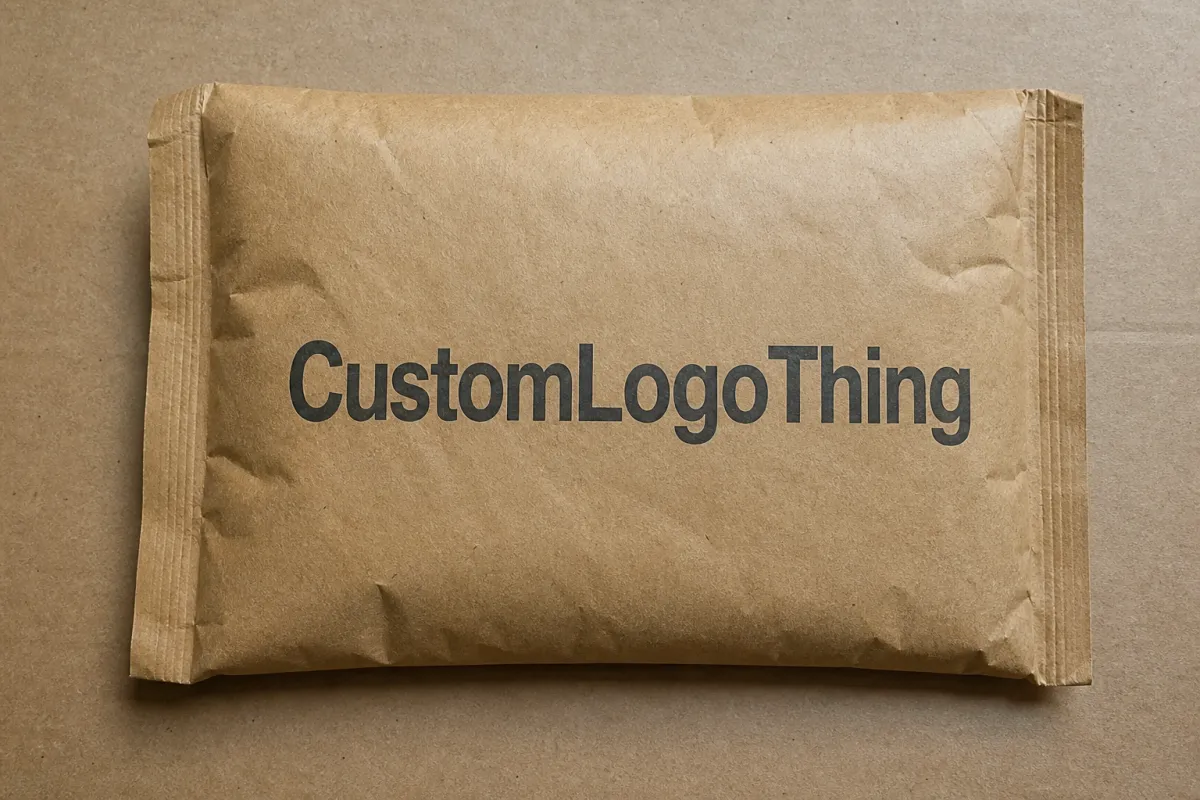
Custom kraft Mailers for Samples do more than move an item from one address to another. They set the tone before the sample is even touched. A clean, paper-based mailer tells the customer the brand cared about the little things, and that signal carries weight because samples are often the first physical interaction a buyer has before placing a larger order. A flimsy exterior or a sloppy print can erode trust before the contents are visible.
The expensive part is how a tiny failure multiplies. A bent swatch can trigger a re-send. A crushed sachet can send the customer to support. A torn edge can make a package look used even when the contents are fine. Sample programs often ask one pack to do the work of marketing, logistics, and presentation at once, so a single damage event can cost more reputation than revenue. That is why sample packaging should be judged with the same discipline a team would use for premium retail packaging, even if the contents are small.
Structure should follow the sample, not the other way around. Beauty samples, food sachets, textile swatches, stationery cards, and industrial components all fail differently. Flat items can usually live in a thinner kraft mailer. Sharp, liquid, brittle, or unusually shaped items may need an insert, a reinforced edge, or a hybrid construction. The pack should fit the risk profile, not just the product dimensions. A sample that looks harmless in a photo can still behave badly in transit if it shifts, leaks, or punctures the wall of the mailer.
Branding plays a role too. A sample mailer is a form of package branding, and package branding works best when the sender is easy to recognize and the pack looks deliberate. That does not require heavy ink coverage or loud graphics. Often the strongest version is restrained: a one-color logo, a clean message panel, and enough open space to keep the exterior organized rather than crowded. In practice, restrained branding often travels better because it leaves more room for handling marks, shipping labels, and practical information.
"If the sample can move, the courier will find a way to punish it."
That line sounds harsh because parcel handling can be harsh. Mailers get compressed, dropped, bent, and dragged. The right sample mailer is designed around that reality instead of around a polished mockup. Teams comparing formats can start with our Custom Packaging Products page, and Custom Poly Mailers make a useful comparison if paper construction is being weighed against a lighter plastic option. The best choice is rarely the fanciest one; it is the one that matches the journey.
How custom kraft mailers for samples work in transit
In transit, a mailer behaves less like a fixed container and more like a flexible structural system. A typical kraft sample mailer includes an outer paper layer, a closure zone, and sometimes an inner reinforcement area. Some designs use a peel-and-seal adhesive strip. Others rely on tuck closures or pressure-sensitive seals. The better choice depends on how the package will be handled after packing and whether the end customer is likely to open it once or repeatedly.
The shipping chain matters as much as the mailer itself. A sample leaves a pick-and-pack table, goes into a carton or bag, travels through sortation belts, rides in a truck or aircraft container, and gets handled again at the final mile. That path explains why bend resistance often matters more than full box rigidity for many samples. If the contents must stay flat, the mailer has to resist folding at the edges and creasing across the face. If the item is only slightly larger than the mailer cavity, the pressure points become even more important.
Thin, compact sample formats tend to work best in this structure: folded textile swatches, membership cards, product sheets, paper sachets, test strips, small vials secured in inserts, and light parts that do not rattle. Once the contents become sharp, heavy, brittle, or liquid-filled, a simple envelope-style construction can stop being enough. At that point, the spec usually shifts toward padding, a rigid insert, or a hybrid mailer-box format. Some teams try to force one mailer to cover every sample type, but that usually creates more damage than savings.
Print and finish shape the pack inside the supply chain too. Crisp typography and a clean logo help with recognition and sorting, but heavy ink coverage, laminations, and coatings can affect cost and recyclability. That does not make print a problem. It means the art direction should support the logistics rather than fight them. Good packaging design accounts for transit visibility and end-of-life claims at the same time, and it does so without pretending every finish is equally easy to recycle.
Teams that need to defend sustainability claims should look beyond the material name on the spec sheet. The EPA's guidance on sustainable materials management is a solid reference for thinking past a single substrate choice, and FSC certification can support responsible fiber sourcing where chain-of-custody matters. See EPA sustainable materials management and FSC for the standards behind those claims. A kraft exterior alone does not prove a package is recyclable, especially if the liner, adhesive, or coating complicates recovery.
A simple decision rule can save time. If the sample is flat, dry, and not easy to damage, a basic kraft mailer may be enough. If the sample is fragile, sharp, liquid, or valuable enough that one failure would create a service headache, a stronger hybrid or an insert is worth considering. Many teams borrow test logic aligned with ISTA protocols because those methods reveal what happens after drops, compression, and vibration rather than what happens on a quiet desk. That kind of testing is not about perfection; it is about learning where the weak point shows up first.
Cost, pricing, and MOQ for custom kraft mailers for samples
Cost is where sample mailer decisions become real. The quoted unit price matters, but it is only one line in the budget. Board weight, size, print coverage, closure type, special finishes, and whether the job needs custom tooling all affect the final number. Even the layout can shift pricing if it adds setup time or pushes the project into a more complicated production sequence. Small structural changes can be surprisingly expensive because they alter how the line has to run.
MOQ, or minimum order quantity, is the other pressure point. Many suppliers quote lower MOQs for digital runs and higher MOQs for offset or flexographic production, though the threshold varies by structure and supplier. A pilot order of 500 to 1,000 pieces lowers inventory risk, but it usually raises per-unit cost. Larger runs, often 3,000 to 10,000 pieces or more, can pull the unit price down while tying up cash and storage space. That tradeoff becomes especially visible for sample programs with changing artwork, seasonal versions, or frequent regulatory updates.
The more useful comparison is total landed cost. That means unit cost plus setup, freight, storage, breakage allowance, and the risk of a reprint if the first batch misses the mark. A mailer that saves four cents per unit can look smart on a spreadsheet and expensive in practice if it causes a 2 percent damage rate or a wave of replacements from customer support. In other words, the cheapest quote is not automatically the lowest-cost option.
Customization changes the economics in specific ways. A one-color logo on kraft stock is usually simpler than full-coverage artwork. Window cutouts, reinforced edges, tear strips, and internal printing each add cost in different amounts. The most expensive option is not always the strongest visual choice. Sometimes a restrained branded packaging approach delivers a better result because it uses fewer colors, fewer coatings, and fewer opportunities for production failure. That is especially true for Custom Kraft Mailers for samples, where the outer pack should support the product story without becoming the whole story.
| Mailer style | Best for | Typical MOQ | Typical unit cost | Tradeoffs |
|---|---|---|---|---|
| Flat kraft mailer | Paper samples, swatches, cards, thin kits | 500-1,000 | $0.22-$0.48 | Lowest profile, but limited protection for delicate items |
| Self-seal branded mailer | High-volume sample sends, subscription-style kits | 1,000-3,000 | $0.30-$0.62 | Good fulfillment speed, moderate protection |
| Reinforced kraft mailer | Heavier flat goods, higher-value samples | 1,000-5,000 | $0.42-$0.88 | Better crush resistance, higher material cost |
| Padded kraft mailer | Fragile non-liquid samples, small components | 1,000-5,000 | $0.38-$0.95 | More protection, slightly bulkier and often higher freight |
| Insert-ready hybrid mailer | Vials, mixed kits, premium launches | 3,000+ | $0.55-$1.25 | Best presentation and control, but highest complexity |
These ranges are directional, not universal. A short run with heavy ink coverage can cost more than a larger run with a single-color logo. Freight can distort the economics too. A light mailer is inexpensive to ship, but awkward dimensions or poor stackability can wipe out the savings through warehouse labor. Sample mailers should be priced like a system, not like a single SKU, because the box fee is only one part of the real cost.
For many brands, the better budgeting question is not "How cheap can the mailer be?" It is "How much does each failed shipment cost us in replacements, support time, and lost repeat orders?" A difference of six or eight cents per unit can disappear if the stronger spec reduces damage by even a small amount. That tradeoff shows up fast in beauty, food, and premium consumer goods, where the package is part of the product story and the sample often has to make the sale on its own.
Process, turnaround, and lead time for custom sample mailers
Most delays come from process, not machinery. The production sequence is usually simple: brief, structural spec, dieline review, artwork setup, proofing, sampling, approval, production, packing, and shipment. The handoffs are where things slow down. Incomplete measurements or late artwork can push the schedule before the press even starts. A project can lose days before anyone realizes the delay happened upstream, not on the production floor.
Breaking the timeline into three parts makes planning easier. First is design and engineering, which may take a few days for a simple mailer or longer if the structure needs a new dieline. Second is proofing and sample approval, which can take one or two review cycles when marketing, operations, and procurement all want a say. Third is production and freight, which often runs 10 to 15 business days after approval for straightforward jobs, with longer windows for complex specs or peak-season queues. International freight, custom inserts, and special coatings can extend that further.
Lead time matters more for sample mailers than for many standard shipping formats because sample programs often anchor launches, trade shows, influencer kits, or seasonal campaigns. Miss the ship date and the sample misses the moment. That becomes a revenue problem, not just a logistics problem. A late sample sent after an event can turn into dead inventory, which is usually more expensive than a slightly higher unit cost. A good sample program is built around timing as much as around print quality.
Turnaround also depends on how disciplined the approval process is. The cleanest jobs have one owner for packaging, one for artwork, and one for fulfillment, with a final sign-off from whoever owns the campaign. The messiest jobs happen when packaging, marketing, and operations each make a last-minute change. A resized logo, a new legal line, or a shifted closure flap can send the file back to prepress and cost several days. If the legal copy is still moving, the mailer is still moving.
A practical planning method is to count backward from the ship date and add contingency for proofing and freight. If the launch date will not move, keep a fallback option ready: an unbranded stock mailer or a simpler printed version that can ship on time while the premium run finishes later. That is not really a compromise. It is risk control. In packaging operations, buffers often protect more margin than they cost, and they keep a launch from stalling because of one missed approval email.
Step-by-step: choosing the right custom kraft mailer spec
1. Measure the sample first
Start with the item itself before anyone talks about print. Measure length, width, depth, and weight. Then measure the awkward parts: a folded corner, a cap, a label tab, a sharp edge, or any component that protrudes beyond the main body. A mailer that fits the flat dimensions but ignores the protrusions will fail in real use. That is one of the most common reasons a sample pack looks correct in procurement and wrong in fulfillment.
For most sample programs, the smallest practical size is the right size. Too much empty space lets the item shift and crease. Too little space can crush the closure or create a tight fit that scuffs the contents. The goal is minimal clearance without stress on the product. If the item must be inserted by hand, the opening should be forgiving enough that staff are not fighting the pack on every unit.
2. Match structure to risk
A sleeve works well for flat items with low damage risk. A tuck format can help when presentation matters and the opening moment needs to feel deliberate. A self-seal format speeds up fulfillment. A padded or reinforced mailer makes sense for fragile samples, though not every fragile item needs the same treatment; a rigid card sample and a glass vial fail in different ways.
Teams often compare paper-based mailers with custom printed boxes at this stage. Boxes provide more rigidity and internal space, but they also add material, freight, and labor. A sample program that does not need vertical protection may be better served by a tighter kraft mailer than by a box that creates empty air and higher dimensional weight. That comparison matters most for brands shipping at scale, because a few extra cubic inches can compound into real freight cost across thousands of units.
3. Set branding priorities
Decide what the outer pack needs to do. Is it mainly a retail packaging style touchpoint, or is it a functional B2B sample shipper that only needs a clean logo and a strong label area? Should the branding stay subtle, or should the mailer create a stronger reveal? Those choices affect ink coverage, panel layout, and finish selection.
A useful rule applies here. If the sample itself already does a lot of the work, keep the outer mailer controlled and readable. If the sample is minimal, the mailer may need more personality to deliver the right impression. That balance is part of packaging design, not just decoration. A plain exterior can be the right answer if it makes the contents feel more precise and less promotional.
4. Test sustainability claims honestly
Kraft does not automatically mean recyclable in every configuration. Adhesives, coatings, liners, and plastic windows can change what happens after use. If the team wants to claim recyclability or fiber-based recovery, the spec has to support the claim. The safest wording is usually the most precise wording.
Sourcing standards help here. FSC can support responsible fiber sourcing, while recovery claims can be grounded in practical supply chain evidence. A stronger claim says what the mailer is made of, what coatings it uses, and which markets can actually process it. Vagueness creates risk. For regulated brands, that risk is not just reputational; it can become a compliance problem if the packaging language overstates what the material can do.
5. Close the loop with a simple checklist
- Sample dimensions, including any protrusions or sharp points
- Target ship method: parcel, courier, postal, or fulfillment insert
- Branding goals: logo visibility, messaging, and unboxing effect
- Damage risk: flat, fragile, liquid, or high-value
- Budget ceiling and acceptable landed cost
- Reorder forecast and likely monthly volume
That checklist stays simple on purpose. Teams that skip it usually revisit the spec after the first bad shipping lane or the first customer complaint. A few minutes spent on measurements can save weeks of rework. It also keeps the conversation grounded in the actual sample instead of in assumptions about how the sample should behave.
Common mistakes that make sample mailers fail
Sizing is the most common failure. Oversized mailers let contents drift, which increases creasing and makes the pack look sloppy. Undersized mailers pinch the product or strain the seal. Both problems are avoidable, yet they keep showing up because people approve visuals before they approve physical fit. A specification that ignores the sample's shape is usually a specification that will come back for revision.
Designing only for the screen is the second mistake. A layout can look elegant in a mockup and still fail under warehouse lighting, on a wet delivery day, or when label placement gets crowded. Critical information such as handling notes, size marks, or return details can disappear under graphics. That is a packaging design issue, not just a marketing issue. If the pack cannot be scanned, sorted, or read quickly, it slows the chain and creates avoidable friction.
Structural overkill is less obvious but just as costly. Teams sometimes specify thicker stock, extra reinforcement, or premium finishes because they want the sample to feel upscale, yet the sample is so light that the extra material never pays back. The result is more cost, more freight, and sometimes a bulkier pack that slows pick-and-pack speed. Overbuilt packaging can also dull the opening experience by making a small item feel unnecessarily formal.
Structural underkill is the opposite problem. Thin stock, weak closures, or untested adhesive strips can raise returns and replacements. A pack that saves a penny and creates a five-dollar service issue is not efficient. It is false economy. A comparison with custom printed boxes can help here; boxes are not always necessary, but brittle or valuable samples may justify the extra structure. The right answer is the one that survives the real route, not the one that looks tidy in sourcing notes.
Procurement mistakes show up when the physical sample gets skipped. Approving artwork before testing the actual mailer is risky because print can change stiffness, surface feel, and the way folds behave. Drop tests and compression checks are not glamorous, but they are cheaper than reprinting. If the program matters, run the sample through a basic stress test before sign-off. One crushed pilot batch can reveal more than a polished mockup ever will.
Storage and fulfillment can fail too. Odd dimensions are harder to stack. Mixed SKUs invite picking errors. Poor labeling slows the team down even when the mailer itself is well made. In a warehouse, speed matters. A sample pack that is just a little slower to pack can become much more expensive once it is multiplied across thousands of units. That is why the physical workflow should be part of the spec review from the start.
One more trap deserves attention: promising sustainability without checking the full structure. A kraft exterior alone does not guarantee a lower-impact result. If the liner, adhesive, or finish complicates recovery, the claim becomes weak or inaccurate. Honest spec language usually beats vague green language. Trust is easier to keep than to rebuild, and packaging claims travel farther than most teams expect.
Expert tips and next steps for better sample programs
Start small, but make the pilot real. A sample run of 100 units packed with actual product, handled by the real fulfillment team, and shipped through the normal lane reveals far more than a perfect mockup ever will. Measure three things: damage rate, packing speed, and customer response. Those numbers tell you whether the spec is ready to scale. A pilot is not a pretend exercise; it is the cheapest version of production learning.
Build a simple decision matrix for sample categories. A flat paper sample may only need a clean sleeve. A premium launch kit may need a reinforced mailer with insert control. A rush shipment may need a lower-finish option that can be produced faster. A high-volume repeat send may justify a different size altogether. Once the categories are defined, the purchasing conversation gets easier, and the team stops arguing about a single mailer as if it should cover every use case.
Request a sample pack from the supplier and inspect it under warehouse lighting, not office lighting. Stack it. Bend it. Open it after it has been compressed. That sounds unglamorous, but it shows how the package behaves after a courier has had its way with it. If the pack survives that, it is probably close to ready. If it fails there, the failure is useful because it happens before the real customer sees it.
Coordinate packaging, marketing, and fulfillment early. If marketing wants a richer unboxing moment, packaging needs to know before the dieline is finalized. If fulfillment wants a faster closure, that needs to be built into the structure, not patched in later. The best custom kraft mailers for samples come from alignment, not rescue work. The closer those teams get to the same brief, the fewer expensive surprises show up later.
Benchmark against the rest of the line as well. Some brands need a mix of formats rather than one universal solution. Sample mailers may carry smaller, flatter items while other programs use custom printed boxes for premium kits or Custom Poly Mailers for lower-cost fulfillment lanes. The right mix usually comes from comparing use cases, not from forcing one material into every job. A sample mailer should earn its place by doing a specific job well.
For next steps, the sequence stays straightforward: audit sample SKUs, select the top three dimensions, request a quote, test one shipping lane, then scale the best-performing custom kraft mailers for samples. That approach keeps risk contained and gives the team actual data instead of guesswork. If the first run shows low damage and clean pack-out, you have a solid basis for repeat orders. If it does not, the pilot has already paid for itself by showing where the spec needs work.
Most brands do not need the fanciest mailer. They need the one that protects the sample, fits the workflow, supports package branding, and stays honest about cost. That is why custom kraft mailers for samples keep earning a place in serious packaging programs: they sit exactly where product packaging, logistics, and customer perception meet. The practical takeaway is simple: choose the lightest structure that survives the route, then prove it with a real shipment before you scale.
FAQ
What size should custom kraft mailers for samples be?
Choose the smallest size that fits the sample with minimal clearance so the item does not shift. Measure length, width, depth, and any protruding elements before ordering. If you ship more than one sample type, two or three standard sizes usually work better than one oversized option because each format can match a different level of protection.
Are custom kraft mailers for samples strong enough for fragile items?
They can be, but fragile items often need inserts, padding, or a reinforced structure. Flat fragile goods usually perform better than loose, hard, or liquid-filled products. Run drop and squeeze tests before approving the final spec so the package reflects real shipping conditions instead of a best-case assumption.
How much do custom kraft mailers for samples usually cost?
Unit cost depends on size, board weight, print complexity, finishes, and order volume. Setup and freight can matter as much as the per-piece price on small runs. Compare total landed cost, not just the quoted unit cost, before approving the order. In some programs, the least expensive quote becomes the most expensive choice once damage and rework are included.
What is the typical turnaround for custom kraft mailers for samples?
Turnaround depends on proofing, artwork revisions, and production queue time. Simple branded mailers may move through production faster than complex structural jobs. Build in extra time for sample approval if the mailer is tied to a launch, trade show, or seasonal program. If the campaign date is fixed, order early enough to absorb one round of revisions without panic.
Can I keep MOQ low for custom kraft mailers for samples?
Yes, but lower MOQs usually increase unit cost. A smaller pilot order reduces risk while you validate fit and print quality. If demand is predictable, a larger run can lower cost and simplify replenishment. The best approach is often to test first, then scale once the format has proven itself in actual shipping conditions.

