Buyer Fit Snapshot
| Best fit | Branded Poly Mailers for Sample Kits projects where brand print, material claims, artwork control, MOQ, and repeat-order consistency need to be specified before quoting. |
|---|---|
| Quote inputs | Share finished size, material target, print colors, finish, packing count, annual reorder estimate, ship-to region, and any compliance wording. |
| Proofing check | Approve dieline scale, logo placement, barcode or warning zones, color tolerance, closure strength, and carton packing before bulk production. |
| Main risk | Vague material claims, crowded artwork, missing packing details, or unclear freight terms can make a low unit price expensive after revisions. |
Fast answer: Branded Poly Mailers for Sample Kits: Film, Print, MOQ, and Carton Packing should be specified like a repeatable production item. The safest quote records material, print method, finish, artwork proof, packing count, and reorder notes in one written spec.
Production checks before approval
Compare the actual filled-product size with the drawing, then confirm tolerance on folds, seals, hang holes, label areas, and retail display edges. Reserve space for logos, QR codes, warning copy, and material claims before decorative graphics fill the panel.
Quote comparison points
Review material grade, print process, finish, sampling route, tooling charges, carton quantity, and freight assumptions side by side. A quote is only useful when the supplier can repeat the same color, closure quality, and packing count on the next order.
Branded Poly Mailers for sample kits can make a tiny shipment feel deliberate, or they can make the whole thing look like it was assembled ten minutes before pickup. That difference is not cosmetic. The outer pack is often the first thing a buyer, influencer, distributor, or internal stakeholder sees, and first impressions tend to stick harder than the product notes that follow.
From a packaging buyer’s point of view, branded Poly Mailers for Sample kits do three jobs at once: they protect contents, carry branding, and keep fulfillment moving at a practical speed. They are lightweight shipping bags built for curated assortments such as trial sizes, product bundles, and demo kits. That explains why they keep showing up in direct-to-consumer sampling, field sales outreach, subscription inserts, and B2B product tests.
The value equation is simple to explain, but not always simple to execute. A mailer usually weighs less than a box, packs faster than rigid packaging, and costs less to move because it does not create a lot of dead air. Add printed branding, a clean seal, and a size that actually fits the contents, and Branded Poly Mailers for sample kits can pull their weight on both the operational side and the marketing side.
The catch is that not every mailer behaves well once it leaves the warehouse. Film thickness, opacity, print method, and closure style all shape how the package survives sorting, stacking, moisture, scuffing, and the rough handling that happens between pack-out and delivery. I have seen a beautiful proof look perfect on a screen and then fail in transit because the seam was just a little too ambitious. That kind of miss is annoying, and avoidable.
So the lens for the rest of this piece is practical: fit, print quality, Cost, Lead Time, and the decisions that determine whether Branded Poly Mailers for sample kits help the campaign or quietly drag it down.
What Branded Poly Mailers for Sample Kits Solve
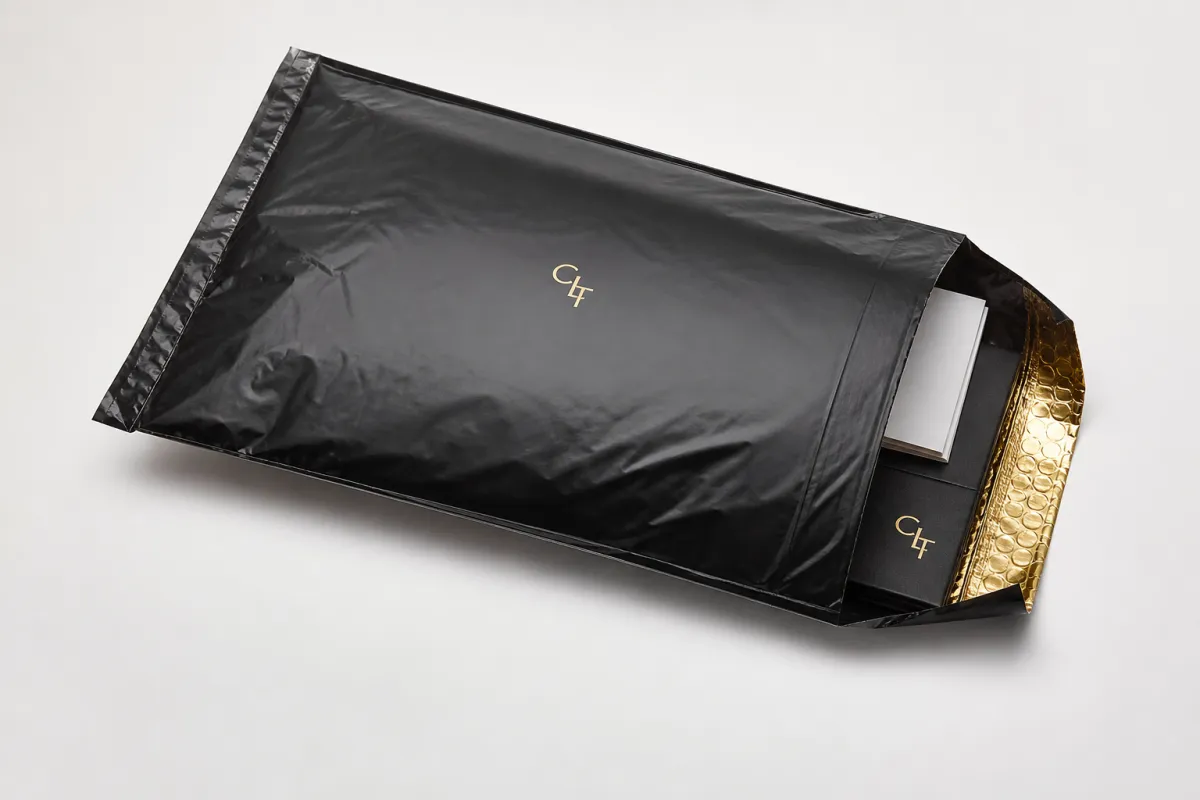
Sample kits fail in a very specific way. The product inside may be excellent, but the outer pack arrives ripped, oversized, or so plain that it feels accidental. Branded poly mailers for sample kits solve that problem by wrapping small assortments in a package that is light, protective, and easier to brand than a generic carton. That matters because a sample is rarely judged on product alone. The package frames the first impression.
Look at the common use cases. Trial programs rely on branded poly mailers for sample kits to keep thousands of shipments consistent. Influencer seeding depends on a package that reads well on camera and feels intentional in hand. Sales demos need an outer format that keeps pieces together and arrives intact. B2B product samplers often want something professional without pushing shipping costs into box territory. Those goals are different, but the same outer format can support them if the specification is solid.
There is a plain operational benefit too. Compared with a rigid box, branded poly mailers for sample kits can reduce pack-out time because they require less folding, less taping, and far less void fill. Compared with a plain mailer, they add brand memory and can carry useful information: what is in the kit, how to use it, a QR code, handling notes, or basic compliance copy. That turns the mailer from a wrapper into a communication surface.
"If the outer package looks deliberate, the sample feels more credible before the product is even opened."
There is a comparison buried inside that sentence. A plain mailer can move parcels, but branded poly mailers for sample kits are better at moving perception. That does not make them the right answer every time. If the kit is heavy, fragile, or high value, a box may still be the smarter structure. For lightweight assortments, though, the mailer often gives the better balance of shipping weight, speed, and visual impact.
One practical warning deserves attention: presentation breaks down fast if the mailer is too large. Extra slack creates shifting, wrinkling, and a less controlled unboxing moment. Even at the concept stage, branded poly mailers for sample kits should be sized against the packed contents, not against a rough estimate of the largest item. That is the difference between packaging that looks designed and packaging that looks improvised.
In a handful of sample programs I reviewed, the best-performing outer packs were not the flashiest ones. They were the ones that fit, sealed cleanly, and survived the carrier network without drama. That sounds unglamorous because it is. Still, it is usually what keeps a campaign from leaking value before the recipient even opens the flap.
For brands building a broader kit system, it helps to pair the mailer decision with other components. The right outer pack can work alongside Custom Packaging Products such as inserts, labels, and secondary wraps, while Case Studies can show how other teams handled similar sample programs. If you want to compare structures directly, Custom Poly Mailers give a clearer view of how the format behaves across sizes and print styles.
How Branded Poly Mailers for Sample Kits Work
At a basic level, branded poly mailers for sample kits are built from a flexible outer film, a printed surface or print layer, and a closure system that keeps the contents secure until delivery. The film carries the job of resisting punctures, scuffing, and moisture. The closure may be a peel-and-seal strip, an adhesive flap, or a tamper-evident style that shows whether the package has been opened.
Most buyers focus on print first, but film performance is usually the more important decision. A thin bag that looks beautiful on screen can fail once it is loaded with sample jars, cards, sachets, or small retail units. Better branded poly mailers for sample kits usually use a film thickness matched to the weight and shape of the contents, because saving a little material can create much larger problems if the outer shell tears in transit. A moderate thickness often works better than the thinnest possible spec.
Printing is the second major variable. For simple graphics and solid color fields, flexographic printing often keeps costs manageable at volume. For more complex artwork, finer detail, or smaller runs, digital print can be attractive because setup is lighter and revisions are easier. The right choice depends on quantity, color count, and how much visual precision the brand really needs. A mailer with three clean brand colors may perform better than one with a crowded full-bleed design that muddies at the edges.
Branded poly mailers for sample kits also succeed or fail on fit. A kit with two jars, one folded insert, and a card insert may need a different size than a kit with five flat sachets and one rigid sample bottle. If the package is too tight, the seal can distort or the seams can stress. If it is too loose, the contents shift and the reveal feels sloppy. The goal is a snug fit without compression.
The user experience matters more than many supply teams expect. The outside package is the first branded touchpoint, so branded poly mailers for sample kits often do more marketing than the sample itself. A clean logo, a short message, a QR code that lands on a use-instructions page, or a clear callout like “Open for your sample set” can make the package feel intentional. That works especially well for trade show drops and sales prospecting, where the recipient may never have touched the brand before.
For teams that want a technical benchmark, shipping and transit testing can help. ISTA test procedures, such as the ones described by the International Safe Transit Association, give packaging buyers a structured way to check whether a mailer can survive distribution stress. You can review the organization’s standards and testing approach at ISTA. If a sample kit is moving through parcel networks, that kind of discipline is more useful than a guess.
There is a smaller point here that gets ignored too often: the package has to be easy to handle on the line. If packers need two extra seconds per unit to wrestle the closure, that adds up quickly across hundreds or thousands of kits. A spec that looks elegant but slows the team down is kinda self-defeating.
Branded Poly Mailers for Sample Kits: Cost, Pricing, and MOQ
Pricing for branded poly mailers for sample kits is shaped by a handful of variables, and most of them are easy to spot once you know where to look. Size is the first one. Bigger mailers use more film and more ink coverage. Film thickness comes next, because heavier gauges raise material cost. Print coverage matters too: a small logo on one side costs less than full-bleed artwork on both sides. Finish, opacity, and closure style can also change the total.
MOQ, or minimum order quantity, is where many first-time buyers get surprised. Smaller runs usually carry a higher unit price because setup, proofing, and production overhead are spread across fewer pieces. Larger runs bring the unit cost down, sometimes sharply. For branded poly mailers for sample kits, that creates a hard tradeoff: order too few and the packaging looks expensive; order too many and inventory sits longer than the campaign itself.
Here is a practical way to think about it. A small run of branded poly mailers for sample kits might land around $0.40-$0.90 per unit depending on size and print complexity, while a larger run can often fall into a much lower range, sometimes around $0.12-$0.30 per unit for more standard specs. Those are not universal numbers. They depend on thickness, branding, shipping, and supplier location. The shape of the curve stays familiar, though: the more pieces you commit to, the lower the per-unit price tends to become.
Cheap unit pricing is not the same thing as good value. Hidden costs can make a low quote less attractive than it first appears. Artwork adjustments, plate or setup fees, proofing, freight, import duties, storage, and replacement stock all belong in the real calculation. If a supplier offers branded poly mailers for sample kits at an attractive unit price but the freight line is vague, the landed cost can climb fast.
There is also a behavioral cost to consider. If sample kits are meant to drive conversion, damage reduction, higher open rates, and stronger recall may be worth more than a few cents saved on the outer pack. A clean-looking mailer can support the campaign in ways that never show up cleanly on a purchase order. That is why good buyers compare landed unit cost against expected value, not just against the lowest quote.
| Order Type | Typical Unit Cost Range | Best For | Tradeoff |
|---|---|---|---|
| Stock or near-stock mailers | $0.12-$0.25 | Fast launches, simple branding, lower-risk kits | Less design flexibility and fewer premium details |
| Semi-custom printed mailers | $0.18-$0.40 | Most branded poly mailers for sample kits with logo and messaging | Moderate setup and some design constraints |
| Fully custom mailers | $0.30-$0.90 | High-visibility launches, influencer kits, premium sample programs | Higher MOQ, longer lead time, more planning |
The table above is a useful shorthand, but it should not replace supplier quotes. Branded poly mailers for sample kits can look similar on paper while behaving very differently in practice. Two mailers with the same outer dimensions may have different seam strength, print quality, and closure performance. A good quote should make those differences visible instead of hiding them behind a single line item.
For teams trying to control spend, the best move is often to define the sample-kit program by tier. Use one spec for everyday replenishment, another for premium sends, and a backup option for rush requests. That gives branded poly mailers for sample kits a better chance of matching actual campaign needs rather than forcing every shipment into the same cost box. If the brand wants a deeper sustainability angle, it is worth checking whether the film contains recycled content or whether the structure can be optimized to reduce material without sacrificing protection. The EPA’s guidance on sustainable materials management is a helpful reference point: EPA sustainable materials guidance.
Branded Poly Mailers for Sample Kits: Process, Timeline, and Lead Time
Production for branded poly mailers for sample kits usually follows a predictable chain: brief the supplier, submit artwork, review a proof, approve the sample or digital mockup, print, finish, pack, and ship. The sequence sounds tidy. The delays usually happen in the middle. Most of the risk sits in artwork corrections, color expectations, and final approval timing.
Lead time depends on how custom the mailer is. A stock format with minimal printing can move quickly. A semi-custom job usually needs more coordination but still fits a reasonable schedule. Fully custom branded poly mailers for sample kits take longer because material sourcing, print setup, and QC all become more specific. For many standard runs, 12-15 business days after proof approval is a realistic planning range, though larger or more complex orders can stretch beyond that. Freight time sits on top of production time, so geography still matters.
Proofing deserves more attention than it usually gets. This is the stage where teams should check logo placement, typography, barcode readability, copy spacing, seal orientation, and any regulatory or labeling details. If the kit includes a promotional code or a QR code, it should be tested at actual size, not just admired on a design file. Branded poly mailers for sample kits often fail not because the print is bad, but because the print was approved too quickly.
Rush orders are tempting, especially when a launch date is fixed. Still, rushing branded poly mailers for sample kits often raises both cost and risk. Material substitutions become more likely. Proof cycles get shorter. Freight options shrink. If there is a revision after approval, the calendar gets tight in a hurry. A better habit is to build buffer time into the plan, especially for trade shows, press sends, and seasonal campaigns that cannot miss their shipping window.
One practical test: ask how the supplier handles proof revisions and whether the production run starts only after written approval. That sounds basic, but it protects against avoidable errors. Good vendors also separate artwork confirmation from final quantity confirmation, which helps keep branded poly mailers for sample kits aligned with the real packing plan rather than a guess that changes midstream.
If the sample kit is part of a more complex launch calendar, it helps to map the packaging order backward from the ship date. Final contents first. Then structure selection. Then print proofing. Then production. Then inbound freight. That timeline may feel strict, but it saves brands from a common mistake: approving the outer pack before the sample kit contents are actually locked.
Key Factors to Choose Branded Poly Mailers for Sample Kits
The first decision is film thickness. For lightweight sample kits, a moderate film may be enough. For heavier assortments or kits that will be handled repeatedly, thicker material usually earns its place. Branded poly mailers for sample kits should feel sturdy enough to resist puncture and seam stress without becoming overbuilt. The right thickness is a balance, not a medal for using the most material.
Opacity comes next. Some sample kits are meant to stay private until delivery; others benefit from being visibly branded. A white or highly opaque outer film can conceal the contents and protect the reveal. Clear or semi-clear options may show too much unless that visibility is part of the concept. For branded poly mailers for sample kits, opacity can also help with fraud prevention by reducing the visibility of valuable contents.
Tamper resistance is another quiet but important feature. If a sample kit contains branded merchandise, regulated items, or anything that should only be opened by the recipient, a tamper-evident seal can be worth the small added cost. It gives the package a more controlled finish and makes handling issues easier to spot. In high-touch distribution, that matters.
Sizing deserves a fresh look because it affects both protection and perception. Branded poly mailers for sample kits should close cleanly without forcing corners or trapping excess air. A snug fit reduces shifting, and reduced shifting lowers abrasion inside the package. If the contents have sharp edges, fragile closures, or liquid components, it may be smarter to add a protective insert or inner sleeve rather than simply upgrading the outer film.
Sustainability choices are more nuanced than a lot of marketing claims suggest. Recycled content may help reduce virgin resin use. Lightweight design can cut shipping emissions by lowering parcel weight. Some formats may be recyclable in specific store-drop-off systems, but not every local recycling stream accepts poly film. That is why packaging teams should avoid blanket claims and instead verify the actual recovery path. If paper inserts are part of the kit, FSC-certified stock can be a good option for those components; see FSC for certification context.
Design also sends a signal before the kit is opened. Premium brands often use restrained graphics, strong contrast, and a cleaner layout. Clinical or wellness programs may prefer a calmer, more minimal look. Playful consumer samples can tolerate bolder color and more expressive copy. Branded poly mailers for sample kits should reflect that positioning without cluttering the surface. Good design is not decoration for its own sake. It is a cue that tells the recipient what kind of experience to expect.
One more practical point: closures and seals should match the intended use. A one-time promotional send may not need a complicated tamper feature, while a higher-value sampler probably does. If the kit is going through contract fulfillment, make sure the closure is easy for packers to use consistently. Branded poly mailers for sample kits only work well if the line can actually pack them at speed.
If the kit is going to trade shows, field reps, or media drops, the outer pack also needs to survive the odd real-world moment: tossed into a car trunk, stacked under a desk, or handed across a booth table. Those are not laboratory conditions. They are the everyday mess of distribution, and the packaging has to behave in that mess.
Step-by-Step Guide to Ordering Branded Poly Mailers for Sample Kits
Start with the contents, not the artwork. Measure every item in the sample kit, then record the total packed dimensions, weight, and any fragile elements. That sounds obvious, but a surprising number of packaging problems begin with a guessed size. Branded poly mailers for sample kits should be based on the actual kit, fully assembled, with enough room for a clean seal and no extra slack.
Next, build a simple spec sheet. Include mailer dimensions, film thickness, print coverage, color count, closure type, opacity, and any labeling or compliance notes. If the sample kit needs a return address, barcode, ingredient callout, or promotional message, spell that out too. The clearer the brief, the fewer surprises later. Suppliers quote branded poly mailers for sample kits more accurately when the inputs are complete.
Then request multiple quotes using the same exact information. Apples-to-apples comparisons only work if every supplier is looking at the same size, the same film, and the same artwork assumptions. If one quote includes freight and another does not, the lowest number may be misleading. A fair comparison usually starts with landed cost, not just factory cost. That is especially true for branded poly mailers for sample kits shipped internationally or with tight launch dates.
After the quotes, review proofs carefully. Color should be checked for brand accuracy. Text should be checked at arm’s length, not only on a bright monitor. Logos should be centered and large enough to survive handling. If there is a QR code, scan it. If there is a barcode, test it. If there is a compliance notice, make sure it is legible. The proof stage is where branded poly mailers for sample kits either become reliable or become expensive.
Once the proof is approved, do not jump straight to full-scale deployment. Test ship a small batch first. Send it through the normal carrier path. Watch for seam failures, scratch marks, moisture, and any signs that the package is too tight or too loose. A real parcel route exposes issues that a desk test will miss. Many teams treat this as optional, but for branded poly mailers for sample kits it is one of the cheapest forms of insurance.
If the test batch passes, lock the reorder trigger before the launch starts. A low stock threshold should reflect both campaign volume and supplier lead time. That prevents a mid-campaign scramble when sample demand rises faster than expected. It also keeps the brand from settling for an inferior substitute just because inventory ran out. Well-planned branded poly mailers for sample kits reduce operational noise, and that is a benefit finance teams notice as much as marketing teams do.
- Measure the fully packed kit.
- Specify the film, seal, and print details.
- Request comparable quotes from several vendors.
- Approve proofs only after checking real-size readability.
- Test ship before a full rollout.
That sequence seems simple, yet it is where a lot of packaging programs get cleaner, faster, and cheaper. Branded poly mailers for sample kits do not need to be complicated. They need to be specified with enough discipline that the outer pack supports the campaign rather than distracting from it.
Common Mistakes With Branded Poly Mailers for Sample Kits
The most common mistake is oversizing. A mailer that is too large lets the kit shift, wrinkle, and sometimes arrive with the inner contents pushed to one corner. That weakens the presentation and may even increase shipping cost if dimensional weight becomes a factor. Branded poly mailers for sample kits work best when the fit is tight enough to protect but not so tight that sealing becomes awkward.
The second mistake is choosing thin film purely to save pennies. Thin material can work for ultra-light sends, but it is a poor choice if the kit has hard edges, glass, metal closures, or multiple touchpoints through fulfillment. A tear on the line or a split in transit can erase the savings immediately. For branded poly mailers for sample kits, a slightly stronger spec often costs less in the long run than a stack of replacements.
Another issue is crowded artwork. Too many messages, too many type sizes, and too many colors can make the package feel busy instead of branded. If the design relies on tiny legal text or low-contrast graphics, the mailer may look weaker than a plain one from a few feet away. Branded poly mailers for sample kits need clarity more than decoration. Fast-moving parcel handling is not a gallery wall.
Operational fit gets ignored more often than design fit. If the fulfillment team cannot pack the sample kit quickly, the packaging system is not ready. Seals may be difficult to close, stock may jam at the station, and the labor cost per unit may climb even though the mailer itself is cheap. That is why branded poly mailers for sample kits should be tested with the people who will actually build them every day.
Carrier testing is the final blind spot. A mailer can look perfect on a desk and still fail when it is stacked, compressed, or exposed to damp conditions in the network. A test that includes real parcel handling can reveal whether the seal holds, whether ink scuffs, and whether the closure survives rough sorting. Organizations like ISTA exist because distribution stress is measurable, not theoretical.
There is a quieter mistake too: ignoring the rest of the kit. If the insert slides around or the sample items are not stabilized internally, the mailer gets blamed for problems it cannot fix alone. Good branded poly mailers for sample kits are part of a system, not a solo act. Sometimes the answer is a better inner tray, a folded insert, or a simple spacer to keep components in place.
One last error is treating the mailer as a one-off marketing prop. If the campaign works, the packaging gets remembered. That means the next run should not be rebuilt from scratch unless the product or shipping conditions actually changed. Repeating the right spec is often smarter than chasing novelty for its own sake.
Expert Tips and Next Steps for Branded Poly Mailers for Sample Kits
One of the smartest things a packaging team can do is build a small sample matrix before buying at scale. Compare two or three sizes, two film thicknesses, and one backup option. That gives you a real view of fit, cost, and handling without locking the project into a single spec too early. For branded poly mailers for sample kits, that kind of comparison usually reveals more than another round of screen mockups.
Ask for physical samples or printed prototypes whenever possible. Screens can hide sheen, opacity, and edge quality. They also hide how a closure feels in the hand. A prototype lets you see whether the logo reads clearly, whether the seal is comfortable, and whether the kit opens cleanly. That tactile check is especially useful for branded poly mailers for sample kits used in premium, cosmetic, wellness, or B2B demo programs.
Set a reorder threshold before the program starts. If a campaign ships in waves or if there is a recurring trade show schedule, you need enough buffer to cover demand spikes and supplier lead time. That is the difference between staying in control and paying rush freight for an emergency batch. Well-managed branded poly mailers for sample kits should support the calendar, not chase it.
If the brand is debating whether the outer format should be a mailer or a box, compare the full landed cost and the likely customer experience side by side. For some kits, the lighter format wins. For others, a box is still the better answer. There is no universal rule, and that honesty is useful. The better question is which structure gives the sample the strongest chance of arriving intact, looking credible, and staying inside budget. In many campaigns, branded poly mailers for sample kits hit that sweet spot better than expected.
The most useful habit here is boring in the best possible way: document the final spec, record what failed and why, and reuse the lessons on the next run. Packaging teams that do this save time faster than teams that keep reinventing the same decision from scratch. Nobody gets applause for a clean spec sheet, but they do get fewer headaches.
Here is the simplest next step list I would recommend: audit the current sample kit, measure every component, request quotes from multiple suppliers, and test ship one live order before committing to full rollout. That sequence is unglamorous, but it is how you find the real answer instead of the brochure answer. For brands that want packaging to do more than hold product, branded poly mailers for sample kits are a practical place to start.
And the short version is this: branded poly mailers for sample kits should improve protection, presentation, and efficiency at the same time. If one of those three falls apart, the spec probably needs another pass. If all three hold together, the packaging is doing real work.
Frequently Asked Questions
What size branded poly mailers for sample kits should I choose?
Measure the fully packed kit, not just the largest item, and leave enough room for a clean seal without extra slack. The smallest mailer that still protects the contents is usually the best choice because oversized packaging can shift, wrinkle, and cost more to ship. If the kit includes fragile parts, test a real packed sample before approving the final size.
Are branded poly mailers for sample kits expensive?
They are often cheaper than rigid boxes in both material and shipping weight, but the price depends on size, film thickness, print coverage, and quantity. Higher MOQs usually lower unit cost, while smaller runs cost more because setup and proofing are spread across fewer pieces. The best comparison is landed cost versus the value gained from fewer damages and stronger presentation.
How long does it take to produce branded poly mailers for sample kits?
Timeline depends on whether artwork is finalized, whether the order is stock or fully custom, and how many proof rounds are needed. More complex printing and larger quantities usually extend production time, especially if materials must be sourced first. Build in buffer time for approvals, shipping, and last-minute design corrections.
What print style works best for sample kit poly mailers?
Choose a print method that matches your run size and detail needs; simpler designs often scale better on smaller orders. High-contrast artwork and readable copy matter more than dense decoration when the package is viewed quickly in transit or at delivery. Ask for a proof to check how logos, gradients, and fine text actually reproduce on the chosen film.
How do I reduce damage with branded poly mailers for sample kits?
Match the film thickness and closure strength to the weight and shape of the kit. Use a size that limits movement inside the mailer, and add internal padding only where the samples truly need it. Test ship a few units through normal carrier routes before ordering the full run.
The practical takeaway is simple: branded poly mailers for sample kits deserve serious attention because they sit at the intersection of shipping, branding, and conversion. Pick the right film, size, and print method, then validate them with real samples and real transit. Done well, branded poly mailers for sample kits can make a sample feel like a deliberate brand experience instead of a generic delivery.


