Custom Kraft Paper Bags for event giveaways do a surprising amount of work. They hold the kit, of course, but they also control the first five seconds of the handoff. If the bag stands up, opens cleanly, and carries without strain, the whole event feels more organized. If it buckles, crowds the table, or sheds handles, the giveaway feels improvised no matter how good the contents are.
That is why buyers keep coming back to kraft. The material is practical, printable, and familiar without looking careless. The natural paper finish gives off a calm, structured look, and it pairs well with short-run event branding, sponsor marks, or a single strong logo. For teams trying to balance presentation with budget discipline, it is one of the few packaging formats that can do both without much friction.
The best results usually come from treating the bag as part of the event system, not an accessory. It needs to fit the contents, move through the venue quickly, and survive the trip home. That sounds basic. It is not. Small mismatches in gusset depth, handle choice, or paper weight can create bottlenecks that show up only when 400 guests are already in line.
Custom kraft paper bags for event giveaways: what they solve
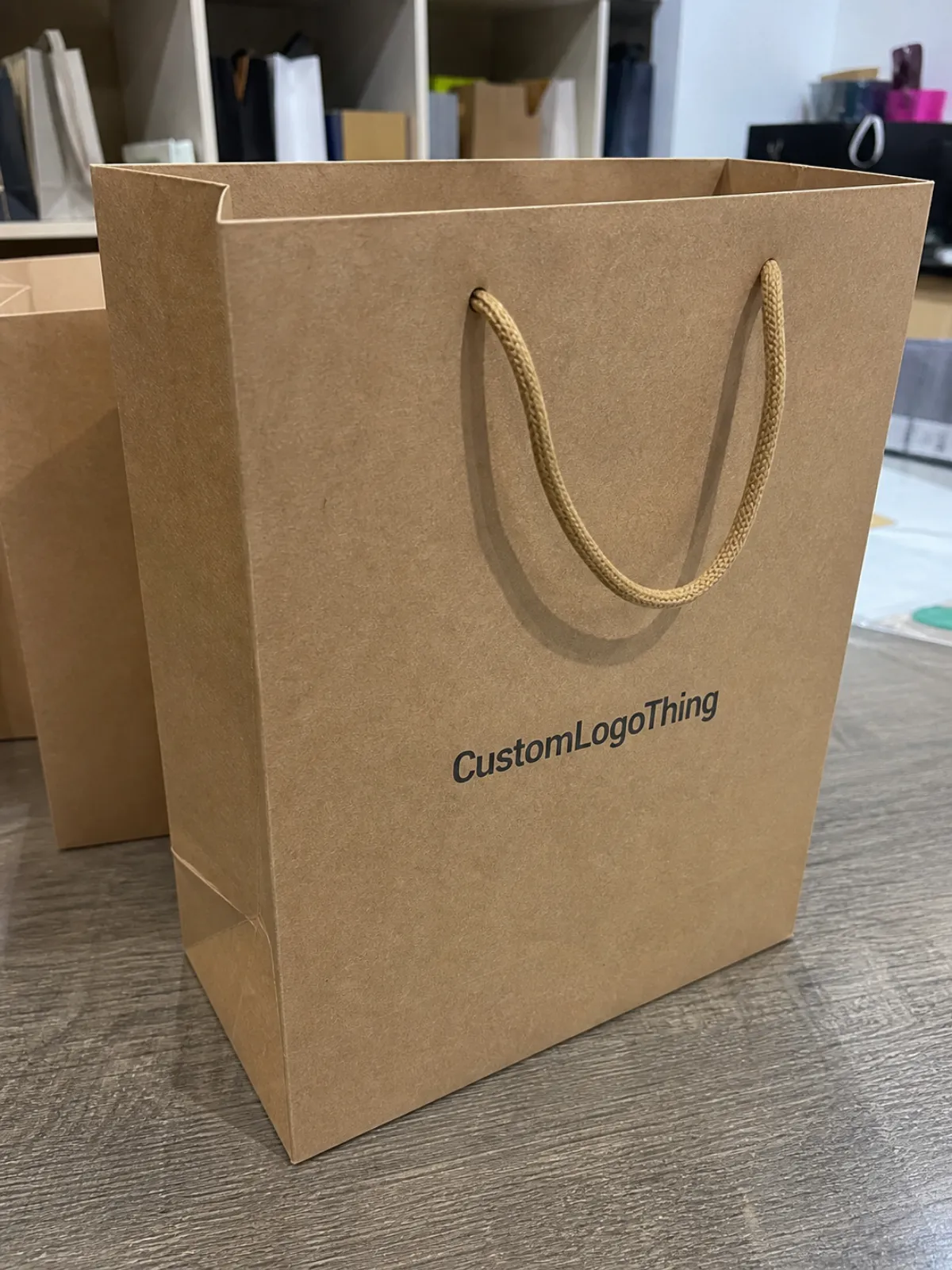
A giveaway bag has three jobs: carry, present, and disappear into the background once it has done its work. Kraft paper is good at that balance. It is sturdy enough for brochures, apparel, samples, and boxed sets, yet plain enough to keep attention on the event instead of the packaging. That matters at conferences, pop-ups, product launches, weddings, donor receptions, and trade shows, where the bag often becomes the item guests keep using throughout the day.
Compared with a generic tote, a kraft bag is easier to spec and easier to ship in volume. It folds flat, prints cleanly on the front or all over, and can be tuned for lightweight registration packets or heavier premium kits. The clean panel surfaces also help with branding because there is less visual noise competing with the logo. One strong graphic, a date, a sponsor line, or a restrained pattern often performs better than a cluttered layout that tries to say everything at once.
There is another reason event teams choose kraft: the material feels intentional without looking expensive for the sake of looking expensive. That can be a useful signal. Guests tend to read a tidy kraft bag as organized, practical, and easy to trust. It does not shout. It simply tells them the contents were planned.
For programs that use multiple pieces, the bag should fit into the same visual language as inserts, labels, tissue, and presentation boxes. If a boxed sample sits inside a loose, undersized carrier, the mismatch becomes visible before anyone opens the kit. If the components are coordinated, the bag becomes the final layer in a controlled handoff rather than a container of last resort.
That is where custom Kraft Paper Bags for event giveaways pull ahead of mixed packaging. They create consistency across staff, venue, and delivery. They also make it easier to keep sponsor assets readable and orderly, especially when several logos need to share the same surface without turning the bag into a billboard.
There is a practical side to all of this. A bag that works well reduces table clutter, speeds up registration, and gives staff one less thing to explain. Those gains are small individually. Taken together, they make a real difference when the giveaway table has a line and the event starts ten minutes late.
How the bag structure changes the giveaway experience
Structure is where the bag either earns its keep or gets in the way. A good kraft bag has the right gusset depth, a bottom that stays flat under load, and handles that do not cut into the hand after 20 feet. That sounds like a simple checklist. In practice, it is the difference between a bag that feels premium and one that behaves like a stopgap.
Light kits are forgiving. A stack of brochures, a pen, and a card can fit in almost anything. Once you add apparel, a bottle, a rigid sample carton, or a catalog with inserts, the margins disappear quickly. A bag that was fine on a sample bench may start to tilt when the actual contents are added. The corners bow. The top opens too wide. The base begins to sag. Guests notice all of that, even if only for a second.
Handle style matters more than many buyers expect. Twisted paper handles are cost-effective and clean-looking, which is useful for large events and fast distribution. Rope handles add comfort and lift capacity. Flat handles are familiar and generally dependable, though they may not feel as refined as rope on a premium kit. The right choice depends on what people will carry and how far they will carry it. A giveaway that only moves from a registration table to a taxi is a different object from one that has to survive a full day on a convention floor.
The base is equally important. A reinforced bottom helps the bag stand upright while it is being packed, which speeds up fulfillment and reduces spills on the table. A bag that stands on its own also photographs better, and that matters more than it used to. Event images get reused in recap decks, social posts, and sponsor reports. Packaging that holds its shape creates cleaner visuals with less effort.
A giveaway bag should make the handoff faster, not fancier. The best versions disappear into the workflow until the moment someone carries them away.
There is also a travel factor that gets missed in approvals. Guests do not always walk in straight lines. They turn through crowds, hold coffee, answer a phone, and stuff the bag under a seat or into a car. A too-small gusset or a weak handle becomes a problem after handoff, not during it. That is why structure should be chosen for the trip, not just for the first photo.
Specs that matter before you order
Start with the contents. Not the logo size, not the bag color, and not the supplier’s stock dimension. Measure the widest item, the tallest item, and the weight of the full kit once everything is packed together. Then add room for a little movement. If tissue, inserts, or a rigid carton are part of the set, they need to be included in the calculation. Guessing here is the fastest route to an awkward fit.
The core specs are straightforward: dimensions, paper weight, handle type, print method, number of colors, finish, and quantity. Paper weight is one of the most useful places to think carefully. Around 120-157 gsm is often enough for lighter brochures or flat handouts. For apparel, bottles, or heavier mixed kits, 180-250 gsm gives the bag more body and a better chance of staying upright. The bag still needs proper construction, but the extra stiffness helps a lot.
Print coverage changes both price and appearance. A simple logo, set off with enough white space, usually feels sharper than a crowded all-over design. Kraft paper naturally absorbs some visual weight, so thin lines and pale colors can disappear faster than expected. Buyers who want a restrained, editorial look usually get better results from one or two strong ink colors than from a full-panel treatment that tries to do too much.
Material sourcing is worth checking early. If recycled content matters, ask for the percentage in writing. If your program needs FSC-certified paper, request the certification details rather than assuming the supplier will include them automatically. The reference framework at fsc.org is a practical way to understand what the claim should cover. For food-related giveaways, it is also smart to ask about ink, coating, and interior contact safety if wrapped food or samples will sit inside the bag.
There are a few measurements that pay for themselves. A wide opening speeds loading. A flat bottom protects the contents. A little extra gusset depth prevents the top from flaring open like a paper funnel. None of these details is dramatic. Together, they decide whether the bag feels professional or merely available.
If the bag will be packed ahead of the event and staged on tables, ask for a sample that stands upright without support. That one test tells you more than a digital proof can. Slump on the table usually means the base fold, paper weight, or dimensions are out of balance. A bag that stands properly looks more expensive even before anything goes inside it.
- Dimensions: match the actual kit, including inserts and padding.
- Paper weight: lighter for flat materials, heavier for bottles or apparel.
- Handle style: choose for comfort, weight, and the tone of the event.
- Print coverage: simple layouts often produce cleaner results on kraft.
- Finish: keep coatings minimal unless the event truly needs a higher-shine look.
For broader programs, it helps to align the bag with other custom packaging options so paper tone, ink density, and logo placement stay consistent across the full event kit. A bag should look like it belongs to the same family as the insert card and presentation box, not like it was ordered later from a different script.
Production process and timeline from proof to delivery
The production path is predictable, but only if the approvals are clean. Most orders move from specification review to artwork setup, then to proofing, approval, manufacturing, finishing, packing, and shipment. The slowest point is usually the proof stage. If the artwork is incomplete, the dimensions are vague, or the logo placement keeps changing, the schedule can slip before production even starts.
That is why buyers who move quickly tend to have the least drama. They know the bag size, they know the print count, and they can approve a proof without a second internal round of debate. One decision-maker helps more than almost anything else. So does a print-ready file. A file that looks fine on a laptop can still fail at press scale if the lines are too thin or the contrast is too low.
For standard runs, a common production window is 12-15 business days after proof approval. More complex builds, such as heavier paper, specialty handles, multiple print colors, or extra finishing, often need 15-25 business days. That is only the manufacturing part. Freight, receiving, and any local distribution time have to be added on top. For event work, the real deadline is not the ship date. It is the date the bags must be in hand and checked.
Rush service exists, but it narrows the field. Some handle colors may not be available, certain print methods may be off the table, and artwork flexibility shrinks. Rush can solve a problem, but it is not a great way to plan a launch or conference giveaway. If the event matters, the safest move is to build in buffer time from the beginning.
Transit planning deserves attention too. Bags are light, but volume creates awkward cartons, and stacked kits can shift if the outer box is too large or underfilled. If the order will travel through multiple sites, the resources at ista.org are useful for thinking about how packaged goods behave in shipping and receiving. A bag that survives manufacture but arrives crushed is still a failed order.
Cost, pricing, MOQ, and what drives unit cost
Pricing moves with a few predictable variables. Quantity is the biggest one. Paper weight comes next. Then dimensions, handle style, print coverage, and any extra work such as reinforcement or special finishing. If the design includes a pocket, lamination, foil, or a more complicated assembly, the price climbs because the labor and setup are more involved.
MOQ, or minimum order quantity, is not just a sales term. It is a production reality. The setup cost for a custom run does not disappear when the order is small, so fewer units means a higher unit price. That is why a slightly larger run can sometimes be the cheaper choice per bag, especially if the artwork is evergreen and the size can be reused for another event later.
For planning purposes, the following ranges are realistic starting points. They are broad on purpose because event specs vary widely, and the final quote will depend on the full build.
| Bag style | Typical MOQ | Estimated unit price | Best use |
|---|---|---|---|
| Simple kraft bag, 1-color print, twisted paper handle | 500-1,000 | $0.45-$0.85 | Registration packets, brochures, light swag |
| Mid-size bag, 1-2 colors, reinforced base | 1,000-3,000 | $0.75-$1.35 | Apparel, sample kits, mixed giveaways |
| Heavy-duty bag, rope handle, higher paper weight | 2,500-5,000 | $1.25-$2.50 | VIP kits, launch boxes, premium sponsor bags |
Those ranges explain why simple branding wins so often. A one-color logo on kraft is usually the most economical path, and it often looks the most composed. Full-panel art can be striking, but it raises cost and can make the bag feel busier than the event needs. If the giveaway already includes a lot of visual elements, the bag should support the system rather than compete with it.
Budgeting gets easier when you split the order by function. Registration bags can stay lean and practical. VIP or sponsor bags can justify a heavier stock and a nicer handle. That approach keeps the average cost under control while reserving the better specs for the most visible moments.
There is one more cost factor worth mentioning: waste. A bag that is too small, too weak, or too visually crowded is money spent twice. First on the order itself. Then on the replacement or the workaround. A slightly better spec often saves more than it costs, especially when the bag has to carry a real load in a real crowd.
Step-by-step ordering plan for event teams
The cleanest ordering process is plain and methodical. Gather the contents, measure them, decide the bag structure, lock the artwork, approve the proof, and schedule delivery with margin. It is not glamorous. It works.
- List every item that will go in the bag, including inserts, tissue, and cartons.
- Measure the widest, tallest, and heaviest contents.
- Choose the bag dimensions, paper weight, and handle type.
- Set the print area, logo placement, and number of colors.
- Request a proof and check spelling, sizing, and alignment carefully.
- Test one packed sample before final approval if the kit includes heavier items.
- Book delivery early enough to absorb freight delays and receiving time.
The sample test is not optional when the contents are unusual. A bag may look correct on paper and still fail once the real load goes in. Bottles shift weight differently from folded apparel. Boxed kits behave differently from loose inserts. If the contents change, the bag should be rechecked. That small step prevents the kind of surprise that shows up on a packed event floor.
It also helps to write down why the bag exists. A registration bag needs to be efficient, easy to stack, and inexpensive enough to fit the headcount. A sponsor bag may need a stronger surface and a more polished finish. A VIP bag often needs better paper and a more comfortable handle because guests notice the difference when the contents get heavier. The spec should follow the job.
For repeat programs, keep one master sheet with final dimensions, artwork files, paper weight, handle choice, and notes from the last order. That record is worth more than people expect. It reduces guesswork, helps purchasing compare quotes accurately, and makes reordering much less chaotic when the event calendar fills up.
If the bag sits inside a wider packaging system, keep the notes with your Custom Packaging Products records. When the next event comes around, you want the team to recover a working spec in minutes, not rebuild it from screenshots and memory.
Approval checklist: contents measured, paper weight confirmed, handle chosen, artwork proofed, quantity locked, and delivery padded with a few extra days.
Common mistakes that weaken event packaging
The most common mistake is guessing size from a product name or a photo. That leads to bags that are shallow, narrow, or oddly tall. A guessed spec is usually the wrong spec. The second mistake is choosing paper that looks fine but feels too light once the kit is packed. The bag may survive the first few handoffs and then start to show weakness at the base or the handle attachment.
Another issue is ignoring how the bag fills. A kit can meet the dimensions on paper and still fit badly if the gusset is too tight or the base is too small. This becomes obvious with boxed products and mixed loads. If the contents include a rigid carton made from corrugated cardboard, ask for a real load test. A bag needs to support the box without leaning, crimping, or forcing the top open wider than intended.
Artwork problems are just as common. Thin typography, low-contrast colors, and overcrowded layouts tend to look worse on kraft than they do on a screen. The paper texture absorbs detail faster than many teams expect. Strong contrast, good spacing, and a simple logo usually print better. They also hold up better in photos, which matters when the bag appears in recap material or sponsor decks.
If the bag cannot be read from a few steps away, it is not doing enough of the branding work.
Timing creates its own set of failures. Many teams leave too little room for proof corrections, freight delays, or receiving checks. That is how a bag order arrives with no margin left to fix a carton count issue or a damaged pallet. A well-managed event order leaves a cushion. Not because delays are inevitable, but because the cost of a delay is so much higher when the event date is fixed.
The final mistake is treating the bag as separate from the rest of the kit. It is not separate. It is the frame. If the bag is too weak, too small, or too visually noisy, the whole giveaway feels less deliberate. Strong event packaging comes from matching the carrier to the contents, the audience, and the amount of walking people will do with it in hand.
Expert tips and next steps for your event rollout
Before ordering, review the bag in the context of the actual event flow. Where will it be packed? How fast does the table need to move? Will guests carry it for ten minutes or all afternoon? Those operational questions change the right spec more than aesthetic preference does. A visually polished bag that slows the line is a bad trade.
Keep one master record for repeat events. Include the final dimensions, artwork version, paper weight, handle choice, and any issues from the last run. That record helps teams avoid spec drift. It also makes future reorders faster because the comparison is against a proven setup, not an approximation. In practice, that is where the savings show up.
Request a new sample whenever the giveaway mix changes. Even a small change can alter the carry experience. Replace a soft item with a rigid carton and the load behaves differently. Add a bottle and the center of gravity shifts. Switch from a flat stack to a taller kit and the top edge may need more room. A quick physical test catches these shifts before production locks them in.
For broader branding programs, keep the bag coordinated with inserts, labels, and any presentation box used inside it. A consistent system reads as planned even when the event is busy. That does not require heavy design. It requires matching paper tone, keeping the logo treatment disciplined, and resisting the urge to add one more graphic element to every surface.
That is the real advantage of custom Kraft Paper Bags for event giveaways. They are flexible enough for many event types, but structured enough to keep the handoff tidy. With the right paper weight, handle, and dimensions, the bag can carry a lot without calling attention to itself. Which is usually exactly the point.
What size custom kraft paper bags for event giveaways should I choose?
Choose the bag around the actual contents, not the category name. Measure the widest and tallest item, then leave room for tissue, inserts, or a rigid box if those are part of the kit. A good fit should close cleanly, stand upright, and carry without forcing the sides to bulge.
How much do custom kraft paper bags for event giveaways usually cost?
Price depends most on quantity, paper weight, handle style, and print coverage. Smaller runs carry a higher per-bag cost because setup is spread across fewer units. Simple one-color branding usually stays in the lowest range, while heavier paper and premium handles push the price up.
What is the usual turnaround time for custom kraft paper bags?
Most schedules start counting after proof approval, not after the first quote. Standard runs often need 12-15 business days, while more complex builds can take 15-25 business days or longer. Freight and receiving time should be added separately so the bags arrive before the event, not on it.
Are kraft paper bags strong enough for heavier event items?
Yes, if the paper weight, base construction, and handle attachment match the load. Heavier kits usually need a thicker stock, a reinforced bottom, and a handle style that can take repeated lifting. A real sample test is the safest way to check whether the bag holds up with the intended contents.
Can custom kraft paper bags for event giveaways be reused or recycled?
Many are reused by guests for transport or storage when the construction is sturdy. Recyclability depends on coatings, inks, and any added materials, so check the build details before ordering. Simple kraft constructions usually offer the best balance of reuse, appearance, and end-of-life recovery.

