Buyer Fit Snapshot
| Best fit | kraft shipping box orders that need board strength, logo print, and repeatable packing specs where brand print, material, artwork control, and repeat-order consistency matter. |
|---|---|
| Quote inputs | Share finished size, material target, print colors, finish, packing count, annual reorder estimate, and delivery region. |
| Proofing check | Approve dieline scale, logo placement, barcode or warning zones, color tolerance, and any recyclable or compostable wording before bulk production. |
| Main risk | Vague material claims, crowded artwork, or missing packing details can create delays even when the unit price looks attractive. |
Fast answer: Kraft Shipping Boxes with Logo: Board Grade, Crush Strength, and Reorder Specs should be specified like a repeatable production item. The safest quote includes material, print method, finish, artwork proof, carton packing, and reorder notes in one written spec.
What to confirm before approving the packaging proof
Check the product dimensions against the actual filled item, not only the sales mockup. Ask for tolerance on folds, seals, hang holes, label areas, and retail display edges. If the package carries a logo, QR code, warning copy, or legal claim, reserve that space before decorative graphics fill the panel.
How to compare quotes without losing quality
Compare board or film grade, print process, finish, sampling route, tooling charges, carton quantity, and freight assumptions side by side. A lower quote is only useful if the supplier can repeat the same color, closure quality, and packing count on the next order.
Custom Kraft Shipping Boxes get written off as plain brown packaging. That is lazy thinking. Sized properly, built from the right corrugated structure, and printed with restraint, Custom Kraft Shipping boxes can protect product, reduce filler, tighten up fulfillment, and make branded packaging feel deliberate without blowing up cost.
Packaging does more than cover a product. It carries load through transit, absorbs vibration, survives pallet pressure, and sets the tone the second a customer opens the carton. From a packaging buyer's point of view, custom Kraft Shipping Boxes sit right where product protection, logistics, and presentation overlap. That is exactly why the details matter.
The best results usually come from looking at the whole system: board style, box size, print method, closure style, and the actual shipping environment. Custom Kraft Shipping Boxes are not just about looks. They are about fit, stacking, handling, and the economics of ecommerce shipping. When those pieces line up, the box stops acting like an expense and starts acting like part of the operation.
Custom Kraft Shipping Boxes: What They Are and Why They Matter
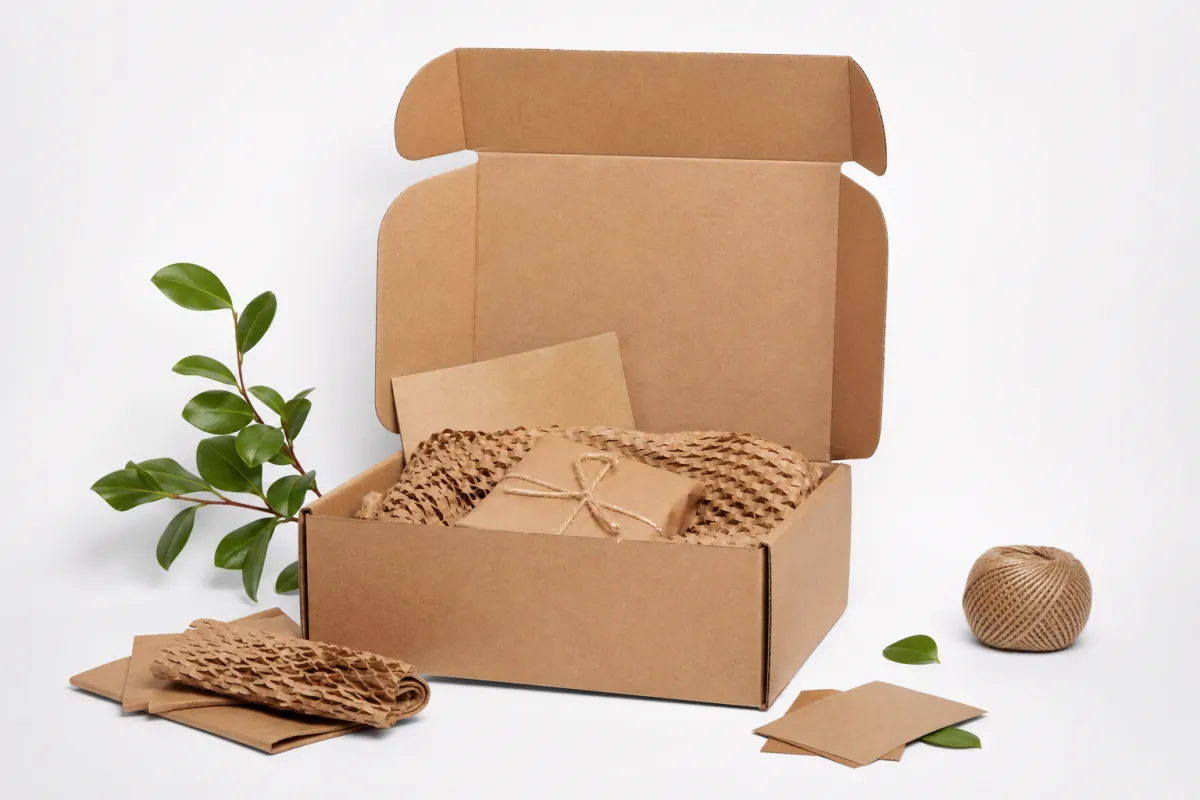
Kraft refers to a paper fiber made for strength. In packaging, that usually shows up as corrugated linerboard or paperboard with a natural brown appearance. That brown color is not a consolation prize. It signals durability, recyclability, and an industrial look that still feels clean. Custom kraft shipping boxes take that base material and turn it into packaging measured for a specific product instead of a random stock size.
The gap between a plain stock mailer and custom kraft shipping boxes is bigger than most buyers expect. Stock cartons can work if the product is flexible, the shipping profile is light, and you do not mind extra void fill. Custom sizing changes the math. It can reduce empty space, improve closure performance, speed up packing, and support graphics or inserts without making the structure awkward.
That is why custom kraft shipping boxes show up so often in ecommerce shipping, subscription kits, retail packaging, and direct-to-consumer fulfillment. They give a brand a controlled surface for package branding while keeping the material honest and functional. A one-color logo on the outside works. So does a message inside. So does leaving the kraft surface mostly untouched for a stripped-back look. Each choice affects cost. Each choice affects handling too.
Here is the part many brands miss: custom kraft shipping boxes are often chosen because they reduce total shipping waste, not because they photograph nicely. A fitted carton usually needs less dunnage, less tape, less movement inside the box, and fewer re-ships caused by damage. That is real money, even if the box itself costs a bit more than a stock option.
A box that fits well usually beats a box that looks fancy but rattles around in transit. In packaging, the cleanest presentation is often the one that protects the product first and leaves branding in second place.
For brands comparing formats, custom kraft shipping boxes are only one part of the packaging stack. Some operations pair them with inserts, paper void fill, or even Custom Poly Mailers for lighter shipments. Others build a mix of cartons, mailers, and branded inserts through Custom Packaging Products. The goal is not to force every item into one box type. It is to match the container to the product and the route it travels.
Box style matters too. A tuck-top mailer can feel premium for lighter goods. A regular slotted carton can be the better call for bulkier shipments. Custom kraft shipping boxes let you choose structure based on real shipping behavior, not just appearance. That is where the material starts earning its keep.
How Custom Kraft Shipping Boxes Are Made
Knowing how custom kraft shipping boxes are made explains why some hold up beautifully and others fail at the worst possible moment. The process starts with kraft liner and medium, which are converted into corrugated board. The medium is fluted, the liners are bonded to it with adhesive, and the result is a sheet that is light for its size but much stronger than flat paperboard of the same thickness.
That flute structure does the heavy lifting. It adds crush resistance, helps the box absorb compression, and creates air pockets that soften impacts during transit. The outer kraft liner gives the box a printable surface, while the inner liner and flute profile help it survive stacking. In custom kraft shipping boxes, the choice between single-wall, double-wall, and different flute profiles changes everything from board caliper to ship weight.
Once the board is formed, converting begins. Sheets may be die-cut, scored, slotted, creased, glued, stitched, or folded depending on the style. Mailer boxes, tuck-top styles, roll-end front tuck designs, and regular slotted cartons all follow different paths. That is why one box assembles in seconds while another needs more manual handling. With custom kraft shipping boxes, the box style should match the speed and skill level of the packing line, not just the marketing brief.
Customization happens throughout the run. A design may call for an insert to hold a bottle, device, or sample set in place. It may need a window cutout, a tear strip, or a closure that avoids extra tape. Print can be applied flexographically, digitally, or through other production methods depending on quantity and coverage. For custom kraft shipping boxes, those choices affect cost, lead time, and finish quality in very practical ways.
One way to think about the production flow is this:
- Spec approval - dimensions, board grade, print, and closure style are confirmed.
- Prototype or sample - a first version is checked for fit, folding, and protection.
- Prepress - artwork is prepared, trapped, and positioned for the chosen press method.
- Production - board is printed, die-cut, scored, glued, and finished.
- Freight and receiving - cartons are packed, palletized, and shipped to the warehouse.
That timeline sounds simple. The delays usually show up in the same places: artwork approval, structural revisions, and sample sign-off. If a buyer wants custom kraft shipping boxes for a launch window, the safer move is to budget time for one sample cycle and one internal review before production starts. Nobody likes discovering a bad fit after a pallet is already on a truck.
Brands that care about traceability and material sourcing should ask whether the fiber content or board sourcing fits certification goals. The FSC site is a good reference point if sustainability claims are part of the story. If transit testing matters, the ISTA site is a useful starting place for shipping test procedures and performance expectations.
Key Factors That Affect Custom Kraft Shipping Boxes
The first factor is the material itself. Kraft liner grade, flute profile, and wall construction drive strength, weight, and how the carton behaves under pressure. A lightweight single-wall box may be fine for apparel or accessories, while heavier goods often need a stronger flute or double-wall construction. In custom kraft shipping boxes, the paper is not just paper. It is the load-bearing structure.
Size is the second big lever. A box that is too large creates movement, and movement creates damage risk. It also pushes up dunnage use and can increase dimensional weight charges. A well-fit box can shorten pack time and lower shipping cost in ways that are easy to miss until the fulfillment center starts measuring throughput. That is one reason custom kraft shipping boxes are often a smart move for operations that ship many of the same SKUs every day.
Print and branding sit between function and presentation. A simple one-color logo might be enough for a minimal, premium-industrial look. Larger custom printed boxes can support marketing campaigns or seasonal retail packaging. More coverage usually means more cost, more setup, and more room for variation. With custom kraft shipping boxes, each ink pass should earn its place.
Protection details deserve equal attention. Inserts, partitions, corner supports, and surface treatments can mean the difference between a clean arrival and a damaged product. Fragile items like glass, candles, liquids, or electronics need more than a strong outer carton. They need restraint inside the box. That is true whether you are shipping one item or building a multi-item kit in custom kraft shipping boxes.
Warehouse handling is another piece buyers sometimes underestimate. A box that looks great but takes too long to assemble can slow the line. Poor closure design can create tape waste. A box that stacks badly can become a storage headache. From an order fulfillment perspective, custom kraft shipping boxes should be checked for assembly speed, pallet pattern, carton count per case, and how cleanly labels and barcodes land on the surface.
Box styles that commonly work well
Mailers work well for lighter products and a neat opening experience. Tuck-top styles feel polished, especially for kits and branded packaging. Roll-end front tuck designs add a snug closure that many ecommerce shipping programs like because the front panel helps keep the lid aligned. Regular slotted cartons remain a strong choice for bulkier goods, especially if the operation already uses standard packing and taping workflows. Each of these can be adapted into custom kraft shipping boxes with the right sizing and artwork approach.
One practical way to compare options is to look at the whole package instead of only the box. For some programs, the right answer is a carton with paper fill. For others, a mailer or even a lightweight mailer from Custom Poly Mailers is the better shipping format. The best custom kraft shipping boxes fit the product, the carrier network, and the packing line together.
Custom Kraft Shipping Boxes Pricing: What Changes the Cost
Pricing is where buyers usually want the shortest answer. The real answer depends on several moving parts. Box dimensions, board caliper, flute type, print complexity, insert count, and order quantity all affect the unit price. A small, one-color run of custom kraft shipping boxes will usually cost less than a large-format carton with internal printing, die-cut windows, and multiple inserts, because each added step takes material, setup, or labor.
Setup costs matter too. Die tooling, print plate preparation, digital file cleanup, and sample approval can all sit on the front end of an order. That is why first runs often look more expensive than repeat orders. The tooling cost is spread across fewer units at the start, then gets diluted as volume increases. For custom kraft shipping boxes, that is one of the clearest reasons long-term planning beats last-minute reorders.
Volume usually improves the economics. A run of 500 boxes often carries a much higher unit price than a run of 5,000 or 10,000, even when the design stays the same. That said, larger quantities bring a tradeoff: storage space. If a brand does not have room to stage cartons safely, the lowest unit price can become the most expensive choice on a cash-flow basis. Custom kraft shipping boxes should be bought with inventory reality in mind, not just with a spreadsheet eye on unit cost.
There are hidden cost factors too. Freight can be significant if the box is large or the pallet count is high. Rush timing can add premium charges. Special coatings, heavier inks, and extra corrugated reinforcement can all raise landed cost. Even the choice of dunnage can matter. If a poor-fitting carton needs a lot of fill, the effective cost of that packaging system rises whether the box price changed or not. That is why custom kraft shipping boxes should be evaluated as part of total packaging cost, not as an isolated line item.
| Box Option | Typical Use | Approximate Unit Cost Range | Notes |
|---|---|---|---|
| Basic kraft mailer | Light ecommerce goods, samples, small kits | $0.45-$0.85 | Good for simple branding and moderate protection |
| Custom printed kraft mailer | Branded shipping, subscription boxes, retail packaging | $0.70-$1.50 | Higher print impact, more setup, better presentation |
| Regular slotted carton | Bulkier products, warehouse shipping, mixed SKUs | $0.40-$1.10 | Depends heavily on size, board grade, and quantity |
| Heavy-duty reinforced carton | Heavier goods, fragile items, stacked pallets | $0.90-$2.20 | Often double-wall or higher-performance board |
Those ranges are a starting point, not a promise. Custom kraft shipping boxes vary by region, press method, board market, and shipping mode. Still, the table shows the basic truth: the cheapest box is not always the lowest-cost choice if it damages products, slows packing, or increases carrier charges. The best decision usually balances fit, protection, and repeatability.
A practical quote request should ask for at least two or three options: one basic structure, one upgraded structure, and one version with print changes. That makes it easier to compare the real difference between a plain functional carton and custom kraft shipping boxes that support both logistics and branded packaging.
For companies that also use Custom Shipping Boxes outside of kraft, comparing the landed cost across formats can reveal useful tradeoffs. A kraft mailer might be cheaper to pack, while a heavier carton may reduce damage on a rougher route. The right answer is usually the one that keeps the overall system steady.
Step-by-Step Process for Choosing Custom Kraft Shipping Boxes
Start with the product itself. Measure length, width, height, and weight at the widest points, not just the nominal retail size. Add only the clearance the product actually needs for protection or insertion. That might be a few millimeters for a snug carton, or more if the item is irregular, fragile, or wrapped. The most efficient custom kraft shipping boxes usually begin with accurate product data rather than artwork ideas.
Next, think about shipping conditions. Will the package move through parcel carriers, be stacked on pallets, or be hand-delivered in smaller batches? Does the item have a glossy finish that scuffs easily? Is there a temperature or moisture concern? A candle, a cosmetic kit, and a stainless steel part can all travel in custom kraft shipping boxes, but they will not need the same board strength or insert design.
After that, choose the box style. A mailer might be ideal for a low-profile subscription kit. A tuck-top can improve the unboxing moment for premium retail packaging. A regular slotted carton may be better for heavier or more variable shipments. If the box will be opened and closed multiple times during order fulfillment, closure style matters more than many buyers expect. A good structural choice for custom kraft shipping boxes saves time every day the line is running.
Samples come next, and this is the step that pays for itself most often. A prototype lets you check fit, closure, stacking, and how the item behaves in the carton. If the product rattles, the insert needs revision. If the lid bows, the board or score lines may need a change. If labels land poorly, the print layout may need to shift. Testing custom kraft shipping boxes on a real bench is far more useful than approving a drawing in isolation.
Once the structure is close, review artwork with production in mind. Keep barcodes clear, leave room for handling marks, and make sure logo placement does not interfere with tape, closure tabs, or shipping labels. Packaging design should support the warehouse first, then the customer-facing side second. That order of operations keeps custom kraft shipping boxes practical instead of decorative.
It also helps to check the timeline in plain language:
- Day 1-3: specs, board choices, and artwork direction are collected.
- Day 4-7: a sample or digital proof is prepared and reviewed.
- Day 8-12: revisions are made if fit or graphics need changes.
- Day 13-20: production begins once approval is finalized.
- After production: freight transit and receiving are scheduled into the launch plan.
That schedule can move faster for simple runs and slower for complex builds, especially if inserts or specialty printing are involved. Still, it gives buyers a realistic frame for custom kraft shipping boxes instead of relying on hope and a rush request. Hope is not a sourcing strategy, no matter how many calendar reminders you set.
One more practical check is to compare the box plan against your other packaging formats. A retailer may decide that Custom Packaging Products should include some kraft cartons, some protective inserts, and some lighter mailers for different SKUs. That kind of mix is often healthier than forcing every product into the same style of custom kraft shipping boxes.
Common Mistakes With Custom Kraft Shipping Boxes
The most common mistake is oversizing. Too much empty space raises damage risk, increases filler use, and can push dimensional weight charges upward. A large carton may look generous, but if the product slides around inside it, the brand ends up paying for void instead of protection. With custom kraft shipping boxes, bigger is not automatically safer. It is often just more expensive.
A second mistake is choosing a carton for appearance only. Kraft has a clean, honest look, and that can tempt teams to approve a design before checking flute strength, wall construction, or stack performance. The carton might look great in a render and fail in a warehouse. That is why custom kraft shipping boxes should be tested under real load, not just reviewed on a screen.
Overly complex artwork is another trap. Heavy coverage, tight registration demands, and multi-step print effects can create variation, especially on porous kraft surfaces. They can also slow production and push cost higher than necessary. Many brands get a better result from a restrained logo and strong typography than from a crowded panel. That is particularly true for custom kraft shipping boxes, where the natural substrate already gives the package a distinct look.
Skipping sample testing is risky, especially with fragile goods, subscription kits, or products with odd shapes. A sample can reveal a weak seam, a closure that springs open, or an insert that needs another millimeter of clearance. If the product is expensive to replace, that prototype cost is cheap insurance. In most cases, the sample is the point where custom kraft shipping boxes stop being a guess and start becoming a solution.
Another operational mistake is ignoring assembly speed and storage footprint. A box that needs too much manual folding can slow the line. A structure that stores inefficiently can crowd the warehouse. Adhesive behavior matters too, especially in humid spaces. If the box is awkward to assemble, the cost shows up in labor long before it shows up on a packaging invoice. Good custom kraft shipping boxes should make the fulfillment team faster, not just make the brand look polished.
There is also a sustainability mistake worth calling out. Some teams lean hard on recycling language without checking whether the inks, coatings, or inserts support the same claim. If environmental messaging matters, verify it carefully and keep it aligned with the actual material structure. The EPA has helpful guidance on recycling and waste reduction at epa.gov, and that kind of reference keeps brand claims grounded.
Expert Tips and Next Steps for Custom Kraft Shipping Boxes
My strongest advice is simple: build a spec sheet before you ask for quotes. Include product dimensions, weight, fragility, target ship method, annual volume, branding needs, and whether the package is for retail packaging, ecommerce shipping, or both. That one document helps vendors quote the same thing, which makes comparisons far more honest. It also makes custom kraft shipping boxes easier to refine over time.
If volume is uncertain, start with a pilot run or a sample batch. Then pack real product, tape real cartons, and ship them through the normal carrier path. Watch what happens at the corners, the seams, the insert edges, and the opening experience. A short pilot often reveals more than a long meeting. For custom kraft shipping boxes, the warehouse test is usually the one that tells the truth.
Keep the branding useful. The goal is not to cover every square inch with ink. The goal is to place the logo, message, and graphics where they help recognition and support package branding without interfering with labels, barcodes, or handling marks. A clean kraft surface can be a strength, not an empty canvas that needs filling. That restraint often makes custom kraft shipping boxes feel more confident and more premium at the same time.
Check sustainability claims carefully too. Ask about fiber sourcing, recycling expectations, and whether inserts or coatings match the intended market. If certification matters, FSC information is worth reviewing. If the package is going into a channel with strict transit testing, build around standards instead of assumptions. Custom kraft shipping boxes aligned with the real use case are easier to defend internally and easier to scale later.
From a practical buying standpoint, I would compare three versions before placing a final order:
- Version 1: a plain structural box with minimal print.
- Version 2: the same box with upgraded graphics or interior print.
- Version 3: a stronger board or different closure for heavier shipping conditions.
That comparison usually shows whether the premium is going toward real function or just visual detail. If the carton is doing its job, custom kraft shipping boxes can support protection, presentation, and fulfillment efficiency in one package instead of splitting those goals across separate materials.
For brands expanding their assortment, it can also help to review adjacent formats like Custom Shipping Boxes and Custom Poly Mailers at the same time. A mixed packaging lineup often gives better control over cost and performance than a one-size-fits-all approach. In many operations, the smartest use of custom kraft shipping boxes is as the anchor format in a broader system, not the only carton on the shelf.
The practical takeaway is simple: choose custom kraft shipping boxes by product fit, shipping stress, and packing workflow, then validate the design with a sample before you lock in quantity. If the box fits well, stacks well, and packs fast, it is doing its job. Everything else is decoration, and nobody needs more cardboard drama than that.
FAQ
How do I choose the right size for custom kraft shipping boxes?
Measure the product at its widest points, then add only the clearance needed for inserts or light void fill. Oversizing usually raises damage risk and shipping cost at the same time, so it is worth prototyping the fit with real product before you commit. For most custom kraft shipping boxes, the best size is the one that keeps movement to a minimum without making packing difficult.
Are custom kraft shipping boxes strong enough for heavy products?
Yes, if the board grade, flute profile, and wall construction are matched to the product weight and the shipping route. For heavier goods, double-wall or reinforced structures may be a better fit than a basic single-wall mailer. Testing stack strength and transit performance is the safest way to confirm that custom kraft shipping boxes are right for the job.
How much do custom kraft shipping boxes usually cost?
Price depends on dimensions, board grade, print coverage, inserts, and order quantity. First orders often cost more because tooling, setup, and sample approval are part of the run. The lowest unit price is not always the best value if the box slows packing or increases damage. That is why custom kraft shipping boxes should be priced as a system, not as a stand-alone item.
How long does it take to produce custom kraft shipping boxes?
Lead time usually includes spec review, sampling, approval, production, and freight transit. Simple designs move faster than highly customized boxes with complex printing or inserts, while rush orders can be possible but often raise cost. If you need custom kraft shipping boxes for a launch, it helps to build in time for one sample cycle and one internal review.
What printing works best on custom kraft shipping boxes?
Simple one- or two-color graphics often work well on kraft because they stay crisp and cost-effective. Large ink coverage can change the look and may affect recyclability messaging, so it should be used intentionally. Keep the artwork practical for labels, barcodes, and warehouse handling, and custom kraft shipping boxes will usually do a better job serving both the brand and the shipper.


