Buyer Fit Snapshot
| Best fit | Printed Kraft Shipping Boxes with Logo projects where brand print, material claims, artwork control, MOQ, and repeat-order consistency need to be specified before quoting. |
|---|---|
| Quote inputs | Share finished size, material target, print colors, finish, packing count, annual reorder estimate, ship-to region, and any compliance wording. |
| Proofing check | Approve dieline scale, logo placement, barcode or warning zones, color tolerance, closure strength, and carton packing before bulk production. |
| Main risk | Vague material claims, crowded artwork, missing packing details, or unclear freight terms can make a low unit price expensive after revisions. |
Fast answer: Printed Kraft Shipping Boxes with Logo: Board, Finish, Dieline, and Unit Cost should be specified like a repeatable production item. The safest quote records material, print method, finish, artwork proof, packing count, and reorder notes in one written spec.
Production checks before approval
Compare the actual filled-product size with the drawing, then confirm tolerance on folds, seals, hang holes, label areas, and retail display edges. Reserve space for logos, QR codes, warning copy, and material claims before decorative graphics fill the panel.
Quote comparison points
Review material grade, print process, finish, sampling route, tooling charges, carton quantity, and freight assumptions side by side. A quote is only useful when the supplier can repeat the same color, closure quality, and packing count on the next order.
Printed kraft shipping Boxes With Logo are usually the first thing a customer touches before the product itself. That sounds minor until you watch a good box do its job. It protects the order, carries the brand, and sets the tone before anyone opens a flap. Not bad for a piece of corrugated board.
For ecommerce teams, printed kraft Shipping Boxes with Logo are one of the cleanest places to start when the goal is packaging that ships well and still looks intentional. Kraft gives you that natural, grounded look. The logo adds structure. You get branding without turning the whole thing into a loud, expensive costume.
The real question is not whether the box looks nice on a desk. It is whether the box survives sortation, warehouse handling, freight, and delivery without falling apart or blowing up the budget. Good packaging has to earn its keep. Pretty is fine. Functional is better.
What Printed Kraft Shipping Boxes with Logo Are and Why They Matter
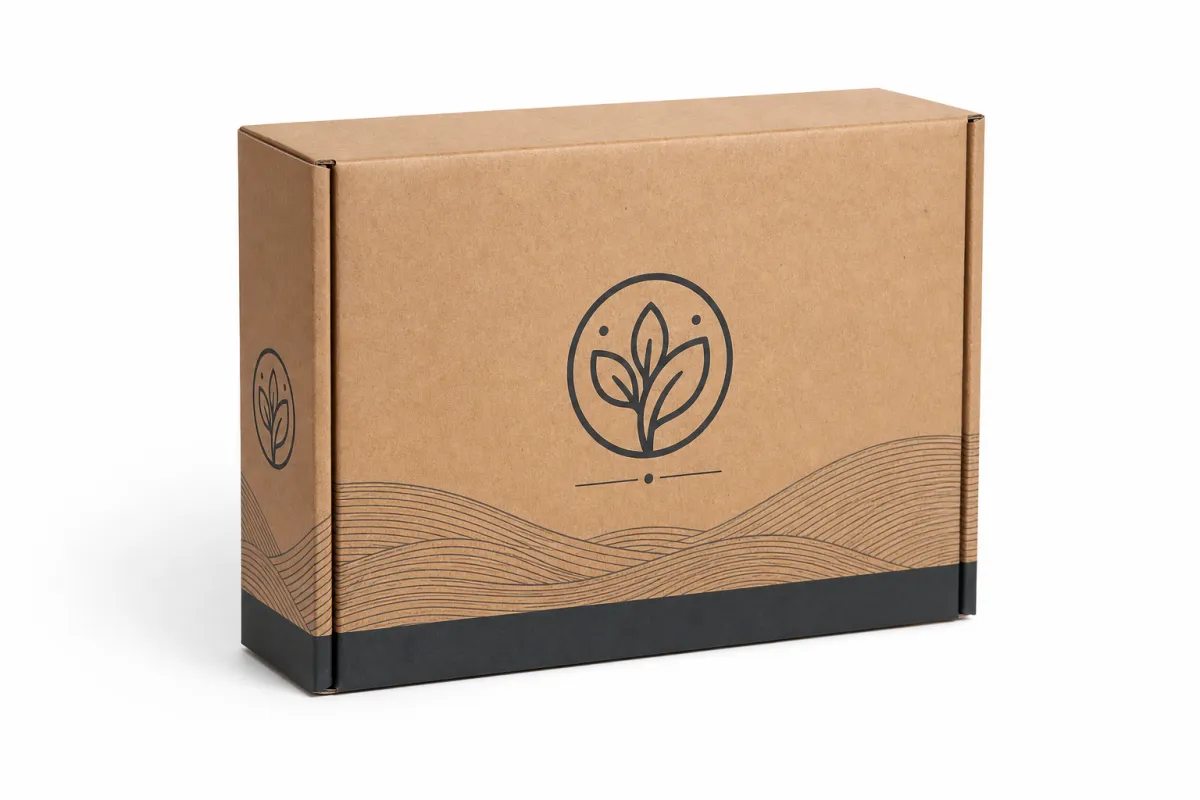
Printed Kraft Shipping Boxes with logo are usually corrugated mailers or shippers made with kraft linerboard and branded with a logo, line name, repeat pattern, or short message. The structure can vary a lot. Some brands use folding mailers. Others choose RSC shippers. Some go with die-cut styles that close with tuck tabs and feel a little more polished.
The point is simple: the box speaks before the product does. A plain brown shipper says the order shipped. A branded kraft box says somebody thought about the experience. Customers notice that difference, even if they do not say it out loud. They file it away. That memory matters more than people like to admit.
Kraft also carries a sustainability signal, which is useful. Still, the look alone does not make a package responsible. If the structure is weak, the box is oversized, or the finish makes recycling harder, the nice brown color does not save you. Printed kraft shipping boxes with logo work best when the material choice, box size, and print system all make sense together.
Here is the part that gets ignored too often: a pretty box that caves in during transit is not premium packaging. A box that stacks cleanly, closes well, and keeps the contents safe through delivery is the actual win. That is why printed kraft shipping boxes with logo should be judged as package protection first and branding second. Both matter. The order just matters.
A shipping box is not a billboard that happens to hold a product. It is transit packaging that has to survive rough handling, stacking pressure, and freight conditions without complaining.
From a buyer's point of view, the best printed kraft shipping boxes with logo line up brand and shipping performance without drama. The size should fit the product instead of floating around it. The board grade should match the load. The logo should stay readable on kraft without fighting the substrate like it has something to prove.
Simple branding often works better than crowded graphics. A restrained mark, a clean repeat pattern, or one strong logo placement can feel more confident than a box that tries to do everything at once. That is especially true for apparel, subscription programs, wellness products, and lightweight consumer goods, where the packaging itself is part of the product story.
How Printed Kraft Shipping Boxes with Logo Are Made
The production flow for printed kraft shipping boxes with logo starts with a corrugated sheet and ends with a finished box that has been cut, scored, folded, glued, and packed flat for shipping. There is a lot of work between those steps, especially in prepress and converting. Most buyers never see that part. Fine. They do not need to. They just need the final box to work.
It starts with the structure. The box style gets selected, the dieline gets built, and the dimensions get locked. Artwork then gets placed on that dieline, which is where the actual problems begin. Logo placement, seam location, flap coverage, and fold lines all matter. Printed kraft shipping boxes with logo can look great on a screen and still fail in real life if the logo sits too close to a crease or lands over a joint.
Most runs use flexographic printing or digital printing. Flexo is common for larger quantities because it is efficient and handles simple branding well. Digital printing is useful for shorter runs, test programs, or packaging that needs more detail without the plate setup. Both can produce strong printed kraft shipping boxes with logo. They just do not behave the same on cost or color.
Water-based inks are often the default for corrugated packaging because they fit standard production and keep the surface feeling natural. Some jobs add coatings or varnishes for rub resistance, which helps if the boxes are going to get handled a lot. With printed kraft shipping boxes with logo, the trick is not adding every finish available. It is choosing the few that actually improve the package.
Kraft substrates absorb and show ink differently than white paperboard. Bright colors can soften. Dark colors can deepen. Thin type can disappear if the contrast is weak. Proofing is not a box-checking exercise; it is the moment that saves you from surprises. Approving artwork on a white monitor and hoping kraft behaves the same way is a good way to waste money.
When teams review printed kraft shipping boxes with logo, they should ask a few plain questions. Is there a white underprint? Are the colors matched exactly or just eyeballed? Has the logo been checked at the real size it will appear on the box? Those details decide whether the final package looks polished or merely passable.
If the packaging program includes other secondary items, it helps to look at the full system, not just one box. A project might include shipping cartons, inserts, and protective packaging, or it might pair branded boxes with Custom Poly Mailers for lighter SKUs. Packaging works better when the pieces are planned together instead of stitched together later.
Printed Kraft Shipping Boxes with Logo Cost and Pricing Factors
The cost of printed kraft shipping boxes with logo depends more on structure, board grade, print method, quantity, and freight than on the logo itself. That surprises people sometimes. They expect the branding to drive the price. In packaging, the real money usually hides in setup, material usage, and how efficiently the job can be run.
Quantity is one of the biggest levers. Small runs carry higher unit prices because artwork prep, plates, tooling, or digital setup costs are spread across fewer boxes. Once volume climbs, those fixed costs get diluted, and printed kraft shipping boxes with logo start to look much better on a per-box basis.
Size matters too. A box that is only a little larger than necessary can use a lot more board than expected and can push freight costs up because of weight or dimensional weight. Ecommerce shipping makes that annoying in a very specific way: an oversized box keeps charging you every time it moves.
A practical pricing rule helps here. If two quotes look close and one includes a better board grade, tighter fit, and stronger construction, the cheaper quote may not be cheaper at all once you factor in damage risk and freight. Printed kraft shipping boxes with logo should be compared as a full package, not just as a printed unit cost.
| Printing / Box Option | Best Fit | Typical Cost Behavior | Common Notes |
|---|---|---|---|
| Flexographic printed corrugated mailer | Medium to larger runs with simple branding | Lower unit cost as quantity rises | Good for one-color logos, repeat art, and efficient production |
| Digital printed corrugated mailer | Short runs, test programs, more detailed branding | Higher unit cost, lower setup burden | Useful when speed or variable graphics matter |
| Unprinted kraft shipper | Lowest branding requirement or internal shipping use | Lowest print cost, but no brand value on box | Can be paired with labels if the brand impact is less important |
| Heavy-duty branded corrugated shipper | Fragile or heavier products | Higher material cost, better protection | Often worth it for fewer claims and less damage |
Other cost drivers show up in places that are easy to miss during quoting. Inserts, partitions, custom cutouts, special closures, windowing, and protective coatings all add complexity. So do size changes after proof approval. If the final dimensions move, the print layout, dieline, and converting schedule may need to be reworked. That is how budgets get messy fast.
For a lot of brands, the sweet spot is a design simple enough to manufacture efficiently but strong enough to create a branded impression. A one-color mark on a clean kraft box is often more cost-effective than a full-coverage graphic, and it can still feel premium when the layout is disciplined. Printed kraft shipping boxes with logo do not need to shout to do their job.
If you are comparing packaging categories, it helps to review broader Custom Packaging Products alongside a specific corrugated option like Custom Shipping Boxes. That makes it easier to line up inserts, labels, and outer transit packaging under one budget instead of treating each item like a separate emergency.
Ask for the quote to be broken out by box size, board grade, print method, and shipping. A clear spec sheet makes printed kraft shipping boxes with logo much easier to compare side by side. It also keeps teams from comparing different constructions as if they were the same thing. That saves time and a lot of pointless back-and-forth.
Choosing Specs for Printed Kraft Shipping Boxes with Logo
The spec sheet is where printed kraft shipping boxes with logo either become a smart packaging system or turn into guesswork. Start with product weight, fragility, and shipping channel. Those three factors tell you more about the right box than the logo placement ever will.
Light apparel and accessory items often work well in a single-wall corrugated mailer, especially if the product already has a pouch, tissue, or inner wrap. Heavier products, fragile goods, or higher-value items usually need stronger board and better closure performance. A 32 ECT or 44 ECT style may fit the load, but that call should come from shipping conditions, not from how attractive the board sounds in a meeting.
Printed kraft shipping boxes with logo should also be checked for closure style. Some mailers tuck together neatly and ship flat. Others use glued tabs or locking mechanisms. If the box gets opened and closed repeatedly during kitting or warehouse handling, that closure has to hold up before the customer ever sees it.
Logo design matters more than many teams expect. A dark, bold logo usually reads better on kraft than a delicate mark with thin strokes. If the brand uses multiple colors, simplifying the palette can help the box stay legible on the brown surface. Bright colors may need tighter color management, and sometimes a white underprint is worth the extra step if contrast is the main goal.
Sustainability choices deserve a real look, not a marketing shortcut. Recyclable corrugated board is a strong starting point, and recycled-content liners can be useful when performance allows. FSC-certified fiber is another option for brands that want third-party chain-of-custody support from FSC. Even then, printed kraft shipping boxes with logo should not pile on extra materials if recyclability is part of the promise.
Finishes need the same kind of attention. Aqueous coating, scuff resistance, and water-based inks can help protect the print. Heavy lamination or specialty coatings may affect how the package moves through local recycling streams. That does not automatically make the box a bad choice. It just means the spec should be honest about the tradeoffs instead of pretending they do not exist.
Quality control on kraft is its own headache, which is why it deserves attention early. The brown surface makes color shifts easier to notice, and fine typography can vanish if the press is not calibrated carefully. Proofs should be checked for logo contrast, seam interference, fold alignment, and print consistency from side to side. Printed kraft shipping boxes with logo can look sharp, but only if the proof stage gets real attention.
From a package protection standpoint, match the box to the product. Do not dress the box for the brand and then hope the structure keeps up. If the box needs to survive drops, vibration, and stacking, test transit packaging performance, not just the presentation. The best printed kraft shipping boxes with logo do both jobs without turning either one into a guessing game.
Printed Kraft Shipping Boxes with Logo Process and Timeline
The ordering process is usually simple enough, but the timeline can stretch fast if the dimensions, artwork, or approval steps are not locked early. A clean project for printed kraft shipping boxes with logo usually starts with the product sample or dimension list, then moves to box style selection, dieline review, and artwork proof.
Once the dieline is confirmed, the logo and any supporting graphics get placed into the print area. That is where hidden problems tend to surface. A fold might run through the logo. A barcode might sit too close to a seam. A phrase may be too small to read on kraft. Better to catch that during proofing than after the press is already running.
Sampling matters. Some buyers jump straight to production because the art looks fine on screen, but physical samples often reveal the truth about print contrast, fit, and rigidity. For printed kraft shipping boxes with logo, a blank structural sample can be just as useful as a printed one because it confirms the size, closure behavior, and stack shape before ink gets involved.
A typical run includes prepress, material procurement, printing, converting, finishing, packing, and freight transit. Repeat work can move faster. First-time custom packaging usually needs more room for proof revisions and sample approval. A realistic window is often 12 to 20 business days from proof approval to shipment, though the actual timing depends on run size and factory load.
Freight can slow things down too. Printed kraft shipping boxes with logo are bulky even when shipped flat, so the receiving location and transit method affect the final lead time. If the project supports a launch date, retailer receiving window, or seasonal ecommerce plan, add buffer time. A delay at the packaging stage has a habit of dragging everything else with it.
The fastest way to create problems is to keep changing the box size after artwork approval. Every change ripples through the process. The dieline changes. The print area changes. The shipping carton count changes. The production slot may need to be rebooked. That is why the best printed kraft shipping boxes with logo projects feel boring while they are being planned. Boring usually means disciplined.
For brands still building their packaging system, it helps to map the box order to the logistics picture. If the packaging will move through multiple warehouse touchpoints, account for order fulfillment, storage height, palletization, and carton counts per case. That way the boxes are not only visually right, they are operationally sane.
A useful benchmark is simple: can the box be approved from three inputs, product dimensions, shipping method, and customer experience goal? If all three are clear, printed kraft shipping boxes with logo usually move smoothly through sampling and production. If one of them is fuzzy, delays are basically guaranteed.
Common Mistakes With Printed Kraft Shipping Boxes with Logo
The most common mistake is designing the artwork as if the box were white paperboard. Kraft is not white. That changes everything. Colors can look darker, muted, or less contrasty than the mockup suggested, which is why printed kraft shipping boxes with logo need artwork tested against the actual substrate.
Another frequent issue is under-specifying the structure. A box can look elegant in a presentation deck and still be too weak for transit packaging. If the board grade is too light, the closure is awkward, or the box is too large for the contents, damage risk climbs fast. That hurts more in ecommerce shipping, because the package may pass through more handling stages than a retail carton would.
Approval mistakes are expensive. Skip the physical sample, approve a proof without checking the folds, or ignore where the logo lands near the seam, and rework follows. Printed kraft shipping boxes with logo are not forgiving when the artwork is rushed. A small misalignment that barely registers on a screen can look sloppy once the box is folded and taped.
Rushed timelines cause a different mess. Order too late, then change the artwork under pressure, and the result is usually a compromise in board choice, print detail, or shipping method. The box may still arrive, but it will cost more than planned and perform worse than expected. That is not a win. It is just a deadline that showed up dressed like one.
Sustainability claims need to be checked carefully too. "Eco-friendly" means very little unless the material, adhesive, coating, and print system support the claim. If a brand wants printed kraft shipping boxes with logo to support a lower-impact story, it should know what parts of the package are recyclable, what finishes are used, and whether the spec lines up with local recycling guidance. Customers ask questions now. Pretending they do not is lazy.
Another mistake is overcomplicating the design. More ink colors, more coverage, more special effects, more structural extras - all of that can work, but not all of it should be added at once. A strong logo, a clean kraft surface, and a well-built box often do more for brand memory than a crowded layout ever will.
One useful check is to ask, "If this box arrives with a scuff on one panel, will it still look intentional?" That question tells you a lot about printed kraft shipping boxes with logo because shipping is not a showroom. A good design accepts real handling and still looks composed afterward.
Expert Tips and Next Steps for Printed Kraft Shipping Boxes with Logo
If you are starting from scratch, begin with one hero SKU or one shipping format instead of trying to change every box in the catalog at once. That gives you a cleaner test of print quality, package protection, customer reaction, and warehouse handling. Printed kraft shipping boxes with logo are much easier to improve when the scope is controlled.
Build a simple spec sheet and keep it tight. Include the exact dimensions, product weight, closure style, shipping method, print colors, logo file format, and any performance expectations. If the package needs to pass an internal drop test or align with ISTA guidance, say that early. Clear specs make printed kraft shipping boxes with logo easier to source accurately.
Ask for three things whenever you can: a blank sample, a printed proof, and a small pilot run if the design is new. The blank sample confirms the structure. The printed proof confirms the artwork. The pilot run confirms how the packaging behaves in the real world. That sequence catches more mistakes than a digital approval chain ever will.
When you compare quotes, do not stop at the unit price. Look at the total landed package value. Freight, storage, claims, rework, and replacement shipments all affect the real cost of the box. A slightly more expensive box that cuts damage can save money fast. That is one reason printed kraft shipping boxes with logo often beat cheaper, generic alternatives over time.
It also helps to think beyond the box. If your program includes labels, inserts, or a mix of shippers for different product sizes, bringing those pieces together through one packaging partner can make the rollout easier. For broader sourcing, Custom Packaging Products can help consolidate the package mix, while Custom Shipping Boxes is the natural next stop if you want to compare structure and print options more closely.
For lighter products or secondary shipments, branded boxes are not the only answer. Some brands use printed kraft shipping boxes with logo for the main order and reserve Mailers for Smaller replenishment units or accessories. That split strategy can reduce dimensional weight, improve storage efficiency, and keep the packaging system flexible instead of boxed into one size forever.
My practical advice is simple: confirm the box spec, review the artwork on kraft, approve a sample, and test the packed box before scaling up. That protects the brand, the budget, and the shipment. If those steps are handled well, printed kraft shipping boxes with logo become more than packaging. They become a dependable part of the customer experience and the order fulfillment process.
Want the shortest route to a solid result? Stay focused on what the box has to do in real life. A good printed kraft shipping boxes with logo program is not about stuffing in more decoration. It is about choosing the right board, the right size, the right print method, and the right level of branding so the package arrives intact and looks like it was made on purpose. That is the whole trick. Keep the spec honest, test the sample, and do not let the artwork outrun the box.
FAQ
Are printed kraft shipping boxes with logo strong enough for shipping?
Yes, if the board grade and flute profile match the product weight and transit conditions. For heavier or fragile items, stronger corrugated construction and a tighter fit matter more than the print itself. A sample test is the best way to confirm stacking strength, closure performance, and corner protection before you commit to full production.
What printing method works best for printed kraft shipping boxes with logo?
Flexographic printing is often efficient for larger runs and simple branding, while digital printing can work well for short runs, faster turnarounds, or more detailed artwork. The best method depends on order volume, color count, artwork complexity, and budget. For many printed kraft shipping boxes with logo projects, the real decision is about balancing setup cost against flexibility.
Are printed kraft shipping boxes with logo recyclable?
Many are recyclable when they use standard corrugated kraft board and compatible inks. Coatings, laminations, or specialty treatments can affect recyclability, so the material spec should be checked carefully. If sustainability is a priority, ask whether the finish and adhesive choices support local recycling guidance and whether the box design aligns with your packaging goals.
How long does it take to produce printed kraft shipping boxes with logo?
Timeline depends on artwork readiness, sampling needs, production method, and freight distance. Simple repeat orders can move faster than first-time custom packaging projects, but the safest approach is to allow time for proof review, sample approval, and a production buffer before launch. For printed kraft shipping boxes with logo, a few extra days up front usually prevent much bigger delays later.
What order quantity makes printed kraft shipping boxes with logo more affordable?
Higher quantities usually lower the unit cost because setup and production costs are spread across more boxes. Small runs are useful for testing, but they often carry a higher per-box price. The right quantity is the point where storage space, cash flow, and unit economics all make sense together, especially when printed kraft shipping boxes with logo are part of a larger packaging system.


