Buyer Fit Snapshot
| Best fit | Custom Kraft Shopping Bags Wholesale for Brands projects where brand print, material claims, artwork control, MOQ, and repeat-order consistency need to be specified before quoting. |
|---|---|
| Quote inputs | Share finished size, material target, print colors, finish, packing count, annual reorder estimate, ship-to region, and any compliance wording. |
| Proofing check | Approve dieline scale, logo placement, barcode or warning zones, color tolerance, closure strength, and carton packing before bulk production. |
| Main risk | Vague material claims, crowded artwork, missing packing details, or unclear freight terms can make a low unit price expensive after revisions. |
Fast answer: Custom Kraft Shopping Bags Wholesale for Brands: Film, Print, MOQ, and Carton Packing should be specified like a repeatable production item. The safest quote records material, print method, finish, artwork proof, packing count, and reorder notes in one written spec.
Production checks before approval
Compare the actual filled-product size with the drawing, then confirm tolerance on folds, seals, hang holes, label areas, and retail display edges. Reserve space for logos, QR codes, warning copy, and material claims before decorative graphics fill the panel.
Quote comparison points
Review material grade, print process, finish, sampling route, tooling charges, carton quantity, and freight assumptions side by side. A quote is only useful when the supplier can repeat the same color, closure quality, and packing count on the next order.
custom Kraft Shopping Bags wholesale often pay back faster than brands expect, because the bag does more than move a purchase from the counter to the street. It closes the sale in public. That handoff matters. A bag that sags, splits, or looks improvised tells a story the customer remembers for the wrong reason. A bag that holds its shape, matches the brand, and feels deliberate tells a cleaner one.
Retailers, bakeries, gift shops, and event teams all feel that difference. A well-built kraft bag supports product packaging, brings order to retail packaging, and gives a small shop a visual presence that generic plastic cannot match. Wholesale buying sharpens the economics further. Larger runs usually bring the unit price down, simplify reorder planning, and reduce the chance that packaging runs out during a holiday weekend or a pop-up rush.
Brands building a broader package branding system usually find that kraft bags fit naturally beside Custom Printed Boxes and other branded packaging materials. The look is practical rather than flashy. That is part of the appeal. Coordinated packaging tends to age better than packaging chosen piecemeal, and procurement teams usually prefer a spec they can defend with numbers and use cases rather than decorative language.
Packaging rule of thumb: the best bag is the one that carries the purchase cleanly, survives the trip home, and fits the item without wasteful overbuilding.
Why custom kraft shopping bags wholesale pay off fast
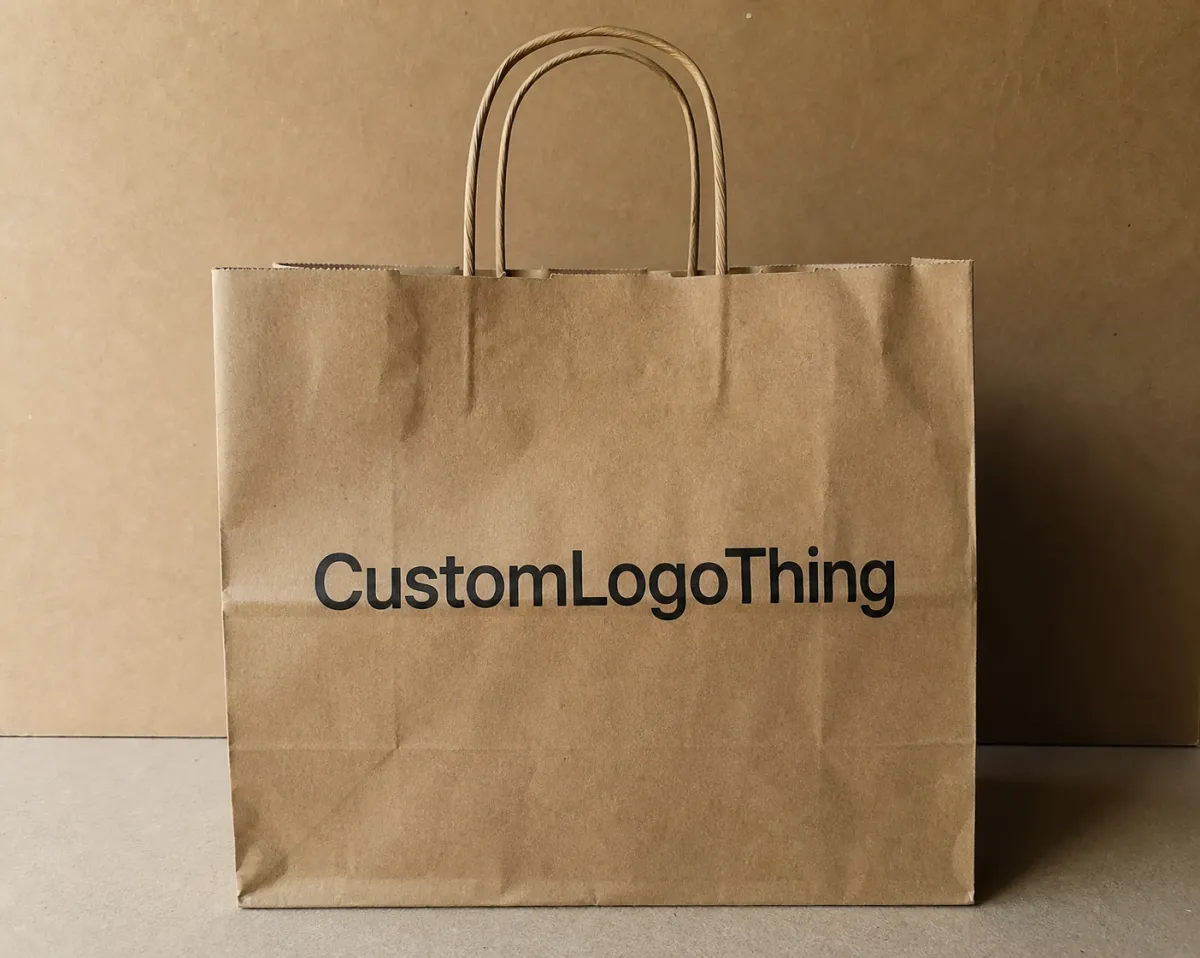
The first payoff is visible at checkout. The bag is part of the customer’s last physical interaction with the brand, so there is no room for a weak choice to hide. If the handle twists oddly or the bottom gives way, the failure is immediate. If the bag feels sturdy and well made, the purchase ends on steadier ground. That moment shapes memory more than most suppliers like to admit.
Kraft paper also carries a useful set of associations. It suggests structure, recyclability, and a more considered buying experience. Those signals are not automatic proof of quality. A poorly printed kraft bag can look cheap fast. Still, compared with a thin alternative, a properly specified kraft bag usually communicates more care with less effort.
Wholesale buying changes the math in ways that matter. A small order can appear attractive until setup fees, emergency freight, and repeat reorders are counted. Larger orders usually reduce per-unit cost and make supply easier to plan. Multi-location retailers benefit even more, because the bag becomes a standard part of the store experience instead of a last-minute supply decision.
Different business models point to the same conclusion for different reasons:
- Boutiques need a bag that handles apparel, accessories, and giftable items without collapsing at the base.
- Bakeries and cafes need strength, clean presentation, and a bag that feels appropriate next to food packaging.
- Gift shops need packaging that supports add-on purchases and makes the item feel ready to give.
- Pop-ups and trade show booths need a repeatable system that keeps pace with foot traffic.
- Subscription kits and event bundles need a bag that protects contents and keeps the handoff neat.
There is also a planning advantage. Once the size, print, and handle style are fixed, reordering becomes far less chaotic. Seasonal promotions, store openings, and launches all get easier to manage when the packaging spec is stable. Teams that do not want packaging to become a monthly scramble usually appreciate that stability almost immediately.
Buyers comparing suppliers usually ask the same questions in a slightly different order: What dimensions fit the product? How much paper weight is enough? Which handle style makes sense? How many print colors are actually needed? What is the MOQ? How long will production take? Those questions are practical for a reason. They affect durability, cost, and the final look on the sales floor.
One reason kraft bags remain popular in wholesale programs is their flexibility. A small bakery can order a restrained, one-color bag and still look polished. A jewelry boutique can choose a heavier stock with rope handles and move the presentation toward premium without stepping outside a sensible budget. The bag shape may be simple, but the decision behind it rarely is.
Product details: paper weight, handles, and print options
Kraft shopping bags are not a single product. They are a set of tradeoffs. One spec can feel bargain-minded, another can read as mid-tier, and another can present as premium. Buyers who treat the order like a checklist rather than a design decision often end up with a bag that functions but does not support the brand story.
Paper choice sets the tone first. Natural brown kraft has the familiar recycled look and pairs well with black, white, or a single deep logo color. Bleached kraft looks brighter and sharper, which helps when a brand wants stronger contrast or a more polished surface. Recycled-content paper can support sustainability messaging, but that claim should rest on documentation, not assumption. If FSC-certified paper matters, ask for proof rather than taking a vendor’s word for it. The FSC site explains certification and chain-of-custody requirements in plain terms.
Paper weight determines stiffness, tear resistance, and how substantial the bag feels in the hand. Many retail buyers evaluate kraft shopping bags in the 120gsm to 200gsm range, with heavier builds chosen for denser products or for a more confident hand feel. The exact figure matters less than the match between paper and load. A small accessory bag does not need the same structure as a carry bag for boxed goods.
Handle style changes both presentation and cost. Twisted paper handles are common because they offer a tidy look and good value. Flat handles are often selected for budget-sensitive programs and everyday use. Rope handles push the bag toward a more premium impression and appear frequently in boutique packaging. Die-cut handles suit compact bags where the silhouette should stay simple and the opening needs to remain sleek.
Print options work best with restraint. One-color printing often delivers the strongest value, especially when the logo is clear and the bag color already supports the design. Two-color printing adds contrast without pushing the project into a more expensive lane. Full-coverage decoration exists, but it should be justified by the brand and the use case rather than chosen because it is available.
Customization can extend beyond print. A folded top or die-cut opening can improve handling. A cardboard bottom insert helps distribute load. Side gussets make packing easier and support boxy merchandise. Inside printing can create a small surprise, though it adds complexity and can lengthen proofing time. A brand should treat those extras as tools, not default upgrades.
| Bag style | Best use case | Typical spec traits | Wholesale cost behavior |
|---|---|---|---|
| Twisted-handle kraft bag | Retail stores, apparel, general merchandise | Balanced strength, clean retail look, efficient printing | Often one of the strongest value picks at medium to high quantities |
| Flat-handle kraft bag | Fast-moving shops, bakery counters, budget-conscious programs | Simple construction, practical carry, lower decoration cost | Usually lower cost, especially with a single-color logo |
| Rope-handle kraft bag | Boutiques, gifting, premium retail packaging | Higher perceived value, stronger presentation, heavier build | Higher unit price, especially with larger print coverage |
| Die-cut handle bag | Events, compact retail, branded giveaways | Streamlined silhouette, minimal hardware, easy stacking | Can stay economical if artwork and size remain simple |
The smart way to choose starts with the product, not the style. A folded sweater, a candle set, and a pastry box behave very differently inside a bag. So do cosmetics, bottle sets, and flat brochures. The right spec fits the item comfortably, protects the contents, and avoids the loose, unsteady look that weakens presentation.
Brands building a broader packaging system usually do better when the bag echoes the rest of the line. A kraft bag that matches the logo treatment used on boxes, tissue, inserts, and labels looks planned. Packaging design begins to work as a system rather than a stack of unrelated purchases. For buyers comparing product families, our Custom Packaging Products page is a useful starting point.
There is one more practical detail buyers sometimes miss: ink density and surface texture affect appearance as much as artwork does. A fine logo can disappear on a highly absorbent kraft surface if the file is too thin or the color contrast is too weak. A supplier who understands paper behavior will flag that early, before the print run turns an elegant design into a faint mark.
Specifications that matter: size, strength, and compliance
Size should begin with the item. That sounds obvious until a wholesale order is built from catalog dimensions instead of the actual merchandise. The result is often a bag that is too tall, too shallow, or too loose to pack efficiently. Fit affects presentation, protection, and waste. Oversized bags cost more and look careless. Undersized bags waste staff time and force awkward packing work.
A practical sizing process starts with the retail category and then checks the actual product footprint. A compact bag for cosmetics or small gifts needs a different shape than a tote-sized bag for folded apparel or a mixed purchase. Dense items, boxed food, and bottle sets need stronger bottoms and more reinforcement than lightweight paper goods. That difference is not cosmetic. It shows up in the customer’s hand.
Strength comes from several parts working together. Paper weight matters, but so do seam quality, bottom construction, handle reinforcement, and the way the top is folded. A bag can look sturdy in a mockup and still fail in use if the seams are weak or the handle attachment is sloppy. Buyers should ask where the reinforcement sits, what load the bag is intended to carry, and whether the structure has been tested with the actual product mix.
For buyers who care about sustainability claims, the conversation should include recycled content, recyclability, and any coating or ink requirements. Not every “eco” claim means the same thing. If the brand needs recyclable construction, confirm whether coatings, lamination, or heavy ink coverage alter that claim. If food contact is involved, ask whether inks and adhesives suit the use case. The EPA offers useful context on recycling and waste reduction at epa.gov/recycle.
Supply-chain checks can help too. Shopping bags are not fragile electronics, but bulk shipping still benefits from basic transport validation and load checks. Bags that arrive flat in cartons or mix with other packaging still need to hold up through handling, storage, and shelf use. Industry organizations such as ISTA publish test methods that are useful reference points when buyers want a more disciplined review process.
Before approving a wholesale run, ask for a sample or a spec sheet and verify the following:
- Exact bag dimensions, including width, gusset, and height.
- Paper weight and whether recycled content is documented.
- Handle type, attachment style, and reinforcement method.
- Print placement, number of colors, and approved artwork file format.
- Bottom structure and whether an insert is included.
- Intended load range and any care or storage notes.
That review keeps the order tied to real use rather than assumptions. It also gives procurement teams a concrete basis for comparing suppliers, which matters when the spec starts to look similar across quotes.
For food-related orders, the compliance discussion deserves special care. A kraft bag used for boxed bakery items is one thing; a bag expected to touch unpackaged food is another. The correct paper grade, adhesive, and print system depend on the actual application. A supplier who glosses over that distinction is saving time on the front end and creating risk on the back end.
Pricing, MOQ, and quote structure
Pricing for custom kraft shopping bags wholesale is driven by the spec, not just the quantity. A large order can pull the unit cost down, yet paper weight, handle style, print complexity, finishing steps, and freight all shape the final number. Two quotes can look close on paper and still be difficult to compare if one leaves out key production details.
A realistic wholesale budget for straightforward kraft shopping bags often begins in a lower range for plain builds and rises as complexity increases. A single-color twisted-handle bag at a larger quantity can sit in a very different cost band from a rope-handle bag with heavier paper and multi-color printing. Freight can move the landed cost as well, especially for bulky orders shipping across long distances. The most honest comparison is not the cheapest quote. It is the cost of the exact same bag spec delivered to the right place.
MOQ usually follows production efficiency. Simple bags often allow lower minimums because they require less setup. Custom sizes, special handles, heavier paper, and extra print colors usually raise the minimum order because they demand more material and more machine time. That higher minimum is not automatically a problem. It simply reflects a more involved build.
Here is a practical way to compare quotes without getting sidetracked:
- Match the exact dimensions, paper weight, and handle style.
- Confirm whether the print is one-color, two-color, or full coverage.
- Ask whether plates, tooling, or setup fees are included.
- Check whether samples are free, credited, or billed separately.
- Verify freight terms, split shipments, and any rush charges.
The extra costs are usually visible, just easy to miss in a fast purchase cycle. Plates, tool creation, and proofing can shift the economics on smaller orders. Freight becomes more noticeable when the order is bulky or the deadline is tight. For a store launch or a major event, rush production may still make sense, but it should be treated as a scheduling decision rather than a default setting.
| Cost driver | What it changes | Buyer takeaway |
|---|---|---|
| Bag size | Material usage, carton density, freight volume | Oversizing raises cost and weakens presentation |
| Paper weight | Stiffness, strength, perceived quality | Heavier paper costs more but can prevent failure |
| Handle style | Construction steps, labor, premium perception | Choose based on use, not appearance alone |
| Print complexity | Setup time, ink use, proofing effort | One-color or two-color artwork often gives the best value |
| Order quantity | Unit price and production efficiency | Higher quantities usually improve unit economics |
A useful tactic is to request tiered pricing. That shows where the next quantity break lowers the per-unit cost enough to justify a larger order. For brands with seasonal demand, that comparison can determine whether it makes sense to buy a little or buy enough to avoid a mid-season rush. If demand is still being tested, staged reorders can protect cash flow while keeping the packaging consistent.
It helps to compare landed cost, not only the factory price. A quote that looks inexpensive can become less attractive once cartons, freight, and any destination fees are added. Buyers who track the full cost often discover that the slightly higher quote is the safer one because it includes the details that actually affect delivery and usable inventory.
Process and lead time: from artwork to delivery
A clear order process reduces risk more effectively than a polished sales pitch. The cleanest projects begin with the essentials: bag dimensions, quantity, artwork, use case, shipping destination, and in-hand date. Once those inputs are set, the supplier can quote against a real spec instead of guessing at the finish line.
The proofing step is the buyer’s last clean chance to catch avoidable problems. At that stage, the supplier should confirm size, artwork placement, print colors, handle style, and any reinforcement details. If a logo sits too close to the edge, the proof should show it. If the brand needs a precise Pantone match or a deeper black, that detail should be resolved before production begins. Good proofing protects both the order and the schedule.
The production flow is straightforward, but each step serves a purpose:
- Printing: applies the artwork to the kraft surface.
- Cutting and shaping: sets the final dimensions and gussets.
- Gluing and assembly: forms the bag body and bottom.
- Handle attachment: secures the carry points and reinforcement.
- Inspection: checks print placement, seams, and finish quality.
- Packing and shipment: prepares the bags for freight and storage.
Lead time depends on order size, the number of print colors, the handle construction, and whether special materials are involved. Freight method also changes the calendar. Air shipping moves faster but costs more. Ocean freight makes more sense for larger programs if the timeline allows. Busy buying seasons can stretch the schedule, so a brand planning a launch, holiday rollout, or trade show should build in a cushion instead of aiming for the exact date on the calendar.
A realistic planning window for Custom Kraft Bags usually includes artwork finalization, proof approval, production, packing, and freight. If the schedule is tight, early notice helps. That gives everyone room to pick the right production route rather than forcing a decision that adds cost or stress. A one-week delay in proof approval can ripple through the rest of the timeline. So can a late change to handle style or logo placement.
Ask for a sample whenever the project has meaningful risk. A physical sample reveals paper feel, handle comfort, print clarity, and bottom stability in a way a screen never can. For teams that order packaging on a recurring basis, that sample often becomes the standard the rest of the program is measured against.
Practical advice: if the bags are needed for a launch, opening, or event, treat the in-hand date as the target and work backward through proofing, production, and freight.
Why choose us for custom kraft shopping bags wholesale
For a buyer, supplier value comes down to consistency, clarity, and control. You want the same bag spec every time, the same print quality across runs, and the same carry performance from the first carton to the last. That matters even more for multi-location brands and distributors, where one weak production run can create mismatched packaging across stores.
Packaging-specific experience matters because kraft bags stop being generic once branding enters the picture. A supplier that understands retail packaging can translate a rough idea into a working spec. That includes size selection, print guidance, and advice on where a premium finish earns its keep and where it simply adds cost. Fewer rework cycles, fewer surprises, better order discipline.
At Custom Logo Things, the goal is simple: make the order easy to specify and repeat. That means clear communication on bag size, print options, and order requirements, plus a process that helps buyers move from quote to proof to production without confusion. If the project needs broader branded packaging coordination, our team can also help align the bags with other formats in the line. That includes custom printed boxes, inserts, labels, and related packaging design decisions that support a consistent package branding system.
Buyers also care about documentation. Sustainability claims, material choices, and repeat-order specs should be visible and easy to understand. For procurement teams, that is not a side issue. It is what keeps approvals moving. If a brand needs recycled content, FSC details, or print guidance tied to a specific use case, the paperwork should support the purchase rather than slow it down.
Support matters before and after the order. Before the order, the buyer needs a quote that reflects the real spec. During proofing, the buyer needs a clear explanation of what is being approved. After production, the buyer needs shipping updates that are useful rather than vague. That is the standard most packaging teams want, and it is the standard worth expecting.
If you are comparing wholesale packaging routes, think in terms of control points. Fewer surprises in the spec usually means better performance in the order. That is one reason many brands keep their bag programs tightly tied to the rest of their retail packaging strategy rather than treating bags as an afterthought. For buyers building out more than one format, our Wholesale Programs page is a practical place to start.
Trust also comes from honest limits. A supplier should be direct about what a bag can and cannot do. A kraft bag can present a brand well and carry a modest retail load, but it is not a substitute for a shipping carton, nor is recycled-content paper automatically the right choice for every use case. Clear guidance matters more than overselling.
Next steps for custom kraft shopping bags wholesale orders
The fastest route to a useful quote is to gather the right information before you ask. Start with the bag dimensions, estimated product weight, logo file, target quantity, shipping destination, and the date the bags must arrive. If you already know the product mix, include that too. A bag for a single candle is not the same as a bag for a boxed gift set or a stack of apparel.
Then decide what matters most. Is the priority a lower unit cost, a more premium look, or a stronger construction? Do you need recycled content or FSC documentation? Does the brand want a simple one-color logo or a fuller branded packaging treatment? Answering those questions first shortens the quoting cycle and cuts down on revisions.
It also helps to request quotes against the same exact spec from every supplier. That is the only fair comparison. If one quote includes a heavier paper weight, better handle reinforcement, and freight to your door while another quote leaves those details out, the lower number is not truly lower. It is just incomplete.
Before approving production, ask for a sample or a proof. Then check the logo placement, color tone, bag size, and handle attachment. Confirm ship-to details, receiving hours, and reorder expectations. If the bags are tied to a store opening, promotion, or trade event, keep a cushion in the schedule. Tight timing increases the chance that a perfectly fine order becomes a stressful one.
The buying path is straightforward once the spec is clear: define the bag, verify the proof, lock the schedule, and place the order. That is the cleanest route to custom kraft shopping bags wholesale that perform as expected and support the brand instead of distracting from it.
For teams ready to move forward, the most practical next step is to write down the bag spec in one page or less: dimensions, paper weight, handle type, print colors, quantity, and delivery date. With those details fixed, suppliers can quote the same job, proofing becomes easier, and the final order is far less likely to drift from the original plan. That discipline saves time on both sides.
FAQ
What is the typical MOQ for custom kraft shopping bags wholesale?
MOQ depends on size, paper weight, handle type, and print complexity, so simpler bags usually start lower than highly customized ones. Larger runs generally lower unit cost, while special finishes or multiple print colors can raise the minimum order threshold. Ask for tiered pricing so you can see when the next quantity break improves value enough to justify a bigger order.
Which type of kraft shopping bag works best for retail stores?
Twisted-handle kraft bags are a common retail choice because they balance cost, appearance, and everyday carry strength. Flat-handle bags work well when budget is the priority, while rope handles create a more premium feel. The best option depends on product weight, brand positioning, and how the bag will be used after purchase.
Can I order recycled or FSC kraft paper bags wholesale?
Yes, many buyers request recycled-content or FSC-certified paper when sustainability documentation matters to their brand or customers. Confirm whether the paper, ink, and any coatings meet the exact sustainability claim you plan to make. Request written specs or certification details before approval so the order matches your procurement requirements.
How long does production usually take after artwork approval?
Lead time depends on bag size, order quantity, print colors, and whether the design needs special materials or finishing. Once artwork is approved, production can move faster, but freight method and seasonal demand still affect the delivery date. Ask for the full timeline up front so you can plan around store openings, promotions, or event dates.
What should I include when requesting a quote for custom kraft shopping bags wholesale?
Provide the exact bag dimensions, quantity, handle style, paper weight, print colors, and any finish or reinforcement needs. Include the delivery location and target in-hand date so the quote reflects realistic freight and scheduling. If possible, attach artwork files or a reference image so the supplier can price the project more accurately.

