Buyer Fit Snapshot
| Best fit | kraft shopping bags with logo for packaging buyers comparing material specs, print proof, MOQ, unit cost, freight, and repeat-order risk where brand print, material, artwork control, and repeat-order consistency matter. |
|---|---|
| Quote inputs | Share finished size, material target, print colors, finish, packing count, annual reorder estimate, and delivery region. |
| Proofing check | Approve dieline scale, logo placement, barcode or warning zones, color tolerance, and any recyclable or compostable wording before bulk production. |
| Main risk | Vague material claims, crowded artwork, or missing packing details can create delays even when the unit price looks attractive. |
Fast answer: Kraft Shopping Bags with Logo: Costs, Specs, and Fit should be specified like a repeatable production item. The safest quote includes material, print method, finish, artwork proof, carton packing, and reorder notes in one written spec.
What to confirm before approving the packaging proof
Check the product dimensions against the actual filled item, not only the sales mockup. Ask for tolerance on folds, seals, hang holes, label areas, and retail display edges. If the package carries a logo, QR code, warning copy, or legal claim, reserve that space before decorative graphics fill the panel.
How to compare quotes without losing quality
Compare board or film grade, print process, finish, sampling route, tooling charges, carton quantity, and freight assumptions side by side. A lower quote is only useful if the supplier can repeat the same color, closure quality, and packing count on the next order.
Kraft shopping Bags with Logo are easy to underestimate. They do not glitter, do not feel precious, and rarely make a dramatic first impression on a screen. Yet a shopping bag often travels farther than the product inside it. It moves through a store, a parking lot, an office lobby, a train carriage, a photo, and sometimes a social feed. That is a lot of mileage for a modest piece of packaging.
The appeal is practical, not sentimental. A good kraft bag signals order, restraint, and a business that has thought through the handoff between sale and carry-out. For retailers, that handoff matters. For the customer, it is often the first physical proof that the brand is organized enough to be trusted again.
A bag that fails at the handle is not a packaging problem. It is a service failure that happens in public.
Why kraft shopping bags with logo still punch above their weight
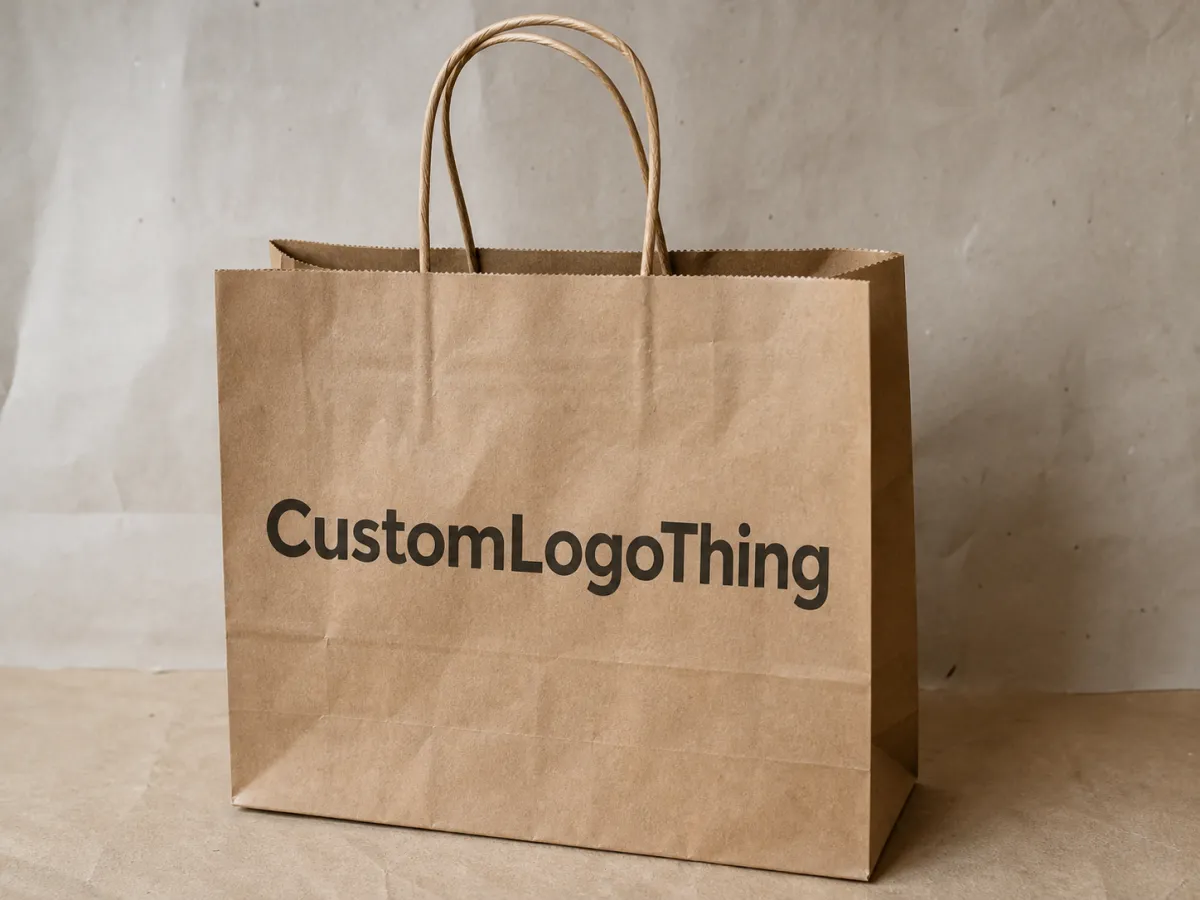
Packaging shapes memory after the transaction is over. A customer may buy one item, but the bag keeps representing the brand long after the receipt is folded away. That is why Kraft Shopping Bags with logo remain common in boutiques, bakeries, gift shops, apparel stores, trade booths, and takeaway counters. They are relatively economical, easy to standardize, and visible in the exact places where brand impression matters most.
Most versions are made from virgin kraft, recycled kraft, or a blend of fibers chosen for a balance of strength and appearance. Brown kraft tends to read natural, grounded, and straightforward. White kraft usually looks cleaner and can help printed logos appear brighter. Neither stock magically improves branding, though. The bag only works if the size, paper weight, handle style, and artwork all fit the job.
The strongest argument for these bags sits in the middle ground between utility and presentation. A well-made kraft bag can make a $30 purchase feel considered, and it can do the same for a higher-ticket item without forcing the packaging budget into luxury territory. That is why so many buyers keep returning to them. They are not trying to create theater. They are trying to make the checkout moment feel complete.
Consistency matters more than most people admit. If every location uses the same bag size, the same handle style, and the same logo placement, the brand looks deliberate. Customers rarely praise that directly, but they notice when it is missing. Inconsistent packaging suggests inconsistent operations. Clean packaging suggests control, and control quietly builds trust.
Kraft also stays relevant because it is familiar to both buyers and suppliers. It can often be printed in one or two colors, it fits well across retail and food-adjacent use cases, and it is easy to explain to store staff. The rest of this piece focuses on how kraft shopping bags with logo are built, what drives cost, what slows production, and where buyers tend to lose money by making the wrong tradeoffs.
How kraft shopping bags with logo are made and printed
Structure comes first. Before a logo is printed, the supplier has to choose the paper stock, and that stock is typically measured in gsm or basis weight depending on the market. Lighter retail bags often fall around 80-120 gsm. Midweight and heavier shopping bags usually move into the 120-180 gsm range, often with reinforced handles or a bottom insert to improve stability. If the contents are dense, glass-based, or awkwardly shaped, ask for the actual load rating instead of relying on a product photo. Pictures do not show how a handle behaves once the bag is full.
Size changes the whole user experience. Small bags may land near 6 x 3 x 8 inches. Medium retail formats often sit around 8 x 4.75 x 10 inches or 10 x 5 x 13 inches. Larger bags can reach 13 x 6 x 15 inches or more. The right choice depends on product footprint, how much clearance the item needs at checkout, and whether the bag should look snug or generous. Too small and the bag looks strained. Too large and the packaging wastes material while making the purchase look underdressed.
Handle style is not a minor decision. Twisted paper handles are common because they balance price and function well for many retail settings. Flat paper handles are usually the lower-cost option and work fine for light loads. Rope handles tend to sit in a more premium lane and often suit heavier items better. Die-cut handles can work for flatter products, but they are not the first choice when the bag has to carry meaningful weight. The handle is the part customers physically feel, so it deserves real attention.
Printing is where the branding becomes tangible. Flexographic printing is often used for larger runs because it handles repeated artwork efficiently once setup is complete. Offset printing can deliver sharper detail and tighter color control. Screen printing works well for bold graphics and simpler premium effects. Foil stamping and embossing can elevate the presentation, but those finishes usually change the economics of the order enough that they should be chosen for a reason, not just because they look expensive.
Logo placement deserves more thought than it usually gets. A centered one-color mark remains popular because it is clean and affordable. Some brands add a side-panel logo, a second color, or a wraparound layout that uses more of the bag surface. Those choices can be strong, but they also increase setup complexity and the risk of misalignment if the artwork is not prepared correctly. Fine-line logos create a different problem. They may look elegant on a computer screen and then disappear on natural kraft paper unless the contrast and scale are handled carefully.
Finishing details change how the bag feels in the hand. A matte surface often looks more natural and less slippery. Coated or gloss finishes can sharpen print appearance, though they can also soften the earthy look that makes kraft useful in the first place. Reinforced tops, glued bottom inserts, and gusset depth influence whether the bag stands upright, keeps its shape, and survives a normal day of use. A nice-looking bag that collapses into a wrinkled tube after one carry is not premium. It is a complaint with a logo on it.
Cost, pricing, and MOQ: what actually changes the quote
Pricing for kraft shopping bags with logo usually moves with a few variables that matter more than first-time buyers expect: size, paper weight, print colors, handle type, finish, and quantity. Each one affects material use, setup work, machine time, and packing labor. Change one, and the quote can move. Change several, and the order can shift from reasonable to awkward fast.
MOQ, or minimum order quantity, is where many buyers get surprised. Smaller runs cost more per bag because setup costs are spread across fewer units. Plates still need making. Proofs still need checking. Color registration still needs setting. If a supplier has to prepare the press, review the artwork, and pack to spec, that work does not shrink just because the order is small. It gets divided across fewer bags.
That is why the unit price often improves at common quantity breaks like 1,000, 3,000, and 5,000 pieces, although the exact threshold depends on the supplier and print method. The real question is not whether a bigger run is cheaper per bag. It usually is. The question is whether the savings are large enough to justify holding more inventory.
Here is a useful comparison. These are broad working ranges, not promises. A simple one-color bag at 5,000 pieces behaves very differently from a custom-size bag with heavy stock and rope handles at 1,000 pieces.
| Setup | Typical MOQ | Typical unit cost | Best for | Main tradeoff |
|---|---|---|---|---|
| Basic kraft bag, one-color print, flat or twisted handles | 500-1,000 | $0.22-$0.55 | Retail, events, light product carry | Lower cost, fewer premium details |
| Midweight kraft bag, one- or two-color print, reinforced handles | 1,000-3,000 | $0.35-$0.85 | Boutiques, gift shops, apparel, beauty | Better feel and strength, moderate setup cost |
| Heavy kraft bag, custom size, specialty finish or premium handle | 1,000-5,000 | $0.75-$1.80 | Luxury retail, flagship stores, higher-value purchases | Stronger presentation, higher total spend |
Those ranges move with region, stock, and freight. A heavier paper stock raises material cost. A second print color adds setup. Pantone matching, foil, embossing, and full-coverage print all push the number upward. Freight can matter just as much as manufacturing because paper stacks occupy more volume than many buyers expect. That lesson usually becomes very clear after the first quotation arrives.
Hidden costs deserve attention because they often sit in the details. Artwork cleanup, vector conversion, proofing, color matching, sample production, packing inserts, and rush fees can all show up on the quote. If the supplier has to redraw a logo because it was sent as a blurry screenshot, that is not a manufacturing problem. It is a file problem. File problems cost time, and time usually costs money. Ask for a quote that separates unit price, setup, and shipping so the comparison stays honest.
The smartest buying move is simple: request price breaks at several quantities. Ask for 1,000, 3,000, and 5,000 units with the same size and artwork, then compare the actual unit cost, not just the headline total. If the savings at the higher tier are meaningful and reorders are likely, the larger run often makes sense. If the discount is modest, smaller batches are safer because they reduce storage pressure and inventory risk.
Process and turnaround: from artwork to delivery
The production flow is usually straightforward. The schedule is not always forgiving. An order often starts with a specification request: size, paper weight, handle type, print colors, finish, and quantity. The buyer sends artwork. Proofing follows. Sample approval may come next if the job is new or more complex. Production, inspection, packing, and shipping finish the chain. Each stage can move quickly when the input is clean, or slow down when the order is built on assumptions.
Artwork is the most common delay. If the logo arrives as a low-resolution PNG or the file uses the wrong color mode, someone has to repair it before printing begins. Good suppliers usually prefer vector files such as AI, EPS, or PDF with fonts outlined or embedded. A simple, print-ready file may move through proofing in a day or two. A file that needs rebuilding adds time, and the calendar does not care that the brand team was busy.
Production time depends on complexity. Simple one-color kraft shopping bags with logo can move fairly quickly after proof approval. Standard sizes, familiar handle styles, and routine print layouts are easier to schedule. Custom dimensions, specialty handles, foil accents, dense ink coverage, and tight color matching create more steps. Revisions after proofing also extend the schedule. Every change requires another round of checking, and printing is a poor place for casual corrections.
Many custom jobs land somewhere in a 12-20 business day window after proof approval, with shipping added on top. Faster runs are possible when the format is standard, but speed usually comes with tradeoffs: fewer finish choices, higher cost, or tighter artwork limits. If the bags are moving by air, transit may only take a few days. Ocean freight or consolidated truck freight can add a longer tail. Planning only for production time is a common way to miss a launch date.
Load testing deserves a mention for heavier bags. The International Safe Transit Association publishes guidance for handling stress and distribution conditions at ISTA. Not every shopping bag needs formal lab work, and many standard retail bags never go near a test chamber. Bags carrying glass, multiple bottles, or dense products should still be checked for handle integrity and seam strength before a full run. A supplier who can explain its test method in plain language is easier to trust than one who hides behind vague claims.
Approval speed matters too. That sounds obvious until a proof sits in someone’s inbox for four days and production stalls behind it. The schedule only moves as fast as the slowest approval. Event launches, seasonal displays, and store openings leave little room for delay, so the order should be planned backward from the date the bags are needed. Leaving packaging until the shelf is already empty is a familiar mistake. It is also an expensive one.
Key factors that decide durability, look, and feel
Strength starts with paper weight, but paper weight does not tell the whole story. Handle reinforcement, bottom construction, seam quality, and glue coverage all affect how well the bag performs under pressure. A midweight bag with solid reinforcement can outlast a heavier bag with weak folding or poor bonding. Sampling matters for exactly that reason. The number on the spec sheet is only part of the story.
Look and feel are about fit, not decoration for its own sake. A natural kraft bag with a small black logo can feel calm, practical, and grounded. That suits brands that want to appear understated or environmentally conscious. A bag with a larger logo, stronger ink coverage, or a high-contrast panel feels more promotional and retail-forward. Both approaches can work. They send different signals, and the signal should match the product, price point, and customer expectation.
Size selection is where brands often look composed or oddly improvised. Bags that are too small squeeze the product and make checkout feel awkward. Bags that are too large waste material and can make the purchase look loose or underplanned. A good supplier should map the product dimensions to a bag size with enough room for loading and closure. That matters for boxed goods, apparel, candles, and gift sets more than many buyers realize.
Print visibility changes on kraft paper because the substrate is not neutral. Dark logos usually stand out well on brown kraft. Lighter tones can sink into the surface unless contrast is strong enough. Fine typography can also lose clarity on rougher paper. If the logo uses tiny copy or thin lines, simplify it or scale it up. This is not the place to squeeze every brand detail onto one square of paper and hope for the best.
Sustainability claims need more than a label. Recycled content, recyclable fibers, water-based or low-VOC inks, and right-sized packaging all help. Paper sourcing matters too. If certified fiber is part of the brief, ask for documentation and check the chain of custody instead of trusting a vague statement on a catalog page. The Forest Stewardship Council explains certified sourcing and traceability at FSC. Recycling rules vary by region, so a paper bag may be recyclable in one city and rejected in another if it has certain coatings, heavy ink coverage, or mixed-material handles.
The strongest environmental claim still has one blunt condition: the bag has to work. A bag that tears on the way to the car creates waste quickly. A bag that is too small or too weak may need to be replaced before the customer gets home. Durability is part of sustainability because failed packaging gets used twice, paid for twice, and discarded twice. The lightest structure that safely carries the product is the right target. Anything thinner is false economy wearing green ink.
Common mistakes when ordering kraft shopping bags with logo
The lowest quote is not a plan. It is a starting point for questions. Maybe the paper is thinner than the sample spec suggests. Maybe the handle glue is weaker. Maybe the print edge is fuzzy. Maybe the bag folds awkwardly when a bottle is placed inside. If the bag fails in front of customers, the savings disappear quickly because the brand has to replace the bags or absorb the impression they create. Unit price alone is a lazy way to buy packaging.
Artwork errors come next. Low-resolution logos, tiny text, and thin linework can look acceptable on a monitor and poor on kraft paper. Color shifts are another predictable problem. RGB files are not print files. CMYK conversion can move tones, and kraft stock changes how ink sits on the surface. If color matters, ask for a printed proof on the actual paper rather than relying on a digital mockup. A screen rendering is only a guess until ink meets stock.
Size mistakes happen more often than they should. Brands reorder an old bag dimension because it "worked before," then discover the product has changed. Maybe the candle box is taller now. Maybe the apparel fold has become bulkier. Maybe the gift set includes one more item. A bag that fit last year may not fit this year’s line. Measure the current product, not the memory of it. Memory is cheap. Inventory is not.
Timing mistakes can cost more than material choices. Buyers wait until stock is nearly gone, then ask for rush production and expedited freight. That shrinks the available options and raises the total. It also tempts people to approve proofs without checking logo placement or color. Experienced buyers keep a reorder buffer for a reason. Panic is expensive, and packaging vendors can spot it quickly.
Consistency problems are subtle and damaging. Mixing suppliers, changing bag sizes too often, or shifting logo placement from one order to the next makes the brand look less established. Customers may never say, "This bag spec is inconsistent." They just feel that the store is less organized. Brands with multiple locations should set one standard bag family and keep it unless there is a genuine operational reason to change.
Load assumptions cause trouble too. A bag for folded apparel is not the same as a bag for boxed candles or glass jars. Dense or awkward contents need stronger handles, better bottom support, and a structure that tolerates real use rather than idealized use. If a supplier cannot explain how the bag performs under weight in practical terms, that is a warning sign. Not dramatic. Just useful.
Expert tips and next steps before you place the order
Start with a checklist that feels almost too plain to matter: product dimensions, estimated weight, logo files, brand colors, target quantity, desired bag size, handle preference, finish preference. That list is basic for a reason. Basic information keeps orders from turning into expensive corrections later. Clean input usually produces a cleaner quote and a faster proofing cycle.
Ask for samples or a plain prototype whenever the order is new or the product has changed. Even an unprinted sample can reveal whether the handle feels comfortable, whether the gusset opens properly, and whether the bag stands upright on a counter. That quick check can prevent a lot of avoidable trouble. There is no award for discovering a sizing error after 3,000 units have already been made.
Compare quotes by more than unit price. A slightly higher cost can be the better choice if it reduces damage, improves presentation, and cuts complaints. A cheaper option that creates storage headaches or print issues is not cheap at all. Packaging sits between materials, operations, and brand perception. Buyers who only examine one of those three usually end up paying for the others later.
Build a reorder plan before you need one. For many retailers, that means keeping enough stock for six to ten weeks of normal sales, plus a small cushion for seasonal spikes. Pop-ups, events, and promotions usually need more buffer. A reorder plan also helps keep the same bag spec in circulation, which protects brand consistency and reduces supply chain confusion.
One useful buying habit: request three tiered quotes with identical artwork and bag specs. If the unit price drops meaningfully at a higher quantity and storage space is available, the larger order can make sense. If the price difference is small, smaller batches reduce risk. Cash flow, storage, and sales predictability decide the answer. There is no universal formula, which is irritating, but true.
If you are sourcing from Custom Logo Things or comparing multiple suppliers, confirm paper weight, handle type, print method, proofing timeline, and shipping method before approving anything. Do not assume "standard" means the same thing everywhere. It rarely does. Two quotes can look similar and behave very differently once the bags arrive and start getting used.
Bottom line: the right kraft shopping bags with logo should fit the product, hold up in real use, and print clearly enough to support the brand without pushing the unit cost into nonsense. Get the size right, keep the artwork clean, ask for samples when the load is uncertain, and compare tiered quotes before you commit. That is the difference between packaging that earns its keep and packaging that only looks good in a mockup.
FAQ
What is the best paper weight for kraft shopping bags with logo?
Light retail items often do well with stock around 80-120 gsm, provided the handles and bottom construction are built properly. Heavier products need thicker paper, stronger handles, and better seam reinforcement. The cleanest answer is to match the paper weight to the actual load instead of choosing by appearance alone. A supplier should be able to recommend a spec based on the product, not just the bag size.
How much do custom kraft shopping bags with logo usually cost?
Price shifts with bag size, quantity, paper thickness, handle style, print colors, and finish. Smaller runs cost more per bag because the setup work gets spread across fewer units. A simple one-color bag at a few thousand pieces can stay in a lower range, while premium bags with custom sizing, heavier stock, or specialty finishes move up fast. Ask for quotes at multiple quantities so the real unit cost is easy to compare.
How long does production take for kraft shopping bags with logo?
Turnaround depends on artwork readiness, proof approval, and whether the bag is a standard format or a custom build. Simple one-color jobs usually move faster than multi-color printing or specialty finishes. A realistic planning window is often around 12-20 business days after proof approval, plus shipping time. Extra revisions or freight delays can extend that, so it helps to plan earlier than feels necessary.
Can I print a full-color logo on kraft shopping bags with logo?
Yes, though the result depends on the print method and the artwork itself. Bold shapes usually survive kraft stock better than tiny details because the paper can mute fine lines and light colors. If the design is complex or color-sensitive, ask for a proof on the actual kraft paper before approving the run. That is far safer than discovering a problem after the full order has already been printed.
Are kraft shopping bags with logo actually eco-friendly?
They can be a better choice than plastic when they use recyclable or recycled paper and the size matches the product. The bag still has to perform. A torn bag creates waste quickly, and an oversized bag uses more material than needed. Choose the lightest structure that safely carries the product, and ask for sourcing documentation if certified fiber matters to your brand.
If the goal is a bag that looks good, carries properly, and avoids wasted spend, kraft shopping bags with logo remain one of the most practical packaging purchases on the shelf. Get the spec right, confirm the artwork, and make the supplier show the real cost at different quantities Before You Order.


