Buyer Fit Snapshot
| Best fit | Custom Kraft Stand Up Pouches projects where brand print, material claims, artwork control, MOQ, and repeat-order consistency need to be specified before quoting. |
|---|---|
| Quote inputs | Share finished size, material target, print colors, finish, packing count, annual reorder estimate, ship-to region, and any compliance wording. |
| Proofing check | Approve dieline scale, logo placement, barcode or warning zones, color tolerance, closure strength, and carton packing before bulk production. |
| Main risk | Vague material claims, crowded artwork, missing packing details, or unclear freight terms can make a low unit price expensive after revisions. |
Fast answer: Custom Kraft Stand Up Pouches: Production Spec, Color Control, and Delivery Risk should be specified like a repeatable production item. The safest quote records material, print method, finish, artwork proof, packing count, and reorder notes in one written spec.
Production checks before approval
Compare the actual filled-product size with the drawing, then confirm tolerance on folds, seals, hang holes, label areas, and retail display edges. Reserve space for logos, QR codes, warning copy, and material claims before decorative graphics fill the panel.
Quote comparison points
Review material grade, print process, finish, sampling route, tooling charges, carton quantity, and freight assumptions side by side. A quote is only useful when the supplier can repeat the same color, closure quality, and packing count on the next order.
Custom kraft Stand Up Pouches earn shelf space because they pull off two jobs at once: they create a natural, tactile look that feels grounded and familiar, and they protect what is inside with a structure that can handle shipping, retail handling, and repeated opening. That balance is why custom kraft Stand Up Pouches show up so often across coffee, tea, snacks, bath salts, supplements, and pet treats.
Many buyers first assume the kraft face means a simple paper bag. It usually is not that simple. In most cases, custom kraft Stand Up Pouches are engineered laminations, and that detail changes nearly everything about performance. The outer layer delivers the earthy, handmade feel, while the inner layers manage barrier performance, sealing, puncture resistance, and shelf life. For a brand, that is the real value of the format.
If you are comparing branded packaging options, it helps to think less about appearance alone and more about the job the pouch has to do. A pouch that looks beautiful in a mockup but fails on the filling line is expensive in the wrong way. A pouch that seals consistently, fills cleanly, and still supports package branding is the version that keeps paying back over time.
Why custom kraft stand up pouches grab attention
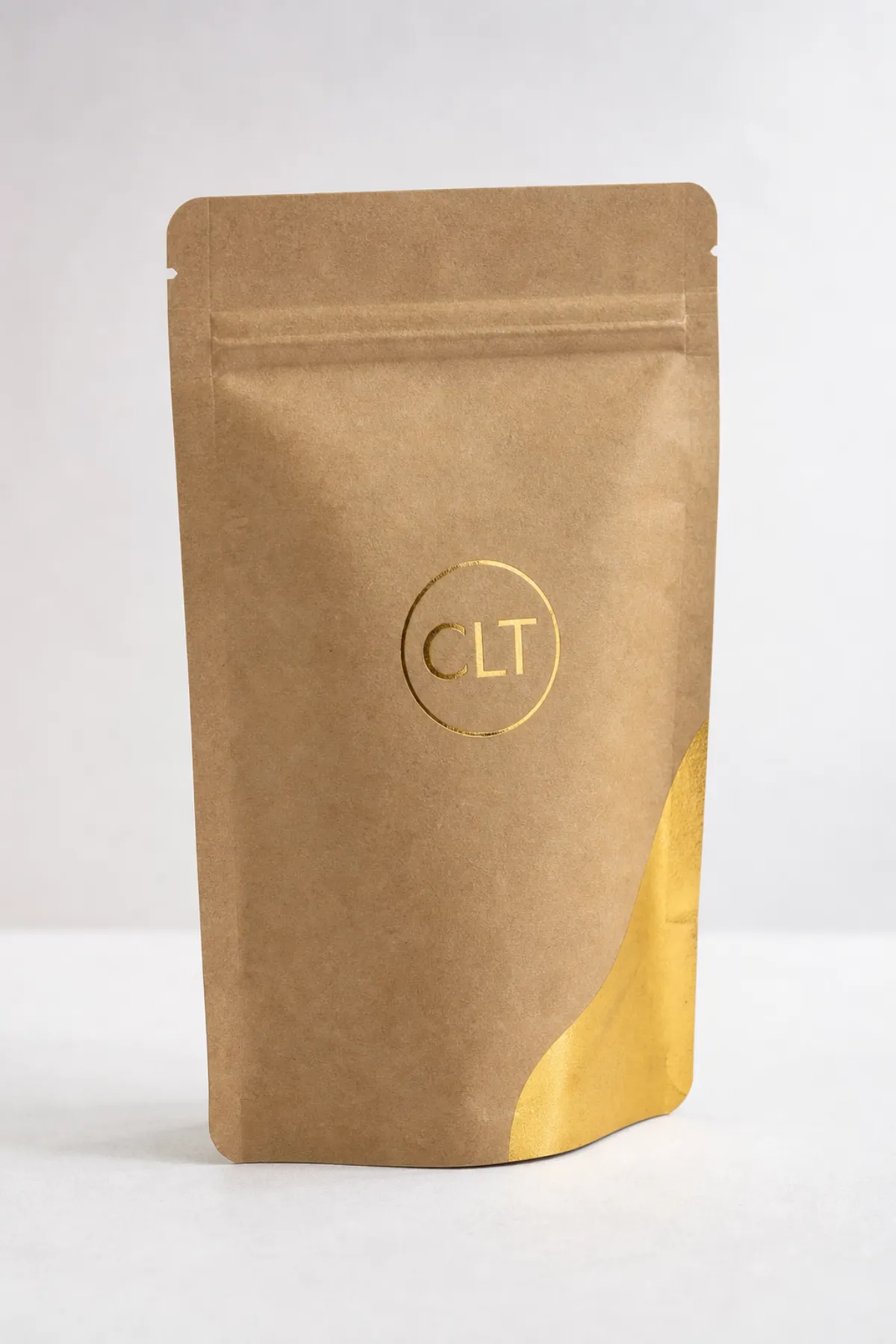
Custom kraft Stand Up Pouches stand out because they feel familiar, honest, and more premium than a plain film pouch. That matters in retail packaging, where a buyer often has only a few seconds to notice what makes one product different from the one beside it. The kraft exterior suggests care, small-batch thinking, and a natural product story before the shopper reads a single line of copy.
That visual cue works especially well for food, wellness, and specialty products. Coffee roasters like the look because it pairs naturally with roasted beans, artisanal language, and dark ink coverage. Tea, granola, protein powders, herbal blends, and pet treats benefit from the same effect. Custom kraft stand up pouches create a broad front panel, so the brand has room for typography, origin details, flavor notes, and compliance information without the pack feeling crowded.
The format is practical too. A stand-up pouch sits upright after filling, which improves shelf presentation and helps during packing, case loading, and shipping. For a buyer, that upright posture is not just cosmetic. It can reduce the chance of products settling awkwardly in the carton, and it gives the retailer a package that is easier to face forward. Custom kraft stand up pouches are one of those formats that make both the shelf and the warehouse easier to manage.
The part that surprises some teams is how sophisticated the structure can be under the kraft surface. A pouch may include a paper exterior, a high-barrier film core, a strong sealant layer, a zipper, a tear notch, and a degassing valve for coffee, all in one build. That is why custom kraft stand up pouches are not decorative props. They are functional product packaging that happens to look warm and organic.
Many brands move toward custom kraft stand up pouches after testing more generic white or clear formats. The pouch feels closer to the product story. It looks less clinical than glossy film and less rigid than a carton, yet it still gives enough space for branded packaging, ingredient callouts, and retailer-required details. That combination tends to read well in person and in photos, which matters more than many buyers expect.
There is also a perception advantage that should not be overlooked. A kraft finish can soften the look of technical products, which helps a new brand feel approachable. It can also make a higher-end product feel less cold and industrial. In package branding, that emotional cue often matters as much as the physical materials, because the shopper is buying with both the eye and the hand.
If your current format feels flat or forgettable, custom kraft stand up pouches can add texture, structure, and shelf presence without forcing a complete rethink of the product. The important thing is matching the pouch construction to the product, not choosing kraft only because it looks appealing in a render.
How custom kraft stand up pouches work
At a structural level, custom kraft stand up pouches usually combine three functions in one build. The outer kraft layer delivers the appearance. The middle barrier layer helps control moisture, oxygen, aroma, or grease migration. The innermost sealant layer allows the pouch to heat seal properly and form a stable package. Those layers may be bonded into a paper-laminate, a foil laminate, or a film-based structure with a kraft-look exterior, depending on the product and shelf-life target.
The stand-up shape comes from the bottom gusset. When the pouch is filled and sealed, that gusset opens into a flat base, which allows the pouch to sit upright. Side seals and top seals matter just as much as the gusset because they affect how the pack holds its shape, how much headspace remains, and how the finished pouch appears in display trays or shipping cartons. Custom kraft stand up pouches that are slightly too narrow or too stiff can stand poorly even when the artwork looks excellent on screen.
Closures change the user experience in a big way. A press-to-close zipper is common for products that are opened and closed repeatedly. Tear notches help the user get into the package cleanly. Hang holes matter for peg displays. Valves are useful for roasted coffee, since fresh coffee releases gas after packing. Child-resistant features are sometimes needed for regulated products. Every feature adds convenience, but it also adds cost and can affect lead time, so custom kraft stand up pouches should be specified with the product journey in mind, not as an afterthought.
Printing is another area where the kraft surface changes the result. Ink on kraft does not behave the same way it does on white film. Dark colors tend to hold up better than pale tones, and heavy ink coverage can mute the natural texture that makes the pouch appealing in the first place. If the design depends on bright color blocks, the team should test color accuracy early. Custom kraft stand up pouches can look premium, but the artwork has to respect the substrate.
The sustainability story needs careful reading too. The word kraft does not automatically mean recyclable or compostable. The actual end-of-life profile depends on the full construction: paper content, plastic layers, adhesives, inks, barrier coatings, and closure parts. A pouch can look paper-like and still be a multi-material laminate. If a brand wants to make recycling or FSC-related claims, the full spec has to support those claims, not just the exterior appearance.
For a solid baseline on packaging terms and flexible-pack structure, the educational material from Packaging School is helpful, and FSC is the right place to confirm paper sourcing standards and certification language.
Custom kraft stand up pouches process and timeline
The cleanest projects start with a spec sheet, not with a vague request for "something natural-looking." Custom kraft stand up pouches need a few decisions before a supplier can quote properly: what the product is, how much it weighs, how long it must stay fresh, what size the pouch should be, how it will be filled, and whether the package needs a zipper, valve, tear notch, hang hole, or special finish. The more complete the starting information, the less room there is for expensive rework later.
A practical workflow usually looks like this:
- Define the product, fill weight, and shelf-life target.
- Choose the pouch dimensions and closure style.
- Select the barrier structure based on moisture, oxygen, grease, or aroma needs.
- Approve artwork and confirm print coverage.
- Review samples or proofs before production.
- Schedule converting, inspection, packing, and shipment.
Lead time depends on how custom the pouch really is. A stock-size pouch with straightforward artwork can move quickly once the proof is approved. A fully custom build with a zipper, valve, special matte finish, or complex graphics usually needs more review time. Artwork revisions are often the biggest hidden delay. Teams may spend more time adjusting panel copy, barcode placement, or ink balance on kraft than they expected, and that is normal.
For simple custom kraft stand up pouches, the timeline may be driven mostly by proof approval and the production queue. For more complex runs, tool setup, print preparation, and material scheduling can stretch the schedule. Add transit time and receiving, and a launch can move from "almost ready" to "we should have started earlier" very quickly. I always suggest leaving enough buffer to test the pouch on the actual filling line before the first commercial run. That is especially true if the pouch has a zipper, because zipper bulk can affect fill speed and seal temperatures.
Line testing is where theory meets reality. A pouch that looks perfect on a mockup may wrinkle under heat, jam in the hopper, or seal unevenly if the product dust is heavy. If you are validating transit performance, the test standards from ISTA are a sensible reference point, especially for e-commerce and wholesale distribution. Custom kraft stand up pouches should be tested the way they will actually be used, not just admired on a desk.
From a packaging buyer's point of view, the best timeline is the one that leaves room for one real sample, one careful review, and one honest conversation about what the line can support. That small amount of discipline usually prevents a much larger delay later, and it often saves a project from avoidable compromise.
Custom kraft stand up pouches cost, MOQ, and pricing
Pricing for custom kraft stand up pouches depends on more variables than many first-time buyers expect. Size matters, of course, but so do total print coverage, number of colors, zipper style, gusset depth, barrier performance, special finishes, valves, hang holes, and whether the order requires custom tooling or a special converting setup. Two pouches that look similar from three feet away can carry very different cost structures once the spec is fully written.
MOQ is one of the biggest levers. Setup costs for print prep, material handling, and converting are spread across the order, so the unit price usually drops as quantity rises. That is why a 2,000-piece order and a 10,000-piece order may feel like different products, even if the bag dimensions are the same. With custom kraft stand up pouches, the most useful quote is not simply the cheapest quote; it is the quote that shows what is driving the cost.
Here is a simple way to think about it:
| Option | Typical build | Usual MOQ | Approx. unit price at 5,000 pieces | Notes |
|---|---|---|---|---|
| Entry-level kraft look | Matte kraft exterior, standard barrier, tear notch, no zipper | 1,000-3,000 | $0.14-$0.24 | Best for dry goods with moderate shelf-life needs |
| Retail-ready zipper pouch | Kraft exterior, press-to-close zipper, stronger barrier, full print | 3,000-5,000 | $0.22-$0.38 | Common for coffee, snacks, tea, and wellness products |
| High-barrier premium build | Kraft exterior, zipper, valve or specialty feature, upgraded film and finish | 5,000+ | $0.35-$0.62 | Often used for aroma-sensitive or higher-value products |
Those ranges are planning numbers, not promises. Final pricing shifts with print coverage, material thickness, and the order quantity. Still, they help a brand avoid bad assumptions. The cheapest custom kraft stand up pouches are not always the best value if they compromise barrier performance, seal strength, or retail appearance. A pouch that loses product freshness can cost far more in returns, complaints, and damaged brand trust than a slightly better build would have cost up front.
Another thing to watch is how suppliers describe the quote. A good quote separates the pouch construction, the decoration, and the add-ons. That makes it easier to compare like for like. It also helps you see whether you are paying for a zipper, a valve, or a special surface finish. If the pricing is bundled too tightly, it becomes hard to tell whether one supplier is truly more efficient or simply quoting a lighter spec.
For brands that also buy Custom Packaging Products such as folding cartons, mailers, or labels, it can be smart to view the pouch in the context of the full package system. Sometimes the best value is not the lowest pouch cost alone, but the pouch that reduces another packaging step or improves shipping efficiency.
Key factors when specifying custom kraft stand up pouches
The first question is always the product itself. Dry snacks, coffee, tea, powders, pet treats, bath salts, and herbal blends do not all behave the same way in a pouch. Some products are oily and can migrate into the structure. Others absorb moisture quickly. Some are fragile and can be crushed by a stiff pack; others are dense and need a stronger bottom gusset. Custom kraft stand up pouches should be selected around the product's actual behavior, not the marketing concept alone.
Size matters just as much. A pouch that is too small forces overfilling, which can create weak seals or zipper issues. A pouch that is too large can look loose, underfilled, or unstable on shelf. The right dimensions depend on fill weight, product density, and the way the product settles after vibration in transit. For example, a 12-ounce roasted coffee blend is very different from 12 ounces of a light, fluffy granola. Both may need custom kraft stand up pouches, but not the same dimensions.
Barrier performance is where many buyers under-specify. The kraft face is attractive, but the inner barrier is what protects freshness. If the product is sensitive to oxygen, humidity, grease migration, or aroma loss, the spec has to reflect that. A snack that goes stale in two weeks on the shelf may need a very different laminate from a pet treat that only needs moderate protection. In other words, custom kraft stand up pouches should be judged by the whole build, not just the outer paper look.
Branding decisions also matter. Matte finishes usually feel more natural, while gloss can make colors pop harder. Windows can help the shopper see the product, but they reduce printable area and may change barrier performance. Writable panels are helpful for small-batch or seasonal products. On kraft, darker type and higher contrast usually read better than pale, thin typography. That is a packaging design detail, but it affects retail performance in a very real way.
Operational details deserve equal attention. Does the pouch need to run on an automatic or semi-automatic filler? What seal temperature window is the equipment already tuned for? Will the pouches be packed into case packs with minimal headspace? Is the display plan a tray, a peg hook, or straight shelf placement? These questions sound small, but they shape the final structure. Custom kraft stand up pouches are at their best when the artwork, the barrier, and the filling line all agree with each other.
If you want a broader packaging baseline, the educational material from Packaging School is a helpful reference for structure and terminology. For paper sourcing language, FSC remains the proper standard to check, especially if the outer kraft layer is part of your sustainability story.
One more practical point: if the pouch is going into both retail packaging and e-commerce, it needs to survive two different journeys. Shelf display is about presentation. Parcel delivery is about abrasion, compression, and impact. Custom kraft stand up pouches can handle both, but only if the spec respects both use cases.
Common mistakes to avoid with custom kraft stand up pouches
The first mistake is treating the kraft face like a sustainability certificate. It is not one. A kraft-looking pouch can be recyclable in one construction, multi-material in another, and well suited to one packaging stream but not another. Custom kraft stand up pouches should only be described with sustainability claims that match the actual material structure and any verified certifications.
The second mistake is choosing a pouch that is too flimsy or too small for the fill. Weak shelf presentation is often the first sign of an underspecified pack, but it is not the only problem. Overfilled custom kraft stand up pouches can strain the zipper, distort the side seals, and create inconsistent headspace, which can hurt shelf life and consumer confidence. The pouch should look full without being stressed.
The third mistake is assuming artwork will behave the same on kraft as it does on a bright white substrate. It will not. Colors can mute. Fine lines can soften. Low-contrast text can disappear into the texture. If the design depends on pale neutrals or delicate gradients, print proofs are essential. Many brands discover too late that their package branding needs more contrast or a different hierarchy to read well on kraft.
A kraft face is a design choice, not a sustainability claim by itself. The full structure, closures, inks, and barrier layers decide how the pouch performs and how it should be described.
The fourth mistake is skipping line testing. A pouch can look terrific in a render and still cause trouble on equipment. Heat seals may need adjustment. Zippers may add resistance on the fill line. Dusty powders may interfere with sealing. I have seen custom kraft stand up pouches perform beautifully in a sample box and then show wrinkle issues on a real production run because nobody tested them at operating speed. That kind of miss is avoidable, but only if someone makes the time for a real trial.
The fifth mistake is rushing the timeline. If MOQ, artwork approval, and production windows are not aligned early, the order can get squeezed. That is frustrating because the solution is often simple: define the spec, review the quote carefully, and leave room for one real proof cycle. The fastest project is usually the one that was specified properly the first time.
There is also a budgeting mistake that shows up often. Buyers compare unit price only and ignore the cost of rejects, rework, or poor shelf appeal. A lower-priced pouch that tears, seals poorly, or looks off-brand can cost more than a better build that runs cleanly. Custom kraft stand up pouches should be bought as a piece of product packaging, not as a commodity line item with no context.
Expert tips and next steps for custom kraft stand up pouches
The best buying decisions start with a clean spec sheet. Before asking for quotes, gather the product name, fill weight, pouch dimensions, target shelf life, closure preference, artwork files, and any special handling notes. If the product is oily, aromatic, moisture-sensitive, or powdery, say so clearly. Custom kraft stand up pouches are far easier to quote and produce when the supplier is not guessing at the application.
Ordering samples or a pilot run is money well spent. A sample lets you judge stiffness, shelf fit, zipper feel, seal appearance, and print contrast in real light, next to the actual product. For branded packaging, that real-world check is hard to replace because screen previews rarely show how kraft texture changes the visual weight of a design. If the pack is meant to support product packaging across retail and e-commerce, test it in both environments before committing to volume.
It also helps to think a step beyond the first order. How often will the artwork need to change? Is the product seasonal? Will the brand add a larger or smaller size later? Can the same pouch structure support a line extension without forcing a redesign? Those questions matter because the smartest custom kraft stand up pouches are the ones that can grow with the brand rather than locking it into one rigid presentation.
One practical habit I recommend is comparing the finished pouch under the same lighting you expect in the store or photo shoot. Kraft can warm up colors, darken text, and alter how metallic accents read. A sample under office lighting can look different from the same pouch on a retail shelf. That is not a defect; it is just how the material behaves. Good packaging design accounts for that behavior instead of fighting it.
If you are building a broader packaging system, keep the pouch aligned with your other formats. The tone of custom kraft stand up pouches should fit the look of your labels, cartons, shipper boxes, and website imagery. That creates a coherent package branding story instead of a collection of disconnected assets. If you need more packaging formats to support the line, Custom Packaging Products can help you plan a consistent family of materials.
Here is the final practical checklist I would use before placing an order:
- Confirm the exact fill weight and product behavior.
- Lock the pouch size before artwork is finalized.
- Choose the barrier level based on shelf-life needs, not appearance.
- Test the closure and seal on your actual line.
- Ask for a quote that separates construction, print, and add-ons.
Custom kraft stand up pouches work best when the spec respects the product, the machine, and the shelf at the same time. If you build them that way, you get the warm kraft look, the stable upright presentation, and the functional protection that buyers expect from serious retail packaging. The practical takeaway is simple: define the product behavior first, choose the barrier second, and let the artwork follow the structure, because that order keeps the pouch honest and the launch on track.
Frequently asked questions
What products work best in custom kraft stand up pouches?
Dry goods with a clear shelf story are a strong fit, including coffee, tea, snacks, powders, bath salts, and pet treats. Products that are oily, aromatic, or sensitive to humidity can still work well, but they usually need a stronger barrier layer and a closure that matches how often the package will be opened. Custom kraft stand up pouches are at their best when the product does not fight the structure.
Are custom kraft stand up pouches recyclable or compostable?
Not automatically. The kraft look does not tell you the full end-of-life story, because the barrier film, sealant, zipper, adhesive system, and ink all matter. Some custom kraft stand up pouches are designed for specific recycling pathways, while others are built for performance first. Always confirm the exact construction and any certification language before making claims on-pack.
How long do custom kraft stand up pouches usually take to produce?
Timing depends on artwork readiness, sample approval, tooling needs, and the complexity of the build. A simple project with final art and a stock-size format can move faster than a pouch with a zipper, valve, special finish, or detailed print requirements. It is smart to leave room for shipping and line testing so the packaging does not become the last-minute bottleneck.
What drives the price of custom kraft stand up pouches the most?
The biggest price drivers are size, quantity, barrier construction, print coverage, and added features such as zippers, tear notches, and valves. MOQ matters because setup and converting costs are spread across the run, which is why unit cost usually falls as volume rises. The clearest quote is the one that breaks out the pouch build, decoration, and add-ons separately.
What should I send when requesting a quote for custom kraft stand up pouches?
Send the product type, fill weight, target dimensions, barrier needs, closure preference, and quantity. If you already have artwork or a rough layout, include that too so the supplier can account for print coverage, branding placement, and any special finishes. If you know your filling method, share that as well, because equipment compatibility can change the best pouch specification.

