Buyer Fit Snapshot
| Best fit | Custom Labels with Foil Stamping projects where brand print, material claims, artwork control, MOQ, and repeat-order consistency need to be specified before quoting. |
|---|---|
| Quote inputs | Share finished size, material target, print colors, finish, packing count, annual reorder estimate, ship-to region, and any compliance wording. |
| Proofing check | Approve dieline scale, logo placement, barcode or warning zones, color tolerance, closure strength, and carton packing before bulk production. |
| Main risk | Vague material claims, crowded artwork, missing packing details, or unclear freight terms can make a low unit price expensive after revisions. |
Fast answer: Custom Labels with Foil Stamping: Material, Adhesive, Artwork, and MOQ should be specified like a repeatable production item. The safest quote records material, print method, finish, artwork proof, packing count, and reorder notes in one written spec.
Production checks before approval
Compare the actual filled-product size with the drawing, then confirm tolerance on folds, seals, hang holes, label areas, and retail display edges. Reserve space for logos, QR codes, warning copy, and material claims before decorative graphics fill the panel.
Quote comparison points
Review material grade, print process, finish, sampling route, tooling charges, carton quantity, and freight assumptions side by side. A quote is only useful when the supplier can repeat the same color, closure quality, and packing count on the next order.
Custom Labels with Foil Stamping: Cost, Process, Tips
On a crowded shelf, custom Labels With Foil stamping can signal premium before a shopper reads a single ingredient line. The eye catches the flash first, then the shape, then the wording. That sequence matters. In category audits I have reviewed over the years, the packages that sell that “expensive” impression fastest are rarely the loudest ones; they are the ones with one disciplined accent placed exactly where the eye lands. For packaging teams trying to improve shelf presence without rebuilding the whole package, custom labels with foil stamping are often the sharpest tool in the box.
Foil stamping looks simple from the outside. Heat, pressure, and a metallic film transfer a reflective layer onto the label surface. The effect is not metallic ink, and it is not a generic glossy coating. It is a distinct physical finish with a cleaner edge and a brighter highlight than most printed substitutes can deliver. A well-made foil mark behaves a little like stage lighting: it directs attention without explaining itself. That is why custom labels with foil stamping tend to feel more deliberate than labels that rely only on color or varnish.
There is a practical reason brands keep returning to this finish. A company can leave the bottle, jar, pouch, or carton alone and still change the way the product reads at retail. That makes custom labels with foil stamping useful for launches, seasonal runs, and premium line extensions where the budget needs to land in the right places. A restrained foil accent can make a system feel tighter and more expensive without turning the whole package into a production puzzle.
The finish only works as well as the planning behind it. Wrong stock, crowded artwork, thin type, or rushed approval can flatten the result fast. A foil detail that looks elegant on screen can turn muddy on textured paper, or disappear into an overworked label face. custom labels with foil stamping deserve the same careful attention as die cutting, adhesive choice, and print registration. The sections that follow break down the process, the pricing math, timeline risks, and the mistakes that create avoidable cost.
Custom Labels with Foil Stamping: What They Are and Why They Stand Out
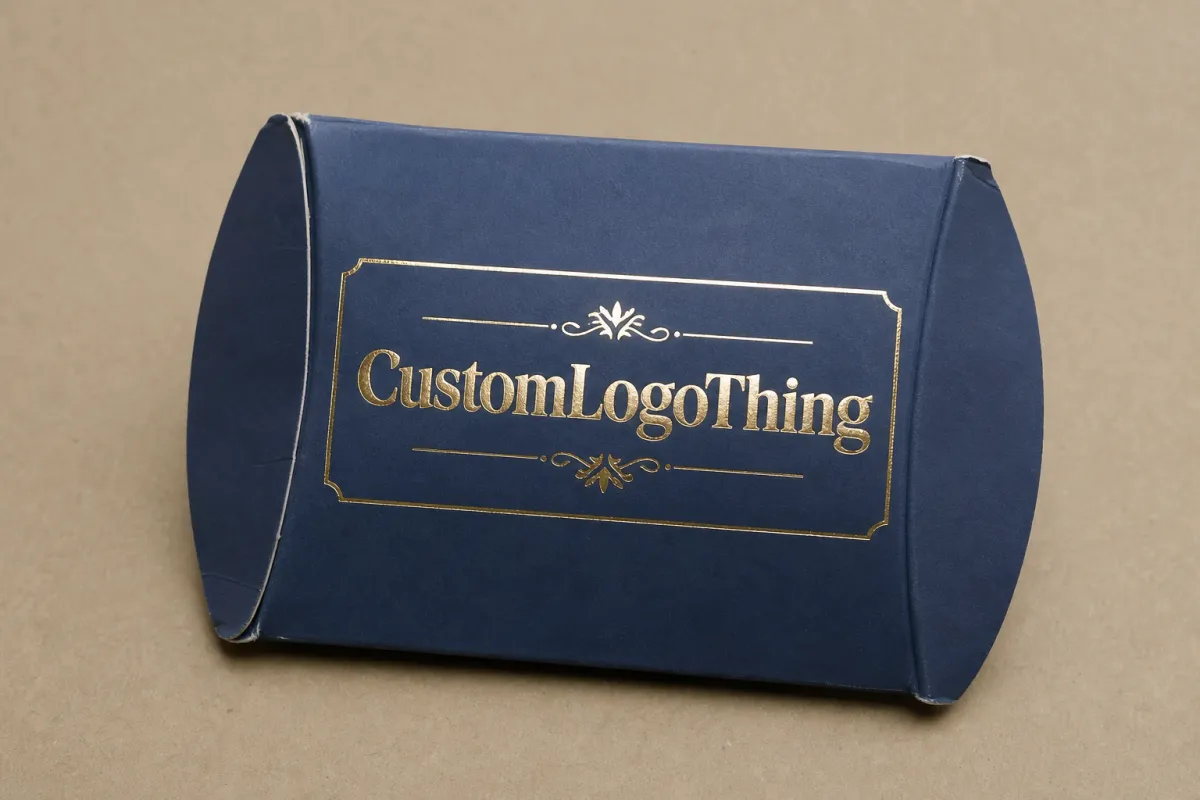
At the simplest level, custom labels with foil stamping are pressure-sensitive labels, sheet labels, or specialty constructions that receive a metallic transfer in chosen areas. The foil usually covers only part of the face. A logo, a product name, a border, a seal, or one graphic detail gets the shine while the rest stays calm. That contrast is the point. The more disciplined the placement, the stronger the effect.
Too many teams treat foil as decoration. That is usually a mistake. Shine without hierarchy can make a label feel loud, while a smaller, more disciplined application can make it feel expensive and confident. custom labels with foil stamping work best when the foil supports the packaging story rather than competing with it. A matte bottle, a clean carton, or a simple label field gives the metallic accent room to matter.
Retail shelves reward speed. A shopper may never study the label closely, yet they still register whether a product feels clinical, natural, technical, festive, or premium. custom labels with foil stamping can tilt that perception because metallic highlights catch ambient light in a way flat inks do not. On glass, film, and coated paper, the finish often reads more dimensional than a printed silver or gold.
Foil only looks premium when the layout behaves. A crowded face turns metallic detail into noise, and noise rarely reads as luxury.
There is also a sourcing advantage. For some brands, custom labels with foil stamping add the premium cue that would otherwise require a heavier carton, a special bottle, or another expensive packaging change. That matters when unit cost, assembly speed, and visual impact all sit at the same table. If you are already ordering Custom Labels & Tags, foil may be the most efficient way to move the item from plain to polished. For broader packaging programs, the finish can coordinate neatly with Custom Packaging Products that share color, texture, or metallic accents.
The finish also works because it changes perception more than it changes structure. The label remains a label. The package remains the package. What shifts is the emotional read. A little light, placed in the right spot, can make the whole product feel more intentional. That is the quiet strength of custom labels with foil stamping: the effect is visible, but the mechanics stay modest.
In practice, I have seen small, well-placed foil marks outperform larger decorative treatments simply because they give the eye a single place to rest. That sounds minor until you are comparing two SKUs from six feet away. The label with a disciplined metallic accent usually wins the first glance.
How the Foil Stamping Process Works on Custom Labels
The production path for custom labels with foil stamping usually begins with artwork prep. Foil areas must be separated from printed elements, stroke widths checked, registration reviewed, and tiny details cleaned up before the job reaches the press. Vector files matter here. Hairline rules, tiny text, and dense border work can all cause trouble if the file is not prepared for the process. Foil rewards clarity and punishes ambiguity.
Once the artwork is approved, the printer or converter produces the die or plate that carries the foil detail. Heat and pressure transfer the metallic layer from the foil roll onto the substrate. The result should be crisp, reflective, and sharply aligned. On custom labels with foil stamping, registration quality is one of the fastest ways to judge whether the job is being handled well. Clean edges signal control. Slight misalignment signals trouble immediately.
Temperature and dwell time matter more than most buyers realize. Too much heat can blur edges or stress the stock. Too little can leave patchy coverage or weak transfer. Paper labels, film labels, and textured stocks each respond differently, which is why the same foil effect can look rich on one material and flat on another. custom labels with foil stamping are not only a design choice; they are a material choice, and that is where real craftsmanship shows up.
The type of foil process matters too. Hot foil stamping uses heat and pressure to transfer the finish and often produces the most tactile result. Cold foil follows a different workflow and may fit certain press setups better. Metallic inks are printed, not stamped, and usually look less reflective. Buyers asking for custom labels with foil stamping are usually after the brighter, more dimensional look that hot foil tends to provide.
After the foil pass, the label may move into die cutting, matrix stripping, slitting, trimming, or rewinding depending on the format. Each step adds another chance for the job to either stay clean or drift. A flawless foil impression can still be undermined by a rough cut or poor rewind tension. custom labels with foil stamping depend on the full production line, not just the shiny part everyone notices first.
Proofing is the checkpoint that saves money later. A digital proof can confirm layout, but it cannot fully predict how foil behaves on the chosen stock. A physical proof on the actual material tells a better story. If the label is part of a matched system with Custom Printed Boxes, sleeves, or inserts, proofing is also where you test whether the metallic tone sits comfortably inside the larger branded packaging system.
One caution here: foil is not a fix for weak artwork. If the original layout is cluttered, the stamp only highlights the clutter. I have watched teams ask for more shine when what they needed was more white space. The press cannot solve hierarchy problems.
Custom Labels with Foil Stamping: Cost, Pricing, and MOQ Factors
Pricing for custom labels with foil stamping comes down to setup, materials, and how much of the label actually gets the foil treatment. A tiny logo accent and a full-face metallic field are two different economic animals. The larger the foil area, the more material and press time the job tends to consume. Add tooling, proofing, stock selection, and finishing, and the price starts to make sense very quickly. “Cheap” and “foil stamped” rarely stay friends for long.
Short runs usually carry a higher unit cost because setup is spread across fewer labels. A 500 to 1,000 piece order with a simple foil accent might land around $0.35 to $0.90 per label, depending on stock and complexity. At 2,500 to 5,000 pieces, a cleaner design on paper or film can often fall closer to $0.12 to $0.32 per label. Larger repeat orders can become more efficient, provided the artwork stays simple and the substrate stays consistent. These are directional ranges, not universal quotes, because every spec sheet has its own physics.
The minimum order quantity matters more than many buyers expect. Some suppliers will print tiny quantities, but the per-piece economics usually improve once setup costs are spread across a few thousand labels. That is why a sample-minded launch often gives way to a more serious production order. custom labels with foil stamping make the most financial sense when quantity matches the business plan rather than the mood board.
| Order profile | Typical setup load | Estimated unit cost | Best fit |
|---|---|---|---|
| 500 to 1,000 labels | Higher, because tooling and press setup are spread thin | $0.35 to $0.90 each | Pilot launches, testing, short promotions |
| 2,500 to 5,000 labels | Moderate; often the best balance of cost and efficiency | $0.12 to $0.32 each | Launch quantities, retail rollouts, seasonal SKUs |
| 10,000+ labels | Lower unit burden if artwork and stock stay consistent | $0.06 to $0.18 each | Repeat products, stable packaging programs |
| Multi-foil or specialty foil | Higher make-ready and more press time | $0.20 to $0.55 each | Premium branding, limited editions, gift products |
The table is a guide, not a quote sheet. Real pricing depends on foil coverage area, number of passes, die complexity, adhesive type, substrate choice, whether the job is roll-fed or sheeted, and whether a varnish or lamination is included. A simple foil die may cost around $100 to $250, while more detailed tooling can run higher. For custom labels with foil stamping, ask directly whether tooling is one-time, reusable, or already included in the unit price.
Quote comparisons deserve a careful read. A lower headline number can hide tooling, freight, proofing, or finishing charges. Two bids for custom labels with foil stamping may look close on paper and still produce very different landed costs. Ask what is included, what is excluded, and what gets charged back if the order changes after proof approval.
- Quoted price: the number you see first, though not always the full cost.
- Tooling: foil die or plate cost, often listed separately.
- Proofing: digital proof only, or a physical proof on the actual stock.
- Finishing: die cutting, slitting, rewinding, trimming, or special coating.
- Freight: easy to understate on paper, expensive to ignore later.
If budget pressure is real, the cleanest move is to restrict foil to the logo, product name, or a single border. That keeps custom labels with foil stamping visually strong while reducing the amount of foil that has to transfer. In many packaging design systems, that one decision keeps the premium cue intact without adding unnecessary cost.
There is another quiet cost factor that gets missed: reprint risk. A design that pushes the process too hard may look affordable at quote stage and expensive after the first quality issue. If the job needs replacements, the true price rises fast. That is one reason I favor conservative foil coverage for first runs.
Lead Time, Proofing, and Production Timeline for Foil Labels
Lead time for custom labels with foil stamping usually runs a little longer than standard printed labels because more checkpoints sit in front of the press. Artwork submission, proofing, die creation, stock confirmation, scheduling, production, and shipping all need room. If the design is already final and the materials are available, a straightforward job may finish in roughly 10 to 15 business days from proof approval. Specialty foils, unusual substrates, or multiple SKUs usually extend that window.
Proof approval is often the variable that decides whether a job stays calm or turns into a scramble. A file can look perfectly fine on a monitor and still contain a border that is too thin, a logo that sits too close to trim, or a type size that feels too delicate once the foil hits the stock. custom labels with foil stamping reward patience at the proof stage. The cost of catching a problem early is far lower than the cost of fixing one after production starts.
Material sourcing can slow the schedule too. Nonstandard stock may need to be ordered in ahead of the run. Specialty foils, clear films, and adhesives for cold, moisture-prone, or textured surfaces can add another layer of timing. None of that is unusual. It just needs to be planned. If the label is tied to a retail packaging launch, a little buffer is worth more than a rushed promise.
Deadlines get messy when the spec keeps moving. Teams lock a launch date, then continue adjusting size, quantity, finish, or application method. The production floor cannot work from moving targets. With custom labels with foil stamping, a complete spec sheet makes the process predictable. A changing spec sheet makes the calendar wobble.
A practical production sequence helps keep the order moving:
- Submit final artwork with foil areas clearly separated.
- Confirm substrate, adhesive, quantity, and application method.
- Approve a digital proof and, if possible, a physical proof.
- Allow time for die making and material procurement.
- Schedule the press run with a buffer before the packaging release date.
If transit durability matters, the ISTA test families are a common reference point for handling and shipment performance. If the label stock is paper-based and sourcing claims matter to the brand, the FSC system is worth checking. Those standards do not change the foil itself, but they help define the larger packaging environment around it.
I would also treat launch timing with a margin of error, not a fantasy schedule. A label order can be technically simple and still get delayed by a missing sign-off, a backordered film, or a last-minute copy change from legal. The foil process is only one part of the calendar.
Choosing the Right Stock, Adhesive, and Foil Finish
The look of custom labels with foil stamping changes dramatically with the stock underneath it. Paper creates a warmer, more classic impression. Film feels cleaner and usually holds up better in demanding environments. Textured stocks add tactility, yet they can make the foil transfer less predictable because the surface is not perfectly flat. If the label has to resist moisture, condensation, or abrasion, the substrate matters as much as the shine.
Adhesive choice belongs in the same conversation. A label for glass does not behave like a label for plastic, and neither behaves like one destined for corrugate or a textured carton panel. Some packages need high tack, some need removability, and some need a specialized adhesive for freezer or cold-chain conditions. custom labels with foil stamping only feel polished when the label stays put during application and survives the real conditions of use.
Foil finish changes the brand voice too. Gold reads warm and classic. Silver feels cooler and more technical. Copper and champagne soften the shine. Holographic foil adds motion and energy, though it can overwhelm a label that already has a busy layout. Matte metallics offer a more restrained premium cue. For custom labels with foil stamping, the best finish usually matches the brand voice instead of simply chasing the brightest swatch.
Print coverage matters more than many teams expect. Dark backgrounds may require a white underprint or a carefully chosen topcoat to keep the foil crisp. Without that support, some metallic finishes look dull or muddy. A simple layout with generous negative space can do the opposite and make even a small foil accent feel expensive. That is one reason package branding teams spend so much time on hierarchy before they ever discuss ornament.
If the launch includes custom printed boxes, hang tags, or secondary cartons, match the metallic tone across the system. A label that says one thing and a carton that says another weakens the overall branded packaging story. Coherence is often what people mean when they say a package feels finished. The label, the box, the insert, and the outer pack should all speak the same visual language.
Embossing belongs in the discussion too, even though it is not the same as foil stamping. On paperboard or specialty tags, embossing adds raised texture that can pair well with metallic detail. For custom labels with foil stamping, true embossing is less common than on cartons, yet the principle still applies: tactile cues can support premium perception when they are used with restraint rather than piled on top of everything else.
The best buying decisions look at the package as a system. Stock, foil, adhesive, application method, storage environment, and shipping route all affect the final result. A beautiful rendering is only a starting point. custom labels with foil stamping should be chosen for the actual product packaging, not just for the mockup.
One practical test I recommend is to ask whether the label still looks intentional under bad lighting. If the finish only works in a polished studio render, the real shelf may expose it quickly. Good packaging survives fluorescent aisles, warehouse handling, and less-than-perfect photography.
Common Mistakes When Ordering Foil Stamped Labels
The first mistake is crowded artwork. Thin foil lines, tiny text, and busy borders can turn into registration headaches before the press even starts. If the design asks for too much detail in too little space, the foil can lose clarity or fail to transfer cleanly. custom labels with foil stamping usually look strongest when the shapes are deliberate, the type is readable, and the shiny areas have room to breathe.
The second mistake is choosing a foil finish from a screen image alone. Foil changes with light, substrate, and viewing angle. A mockup can help with direction, but it cannot show the live effect fully. If you judge custom labels with foil stamping only by a PDF or web image, the actual brightness, warmth, or reflectivity may surprise you once the labels arrive.
The third mistake is skipping a physical proof. That is how teams discover too late that the stock is more textured than expected, the adhesive grabs differently than planned, or the foil tone fights the printed ink. Proofing does not need to happen for every small job, but for important launches it is a smart safeguard. With custom labels with foil stamping, a proof can save time, money, and a fair amount of embarrassment.
The fourth mistake is under-ordering. Short runs are useful for testing, yet if the product sells well, a rushed reorder usually costs more and takes more energy than planning a sensible quantity in the first place. Many teams focus on the first shipment and forget the second. custom labels with foil stamping should be spec’d with the next production cycle in mind whenever possible.
The fifth mistake is ignoring the filling line and storage conditions. A label can look beautiful in hand and still fail if it needs to survive cold storage, fast application, rough handling, or humidity in transit. A good supplier will ask about the package system, not just the face art. If you are buying custom labels with foil stamping, the right questions are about use case, not decoration.
There is also a softer mistake: treating the finish as a substitute for brand thinking. Foil can elevate a package, but it cannot create a clear message out of an unclear one. The label still needs hierarchy, legibility, and a reason to exist beyond shine.
Expert Tips and Next Steps for a Smooth Order
Start with hierarchy. Decide exactly what should get the foil and what should stay quiet. custom labels with foil stamping usually look strongest when the eye has one clear landing point, often the logo or product name, and the rest of the label supports that point without competing with it. If every element is shouting, the premium cue gets diluted.
Build a short pre-quote checklist before sending files out. Include label size, quantity, substrate, adhesive, foil area, finish, application method, and deadline. That one page helps vendors quote accurately and helps you compare apples to apples. For custom labels with foil stamping, it is especially useful to state whether the job is for roll application, hand application, or sheet application, because that changes how the production run is planned.
Ask for a sample or proof on the actual stock whenever possible. The difference between paper, film, and textured surfaces can be wider than expected. If the label must match package branding across a family of products, this step matters even more. The same foil tone can feel warmer on one stock and cooler on another, and that subtle shift can change how the brand reads across a shelf set.
Give yourself a realistic buffer. A launch date on a spreadsheet is not the same thing as a press schedule on a production floor. If the design is new, if multiple SKUs are involved, or if the label needs to sync with custom printed boxes, leave room for proofing and small revisions. custom labels with foil stamping tend to go smoothly when the job is planned with one eye on the calendar and the other on the actual manufacturing steps.
The next step is straightforward: gather exact specs, compare quotes, request a sample if the project justifies it, and confirm timing before committing. If your packaging system includes more than labels, review the label spec alongside your broader Custom Packaging Products so the finish, colors, and materials feel coordinated. That kind of discipline removes noise before it becomes expensive.
Used well, custom labels with foil stamping add polish, lift perceived value, and help a product read like it belongs in a higher tier of retail packaging. The point is not to chase shine for its own sake. The point is to treat custom labels with foil stamping as a controlled finishing choice that fits the stock, the budget, and the production line.
My strongest advice is simple: lock the artwork first, then choose the foil treatment that fits the real product environment. If the label needs to survive moisture, handling, or transport, build around those limits instead of designing for a perfect mockup. That is the difference between a pretty proof and a label that still looks right after it has done its job.
Frequently Asked Questions
How much do custom labels with foil stamping usually cost?
Cost depends on foil coverage, label size, substrate, quantity, and the amount of setup required. Smaller runs usually cost more per label because tooling and press time are spread across fewer pieces. The most accurate way to budget custom labels with foil stamping is to request quotes with the exact artwork, material, and quantity.
What is the typical turnaround for custom labels with foil stamping?
Turnaround depends on proof approval speed, material availability, die making, and press scheduling. Simple jobs move faster, while specialty foils, multiple SKUs, or unusual stocks usually add time. If the label is tied to a launch date, build in extra room so custom labels with foil stamping do not slip past your packaging deadline.
Can custom labels with foil stamping work on film labels?
Yes, as long as the film and adhesive are compatible with the foil process and the package surface. Film labels are often chosen when durability or moisture resistance matters, especially on cold-filled or heavily handled products. A physical proof is the best way to confirm how custom labels with foil stamping look on the selected film stock.
What artwork files are best for foil stamping labels?
Vector files with clean outlines are ideal because they help the die reproduce sharp detail. Foil areas should be separated clearly from printed elements so registration stays accurate. Thin lines, tiny text, and crowded details should be checked carefully before production if you want custom labels with foil stamping to come out crisp.
How do I reduce the cost of foil stamped labels without losing the premium look?
Limit foil to the logo, product name, or a key accent instead of covering large background areas. Choose a standard substrate and keep the design focused so setup and production stay simpler. Order enough quantity to improve the unit cost if the product will be reordered. Done that way, custom labels with foil stamping can still feel premium without stretching the budget.

