Buyer Fit Snapshot
| Best fit | custom leatherette boxes with logo for packaging buyers comparing material specs, print proof, MOQ, unit cost, freight, and repeat-order risk where brand print, material, artwork control, and repeat-order consistency matter. |
|---|---|
| Quote inputs | Share finished size, material target, print colors, finish, packing count, annual reorder estimate, and delivery region. |
| Proofing check | Approve dieline scale, logo placement, barcode or warning zones, color tolerance, and any recyclable or compostable wording before bulk production. |
| Main risk | Vague material claims, crowded artwork, or missing packing details can create delays even when the unit price looks attractive. |
Fast answer: Custom Leatherette Boxes with Logo: Design, Cost, and Use should be specified like a repeatable production item. The safest quote includes material, print method, finish, artwork proof, carton packing, and reorder notes in one written spec.
What to confirm before approving the packaging proof
Check the product dimensions against the actual filled item, not only the sales mockup. Ask for tolerance on folds, seals, hang holes, label areas, and retail display edges. If the package carries a logo, QR code, warning copy, or legal claim, reserve that space before decorative graphics fill the panel.
How to compare quotes without losing quality
Compare board or film grade, print process, finish, sampling route, tooling charges, carton quantity, and freight assumptions side by side. A lower quote is only useful if the supplier can repeat the same color, closure quality, and packing count on the next order.
I’ve stood on enough factory floors in Shenzhen, Dongguan, and Ningbo to know this: custom leatherette Boxes with Logo can sell a product before the customer even touches the item inside. I remember one buyer rejecting a $12 box because the texture felt “cheap” at arm’s length, even though the board was a 2mm grayboard rigid shell and the foil was stamped cleanly at 140°C. Not under a microscope. Not with a loupe. At arm’s length. That is packaging for you. I’ve spent long afternoons in workshops where the smell of adhesive, the squeak of cutting tables, and the thump of stacked rigid shells all blur together, and still the same truth keeps showing up: branded packaging lives or dies by first touch. Custom Leatherette Boxes with logo sit right in that high-stakes zone where product packaging, retail packaging, and package branding all have to pull together without looking like they tried too hard.
At Custom Logo Things, I’ve seen brands use custom leatherette Boxes with Logo for jewelry, watches, spirits, cosmetics, corporate gifts, awards, and launch kits where the box matters almost as much as the product. One jewelry client in Los Angeles moved from a basic folding carton to a rigid leatherette presentation box and saw reorder rates climb because the unboxing felt more deliberate. Honestly, I think that’s the whole appeal. You get the premium look of leather without paying for genuine leather, which is a nice little reality check for anyone who thinks packaging budgets are infinite. They aren’t. A smart packaging design can make a $40 product feel like a $140 one, but only if the materials, logo method, and structure are chosen with a bit of discipline—and a healthy suspicion of “let’s just make it fancy.” That phrase causes trouble more often than it helps.
What Are Custom Leatherette Boxes with Logo?
Custom Leatherette Boxes with logo are rigid boxes wrapped in a leather-look material, usually PU, PVC-free synthetic leather, or textured paper film that mimics leather grain. They’re common in gift packaging and presentation packaging because they feel substantial in the hand. If you’ve ever opened a watch box with a soft, pebbled exterior and a crisp debossed mark on the lid, that was probably one of these. The box is usually built from grayboard or chipboard, then wrapped and finished with a logo application method that fits the brand story. A standard build often uses 1.5mm, 2mm, or 2.5mm grayboard, depending on whether the product is a 120g perfume bottle or a 900g bottle set.
Here’s the part most people miss. “Leatherette” is not one exact material. I’ve handled soft matte PU wraps that felt like a luxury notebook cover, and I’ve also touched grainy wraps that looked great from six feet away but felt plasticky up close. That difference matters. When clients ask for custom leatherette boxes with logo, I always ask whether they want warm and tactile, sleek and modern, or bold and giftable. Those are different builds, not just different colors. A soft-touch PU in black at 0.6mm thickness behaves very differently from a crocodile-grain wrap used on a 320mm watch presentation case. And yes, people often say “premium” like it’s a material spec. It is not. I wish it were that easy.
Brands choose custom leatherette boxes with logo because they deliver premium presence without the cost and maintenance issues of genuine leather. Real leather raises material cost, sourcing complexity, and consistency headaches. One batch can have natural grain variation; the next batch can look different enough to annoy a brand manager with a spreadsheet and a grudge. Leatherette gives you tighter control. For luxury product launches, that control is worth real money, especially when a client wants 5,000 boxes to look like they were all born on the same day. On a run that size, even a $0.15 per unit difference matters, because the total swings by $750 before you’ve added freight from Shanghai or Guangzhou.
“I don’t need the box to be flashy,” one cosmetics client told me in a Shanghai meeting. “I need it to feel expensive when the customer holds it for five seconds.” That line stuck with me because it’s exactly what good custom leatherette boxes with logo do.
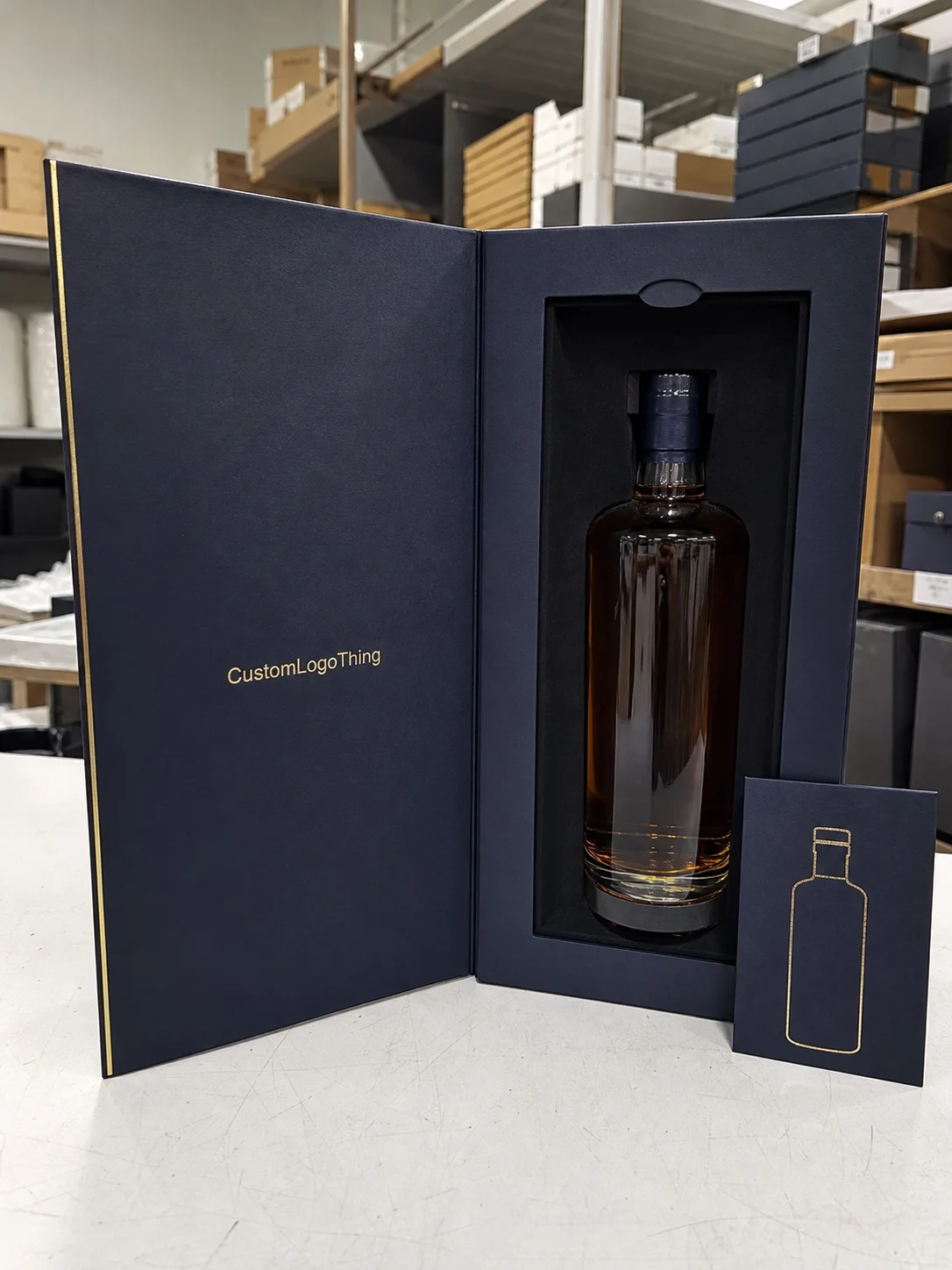
Common uses include jewelry sets, cigar accessories, corporate welcome kits, award presentation cases, perfume gift boxes, bottle presentation boxes, and limited-edition launch packaging. I’ve also seen them used for hotel amenities and private-label electronics where the box needs to sit on a shelf without looking like generic custom printed boxes. If your product needs a premium reveal, custom leatherette boxes with logo usually make sense. In one Dubai hospitality project, a 180mm x 120mm x 45mm amenity box wrapped in taupe leatherette became part of the room experience, not just the storage solution.
“With logo” can mean a few different things, and this is where pricing and appearance diverge fast. The logo may be:
- Blind debossed, pressed into the wrap with no ink or foil.
- Foil stamped, usually gold, silver, black, or rose gold.
- Printed, often screen print or UV print for simpler graphics.
- Metal plated, attached to the lid for a heavier luxury feel.
- Sewn patch, more common on soft presentation cases or hybrid builds.
Each method changes the look, durability, and unit cost. A blind deboss on black PU can add only a few cents to a run of 5,000 pieces, while a custom brass logo plate can add $0.35 to $1.20 per unit depending on finish and attachment method. That matters because a nice logo is not the same as a logo that survives shipping, handling, and retail use.
If you’re comparing options, I usually point buyers to Custom Packaging Products for structure ideas first. Start with the box style, then pick the finish. Too many people do that backward and end up paying for a fancy finish on a structure that doesn’t fit the product properly. Cute. Expensive. Wrong.
How Custom Leatherette Boxes with Logo Are Made
Making custom leatherette boxes with logo is not mysterious, but it does involve more steps than most buyers expect. The process usually starts with rigid board cutting in a packaging factory in Dongguan, Shenzhen, or Huizhou. A grayboard sheet, often 1.5mm to 3mm thick depending on box size and product weight, is die-cut or CNC-cut into the box structure. Then the wrap material is laminated to the board, corners are wrapped, and the outer shell is pressed and dried so it stays square. After that comes the logo application, lining, insert assembly, and final quality control. On a standard run, the shell glue stage alone may take 2 to 4 minutes per unit when the line is set up properly.
I’ve watched workers in our Shenzhen facility wrap corners on a stack of 500 rigid shells, and the speed is impressive until one edge starts lifting. Then the whole line stops. That’s packaging reality. A 2mm glue misalignment can ruin a thousand boxes if nobody catches it early. When buyers think custom leatherette boxes with logo are “just boxes,” I usually smile and ask them if they’ve ever paid to rework a pallet of 3,000 units. Silence follows. A very meaningful silence, too. Rework on a batch that size can add three to five business days and turn a clean FOB quote into a costly headache.
Logo methods affect both appearance and cost. Foil stamping gives strong contrast and a polished finish, especially on darker leatherette surfaces. It’s popular for custom leatherette boxes with logo because it reads as premium even from a distance. A gold foil on a deep navy PU lid, for example, can look excellent under retail lighting when the die is heated to around 130°C to 145°C. Blind deboss is more subtle. The logo is pressed into the material without foil or ink, which gives a refined, understated look. It also tends to wear better over time because there’s no printed layer to scuff off. Screen printing or UV printing is usually better for graphic marks or higher-color logos, but it won’t always feel as luxurious on textured wrap.
Material choice changes the result a lot. A textured leatherette can hide minor handling marks and fingerprints. A smooth PU wrap gives a cleaner modern look but can show flaws faster if the glue or edge folds are sloppy. Specialty grain finishes, like crocodile pattern or fine pebble emboss, create a stronger tactile identity. I’ve seen premium whiskey launches in Edinburgh use a dark brown croc-grain wrap with a gold foil logo, and the box did half the selling before the bottle got out. That’s not poetry. That’s shelf performance. A 350gsm C1S artboard wrap on the inner liner can also help keep the structure crisp without adding too much weight.
Lead time usually follows a simple chain: sample development, dieline approval, pre-production proofing, mass production, and shipping. A basic prototype might take 5 to 7 business days if the structure is simple and the logo is one-color foil. A production run typically takes 12 to 15 business days from proof approval for standard quantities of 1,000 to 5,000 pieces, while complex inserts or mixed materials can stretch it to 18 to 22 business days. International freight is its own creature. If you need a date tied to a launch or trade show, pad the schedule. I’ve seen an eight-day air delay ruin a product reveal. The box arrived after the bottles. That was a fun conversation I’d rather not repeat.
Factory realities matter too. Minimum order quantities can be 300, 500, or 1,000 pieces depending on structure and finish. One-color logos often cost less because setup time is lower and the press work is simpler. Multiple logo hits, custom interior printing, magnetic closure alignment, and shaped inserts all add setup time. Machines don’t care about your brand mood board. They care about setup efficiency, foil temperature, and whether the press operator wants a second coffee. A factory in Guangzhou may turn a basic deboss run in less than two weeks, while a boutique workshop in Foshan may need a little longer for hand-wrapped corners.
Key Factors That Affect Custom Leatherette Boxes with Logo Pricing
Custom leatherette boxes with logo pricing is driven by six main things: size, board thickness, wrap material, logo method, insert complexity, and finishing. If any one of those changes, the quote moves. That’s not suppliers being tricky. That’s manufacturing. A 100mm square box with a paper insert is not the same cost as a 320mm rigid presentation case with EVA foam, ribbon pull, and interior print. In most Shenzhen production quotes, the jump from a simple lid-and-base box to a magnet-closure two-piece presentation box can add 20% to 35% before freight.
Let’s talk real numbers, because vague pricing is useless. For a small run of custom leatherette boxes with logo, you might see pricing in the $2.80 to $5.50 per unit range for a simple rigid structure with one-color deboss and a basic paper insert, depending on dimensions and quantity. Move into magnet closures, custom foam, or metallic foil, and the number can jump to $4.50 to $9.00 per unit fast. For a larger order of 5,000 pieces with a straightforward 2mm grayboard structure, a single debossed logo, and no special insert, some suppliers can get close to the low end of that range, but not for a fully finished rigid box. Smaller runs of 300 to 500 units usually land higher per piece because tooling, setup, and labor get spread over fewer boxes. That’s just math wearing a nice jacket.
I once quoted a 750-unit corporate gift program where the client wanted a leatherette lid, magnetic closure, interior printing, and a foam insert with a satin ribbon pull. The first quote came back at $6.42 per unit FOB Shenzhen. When we simplified the insert and switched from foil to blind deboss, it dropped to $4.85. Same brand impression. Less drama. Less cash burned. That’s the sort of packaging design decision that keeps finance people from sending passive-aggressive emails. The client approved proof on a Tuesday and the finished goods were ready 13 business days later, which is exactly the kind of timing that saves a launch calendar.
| Option | Typical unit price range | Visual impact | Durability | Best use |
|---|---|---|---|---|
| Blind deboss on textured leatherette | $2.80–$4.80 | Subtle, premium | High | Watches, jewelry, executive gifts |
| Foil stamp on smooth PU | $3.20–$6.20 | Strong contrast | Medium to high | Cosmetics, launches, spirits |
| Metal logo plate | $4.50–$9.00 | Very premium | High | Luxury product packaging, awards |
| Printed logo with custom foam insert | $3.80–$7.50 | Clean, functional | Medium | Tech gifts, sampling kits |
Inside printing adds more than people expect. Even a simple one-color interior mark can increase labor and raise spoilage risk if the board surface is textured or uneven. Magnet closures also add cost because they require embedded hardware and tighter alignment. A ribbon pull is cheap in isolation, maybe $0.05 to $0.20 per unit, but the labor to place it can add more than the ribbon itself. Custom foam inserts are another budget line. EVA foam usually costs more than basic paperboard, and die-cut trays add tooling time. If you want a velvet insert in a 250mm presentation box, expect the unit cost to move up another 10% to 18% depending on the factory in Ningbo or Dongguan.
Freight and duties are the sneaky line items. I’ve seen buyers celebrate a $3.60 unit price and then get hit with shipping, customs clearance, and inland delivery that added 18% to the landed cost. Sample charges matter too. A sample might be $45 to $150 depending on structure, logo method, and whether the supplier uses stock materials or produces a custom proof. If a factory like Shunho or Shenzhen Yuto is quoting through a larger production system, the math can change again because their process, capacity, and finishing equipment are different from a small converter. A local shop may quote higher on unit price but lower on communication friction. Sometimes that matters more than the last six cents.
Also, packaging standards can affect cost and performance. For shipping, some brands want ISTA-style testing for drop and transit protection. That’s smart if the box is part of the e-commerce experience or includes fragile items. If you need guidance, the International Safe Transit Association has useful resources at ista.org. And if sustainability matters, the FSC program at fsc.org is worth checking for paper-based components. I’ve worked with buyers who asked for FSC-certified board and then forgot to mention it until after samples. That mistake costs time. Sometimes a full week, sometimes ten business days if the supplier has to source alternate board from another mill in Zhejiang.
For material sourcing and environmental claims, the EPA has practical packaging waste information at epa.gov. No, that won’t make your box prettier. It will help you make fewer claims you can’t back up.
How to Order Custom Leatherette Boxes with Logo Step by Step
If you want custom leatherette boxes with logo done right, start with the product, not the box fantasy. Measure the item first. Write down length, width, height, and whether it needs extra clearance for fabric, caps, cables, or accessories. Then decide if the box is for retail display, gifting, or storage. A retail box needs shelf presence. A gift box needs reveal and feel. A storage box needs structure and protection. If the product weighs 380g, that number matters because it affects board thickness and magnet strength.
The next step is to request a dieline. A dieline is the box template. It shows the exact dimensions, folds, and glue flaps. Send your logo artwork in vector format if you have it. AI, EPS, or PDF works best. If your brand has Pantone targets, include them. If not, send a physical color reference, because “dark navy” means wildly different things depending on who is looking at it. Also send product photos or a reference box if you already have one. That can save two revision rounds immediately. A complete brief often cuts the sampling cycle from 7 days to 4 or 5 days in a well-run factory.
When I worked on a premium spirits launch, the client sent a mood board and nothing else. Nice mood board. Completely useless for manufacturing. We had to wait three days for actual bottle dimensions, closure height, and insert depth. That lost us almost a week because the first dieline was wrong by 4mm. Four millimeters. Packaging people care about the number because 4mm can decide whether the lid sits flush or bows at the corners. Nobody wants a bowing lid on custom leatherette boxes with logo. It looks cheap. Fast.
Here’s the usual proofing sequence I recommend:
- Digital mockup — supplier places your logo on the box render.
- Physical sample — you check material, color, structure, and fit.
- Correction round — you fix any errors, often one to three small changes.
- Pre-production signoff — final approval before bulk run.
Timeline planning should be honest, not optimistic. A simple project for custom leatherette boxes with logo might go like this: 2 to 4 days for quote and structure confirmation, 5 to 7 business days for sampling, 1 to 2 days for revisions, 12 to 15 business days from proof approval for production on standard quantities, and 5 to 30 days for shipping depending on air or sea freight. If you have a trade show, launch date, or holiday window, tell the supplier up front. The box can be beautiful or it can be late. Late boxes are just expensive cardboard with regret attached.
One more practical point. Lock the print method before asking suppliers to compare quotes. If one vendor quotes blind deboss and another quotes foil stamp, the numbers will not be apples to apples. Same with inserts. A paper tray, EVA foam tray, and molded pulp tray are not the same thing. Buyers waste time pretending they are. They aren’t. A Shenzhen supplier may also quote faster if you already know whether the wrap is PU leatherette or paper-based imitation leather.
Common Mistakes When Ordering Custom Leatherette Boxes with Logo
The most common mistake with custom leatherette boxes with logo is choosing a logo method that looks gorgeous on a monitor and then falls apart in real life. Thin foil lines can crack on textured wrap. Very fine text can disappear on grainy leatherette. A beautifully embossed mark can become too subtle if the lighting is poor or the color contrast is weak. I’ve seen buyers approve a logo that looked elegant in a mockup, then discover it became almost invisible on the actual material. That is not a small issue. It’s a brand visibility problem, especially on 50-piece boutique runs where every box is handled by a salesperson in a store in Austin or Milan.
Another classic mistake is vague sizing. “It should fit the product” is not a measurement. It’s a wish. And wishes do not protect glass bottles. I’ve had a client send a luxury watch that needed a cushion tray, but the inside cavity was only 1.5mm larger than the watch case. The first sample looked fine until we tried closing the lid with the pillow inserted. Suddenly the box popped open at the corner. Expensive lesson. Avoidable, too. A proper fit check should include at least 2mm to 3mm clearance for inserts, depending on the product’s finish and the type of lining used.
People also approve a sample without checking closure strength, insert friction, and corner wrapping. Those three details are where a lot of custom leatherette boxes with logo fail. If the magnet is too weak, the lid opens in transit. If the insert is too tight, the product scratches during removal. If the corner wrap is sloppy, the box starts lifting after a few openings. Pretty samples can hide weak build quality. That’s why I always ask to open and close the box at least twenty times during a sample review. If it creaks, bulges, or peels, keep talking. A 20-cycle test in the office can reveal more than a glossy presentation ever will.
Then there’s overdesign. Too many colors, mixed finishes, metallic accents, internal prints, and complex closures often bloat price without improving shelf impact. Brands love the idea of “something special.” I get that. But special does not always mean better. A blind deboss on textured leatherette can look more expensive than a five-color printed lid with three foils and a velvet insert. Yes, really. Simpler often wins because it feels intentional, and it often keeps the unit cost closer to $3.25 instead of pushing it past $7.00.
One buyer told me, “The prettiest sample is useless if it takes 18 seconds to pack by hand.” He was right. On a 20,000-unit run, 18 seconds is not a detail. It is a labor bill.
That packing-time issue is one I still bring up in client meetings. A box that takes too long to assemble slows the line and increases labor. If the insert requires too much manual placement, your unit cost rises even if the quote looks good on paper. A supplier can quote a low price for custom leatherette boxes with logo, but if it takes two operators to assemble each box, the real cost lands elsewhere. Usually in your margin.
Expert Tips for Better Custom Leatherette Boxes with Logo
Test the logo on real swatches before you commit to a full production run. I mean actual leatherette samples, not a digital proof. Light hits texture differently. A gold foil that looks rich on screen can read brassy on a deep brown grain. A black deboss can disappear if the surface is too matte. For premium brands, that testing step is cheap insurance. It might cost $20 to $60 in sampling materials and save a whole batch from looking off. I’ve had that happen, and nobody enjoys the email that starts with “the foil looks a bit different than expected.” Bit different is doing a lot of work there.
If you want a cleaner long-term wear pattern, blind deboss or subtle foil is usually the safer play for custom leatherette boxes with logo. Heavy color printing can chip at the corners after repeated handling. Metal plates look great, but they add weight and can dent if the box gets knocked around. I like them for awards and high-end corporate gifting, especially when the interior is foam-lined and the product is static. For retail product packaging that will be handled often, subtle is often smarter. My opinion? Fancy should still be practical. Otherwise it’s just expensive decoration pretending to be packaging.
Pick insert material based on product weight and breakage risk. For a perfume bottle, EVA foam gives strong grip. For a jewelry set, velvet-covered paperboard gives a softer unboxing feel. For a watch, a cushion insert works well, but only if the strap sizing is right. The insert should protect the product without turning the box into a wrestling match. If customers have to fight the packaging, they won’t admire it. They’ll just be annoyed. A 3mm EVA cutout can hold a fragrance bottle neatly, while a 1.2mm folded paper tray may be enough for lighter accessories.
Here are cost-saving moves I use when clients want premium results without a bloated budget:
- Use standard board sizes instead of custom oversized panels.
- Reduce the number of unique box SKUs.
- Keep the closure system simple unless the product truly needs magnets.
- Choose one logo placement instead of multiple sides.
- Use a single insert material across the range where possible.
On the quality side, inspect corner folds, logo alignment, and glue bleed on every sample. I’ve seen glue seep through on light-colored wraps and create permanent marks near the spine. I’ve also seen logo placement drift by 2mm, which sounds tiny until you put six boxes side by side under store lighting. Then it looks sloppy. A good factory will catch this. A mediocre one will call it “within tolerance” and hope you stop looking. I never stop looking, which, depending on the day, is either a professional habit or a mild personality flaw.
Two factory-side habits separate decent suppliers from the ones you can trust. First, they check the first five pieces from a run before continuing. Second, they compare the foil plate or emboss die against the approved artwork instead of “close enough.” Those are not glamorous checks. They are the reason a shipment doesn’t turn into a warehouse headache. In a well-run plant outside Suzhou, I’ve seen operators pause every 25 units to check lid alignment and magnet seating, and that discipline saves money later.
If you’re buying for a product line, think like a packaging manager, not a decorator. Custom leatherette boxes with logo should protect the item, reinforce the brand, and be practical to produce at scale. That balance is what keeps reorders smooth and margins alive, whether you’re ordering 500 units for a boutique rollout or 10,000 units for a regional retail program.
Next Steps for Ordering Custom Leatherette Boxes with Logo
Start with the product in hand. Measure it, weigh it, and decide whether the box is for retail, gifting, or storage. If the product is fragile, note where the stress points are. If it’s a bottle, measure neck height and cap diameter. If it’s jewelry, check whether you need a tray, pillow, or insert cutout. Those details will shape the custom leatherette boxes with logo specification before a supplier even starts quoting. A 220g product and a 620g product do not belong in the same box spec, even if they share a logo.
Then do these three things:
- Request a dieline for the exact structure you want.
- Gather logo files and brand color targets.
- Ask for sample photos and a quote breakdown that shows material, printing, assembly, and freight separately.
Compare at least two suppliers on structure, finish, lead time, and landed cost. Not unit price alone. I’ve seen buyers obsess over a 17-cent difference and then ignore a 28% freight increase. That is not savings. That is self-sabotage with spreadsheets. A lower quote can be worse if the supplier has weak communication, slow sampling, or sloppy QC. Sometimes the “more expensive” factory is cheaper by the time the boxes land in your warehouse, especially if the first supplier needs two extra proof rounds and a third round of corrections.
If your launch date is fixed or the product value is high, run a pilot order first. Even 200 to 300 units can reveal problems with logo contrast, closure strength, insert fit, and assembly speed. It’s a lot easier to correct those issues before a full run than after 10,000 boxes are already packed. I’ve had clients thank me later for insisting on a pilot. I’ve also had a few ignore that advice and then call me from a warehouse in panic mode. Predictable, honestly.
Done well, custom leatherette boxes with logo should do three jobs at once: protect the product, match the brand, and make production sense. If any one of those fails, the box is costing you more than it should. If all three line up, you get Packaging That Actually helps sell the item. That’s the goal. Not just a pretty box. A box that earns its keep.
FAQs
How much do custom leatherette boxes with logo usually cost per unit?
Price depends on size, quantity, logo method, and insert complexity, so small runs cost much more per box than larger runs. For simple custom leatherette boxes with logo, I usually see numbers starting around $2.80 to $5.50 per unit, while more complex builds with magnets, foam, or metal plates can land higher. On a 5,000-piece order, some simplified components can come in at about $0.15 per unit, but a fully finished rigid box will usually sit far above that. Ask for separate lines for unit cost, sample cost, tooling, and freight so you can compare quotes fairly.
What is the best logo method for custom leatherette boxes with logo?
Blind deboss and foil stamping are the most popular options because they look premium without making the box feel overworked. Deboss works especially well on textured wraps, while foil gives stronger visual contrast on darker surfaces. If the box will be handled a lot, choose a logo method that resists scuffing and edge wear better than a heavy printed layer. For a black PU lid in a retail program, a 1-color deboss often holds up better than a large metallic print.
How long does production take for custom leatherette boxes with logo?
Sample development usually comes first, then approval, then production, then shipping. Simple structures move faster, while custom inserts, special finishes, and logo testing add time. A realistic schedule often runs 5 to 7 business days for a sample and 12 to 15 business days from proof approval for production, not counting freight. Build extra time in if you need revision rounds or international shipping, especially if your boxes are coming from Shenzhen to Chicago or Rotterdam.
Can custom leatherette boxes with logo be reused or recycled?
They are often reusable because rigid boxes hold shape well and look good after opening. Recyclability depends on the board, wrap, adhesive, and any metal or foam components. If sustainability matters, ask for fewer mixed materials and simpler inserts. FSC-certified paper components can help, but you still need to check the full build, especially if the box includes magnets or PU wrap.
What should I send a supplier for an accurate quote on custom leatherette boxes with logo?
Send product dimensions, target quantity, logo artwork, preferred box style, and insert requirements. Include reference photos or a sample box if you have one, because “premium” means different things to different factories. Ask for a breakdown of material, printing, assembly, and shipping so there are no mystery charges hiding in the final invoice. If you can, include target board thickness, such as 2mm grayboard, and any color standard like Pantone 296C.