Custom Logo Clothing Tags b2b sourcing looks small on a purchase order. Then the first proof lands, and a two-cent component is suddenly tied to brand perception, compliance, freight timing, and whether a launch stays on schedule. That is the part many buyers learn after the fact. A tag is tiny, but on a garment rail or in a carton pack, it can change how the product reads in seconds.
From a packaging and trim buyer’s point of view, the real task is not just ordering tags. It is coordinating Custom Logo Clothing tags b2b sourcing with the garment schedule so the label supports production instead of slowing it down. The same logic applies across branded packaging, retail packaging, and package branding: the smallest component often carries the biggest expectation.
Why custom clothing tags are a bigger sourcing decision than they look
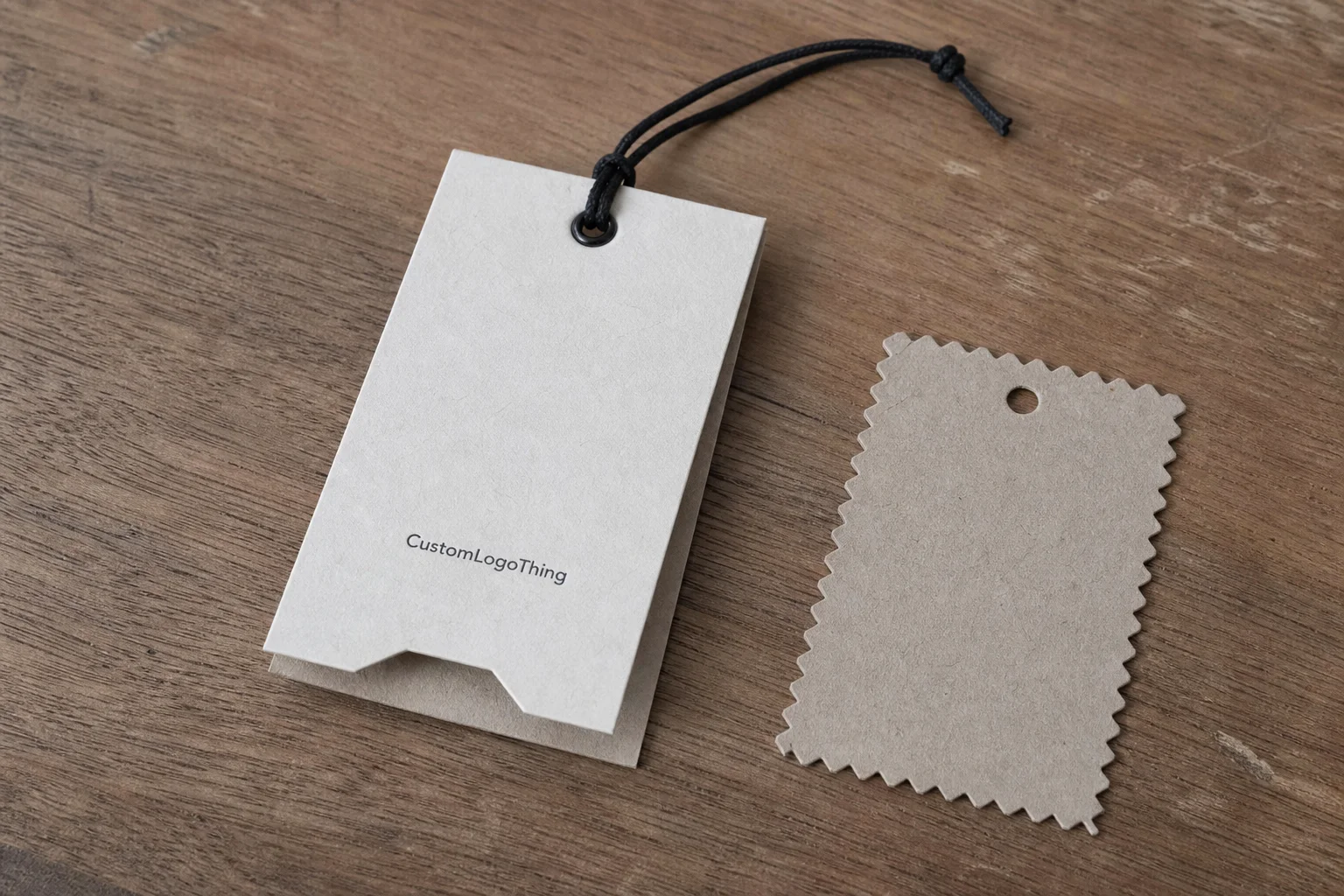
Buyers sometimes treat tags as an afterthought. That is a mistake. Hang tags, woven labels, printed satin labels, size labels, and care labels are part of the commercial product, not decoration. They affect first impression, legal compliance, inventory planning, and sometimes margin. If a tag run is late, the shirt may be finished but not shippable.
Custom Logo Clothing Tags b2b sourcing sits at the intersection of design and operations. Visual details matter—logo placement, typography, finish, and color accuracy—but the practical side matters just as much. A premium cotton tee may need a soft woven neck label; an activewear piece may be better served by a heat-transfer label or low-profile printed care tag. One format rarely suits every category.
In most apparel programs, tag sourcing includes some mix of the following:
- Hang tags for branding, price presentation, and SKU identification
- Woven labels for premium branding and long-wear durability
- Printed labels on satin, cotton, nylon, or recycled substrates
- Size labels for retail sorting and fulfillment
- Care labels for wash instructions, fiber content, and origin data
- Special finishes such as foil stamping, embossing, spot UV, or die-cut shapes
The buyer’s challenge is straightforward to describe and harder to execute: balance brand impact, durability, and supplier reliability across multiple SKUs. If you also manage Custom Labels & Tags alongside Custom Packaging Products, the coordination load rises quickly. Labels and packaging need to land in the same production window, or one delay starts to ripple through the rest of the line.
“A tag is not just a tag. It is a small piece of product packaging that tells the buyer whether the brand is premium, organized, and ready for retail.”
That is why experienced teams treat tag sourcing like a small procurement project rather than a quick reorder. They ask about Specs, Lead Times, compliance, and freight early. Not after artwork has already been approved.
How the sourcing process works from brief to delivery
The workflow is familiar, but the details decide whether the order runs cleanly. First comes the inquiry. The buyer sends artwork, quantity, target ship date, and intended use case: apparel, accessories, athletic wear, babywear, or a private-label retail program. The supplier then translates that brief into materials, dimensions, print method, finishing, and MOQ.
The quoting stage should answer more than unit price. A proper quote reflects substrate choice, print coverage, attachment style, finishing, packaging format, and whether the job needs a custom die or special color matching. If the quote feels vague, the supplier is still making assumptions.
Then comes proofing or sampling. This is where many orders slow down. The buyer approves logo placement, Pantone targets, fold style, hole position, or sewn-in attachment method. For care and compliance labels, legal copy should be checked at this stage too. Fiber content, country of origin, and washing instructions are not cosmetic details; they are part of retail readiness.
In bulk orders, the process becomes more operational. Larger runs may require a production proof, formal sample signoff, and tighter tolerance control. Smaller runs can move faster, but they often carry a higher unit cost because setup is spread across fewer pieces. That tradeoff is normal.
Communication cadence matters more than many buyers expect. A supplier can produce the right label and still miss the launch if the buyer responds three days late to every proof. Equally, a buyer can approve a mockup too quickly and discover that the tag size overwhelms the garment collar or the attachment method damages the fabric.
For teams comparing suppliers, one rule holds up well: if communication is unclear before the order, it usually gets worse after the order. That is why many brands formalize their custom logo clothing tags b2b sourcing process with a standard spec sheet and a side-by-side quote template.
Cost, pricing, and MOQ factors that change your quote
Pricing for clothing tags is driven by a small set of variables that interact in messy ways. Material type matters. So does print complexity, finishing, order quantity, and packaging format. A simple one-color printed satin label is a different job from a gold-foil hang tag with embossing, rounded corners, and string attachment.
In practical terms, unit cost usually falls as volume rises. That is true across most label and packaging categories. But landed cost can tell a different story once setup, sampling, freight, and customs are added. A low unit price with expensive shipping can end up costlier than a slightly higher quoted unit price from a closer supplier.
| Option | Typical use | Usual MOQ behavior | Common price pressure points |
|---|---|---|---|
| Printed satin labels | Soft-touch apparel, fashion basics | Often lower than woven options | Print coverage, size, edge finish |
| Woven labels | Premium branding, durable garments | Often moderate to higher | Thread count, weave detail, color count |
| Recycled paper hang tags | Retail apparel, eco-positioned brands | Usually flexible, depending on finish | Thickness, die-cutting, foil, stringing |
| Specialty embossed or foil-pressed tags | Luxury, premium retail packaging | Often higher due to setup | Tooling, finish complexity, waste rate |
MOQ is where many startups and mid-size brands feel the pressure. A brand with five colorways and three garment types may think it needs one label run, then discover it actually needs fifteen variants. That multiplies cost quickly. Established brands face a different problem: they want to consolidate multiple SKUs, but the supplier’s production rules may not allow too many versions in a single line run without extra setup.
Ask about hidden costs early. These are the ones that distort quote comparisons if they stay buried in email threads:
- Art setup or prepress charges
- Sampling fees for physical proofs
- Rush fees for shorter production windows
- Color matching charges when Pantone control is tight
- Split shipment costs for partial deliveries
- Freight and duties for imported orders
For reference, simple printed tags can land in the low cents per unit at volume, while specialty finishes can climb much higher depending on material and labor intensity. The right question is not “What is the cheapest tag?” It is “What is the true cost per sellable unit once the garment is packed, labeled, and ready to move?”
That is where retail packaging thinking helps. A tag may be cheap on its own, but if it slows packing, increases errors, or looks inconsistent beside the rest of the package branding, the hidden cost shows up later in returns, rework, or buyer complaints.
Key specs to lock before you request samples
Before you request samples, lock the spec sheet. Otherwise, you are sampling assumptions instead of product. A complete spec should include dimensions, fold type, substrate, thickness, print sides, attachment method, and finish. That sounds basic, but incomplete briefs are one of the most common reasons orders bounce back with revisions.
Durability should match garment use. A fashion blouse tag behaves differently from a children’s hoodie tag or a running jacket label. If the item will be washed repeatedly, exposed to abrasion, or worn against skin, material choice becomes a comfort and performance decision. Printed satin, nylon, cotton, and woven polyester all behave differently once they are attached to the garment.
Brand consistency is another pressure point. Pantone targets matter more than many buyers expect, especially for brands that use a precise palette across packaging design, custom printed boxes, and tags. A color shift that looks minor on screen can make a premium line look off-brand on shelf. Typography, logo clear space, and edge finishing should all be treated as part of the brand system, not as afterthoughts.
Compliance can be the dealbreaker. Apparel tags often need fiber content, care instructions, and country of origin. Depending on market and channel, retail packaging rules may also influence what appears on the hang tag versus the sewn-in label. If you sell through marketplaces or major retail accounts, the documentation expectations can be stricter than a direct-to-consumer launch.
Sustainability choices now influence sourcing decisions too. Buyers increasingly ask for recycled paper, FSC-certified stock, organic cotton, low-impact inks, and reduced-plastic packaging. For brands building a greener story, that can align the label with wider package branding. For a neutral reference point on certified fiber and paper sourcing, the FSC site is useful: FSC.
Two practical details get overlooked often:
- Attachment method should match the garment and packing line. A tag string that looks fine in a mockup may slow manual packing.
- Final trim size should be checked against the actual garment, not only the artwork file. Small labels can read too tiny once sewn or folded.
When buyers ask for samples with these specs already settled, they save time and cut revision loops. More important, they get samples that tell the truth about the finished item.
Production steps and lead time: what happens after approval
Once the proof is approved, the work shifts from design to execution. The typical sequence is file lock, material prep, printing or weaving, cutting, finishing, assembly, packing, and dispatch. On paper, that sounds straightforward. In reality, lead time depends on the method, quantity, seasonality, and whether the job needs custom tooling or special finishing.
Sample turnaround and bulk turnaround are not the same timeline. A sample may be ready faster because the supplier can run a smaller test batch, while bulk production waits for full material allocation. Buyers sometimes assume the sample date automatically carries over to the full order. It usually does not.
For common B2B label orders, a straightforward production run may take around 12 to 15 business days from proof approval, but more complex items can take longer. Woven labels with tight color matching, specialty papers with foil, or orders with multiple SKUs can easily extend that window. Add shipping, and the calendar gets longer still.
Quality control should not be an afterthought. Good suppliers check color consistency, trim accuracy, fold uniformity, count verification, and packaging integrity before dispatch. If the labels are part of a larger retail packaging program, they may also be checked against the carton pack plan so the right variant reaches the right style code.
Shipping adds its own variables. Domestic transit can be predictable, while overseas shipments can be affected by customs clearance, port delays, or documentation errors. If the tags are tied to a launch date, build buffer time into the plan. A three-day freight delay can be harmless in midseason and disastrous before a product drop.
Production time is only one part of lead time. Artwork revisions, approval lag, packing, freight, and import clearance all sit on the timeline. That is why mature teams plan tag procurement alongside the rest of the trim stack, including hangers, stickers, boxes, and inserts from their Wholesale Programs.
For anyone trying to keep quality expectations aligned with transit reality, the packaging world offers a useful analogy. Like carton testing under ISTA methods for shipping readiness, label production is safest when you assume the item will experience handling, compression, and friction before it reaches the customer. ISTA’s testing framework is worth reviewing for broader pack-out thinking: ISTA.
Common sourcing mistakes that create delays or reorders
The biggest mistakes are usually boring ones. That is what makes them expensive. Incomplete artwork files, vague sizing instructions, and missing legal copy cause quote revisions and production delays far more often than dramatic supplier failures do.
Approving a sample without testing it on the final garment is another classic problem. A label may look perfect flat on a proof sheet, then feel scratchy on neck skin, drape badly on a lightweight tee, or interfere with a seam once attached. If the final garment differs in fabric weight or construction from the sample, the result can mislead you.
Chasing the lowest price can also backfire. If a tag fades, frays, warps, or looks cheap under retail lighting, the brand pays for that mistake later. That is especially true in premium retail packaging, where one weak component can drag down the perceived value of the whole product. It is a little like using a luxury box with a flimsy insert: the mismatch is obvious immediately.
Underestimating MOQ is another frequent trap. A brand planning multiple SKUs, colorways, or seasonal drops may find that each variation needs its own label version. That can turn a manageable order into a fragmented series of small runs, which increases setup cost and administrative effort. If you are building a label system across styles, think in batches and reuse where possible.
One more issue: buyers sometimes delay compliance checks until after production starts. That is backwards. Packaging and labeling requirements should be settled before the purchase order is released, not after the supplier has already booked materials. A last-minute change can trigger reprints, added freight, or partial shipments.
Most reorder pain comes from preventable ambiguity. Clean specs, tested samples, and a realistic schedule are boring tools. They also save the most money.
Expert buying steps for better supplier comparison and launch readiness
If you want a cleaner supplier comparison, start with a simple scorecard. Track unit price, setup fee, MOQ, sample policy, lead time, materials, and communication speed in one place. A spreadsheet sounds basic, but it cuts through the noise when three suppliers all say they can “do it cheaper.” Cheaper on what basis?
Ask for more than a flat mockup. A physical sample, or at least a photo proof with garment application, tells you much more about scale, feel, and visual impact than artwork alone. For woven or printed labels, ask how the edges are finished. For hang tags, request the actual paper weight and coating. If a supplier cannot tell you whether the stock is 300gsm, 350gsm, or something similar, they may not be controlling the spec tightly enough.
You should also confirm ownership of corrections. If the proof is approved incorrectly, who pays for the rerun? If the color needs a small adjustment, who handles prepress? Good suppliers define this upfront. Weak suppliers leave the issue vague until there is a problem.
Planning tag procurement alongside trims and packaging is another sign of a mature operation. The best launches do not treat tags as a lonely purchase order. They sit inside a coordinated product packaging schedule with cartons, inserts, price stickers, and shipping materials. That reduces the odds of one component arriving early and another arriving late.
For buyers building a brand with more texture than a basic white box, the label is part of the packaging story. It should feel aligned with custom printed boxes, folded inserts, and the garment itself. That cohesion is what shoppers interpret as polish. It is not magic. It is consistency.
If you are tightening your process, a few practical steps usually deliver the quickest gains:
- Audit your current label spec and remove ambiguity
- Gather artwork files in editable and print-ready formats
- Set a target budget with a realistic freight allowance
- Request multiple quotes in the same format
- Match label selection to garment use, not just design preference
- Build label timing into the broader production calendar
That is the difference between reactive buying and controlled sourcing. In custom logo clothing tags b2b sourcing, control comes from specificity, not optimism.
It also helps to think across the full packaging system, from tags to product packaging to shelf-facing presentation. When the pieces are aligned, the brand feels intentional. When they are not, the customer notices in under a second.
What should I include when sourcing custom logo clothing tags B2B?
Include artwork files, dimensions, material preference, fold style, attachment method, quantity, and required compliance text. Add your target launch date too, because lead time only matters if it fits the production calendar.
How do I compare quotes for custom logo clothing tags sourcing?
Compare unit price, setup fees, sampling costs, freight, MOQ, and turnaround time rather than looking at price alone. Also check whether color matching, revisions, and packaging are included or billed separately.
What is a normal MOQ for clothing tags in B2B orders?
MOQ varies by material and process. Simpler printed tags often come with lower quantities than woven or specialty-finish options. Ask whether the supplier can combine multiple SKUs into one run to improve volume efficiency.
How long does production usually take after approval?
Timing depends on method, quantity, and finishing complexity, but sample approval and bulk production are usually separate timelines. Build in extra time for artwork revisions, shipping, and any customs or import delays.
What mistakes most often hurt tag quality or brand consistency?
The biggest issues are weak file prep, unclear specs, skipping sample checks, and choosing materials that do not match the garment use case. A second common problem is approving color or finish from a screen instead of a physical proof.
If you are tightening your process for custom logo clothing tags b2b sourcing, the safest approach is simple: define the spec, compare suppliers on the same terms, and protect the timeline with enough buffer to absorb real-world delays. That keeps the tags aligned with the garment, the brand, and the launch.


