Custom Logo Clothing tags china factory sourcing only works well when the tag is treated as a product component, not a last-minute branding add-on. The logo matters, but so do hand feel, wash durability, edge finish, and whether the tag can be reproduced exactly six months later without drifting in color or cut.
What a custom logo clothing tags China factory really handles
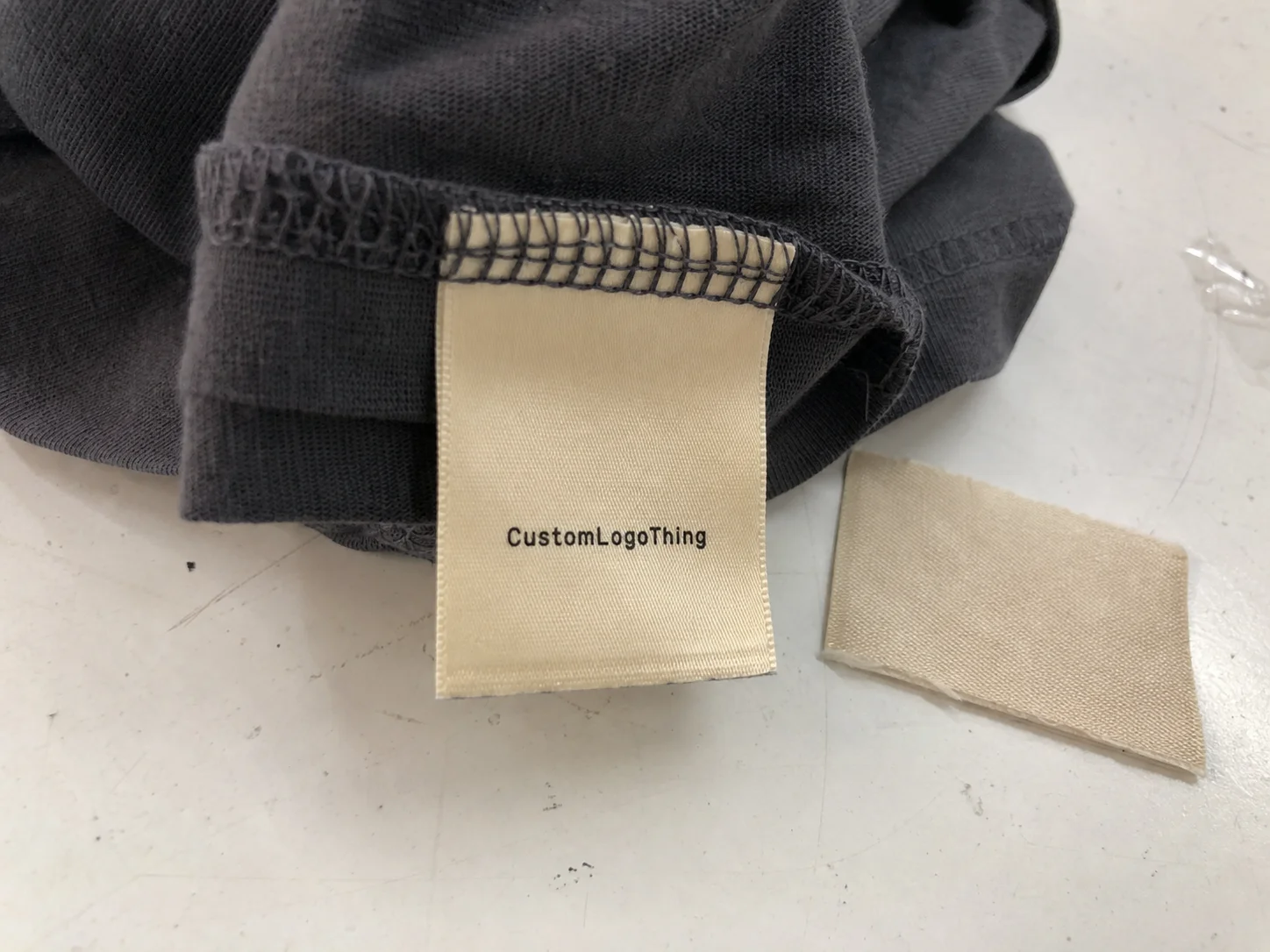
A Custom Logo Clothing Tags China factory does more than print or weave a brand mark. Its real job is to translate a design into a repeatable production spec that can survive sewing, packing, shipping, and repeated use. If that sounds unglamorous, it is. It is also where most label failures start.
The tag has to fit the garment, not just the artwork. A woven label that looks sharp on a jacket can feel too stiff on a knit tee. A printed satin care label may be ideal for a soft interior seam, while a heat-transfer label makes more sense for tag-free athletic wear. Hang tags are different again: they sit outside the garment and carry retail information, so paper stock, coating, stringing, and die-cut quality matter more than wash durability.
Most customer complaints about clothing tags are not really logo issues. They are specification issues. The edge is scratchy. The text is too small. The contrast disappears on dark fabric. The adhesive leaves residue. The label shrinks, curls, or becomes unreadable after a few wash cycles. If the factory does not ask the right questions at the quote stage, the buyer often discovers the problem only after bulk production.
That is why the first decision should be use case, not decoration. A premium garment line usually needs a different solution than workwear, childrenswear, or activewear. The same logo can be built as a woven damask label, a printed satin label, a heat-transfer care tag, or a paper hang tag, but each version behaves differently once it is attached to the garment. If your launch also includes broader branded packaging, it helps to coordinate labels with Custom Labels & Tags and the rest of your Custom Packaging Products so the presentation stays consistent.
A good tag should feel like part of the garment. If it becomes noticeable for the wrong reason, the spec was wrong long before production was.
How tags are made from artwork to finished labels
A Custom Logo Clothing Tags China factory usually starts with artwork, but a logo file by itself is not enough. The useful input is a production-ready brief: finished dimensions, fold style, material preference, color count, attachment method, and the exact wording that must appear in small type. Without those details, a quote can look reasonable while the finished label comes back wrong.
The factory then turns that brief into a digital proof, a loom setup, or a print file depending on the product. That stage matters more than many buyers expect. Fine lines that look clean in a vector file can blur if the weave is too loose. Tiny care text can collapse if the print area is too narrow. Pantone values can drift if the substrate is not suited to the selected ink or yarn. A capable supplier will flag those risks before sampling rather than after a failed bulk run.
The first physical sample is where real judgment begins. Screen proofs cannot show texture, edge softness, fold accuracy, glue coverage, or how the label feels against skin. If the tag will sit at the neck, ask someone to wear it for a few hours. If the label twists under stitching, that shows up in the hand sample too. Those checks sound small, but they often prevent large returns later.
The production path usually follows a steady sequence: material prep, printing or weaving, cutting, finishing, inspection, and packing. The details vary by product type, but the control points do not. For woven labels, density and edge trim matter. For printed satin, ink coverage and text clarity matter. For hang tags, paper stock, coating, hole punch quality, and stringing are the points worth inspecting. None of that is flashy. All of it affects how the finished garment is perceived on the rack.
Pricing, MOQ, and unit cost drivers
Pricing from a custom logo clothing tags China factory is usually driven by a short list of variables: material, size, color count, fold complexity, backing, finish, and quantity. Every extra production step adds handling or setup. A simple printed satin neck label can cost far less than a woven damask label with a folded edge and custom packing, even if both carry the same logo.
MOQ follows the same logic. A lower minimum order quantity is useful for testing, but the unit price often rises because setup costs are spread across fewer pieces. Larger runs reduce per-unit cost, yet they also tie up inventory cash. For many apparel buyers, the useful question is not “What is the lowest MOQ?” but “What MOQ matches the sales curve for this style without creating dead stock?”
Quote comparison is where pricing confusion starts. One supplier may include sampling, setup, and shipping to the warehouse. Another may quote only the label price and leave the rest for later. On paper, the second quote looks cheaper. In reality, it may be incomplete. Ask for a landed comparison whenever possible, especially if the tag order is part of a broader packaging launch.
| Tag type | Typical MOQ | Typical unit price | Main cost drivers | Best use |
|---|---|---|---|---|
| Woven damask label | 1,000-5,000 pcs | $0.08-$0.22 | Color count, weave density, fold style | Apparel that needs a premium finish |
| Printed satin label | 500-5,000 pcs | $0.05-$0.14 | Print coverage, text size, cut method | Soft-feel inner labels and care labels |
| Heat-transfer tag | 1,000-3,000 pcs | $0.12-$0.30 | Ink layers, application clarity, durability testing | Tag-free comfort on skin-facing garments |
| Paper hang tag | 500-10,000 pcs | $0.03-$0.18 | Stock, coating, die cut, stringing, finishing | Retail presentation and product information |
Hidden costs matter as much as the unit price. Artwork revisions, rush fees, upgraded packing, and reorders after a poor proof approval can erase the savings from a lower quote. If the supplier cannot explain those items cleanly, the quote is incomplete. For paper-based hang tags, ask whether the stock is FSC-certified if that claim matters to your retail packaging story. For transit or shipper testing, ISTA standards are useful when tags ship with finished goods in cartons, and FSC certification is the right reference when paper sourcing claims appear on the packaging brief.
Production steps and lead time from proof to shipment
The process is straightforward on paper: inquiry, spec review, price confirmation, proof approval, sample or strike-off, bulk run, inspection, and shipment. A custom logo clothing tags China factory that understands apparel work should be able to describe each stage without hiding behind vague language. If the supplier cannot explain where delays usually happen, it is a sign the process is not well controlled.
Lead time changes most often at the proof and sample stages. If the artwork is incomplete, the fold style is undecided, or the text is too small to print cleanly, the sample cycle stretches. One revision round is normal. Two or three usually means the spec was underdefined from the start. The cleanest jobs begin with a complete brief and a single approval path.
Sample timing and bulk timing should be treated separately. A sample can be ready fast, but that does not guarantee a fast finished order. Bulk production still needs weaving, printing, cutting, finishing, inspection, and packing. Shipping adds another clock. Air courier, air freight, and sea freight can change the total delivery window more than the factory schedule does.
A realistic timeline for a straightforward order is 2-5 business days for a digital proof, 5-10 business days for a sample, and 10-20 business days for bulk production. Complex woven labels or large hang tag runs can take longer. If the factory is in peak season or the material is not in stock, expect the schedule to stretch. Buyers who build in a buffer usually avoid the worst rush fees.
Material, finish, and compliance choices that change the result
Material choice determines how the tag feels before it determines how it looks. Woven damask gives fine detail and a cleaner brand presentation. Satin feels softer and is common for inner labels and care labels. Cotton has a natural texture and a less polished look. Tyvek is lightweight and practical for temporary or utility use. Paper Hang Tags can be uncoated, matte, gloss, or specialty stock depending on the brand position of the garment.
Finish matters just as much. Heat-cut edges work well on many synthetic labels. Ultrasonic cutting can produce a cleaner sealed edge on certain materials. A matte surface often reads more restrained and premium on minimal apparel. Gloss can make retail tags stand out more sharply. Stitching, adhesive backing, and heat-transfer application change the way a label behaves in use, so the finish should match the garment and not just the mockup.
Compliance deserves attention before proof approval. Care labels usually need fiber content, country of origin, wash symbols, and market-specific wording. The exact format depends on the destination market, and the buyer should confirm the language and symbol set before production starts. That is not decorative detail. It affects customs, retail acceptance, and consumer trust.
Different product categories demand different compromises. Activewear often benefits from heat-transfer labeling to reduce irritation. Childrenswear needs softer touch materials and careful symbol placement. Luxury fashion can justify a tighter weave, richer hand feel, and more refined edge finish. Workwear usually prioritizes durability and legibility over delicate presentation. The right choice is rarely universal.
Quality control checks that prevent expensive mistakes
Quality control is where a good supplier separates itself from a merely cheap one. The first check is dimensional accuracy. Measure the actual finished size, not the artwork size. A label that is off by just a few millimeters may still be acceptable on a mockup, but it can look uneven once sewn into a seam or folded into a package.
Color control is next. Ask how the factory checks against Pantone references and whether the approved sample becomes the master for future runs. On woven labels, a slight shift in yarn tone can change the whole appearance. On printed tags, ink density and drying consistency matter. Dark garments expose weak contrast quickly, especially after repeated wash cycles.
For inner labels and heat-transfer tags, durability testing is not optional if the garment will be washed often. Ask whether the supplier can simulate wash wear, adhesion failure, or ink fade. A simple rub test, stretch test, and wash check often reveal more than a polished sales sample does. The goal is not perfect laboratory data. It is catching weak points before they reach customers.
Packing checks are overlooked more often than they should be. Count per bundle, carton marks, moisture protection, and reorder codes all matter when a buyer needs to identify a repeat run months later. If the packing method changes between orders, the labels can still be technically correct and still create confusion at receiving. That usually costs time at the warehouse, which is a preventable expense.
Common ordering mistakes that create delays or rework
Sending only a logo file is one of the most common mistakes. A custom logo clothing tags China factory still needs finished dimensions, fold direction, quantity, attachment method, and material preference. Without those details, the factory has to guess. Guessing is expensive once a job moves into sampling or bulk production.
The second mistake is approving a proof too quickly. Tiny text, care symbols, and edge contrast are easy to overlook on a screen, but they become obvious in the finished tag. That is especially true on black fabric, stretch knit garments, and products that will be washed frequently. A layout that looks balanced in a PDF can become unreadable once it is reduced to real size.
Another recurring problem is ignoring the garment itself. A tag that looks sharp on white paper may disappear against a patterned textile or feel rough against the neck. Buyers who test the tag against the real garment usually catch those issues earlier. The same logic applies to broader product packaging: the design has to work on the actual substrate, not just in the mockup.
Operational mistakes create delays too. Clear packing instructions matter. So do reorder codes, carton marks, and response deadlines. If the sample stage drags out, the production slot may close and the order slides back in the queue. That is not a factory mystery. It is a planning failure.
Expert tips for cleaner artwork, faster approvals, and better repeat orders
Build one master spec sheet per product line. It sounds ordinary, but it prevents a surprising amount of rework. Lock in dimensions, fold style, colors, placement, and attachment method so every reorder follows the same rules. Once the spec is stable, the factory can quote more accurately and the brand can keep the look consistent across seasons.
Ask for a real-garment test if the tag will touch skin. Flat samples on paper do not tell you how a woven edge feels after an hour of wear. They also do not tell you whether a heat-transfer label survives washing or whether a satin label twists after sewing. Comfort and durability belong in the design brief, not outside it.
Before proofing, confirm Pantone references, minimum text size, and logo clear space. That helps the factory produce a cleaner proof and reduces revisions caused by details that were too small to survive production. If the tag sits inside a larger brand system, keep the label palette aligned with the rest of the retail packaging so the product line feels deliberate instead of assembled from separate decisions.
Keep the approved sample, photos, and final file set together. Future orders should not depend on memory or a long email trail. The best repeat orders are boring in a useful way: same spec, same approval, same result. That is what makes a supplier relationship worthwhile over time.
Next steps before you request a quote
Before asking for pricing, gather the essentials: logo artwork, finished dimensions, tag type, quantity, garment category, attachment method, and target delivery date. If you already know the wash environment, skin-contact requirement, or retail presentation needs, add those too. The more complete the brief, the less likely the first proof will miss the mark.
Request two or three quotes using the same spec sheet. That way you compare like with like instead of comparing guesses. Ask each supplier whether the quote includes sampling, setup, packing, and shipping terms. If you are also ordering custom printed boxes or other branded packaging for the same launch, line up the schedule so the components arrive together instead of in separate waves.
Ask for sample photos or a strike-off before bulk production, and confirm what changes are allowed after proof approval. Then compare the approved sample against the quote one last time for material, adhesive, packing method, and reorder code. That discipline pays off most on the second and third order, not the first.
For most apparel buyers, the right goal is not finding the cheapest custom logo clothing tags China factory. The better goal is finding one that can hold the same spec, the same finish, and the same result every time the line is reordered. That is what keeps a garment looking consistent on the rack and after the customer takes it home.
How do I compare a clothing tag factory in China before ordering?
Compare suppliers on the same spec sheet so price, material, and lead time are truly comparable. Ask for sample photos, the proof approval flow, and whether setup or shipping is included in the quote. Check how clearly they explain MOQ, finishing options, and revision limits before you commit.
What artwork should I send to a custom logo clothing tag factory?
Send a vector file when possible, plus the finished size, color references, and any text that must appear on the tag. Include the garment type and attachment method so the factory can recommend a practical material and fold. If you have compliance copy, provide it in final form so small text and symbols are not guessed during proofing.
What affects MOQ and unit cost the most for clothing tags?
Material choice, color count, fold complexity, and special finishing usually have the biggest effect on unit cost. Smaller quantities often carry a higher per-unit price because setup costs are spread across fewer pieces. Ask whether sampling, plates, tooling, and freight are included so the real landed cost is easier to judge.
How long does sampling and production usually take?
Sampling is usually faster than bulk production, but it can take longer if the artwork is incomplete or needs revision. Bulk lead time depends on quantity, material availability, and the number of finishing steps required. Shipping method can change the total timeline as much as manufacturing speed, so confirm transit time separately.
What should I confirm before approving a reorder?
Confirm that the saved artwork, dimensions, and fold style match the original approved sample. Check for any supplier changes in material, adhesive, or packing that could affect the final look or feel. Review the reorder against the first production run so the repeat order stays consistent.


