Most sample problems with headwear are small enough to miss on a screen and big enough to annoy every person who touches the final order. The patch sits a little low. The knit relaxes more than expected. The thread color looks right in a studio photo and flat in daylight. A good logo patch Beanies Sample Checklist catches those issues before bulk production turns a minor miss into a carton full of product that is technically correct and commercially awkward.
That is the real job. You are not just approving artwork. You are approving how the logo patch behaves on a soft, curved, wearable item that stretches, creases, and changes shape every time someone pulls it on. A patch can look centered flat on a table and drift once the beanie is worn. A backing can seem tidy in a mockup and press uncomfortably against the forehead. Those are not edge cases. They are normal headwear problems.
What a logo patch beanies sample checklist should cover
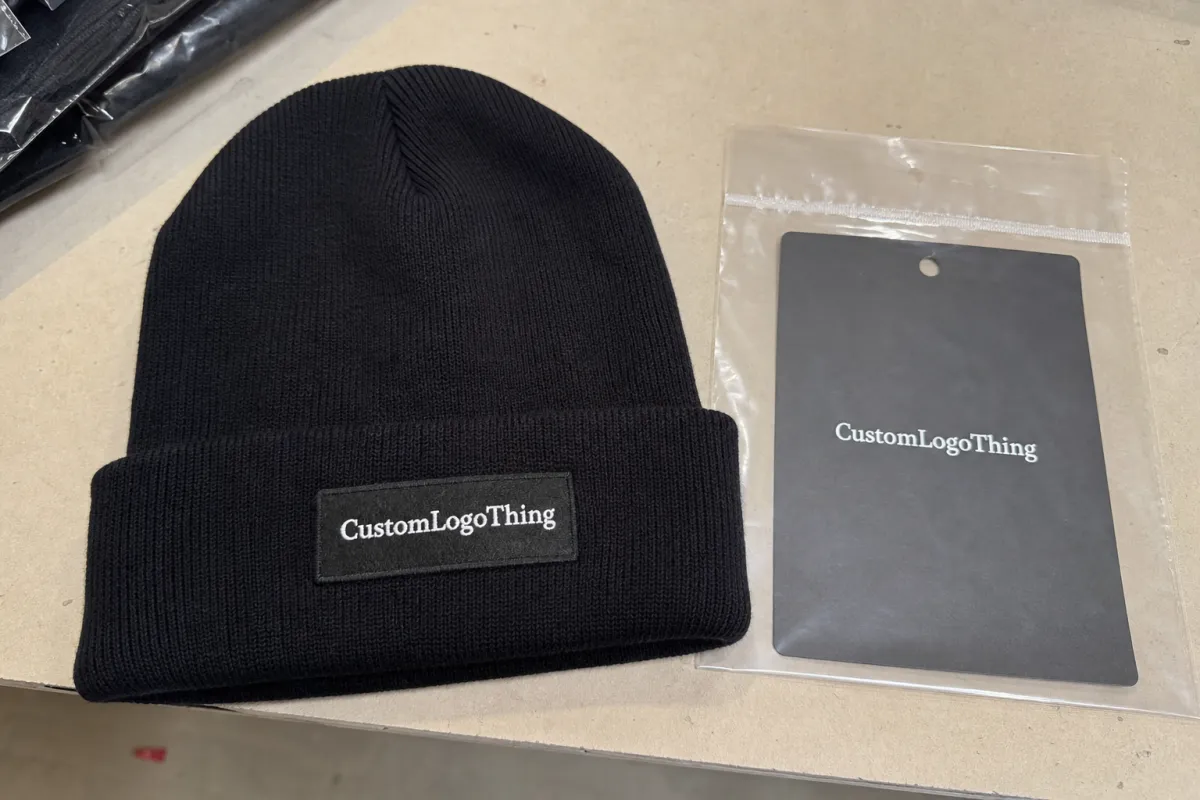
A proper Logo Patch Beanies sample checklist is a pre-production approval tool, not a ceremonial form. It should confirm patch size, logo clarity, knit stretch, edge finish, placement, backing type, and packaging expectations before anyone commits to bulk. If the checklist only says "looks good," it is not a checklist. It is a note to self, and those are poor control documents.
Beanies are difficult because the surface is not flat and the garment is rarely static. A patch that looks perfectly aligned on a render can tilt on rib knit. A thick backing may hold shape well in isolation and still feel stiff once the beanie is worn. Even a clean logo can lose legibility if the patch is oversized for the cuff or undersized for the crown. The geometry matters more than most buyers expect.
From a buyer's point of view, the useful mindset is simple: approve performance, not just appearance. That means checking the logo patch on the actual beanie body, under real stretch, with the exact yarn, backing, and placement the factory intends to use in bulk. If the sample is only examined as a flat object, the approval is incomplete.
Good checklist items usually include:
- Patch dimensions and shape tolerance, usually within 1-2 mm on small badges and 2-3 mm on larger ones.
- Logo readability at arm's length, not only in a close-up photo.
- Patch centering against the cuff, fold, seam, or other agreed reference point.
- Thread density, edge finish, and any loose fibers, lifting corners, or uneven borders.
- Backing type, such as sew-on, heat-applied, adhesive-assisted, or stitched-through construction.
- Packaging notes, including polybag size, insert cards, barcode labels, carton marks, and folding direction.
- Material declarations for the body, such as 100% acrylic, 100% organic cotton, 80/20 acrylic-wool blends, or recycled polyester where the product spec requires it.
- Compliance references where relevant, such as OEKO-TEX Standard 100 for yarns and trims, GOTS for organic cotton, GRS for recycled content, WRAP, or BSCI for factory social compliance.
If the order will ship retail-ready, packaging belongs on the checklist from the start. People often approve a solid sample and then discover the hangtag blocks the patch, the fold crushes the logo, or the label lands where the retailer does not want it. The approved sample should match the final use case, not an idealized version of it.
For transit-heavy programs, it helps to think like a tester. Headwear gets compressed, stacked, handled, and repacked more than a flat patch ever will. Packaging standards from groups such as ISTA are useful references if you want the product to survive movement instead of just looking good on a shelf.
How the patch sample process works from mockup to approval
Artwork usually comes first. That means a clean vector file, Pantone or thread color references, target patch dimensions, and a placement note that leaves no room for guesswork. "Front center" is not enough if the beanie has a cuff, a seam, or a woven label that changes the usable area. The more the garment structure affects the front panel, the more precise the instruction needs to be.
Next comes digitizing or patch setup. If the logo is embroidered, the factory converts the artwork into stitch instructions. If it is woven, printed, leather-like, or silicone, they prepare the patch spec and backing. This is where digital proofs and factory samples get mixed up all the time. The proof shows intent. The sample shows reality. They are not the same thing, and only one tells you whether the product will work.
A good logo patch Beanies Sample Checklist should also define what sample photos must show. Ask for front, side, inside backing, close-up stitch detail, and a view of the patch on a stretched beanie body. One polished image on a white background is not enough to judge placement or distortion. You need angles that show how the patch behaves under tension and when the garment folds back on itself.
For physical sampling, the most common flow is:
- Step 1: Submit artwork, placement notes, and the target material spec.
- Step 2: Review a digital proof or tech pack annotation within 1-2 business days.
- Step 3: Approve a first sample or proto sample made on the intended knit, usually 1 piece per colorway.
- Step 4: Request revisions if the patch size, backing, or stitch density is off.
- Step 5: Approve the pre-production sample once the factory matches the approved reference exactly.
- Step 6: Lock the spec sheet, sign off the golden sample, and start bulk production.
On the manufacturing side, a typical patch sample may pass through a computerized embroidery machine, woven label loom, die-cutting press, heat-seal press, or silicone molding step depending on the patch type. A sewn patch usually gets a lockstitch or flatlock attachment, while a heat-applied patch needs controlled temperature, pressure, and dwell time so the adhesive bonds without scorching the knit. If the body is a rib-knit beanie, the factory should test how the patch sits after the cuff is stretched and released several times.
A quick comparison helps before sign-off:
| Sample type | What it shows | Typical cost / timing | Best use |
|---|---|---|---|
| Digital proof | Artwork layout, text accuracy, rough placement | Usually free or under $20; same day to 2 business days | Early design checks |
| Factory photo sample | Actual patch and beanie construction in photos | $20-$60; 3-7 business days before shipping | Fast internal review |
| Physical pre-production sample | Real materials, fit, finish, and wear behavior | $40-$120+; 7-15 business days plus transit | Final buyer approval |
Where communication breaks down most often is painfully ordinary: the logo file was outdated, the placement note was vague, or a thread color change was made in a call but never written down. Then the factory produces a sample that matches the last instruction they received, and everyone acts surprised. That is not a production mystery. It is a documentation failure.
For buyers who need recycled packaging or FSC-controlled paper inserts, keep those approvals separate unless they are on the critical path. You can reference recognized certification systems such as FSC where relevant, but do not let packaging debates swallow the patch approval timeline unless the launch can absorb the delay.
Cost, pricing, MOQ, and quote factors buyers need first
Sample pricing and bulk pricing are different animals. A sample often looks expensive because you are paying setup, one-off labor, waste, and revision time. That does not make the quote unfair. It means the math is honest. A single-piece run is never priced like 5,000 units, and it should not be.
For Logo Patch Beanies, sample costs often land around $35-$120 depending on patch type, complexity, and whether shipping is included. Bulk unit pricing can drop into the $2.20-$5.50 range at higher volumes, but that depends on fabric weight, patch method, knit quality, country of origin, and packaging spec. If you need a more concrete planning number, many buyers see $2.50-$4.00 per unit at 500 MOQ for a simple acrylic beanie with a small sewn patch and basic polybag packing, while more complex builds with woven labels, fleece lining, or multi-color embroidery can move above that range.
Main cost drivers include:
- Patch material: embroidered twill, woven damask, PU, silicone, felt, or printed fabric.
- Body yarn: 100% acrylic is usually the lowest cost, while wool blends, organic cotton, and recycled polyester increase material and processing cost.
- Patch size and stitch count: larger logos, dense satin borders, and fine text raise machine time and reject risk.
- Backing method: sew-on, heat seal, adhesive, Velcro, or stitch-through construction.
- Beanie knit: heavier yarns, tighter gauges, and lined builds require more labor and inspection.
- Packaging: retail inserts, barcode labels, folding, and carton marking add labor.
- Order size: higher volume spreads setup across more units.
- Certification requirements: GOTS, OEKO-TEX Standard 100, GRS, WRAP, or BSCI documentation can add admin time and audit cost.
MOQ is where many buyers get caught off guard. A factory may accept a 100-200 piece sample run for development, but a production MOQ for custom logo patch beanies often sits around 300-500 pieces per color and design. For more complex patch types or color changes, 500-1,000 pieces is common because the factory needs enough volume to cover knitting setup, patch tooling, and color matching. If a seller quotes 50 pieces at a very low rate, check whether the item is truly custom or just a stock blank with a logo added later.
Quote comparisons should always ask for the same line items:
- Body yarn composition and gauge, such as 7-gauge 100% acrylic or 12-gauge organic cotton.
- Patch type, patch size, and attachment method.
- Number of colors in the logo and whether Pantone matching is required.
- Sampling charges, revision charges, and courier fees.
- Inspection level, such as 100% visual inspection, AQL 2.5, or AQL 4.0.
- Packaging spec, including individual polybag, hangtag, size sticker, and carton configuration.
A cheaper quote usually saves money by shrinking one of those lines. Sometimes that is acceptable. Often it is not. If you need the patch to survive repeated wear, washing, and retail handling, ask the factory to show exactly where the money is going: knit time, patch labor, heat application, trimming, inspection, and packing.
Process, timeline, and lead time for sample approval
Sample lead time is usually faster than bulk, but not instant. A simple digital proof may be ready in 24-48 hours. A physical prototype often takes 7-15 business days to make, and if the patch requires a new mold, embossing tool, or woven label setup, you can add another 3-7 business days. Once the sample is approved, bulk production for a straightforward beanie and patch order often lands at 18-22 business days, not including ocean freight or customs clearance.
That timing assumes the artwork is final and the bill of materials is stable. Every revision extends the calendar. If the first sample needs a color change, a different patch backing, or a wider cuff, the factory has to reschedule the sample room, remake pieces, and sometimes re-source components. The fastest approval process is the one that avoids ambiguity on day one.
A practical timeline looks like this:
- Day 1-2: Final artwork, placement notes, and tech pack signoff.
- Day 3-5: Digital proof or patch artwork confirmation.
- Day 6-15: Physical sample construction, trimming, and internal factory review.
- Day 16-18: Courier transit and buyer inspection.
- Day 19-22: Final revisions and pre-production signoff, if required.
For urgent launches, some factories can accelerate one sample to 5-7 business days, but that usually means higher sample charges and less flexibility for revisions. Rush sampling is most realistic when the patch is a standard embroidered badge, the body knit is already in stock, and no new compliance paperwork is needed. If you need GOTS or OEKO-TEX Standard 100 documentation for the yarns or trims, build in extra time for certificate checks and traceability confirmation.
Buyers should also separate sample approval from bulk shipment planning. A sample can be approved in one week and still leave you waiting if cartons, labels, or carton drop tests are not ready. Keep these checkpoints on a calendar:
- Artwork approval date
- Sample ship date
- Buyer inspection date
- Golden sample signoff date
- Bulk start date
- Inline inspection date
- Final packout date
Key specs that decide whether the sample passes
The most common reasons a beanie sample fails are not dramatic. They are small mismatches that compound: the patch is 3 mm too high, the thread sheen is off, the cuff stretches unevenly, or the edge finish frays after handling. Because the product is soft and wearable, the acceptable range is tighter than buyers expect.
The key technical checkpoints are:
- Patch size and tolerance: 1-2 mm on small logos, 2-3 mm on larger badges.
- Placement tolerance: usually within 3 mm from the approved center point, unless the design calls for a looser casual placement.
- Logo legibility: all text should remain readable at arm's length and not collapse when the cuff is stretched.
- Stitch density: dense enough to avoid gaps, but not so heavy that the patch cups or warps.
- Edge finish: no loose threads, lifting corners, delamination, or sharp adhesive edges.
- Color matching: thread, yarn, and patch substrate should stay within the approved Pantone target or an agreed delta E range.
- Recovery: the knit should return close to its original shape after a stretch test.
- Backing behavior: heat-applied patches should bond without scorching, bubbling, or hard spots.
- Care performance: the sample should survive basic wash and rub checks if the product will be laundered.
For knit bodies, ask the factory to identify the gauge, yarn count, and finished weight. A common production spec might be 7-gauge acrylic at 90-110 g per beanie, a ribbed cuff, and a folded hem with a patch centered 15-20 mm above the cuff edge. If the order uses organic cotton, request GOTS scope documentation for the yarn or fabric source. If recycled yarn is part of the pitch, ask for GRS evidence showing chain-of-custody coverage for the recycled content claim.
Inspections should not stop at appearance. A solid sample review usually includes:
- Visual check for stitch skips, loose yarn, puckering, and patch skew.
- Measurement check for body width, height, cuff depth, and patch position.
- Stretch and recovery check on the cuff and crown.
- Attachment check by gently tugging the patch edges and backing.
- Trim check for loose threads, needle marks, and adhesive bleed.
- Pack check for polybag size, suffocation warning, barcode placement, and carton count.
If the sample will be sold as a compliant garment or premium retail item, ask for a final pre-production inspection plan. AQL 2.5 is common for appearance-focused apparel orders, though some buyers use stricter internal limits for premium goods. The important part is consistency: define the same measurement and defect rules for the sample, the inline check, and the final packout.
Step-by-step sample checklist before you approve anything
Use the same sequence every time so the approval is repeatable instead of emotional. A clean checklist makes it easier to compare samples across colorways, sizes, and vendors.
- Confirm the beanie body spec: fiber content, gauge, weight, cuff depth, and color code.
- Confirm the patch type: embroidered, woven, PU, leather-like, silicone, felt, or printed.
- Verify the patch attachment method: sewn, heat-applied, adhesive-assisted, or stitched-through.
- Check the artwork file version and make sure the sample matches the latest revision.
- Measure patch size, placement, and border width against the tech pack.
- Inspect thread density, logo sharpness, and border uniformity under bright light.
- Stretch the beanie body and confirm the patch does not shift, warp, or bubble.
- Turn the beanie inside out and check the backing, seam finish, and any rough edges.
- Review care label, hangtag, barcode, and packaging against the retail spec.
- Record defects with photos, notes, and a yes/no pass decision for each line item.
- Approve only after the factory confirms the golden sample will be the bulk reference.
If the factory uses a heated application, ask for the process settings used on the sample. A common range is 150-165 C for 10-15 seconds with moderate pressure, but the correct setting depends on the patch adhesive and the knit construction. If the beanie body is synthetic, the factory should confirm the temperature does not gloss the yarn or distort the cuff.
For buyers managing multiple SKUs, it helps to create a single page approval sheet with three columns: must-pass, acceptable variance, and reject. That makes decisions faster when you are reviewing black, navy, charcoal, and seasonal colors at the same time. It also gives production a clear reference if a future lot needs to match the approved sample exactly.
Common mistakes buyers make with logo patch beanies
The most common mistake is approving a flat mockup and calling it a sample. A render cannot show patch stiffness, knit recovery, or how the cuff folds under real use. Another frequent error is assuming one approved colorway automatically validates every other colorway. Dark yarn, light yarn, and melange yarn all show patches differently, especially when the patch has thin text or a shiny border.
Other avoidable mistakes include:
- Leaving patch placement vague and expecting the factory to guess the visual balance.
- Skipping inside/backing inspection because the front side looks fine.
- Changing thread colors after sample approval without updating the tech pack.
- Ordering a tight MOQ that cannot absorb a revision or a small defect rate.
- Ignoring packaging until the final week and discovering the fold or hangtag blocks the logo.
- Failing to request certification support early when GOTS, OEKO-TEX Standard 100, GRS, WRAP, or BSCI documentation matters to the buyer or retailer.
- Approving a sample without confirming bulk will use the same yarn lot, patch substrate, and backing adhesive.
Another subtle mistake is treating a sample defect as "close enough" when it is actually the first sign of a process issue. A slightly tilted patch may mean the sewing jig is off. A stiff heat-applied badge may mean the adhesive was applied too hot. A fuzzy edge may mean the patch was cut with dull tooling or the stitch density is too low for the substrate. Solving the root cause early is cheaper than sorting cartons later.
Finally, buyers sometimes chase the lowest unit price and forget the cost of rework, freight delays, and inspection labor. Saving $0.12 per unit does not help if the patch shifts, the boxing is wrong, or the retailer rejects the program. The sample should tell you whether the quote is actually realistic.
Expert tips and next steps after the sample passes
Once the sample passes, lock everything down in writing. The approved piece should become the golden sample, and the golden sample should match the signed tech pack, artwork file, measurement chart, and packaging spec. If a factory ever needs to rerun the order, there should be no room for interpretation.
The most useful next steps are:
- Send a written approval that names the exact version of the artwork and sample date.
- Store one approved physical sample for reference and one photo set for production records.
- Confirm the bulk MOQ, unit price, payment terms, and delivery window in the same email thread.
- Ask for inline inspection checkpoints at patch placement, trimming, and final packing.
- Confirm whether the factory will do 100% visual inspection or AQL sampling at the end of the line.
- Request final carton counts, gross weight, and carton dimensions before shipment booking.
For more complex programs, a small pilot run of 50-100 pieces can be useful even after sample approval, especially if the patch is embossed, heat-applied, or combined with special packaging. That pilot run exposes bulk variation before the full quantity is committed. It is cheaper to learn that a patch edge lifts on 100 units than on 5,000.
If sustainability claims matter, keep the proof chain clean. Organic cotton should have GOTS support. Recycled content should have GRS support. Fabric and trims can carry OEKO-TEX Standard 100 references where the customer wants restricted-substance reassurance. Social compliance statements such as WRAP or BSCI are best used where they can be documented and matched to the specific factory or supply chain involved. The rule is simple: only claim what the paperwork can support.
FAQs
How many samples should I expect?
Most buyers need 1 digital proof, 1 physical proto sample, and sometimes 1 revision sample. For complex patch work or new body knits, plan for 2 physical rounds.
What MOQ should I plan for?
A realistic custom MOQ for logo patch beanies is often 300-500 pieces per color and design. Simple stock-based programs may go lower, while custom yarn or special patch tooling can push MOQ to 500-1,000 pieces.
How much should a sample cost?
A physical sample commonly costs $35-$120, with rush or revision samples sometimes adding $15-$40 each. Courier charges can add another $20-$60 depending on destination and service level.
How long does sample approval take?
A digital proof can be ready in 1-2 business days. A physical sample usually takes 7-15 business days, plus transit. Bulk production often takes 18-22 business days after final approval for a standard order.
Which certifications matter most?
Use GOTS for organic cotton, OEKO-TEX Standard 100 for restricted-substance testing, GRS for recycled content, and WRAP or BSCI when social compliance documentation is required by the buyer.
What is the most important inspection checkpoint?
Patch placement and wear behavior. If the patch looks perfect flat but shifts, curls, or feels stiff on the head, the sample is not ready.
Should I approve from photos only?
Photos help, but they should not replace a physical sample for final approval. Use photos for quick review and a physical sample for fit, stretch, and finish.