Buyer Fit Snapshot
| Best fit | custom logo stickers for boxes branding for packaging buyers comparing material specs, print proof, MOQ, unit cost, freight, and repeat-order risk where brand print, material, artwork control, and repeat-order consistency matter. |
|---|---|
| Quote inputs | Share finished size, material target, print colors, finish, packing count, annual reorder estimate, and delivery region. |
| Proofing check | Approve dieline scale, logo placement, barcode or warning zones, color tolerance, and any recyclable or compostable wording before bulk production. |
| Main risk | Vague material claims, crowded artwork, or missing packing details can create delays even when the unit price looks attractive. |
Fast answer: Custom Logo Stickers for Boxes Branding: Dieline, Finish, Proof, and Buyer Review should be specified like a repeatable production item. The safest quote includes material, print method, finish, artwork proof, carton packing, and reorder notes in one written spec.
What to confirm before approving the packaging proof
Check the product dimensions against the actual filled item, not only the sales mockup. Ask for tolerance on folds, seals, hang holes, label areas, and retail display edges. If the package carries a logo, QR code, warning copy, or legal claim, reserve that space before decorative graphics fill the panel.
How to compare quotes without losing quality
Compare board or film grade, print process, finish, sampling route, tooling charges, carton quantity, and freight assumptions side by side. A lower quote is only useful if the supplier can repeat the same color, closure quality, and packing count on the next order.
Custom logo Stickers for Boxes are one of those packaging details that looks tiny on a spreadsheet and then suddenly matters a lot once the box is in someone’s hands. A plain corrugated carton can go from forgettable to branded in one move. That is the appeal. Custom logo stickers for boxes give brands a fast, low-friction way to improve presentation without rebuilding an entire packaging program.
From a buyer’s perspective, the math is pretty simple. Custom logo stickers for boxes let you control the outer look, the box ID, and the spend. That matters if you ship a mix of SKUs, launch kits, subscription orders, or retail cartons. Printing every box from scratch sounds nice until the invoice shows up. And if the packaging changes every quarter, you are not gonna love managing dead inventory.
There is also a practical side that gets ignored in pretty mockups. A sticker can help standardize a plain stock box across channels, which keeps inventory cleaner and gives operations more room to breathe. I have seen teams use the same base carton for wholesale, direct-to-consumer, and event shipping, then shift the branding with a label instead of ordering three separate box programs. That is less glamorous than a fully printed carton. It is also a lot easier to run.
What Are Custom Logo Stickers for Boxes?
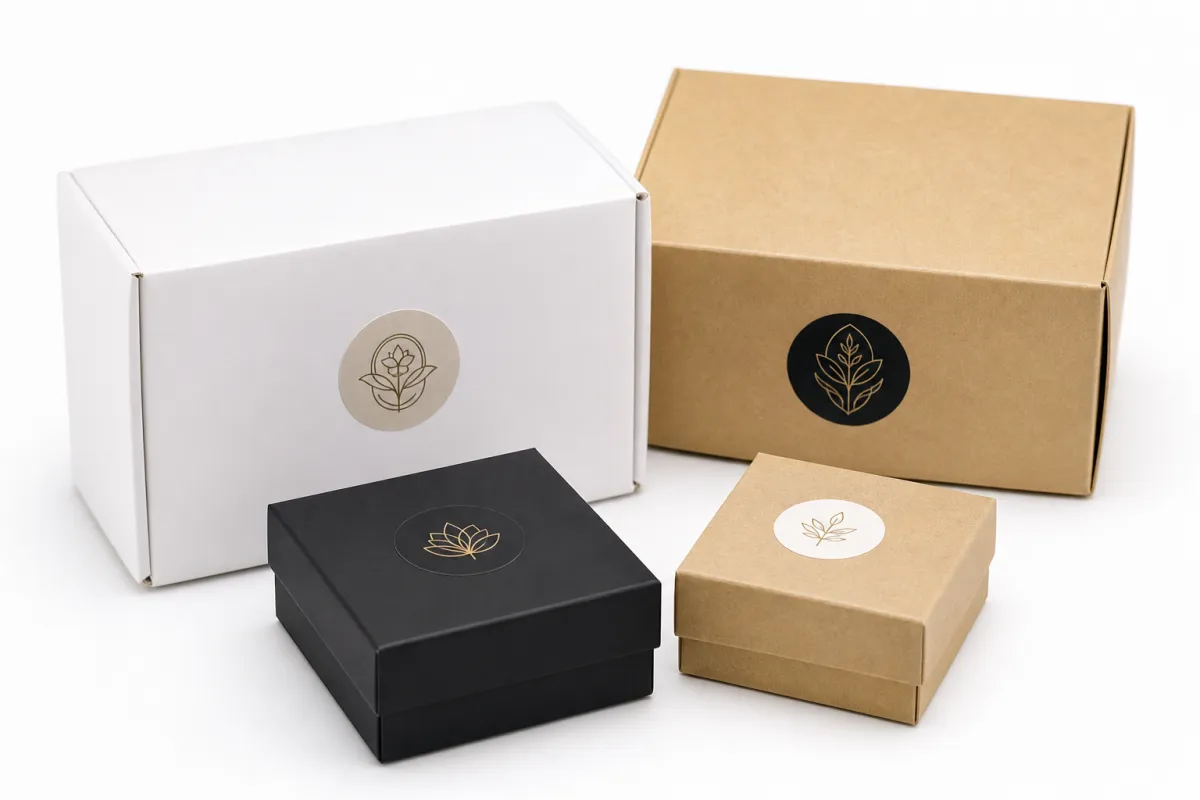
Custom logo stickers for boxes are printed adhesive labels made to carry a logo, brand mark, pattern, short message, or promo graphic on a box surface. They can go on shipping cartons, mailers, retail boxes, corrugated sleeves, and Product Packaging That needs a quick branding lift. In practice, they are often the fastest way to make packaging feel finished without moving into fully printed cartons or more complicated converted packaging.
They do more than decorate. A well-placed label can help seal a flap, hold a closure point, identify a product line, or carry a message like “hand packed,” “fragile,” “limited release,” or “thank you.” That makes custom logo stickers for boxes useful in both fulfillment and presentation. The warehouse sees a clear carton. The customer sees a package that feels like someone paid attention.
Shape and size choices are wide open. Round labels work for simple logo marks. Square labels fit clean, modern branding. Die-cut labels can trace a logo outline or badge shape. Full-bleed labels cover more of the box face and work well for bold branding or seasonal drops. Minimal brand? Keep the sticker small and sharp. Need more energy? Custom logo stickers for boxes can carry a bigger graphic system without forcing a full box redesign.
That flexibility is a big reason buyers keep coming back to custom logo stickers for boxes. A kraft carton can feel rustic with a simple black mark. A white mailer can feel premium with a matte seal label. A retail shipping box can look more polished with a centered die-cut logo sticker that matches the rest of the packaging system. The label bridges plain stock and a finished brand look.
Labels and stickers also play nicely with tissue, inserts, tape, and hang tags. If you are comparing packaging components, the labels section at Custom Labels & Tags and the broader line of Custom Packaging Products are good places to sort out how the outer box and inner presentation work together.
How Custom Logo Stickers for Boxes Work in Production
The production path for custom logo stickers for boxes usually starts with artwork and ends with rolls or sheets ready for application. Simple on paper. Not always simple in practice. Artwork has to be set at the correct size, colors need to be handled properly, the material has to match the box surface, and the cut line has to fit the design cleanly. Miss one of those and the sticker may still print, but it will not behave the way the packaging team needs it to.
File setup matters more than many buyers expect. Vector logos are usually the cleanest choice for custom logo stickers for boxes, especially if the design will be die cut or scaled across multiple sizes. If brand colors need to stay consistent, specify them clearly in CMYK or Pantone terms when the supplier can support that workflow. A proof should show the artwork, the actual sticker size, and the intended placement on the box face. Pretty mockups are nice. Real dimensions matter more.
Substrate choice is the next decision. Paper labels work well for dry, indoor packaging and retail presentation, where the main goal is visual branding and the environment is controlled. Film or synthetic stocks make more sense for shipping cartons, longer handling cycles, or situations where moisture, scuffing, or abrasion could be a problem. With custom logo stickers for boxes, the right stock is not the fanciest one. It is the one that survives the route the package actually takes.
Adhesive behavior depends on the box surface. Kraft corrugate, coated board, recycled board, and textured carton stock all grab adhesive differently. A sticker that lays flat on a smooth mailer may lift on a rough recycled box. That is why sample testing saves money. A label can look perfect on screen and still curl, bubble, or fail once it hits the real packaging surface. Good custom logo stickers for boxes are chosen with the actual carton in mind, not just the logo file.
I have seen a launch get held up because the team approved a label on a bright white proof, then applied it to a rough recycled carton. The edges lifted in the first production run. Cheap on paper. Expensive in reality. The fix was simple: switch adhesive, widen the sticker slightly, and test again before the reorder landed. That kind of boring correction saves a lot of grief later.
Print method changes the buying decision too. Digital printing is usually the most flexible option for short runs, multiple versions, or seasonal changes. It fits if you need several designs, quick artwork edits, or lower quantities. Other print methods can offer better efficiency at scale, especially where color consistency or very large quantities matter more. The right answer depends on whether the program values flexibility, unit economics, or repeatability most.
Finishing and packing close the loop. Some custom logo stickers for boxes ship as rolls for fast dispensing in fulfillment centers. Others come as sheets for hand application or smaller teams. A matte overlaminate cuts glare. A gloss finish makes color pop. A crisp cut line makes the logo feel more deliberate. Minor details, sure. Also the details customers notice when the box lands on a desk or porch.
There is a compliance angle too, and it matters more than people want it to. If the label touches primary food packaging, medical packaging, or anything with regulatory rules, confirm the adhesive, substrate, and inks before you place the order. Do not assume a standard label stock is automatically approved for every use. That is how you end up explaining a preventable problem to ops, legal, or both.
The standards side matters as well. If the box sits inside a shipping program, transit testing and packaging validation are worth a look, especially for fragile or high-value goods. Industry references such as ISTA help you think past appearance and judge how packaging behaves under real handling conditions. That keeps custom logo stickers for boxes tied to performance, not just decoration.
Material, Finish, and Pricing Factors
The price of custom logo stickers for boxes depends on a handful of variables that matter more than most buyers expect: quantity, size, shape complexity, stock choice, finish, color count, and whether the design needs special cutting. A small round logo sticker in a standard shape will cost less than a custom die-cut label with multiple color areas and a specialty topcoat. That is normal. Quoting packaging starts with the use case, not a generic request.
Quantity is the biggest lever. Larger runs usually cut unit cost because setup time, proofing, and cutting are spread across more labels. Smaller runs still make sense if you are managing frequent packaging changes, short product drops, or seasonal versions. I have seen companies save more by buying the right quantity of custom logo stickers for boxes than by chasing the lowest sticker price on a quote sheet. Buy too few and you reorder constantly. Buy too many and you sit on outdated packaging.
Material choice matters just as much. Paper stocks are usually economical and work beautifully on retail packaging, gift boxes, and indoor shipping where abrasion is limited. Film stocks, synthetic labels, and stronger adhesive systems add cost, but they also improve durability. If the carton may face humidity, chilled storage, rough transit, or repeated hand contact, those higher-performance materials are often worth it. For custom logo stickers for boxes, durability and cost should be discussed together.
Finish changes both the look and the budget. Matte gives a cleaner, calmer impression and reduces glare, which helps a logo read on bright packing tables or under retail lighting. Gloss adds color punch and can help a small design stand out. Specialty coatings, laminates, and tactile finishes add expense, but they can protect against scuffing and make the box feel more premium. The right finish depends on how the package gets handled and what feeling the brand wants to create.
| Option | Typical Use | Relative Cost | Practical Benefit |
|---|---|---|---|
| Paper sticker, matte finish | Retail packaging, gift boxes, light-duty cartons | Lower | Clean look, easy on the budget, strong for branding |
| Paper sticker, gloss finish | Promotional packaging, colorful brand marks | Low to moderate | Brightens print, adds visual punch under lighting |
| Film or synthetic label | Shipping cartons, humid storage, rough handling | Moderate to higher | Better tear resistance and surface durability |
| Custom die-cut label | Distinctive branding, shaped logos, premium presentation | Moderate to higher | Creates a stronger branded packaging impression |
| Laminated or specialty-finished label | High-touch product packaging, frequent handling | Higher | Improves scuff resistance and visual longevity |
For a rough pricing mindset, many buyers find that custom logo stickers for boxes can be very economical at scale when the design is simple, while custom-cut or specialty-finished labels carry more cost but give better presentation. A common buying mistake is judging value only by unit price. A sticker that peels, scratches, or fades can cost more in rework and damaged brand perception than a sturdier label ever would.
There is another financial angle: packaging waste. If a better adhesive, better stock, or better finish lets the sticker perform reliably across more cartons, you reduce rework and scrap. That matters in fulfillment. It also matters in retail packaging, where every failed or misapplied label becomes a visible quality issue. For brands trying to make branded packaging feel polished, the cheapest route is rarely the one That Holds Up best. With custom logo stickers for boxes, value usually lives in consistency.
If sustainability is part of the procurement conversation, material sourcing should be checked carefully rather than assumed. For paper-based options, certification and fiber sourcing matter, and organizations such as FSC provide a useful framework for responsible fiber management. That does not make every paper label “green” by default, but it gives packaging buyers a better way to ask the right questions.
Step-by-Step Ordering and Timeline
The ordering process for custom logo stickers for boxes moves faster when the packaging team treats it like a production job instead of a design request. Start by measuring the box area. Decide where the label will sit, whether it will seal flaps, cover a corner, or sit centered as a brand mark, and note whether the box is kraft, coated, recycled, or heavily textured. That one call shapes most of the rest.
Next comes artwork prep. Gather logo files in a vector format if possible, confirm any brand colors that need to stay consistent, and decide how much detail the sticker actually needs. Small labels do not reward busy designs. If the panel is only a few inches wide, a simple logo, border, or short message often reads better than a crowded layout. Good custom logo stickers for boxes usually feel intentional because they are sized for the box, not just for a screen.
Proofing is where many problems get caught early, which is exactly what you want. A digital proof should show the final size, cut line, and color placement. If the sticker is going on kraft board, ask for a view against a kraft background, not only on white. That helps catch contrast issues before production starts. If the label also acts as a seal, check placement carefully so it does not interfere with opening or leave the box looking crooked.
Here is a timeline many packaging teams know by heart: artwork review, proof corrections, print, finishing, quality check, shipment. Total turnaround depends on order size, material availability, and whether the sticker uses a standard or custom die line. Simpler runs move faster. Large or specialty jobs take longer. For custom logo stickers for boxes, the smart move is to leave buffer before a launch, trade show, holiday peak, or retail drop. Packaging delays have a talent for arriving right when they are least welcome.
Order timing also affects how the labels fit into the wider packaging system. If the boxes, inserts, and tape all arrive on different schedules, fulfillment slows down. If the labels show up first, teams can stage packaging ahead of time, which is useful for seasonal or recurring campaigns. In a lot of operations, this is where custom logo stickers for boxes earn their keep: they are easy to store, easy to reorder, and easy to deploy without reworking the whole line.
Application method matters too. Hand-applied labels are fine for lower volumes, but if you are moving a high number of cartons, roll format can improve speed and consistency. A clean application workflow cuts crooked placement, trapped air, and wasted labels. That sounds minor until someone has to peel and re-stick fifty cartons. Then it becomes very important.
One more practical note: if the box is shipping internationally or moving through a rougher logistics chain, do not assume the sticker is only cosmetic. Packaging works best as a complete system, and many brands use outer labels alongside transit-tested cartons, internal cushioning, and verified shipping methods. The sticker should support the box, not fight it.
Common Mistakes That Hurt Box Branding
The first mistake is overcrowding the sticker. I see this a lot with brands that want to fit a logo, tagline, website, social handle, recycling note, and seasonal artwork onto a label that is simply too small. Once the sticker is on a box, people may only see it for a second or two. That is not much time for a wall of text to pretend it is design. Custom logo stickers for boxes work best when the main message reads fast from a normal viewing distance.
The second mistake is choosing a stock that does not match the carton. A sticker that looks great on smooth board may fail on recycled corrugate because the adhesive cannot fully wet the texture. A bright white paper label may also clash with natural kraft if the brand wanted a softer, earthier look. The box surface is not a neutral background. It is part of the finished package. With custom logo stickers for boxes, the board type matters as much as the design.
Color mismatch is another common issue. Logos that look vivid on a monitor can shift during print, especially if the file was not prepared with print output in mind. If brand color is critical, ask for a proof and review it under normal lighting, not just in a dim office or on a phone screen. Packaging design is not theoretical. What looks rich on screen may print flatter, warmer, or darker. Good custom logo stickers for boxes account for that before the full run is approved.
Placement errors are easy to shrug off and hard to ignore once the cartons are stacked. A sticker applied too high, too low, or slightly crooked can make the package feel rushed even when the artwork is solid. If the label is meant to seal a flap, it should close cleanly without tearing or peeling at the edge. If it is meant to decorate the front panel, it should align with the box structure and leave room for tape, barcodes, and shipping information. Small errors show up fast in large-volume fulfillment.
Consistency is the last big one. Switching sizes, finishes, and die lines too often can weaken recognition unless the variation is clearly part of the brand system. A company may use one size for mailers, another for retail cartons, and a third for event boxes. Fine, if the family resemblance is obvious. The problem starts when every order looks like a different supplier made it. Strong custom logo stickers for boxes create repeatable recognition across product lines.
There is also a hidden operational mistake: ignoring application speed. If the sticker is hard to peel, difficult to center, or awkward to apply by hand, the line slows down. In some facilities, that means saving a little on the label and losing a lot more in labor. A packaging decision should always be judged in context. The best label is the one the team can apply accurately, consistently, and without cursing at the table.
Expert Tips for Custom Logo Stickers for Boxes
Design for the box, not just the logo. That is the first rule I would give any buyer ordering custom logo stickers for boxes. A label should breathe a little on the surface, especially if the carton already has texture or printed elements. Strong contrast helps. So does restraint. A clean, centered mark on a kraft box can feel more premium than a crowded, overworked sticker on a white mailer.
Always test on the actual packaging stock. A sample on the real box tells you more than a dozen digital mockups. You can see whether the adhesive grips properly, whether the edges curl, whether the finish reflects too much light, and how the color reads against the substrate. For custom logo stickers for boxes, this one step catches problems that usually cost time later.
Match finish to brand tone. Matte often feels refined, modern, and a little quieter, which works well for premium product packaging and natural materials. Gloss creates more visual punch and can help smaller artwork stand out under bright retail lighting. If the goal is understated package branding, matte is often the safer call. If the goal is shelf pop, gloss may win. There is no universal answer. Pick the one that fits the box and the buyer.
Keep inventory smart. A lot of brands do better with two or three standardized sticker sizes than with a unique version for every box. That makes reordering easier and reduces the chance that the wrong label lands in the wrong department. Special-event artwork can still be useful for launches, limited drops, or holiday promos, but the core custom logo stickers for boxes should stay consistent enough to support a repeatable packaging process.
Think about what the customer sees first. A shipping box might be photographed in a warehouse, on a porch, or in an unboxing video before the customer even touches it. The sticker should read clearly in those real conditions. If the logo is too small, too thin, or too low-contrast, it disappears in the exact moments where branded packaging can do the most work. That is why I usually favor simple, strong layouts for custom logo stickers for boxes; they hold up better across lighting, camera angles, and hurried handling.
Do not ignore the rest of the box system. A sticker can elevate a plain carton, but it should work with tape, inserts, tissue, and any printed note inside the package. If the outside says one thing and the inside says another, the brand loses coherence. Thoughtful packaging design creates value that is bigger than a single label. The outer sticker becomes part of the product packaging story instead of a random accessory.
If you are buying for a business that ships at volume, ask about roll direction, dispensing method, and application format. Those details can save time on the line. A sticker that is easy to grab and place adds speed without sacrificing precision. For custom logo stickers for boxes, that kind of operational detail is often what turns a decent purchasing decision into a good one.
Finally, remember that the best packaging decisions are usually the ones that hold up under repetition. A first run can look great by accident. A second and third run tell the truth. If the size, adhesive, material, and print method all continue to work across reorder cycles, you probably found a durable label standard. That is the real value of custom logo stickers for boxes: they let a brand stay visually consistent without making the packaging supply chain more complicated than it needs to be.
Next Steps for Custom Logo Stickers for Boxes
Start with the basics: box type, sticker size range, usage environment, and whether the label is meant to seal, decorate, identify, or do all three. Once those answers are clear, ordering custom logo stickers for boxes gets a lot easier because the supplier can recommend the right stock, adhesive, and finish without guessing.
Gather the practical assets next. That means logo files, box photos, brand color references, and a rough count of how many cartons you ship in a typical month. A supplier can quote far more accurately when they know whether the label is for a kraft mailer, a coated retail carton, or a high-touch subscription box. The more real the reference material, the better the result for custom logo stickers for boxes.
Request samples on the same surface you plan to use. That is the fastest way to validate adhesion, finish, and visual balance. If the box stock is rough or recycled, the sample should be applied to that exact stock. If the carton is part of a premium retail line, test it under the same lighting and handling conditions the customer will see. A real sample beats a polished mockup every time.
Compare quotes by total value, not just unit price. Look at material durability, finish quality, production speed, and how consistent the labels will be from one reorder to the next. The cheapest option can get expensive if it peels or scuffs. A slightly higher-cost label may cut handling problems and improve brand perception across every shipment. That is usually the better trade for custom logo stickers for boxes.
Once the label is approved, build it into a repeatable packaging standard. Document the size, finish, placement, and reorder source so future shipments stay consistent. That kind of discipline keeps branded packaging looking professional over time, especially as teams change and order volumes grow. In the end, custom logo stickers for boxes are most valuable when they become part of a stable packaging system, not a one-off decoration.
The practical takeaway is simple: choose one real box, one realistic label size, and one finish, then test them together before you scale. If the sticker reads cleanly, sticks to the actual carton, and survives normal handling, you have a packaging spec worth repeating. If it does not, fix the surface, adhesive, or layout now instead of paying for the mistake in the next reorder. That is how custom logo stickers for boxes earn their keep.
FAQ
Are custom logo stickers for boxes cheaper than printed boxes?
Often, yes, especially for small to mid-size runs. Custom logo stickers for boxes avoid the higher setup cost of fully printed cartons, and they let you use plain stock boxes while still creating a branded look. The best value depends on quantity, how complex the artwork is, and whether the sticker also needs to seal or protect the box.
What material is best for custom logo stickers for boxes?
Paper labels work well for dry, indoor, or retail-focused packaging where the main goal is visual branding. Film or synthetic materials are better for shipping boxes, humid environments, or cartons that may rub during transit. The smartest choice is based on the actual box surface and handling conditions, not just the logo design.
How long do custom logo stickers for boxes take to produce?
Timeline usually depends on proof approval, quantity, print method, and whether the sticker needs custom cutting or specialty finishing. Simple short runs can move quickly, while larger orders or specialty materials may take longer. If the labels need to arrive before a launch or peak shipping window, build in extra buffer.
Can custom logo stickers for boxes stick to recycled cardboard?
Yes, but recycled board can be more textured or porous, so adhesive choice matters more than it would on a smooth surface. Testing a sample on the exact box stock is the safest way to confirm edge hold, adhesion, and visual balance. If the surface is rough, a stronger adhesive and a slightly larger sticker often perform better.
How do I make custom logo stickers for boxes look more premium?
Keep the design clean, use strong contrast, and leave enough space around the logo so the sticker feels deliberate rather than crowded. Match the finish to the brand, such as matte for a refined feel or gloss for brighter color impact. Precise placement and the right size for the box panel also make a big difference.

