Buyer Fit Snapshot
| Best fit | Custom Magnetic Closure Boxes Cost projects where brand print, material claims, artwork control, MOQ, and repeat-order consistency need to be specified before quoting. |
|---|---|
| Quote inputs | Share finished size, material target, print colors, finish, packing count, annual reorder estimate, ship-to region, and any compliance wording. |
| Proofing check | Approve dieline scale, logo placement, barcode or warning zones, color tolerance, closure strength, and carton packing before bulk production. |
| Main risk | Vague material claims, crowded artwork, missing packing details, or unclear freight terms can make a low unit price expensive after revisions. |
Fast answer: Custom Magnetic Closure Boxes Cost: Pricing and MOQ should be specified like a repeatable production item. The safest quote records material, print method, finish, artwork proof, packing count, and reorder notes in one written spec.
Production checks before approval
Compare the actual filled-product size with the drawing, then confirm tolerance on folds, seals, hang holes, label areas, and retail display edges. Reserve space for logos, QR codes, warning copy, and material claims before decorative graphics fill the panel.
Quote comparison points
Review material grade, print process, finish, sampling route, tooling charges, carton quantity, and freight assumptions side by side. A quote is only useful when the supplier can repeat the same color, closure quality, and packing count on the next order.
Custom magnetic closure boxes cost more than basic cartons for a simple reason: they are built to look and feel premium, not disposable. A rigid box wrapped in printed paper, fitted with magnets, and assembled by hand does not behave like a plain folding carton. It is closer to a presentation piece than a shipping shell.
That difference shows up in the quote immediately. The structure uses more board, more wrap material, more setup, and more labor. Add an insert, a specialty finish, or a custom size, and the number climbs again. No mystery. Just packaging math.
From a buyer's point of view, the real question is not whether the box costs more. It does. The question is whether the higher spend matches the product value and sales channel. Gift sets, cosmetics, jewelry, candles, electronics, and luxury retail packaging usually justify the upgrade because the box does part of the selling before the customer even touches the product.
If you are comparing options, start with the structure, the finish stack, and the quantity tier. That is where most of the budget lives. For a broader view of available builds and materials, you can also review our Custom Packaging Products page while you work through the details.
Why custom magnetic closure boxes cost more than plain rigid boxes
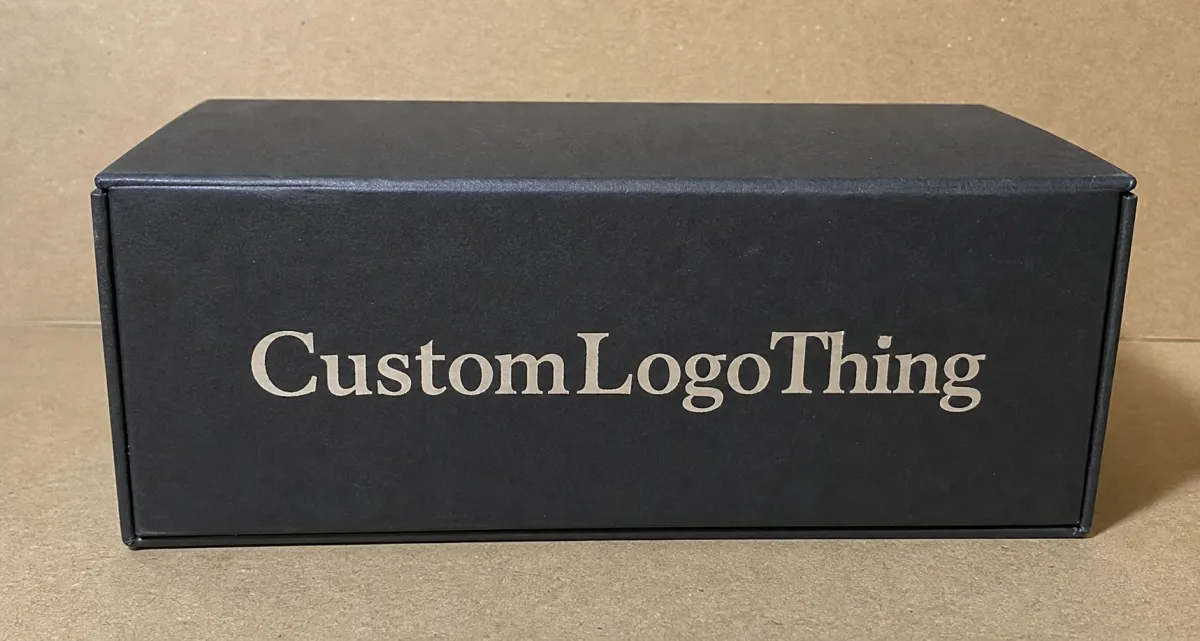
Custom magnetic closure boxes cost more than tuck boxes, mailers, and folding cartons because they use more material and more manual assembly. A folding carton is usually printed, cut, folded, and glued in a fairly efficient sequence. A rigid magnetic box is built in layers: the board shell, the wrapped exterior, the closure system, and often an insert. That extra work is where the cost comes from.
The magnet itself is rarely the main expense. Buyers often assume the closure hardware is the pricey part because it sounds technical. In practice, the costly pieces are the rigid board, the wrap paper, the adhesive work, the alignment, and the labor needed to keep everything clean and square. If the box includes a soft-touch surface, foil stamping, embossing, or a precision insert, the price rises faster than first-time buyers expect.
That extra spend can still be a smart move. A premium product packed in a flimsy box can look underpriced, even if the product inside is excellent. The box sets expectations before the item is touched. In retail packaging and gift packaging, that matters.
There is also a protection benefit. A rigid magnetic closure box holds its shape better than a lightweight carton during storage and handling. It is not a miracle fix, and it is not always the right choice for every shipping lane, but it does improve product packaging integrity for many premium goods. If the item is fragile or comes with accessories, a custom insert can keep pieces from shifting around like loose hardware in a toolbox.
Here is the practical tradeoff:
If the product benefits from presentation, the box has to earn its place. Cheap packaging saves money upfront and can quietly hurt perception later. That is usually a bad trade for brands trying to sell premium value.
So the useful question is not, "Why is this expensive?" The useful question is, "What exactly am I paying for, and which parts can be simplified without weakening the result?" That is the thread running through the rest of this article.
What custom magnetic closure boxes actually include
A custom magnetic closure box is usually a rigid paperboard box with a wrapped outer layer and a magnetic flap, lid, or closure point that keeps the box shut. Most people picture one style, but several builds fall under that name. The structure can change the quote almost as much as the artwork.
The most common versions are book-style magnetic boxes, lift-lid magnetic boxes, collapsible magnetic boxes, and drawer-style hybrids that still use a magnetic clasp somewhere in the structure. Book-style boxes open like a cover. Lift-lid boxes open from the top and feel closer to a classic gift box. Collapsible versions matter when storage space is tight. Drawer hybrids often show up in high-end retail packaging where the unboxing sequence needs a little more drama.
Inside, the box may include a plain cavity, a paperboard insert, EVA foam, molded pulp, or a multi-compartment tray. The insert is not filler. It controls product movement, supports presentation, and protects delicate surfaces. A cosmetics set, for example, may need a precise cutout so bottles do not knock into each other. A tech product may need shaped support for corners, cables, and accessories. If the insert is too simple, the box can look unfinished. If it is too complex, the unit cost jumps.
Decoration choices matter just as much. Offset printing, foil stamping, embossing, debossing, spot UV, matte lamination, gloss lamination, and soft-touch coating are all common custom printed box finishes. Some buyers want all of them at once. That is usually where the budget gets noisy. A clean layout with one strong finish effect often outperforms a box packed with every option available.
Do not ignore the smaller functional details either. Ribbon pulls can improve the opening experience. Hidden magnets can make the closure feel cleaner. Internal printing adds polish. Tamper-resistant options may be necessary for retail distribution. None of these choices are difficult on their own. They just add labor, and labor is what pushes a quote from reasonable to irritating.
From a sourcing perspective, the more custom the structure and finish stack, the more the job shifts away from simple material pricing and toward labor-heavy production. That is why two boxes that look similar in a photo can quote very differently on paper.
- Rigid board shell: the structural base and usually the biggest cost driver.
- Wrapped exterior paper: kraft, coated art paper, textured stock, or printed wrap.
- Magnetic closure: a hidden magnet or paired magnets in the lid or flap.
- Insert tray: paperboard, EVA foam, molded pulp, or a custom compartment layout.
- Branding finishes: foil, embossing, debossing, spot UV, lamination, and inside print.
If the goal is premium package branding without overbuilding, decide which of those elements actually support the product. Not every box needs all five. Some need two. Some need one. The rest is decoration for its own sake, and buyers usually notice the invoice before they notice the glitter.
Specifications that move the quote up or down
Size is the first lever. Larger boxes use more board and wrap material, and shipping weight and cubic volume rise with them. Even a small dimension change can shift the amount of rigid board required and the way sheets are nested for production. In rigid box work, a few millimeters is not a rounding error. It can change the waste pattern.
Board thickness is another direct cost driver. Thicker board feels more substantial and usually protects better, but it costs more to source and takes more care during wrapping. Common rigid board thicknesses often land around 1.5 mm to 3 mm, depending on the build and use case. A 2 mm structure is enough for many gift boxes. A 3 mm build feels heavier and more premium, but it also increases material and assembly effort. There is no universal winner. The right choice depends on product weight, shipping method, and shelf expectations.
Magnet count and placement matter too. One magnetic point is cheaper than dual magnets or hidden multi-point closures, especially on larger lids. A larger box may need stronger or additional magnets to keep the closure secure and aligned. That is not a luxury detail. It is a mechanical issue. Weak closure geometry leads to a box that pops open or feels sloppy, and nobody pays premium pricing for sloppy.
Finish choice can move the quote more than many buyers expect. Specialty papers, textured wraps, soft-touch laminates, metallic foils, and multiple decoration passes all add cost. Spot UV on a full-bleed design is a different job than one small logo hit. Embossing on a thick wrap is different again. The more finish effects you layer, the more time and scrap risk enter the job.
Insert complexity deserves its own warning. Paperboard inserts are generally the simplest option. EVA foam costs more. Molded pulp can be useful for sustainability goals, but the shape and sourcing need to fit the project. Fully custom compartments shaped for multiple items are even more involved. If you are shipping a two-piece set, you may be choosing between a polished paperboard insert and a foam tray. They do not cost the same, and they do not send the same message to the buyer.
Artwork and setup also affect the quote. Full-surface print coverage takes more prep than a small logo on a plain wrap. White ink, tight registration, metallic inks, and mixed finishes add setup time and raise the chance of rework. If the artwork is not ready or the files are messy, the supplier spends more time fixing the problem before production even starts.
For brands comparing custom magnetic closure boxes with other product packaging options, think in terms of what the customer will actually notice. If the customer only sees the lid and the logo, do not spend on expensive inside decoration for every unit. If the product opens in stages and the unboxing is part of the brand story, internal print may earn its place.
For products that will move through e-commerce or broader distribution, ask whether the packed configuration has been checked against a recognized method such as ISTA packaging test standards. If sustainability claims matter, verify paper sourcing through a program like FSC certification. Good packaging design is not just appearance. It is fit, function, and proof that the spec holds up under real use.
Custom magnetic closure boxes cost, pricing, MOQ, and unit math
Now to the part everyone actually wants: custom magnetic closure boxes cost, how MOQ works, and how the math usually breaks down. There is no single clean price because the cost is built from several buckets: material, setup, printing, finishing, labor, inspection, packing, and freight. The final landed cost depends on how much of each bucket your project uses.
MOQ, or minimum order quantity, is where many buyers get surprised. Rigid boxes usually need a higher MOQ than folding cartons because the setup is heavier and the assembly is more manual. Some suppliers can support lower runs, but the unit cost rises because the setup time gets spread across fewer boxes. That is not a penalty. It is basic factory math.
For planning purposes, many custom magnetic closure box projects fall into a range like 300 to 1,000 units for common MOQ discussions, with smaller pilot runs sometimes available at a higher per-unit price. Standard sizes and simpler finishes tend to support lower MOQs. Fully custom structures, specialty papers, and layered decoration often push the threshold upward. If a supplier says a tiny run is possible, ask what happens to the price. Usually the answer is "quite a lot."
Below is a practical way to think about pricing tiers. These are not promises. They are the sort of ranges a buyer can use to judge whether a quote is in the right neighborhood.
| Quantity Tier | Typical Build | Indicative Unit Cost Range | What Usually Changes |
|---|---|---|---|
| 300-500 units | Standard rigid box, one-color or simple print, basic insert | $3.20-$6.50 | Setup cost is spread over fewer boxes, so labor weighs heavily |
| 1,000 units | Printed wrap, magnetic closure, paperboard insert, matte lamination | $2.10-$4.20 | Better spread on setup and more efficient production flow |
| 3,000 units | Custom size, foil logo, upgraded insert, more consistent finishing | $1.40-$3.10 | Material ordering gets more efficient and labor becomes less painful per box |
| 5,000+ units | High-volume premium box with a tighter spec and repeatable decoration | $1.05-$2.40 | Best unit cost, but higher inventory commitment and storage pressure |
Use those ranges carefully. A larger box with a soft-touch finish and foam insert will sit near the upper end or beyond it. A smaller box with a simple printed wrap and paperboard insert may come in lower. Shipping can also swing the landed number, especially for international freight or bulky boxes that take up more cube than weight would suggest. Rigid boxes are not kind to space efficiency. They eat it.
One common mistake is comparing quotes that are not actually built the same. A supplier may quote a box without an insert, while another includes one. One may include internal print, another may not. One may quote ex-works and another may include freight. If the specs differ, the quotes are not comparable. That sounds obvious, yet people still do it every week.
Here is the cleaner quote checklist:
- Structure: book-style, lift-lid, collapsible, or drawer-style hybrid.
- Size: exact inside and outside dimensions.
- Board: thickness and rigidity target.
- Wrap: plain paper, printed wrap, textured stock, or specialty finish paper.
- Decoration: offset print, foil, emboss, deboss, spot UV, or internal print.
- Insert: none, paperboard, EVA foam, molded pulp, or custom tray.
- Quantity: tiered volumes so you can see the break points.
- Freight: packed method and delivery term.
That checklist saves time and helps control unit cost. It also exposes where the quote is bloated. A buyer who knows which features actually matter can trim cost without stripping value out of the box.
For example, a luxury candle brand may not need foil, embossing, and full inside print all at once. One strong logo treatment on a good wrap paper can look cleaner and cost less. A tech accessory brand might need a stronger insert and less decoration. That is not cheaping out. That is Choosing the Right priorities.
Because the box is part of your retail packaging, it should support the margin of the product inside, not swallow it whole. If the packaging cost starts to approach the value of the product, the spec needs another look. That usually means the box got too clever for its own good.
Process and timeline: how the order moves
The easiest way to keep a packaging order under control is to lock the basics before asking for a formal quote. Confirm product dimensions, product weight, closure style, finish preferences, insert needs, and target quantity tiers. If the supplier has to guess at any of those, the quote gets fuzzy fast.
After that comes sampling or proofing. For custom magnetic closure boxes, the sample stage is usually where real decisions get made. A dieline review shows how the structure will fold and fit. A material sample confirms the look and feel of the wrap. A proof checks artwork placement, foil registration, and whether the logo sits where it should. Skipping that step is how people end up approving something that is technically correct and commercially wrong.
Production usually moves through a straightforward sequence: board cutting, wrap printing or finishing, magnet placement, wrap application, insert assembly, quality checks, and final packing. On paper, that sounds simple. In practice, timing depends on how much manual work the box needs and how much finish work is stacked onto the spec.
Simple jobs move faster. Complex jobs slow down. That is not a mystery. A plain printed wrap with a paperboard insert will usually move more smoothly than a soft-touch, foil-stamped, embossed box with a custom foam tray. If speed matters, do not ask for every premium effect in the catalog.
Lead time should always be separated from freight time. Production completion is not delivery. Plenty of buyers blur those two and then wonder why the launch date slips. A box that leaves the factory on schedule can still arrive late if freight is congested, customs paperwork is incomplete, or the shipment is bulky enough to get slower handling.
Common delay triggers are avoidable:
- Artwork arrives late or is not press-ready.
- Dimensions change after the quote is approved.
- The sample is treated like a rough draft instead of the final spec.
- Approval drags and the production slot gets pushed.
- Freight terms are not confirmed until the boxes are already made.
From a buyer's perspective, the practical move is to get the sample or proof approved early, then freeze the spec. Every change after that adds risk. Sometimes it adds cost too. Usually both.
For brands building Custom Printed Boxes into a launch schedule, it helps to plan around the full packaging and shipping chain, not just the factory phase. A box that looks right on a desk can still fail if the packed goods move around in transit or if the carton count is awkward for warehouse handling. Good packaging design keeps manufacturing and logistics aligned.
Why choose us for custom magnetic closure boxes
What buyers usually want from a supplier is not poetry. It is a quote that makes sense, a spec that holds up, and communication that does not waste a week. That is the standard we try to hit with custom magnetic closure boxes. We quote from real specs, not vague guesses. That matters because the difference between "looks premium" and "priced correctly" is often one change in board thickness or insert type.
We also pay attention to where the budget leaks. A lot of box projects get overdesigned because every decoration option sounds attractive on its own. Then the final invoice lands and everybody acts surprised. You do not need a heroic package if the product does not justify it. A clean box with one strong premium detail often does the job better than a crowded spec sheet.
Manufacturing control matters too. Consistent rigid construction, proper magnet alignment, clean wrap edges, and repeatable finishing are not luxuries. They are the basic standards that make a box feel intentional. A shiny sales pitch does not fix a warped lid.
Communication is part of the product. Fast feedback on dielines, proof corrections, and sample questions reduces rework and keeps a launch on schedule. That matters especially for seasonal packaging or retail dates. Miss the window, and the box becomes inventory instead of revenue.
We also try to be straight about tradeoffs. If a spec is overbuilt for the product, we say so. If a simpler insert will protect the item just as well, we say that too. A buyer should not have to pay for features that only make the quote look fancy. If you want to compare options, the broader Custom Packaging Products page is a useful starting point before locking in the final structure.
That kind of judgment matters because package branding is not just about making the box look expensive. It is about making the spend proportional to the product, the channel, and the margin.
Next steps: get an accurate quote without delays
If you want a clean quote, gather the essentials before you send the request: product dimensions, product weight, box style, finish preferences, insert type, artwork status, and target quantity tiers. The more complete the brief, the less back-and-forth you need. Simple enough, but it saves days.
Also say what you are optimizing for. Lowest unit cost? Premium presentation? Faster turnaround? Best balance across all three? Those goals do not always point to the same spec. A buyer chasing the lowest number may choose a standard size and a simpler finish. A buyer focused on shelf impact may accept a higher unit cost for better paper and more decoration. Neither choice is wrong. Pretending they are the same is where bad decisions start.
Ask for tiered pricing so you can see where the break points land. In many cases, the difference between 500 units and 1,000 units is enough to justify the larger run if you have storage space and confidence in sell-through. If you do not, do not overbuy just because the unit price looks nicer. Inventory is still cash. It just wears cardboard.
Compare quotes using the same checklist every time: structure, board thickness, insert type, finish stack, packing method, and freight terms. If one supplier includes inserts and another does not, fix that before comparing the numbers. Otherwise you are not buying on value. You are comparing two different products with the same silhouette.
Then lock the spec, approve the proof or sample, and place the order before the timeline gets tight. That is the practical route. It avoids rework and keeps the launch moving. If your goal is to lower custom magnetic closure boxes cost without making the box look cheap, the fastest move is simple: finalize the spec before you ask for price.
FAQ
What is the MOQ for custom magnetic closure boxes?
MOQ is usually higher than for folding cartons because rigid boxes need more setup and hand assembly. Standard sizes and simpler finishes often allow a lower MOQ than fully custom structures. If you need a small run, expect the per-unit price to reflect setup time rather than just material usage.
How much do custom magnetic closure boxes cost per unit?
Unit cost depends on size, board thickness, print coverage, finish choice, insert type, and order quantity. The price drops as quantity rises because setup and labor are spread across more boxes. Ask for tiered quotes so you can see where the break point makes a larger run worthwhile.
What makes a custom magnetic closure boxes quote higher?
Oversized dimensions, thick rigid board, premium wrap paper, and complex inserts all raise the quote. Foil, embossing, soft-touch finish, and internal print can add setup and production labor. Rush timing, sample revisions, and special packing requirements can also increase cost.
How long does production usually take for custom magnetic closure boxes?
Lead time depends on approval speed, order complexity, and current factory load. Simple builds move faster than jobs with special finishes, custom inserts, or multiple artwork revisions. Separate production time from freight time so delivery expectations stay realistic.
How can I lower custom magnetic closure boxes cost without making them look cheap?
Use a standard size, reduce unnecessary finish layers, and choose a simpler insert when the product allows it. Keep the design clean and let one strong premium detail do the work instead of stacking every effect possible. Order in a better quantity tier if the unit savings justify the extra inventory.

