Buyer Fit Snapshot
| Best fit | Custom Mailer Boxes with Gloss Lamination projects where brand print, material claims, artwork control, MOQ, and repeat-order consistency need to be specified before quoting. |
|---|---|
| Quote inputs | Share finished size, material target, print colors, finish, packing count, annual reorder estimate, ship-to region, and any compliance wording. |
| Proofing check | Approve dieline scale, logo placement, barcode or warning zones, color tolerance, closure strength, and carton packing before bulk production. |
| Main risk | Vague material claims, crowded artwork, missing packing details, or unclear freight terms can make a low unit price expensive after revisions. |
Fast answer: Custom Mailer Boxes with Gloss Lamination: Film, Print, MOQ, and Carton Packing should be specified like a repeatable production item. The safest quote records material, print method, finish, artwork proof, packing count, and reorder notes in one written spec.
Production checks before approval
Compare the actual filled-product size with the drawing, then confirm tolerance on folds, seals, hang holes, label areas, and retail display edges. Reserve space for logos, QR codes, warning copy, and material claims before decorative graphics fill the panel.
Quote comparison points
Review material grade, print process, finish, sampling route, tooling charges, carton quantity, and freight assumptions side by side. A quote is only useful when the supplier can repeat the same color, closure quality, and packing count on the next order.
Custom Mailer Boxes with gloss lamination do two jobs at once, and they do them in a way that is hard to ignore. They protect the product inside, then turn the package into a small billboard before anyone breaks the seal. Light catches the surface, artwork sharpens, and even simple typography starts to feel more deliberate. For a DTC brand, that first impression can decide whether a box feels like routine shipping or something worth keeping on the desk a little longer.
There is also a very practical side to the shine. Custom Mailer Boxes with gloss lamination carry a thin protective film over the printed board, which helps resist scuffs, fingerprints, and some moisture during handling. That film will not rescue weak packaging or sloppy packing, and it should not be sold that way. What it does is reduce the odds that a strong design arrives looking tired. I have seen a deep navy mailer go from "nice proof" to "why does this look dull?" after a single rough route through fulfillment. Gloss reduced that risk, and sometimes that is the whole point.
"If the box has to sell the product before the seal is broken, finish choice is not decoration. It is part of the packaging strategy."
Launch kits, influencer mailers, beauty sets, apparel drops, and seasonal promotions often benefit from that brighter, more polished look. Custom mailer boxes with gloss lamination feel active and confident. They are less hushed than matte, less restrained than soft-touch, and that can be exactly what a brand needs. Some packages are meant to sit quietly on a shelf. Others need to hit like a magazine cover in the customer's hands.
Why Custom Mailer Boxes with Gloss Lamination Stand Out
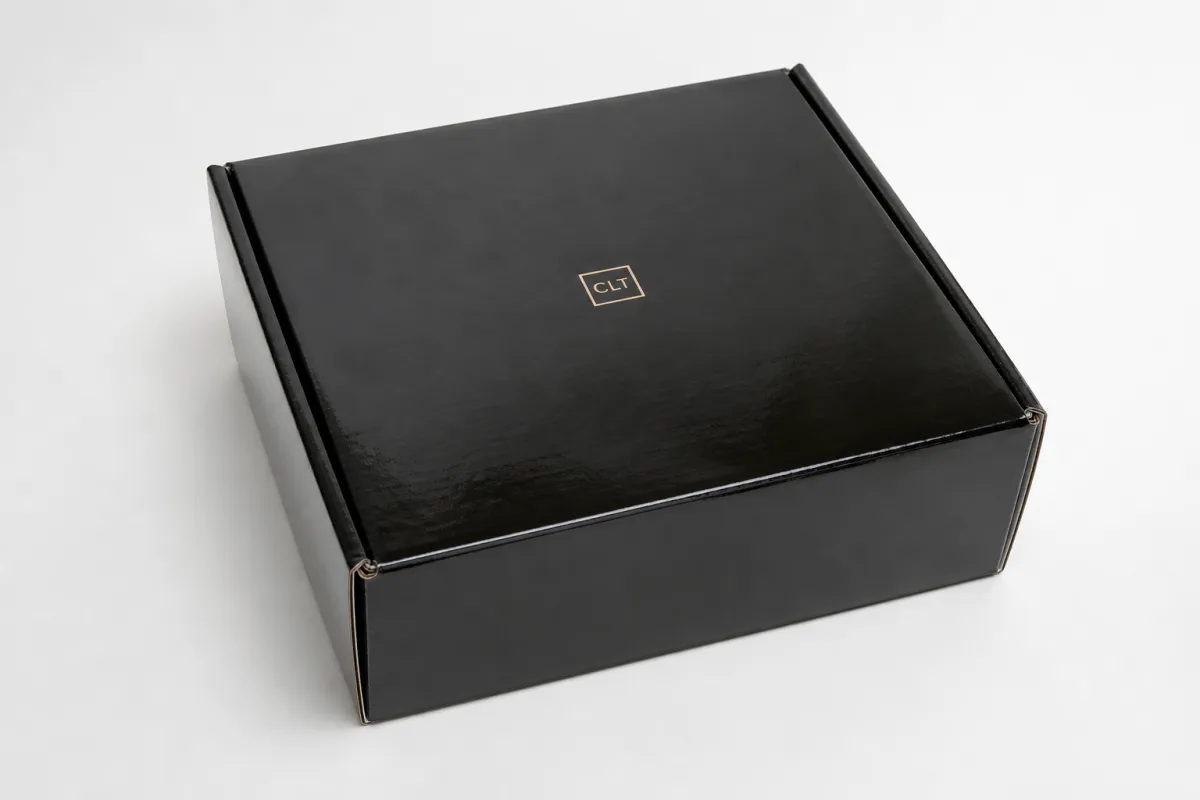
Custom mailer boxes with gloss lamination stand out because gloss changes the way the eye reads a printed surface. Light bounces instead of disappearing. Color looks denser. Edges read cleaner. A red logo feels more urgent; black gains depth; white type has more contrast against the board. For packaging that depends on a strong first glance, that extra force can do as much work as another ink color.
That visibility matters in crowded feeds. A reflective box usually grabs attention faster than a low-sheen finish, especially in social content where the package may appear only for a second or two. I have watched a launch mailer go from "nice" to "must-screenshot" just because the gloss caught daylight across the logo panel. That is not magic. It is optics, and it is one reason Custom Mailer boxes with gloss lamination keep showing up in beauty, apparel, and subscription packaging.
Brand positioning plays a role as well. Gloss feels polished, lively, and a little louder. That does not make it cheap. In the right layout, it feels intentional and retail-ready. Beauty brands use that effect to intensify color. Apparel brands use it to make a drop feel current. Gadget accessories and wellness products use it to move the package closer to the perceived value of the item inside. The finish can make a modest box look like it belongs on a display table instead of in a shipping stack.
The simplest case for custom mailer boxes with gloss lamination is this: one surface has to protect the shipment, carry the brand, and still look good under a phone camera. A plain uncoated mailer rarely does all three well. Matte can handle some of it. Gloss often does more of the visual lifting when strong color, contrast, and shelf-like presentation matter.
- Best use cases: launch kits, influencer mailers, cosmetics, apparel, and subscription boxes.
- Visual effect: brighter color, stronger contrast, and more noticeable logos.
- Practical benefit: better resistance to scuffing than a plain printed surface.
- Brand feel: retail-ready, polished, and high energy.
Gloss is not the only route to a premium package, and it is not always the right one. Some brands want quiet luxury, not shine. Some want a tactile, low-reflective surface that feels editorial. That tension is exactly why custom mailer boxes with gloss lamination matter: they make a decisive choice. Packaging that knows what it wants usually stays in the customer's memory longer than packaging that tries to please everyone.
How Custom Mailer Boxes with Gloss Lamination Are Made
Custom mailer boxes with gloss lamination begin with the structure, not the finish. The board grade gets selected first. The dieline gets checked next. Artwork is confirmed before the finish touches the surface. After printing, the gloss film is added as a thin top layer, then the sheet moves to die cutting, folding, and glueing. The finish comes late in the sequence because it is meant to protect the print and define the final look, not compete with the artwork for attention.
Print first, film later
That order is not cosmetic; it is functional. Applying gloss before printing would create adhesion trouble and muddy the artwork. Applied after printing, the film shields the design and gives the board a more even sheen. For custom mailer boxes with gloss lamination, the top layer is often a BOPP or PET film around 1.0-1.2 mil, though exact specifications vary by supplier and structure. The number matters less than the result: brighter color, more consistent surface behavior, and a cleaner guard against handling marks.
Die cutting deserves the same level of attention. Mailer shapes rely on slots, folds, tuck tabs, and closing panels, all cut from the printed sheet. Push artwork too close to a fold and the gloss makes the mistake easier to see. Reflective surfaces are unforgiving that way. A misaligned rule line or an overpacked logo can stand out more under gloss than it did in the proof. That is why custom mailer boxes with gloss lamination need a careful dieline review before production begins, not after the first sample comes back trimmed. A rushed approval there is the kind of thing that is gonna cost you a reprint.
Gloss versus other finishes
Compared with aqueous coating, gloss lamination usually brings stronger shine and a more noticeable barrier against abrasion. Compared with UV coating, it creates a smoother all-over finish instead of a focused accent. Compared with matte, it reflects more light and makes print appear more vivid. Custom mailer boxes with gloss lamination are often the right fit for bold color blocks, photo-driven graphics, or branding that needs a visual lift without adding foil or embossing.
The trade-off is easy to describe and harder to ignore. Gloss can glare under strong lighting. It can show fingerprints more quickly than matte. Dark artwork can reveal every touch. Designers also need to think differently about gradients, fine text, and thin lines because the finish changes how those elements behave in the hand and under a camera. In custom printed boxes, those details separate a polished result from a package that feels busy or unfinished.
Brands comparing box formats often benefit from looking across the broader range on Custom Packaging Products. For lighter shipping needs, it can also help to compare with Custom Poly Mailers. The point is not that one format replaces the other. The point is that the structure should match the shipment and the customer experience, not the other way around.
Custom mailer boxes with gloss lamination also work well with selective upgrades. A logo can be embossed. A headline can get spot UV. A hero panel can be designed with sharper contrast than the rest of the surface. That kind of restraint usually spends money better than covering the entire box with decorative effects. Packaging often rewards focus, and gloss gives that focus room to breathe.
Custom Mailer Boxes with Gloss Lamination: Cost, Pricing, and MOQ
Price is where many buyers pause, and for good reason. Custom mailer boxes with gloss lamination usually cost more than plain uncoated mailers, but the gap shifts with quantity, box size, board grade, ink coverage, and finishing complexity. A large mailer with full-bleed graphics on heavy board will cost more than a small one-color box, even if both use the same gloss film. The finish matters, but it is one line item among several.
For a branded mailer on 16pt to 24pt board, a rough unit range might land around $0.85-$1.60 at 1,000 pieces and $0.35-$0.75 at 5,000 pieces before freight and add-ons. Small custom mailer boxes with gloss lamination often carry a higher unit cost because press setup, lamination setup, and die cutting waste are spread across fewer boxes. MOQ is what makes that math visible. If a quote seems unusually low, there is usually a reason hiding in the specs.
Minimum order quantity reflects labor, machine setup, material waste, and the reality that a short run takes almost the same preparation as a longer one. Some suppliers start at 500 pieces. Others need 1,000 to 3,000 pieces once inserts, heavier coverage, or more complex structures enter the picture. Custom mailer boxes with gloss lamination behave like most custom printed packaging in that regard: small runs are possible, but setup costs weigh more heavily.
| Finish Option | Visual Look | Durability | Typical Relative Cost | Best Fit |
|---|---|---|---|---|
| Gloss lamination | Bright, reflective, high color pop | Strong surface scuff resistance | Moderate | Launch kits, beauty, apparel, retail packaging |
| Matte lamination | Soft, low sheen, subdued | Good, but more visible rub marks on dark art | Moderate | Minimalist, premium, quiet luxury branding |
| Aqueous coating | Light protective finish with mild sheen | Decent for standard shipping | Lower | Cost-sensitive product packaging |
| Spot UV on coated board | Accent shine on selected areas | Good on highlighted zones | Higher | Hero logos, premium campaigns, focused branding |
Quotes only become useful when they are compared on the same terms. Separate tooling, proofing, production, inserts, packaging, and freight. A low number can hide expenses in shipping or setup. A higher number may already include the sample, corrugated inserts, or final delivery. Landed cost gives a truer picture than a headline rate ever will.
There is a strategic side to the pricing discussion as well. A slightly higher unit cost can still make sense if the box reduces the need for extra labels, wraps, or printed inserts. That is one reason custom mailer boxes with gloss lamination can be worth the spend for brands that want the packaging itself to carry part of the marketing message. A box that does more work can justify more budget, especially if it replaces three separate pieces of branded material.
The better question is not whether gloss can be affordable. The better question is what gloss allows the box to replace. If the finish helps the package deliver a stronger branded moment, fewer accessory materials may be needed. That can make the spend easier to defend, especially for products where the shipping carton is part of the product story.
Key Factors That Affect Print Quality and Durability
Custom mailer boxes with gloss lamination rise or fall on the board underneath the film. Board thickness, flute style, liner quality, and recycled content all shape how the surface behaves after printing and finishing. A stiffer board tends to hold shape better and often looks cleaner after die cutting. A weaker board can still work, but the glossy surface may make flaws more obvious by reflecting light across uneven areas.
Board choice matters more than most buyers think
Common materials include recycled kraft board, virgin board, and corrugated structures with different flute profiles. The finish does not erase the board's limitations. If the board is warped, fiber-heavy, or weak at the edges, custom mailer boxes with gloss lamination can still show curling, seam lift, or rough cuts. The laminate improves appearance. It does not perform structural miracles, and it should never be treated like it does.
Artwork behaves the same way. Gloss intensifies saturated color, which sounds like a win until fingerprints, glare, and tiny text enter the conversation. Skin tones need careful proofing. Dark backgrounds can pick up handling marks quickly. Photo-heavy designs often gain the most from gloss, while minimal layouts can need more testing so the copy does not get lost in reflections. In custom mailer boxes with gloss lamination, artwork is part of the surface behavior, not just the decoration on top.
Durability is more than surface shine
Durability should be judged in layers. The film strengthens the outer face, but the box still has to survive stacking, transit, and repeated handling. For parcel shipping, ask whether the structure has been considered against ISTA test protocols or comparable distribution testing. If sourcing claims matter to the brand, check the paperwork for FSC chain-of-custody as well. Those are not embellishments. They are the background checks that keep packaging claims credible.
Sustainability language deserves restraint. Some laminated board can still be recycled in certain systems, but local facilities do not handle every finish the same way. Broad claims about being fully recyclable or fully eco-friendly are easy to say and hard to defend. If the brand needs a recycling claim, verify it against local guidance and do not assume gloss changes the rules. Custom mailer boxes with gloss lamination can fit a sensible packaging strategy, but only if the material story matches reality.
Use case matters too. Subscription boxes may need repeat handling and consistent presentation. Cosmetic kits often benefit from a cleaner, glossier cue. Electronics demand stronger structure and careful inserts. Apparel boxes tend to live or die by the unboxing photo as much as the garment inside. Custom mailer boxes with gloss lamination can serve all of those needs, though the board spec and internal fit should follow the shipment, not habit.
Process, Timeline, and Lead Time for Production
Custom mailer boxes with gloss lamination usually move through a familiar sequence: brief, dieline review, artwork proofing, sample approval, production, finishing, quality control, and shipment. The workflow is standard. The calendar is not always so cooperative. A delay in one stage can ripple through the rest, which is why experienced buyers think of lead time as a chain instead of a single date.
A clean repeat order with no structural changes may finish in 12-15 business days after proof approval, depending on the supplier and quantity. A first-time order with new tooling, inserts, or larger print coverage usually takes longer. Change the box size and the dieline changes. Change the art and the proof changes. Change the finish and the finishing step shifts. Custom mailer boxes with gloss lamination are not inherently slow; they move at the speed of approvals.
Artwork revisions create the biggest schedule drag. Not the machine. Not the laminate. Usually the art. A color tweak, a layout rewrite, or a last-minute dimension change can push a project back more than the actual production. That becomes even more true when the gloss finish makes contrast and reflection easier to judge under real light, because designers often ask for one more sample before signing off.
Keeping the project moving tends to come down to a few disciplined steps:
- Lock the final dimensions before requesting a quote.
- Send print-ready files, not a rough mockup.
- Confirm the finish, board thickness, and insert requirements early.
- Approve the sample quickly and keep a single decision-maker on the project.
- Share the exact delivery date and destination upfront.
That last step saves more time than it sounds like it should. If the vendor knows the boxes need to land at a warehouse, fulfillment center, or trade-show address, planning gets easier. Custom mailer boxes with gloss lamination can fit a tight calendar, but only when schedule information is treated like a production spec rather than an afterthought.
One more useful comparison: if the product could travel well in a lighter format, evaluate that option on the same timeline. A single order of custom printed boxes is not always the smartest answer if the shipment is better suited to a flexible mailer. The structural choice can change both freight cost and lead time, and the wrong choice rarely compensates with a nicer finish.
Common Mistakes When Ordering Gloss-Laminated Mailers
The first mistake is choosing custom mailer boxes with gloss lamination for a product that does not benefit from shine. A brand built around restraint, editorial taste, or quiet luxury may find high gloss working against the message. The finish is not wrong. It is simply louder. Sometimes matte or soft-touch tells the story with more accuracy.
The second mistake is hoping the finish will fix a weak structure. It will not. Custom mailer boxes with gloss lamination still need a sound board, a closure that holds, and a fit that keeps the product from sliding around. Fragile items need inserts, dividers, or void fill. The gloss helps the outside look better. It does not stop impact inside the box.
The third mistake is letting artwork drift across folds, seams, or tuck points. On screen, the layout may look tidy. On the finished box, a fold can split a logo or make copy feel off center. Gloss makes that problem easier to notice because reflective light draws attention to edges and breaks. Dieline discipline matters more than many first-time buyers expect.
"A beautiful mockup is not a finished box. If the dieline is wrong, the gloss only makes the mistake easier to see."
The fourth mistake is comparing supplier quotes without checking what each one includes. One vendor may bundle proofing, inserts, and freight. Another may quote only the shell. A cheaper number can look appealing until the missing pieces appear later. Custom mailer boxes with gloss lamination should be compared using the same assumptions, not just the same dimensions.
Sampling is another place where brands try to save too much too early. A physical sample matters when color accuracy, glare, or surface feel carries brand weight. A render will not show how gloss catches light on a deep blue panel or how a logo reads under warehouse lighting. For custom mailer boxes with gloss lamination, the sample is often the least expensive mistake prevention available.
Sustainability claims can misfire just as quickly. If you want to describe the box as recyclable, recycled, or responsibly sourced, verify the material and the local recovery system first. Otherwise the wording can outpace the evidence. Honest product packaging builds trust faster than a polished claim that cannot be defended.
Expert Tips and Next Steps for Your Gloss-Laminated Mailers
If the goal is premium rather than merely shiny, use custom mailer boxes with gloss lamination with intent. Put the finish on hero panels, logos, or seasonal editions instead of flooding the entire surface out of habit. A reflective area placed with care can guide the eye better than a fully glossy box, and it often feels more considered. Packaging usually reads as more expensive when the design knows where to stop.
Think through the unboxing sequence as a whole. Tissue paper, inserts, printed inside panels, and structured reveals can make custom mailer boxes with gloss lamination feel more valuable without demanding a huge jump in material spend. That helps brands that need a stronger perceived value but cannot justify heavy embellishment on every run. The box sets the stage, yet it does not need to carry every cue alone.
Contrast pays off. Gloss pairs well with embossing, spot UV, bold typography, and high-contrast color blocks. It can also support a spare layout if the design stays disciplined. Trouble starts when too many effects compete on one surface. A box loaded with gloss, foil, dense copy, and busy graphics can lose the clarity that made it memorable in the first place. Custom mailer boxes with gloss lamination reward editing as much as styling.
A one-page spec sheet can speed the whole process. List dimensions, quantity, board preference, finish choice, artwork status, insert needs, ship date, and destination. Add a note about whether the project behaves more like retail packaging or direct shipping protection. That single page can save more time than a stack of scattered emails and half-remembered revisions.
Keep the comparison honest. Ask for three quotes built on the same assumptions, the same proofing needs, and the same delivery terms. Then judge them against the product packaging goal, not only the lowest number. Custom mailer boxes with gloss lamination work best when finish, structure, and timeline are specified together. Confirm the specs, request a sample, compare landed cost, and move ahead only when the box fits the brand and the shipment with equal precision.
FAQ
Are custom mailer boxes with gloss lamination good for fragile products?
Yes, as long as the structure is strong enough. Custom mailer boxes with gloss lamination improve the surface, but the board grade, closure design, and internal fit do the real protective work. Glass, cosmetics, electronics, and multi-part kits usually need inserts, dividers, or void fill so the finish is paired with actual transit protection. If the shipping lane is rough, request a sample and test closure strength before committing to volume.
How do custom mailer boxes with gloss lamination compare to matte finishes?
Gloss usually delivers stronger color pop and a brighter first impression, while matte feels softer and more restrained. Custom mailer boxes with gloss lamination tend to reveal fingerprints and minor scuffs more than matte, especially on dark artwork, but they also make logos read faster in photos and short videos. Matte often suits minimalist or luxury positioning; gloss often suits energetic, retail-facing branding. The better choice depends on the message you want the package to send before it is opened.
What affects the cost of custom mailer boxes with gloss lamination?
The biggest drivers are size, quantity, board thickness, print coverage, lamination type, and whether you add inserts or special structural features. MOQ matters because setup cost is spread across the run, so small orders usually carry higher unit pricing. Ask whether proofing, lamination, and freight are included so you can compare true landed cost, not just box price. For custom mailer boxes with gloss lamination, that comparison is usually more revealing than the headline quote.
What is the usual turnaround time for custom mailer boxes with gloss lamination?
Turnaround depends on artwork readiness, sample approval, and whether the design uses standard or custom tooling. Simple repeat orders often move faster than first-time projects that need new dielines, color matching, or inserts. A practical planning window is often 12-15 business days after proof approval for straightforward jobs, with longer lead times for larger or more complex runs. If schedule matters, lock dimensions, quantity, and finish before production starts.
Do custom mailer boxes with gloss lamination work for small MOQ orders?
They can, but small runs usually carry higher per-unit cost because setup and finishing expenses are spread over fewer boxes. If you are testing a new product, ask for the lowest viable MOQ and confirm whether sample charges are credited toward the order. For launch-stage brands, a smaller gloss-laminated run can be a smart test before scaling up. Custom mailer boxes with gloss lamination often make the most sense when a brand wants to validate the look before committing to larger production.

