Buyer Fit Snapshot
| Best fit | Custom Mailers with Tissue Paper projects where brand print, material claims, artwork control, MOQ, and repeat-order consistency need to be specified before quoting. |
|---|---|
| Quote inputs | Share finished size, material target, print colors, finish, packing count, annual reorder estimate, ship-to region, and any compliance wording. |
| Proofing check | Approve dieline scale, logo placement, barcode or warning zones, color tolerance, closure strength, and carton packing before bulk production. |
| Main risk | Vague material claims, crowded artwork, missing packing details, or unclear freight terms can make a low unit price expensive after revisions. |
Fast answer: Custom Mailers with Tissue Paper: Film, Print, MOQ, and Carton Packing should be specified like a repeatable production item. The safest quote records material, print method, finish, artwork proof, packing count, and reorder notes in one written spec.
Production checks before approval
Compare the actual filled-product size with the drawing, then confirm tolerance on folds, seals, hang holes, label areas, and retail display edges. Reserve space for logos, QR codes, warning copy, and material claims before decorative graphics fill the panel.
Quote comparison points
Review material grade, print process, finish, sampling route, tooling charges, carton quantity, and freight assumptions side by side. A quote is only useful when the supplier can repeat the same color, closure quality, and packing count on the next order.
A soft tissue reveal can raise perceived value faster than a heavier carton, and custom mailers with tissue paper prove it every time. The first thing a buyer sees is not a shipping label or a seam in corrugated board. It is a fold, a color, a little restraint. That moment tells the customer the shipment was handled with care, and the package feels more intentional, more giftable, and often more expensive than the material bill would suggest.
That is the strange math of packaging design. A modest outer mailer, a controlled reveal, and a careful choice of color and print can do more for package branding than a flashy upgrade that never touches the customer's hand. For brands balancing shipping cost, fulfillment speed, and retail packaging expectations, custom mailers with tissue paper sit in a practical middle zone: light enough for ecommerce, polished enough for repeat purchases, and flexible enough to work across apparel, accessories, cosmetics, stationery, and small lifestyle goods.
In my own packaging reviews, the most convincing samples were rarely the most expensive. They were the ones that opened with a clear, tidy motion and left no guesswork for the buyer. That kind of result is not magic, and it is not luck. It comes from good sizing, a fold that stays put, and materials that behave the same way every time. Once those pieces are in place, the package starts doing quiet brand work before the product is even seen.
Custom Mailers with Tissue Paper: Why the Unboxing Feels Premium
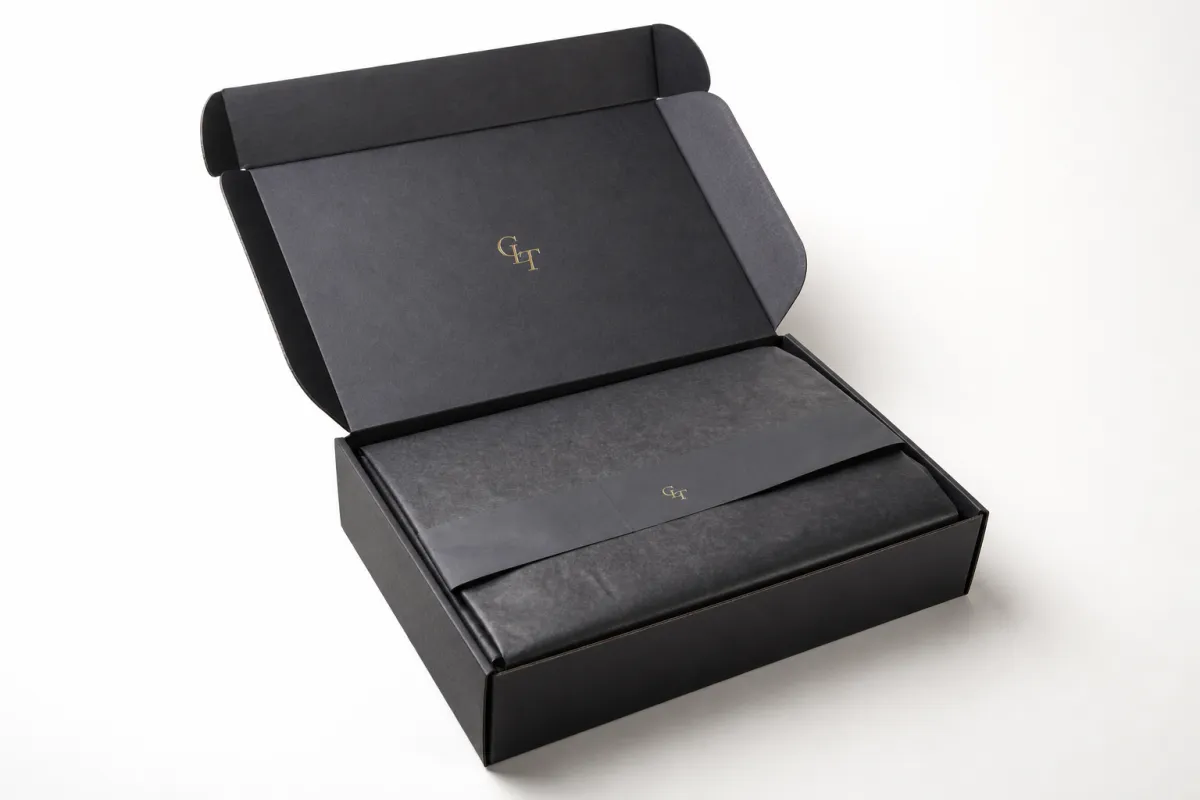
Many buyers do not judge packaging by the most expensive component. They judge it by the first tactile moment. A plain poly mailer that opens straight to the product feels fast, but it also feels purely functional. Custom mailers with tissue paper slow that reveal just enough to tell a different story. The tissue adds a layer of care, and care is what most customers are actually reading.
Perceived value does not move in a straight line. A brand may spend a few extra cents on tissue paper and gain an impression worth far more than the material cost. In practice, custom mailers with tissue paper can make a lightweight order feel closer to premium product packaging than a basic ship-and-forget carton ever will. The customer sees a fold, a brand color, or a logo repeat before they touch the item. That sequence shapes the unboxing before the product even comes out.
The contrast is easy to spot when the two experiences sit side by side. A plain poly mailer says efficiency. A branded mailer with tissue says curation. Both can protect the product, but only one gives the buyer a reason to pause, photograph the package, and share it. Social posts usually center on the reveal, not the shipping label, because the reveal is where the emotion lives.
There is a practical side to the premium effect as well. Custom mailers with tissue paper help standardize presentation across large teams. If every packout follows the same fold, the same placement, and the same seal, the brand feels consistent even when fulfillment volume changes. Consistency is underrated. It is one of the quietest drivers of trust in branded packaging.
"If the first reveal feels tidy, the product inherits that feeling."
The real question behind this format is simple: how can a low-friction shipment still feel upscale? The answer is not to overload the package with layers. It is to use just enough structure to signal intention. For many merchants, custom mailers with tissue paper deliver that balance better than heavier Custom Printed Boxes, especially when shipping speed and dimensional weight matter.
Flexibility is part of the appeal too. Neutral tissue can support multiple product lines, while a branded version can reinforce a campaign, a seasonal drop, or a membership box. That kind of range matters for brands that want retail packaging cues without locking themselves into expensive, rigid formats. The tissue is not just decoration. It is a control point in the customer experience.
A branded sheet can also calm down a package that would otherwise look plain or clinical. A thin outer mailer, a well-cut insert, and a tissue wrap can make the whole shipment feel composed, even if the contents are light. That kind of polish matters for direct-to-consumer brands that want the package to feel like part of the product rather than a separate shipping shell.
How Custom Mailers with Tissue Paper Work in Real Fulfillment
Fulfillment teams care about three things in equal measure: speed, accuracy, and repeatability. Custom mailers with tissue paper can support all three, but only if the packout is built with the workflow in mind. A presentation that slows the line will usually lose to a simpler setup. The best systems follow a clear sequence rather than a vague idea of premium.
The usual packout sequence looks like this:
- Product is checked and staged.
- Protective wrap or poly bag is added if needed.
- Tissue paper is folded around the product or placed as a reveal layer.
- The item is loaded into the mailer.
- The mailer is sealed.
- The shipping label is applied.
- A final inspection checks alignment, print orientation, and package closure.
That sequence sounds simple, yet small choices change labor time. A pre-folded tissue sheet can save several seconds per order. Multiply that by a few thousand orders, and it becomes clear why custom mailers with tissue paper are often judged less by appearance alone and more by how efficiently they move through the line. A packout that takes eight extra seconds might be fine at 300 orders a week and painful at 3,000.
The tissue itself has two jobs. First, it creates the visual reveal. Second, depending on thickness and placement, it can add light cushioning or at least keep the item from shifting. That second job is modest, not magical. Tissue paper is not a substitute for proper protective packaging when the product is fragile. It is a presentation layer first and a helper layer second. That distinction matters because some brands expect it to solve problems it was never meant to solve.
Custom mailers with tissue paper also perform differently depending on the product category. Apparel usually benefits from a clean wrap and a tidy fold. Cosmetics, small accessories, and stationery often use the tissue as a privacy layer, so the buyer does not see the contents immediately. That delay can build anticipation. For giftable items, the tissue becomes part of the unwrapping ritual.
Manual packing versus semi-standardized packing is another important split. A fully manual line gives flexibility, but it also creates more variation. Semi-standardized packouts, with measured tissue sheets and preset folds, reduce inconsistency and help newer staff hit the same presentation quality as experienced packers. That is one reason custom mailers with tissue paper scale better when the brand writes a simple packing standard and trains to it.
For brands already using Custom Poly Mailers, adding tissue is often the most efficient way to lift the unboxing without changing the entire shipping system. If the outer mailer is sized correctly and the tissue is cut to the right sheet dimensions, the line can stay fast. If the fit is poor, the presentation gets messy fast. Bulging sides, torn folds, and crooked seals are the small failures that customers notice first.
There is a hidden benefit too: privacy. A tissue wrap can conceal the product from view, which helps with resale protection, gift orders, and any shipment where you do not want the contents visible through a thin outer layer. That is especially useful in product packaging for apparel and accessories, where the first glimpse should feel deliberate, not accidental.
One more thing from the operations side: if the tissue has a static cling problem, or if the packer is working in dry air, the sheet can stick where it should not. That sounds minor, but it can slow the line and make a clean fold feel kind of fussy. A little attention to humidity, staging, and sheet size usually fixes it before it becomes a daily annoyance.
Cost and Pricing for Custom Mailers with Tissue Paper
Pricing is where a lot of packaging conversations turn fuzzy. They should not. With custom mailers with tissue paper, the cost structure is usually easy to break down: mailer size, print coverage, tissue style, quantity, proofing, freight, and labor. Each one can move the final unit cost more than people expect, especially when the order is small or the artwork is complex.
For realistic planning, think in ranges. At around 5,000 units, a custom printed mailer might land in a rough range of $0.18-$0.45 per unit depending on material, size, and print coverage. Tissue paper can add another $0.03-$0.12 per sheet for standard or lightly branded runs, while Custom Printed Tissue usually costs more. Those numbers are not fixed, but they are useful for budget conversations because they show where the money usually goes.
The bigger surprise is that the lowest sticker price does not always mean the lowest total cost. Proof revisions, setup fees, special ink coverage, and freight can offset what looks like a bargain on paper. If the packout slows fulfillment, labor cost can quietly erase the savings too. That is why smart buyers compare the full packout, not just the tissue sheet or the outer mailer.
| Option | Typical Unit Cost | Best Use Case | Notes |
|---|---|---|---|
| Stock tissue + branded mailer | $0.03-$0.08 for tissue, plus mailer cost | Fastest way to add polish | Good for smaller brands that want a premium feel without custom tissue printing |
| Custom printed tissue + branded mailer | $0.06-$0.15 for tissue, plus mailer cost | Campaigns, launches, stronger package branding | More visual impact, but proofing and print coverage matter more |
| Heavy custom printed boxes | $0.60-$2.50+ | Higher-value or fragile products | Stronger structural presentation, but more freight and dimensional weight |
| Mailer + tissue + insert card | Varies widely | Retail packaging feel with lightweight shipping | Useful when the brand message needs one more touchpoint |
The comparison above is where custom mailers with tissue paper often shine. They can deliver a branded packaging look that sits between low-cost commodity shipping and more expensive custom printed boxes. For many ecommerce brands, that middle ground is the sweet spot. It protects margin while improving the customer's first impression.
There is also a return-on-impression question. If better presentation improves repeat orders by even a small amount, the packaging can pay for itself faster than a simple unit-cost spreadsheet suggests. From a packaging buyer's point of view, the real metric is not whether the tissue costs four cents or nine. It is whether the overall packout supports higher retention, fewer complaints, and better word-of-mouth.
Some brands spend too much trying to make every layer custom. That rarely makes sense. A more practical approach is to use one branded surface, one tactile reveal, and one reliable shipping format. The result often feels more thoughtful than a pile of unnecessary components. That is why custom mailers with tissue paper can outperform pricier packaging design choices that look impressive in a sample drawer but get in the way of fulfillment.
If your current packaging mix includes Custom Packaging Products, it may be worth comparing the cost of tissue-enhanced mailers against inserts, sticker seals, or full-box upgrades. In many cases, the lightest option with the strongest presentation wins on total economics, not just aesthetics.
One practical cost detail gets missed a lot: storage. Bigger boxes and heavier components do not just cost more to buy. They also take up more room on the shelf, which can raise carrying cost and slow replenishment. Tissue is cheap to store, easy to count, and usually pretty forgiving, so it tends to fit better in a lean packaging program than larger structural upgrades.
Production Process and Timeline: Proofs, Lead Time, and Delivery
The production path for custom mailers with tissue paper usually starts with a quote request and ends with delivery, but the parts in the middle matter more than most buyers realize. Artwork, material selection, sizing, and sampling all influence the real timeline. A good print run can move quickly once approvals are locked. A run with open questions can stall for days.
Here is the typical sequence:
- Request quote with size, quantity, print areas, and tissue requirements.
- Review dieline or template for the mailer and tissue sheet dimensions.
- Submit artwork and confirm colors, bleed, and logo placement.
- Approve digital proof or physical sample.
- Move into manufacturing and packing.
- Ship by freight or parcel depending on volume.
In many cases, the print run itself is not the bottleneck. Revisions are. If the artwork is missing print-safe margins or the fold line is not accounted for, the proof round can turn into a back-and-forth exchange. That is why brands using custom mailers with tissue paper should plan for one extra review cycle when the design is new or the tissue is custom printed.
Typical lead times after proof approval often land around 12-15 business days for straightforward jobs, though custom sizing, specialty finishes, peak season volume, and freight conditions can stretch that. Complex jobs can take longer. If you are launching a seasonal line or tying packaging to a campaign date, build in buffer time. Packaging rarely fails loudly. It usually slips quietly by a few days at a time.
One practical rule helps more than most teams expect: set the packaging deadline earlier than the ecommerce launch deadline. That sounds conservative, but it is the safest way to protect your sales calendar. If your shipping program depends on custom mailers with tissue paper, you do not want to be waiting on final approvals while customer acquisition spend is already running.
It also helps to think in terms of inventory staging. A brand might not need every component on the same day. If the mailers arrive first and the tissue follows a few days later, you can still stay on track as long as the sequence is planned. What slows projects down is usually a missing component, not an impossible manufacturing problem.
For teams that care about quality standards, it is worth aligning the packout with industry testing such as ISTA testing standards. Not every mailer needs a formal lab program, but the mindset is useful: define the handling conditions, define the failure points, and test the package against real movement. That is far more useful than approving a mockup based on appearance alone.
Step-by-Step Guide to Building the Right Packout
If the goal is a reliable premium reveal, custom mailers with tissue paper should be designed from the product outward, not from the mailer inward. That sounds obvious, yet many packaging mistakes start because someone chose a mailer size before measuring the packed bundle. The product dimensions, the fold thickness, and the seal area all matter.
Start with the product, not the outer mailer
Measure the finished item, then measure the item in its protective wrap if one is needed. A soft sweatshirt, a rigid accessory box, and a folded print do not occupy space the same way. The goal is to avoid a packed bundle that forces the tissue to bunch or crease sharply. Custom mailers with tissue paper work best when the product has room to sit flat without floating around inside the mailer.
Define the reveal moment
What should the customer see first? The tissue edge? A logo repeat? A seasonal color? This decision drives the fold pattern. Some brands place the tissue so the logo shows immediately when the mailer opens. Others hide the product fully and let the reveal happen in a second motion. Both approaches can work. The important part is choosing one on purpose.
From a packaging design standpoint, the reveal is the emotional center of the packout. A well-timed fold can make custom mailers with tissue paper feel far more refined than a more expensive package that opens awkwardly. In retail packaging terms, the sequence is doing the heavy lifting.
Choose the tissue style with the product in mind
Neutral tissue is the safest option when you want broad inventory use. Branded tissue works well when the goal is a stronger identity cue. Seasonal tissue can be excellent for launches, but it is less flexible if you need to move stock across product lines. A heavier tissue sheet may look more polished, yet it can also slow packing or wrinkle differently depending on humidity and handling.
The best choice usually depends on the product weight and the shelf life of the packaging inventory. If you ship year-round, a versatile neutral or lightly branded tissue is easier to store. If you release limited drops, more expressive tissue can create stronger package branding. Custom mailers with tissue paper can support either strategy.
Match the outer mailer to the job
The outer mailer should protect the contents and fit the packed bundle closely enough to reduce movement. Oversized mailers are inefficient. They waste material, increase shipping cost, and make the package feel loose. Too-tight mailers create crease lines and can damage the reveal. Many brands find their best results with Custom Poly Mailers sized around the actual packed thickness, not just the product width.
If you are still deciding between supply options, it can help to review Custom Poly Mailers alongside your tissue dimensions. The outer shell and the reveal layer should be developed together. That is especially true if the brand wants the packout to feel clean at scale, not just in a sample photo.
Build a test packout checklist
Before launch, run a small test batch and check four things:
- Fit: Does the product sit neatly without crowding?
- Speed: Can a packer complete the order in a predictable time?
- Presentation: Does the reveal stay crisp after sealing?
- Durability: Does the package survive handling, stacking, and transit?
That checklist is simple, but it catches the expensive mistakes. One weak seal or one badly scaled tissue fold can make custom mailers with tissue paper look rushed, even if the print quality is excellent. A pilot batch reveals those problems before the full rollout does.
One more practical note: if your packout includes inserts, stickers, or a return card, keep them in the same exact location every time. Random placement slows the line and makes the reveal look inconsistent. The most effective branded packaging systems are rarely the most complicated. They are the ones that leave the fewest decisions to the packer.
It also helps to write down the fold language in plain terms. Not the design team version, but the warehouse version. Where the top edge sits, which side faces up, how far the tissue overlaps, and where the seal lands. That tiny bit of discipline keeps the system steady when the team changes or volume jumps.
Common Mistakes Brands Make with Custom Mailers with Tissue Paper
Most problems with custom mailers with tissue paper are not dramatic. They are small, repeatable, and easy to overlook during sample approval. A package can look great on a table and underperform in the warehouse. That gap is where the mistakes live.
Oversizing the mailer
An oversized mailer makes the shipment feel loose and can increase dimensional weight. It also creates extra movement, which can shift the tissue during transit. If the fold drifts, the reveal stops feeling deliberate. Oversizing is one of the easiest ways to make a premium concept feel improvised.
Choosing tissue that is too thin or too decorative
Thin tissue tears too easily, especially during fast packing or when the item has edges, tags, or corners. Overly busy tissue can compete with the product rather than frame it. The best tissue usually balances print visibility with structure. Custom mailers with tissue paper need a tissue grade that holds a fold without turning brittle.
Inconsistent folding
A lot of teams underestimate the visual damage caused by inconsistent folds. One crooked packout is not a catastrophe. A hundred crooked packouts are a brand pattern. If the fold line, seam direction, or opening edge changes from order to order, the customer notices. That is especially true in ecommerce, where repeated exposure to the same packout trains expectations quickly.
Ignoring storage and labor realities
Packaging design is not just a visual exercise. It is storage, counting, restocking, and training. If the tissue comes in a format that is awkward to stage or the mailers take up too much shelf space, the system slows down. Many brands want the look of custom mailers with tissue paper but forget to ask how the setup behaves in a real warehouse with limited benches and shifting order volume.
There is also a sustainability angle worth respecting. Tissue sourced from responsible forestry and paper systems with FSC certification can support a stronger environmental story, while waste reduction matters in its own right. The EPA publishes solid guidance on reducing packaging waste and improving material choices; those principles matter even if the shipment is small. Sustainable packaging is not just about materials. It is about using the right amount of material well.
When a brand combines a beautiful outer surface with a sloppy packout, the customer sees the gap immediately. That is why custom mailers with tissue paper should be approved as a system, not as separate parts. Mailer, tissue, fold, seal, label, storage, and labor all need to agree with each other.
Another common misstep is treating the sample as if it will behave exactly like the production run. A one-off sample is often packed by hand, with more care and more time than a real shift can spare. That can hide problems with curl, static, adhesive placement, or folding speed. The test batch needs to be close to real life, not just pretty on a desk.
Expert Tips and Next Steps for a Pilot Order
The safest way to scale custom mailers with tissue paper is to treat the first order like a pilot, not a final verdict. A pilot order tells you how the package behaves in the real world: on the packing table, in the delivery stream, and in customer feedback after arrival.
Start by testing two or three variations. One might use stock tissue and a branded mailer. Another might use custom printed tissue with a neutral outer shell. A third might compare different mailer sizes or fold styles. The goal is to isolate which part of the presentation actually drives the response.
- Measure pack time per order.
- Track damage or return rates.
- Collect customer service comments about presentation.
- Watch repeat order behavior over the next few weeks.
- Compare the final labor and material cost against the baseline packout.
That approach gives you data, not guesses. If one version of custom mailers with tissue paper adds three seconds to pack time but improves customer feedback and repeat purchase rate, it may be worth keeping. If another version looks great but creates constant folding errors, it should probably be retired. The pilot stage is where honest trade-offs become visible.
It also helps to document the approved packout in one short internal guide. Keep it simple: mailer size, tissue size, fold orientation, insertion order, seal method, and label placement. A one-page standard is easier to train than a long SOP, and it keeps the presentation consistent across shifts or seasonal hires.
For brands building a broader packaging system, think in layers. The outer shipping format can be one family of custom mailers with tissue paper, while other products may still use Custom Packaging Products or dedicated boxes for heavier SKUs. Not every item needs the same treatment. The point is to match the packaging structure to the product value, transit risk, and customer expectation.
Finally, do not skip the final audit. Hold the packed bundle, shake it lightly, open it, and look at what the customer sees first. If the reveal feels deliberate and the package closes cleanly, you are close. If the tissue shifts, wrinkles, or exposes the product too early, adjust before scaling. That last check often saves more money than a slightly cheaper quote ever would.
One useful habit is to keep a photo record of the approved result. A warehouse team can glance at a good example far faster than they can parse a long written spec, and a photo gives everyone the same target. That kind of visual reference prevents drift when a new employee starts packing or a busy season changes the pace.
Custom Mailers with Tissue Paper: The Final Take
The strongest case for custom mailers with tissue paper is not that they are glamorous. It is that they are efficient at creating a premium impression without the weight, freight, or complexity of larger custom printed boxes. For many ecommerce brands, that is exactly the right trade-off. The package feels considered, the line stays manageable, and the customer gets a reveal worth remembering.
Used well, custom mailers with tissue paper support branded packaging, reduce presentation drift, and make small products feel more valuable. Used badly, they become another layer of clutter. The difference is planning: right-size the mailer, choose tissue that fits the product, standardize the fold, and test the packout before full launch. Do that, and the package does more than ship an item. It reinforces the brand every time it lands on a doorstep.
If you want the shortest path to a better result, start with one product line, one mailer size, and one repeatable tissue fold, then run a pilot order on the actual packing line. That is the cleanest way to see whether the presentation truly earns its place in the workflow.
Are custom mailers with tissue paper worth it for small ecommerce brands?
Yes, if presentation affects repeat purchase, referrals, or perceived product value. They are especially useful when the product itself is lightweight but the brand wants a stronger premium feel. Start with a pilot order so you can compare the packaging lift against the added material and labor cost. For many small brands, custom mailers with tissue paper deliver a bigger brand impression than their unit price suggests.
How much does tissue paper add to the total packaging cost?
The answer depends on sheet size, print coverage, and whether you buy standard stock or custom printed tissue. Tissue usually adds less cost than switching to rigid packaging, but labor time can matter just as much as material cost. Compare the total packout cost, not just the tissue price, before deciding. In many cases, custom mailers with tissue paper remain a lower-cost route to premium branding than heavier alternatives.
Do custom mailers with tissue paper need a bigger mailer size?
Not always, but the tissue fold and product shape can change the ideal fit. Measure the finished packed bundle, not only the product itself, so the reveal layer does not create bulging. If the mailer is too tight, the tissue can crease badly and the package can look rushed. Good sizing is one of the quiet reasons custom mailers with tissue paper look polished instead of stuffed.
What is the best way to keep tissue paper neat during shipping?
Use a fold pattern that protects the reveal edge and keeps the top layer from shifting inside the mailer. Match tissue thickness to the product weight so it looks crisp without tearing during packing. Test handling, drop, and squeeze conditions before approving the final packout. That is the safest way to keep custom mailers with tissue paper looking clean from warehouse to doorstep.
How do I test whether custom mailers with tissue paper improve customer response?
Run a small A/B test with two packaging versions and track unboxing feedback, returns, and repeat orders. Ask customer service to log mentions of presentation, quality, and surprise in post-purchase comments. Treat the result as both a brand test and an operations test, because speed and consistency matter too. If custom mailers with tissue paper improve customer sentiment without slowing fulfillment, that is a strong signal to scale.

