Buyer Fit Snapshot
| Best fit | Custom Poly Mailers for Mail Order projects where brand print, material claims, artwork control, MOQ, and repeat-order consistency need to be specified before quoting. |
|---|---|
| Quote inputs | Share finished size, material target, print colors, finish, packing count, annual reorder estimate, ship-to region, and any compliance wording. |
| Proofing check | Approve dieline scale, logo placement, barcode or warning zones, color tolerance, closure strength, and carton packing before bulk production. |
| Main risk | Vague material claims, crowded artwork, missing packing details, or unclear freight terms can make a low unit price expensive after revisions. |
Fast answer: Custom Poly Mailers for Mail Order: Film, Print, MOQ, and Carton Packing should be specified like a repeatable production item. The safest quote records material, print method, finish, artwork proof, packing count, and reorder notes in one written spec.
Production checks before approval
Compare the actual filled-product size with the drawing, then confirm tolerance on folds, seals, hang holes, label areas, and retail display edges. Reserve space for logos, QR codes, warning copy, and material claims before decorative graphics fill the panel.
Quote comparison points
Review material grade, print process, finish, sampling route, tooling charges, carton quantity, and freight assumptions side by side. A quote is only useful when the supplier can repeat the same color, closure quality, and packing count on the next order.
Custom Poly Mailers for mail order are not just a nice-looking wrapper around a shipment. They influence damage rates, pack-out speed, freight cost, and the first physical impression a customer gets before the package is even opened. In a mail-order program, the packaging either helps the item move cleanly through the line or quietly adds cost in the background. That is the real question behind custom poly mailers for mail order: does the format fit the product, the warehouse flow, and the shipping promise?
For packaging buyers, the strongest case for Custom Poly Mailers for mail order is easy to see once you start comparing the full process instead of the unit price alone. They remove unnecessary carton volume, reduce void fill, and usually make the pack-out more predictable. Apparel, flat accessories, soft goods, and other low-fragility items often ship better in a mailer because the workflow is simpler, the parcel is lighter, and the finished package looks more polished without extra inserts or a separate outer carton.
Packaging details that matter in daily operations often get pushed aside: seal strength, film gauge, print placement, and whether a picker can close the bag quickly without fighting the adhesive. The goal is not to buy the flashiest pouch on the market. The goal is to choose Custom Poly Mailers for mail order that protect the item, keep shipping costs under control, and hold up during repeat use in a busy fulfillment environment. That is the part people tend to underestimate until a line starts running at full speed.
Why custom poly mailers for mail order can cut returns
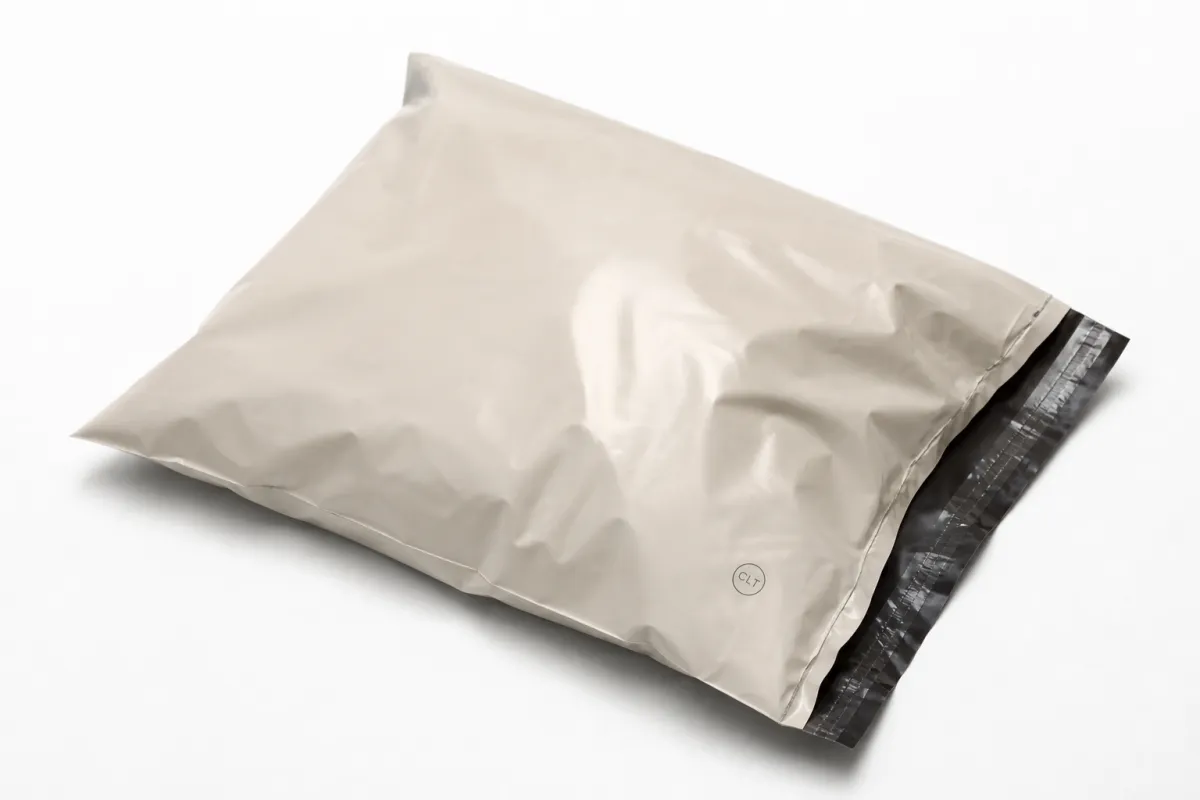
Most returns do not begin with a dramatic failure. They begin with a small mismatch between the packaging and the item inside it. A sleeve corner gets crushed in a carton that is too large. A soft garment slides around because there is too much empty space. A packing team adds void fill because the box is deeper than the product needs. Custom poly mailers for mail order reduce those errors by fitting the shipment more closely to the way it actually travels.
That tighter fit matters beyond protection. It trims work in the warehouse. When custom poly mailers for mail order are sized around the product mix, teams usually deal with fewer packaging SKUs, spend less time building cartons, and avoid the hidden cost of pulling filler from inventory. That is a labor story with real dollars behind it, not a branding story dressed up as logistics. Even a 10- or 20-second reduction per order becomes meaningful once a line is shipping hundreds or thousands of parcels in a day.
The shipping side matters just as much. Lightweight, flat items often perform better in a mailer than in a small box, especially when the box leaves extra air around the product and triggers dimensional-weight charges. I have seen brands move from cartons to custom poly mailers for mail order and recover several dollars per shipment on mid-volume programs simply by removing excess space rather than changing carriers. The exact savings will vary, but the pattern stays steady: fewer cubic inches usually mean fewer penalties.
Branding belongs in the return equation too. A plain shipper can feel disposable, while custom poly mailers for mail order create a branded touchpoint the customer sees immediately. That matters for unboxing, and it matters in the warehouse as well. A printed mailer can take the place of separate stickers or inserts for handling messages, which keeps the workflow cleaner and lowers the chance of a missed step. For many teams, that is the difference between a mail-order program that feels deliberate and one that feels pieced together from leftovers.
There is a real limit to what a mailer should do. Custom poly mailers for mail order are not the right answer for every product. Fragile ceramics, rigid electronics with sharp corners, and anything likely to be crushed under compression usually need a box or reinforced secondary packaging. The point is not to replace every carton. The point is to match the format to the item. When that match is right, packaging-related returns usually fall and the operation becomes easier to repeat.
Brands that sell apparel, accessories, beauty tools, books, kits, and other flat retail items often see especially strong economics. A corrugated shipper may still make sense for premium presentation or rigid products, but many lower-risk items ship better in custom poly mailers for mail order because the packaging does less work while still doing enough. That sounds simple because it is simple, though getting the fit right still takes a little discipline.
"The best mailer is the one that disappears into the process. If the team packs faster, the parcel ships cheaper, and the customer still receives a clean presentation, the packaging is doing its job."
It helps to think in total system cost instead of unit price alone. Custom poly mailers for mail order may cost more than a plain stock pouch, yet they can cost less than a box once labor, filler, tape, and avoidable dimensional weight are part of the math. That is the comparison that makes the decision real, and it is the one seasoned buyers keep coming back to.
Custom poly mailers for mail order: product details
The basic construction is usually a co-extruded polyethylene film with an opaque exterior and a smooth interior. That structure gives custom poly mailers for mail order the combination buyers care about most: low weight, reasonable puncture resistance, and a clean surface for printing. The film can be built with different layers, which is why two mailers that look similar on paper can behave very differently at the packing bench.
The most common thickness range sits around 2.5 mil to 4 mil for standard e-commerce use. Thinner film can work for soft, flexible products that do not create sharp stress points. Thicker film is better for heavier apparel bundles, denser accessories, or shipments that move through rougher distribution networks. With custom poly mailers for mail order, the answer is not always "thicker is better." A 4 mil pouch can feel stiffer, cost more to print, and take more effort to close quickly. In some programs, 3 mil is the better balance.
Seal style deserves the same attention as film gauge. A pressure-sensitive adhesive strip should close securely without requiring a lot of hand pressure, and it should hold through temperature swings and transit vibration. If the adhesive is inconsistent, custom poly mailers for mail order can create a false sense of security. The bag looks sealed, yet the edge lifts during sorting or transfer. I have watched a line go from smooth to annoying because the adhesive grabbed too late in a cold dock, so this is not a theoretical issue.
Branding options vary more than many buyers expect. One-color printing is common for clean, economical package branding. Full-color graphics are possible, but they add complexity and often increase cost through artwork prep, plate charges, or extra setup steps. Some brands print only the exterior logo and leave the inside blank; others place a discreet interior message for a stronger unboxing moment. Both approaches can work. The better choice depends on whether the goal is retail packaging presentation, handling clarity, or both.
Opacity is another detail that gets overlooked. A high-opacity film keeps contents from being visible during transit, which helps with apparel, subscription kits, and private-label shipments. For custom poly mailers for mail order, opacity is not just about appearance. It also lowers the chance that the item is recognizable in transit, which can matter for privacy and brand protection. If you have ever seen a clear patch from a poor film blend, you know how quickly that can undermine the presentation.
If the product has return risk, consider whether a resealable or dual-seal design makes sense. Some custom poly mailers for mail order include a second adhesive strip so the same bag can support returns. That feature can be useful for certain categories, but it is not free, and it only pays for itself when the return flow justifies the added cost. A branded return path is nice; an unnecessary upgrade is just extra spend.
Stock mailers work fine when the product mix is stable and the branding need is light. Custom poly mailers for mail order become more appealing when the brand wants a tighter fit, a more consistent presentation, and a repeatable spec the fulfillment team can trust month after month. The operational benefit is often bigger than the visual one, which is why experienced buyers look beyond the print.
It also helps to compare custom poly mailers for mail order against Custom Printed Boxes. Boxes have a clear place, especially for rigid or fragile products, but they take more material and usually more handling time. A mailer is a different packaging choice with a different cost structure. Once that difference is clear, the buying decision becomes easier to ground in numbers rather than preference.
Specifications to compare before you order
Before placing an order, compare the specs side by side. That sounds obvious, yet many packaging problems begin when artwork is approved before the dimensional details are fully locked. For custom poly mailers for mail order, the core specifications are dimensions, film gauge, closure type, opacity, and print area. Those five items decide whether the mailer works in production or only looks good on a screen.
Dimensions should be checked against the product in its packed state, not in its retail form. A folded shirt may take more room than a flat shirt. A small accessory may still need clearance for a poly bag or protective sleeve. Custom poly mailers for mail order should leave enough room for easy insertion, but not so much slack that the contents slide around during transit. A little breathing room is fine; a lot of empty space is where the trouble starts.
Film gauge should match the real stress on the pouch. Heavier gauge raises material cost, though it does not always improve the result in proportion. If the item is soft and low-risk, extra thickness may only make the bag stiffer and more expensive. If the item has edges or multiple components, a stronger film can reduce puncture risk. That is why custom poly mailers for mail order should be specified from the product outward, not from a supplier catalog inward.
Closure type deserves the same attention. Most buyers use a peel-and-seal strip, but adhesive quality can vary. Ask how the seal behaves in warm rooms, cold docks, and humid transit conditions. The seal should hold after pressure, not just on contact. If the mailer is used for returns, test the second adhesive strip as well. A small weakness here can create a large operational headache later.
Print area matters because it affects both branding and legibility. A full-coverage graphic can look bold, but it may also wrap unpredictably around the fold or flap. A cleaner logo placement often works better in real use. For custom poly mailers for mail order, the best design is usually the one that survives folding, stacking, and high-speed handling without losing clarity. A package that reads cleanly on a bench but smears in transit has already missed the point.
Use-case guidance by product type
Apparel: T-shirts, socks, lightweight hoodies, and soft accessories often ship well in custom poly mailers for mail order because the product compresses naturally. The most common mistake is oversizing the pouch, which creates movement and a sloppy presentation.
Books and flat media: Thin books and similar items can work in mailers if the corners are not too vulnerable. Once the item becomes rigid or heavy, a box may be safer.
Small hard goods: Items with edges, chargers, or compact kits may need a reinforced mailer or interior wrap. A standard film may be enough, but not always.
Subscription items: Many recurring programs prefer custom poly mailers for mail order because the format is repeatable and easy to brand. The pack-out is often simpler than building custom printed boxes for every cycle.
Return-friendly retail orders: If the customer is likely to send the item back, consider whether a dual-seal feature or a stronger pouch is worth the extra unit cost.
It helps to evaluate strength with real testing rather than gut feeling. Many suppliers reference ASTM test procedures for materials and transit tests aligned with ISTA packages. If your team wants a clearer baseline, the ISTA testing framework is a useful reference because it focuses on package performance under distribution conditions, not just appearance. That view is especially helpful for custom poly mailers for mail order, where the real question is how the package behaves after it leaves the packing bench.
If your program includes sustainability targets, compare the packaging mix honestly. A lighter parcel can reduce material use and transport burden, but not every alternative is automatically greener. The U.S. EPA has useful context on waste reduction and source reduction at epa.gov/recycle. That does not make one format perfect, but it does reinforce a simple point: right-sizing matters. In many cases, custom poly mailers for mail order help with that.
For buyers comparing paper-based alternatives, certifications such as FSC can matter on some product lines, especially where paper packaging is preferred for brand reasons. For many mail-order goods, though, the choice is still between a mailer, a box, or a padded shipper. The key is to match the packaging to the item, then measure the results instead of guessing. Packaging opinions are cheap; parcel data is what tells the truth.
A sample pack is not optional if the order is meaningful. Ask the supplier to provide samples at the target gauge and print style, then run them through your own line. Close the bag ten times. See whether the adhesive grabs too aggressively. Check whether the print scuffs when stacked. Measure the actual pack-out speed. With custom poly mailers for mail order, those tests reveal more than a spec sheet ever will.
Pricing, MOQ, and quote factors for custom poly mailers
Pricing for custom poly mailers for mail order comes from a handful of variables buyers can actually control. Size is one. Film thickness is another. Print colors, special finishes, and order quantity matter as well. Once those drivers are clear, a quote becomes much easier to interpret. If a supplier only gives a single unit price with no context, the comparison is incomplete.
For planning purposes, many custom poly mailers for mail order fall into a broad range that can start around the high teens of cents per unit for larger runs and rise from there depending on size, print coverage, and finish. A small custom run with heavier film, more colors, or lower quantity can land noticeably higher. That is normal. What matters is whether the unit cost still makes sense after labor, freight, and damage risk are part of the calculation.
MOQ is where smaller brands feel the pressure first. Some suppliers will quote a custom run at 1,000 to 3,000 pieces, while others want 5,000 or more depending on the construction and print setup. Lower minimums are possible, though they usually carry a higher unit cost because setup is spread across fewer bags. If you are testing the market, a smaller MOQ can be sensible. If you already know the product will repeat, a larger run often lowers the total cost of custom poly mailers for mail order.
When reviewing a quote, ask for the full cost stack. You want the unit price, setup or plate fees, freight, sample cost, and any assumptions about lead time. Some quotes look attractive until freight is added. Others seem modest on the product side but hide a costly color change or artwork charge. A good quote for custom poly mailers for mail order should tell you exactly what is included and what changes if the spec changes.
Feature and cost comparison
| Packaging option | Typical use | Relative unit cost | Packing labor | Main advantage |
|---|---|---|---|---|
| Stock poly mailer | Simple, low-brand mailings | Lowest | Fast | No print setup |
| Custom poly mailers for mail order | Branded apparel, flat goods, kits | Low to moderate | Fast | Branding plus tight fit |
| Padded mailer | Light protection for delicate items | Moderate | Fast | Extra cushioning |
| Corrugated shipper | Rigid or fragile items | Moderate to high | Slower | Best crush protection |
The table matters because unit price alone does not tell the whole story. A lower-cost bag can still end up more expensive if it increases damage rates or slows the packing line. Experienced buyers compare custom poly mailers for mail order against the full pack-out process, not just the invoice. If a carton requires tape, filler, and more hand motion, the cheaper-looking option can cost more in the end.
Ask for tiered pricing as well. If your annual use rate is uncertain, a quote that shows 2,500, 5,000, and 10,000-piece tiers can help you see where the economics improve. That is especially useful for seasonal sellers. A holiday-heavy brand may want a smaller introductory run of custom poly mailers for mail order, then a larger reorder once demand settles.
One other buying habit matters: compare what happens if the print changes. A simple logo can be economical, but a more complex design may require a new proof, a new setup, or a different print method. That can be fine when the branding value is clear. It is a problem when the brand underestimates the full cost of its packaging design choices. The spec may look tiny on paper, yet it can move the quote more than people expect.
Process, timeline, and production steps from proof to shipment
The order process for custom poly mailers for mail order should be straightforward, but it only stays that way when the initial brief is precise. A clean workflow usually starts with an inquiry, then moves to specification review, artwork proof, approval, production, and shipment. Each step sounds small. Together, they decide whether the packaging arrives on time and matches the approved sample.
What slows projects down most often is not manufacturing. It is ambiguity. If the dimensions are unclear, if the artwork file is low resolution, or if the team keeps changing the print area after the proof stage, the schedule slips. That is why custom poly mailers for mail order work best when the buyer has already measured the product in its packed state and knows the shipping method before requesting a quote.
Artwork quality is another common delay. Vector files are usually easier to proof and reproduce cleanly than raster files. If your logo has fine lines, small text, or a thin tagline, ask for a proof that checks legibility at the actual print size. Custom poly mailers for mail order can look excellent with a simple layout, but a complicated print file can become muddy very quickly once it is reduced for packaging.
Samples and pre-production approvals are worth the extra time. A physical sample lets you verify seal behavior, scuff resistance, and actual pack-out speed. That matters more than a screen mockup because packaging lives in the physical world. A design can look balanced on a monitor and still fail because the flap crowds the logo or the image lands too close to a seam. For custom poly mailers for mail order, that test can save an entire run from avoidable disappointment.
Timeline depends on complexity. Standard custom poly mailers for mail order with clean branding and a stable specification often move faster than more elaborate construction. If the run involves multiple sizes, special finishes, or detailed artwork, the approval cycle can stretch. In many programs, the fastest way to shorten the calendar is not to rush production; it is to answer proofs quickly and avoid midstream changes. The slowest jobs are usually the ones that keep getting redefined halfway through.
Typical production sequence
- Inquiry: Share dimensions, quantity, print colors, and target ship date.
- Quote: Review unit price, setup fees, freight, and lead-time assumptions.
- Spec check: Confirm gauge, seal type, opacity, and print area.
- Artwork proof: Approve placement, wording, and color references.
- Sample or pre-production check: Verify fit and line behavior if needed.
- Production: Manufacture, print, and finish the mailers.
- Shipment: Send the order to your warehouse or fulfillment partner.
For many buyers, the most realistic expectation is that custom poly mailers for mail order often take longer when the order is more tailored, and shorter when the spec is simple and the proof is approved quickly. That may sound obvious, but it helps teams plan launches properly. If a product release date is fixed, the packaging schedule should be fixed first. Otherwise the packaging starts making decisions for everybody else.
That is also where operational coordination matters. A marketing team may want the boldest version of the packaging design, while the warehouse wants the fastest packing motion. A good packaging program balances both. The best custom poly mailers for mail order support the brand without forcing the fulfillment team to slow down or improvise at the line. Nobody wants a beautiful pouch that turns into a bottleneck.
If you want a useful rule of thumb, build in enough time to absorb one revision and one sample check. When the schedule is tighter than that, risk rises. The order might still work, but the odds of a late proof, a misread dimension, or a rushed artwork file increase. In shipping, as in packaging, haste often shows up as cost.
Why choose us for mail-order packaging
Buyers usually switch suppliers for one of three reasons: inconsistency, communication gaps, or hidden cost. The advantage of working with a packaging partner that understands custom poly mailers for mail order is that those problems can be reduced before production starts. Clear quoting, consistent spec checks, and practical artwork guidance save more time than any glossy promise ever could.
Manufacturing control matters because a proof is only useful if the delivered product matches it. Tighter checks on film thickness, seal quality, and print placement reduce the chance of surprises between approval and shipment. That consistency is especially valuable for recurring mail-order programs, where the same mailer may be reordered every month or every season. Custom poly mailers for mail order should be repeatable, not a new puzzle each time.
Service is equally important. A good packaging supplier should be able to explain why one gauge fits better than another, why a larger print area may weaken the visual hierarchy, and when a padded option is more appropriate than a standard pouch. That kind of guidance is part of real product packaging support. It is also where a lot of waste gets avoided. Buyers do not need hype. They need someone who can connect the spec to the product.
There is also a broader program-level benefit. Brands that use multiple formats, such as custom printed boxes for premium items and custom poly mailers for mail order for flat goods, usually need a supplier who can think across the full packaging mix. That is where branded packaging becomes more than a logo exercise. It becomes a system. The same visual language can run through mailers, carton labels, and inserts without creating chaos in production.
Operational transparency should never be optional. Ask what is included, what is optional, and what changes the final price. Are plates included? Is freight separate? Does a second adhesive strip count as a premium feature? The more clearly those points are defined, the easier it is to compare options. That is especially true when custom poly mailers for mail order are being sourced for a wholesale or recurring program. Nobody likes discovering the real cost after the proof is already approved.
For buyers who want a broader purchasing path, it can help to review Custom Packaging Products alongside a focused mailer line. If your ordering pattern is larger and repeatable, the Wholesale Programs page is a better place to compare commercial terms than trying to infer them from a one-off quote. And if your team is still deciding between pouch styles, the Custom Poly Mailers category is the most direct starting point.
I also think good support shows up in the small moments: a corrected dimension before production begins, a cleaner proof callout, a note about scuff risk on darker print coverage, or a suggestion to test a sample on the actual packing line. Those are not flashy actions, but they keep custom poly mailers for mail order from turning into a post-launch headache. That kind of detail is boring in the best possible way, because boring packaging usually means stable packaging.
For brands that care about retail packaging presentation, the difference is visible the moment the package arrives. For operations teams, the difference is measurable in labor minutes, damaged parcels, and rework. That is why custom poly mailers for mail order should be viewed as a supply chain choice as much as a branding choice. The right spec does both jobs without asking the line to slow

