Buyer Fit Snapshot
| Best fit | Custom Offset Printed Cartons projects where brand print, material claims, artwork control, MOQ, and repeat-order consistency need to be specified before quoting. |
|---|---|
| Quote inputs | Share finished size, material target, print colors, finish, packing count, annual reorder estimate, ship-to region, and any compliance wording. |
| Proofing check | Approve dieline scale, logo placement, barcode or warning zones, color tolerance, closure strength, and carton packing before bulk production. |
| Main risk | Vague material claims, crowded artwork, missing packing details, or unclear freight terms can make a low unit price expensive after revisions. |
Fast answer: Custom Offset Printed Cartons: Board, Finish, Dieline, and Unit Cost should be specified like a repeatable production item. The safest quote records material, print method, finish, artwork proof, packing count, and reorder notes in one written spec.
Production checks before approval
Compare the actual filled-product size with the drawing, then confirm tolerance on folds, seals, hang holes, label areas, and retail display edges. Reserve space for logos, QR codes, warning copy, and material claims before decorative graphics fill the panel.
Quote comparison points
Review material grade, print process, finish, sampling route, tooling charges, carton quantity, and freight assumptions side by side. A quote is only useful when the supplier can repeat the same color, closure quality, and packing count on the next order.
Custom Offset Printed Cartons: A Practical Business Guide
Custom Offset Printed Cartons do two jobs at once. They sell the product, and they protect the margin. Miss either one, and the box starts acting like a tiny expense machine. The print looks polished. The unit price creeps up. The spec was wrong for the run. Suddenly the carton is eating cash instead of helping earn it. From a packaging buyer's point of view, that is not decoration. It is part of the business model.
Comparing Custom Offset Printed cartons against digital or flexographic options is rarely about picking a single winner. It comes down to the product, the quantity, the finish stack, and the margin target. That is the part people skip when they are rushing a quote. The right method for retail packaging, Branded Shipping Cartons, subscription box components, or custom printed boxes can change with volume and timing. One method may look cheaper on paper and still lose once setup, waste, coatings, and freight enter the picture. I have seen that movie. It is not a fun one.
Offset printing earns its keep when the job calls for crisp graphics, steady color, and better economics as volume climbs. Digital can make sense for a few hundred units or artwork that changes every week. Custom Offset Printed cartons usually pull ahead once setup costs get spread across a larger run. The question is not which process sounds modern. The question is where the real break-even point sits for your product packaging, because that is where the money actually moves.
Custom Offset Printed Cartons: What They Are and Why They Matter
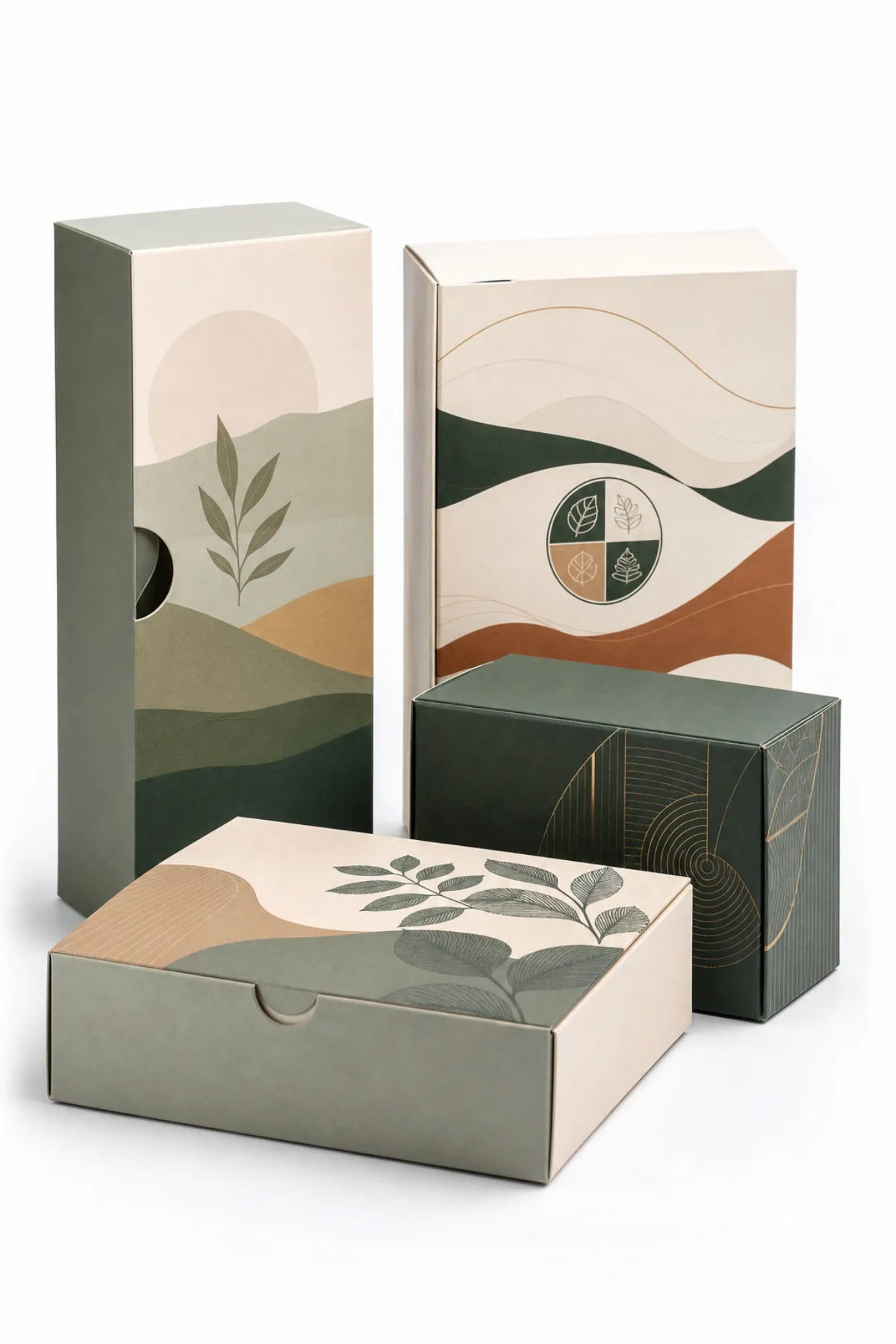
Custom offset printed cartons are paperboard cartons printed on an offset press, then converted into finished packaging through die-cutting, folding, and gluing. Ink moves from plate to blanket to board. That indirect transfer is why offset can deliver tight type, clean lines, and strong coverage with a level of control that suits branded packaging and high-visibility retail packaging. If the carton is carrying package branding, consistency is not a nice extra. It is the whole point.
These cartons fit best where appearance and repeatability both matter. Shelf-ready cartons. Product sleeves. Inner cartons. Display packaging. Secondary cartons that still need to do branding work. Cosmetics, supplements, personal care, electronics accessories, and premium food packaging all use them for the same reason: the product may be simple, but the carton needs to earn attention.
The business case is easy to see. If a carton helps a product command a higher shelf price, offset print quality can support that move. If a brand needs the same look across a multi-SKU line, custom offset printed cartons usually hold that consistency better than a method that wanders from run to run. Once an order moves into the 3,000, 5,000, or 10,000 unit range, setup cost starts to look reasonable instead of painful.
Offset is not the default answer for every project. Short runs under about 1,000 units can tilt toward digital because the setup burden is lower and changeovers are faster. Even so, custom offset printed cartons often become the better choice when visual standards are high and the order is large enough to absorb plates, press setup, and converting costs. I see the same mistake over and over: buyers compare unit price before they compare the economics of the whole run. That is backwards.
For brands still shaping the spec, it helps to review the broader Custom Packaging Products range and the Manufacturing Capabilities page before asking for quotes. That saves time. It also keeps you from building a carton around a guess.
Practical rule: custom offset printed cartons are usually the right call for quality and scale. Digital often wins on speed for very short runs, but offset tends to make more financial sense once the quantity rises and the brand needs tighter visual control.
How Custom Offset Printed Cartons Are Produced
The production path starts before ink touches board. Artwork setup comes first, and this is where packaging design either saves the schedule or wrecks it. The printer checks dielines, bleeds, safety areas, color builds, barcode placement, and image resolution. A file can look perfect on a screen and still fall apart once score lines, glue flaps, and tuck tabs enter the picture. That mismatch is one of those unglamorous problems that turns into an expensive one fast.
Plate making comes next. Each color usually gets its own plate, and that is part of the setup cost that makes offset different from digital. Once the press is ready, the image transfers from plate to blanket to substrate. That is what gives custom offset printed cartons their sharp text and clean color blocks. It also makes them strong on fine logos, product imagery, and tight registration on custom printed boxes.
The substrate matters just as much as the press. Paperboard choice affects image sharpness, fold quality, coating behavior, and rigidity. A common folding carton might use 14pt, 16pt, 18pt, or 24pt SBS, C1S, C2S, or CCNB, depending on the product, the retail environment, and the amount of abuse the pack will take. Custom offset printed cartons on a premium board can feel more substantial. Overbuilding the stock, though, pushes cost up without buying much in return.
After printing, the sheet may go through aqueous coating, varnish, matte or gloss lamination, foil stamping, embossing, debossing, or window patching. Each finish changes both the look and the production flow. A soft-touch matte laminate can add a premium feel, but it changes recyclability and can slow finishing compared with a simple aqueous coat. A foil accent can lift package branding. Too many effects add spoilage risk and drag out make-ready. Fancy is fine. Random is where the trouble starts.
Then the printed sheet moves to die-cutting, folding, and gluing. Non-packaging teams tend to underestimate this part. Custom offset printed cartons are not just printed sheets. They are engineered forms that must open, fill, close, ship, and survive the trip. A window, a crash-lock bottom, or a tight insert fit needs to be planned early so the converting tools match the design intent.
Before full production, ask for proofs and samples that show more than color. A digital proof helps confirm artwork placement. A hard proof or structural sample can expose registration issues, glue tab conflicts, and fold stress that a screen mockup will miss. For cartons that will move through parcel networks or retail replenishment, ask whether the job can be checked against relevant test methods such as ISTA procedures, especially if the pack must survive drops, vibration, or compression.
That is the part many buyers miss: custom offset printed cartons are not just a visual decision. They are a manufacturing sequence, and each step can change whether the final pack looks premium or just expensive.
"A good carton does not just survive the press check. It survives the fill line, the freight lane, and the shelf."
Key Factors That Shape Quality and Performance
Quality starts with the board. For custom offset printed cartons, board grade and thickness affect print appearance and the way the carton folds and resists crushing. A 16pt carton may be fine for a light cosmetic item. A heavier or more premium product may need 18pt or 24pt stock. If the carton has to hold shape on a retail shelf, the difference between a flexible board and a stiffer one is obvious from a few feet away.
Structure matters just as much. A straight tuck end, reverse tuck, crash-lock bottom, sleeve, tray, or rigid-style presentation pack all behave differently. A simple tuck carton is usually more economical. A crash-lock bottom can improve packing speed. Rigid-style cartons create a stronger unboxing moment, although they sit in a different cost tier and do not fit every product packaging strategy. Custom offset printed cartons should support the structure, not fight it.
Artwork variables bring another layer of risk and opportunity. Heavy ink coverage can look rich, but it can also scuff if the finish is too thin. Spot colors help maintain brand consistency, while gradients and photographic imagery demand better file preparation and tighter press control. Weak resolution or poorly built blacks can still print, but they will not print well. That is where prepress discipline earns its keep.
Finishing choices can raise perceived value fast. They can also complicate the job. A carton with matte laminate, foil, embossing, and a die-cut window may look impressive, but every added process adds another point of waste, another set of tolerances, and another chance for the schedule to slip. My better question is not, "What else can we add?" It is, "Which finish supports sales and which one only adds cost?"
Sustainability needs a practical look, not a slogan. Recycled content, right-sizing, and coating selection all affect the footprint of custom offset printed cartons. FSC-certified board may be required for some brands, and that can be a sensible sourcing filter when the supply chain needs documented fiber management. The FSC site explains the certification framework clearly: FSC. Smart material choices can also cut shipping volume, because a carton that fits better wastes less corrugate, less void fill, and less truck space.
From a packaging professional's point of view, the best-performing custom offset printed cartons usually share three traits: the board matches the load, the structure matches the line, and the finish matches the brand promise without turning production into a circus.
Useful checkpoint: if the carton must protect product in transit, ask for compression guidance, edge-crush expectations, and any relevant testing references before you sign off on the spec. ASTM and ISTA language is far more useful than a vague promise of "durable."
Custom Offset Printed Cartons Pricing and Cost Drivers
Pricing for custom offset printed cartons usually comes down to a few variables: run length, board type, color count, die complexity, finishing steps, and the amount of setup work needed before the press can run clean. More setup and more finishing mean more cost. The useful part lives in the details, because the spec choices made before quoting can move the unit price by a wide margin.
Offset has a setup-heavy cost structure. That means the economics improve as the quantity rises. A short run of 1,000 cartons can carry a unit price that looks high because plate work and press setup are spread over too few pieces. Push that same design to 5,000 or 10,000 units, and the unit price can fall hard because the setup cost gets diluted. That is why custom offset printed cartons often make sense for stable SKUs, not only launch packaging.
To make the comparison easier, here is a practical pricing lens. These are ballpark ranges, not quotes, and board choice, print coverage, freight, and finishing can move the numbers up or down. They still help with planning.
| Printing Method | Typical Run Size | Setup Profile | Approximate Unit Range | Best Use Case |
|---|---|---|---|---|
| Digital carton printing | 250-1,000 units | Low setup, fast changeovers | $0.60-$1.50 | Short runs, frequent artwork changes, launch tests |
| Custom offset printed cartons | 3,000-20,000+ units | Higher setup, better scale economics | $0.18-$0.75 | Retail packaging, branded packaging, stable SKUs |
| Flexographic cartons | Often larger volume, simpler graphics | Moderate setup, efficient on repeats | $0.12-$0.40 | Secondary packaging, simpler line art, corrugated applications |
That table leaves out something important: the lowest unit price is not always the lowest total cost. If a carton supports a premium product price, stronger print finish may help conversion at retail. If a carton reduces damage in transit, it can save more in returns than it costs in print. Custom offset printed cartons should be judged against total packaging cost, not just the invoice line.
Buyers also miss hidden costs. Plates, prepress corrections, hard proofs, freight, storage, and extra waste for color approval all add up. A quote that looks cheap on the surface can hide proofing or tooling charges somewhere else. Ask for the full picture. Then compare like for like across board spec, print coverage, finishing, and delivery terms.
Premium finishes can be worth the spend when the carton carries the sales job. A foil logo or soft-touch coating may be justified on a high-margin skincare line or a gift-ready retail carton. On a low-margin commodity item, those same finishes can crush profit. That is the tension in custom offset printed cartons: the package needs to reinforce the product's value without eating the value itself.
If you want a reliable budgeting frame, think in four layers: carton unit cost, total packaging cost, damage risk, and brand impact. The right number is not the cheapest one. It is the number that still leaves room for margin, freight efficiency, and the visual standard your market expects.
Step-by-Step Process and Timeline for Ordering
The cleanest custom offset printed cartons project starts with a clear discovery phase. Before anyone asks for a quote, define the product dimensions, fill weight, shipping requirements, shelf environment, branding goals, and target quantity. A carton for a 4 oz jar is not the same as a carton for a glass bottle, even if both use the same print method. Sounds obvious. Somehow it still gets missed.
Quoting and prepress come next. Send the dieline, artwork files, carton specs, and any compliance or retail requirements. A good supplier should flag issues before production, not after. This is also the point to ask about board options, finishing choices, and whether the structure needs reinforcement. If you have not locked the pack yet, reviewing Custom Packaging Products can help narrow the structure. If the job needs windows, coatings, or a more complex convert, the Manufacturing Capabilities page can help set expectations before the quote stage.
Sampling and approval come next. A structural sample can confirm that the carton folds, locks, and fills correctly. A digital proof can verify color placement and copy. A hard proof or press proof may be worth the extra step if color precision matters. That extra review often prevents rework that would cost more later. For custom offset printed cartons, I would rather spend a little more time at proof stage than pay for a correction after plates are already made.
Once the job is approved, the production sequence is usually straightforward: plate making, press setup, printing, coating or finishing, die-cutting, folding, gluing, packing, and shipment. For a standard run with clean artwork and in-stock board, custom offset printed cartons often move through production in about 12-15 business days from final approval. Add foil, embossing, window patching, or custom inserts, and the timeline can stretch. If the schedule matters, ask whether your date is based on approval, press start, or finished goods departure. Those are different dates, and they do not mean the same thing.
Timeline risk usually comes from the same few places. Artwork changes after proof approval. Board availability shifts. Seasonal demand crowds the press schedule. The brand team wants one more revision, and suddenly the cartons are waiting while the launch date keeps moving. None of that is unusual. It just means the planning window should include slack, especially for custom offset printed cartons tied to a retailer reset, product launch, or trade show deadline.
A useful way to manage the timeline is to break it into milestones:
- Spec lock: product size, board, structure, quantity, and finish.
- Prepress review: dieline, artwork, color targets, and copy checks.
- Sample approval: structural sample and proof sign-off.
- Production: printing, converting, and inspection.
- Delivery: packing, freight, receiving, and line release.
That sequence sounds simple. It is also where most smooth jobs are won. Custom offset printed cartons usually run better when the buyer, designer, operations lead, and supplier are all working from the same spec sheet, not four different versions of it.
Common Mistakes to Avoid with Custom Offset Printed Cartons
The first mistake is ordering without a confirmed dieline. Screen graphics can hide structural problems, and that gets expensive the moment a fold line, glue tab, or cutout lands in the wrong place. Custom offset printed cartons need to be engineered for the physical pack, not just the visual layout. If the template is wrong, the artwork is wrong too.
The second mistake is underestimating lead time. Buyers often plan the launch date first and the packaging timeline second. That creates pressure, and pressure creates shortcuts. If custom offset printed cartons need fresh plates, a structural sample, a finish review, or multiple approval rounds, the order should start earlier than you think. A launch window can disappear fast once revision cycles begin.
The third mistake is overdesign. More coatings. More special inks. More foil. More embossing. More everything. The result can look flashy and still damage margin. Good packaging design is not about stacking effects. It is about choosing the few details that actually support the product story and the retail price. If the carton is sold through ecommerce, a clean structure may matter more than another print pass.
The fourth mistake is ignoring shipping realities. A carton that looks refined on a table can still crush, rub, or scuff under load. If the box will move through parcel carriers, warehouse shelving, or repeated replenishment, ask for compression guidance and distribution testing. ASTM D642 compression tests and ISTA methods are useful references when the supply chain is rough on packaging. Custom offset printed cartons should be beautiful, yes, but they also need to be practical.
"If the pack fails in the freight lane, shelf appeal is not enough to save it."
The final mistake is waiting too long to verify print expectations. Brand teams often approve a monitor proof and assume the press will match it exactly. That is not how production works. Ask early about acceptable tolerances for color, registration, and coating appearance. If the product line depends on a very specific brand color, make sure the vendor knows the standard before plates are made. Custom offset printed cartons can hold a tight standard, but only if the target is defined.
One practical habit helps more than people expect: compare the sample against the real product, not just the mockup. A carton can look perfect in isolation and still fail the shelf test once it sits beside competitor packs. Custom offset printed cartons are part of the buying experience. They need to work in context, not in a vacuum.
Expert Tips and Next Steps for Better Results
Start by asking for samples from similar jobs, not generic paper samples. A real carton sample lets you compare board feel, fold memory, coating behavior, and print clarity in a way spec sheets cannot. If the sample is close to your product category, you will learn faster. That matters with custom offset printed cartons, where the finish stack can change the feel as much as the graphics.
Build a short decision checklist before you compare quotes. You do not need a 20-page procurement pack. You need the essentials: product size, protection level, brand impression, order volume, target cost, launch date, and whether the carton is going into retail packaging or direct-to-consumer fulfillment. If that checklist stays consistent, the quotes are easier to compare and the vendor feedback becomes more useful.
Compare offset against digital and flexographic options using the same carton spec. That sounds obvious, yet many quotes cannot be compared because each supplier is quoting a slightly different board or finish stack. For custom offset printed cartons, apples-to-apples quoting is the difference between informed buying and noisy buying. Ask for the same dieline, same dimensions, same quantity, and same finish assumptions across all quotes.
Align packaging and operations early. The carton has to work in the fill line, in storage, and in fulfillment. If it slows packing, creates dust, needs too much hand assembly, or fits badly on pallets, it is not a clean solution. Custom offset printed cartons should reduce friction, not create a new workstation problem. That operational check is easy to skip and expensive to fix later.
Here is the simple action plan I recommend:
- Gather the product dimensions, weight, and shipping profile.
- Lock the structure and dieline before final artwork.
- Request two or three comparable quotes for custom offset printed cartons.
- Review proofs with both brand and operations teams.
- Test the carton with real product before approving the full run.
My blunt view: the best custom offset printed cartons are the ones that look intentional, pack efficiently, and survive the real logistics chain without drama. Fancy is optional. Fit is not.
For most brands, custom offset printed cartons are worth the effort when the carton is carrying brand value, the quantity is large enough to absorb setup costs, and the final pack has been tested against actual product and shipping conditions. The clean takeaway is simple: lock the structure early, compare quotes on the same spec, and test the pack before plates are made. That is how you keep the box useful instead of merely pretty.
FAQ
What makes custom offset printed cartons different from digital cartons?
Offset usually delivers stronger color consistency, sharper type, and better economics at higher volumes. Digital is often better for very short runs, quick turnarounds, or frequent artwork changes. The right choice depends on the quantity, the finish stack, and how much setup cost you can spread across the run.
Are custom offset printed cartons worth it for small brands?
They can be, especially if the carton is part of the brand story and the order volume is stable. Small brands should compare custom offset printed cartons against digital and ask whether the pack will stay in use long enough to justify plates and setup. If the carton sells in retail, premium print quality can support perceived value and pricing.
How long do custom offset printed cartons usually take?
Timing depends on artwork readiness, proof approval, material availability, and finishing complexity. A straightforward job can move in about 12-15 business days after approval, while special coatings, structural testing, or multiple revision rounds can extend the schedule. The safest plan is to build extra time for sampling before production is booked.
What information do printers need for an accurate quote?
Provide carton dimensions, quantity, board preference if known, print colors, finishing requests, and the shipping destination. Include a dieline, artwork files, and any retail or compliance requirements so the quote reflects the real job. The more complete the spec sheet, the fewer surprises in pricing and timeline.
How can I lower the cost of custom offset printed cartons?
Reduce unnecessary finishes, simplify the structure, and choose a board that meets the job without overbuilding it. Increase order quantity when possible, because offset pricing generally improves as setup costs are spread over more units. Keep artwork stable and approve files quickly to avoid rework, waste, and schedule delays.

