Custom Padded Mailers for Bakery Reorders: Ready to Quote The custom padded mailers for bakery packaging reorder planning guide is really a control document disguised as a packaging article. The hard part is not getting a sample approved once. The hard part is making the next 5,000 units behave exactly like the first 500, without a surprise in fit, seal performance, or print alignment.
Bakery buyers usually know the product side well. What gets missed is the packaging side: a tray changes by a few millimeters, a closure strip shifts, humidity changes the way paper behaves, and suddenly a reorder that looked safe turns into a line bottleneck. The margin loss is rarely dramatic on a single carton. It becomes visible only after enough tiny problems stack up.
Custom Padded Mailers sit in an interesting middle ground. They can be lighter and faster than a box-with-insert build, but they still need the right amount of structure to protect cookies, brownies, mini loaves, and mixed gift sets. Used well, they reduce touchpoints. Used carelessly, they become a repack problem with branding on it.
Why bakery reorders go sideways
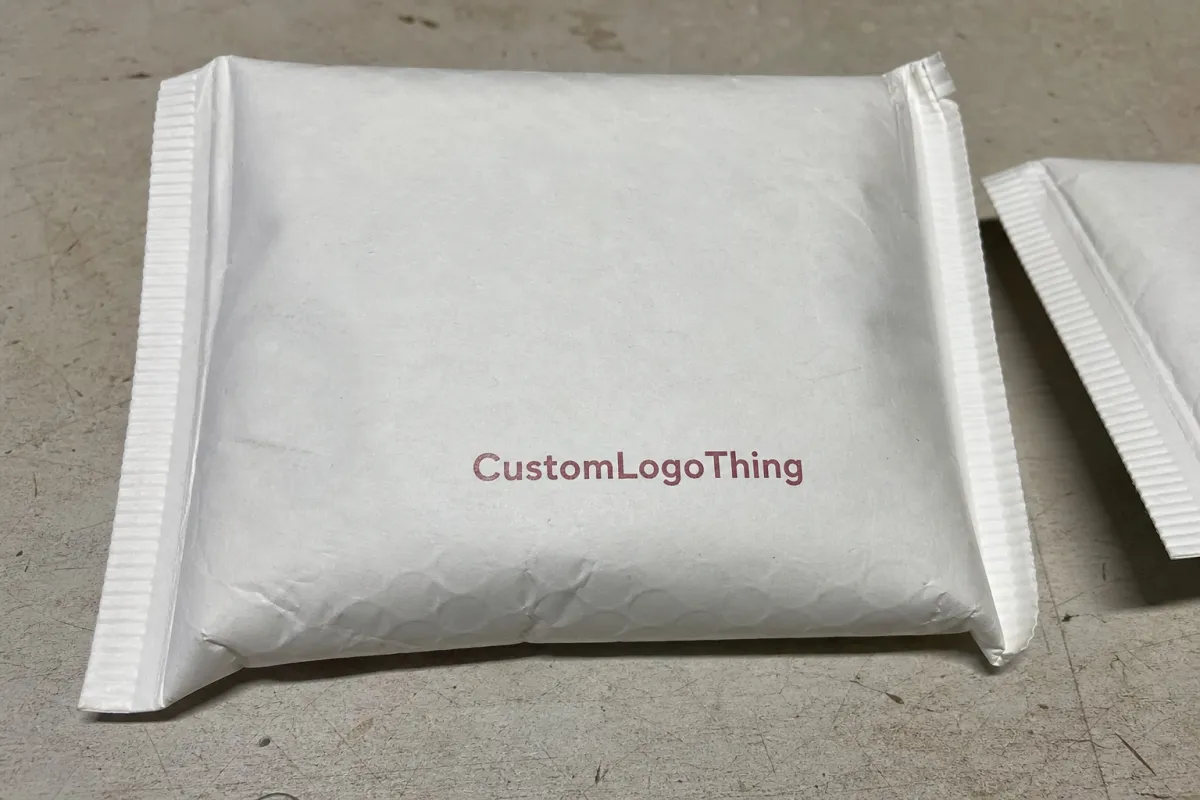
The most expensive problems usually start before production. A buyer assumes the last approved sample is enough, then sends a short email that says “same as before” without attaching the actual specs. That works until one of the hidden variables changes: material lot, print coverage, closure strength, or the dimensions of the packaged bakery item itself.
That matters more in bakery packaging than in many other categories because the product is often irregular. A brownie tray, a cookie sleeve, and a mini loaf do not load the same way. One needs edge protection. Another needs compression resistance. Another needs enough headroom that the top seam does not crush the product during closing. A mailer that fits a flat bar can be wrong for a taller item even when the outer footprint looks close.
There is also a labor issue. If a closure takes extra pressure, the pack line slows. If the fit is too tight, operators start forcing product into the mailer, which increases damage and makes consistency worse. A difference of a quarter inch does not sound dramatic until it appears thousands of times in a shift.
- Loose fit allows movement, corner scuffing, and broken product edges.
- Tight fit slows packing and can deform the inner bakery pack.
- Weak seal raises return risk and invites repacks.
- Inconsistent print makes the reorder look like a different product line.
The cleanest reorder is usually the boring one. Same structure, same closure feel, same protective behavior, no surprises.
What the mailer needs to protect
Bakery products fail in different ways. Cookies chip at the edges. Brownies shift as a dense block. Mini loaves can press into the top seam. Gift sets are often the hardest because the contents are uneven, which makes the pack unstable under vibration. The outer mailer has to solve for the weakest part of the load, not the prettiest version of it.
For most bakery shipments, the mailer needs to do three jobs at once: cushion the contents, hold the closure under stress, and present well enough that the brand impression survives the first touch. That is why packaging spec and product spec need to be written together. If the bakery tray changes, the mailer spec should be checked again.
Not every bakery order should use a padded mailer. Rigid, stackable, or corner-sensitive products can still do better in custom printed boxes. A padded mailer can reduce material count and cut down on dead space, but if the contents need stronger compression resistance, lighter packaging is the wrong trade.
One caveat is easy to miss: the outer mailer should not be treated as food contact packaging unless the structure and compliance documentation explicitly support that use. Most bakery shipments still rely on an inner food-safe wrap, tray, or pouch, with the mailer acting as the shipping layer. That is an important distinction for claims, labeling, and buyer expectations.
If you want a practical testing reference, the ISTA methods are useful even though they are not bakery-specific. Drop, vibration, and compression testing help expose where a package is likely to fail long before a customer does.
- Cookies and bars: prioritize edge protection and seal integrity.
- Brownies and dense slices: watch product shift and pressure transfer.
- Mini loaves: confirm vertical clearance and top seam tolerance.
- Gift sets: test the heaviest mixed configuration, not the neatest one.
Specs to lock before you reorder
A serious Custom Padded Mailers for bakery packaging reorder planning guide starts with the measurable details, not the artwork file. Measure the filled package, not the empty tray or the marketing mockup. Then add only enough room for closure and movement control. In many bakery applications, a clearance of about 0.25 to 0.5 inches per side is a workable starting point, but the right number depends on shape, fragility, and how much motion you can tolerate without damage.
These are the specs worth locking before a quote goes out:
- Finished outer dimensions: exact width, height, and depth.
- Usable inner space: subtract seam allowance, fold-over areas, and any adhesive strip intrusion.
- Closure type: peel-and-seal, pressure-sensitive adhesive, or another format matched to line speed.
- Substrate: paper for a more natural retail feel, poly for moisture resistance, or recycled-content paper when the brand story requires it.
- Padding style: bubble, paper cushion, or molded fiber depending on weight and crush risk.
- Print coverage: one-color branding, full coverage, or limited mark placement for barcodes and handling copy.
- Surface requirements: ink rub resistance, moisture behavior, and whether the outside finish needs to survive cold-chain condensation.
Material choice should be tied to the bakery item, not to trend language. Paper-faced mailers usually look better in a retail bakery environment and are easier to align with sustainability claims. Poly-based options can perform better in damp conditions or rough handling. Coated paper can sit somewhere in the middle, but if the coating creates a slick surface that frustrates labeling or stacking, the cosmetic gain may not be worth it.
For reorders, simple print is often the best print. One-color artwork is faster to match, easier to approve, and less likely to create color variation between runs. Heavy coverage, foil, or specialty inks can look great, but they add setup time and increase the chance of mismatch if the supplier changes equipment or substrate lot.
The broader lesson is the same across most branded packaging decisions: let the structure carry the job, then let the design support it. That principle applies whether the outer format is a mailer, a carton, or another piece of shipping packaging. If the functional spec is weak, attractive graphics will not rescue it.
If your line also handles non-food accessories or mixed merch, compare the format against Custom Poly Mailers and other options in Custom Packaging Products. The lowest unit price is not always the lowest landed cost once labor, storage, and spoilage risk are included.
Pricing, MOQ, and lead time
Quote accuracy depends on the inputs you send. The same mailer can price very differently depending on size, substrate, print count, adhesive type, and the quantity break you choose. Larger formats use more material. More print colors add setup and matching time. Heavier padding raises substrate cost and sometimes freight weight. None of that is mysterious; it is just the economics of materials and labor.
For bakery buyers, the point is to get the quote anchored before anyone starts guessing. If you already know the dimensions, volume, and delivery window, the supplier has fewer places to hide behind broad ranges.
| Option | Typical MOQ | Unit cost range | Lead time | Best fit |
|---|---|---|---|---|
| Stock padded mailer + label | 250-500 | $0.45-$0.85 | 3-7 business days | Urgent reorders, test runs, short promotions |
| Light custom print | 1,000-3,000 | $0.28-$0.55 | 10-18 business days | Recurring bakery SKUs with simple branding |
| Fully custom size + print | 3,000-5,000+ | $0.18-$0.42 | 15-25 business days | Higher volume and tighter brand control |
Those are typical ranges, not guarantees. A narrow mailer with plain print can land near the low end. A larger format with recycled content, heavier padding, or a special adhesive can move the cost up quickly. Freight matters as well. A price that ignores the destination zip code, carton count, or pallet pattern is not a finished quote. It is a placeholder.
The MOQ question is not just about the factory. It is also about storage and cash flow. A low unit price can become expensive if you have to warehouse too much inventory or if your SKU mix changes faster than the packaging cycle. For some bakery brands, a slightly higher per-unit price is worth it because it prevents dead stock after a seasonal reset.
Send these inputs with the request:
- Finished dimensions and target fill weight
- Artwork files and print count
- Quantity breaks for the current and next run
- Shipping zip code and delivery deadline
- Sample or proof requirements
- Warehouse, carton pack, or pallet constraints
If you are comparing volume programs or planning the next quarter, the Wholesale Programs page helps frame the reorder in the context of storage and replenishment. Packaging costs make more sense when they are tied to how quickly the bakery actually turns product.
Production and QC checks
A good reorder follows the same sequence every time: spec confirmation, proof review, sample approval, production, and freight booking. Skip one step and the failure usually appears later as a timing problem, not a neat packaging problem. Most delays come from art revisions, unclear notes, or someone assuming the old PO is enough to define the new run.
Use the reorder calendar as seriously as the spec sheet. Holiday bakery shipments, gift drops, and seasonal promotions compress the timeline fast. If you are counting on a launch window, count backward from the delivery date and add time for proof corrections plus transit.
- Spec confirmation: match dimensions, material, and closure to the approved sample.
- Proof review: verify artwork placement, barcode zones, and any legal copy.
- Sample approval: test the heaviest normal configuration, not the lightest one.
- Production: most custom runs land in the 10-25 business day range depending on complexity and queue.
- Freight and receiving: add another 2-7 business days for domestic transit, plus receiving time if the warehouse is busy.
QC should focus on repeatability. Check closure strength, print position, adhesive coverage, panel alignment, and whether the mailer still seals cleanly after a few open-close cycles if the structure is meant to be handled more than once. For food packaging, moisture exposure matters more than many teams expect. A bakery product pulled from a cold environment can create condensation, and that affects paper, ink, and label adhesion in ways a dry-room sample will not reveal.
It helps to keep the approved dieline, final proof, and a photographed sample with the PO. That is not paperwork for its own sake. It is how you stop a reorder from drifting when the original contact is unavailable or a production note has to be interpreted weeks later.
Supplier questions that cut risk
The best supplier conversations are specific. Ask how the previous run was built, what changed since then, and which component is most likely to vary on a repeat order. A good partner should be able to speak in plain terms about adhesive behavior, liner consistency, substrate lot variation, and print tolerance. If the answer is only “same as last time,” push for the actual spec.
If the spec is not written down, it is not a spec. It is a memory.
These checks are worth doing before approval:
- Proof quality: dimensions, print placement, and material callouts should be unambiguous.
- Sample policy: know whether the sample is free, credited back, or billed separately.
- Response speed: delayed answers on basic questions usually turn into delayed production later.
- Repeat consistency: ask how they hold adhesive, liner, and print setup steady across runs.
- Claim handling: confirm who owns the timeline if defects, crush issues, or print mismatch appear.
- Compliance support: if fiber claims matter, ask for the documentation before the print file is released.
For paper-based builds, FSC chain-of-custody can matter if the claim is part of the brand story. The FSC reference is useful because it separates a real certification from vague eco language. If the mailer will carry a sustainability statement, get the paperwork in order before the print run starts.
One more practical filter: suppliers that handle support questions clearly are often more reliable on reorders, because organization shows up in the small things first. That is not a guarantee, but it is a useful signal.
Common reorder mistakes
Most packaging losses are small and repetitive. A slightly undersized mailer creates manual rework. A file named “final_final_v3” creates avoidable approval time. Overbuying because demand feels strong ties up cash and storage. None of those mistakes is dramatic. Together, they can wreck the economics of a clean packaging program.
Freight and warehousing are easy to underestimate. Buyers often focus on the unit price and ignore carton count, pallet height, and receiving constraints. A few extra cases can raise storage fees. A sloppy pallet pattern can cause damage before the product leaves the dock. Bakery packaging is especially sensitive to this because product value per unit is often modest compared with the labor wrapped around it.
Another common problem is packaging drift. The bakery tray gets revised, the insert changes, or the closure label moves, but the mailer spec is left untouched. The outer format no longer fits the inner pack quite the same way, and the issue is only discovered after packing starts. The product may still be the same flavor, but the package is not the same system.
Use this short checklist before releasing the PO:
- Current sales velocity for the last 8-12 weeks
- Safety stock target in units and days of cover
- Promo dates or seasonal peaks
- Active SKU mix and planned flavor changes
- Approval owner for art, specs, and spend
When those basics are clear, a reorder is much less likely to wander. That is the real value of disciplined packaging planning: fewer surprises, fewer exceptions, and less time spent fixing what should have been locked in the first place.
How do I choose the right size custom padded mailers for bakery packaging reorders?
Measure the filled, ship-ready package rather than the empty bakery container. Leave enough room for closure and a small movement buffer, then test the heaviest normal configuration before approving the final spec. If the item shifts or the seam bulges, the size is probably too tight.
What MOQ is typical for custom padded mailers for bakery packaging?
MOQ depends on print method, size, and substrate. Many custom runs start around 1,000 to 5,000 units, while stock or lightly customized options can run lower. Ask for quantity breaks early so you can compare unit cost against storage and cash flow rather than looking only at the headline price.
How long does a bakery packaging mailer reorder usually take?
Once artwork and specs are ready, proofing may take a few business days. Production often falls in the 10 to 25 business day range depending on complexity and factory load, and freight is separate. Build in time for receiving and any warehouse constraints.
What print options work best for custom padded mailers used in bakery packaging?
One-color branding is often the safest choice for reorders because it is faster to approve and easier to match between runs. Complex art, foil, and full coverage can increase cost and extend lead time. Keep barcodes, handling marks, and compliance copy clear and unobstructed.
Can I reorder custom padded mailers for bakery packaging from an old spec sheet?
Yes, if the dimensions, artwork, and material specifications are still current and the previous run performed well. Send the prior PO, dieline, proof, or approved sample photos so the supplier can match it accurately, and ask for a fresh proof before production because small setup differences still matter.

