Buyer Fit Snapshot
| Best fit | Custom Padded Mailers for Coffee Roasters projects where brand print, material claims, artwork control, MOQ, and repeat-order consistency need to be specified before quoting. |
|---|---|
| Quote inputs | Share finished size, material target, print colors, finish, packing count, annual reorder estimate, ship-to region, and any compliance wording. |
| Proofing check | Approve dieline scale, logo placement, barcode or warning zones, color tolerance, closure strength, and carton packing before bulk production. |
| Main risk | Vague material claims, crowded artwork, missing packing details, or unclear freight terms can make a low unit price expensive after revisions. |
Fast answer: Custom Padded Mailers for Coffee Roasters: Durability should be specified like a repeatable production item. The safest quote records material, print method, finish, artwork proof, packing count, and reorder notes in one written spec.
Production checks before approval
Compare the actual filled-product size with the drawing, then confirm tolerance on folds, seals, hang holes, label areas, and retail display edges. Reserve space for logos, QR codes, warning copy, and material claims before decorative graphics fill the panel.
Quote comparison points
Review material grade, print process, finish, sampling route, tooling charges, carton quantity, and freight assumptions side by side. A quote is only useful when the supplier can repeat the same color, closure quality, and packing count on the next order.
Custom Padded Mailers for Coffee roasters shipping durability checklist is a long keyword, but the problem it points to is simple: packaging fails in ordinary conditions, not heroic ones. A weak seam, a sloppy fit, or a closure that gives up in a cold truck will do more damage than a dramatic drop test ever will. Packaging rarely dies in a blaze. It usually quits quietly.
That matters for coffee roasters because customers judge the shipment before they judge the roast. If the mailer arrives crushed, stained, or half-open, nobody blames the carrier with much conviction. They blame the brand that packed it. That affects repeats, subscriptions, and reviews, which is exactly where margin gets made or lost.
The best mailer is not the prettiest sample on the desk. It is the one that survives the ugliest route without making a scene.
For roasters shipping sample bags, apparel, stickers, and other light add-ons, padded mailers can be a smart middle ground between a flat poly mailer and a full box. If you are sorting through formats and materials, our Custom Packaging Products page is a practical place to compare options without pretending every order has the same needs.
Custom Padded Mailers for Coffee Roasters Shipping Durability Checklist
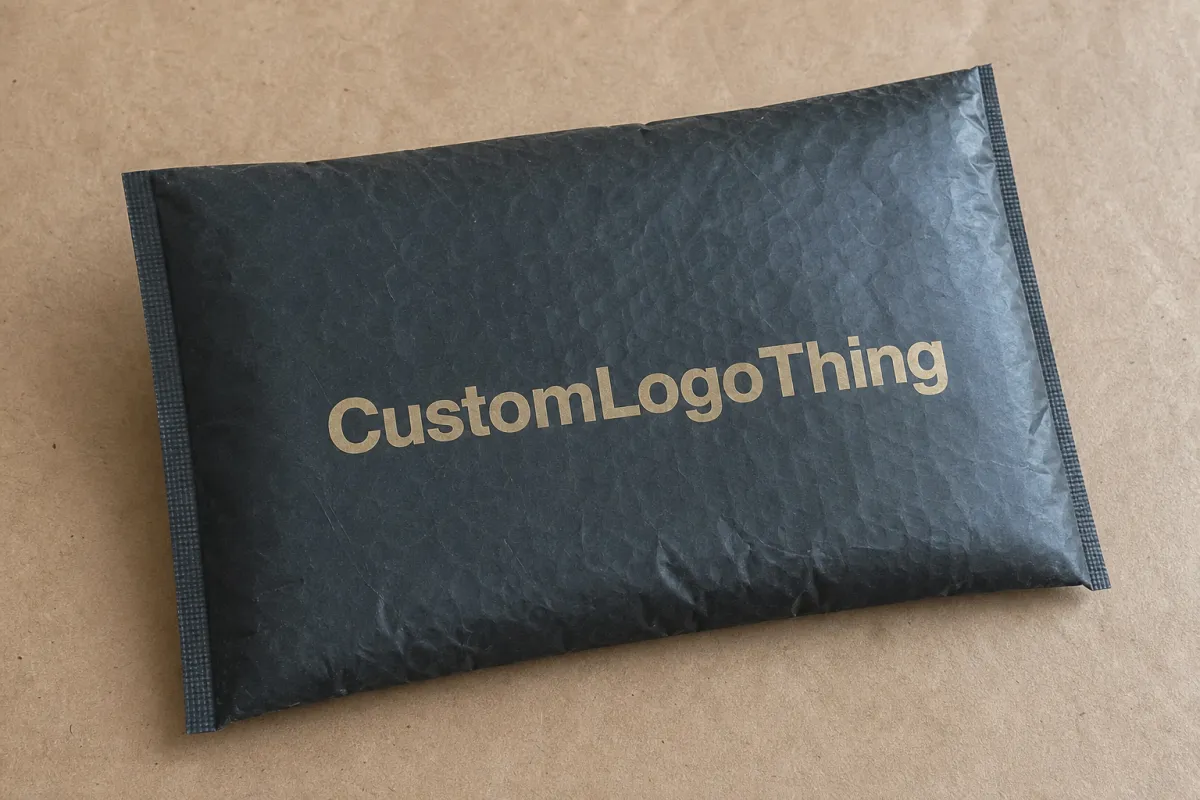
The phrase sounds technical because the decision actually is technical. A mailer is not durable in a vacuum. It is durable for a specific weight, route, finish, and packout. A real Custom Padded Mailers for Coffee roasters shipping durability checklist starts with the shipment, not the artwork.
Padded mailers are lightweight shipping mailers with an internal cushioning layer. That layer may be bubble-based, paper-based, or foam-like, depending on the build. The outside can be film, kraft, or a printed paper face that handles abrasion during sortation and delivery. The goal is straightforward: protect smaller shipments from scuffs, light impacts, and the kind of handling that happens between the warehouse and the doorstep. You get more protection than a flat mailer and less bulk than a corrugated box.
Roasters usually use them for:
- Sample bags and tasting kits
- Stickers, inserts, and promotional cards
- Apparel like tees and hats
- Small merch bundles with low crush risk
- Light accessories that do not need rigid wall support
They are not a cure-all. Heavy tins, glass, ceramic mugs, grinder parts with sharp edges, and mixed bundles with real crush risk usually need a box or a hybrid packout. I have seen teams try to force a padded mailer to carry a gift set that clearly wanted a box. The mailer lost. The customer paid for the mistake.
Coffee roasters care about this more than some brands because the package is part of the product story. Coffee is sensory. The outer pack has to support freshness, care, and consistency, even if the coffee itself is sealed in a proper inner barrier bag. Transit packaging does not preserve roast freshness, but it absolutely shapes how the brand feels when the order lands.
Bad shipping choices also create hidden labor. A torn mailer means relabeling, re-shipping, refunds, and customer service cleanup. That costs postage and time, and both are expensive when volume grows. Durability is not a luxury feature. It is a damage-control problem with a packaging budget attached.
How Custom Padded Mailers Protect Coffee Shipments
Protection comes from three parts working together: abrasion resistance, impact absorption, and closure strength. The outer face takes the abuse from belts, bins, and other parcels. The inner layer softens short drops and compression. The seal keeps the package closed after the rest has done its job.
That sounds neat until one layer has to do all the work. A mailer can look premium in a mockup and still split because the seam is thin. Another can have decent cushioning and still fail because the adhesive strip is weak in cold storage or dusty packing conditions. Packaging is physical. The mockup does not get a vote.
Compared with flat poly mailers, padded versions add a useful buffer for smaller items that need extra protection. Compared with Custom Shipping Boxes, they save weight and often reduce freight cost, but they do not match box-level crush resistance. That tradeoff is the point. Match the structure to the shipment instead of asking one format to cover every order.
If your catalog is heavy on sample packs and light merch, a padded mailer can beat a box on cost and speed. If you are shipping thicker bundles or anything with sharp corners, a box is usually the better answer. For some programs, it also makes sense to compare against Custom Poly Mailers before you lock the spec. A padded mailer gives more protection than a simple poly mailer, but it is not a force field.
Transit conditions matter just as much as the package itself. A mailer that survives a local route may fail on a longer lane with more sortation, more trailer time, and more temperature swings. Moist air can weaken adhesive performance and curl paper facings. Rough last-mile handling can flatten corners or stress side seams. Weak specs get exposed fast on longer routes.
For teams that want a more formal benchmark, ISTA is a useful reference for transit simulation methods. It keeps testing grounded in actual handling conditions instead of wishful thinking.
Key Durability Factors: Film, Padding, Seal, and Sizing
Durability is a stack of choices. If one layer is weak, the whole package pays for it. Start with the outer face or film. Thicker material usually costs more, but it can reduce tears, punctures, and returns. For many polyethylene mailers, a common range lands around 2.5 to 4 mil, though the exact spec depends on the construction and supplier. Paper-based mailers work differently. Face strength, tear resistance, coating quality, and basis weight matter more than a single thickness number.
Some premium paper-faced padded builds use a 350gsm C1S artboard laminated to the structure. That is not magic. It simply gives the mailer a stiffer face, a cleaner print surface, and more resistance to scuffing than lighter stock. If the goal is a retail-ready appearance for ecommerce or pop-up sales, that extra stiffness can help the package hold shape after packing and sortation.
Padding type is the next decision point.
- Bubble-style cushioning handles light impacts well and keeps weight down.
- Paper-based cushioning suits fiber-forward branding, but it needs testing for abrasion and moisture.
- Foam-like layers can feel protective, though they are not automatically better unless the seam and outer face can keep up.
Seal quality is not negotiable. A mailer with a weak adhesive strip can fail even if the rest of the structure is solid. Cold warehouses, dusty packing stations, and longer storage windows make that worse. If the adhesive is sensitive to temperature or contamination, the package can pop open after a few bumps. The clean unboxing moment is gone before it starts.
Sizing is where a lot of buyers waste money. Oversized mailers let the product move around. That movement pushes stress to seams and corners instead of letting the cushioning do the work. Undersized mailers stress the closure, flatten the contents, and make the package look forced. The best fit is usually the smallest size that still leaves room for the product, inserts, and a little tolerance. For coffee bundles with a pouch, card, and thank-you insert, that tolerance might only be 3 to 5 mm on each side. More than that, and the order starts floating.
Here is the practical checklist I would use before placing an order:
- Confirm the filled weight of the packout, not just the product weight.
- Check whether sharp edges, tin ties, or folded carton corners can rub through the inner layer.
- Test the closure after packing, storage, and a few handling cycles.
- Ask whether the print finish resists scuffing, label adhesive, and finger oils.
- Choose a paper face, gloss face, or matte finish based on handling conditions and brand look.
Print durability matters more than people expect. A mailer can survive transit and still arrive looking cheap because the ink scuffed, the label bled, or the adhesive strip showed through the face. That is not a shipping failure in the strict sense, but it still hurts the brand. If retail packaging and ecommerce shipping both signal quality, the exterior has to support that story.
A mailer that arrives intact but looks rough still costs you brand value. Customers do not separate those two things.
Roasters building a broader package system should think beyond the mailer itself. Artwork, insert placement, seal location, and label area all shape the final result. That is where packaging design and order fulfillment meet. A beautiful format that is annoying to pack becomes a daily headache. A practical format with clean branding becomes a quiet win.
If your line also includes retail-ready formats or gift sets, compare mailers against custom printed boxes during the same planning cycle. The best structure is not always the one that looks the most premium. It is the one that fits the product, the margin, and the route.
Production Steps, Lead Time, and Timeline Planning
Production is where theory gets measured. The chain usually starts with artwork and dieline approval, then moves into sampling, proofing, manufacturing, quality checks, packing, and freight scheduling. If one step slips, the launch date slips too. That matters for roasters running seasonal blends, subscription refreshes, or event drops.
A realistic timeline usually looks like this:
- Artwork and dieline review: 1 to 3 business days if files are clean, longer if logo placement is still under discussion.
- Sampling and proofing: 3 to 10 business days depending on the structure and whether you want physical samples or digital proofs first.
- Production: often 12 to 15 business days from proof approval for straightforward custom padded mailers, and often 2 to 4 weeks for more complex print setups or specialty materials.
- Transit: anywhere from a few days to several weeks depending on domestic air, domestic ground, or ocean freight.
- Receiving and inspection: a few more days if you are checking cartons, counts, and finishing before release to the warehouse.
That is a planning window, not a guarantee. Stock-based options move faster because the structure already exists. Fully custom specs need more time for setup, testing, and back-and-forth on artwork or print coverage. If you are launching on a hard date, do not pretend the factory clock is the only clock that matters. Shipping lanes have their own timing, and they are rarely polite about it.
A clean timeline checklist for coffee roasters usually includes:
- Final artwork files ready to send
- Dieline confirmed by the supplier
- Physical sample reviewed with the actual filled product
- Production slot reserved before peak season
- Freight method confirmed and priced
- Warehouse receiving plan in place
Peak shipping periods stretch everything. Holiday volume, major roast launches, and subscription renewal waves all add pressure to the factory and the carrier. If packaging is part of a launch, build buffer into the schedule. Approve the design earlier than feels comfortable, then leave room for a second sample if the first one exposes a problem. That extra week is usually cheaper than an emergency reprint.
For buyers comparing formats, the decision usually comes down to control versus speed. A faster stock option can get product out sooner, but a custom run gives you tighter sizing, better brand fit, and a cleaner match with fulfillment. If packaging is part of a broader system, that extra control can be worth the wait.
Cost, Pricing, MOQ, and Unit Economics
Price is where packaging decisions get sloppy. Buyers ask for a unit quote, then forget setup, sampling, freight, storage, and the cost of a bad fit. That is how a cheap package turns into an expensive one. The better question is not, "What does each mailer cost?" It is, "What does one shipped, damage-free order cost me?"
These are the main price drivers:
- Material thickness and construction - stronger outer layers and better cushioning raise cost.
- Print coverage - one-color branding costs less than full-coverage custom print.
- Size - larger formats use more material and often ship in bigger cartons.
- Closure upgrades - stronger adhesive strips or tamper-evident features add cost.
- Order volume - higher volume usually lowers unit cost, sometimes sharply.
- Special sourcing - FSC-certified paper, specialty finishes, or custom sizing can raise the quote.
Here is a practical comparison many roasters use as a starting point. Numbers vary by size, print coverage, freight, and supplier, but the ranges help with planning.
| Option | Typical Unit Cost at 1,000 Units | Durability Profile | Best Use |
|---|---|---|---|
| Stock poly padded mailers | $0.18-$0.35 | Light to moderate protection, good abrasion resistance, limited brand control | Sampler bags, stickers, apparel, low-risk add-ons |
| Custom printed padded mailers | $0.30-$0.75 | Better branding, improved fit, protection depends on film and seal spec | Branded ecommerce shipping, subscription mailings, gift packs |
| Paper padded mailers | $0.40-$0.85 | Good brand story, variable moisture resistance, test the seam and closure carefully | Paper-forward branding, lighter merch, environmentally minded retail packaging |
| Mailers + boxes hybrid packout | $0.75-$1.80+ | Best for crush risk and mixed items, higher shipping weight | Mugs, glass, grinder accessories, mixed kits, premium gift orders |
That table is not a sales pitch. It is a reality check. The lowest unit price is not always the lowest landed cost. If a cheaper mailer causes damage, replacement postage, or a refund, the true price climbs fast. One extra dollar in packaging can save much more in customer service and repeat-order retention. That is especially true for brands shipping smaller ecommerce orders where margins are already tight.
To make the economics more concrete, a custom padded mailer run of 5,000 pieces often lands around $0.15-$0.24 per unit for simpler builds with limited print coverage, then rises as size, color count, foil, or full-coverage graphics increase. Heavy print coverage, specialty finishes, or a thicker face stock can push a run into the $0.24-$0.38 per unit range or higher. Freight, cartons, and import duties can move that number too. A quote without landed cost is only half a quote.
MOQ matters too. Many suppliers quote better pricing at 500, 1,000, and 5,000 units because those breaks help them run the line efficiently. A small roaster does not always need the biggest quantity. A lower-volume test run can be smarter if you are still dialing in packout size, branding, or product mix. Ask for price breaks across several tiers so you can see where the economics improve without sitting on too much inventory.
Hidden costs deserve more attention than they usually get. Sampling, freight, design revisions, inserts, and warehouse storage all affect your real spend. Even if the unit cost looks tidy, the total order can get messy quickly. If you are comparing padded mailers with other formats, include the actual shipping cost of a filled unit, not just the carton price. A package that adds weight can change postage enough to erase the savings.
If your brand wants a more material-forward story, ask about FSC-certified options for paper-based mailers and other fiber components. The FSC standard is worth checking if your packaging claims mention responsible fiber sourcing. Buyers ask for proof. Vague sustainability language does not carry much weight anymore.
Common Mistakes That Cause Leaks, Tears, and Returns
Most packaging failures are preventable. They are not mysterious bad luck. They usually come from shortcuts that show up again and again.
Oversizing is one of the easiest mistakes to make. If the product can slide around, the package starts asking the seams and corners to do work they were never meant to handle. A roaster shipping a lightweight tasting kit might think a bigger mailer feels safer. In practice, the extra space can create movement that leads to scuffed edges or seam strain.
Underestimating moisture is another common miss. Coffee brands shipping through humid regions, rainy delivery zones, or long storage windows need to think about adhesive behavior and face stock response. Paper can curl. Labels can lift. Even a decent padded mailer can suffer if the material choice ignores weather and handling conditions.
Skipping sample testing is the mistake that gets expensive later. A mailer can look good on screen and still split at the fold, puncture at the corner, or fail under compression. Always test with the actual filled product, not an empty sample. Empty packaging lies. It never weighs what the real order weighs.
Using the wrong format is another one. Heavy jars, glass, sharp metal parts, and bulky premium bundles often need a box or a stronger hybrid packout. If the item can crush itself or another item inside the package, a padded mailer is probably the wrong tool. That is not the mailer failing. That is the wrong package choice.
Ignoring warehouse handling causes damage too. Packages do not only fail in transit. They fail when they are stacked, dropped, squeezed, or dragged during fulfillment. The warehouse is not gentle. Packaging should account for that. A good spec has to survive the line and the lane.
Leaving branding out of the durability plan is subtle but expensive. Smudged print, weak adhesive labels, and crooked seams tell customers the operation is sloppy even if the contents are fine. That hurts the whole package branding story. It also lowers the bar for retail packaging if the brand shows up in stores or pop-ups.
Here is the short version: the mailer has to protect the product, fit the product, and still look intentional when it lands on a doorstep. Miss any one of those, and the customer notices.
Expert Tips and Next Steps for a Better Shipping Test
The easiest way to avoid expensive surprises is to test like you actually ship. Do not trust one off-the-shelf sample and a quick squeeze in the office. Build a simple matrix with product type, route roughness, and weather exposure. That gives you a much clearer read on what works and what does not.
A practical testing routine usually includes:
- Drop test: simulate a few real-world drops from waist height onto a hard surface.
- Shake test: close the mailer and shake it to see whether the contents move or the seal weakens.
- Compression test: stack a few heavy cartons on it and check for corner crush or seam lift.
- Moisture check: inspect for print smearing, edge curl, or adhesive weakness after humidity exposure.
- Post-delivery inspection: review the package the way a customer would receive it.
The goal is not lab theater. The goal is to catch obvious failures before customers do. If you want a more formal benchmark, ISTA-style transit testing is a solid direction because it forces you to think about vibration, drop sequences, and handling conditions instead of just looks.
Ask suppliers for samples in the exact size, adhesive, and print setup you plan to order. Generic samples can mislead you. They may use a different film thickness, a different closure, or a print setup that is not the one you will actually buy. That kind of sample can make a weak structure look stronger than it really is. And yes, that still happens too often.
If you are stuck between mailers and more rigid formats, compare the real customer experience. A lighter padded mailer can work well for simple ecommerce shipping, especially for light merch and coffee sample packs. A box is usually the safer call for mugs, mixed gifts, or anything that benefits from custom printed boxes and more internal separation. There is no prize for forcing every shipment into the same shape.
For teams building a repeatable spec, turn test results into a one-page sheet that sales, purchasing, and fulfillment can all use. Include dimensions, target weight, closure type, print finish, approved inserts, and the maximum product mix allowed in that mailer. One document prevents a lot of "we used the wrong thing because nobody wrote it down" problems. Packaging chaos usually starts with silence, not bad intent.
My practical takeaway: test the filled packout on your roughest route, not your easiest one, and only approve the mailer after it survives the closure, compression, and moisture checks in the real size you plan to buy. That order of operations saves money, avoids reprints, and gives the packaging a job it can actually do.
FAQ
Are custom padded mailers for coffee roasters strong enough for shipping sample bags?
Yes, if the sample bags are sealed, compact, and light enough that they do not stress the seams. They work well for small coffee pouches, tasting kits, stickers, apparel, and other lightweight add-ons. If the order includes glass, metal, or bulky gifts, move up to a box or a hybrid packout instead of forcing the mailer to do the wrong job.
What size should I choose for custom padded mailers for coffee roasters?
Pick the smallest size that fits the product plus a little room for inserts and label thickness. Oversized mailers create movement, which leads to corner damage and sloppy presentation. Always ask for a sample using the actual packout before placing the full order, because the finished bundle often behaves differently than an empty test piece.
What padding level should I ask for to improve shipping durability?
Ask for the thickest practical option if your route is rough, humid, or long-distance. If you are shipping lightweight merch and coffee samples, a moderate cushion layer may be enough and often costs less. Do not focus only on padding thickness, though. Test seam strength and closure performance too, because weak seals fail faster than most buyers expect.
How long does custom padded mailer production usually take?
Expect time for artwork, proof approval, sampling, production, and transit. For straightforward Custom Padded Mailers, production is often 12 to 15 business days from proof approval. Stock-based options usually move faster, while fully custom specs need more time for setup and revisions. A clean plan leaves buffer for reprints or spec changes so the launch date does not depend on a perfect schedule, because that rarely happens in packaging.
What should I ask for in a quote for custom padded mailers for coffee roasters?
Ask for pricing at multiple volumes, the MOQ, sample fees, and freight so you can compare landed cost instead of just unit price. Confirm material thickness, print coverage, closure type, and exact dimensions before comparing suppliers. If the mailer uses a paper face, ask for the basis weight or board spec, such as 350gsm C1S artboard, so you are not comparing one vague description against another. A quote is only useful if it helps you judge durability, brand fit, and total cost together.

