Buyer Fit Snapshot
| Best fit | Printed Padded Mailers for Coffee Roasters projects where brand print, material claims, artwork control, MOQ, and repeat-order consistency need to be specified before quoting. |
|---|---|
| Quote inputs | Share finished size, material target, print colors, finish, packing count, annual reorder estimate, ship-to region, and any compliance wording. |
| Proofing check | Approve dieline scale, logo placement, barcode or warning zones, color tolerance, closure strength, and carton packing before bulk production. |
| Main risk | Vague material claims, crowded artwork, missing packing details, or unclear freight terms can make a low unit price expensive after revisions. |
Fast answer: Printed Padded Mailers for Coffee Roasters: Eco Options should be specified like a repeatable production item. The safest quote records material, print method, finish, artwork proof, packing count, and reorder notes in one written spec.
Production checks before approval
Compare the actual filled-product size with the drawing, then confirm tolerance on folds, seals, hang holes, label areas, and retail display edges. Reserve space for logos, QR codes, warning copy, and material claims before decorative graphics fill the panel.
Quote comparison points
Review material grade, print process, finish, sampling route, tooling charges, carton quantity, and freight assumptions side by side. A quote is only useful when the supplier can repeat the same color, closure quality, and packing count on the next order.
Printed Padded Mailers for Coffee roasters sustainable material options usually get framed as a branding decision. That is backwards. The real question is whether the package protects the coffee bag, moves fast on the pack line, and still fits the sustainability story you are trying to tell.
If you are comparing mailers against boxes and inserts, the wider mix of Custom Packaging Products gives you a practical benchmark. Roasters that want a lighter shell with more film-based performance often compare it with Custom Poly Mailers before they approve a spec. For most coffee brands, the decision is not “mailer or box.” It is “what survives the actual route for the lowest total cost and the least waste?”
Printed padded mailers for coffee roasters: why they work
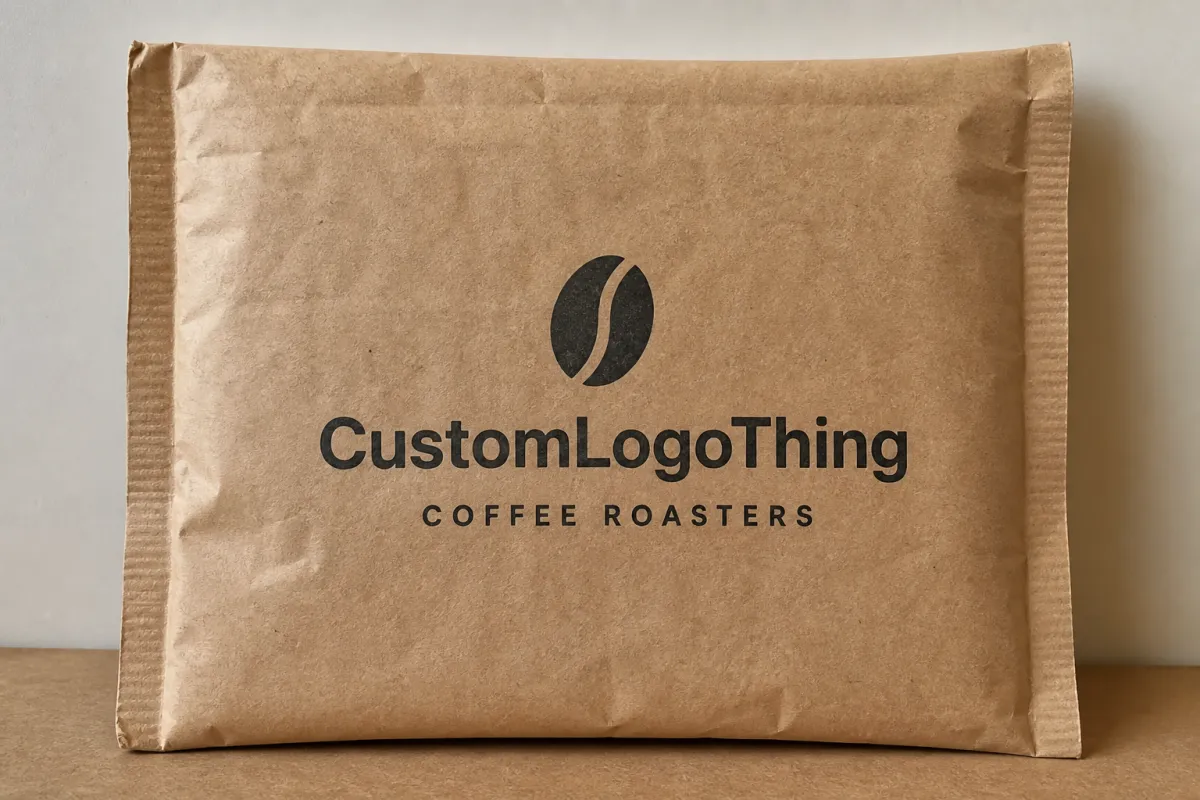
A right-sized padded mailer can protect a smaller coffee shipment better than a box. That sounds backward until you look at the physics. Less empty space means less movement. Fewer corners mean fewer crush points. Less void fill means fewer materials pretending to do a job.
For a single 8 oz or 12 oz bag, a sample kit, or a small merch order, the tighter footprint usually makes packing cleaner and transit damage less likely. Coffee orders rarely travel alone. One shipment might include a recipe card, a sticker, a scoop, tasting notes, or a handwritten insert. The package still has to survive sort belts, tote bins, porch drops, and the occasional rough handoff.
A printed padded mailer gives you a visible brand surface, a cushioning layer, and a closure that behaves without turning packout into a wrestling match. That brand surface matters. A mailer gives more visible area than a plain shipping box, which means the logo, roast notes, origin story, subscription copy, or seasonal art shows up before the customer opens anything. Coffee lives on repeat orders. Packaging helps push the next purchase in the right direction, whether people admit it or not. I have seen plain shipping formats do the job, but they rarely help a brand stay memorable.
Coffee-specific mailers need a few traits that sound obvious and still get missed. Puncture resistance matters because coffee bags often carry sharp edges from valves, heat seals, and labels. Moisture resistance matters because carriers do not promise dry handling. Stiffness matters because a shell that folds too easily can scuff the bag, crush the corners, and make the package look careless on arrival.
The format has limits, and pretending otherwise is how bad packaging gets approved. Printed Padded Mailers for Coffee Roasters work well for direct-to-consumer bags, subscriptions, and accessory kits that stay light, usually under about 1 lb to 1.5 lb with packaging. They are not the answer for heavy glass, oversized gift sets, or anything that needs the rigid support corrugated cardboard provides. Boxes still win when the contents need structure, stackability, or a multi-item layout that would feel awkward in a flat pack.
As a rough sizing reference, many coffee shippers use mailers sized for one 8 oz or 12 oz pouch with an internal fit that leaves about 0.25 in to 0.5 in of breathing room on the shortest side. That is usually enough for a bag, a thank-you card, and a sticker without letting the contents skate around like they are on ice.
Practical rule: if the mailer cannot survive a real drop, shake, and seal check with the actual coffee bag inside, it is not sustainable packaging yet; it is just lighter waste.
How printed padded mailers work in coffee shipping
The build makes more sense once you split it into layers. Most padded mailers use an outer print face, an inner cushioning layer, and a closure system. The outer face may be kraft paper, a film, or a hybrid structure. The inside may use fiber padding, air-cell cushioning, or a thin foam or bubble-style layer, depending on the impact resistance the design needs. The closure is usually a pressure-sensitive adhesive strip, though some formats use peel-and-seal with a tamper-evident tear feature.
The cushioning does real work even when it looks simple. It absorbs minor impacts, reduces abrasion against the coffee bag, and keeps the contents from sliding around when a parcel gets tossed onto a conveyor or stacked in a bin. A good mailer does not need carton-level rigidity. It needs to stop the bag from getting bruised, scuffed, or punctured before the customer touches it.
Printing method matters once a roaster ships enough volume to care about consistency. Flexographic printing is common for larger runs because it keeps unit cost under control and handles repeat artwork well. Digital printing usually makes more sense for shorter runs or artwork that changes often, like seasonal blends, limited releases, or regional campaigns. Flexo tends to favor scale. Digital tends to favor flexibility. Both can look sharp, but they affect setup time, color matching, and MOQ in different ways.
If you are printing on kraft or coated paper faces, ask what the base stock actually is. A common printed paper face for a premium mailer may use a 120gsm to 170gsm kraft outer, while some sturdier retail-style applications use thicker boards for sleeves or internal cards. The point is not to chase the heaviest sheet. The point is to match the shell to the abuse the package will take.
The seal deserves the same attention as the graphics. A pressure-sensitive adhesive strip is fast to pack and easy to train on, which is why fulfillment teams like it. The adhesive strength still has to match the package weight and the way the parcel gets handled. A strip that works fine for one 12 oz bag may not hold up if you add a second pouch, inserts, or a heavier retail item. Test the seal after the mailer has been packed, squeezed, dropped, and left under load for a few hours. A closure that looks perfect on the bench can fail once real contents are inside.
The same format can shift with small spec changes. A subscription mailer may prioritize easy packout, a polished unboxing moment, and a clean print face that supports brand storytelling. A wholesale sample mailer may need stronger tear resistance, more utilitarian sizing, and less decoration. A campaign mailer for a new roast launch may sit in between, with a larger print area and enough protection to arrive intact without moving to a full box.
For teams that want a stricter way to think about shipping durability, the testing mindset used by the International Safe Transit Association is a good reference point. No one needs a lab for every decision. Everyone does need a consistent way to ask what happens when the parcel gets dropped, vibrated, stacked, and handled by a machine before a person ever sees it.
Printed padded mailers for coffee roasters sustainable material options
This part gets useful because “eco” can mean a few very different things. Some buyers want recycled content. Others want a paper-forward look and feel. Some care most about end-of-life recovery. Others care more about lower weight, less damage, or less packaging per order. Printed Padded Mailers for Coffee roasters sustainable material options should be judged against those real goals, not against a label that sounds nice in isolation.
The main routes are kraft paper faces, recycled-content plastic mailers, mono-material polyethylene, and hybrid structures that try to balance print quality with lower-impact content. A kraft paper outer works well when the roaster wants a natural look and a fiber-based message, especially if the paper is FSC-certified. A recycled-content film or padded mailer can be the better call when moisture resistance and puncture resistance matter more than a paper feel. A mono-material polyethylene structure can improve recyclability in some film recovery streams, provided the local collection path can actually handle it.
The tradeoff is straightforward. The greener-looking option is not always the better one if it fails shipping tests. If a paper-based mailer lets moisture in, tears at the corners, or leads to damaged product and replacements, the total impact can end up worse than a slightly heavier but more durable format. That is why I look at protection, packout speed, and end-of-life together. A package that gets the product there intact and still fits a real recovery path usually beats one that checks only one box.
End-of-life is where a lot of brands talk past reality. Recyclable paper-based mailers can be sensible where fiber recovery exists, but only if the structure is mostly paper and not buried under too many mixed layers. Recyclable plastic mailers only make sense if the local or regional film recycling path is real, practical, and reachable. Post-consumer waste content helps, but it is not magic; ask for the percentage, the source, and the test method instead of taking a claim at face value.
Compostable claims need the most scrutiny. Some structures sold as biodegradable packaging sound promising, yet they depend on specific facilities, specific temperatures, and a collection system many customers simply do not have. If a mailer is compostable in theory but has no realistic collection path in your markets, the claim is mostly decoration. In many cases, a recycled-content or fiber-based option with a clearer recovery path is the more grounded choice.
Mailer sizing belongs in the sustainability discussion too. A better-fit mailer reduces filler, cuts wasted surface area, and often improves shipping efficiency because the parcel cube stays smaller. That can matter more than picking the thinnest substrate available. A roaster shipping a single bag of coffee usually gets more value from a snug one-piece packout than from a larger mailer stuffed with extra padding that never needed to exist.
Ink and finish choices shape the sustainability story as well. Water-based inks often fit paper structures better, and lower-coverage designs can keep the look sharp without burying the substrate under heavy ink. Fewer embellishments usually help too. A clean logo, a roast note, and one or two brand colors can feel intentional rather than plain, especially on kraft paper. The goal is not to make the package austere. The goal is to make each layer earn its keep.
| Material path | Best fit | Protection level | End-of-life reality | Typical cost impact |
|---|---|---|---|---|
| Kraft paper outer with recycled fiber padding | Single-bag DTC orders, sample kits, brand-forward shipments | Good abrasion resistance, moderate moisture resistance | Often recyclable where paper mailers are accepted; verify local rules | Baseline to +10% |
| Recycled-content padded poly mailer | Humid climates, subscription volume, higher parcel abrasion | Strong puncture and moisture resistance | Can fit film recycling streams where available | +5% to +15% |
| Mono-material polyethylene | Higher-volume programs needing a simpler recovery path | Very good shipping durability | Better chance at film recovery if accepted locally | Baseline to +12% |
| Compostable fiber or film hybrid | Brands with clear compost access and a tighter material story | Varies by build, often best for lighter loads | Only useful if collection and facilities exist | +10% to +25% |
If you are checking recycled or fiber claims, the chain-of-custody basics on the FSC site are worth a look, especially for paper-based mailers that rely on credible forest sourcing. That does not replace a material test, but it does help separate a real claim from a vague marketing line.
Process and timeline: from quote to production steps
The cleanest projects start with a brief that is specific enough to quote accurately. A supplier needs the bag dimensions, the finished mailer size, the average shipment weight, the print area, the finish, the target sustainability path, and the expected monthly volume. If the mailer will carry only coffee bags, that is one thing. If it also needs to fit a thank-you card, stickers, or a promotional sample, the internal fit changes and the material choice often changes with it.
A useful spec sheet is boring in the best way. It usually includes the bag size, the target fill weight, the exact outer dimensions, the material callout, the closure type, the print colors, and the carton pack count. For a sample kit, it might also list the insert count and whether the contents need to survive a 20 in to 24 in drop test without shifting. That level of detail is not overkill. It cuts the back-and-forth that eats schedule later.
Artwork review comes next, and this is where avoidable delays usually start if the brief is fuzzy. The dieline has to be reviewed. The bleed has to be set. Every logo, roast note, legal line, barcode, and shipping mark needs a safe print zone. On a custom mailer, the back panel can look huge in a mockup and still become cramped once fold lines, adhesive zones, and cutting or sealing areas are added.
Proofing should happen in stages. A digital proof confirms layout and copy. A sample or mockup confirms fit in hand. A final production approval locks the job. That order matters because a nice screen proof does not tell you how the mailer behaves with a real bag inside. A packout sample can show whether the seal is awkward, whether the closure line sits too close to the contents, or whether the print disappears once the mailer folds.
The production steps are straightforward once the spec is locked: material preparation, printing, lamination or padding application, cutting, sealing, packing, and shipping. The timeline depends on how complicated each of those steps is. A simple custom print on standard material often moves in about 12 to 15 business days from proof approval, plus transit time. Specialty recycled content, higher ink coverage, custom finishes, or multi-layer builds can push that closer to 15 to 25 business days. If the job needs new tooling, complex artwork, or a change after proofing, plan for more time.
Coffee roasters need those lead times aligned with roast calendars and subscription drops. A holiday blend, a limited release, or a new retail launch can create a short burst of demand that burns through packaging faster than expected. If you run a monthly subscription, ordering before the reorder point feels urgent is the safer move. A two-week packaging delay can turn into a shipping delay fast if the next roast batch is already scheduled.
For transit validation, many teams start with a simple in-house routine, then decide whether they need a stricter test plan. A basic drop and shake check with live product shows a lot. If the parcel will ship in larger volumes or through tougher channels, borrow from ISTA-style thinking and treat drop, vibration, compression, and temperature exposure as part of the discussion rather than afterthoughts. A 10-pack audit is better than crossing your fingers and hoping the carrier is gentle.
The practical takeaway is blunt. Packaging is not just a purchase. It is a timing problem, an operations problem, and a brand problem at the same time. A better brief makes it much easier to get Printed Padded Mailers that fit the bag, fit the budget, and fit the shipping calendar without endless back-and-forth.
Cost, pricing, and MOQ: what drives the unit price
The unit price of a custom padded mailer comes down to a handful of variables that show up again and again. Material choice is the biggest one. Size is next, because a larger mailer uses more substrate and more padding. Print coverage matters because full-coverage artwork costs more to produce than a restrained design with one or two colors. Adhesive style, recycled content, film thickness, and whether the structure includes specialty recovery or compostable components all affect price too.
MOQ is where first-time buyers get caught between optimism and reality. Lower minimums help if you are testing a new launch or trying a seasonal blend for the first time, but setup costs get spread across fewer pieces, which pushes the unit price up. For planning, many buyers see pilot runs around $0.55-$1.20 per unit depending on size and print complexity, while larger quantities, often in the 5,000-piece range or above, may settle closer to $0.15-$0.24 per unit for simpler constructions and around $0.22-$0.55 per unit for heavier builds, specialty materials, or more print coverage. That is a planning band, not a quote, but it is a realistic way to think about scale.
Freight and storage matter more than people expect because padded mailers still occupy cube even though they are lightweight. Order too much at once and the savings can get eaten by warehouse space or packaging that changes before it gets used. Order too little and rush fees or split shipments can wipe out the savings from a smaller run. Landed cost should include the item price, freight, sample charges, and any extra handling the project requires.
There are hidden costs too, and they are rarely hidden for long. Artwork revisions take time. Custom ink matching can add back-and-forth. A second proof round may be needed if the logo sits too close to a seam or the copy does not fit cleanly inside the print zone. If the project is rushed, there may be a premium for priority production or split shipping. None of that is unusual. It just needs to be visible before approval so the quote does not change at the last minute.
The best comparison method is total landed cost, not the headline unit price. A slightly more expensive mailer may save money if it lowers damage rates, speeds up packout, or reduces the need for void fill and repacking. A mailer that costs a little more but cuts five seconds from each pack can matter a lot if your team ships hundreds of orders a week. At scale, small operational changes become real labor savings.
A simple buying pattern works well for most roasters: start with a pilot run, measure usage against actual order volume, and set the reorder point after you have seen the real packout. That keeps cash from getting trapped in the wrong size or the wrong structure, and it gives you room to refine the print spec once the packaging is proven in daily use.
Practical pricing lens: if two mailers look close on paper, compare what happens after the package is filled, sealed, stored, shipped, and opened. The cheaper spec is not always the cheaper outcome.
Step-by-step guide to choosing the right mailer
The easiest way to choose the right mailer is to treat it like a short decision tree instead of a style exercise. Start with the product profile. Weigh the coffee bag, measure the finished packout, and note whether the shipment includes a card, sample, sticker, or accessory. A single 12 oz bag has very different needs from a bundle with two bags, a note card, and a retail insert.
- Measure the shipment: record the bag width, height, thickness, and total packed weight, then add anything that ships with it.
- Set the sustainability target: decide whether recyclability, recycled content, compostability, or reduced material use matters most.
- Shortlist the substrate: match the material to the product, the climate, and the local recovery path instead of chasing every claim at once.
- Request samples: compare print feel, stiffness, closure strength, and hand feel, not just a spec sheet or a photo.
- Test in real packout: pack live orders, ship them through normal carriers, and check the condition on arrival.
- Lock the repeat spec: only finalize the artwork placement, dimensions, and reorder plan after the team agrees on the outcome.
Sampling is where a lot of good decisions happen. A mailer can look perfect on a data sheet and still feel wrong in the hand. Maybe the seal tab is too short. Maybe the outer face scuffs too easily. Maybe the opening is awkward when the operator is trying to keep pace during a busy pack window. Testing three samples side by side usually exposes those issues faster than a quote ever will.
I also recommend testing with a small batch of live orders, usually 25 to 50 parcels, rather than only one or two demo packs. That gives you a better read on consistency. One perfect sample can hide a weak closure or a sizing issue, while a short run shows whether the mailer behaves the same way after repeated handling. If the parcels are going through summer heat, a damp loading dock, or a long carrier loop, those conditions will reveal weaknesses that a clean desk test misses.
Review the results with operations in mind. If packout slows down by even a few seconds per order, that can matter more than a small difference in unit price. If the size is a little too tight, operators start forcing the bag into the mailer, and that can damage the bag or the seal. If the package is too loose, the contents shift and the presentation falls apart. The right choice usually keeps the team moving while still protecting the coffee.
For many roasters, the smartest path is not the biggest run on day one. It is to confirm fit, print quality, and handling first, then scale once the reorder pattern is clear. That keeps the packaging spec stable and makes future production much easier to repeat.
Common mistakes, expert tips, and next steps
The most common mistake is picking a material because it sounds sustainable without checking whether it survives coffee shipping conditions. A paper-heavy option may work well in a dry climate and become annoying in a humid one. A compostable film may look excellent in a pitch deck and fail the second a packed mailer gets pressed in transit. Real sustainability starts with fewer damaged parcels and fewer replacement shipments.
The second mistake is sizing the mailer too large. Oversized packaging wastes material, makes the shipment look loose, and increases movement inside the parcel. In a coffee shipment, loose movement is not just a cosmetic problem. It can bend corners, scuff labels, puncture insert cards, or make the package feel less considered when the customer opens it. A snug fit usually performs better and reads better.
The third mistake is overcomplicating the print. Too many effects, dense copy, and tiny legal lines can slow production and create avoidable approval delays. A good mailer works hardest when the message is simple: a clear logo, a restrained color system, a roast or origin cue, and maybe one supporting line. That keeps the brand visible without turning the mailer into a design maze.
Here are a few field-tested habits that help on the packaging floor:
- Test the seal with real contents: a closure that holds an empty mailer may fail once the coffee bag is inside.
- Check heat and humidity: some materials behave differently in warm or damp shipping lanes.
- Keep a backup spec: a second approved structure makes emergency reorders easier if a material goes out of stock.
- Document the approved packout: one clear spec sheet saves time when a new team member joins fulfillment.
- Compare against damage rates: a mailer that lowers replacements often pays for itself fast.
One more useful habit: ask the supplier what changes if print coverage increases by 20%, the size grows by half an inch, or the order drops below the preferred MOQ. Those questions uncover real cost breaks and show whether a package still makes sense if your coffee line changes later.
For launch planning, the safest sequence is simple: build a one-page packaging brief, review two or three sample builds, compare landed cost and turnaround, and run a pilot order before scaling up. That usually tells you whether a mailer works in the real world or only in a render file. If the sample passes the shipping test, the packout test, and the recovery-path test, you have a spec worth repeating.
For most roasters, the right answer is the one that passes a real ship test, matches the pack line, and supports Printed Padded Mailers for coffee roasters sustainable material options without creating avoidable waste.
Frequently asked questions
What sustainable material options are best for printed padded mailers for coffee roasters?
Paper-based mailers are a solid fit when the shipment is light and the local fiber recycling path is realistic. Recycled-content plastic mailers and mono-material polyethylene usually perform better when moisture resistance and puncture resistance matter more. The best choice depends on your actual shipping conditions, not just the material story on the front panel. A kraft outer with recycled padding can work well for single-bag DTC orders, while a mono-material film is often better for humid regions or frequent subscription shipments.
How do I know if a padded mailer is strong enough for coffee shipments?
Test it with the actual coffee bag weight and the real insert load, not an empty shell. Run a simple drop and shake check, then inspect the seal, the corners, and the surface of the bag after transit. If the package scuffs, opens, or shifts too much, the structure needs another round of tuning before you place a larger order. A good rule is to test the final filled pack, not just the mailer itself. A 12 oz coffee bag with a card behaves differently from an empty pouch on a bench.
What is a realistic MOQ for custom printed padded mailers?
MOQ depends on material, print method, and size, but smaller runs usually carry a higher per-unit price because setup costs are spread across fewer pieces. Pilot quantities are useful when you are testing a new subscription format or seasonal blend. Once the spec is stable, a larger repeat run usually brings the unit price down in a meaningful way. Many buyers start near 1,000 to 3,000 pieces for a test run, then move to 5,000 pieces or more once the design is proven.
How long does the process usually take from quote to delivery?
Simple jobs with standard materials can move fairly quickly after proof approval, while custom materials or more complex print coverage need more time. Sampling, proofing, and final approval are usually the steps that add days, so it helps to build them into the launch calendar early. Ask for both production time and transit time so you know the true schedule. A straightforward custom run is often 12 to 15 business days from proof approval, while more complex specs can take 15 to 25 business days before shipping.
Can printed padded mailers be compostable and still protect coffee bags well?
Yes, but only if the structure has enough puncture resistance, seal strength, and moisture tolerance for your actual shipping route. The harder part is making sure the compostable path is real for the markets you serve. Many roasters choose recycled-content or paper-based options instead because the recovery story is easier to explain and the protection is easier to trust. If the bag needs to move through hot trucks, wet docks, or long fulfillment loops, test the compostable version hard before you commit.
What should I confirm before placing the order?
Confirm the bag dimensions, the target sustainability path, the print area, the MOQ, the seal type, and the reorder timing. If the mailer passes your sample tests and your live packout test, you are in good shape to move forward with printed padded mailers for coffee roasters sustainable material options. I would also confirm the approved artwork file, the proof date, the production window, and whether the quote includes freight or only the unit price.


