Buyer Fit Snapshot
| Best fit | Custom Padded Mailers for Sample Kits Thickness projects where brand print, material claims, artwork control, MOQ, and repeat-order consistency need to be specified before quoting. |
|---|---|
| Quote inputs | Share finished size, material target, print colors, finish, packing count, annual reorder estimate, ship-to region, and any compliance wording. |
| Proofing check | Approve dieline scale, logo placement, barcode or warning zones, color tolerance, closure strength, and carton packing before bulk production. |
| Main risk | Vague material claims, crowded artwork, missing packing details, or unclear freight terms can make a low unit price expensive after revisions. |
Fast answer: Custom Padded Mailers for Sample Kits Thickness: Film, Print, MOQ, and Carton Packing should be specified like a repeatable production item. The safest quote records material, print method, finish, artwork proof, packing count, and reorder notes in one written spec.
Production checks before approval
Compare the actual filled-product size with the drawing, then confirm tolerance on folds, seals, hang holes, label areas, and retail display edges. Reserve space for logos, QR codes, warning copy, and material claims before decorative graphics fill the panel.
Quote comparison points
Review material grade, print process, finish, sampling route, tooling charges, carton quantity, and freight assumptions side by side. A quote is only useful when the supplier can repeat the same color, closure quality, and packing count on the next order.
Custom Padded Mailers for Sample Kits Thickness Guide
If you are sorting through Custom Padded Mailers for Sample kits material thickness guide options, start with the part people keep underestimating: most damage does not come from one huge blowout in transit. It comes from flex, corner crush, loose pack-out, and contents that move just enough to scuff, crease, or crack. Buyers often chase the word “thicker” because it sounds safer, then get hit with higher postage, slower packing, and a kit that still arrives looking tired.
A sample kit is not just packaging. It is sales collateral, retail presentation, and the first physical impression of a brand. The mailer has to protect the contents and support the brand at the same time. Too thin, and the kit feels flimsy. Too thick, and you pay for overkill that hides a sizing mistake instead of fixing it. The smarter move is straightforward: match material thickness to the actual shipping abuse, then stop there.
Material thickness is not one clean number. Buyers usually mean a mix of things: the outer film or paper gauge, the cushioning layer, seam strength, closure strength, and the way the finished mailer behaves under bending and stacking. That is why two mailers can look close on a spec sheet and still perform very differently on a real shipping line. One protects flat cards all day. The other saves you from a reprint and an annoyed customer service team.
Use this guide as a practical filter. By the end, you should know what thickness protects the sample kit without turning the mailer into expensive dead weight.
Custom Padded Mailers for Sample Kits Material Thickness Guide
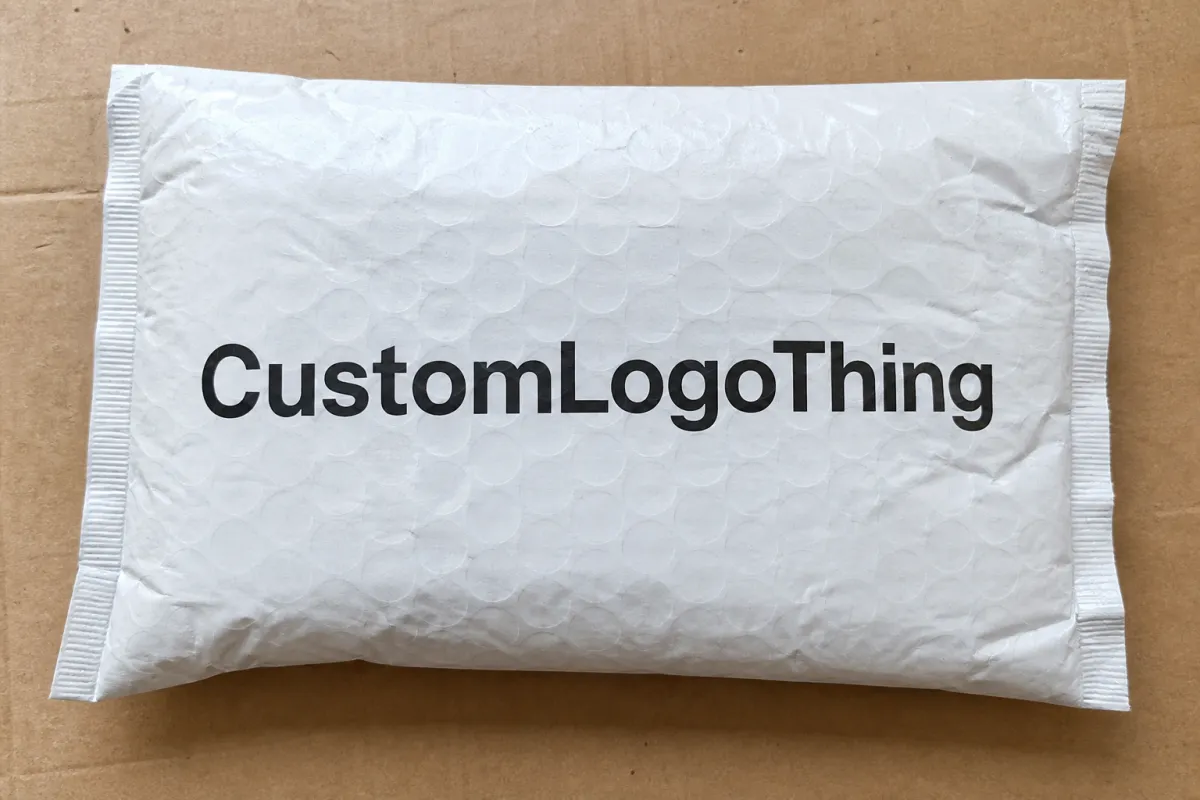
Thickness is really a bundle of decisions pretending to be one measurement. Four parts matter most: the outer shell, the cushioning layer, the closure system, and the stiffness created by the full construction. In shipping, all four pull weight. A decent outer film with a weak seal can split at the flap. A thick cushion with a soft body can still crush at the corners. And a nice print surface means very little if the contents show up bent.
The better question is not “How thick can we make it?” It is “How much abuse does this sample kit need to survive before it reaches someone’s hands?” That sounds basic because it is. People still skip it. They choose a spec from habit, from a previous project, or because somebody liked the hand feel. Hand feel is not a shipping test. It never has been.
For flat collateral, thin swatches, or paper inserts, lighter construction can do the job. Add rigid cards, trays, vials, or anything with edges, and the mailer needs more body plus a stronger seal. If the contents shift during transit, no amount of wishful thinking fixes that. The package has to control movement first, then absorb impact.
Fit matters just as much as thickness. A slightly slimmer mailer with a tight pack-out can outperform a thicker one that leaves empty space. That extra room lets the kit bounce, and bounce is what turns normal handling into corner damage. From a packaging design standpoint, that is the gap between competent and careless.
The cheapest mailer is rarely the cheapest program. A weak spec turns into damaged kits, re-ship costs, and customer complaints. That is not savings. That is hidden labor wearing a fake mustache.
If you want to compare other format options, our Custom Packaging Products page is useful for seeing where padded mailers sit beside inserts, cartons, and other product packaging formats. For lighter or simpler kits, it also helps to compare against Custom Poly Mailers, because sometimes the answer is not more padding. Sometimes it is a different construction.
Here is the rough performance range most buyers can use as a starting point. It is not a law of physics, because structure, print build, and internal pack-out change the final result, but it is enough to keep you out of the wrong class of mailer.
| Mailer class | Typical build | Best for | Typical unit cost at 5,000 pcs | Main tradeoff |
|---|---|---|---|---|
| Light | 60-70 gsm kraft outer or 2.5-3 mil PE film, 3/16 in bubble or thin foam layer, standard peel seal | Flat swatch kits, paper inserts, lightweight promos | $0.15-$0.24 | Lower cost, but less crush and puncture tolerance |
| Medium | 80-90 gsm kraft outer or 3-4 mil PE film, denser cushion, reinforced flap or wider adhesive band | Mixed sample kits, small components, moderate transit stress | $0.24-$0.41 | Best balance for most sample kit programs |
| Heavy | 100+ gsm kraft outer, thicker bubble or foam liner, reinforced seams, stronger closure zone | Premium launch kits, fragile inserts, higher-value samples | $0.41-$0.78 | Higher unit cost and more postage weight |
The pattern is obvious once you stop pretending thicker automatically means better. Light to medium usually fixes real damage without making postage ridiculous. Medium to heavy only makes sense when the contents genuinely need the extra protection. Thickness works when the pack-out, shipping route, and failure risk justify it. Otherwise, you are paying more to feel safer.
How Thickness, Cushioning, and Seal Strength Work
A packaging engineer would split a padded mailer into four parts: the outer shell, the cushioning layer, the closure system, and the print surface. That sounds neat on paper. Then transit happens. The shell takes scuffs and light abrasion. The cushion softens compression and vibration. The seal keeps the kit inside the mailer. The print surface carries the branding. Miss one of those, and the whole package gets worse fast.
Thickness improves performance in three ways. First, it boosts puncture resistance, which matters when the sample kit has corners, clips, bottles, or anything that presses against the wall of the mailer. Second, it improves crush resistance, which matters when cartons get stacked or sorted on top of the mailer. Third, it adds bounce-back, meaning the mailer can recover after being bent or compressed instead of staying folded into a sad little crease.
Those gains are real, but they do not scale forever. Once the pack-out is already secure, more material starts handing you diminishing returns. The mailer gets bulkier, heavier, and more expensive to ship. In some cases, it slows fulfillment because workers have to fight a stiffer flap or a tighter seal. Good specs know the difference between “enough protection” and “why are we paying for this?”
Seal strength can matter just as much as body thickness. A padded mailer with a strong shell but weak adhesive or a narrow closure zone can still fail in automated sorting or during rough handoffs. If the seal lifts, the mailer is done. So when you compare options, do not stop at gauge. Ask about adhesive width, seal area, seam construction, and any reinforcement in the flap.
Light swatch kits often do better with a thinner mailer, a tight fit, and a strong seal than with a heavy mailer that traps empty space. Mixed-product kits usually want a middle spec that adds cushion without becoming bulky. Premium launch kits can justify a heavier build, but only when the contents are fragile or high value enough to earn it.
Think in terms of abuse, not marketing copy. Local delivery with limited handling? Modest spec. Multiple hubs, bulk distribution, or a stack of dense collateral? More structure. That applies to branded packaging just as much as it applies to shipping protection. Pretty does not survive a sorting belt by itself.
If you are comparing the mailer against other package types, remember that custom printed boxes and corrugated cardboard inserts solve different problems. A padded mailer is efficient for compact kits. Once the sample set gets more complex, a box may be the cleaner answer. For some programs, the right move is not forcing everything into one format. It is choosing the format that respects the contents.
Paper-forward programs often favor a kraft paper outer because it fits natural finishes and FSC-certified fibers. Film-based outers can make more sense if you need moisture resistance or smoother print. Sustainability should still pass the annoying little test called reality. The U.S. EPA has useful guidance on reducing packaging waste at epa.gov, and FSC certification details are available at fsc.org. Materials still need to perform first. Green labels do not protect a crushed sample kit.
Key Factors That Decide the Right Thickness
The contents decide the spec before anything else. Weight matters, sure. Shape matters more than people expect. A flat 8-ounce kit with rounded edges can travel better than a 4-ounce kit with rigid corners and loose inserts. Sharp edges, glass vials, metal closures, product trays, and layered inserts all push the spec upward because they create focused pressure points.
Think about what happens after the pack-out leaves the table. A sample kit that feels secure in the room can still shift after a few hours in transit. That tiny shift is enough to rub an insert, crack a fragile corner, or dent a premium card. A slightly thicker body can help, but the real fix is usually better fit and better internal restraint. Padding is not a substitute for a proper build.
Route risk matters too. Local courier delivery is one thing. Cross-country parcel transit is another. The more times the mailer gets sorted, stacked, dropped, or compressed, the more you should care about material thickness and closure quality. Bulk distribution, event shipping, and retail replenishment all add handling risk. If the kit is headed to retailers, think about how often it gets moved before anyone opens it. Retail packaging gets handled more than people admit.
Presentation is the third factor, and no, it is not fluffy. A sample kit sent to sales prospects can have a different visual target than a direct-to-consumer kit. One may need to feel polished and premium in the hand. The other may need to survive warehouse handling without drama. That is where package branding and protection need to agree instead of arguing like siblings in the back seat.
Size and fit are where expensive mistakes start. An oversized mailer lets the kit slide, which is a problem even if the material is thick. An undersized mailer can split seams because the contents are forcing the body open. Either mistake can wreck a good spec. The mailer should hold the kit with just enough room for the product, inserts, and any internal cushioning, but not enough room for the contents to travel like they missed a bus.
The easiest way to decide is to map the content stack:
- Flat, light kits: Lower-thickness constructions usually work if they survive a simple drop and bend test.
- Mixed kits: Medium-thickness specs are often the practical sweet spot because they balance cost and protection.
- Fragile or premium kits: Heavier builds, stronger seals, and tighter pack-outs usually make sense.
That list is not flashy. It is how decent packaging decisions get made. Start with the product packaging inside the mailer, then work outward. The outer layer should support the kit, not compensate for a sloppy internal build.
One more practical point: if your sample kit needs to sit alongside kraft paper cartons, custom printed boxes, or other retail packaging, keep the branding language consistent. Thickness changes how the mailer looks and feels in the hand. That tactile impression shapes package branding faster than a logo ever will.
Cost, Pricing, MOQ, and Unit Cost Tradeoffs
Thickness changes cost in more ways than most buyers expect. Yes, thicker materials use more raw stock. That part is obvious. The ripple effects are where the bill gets interesting. You may pay more for printing coverage, more for freight if the mailers are heavier, and more for storage if the cartons are bulkier. If the material choice slows packing, labor costs rise too. Suddenly “just one spec bump” is not just one spec bump.
For custom padded mailers, a sane pricing conversation starts with size, material gauge, print colors, closure type, and order quantity. Delivery location matters too, because freight can swing a lot depending on where the shipment lands. A proper quote should show landed cost, not just factory price. If the quote leaves out shipping and assumes perfect conditions, it is not a quote. It is a guess wearing a tie.
Most buyers end up balancing two pressures: a better spec and the cash tied up in a larger order. MOQ can be annoying, but it drives unit cost down. Smaller runs usually carry a higher per-piece price because setup and production overhead are spread across fewer units. In many custom packaging programs, short runs start around 500 to 1,000 pieces, while better pricing often shows up at 3,000 to 5,000 pieces and beyond. Exact minimums depend on construction and print method, so the only useful answer is the one tied to your actual spec.
Here is the trap. A thinner mailer looks cheaper on paper, but if it creates damage, re-ships, or complaint handling, the savings vanish fast. That is especially true for sample kits that support sales, launches, or trade-show follow-up. If one damaged kit causes a lost lead or a reprint, the damage cost can blow past the difference between two thickness options. The buyer who stares only at unit price usually becomes the one explaining the expensive surprise later.
Ask every supplier for pricing at two or three thickness levels using the same size and print setup. That gives you a fair comparison. Do not compare a light mailer in one size against a heavier mailer in another size and call it analysis. It is not. You want apples to apples: same footprint, same print coverage, same closure style, different construction. That is the cleanest way to see whether extra thickness buys real value or just a larger invoice.
The checklist below keeps quote requests from drifting into nonsense:
- Finished dimensions: Include the actual packed size, not just the product size.
- Content list: Swatches, inserts, cards, vials, trays, or accessories all matter.
- Target feel: Premium, utilitarian, retail-ready, or sales-appointment friendly.
- Material preference: Poly, kraft paper, or another structure.
- Print needs: One color, full color, inside print, logo coverage, or variable data.
- Quantity: Quote the exact run size plus likely reorders.
- Delivery date: Give a real deadline, not a hopeful one.
- Handling risk: Include any drop, friction, or moisture concerns.
Use the quote to compare total program cost, not just the mailer price. A slightly thicker option can be the smarter buy if it reduces waste and protects a higher-value kit. Once the spec goes past what the contents need, though, you are just paying to ship more material around. That is a lovely way to make a freight carrier richer.
For teams building a broader branded packaging system, it can also help to compare mailers with custom printed boxes or a hybrid setup: a mailer for the outer shipper and a smaller carton or insert tray inside. That can work well for premium product packaging, but only if the math supports it. Packaging design should earn its keep.
Process, Timeline, Lead Time, and Production Steps
A clean production process saves a lot more pain than a heroic scramble ever will. Most custom padded mailer projects move through the same basic steps: brief, quote, proof, sample, approval, production, and shipping. The details change, but the sequence does not. Skip a step because you are rushing and you usually pay for it later in rework or delayed launch plans.
The brief is where projects turn vague. Do not do that. Include the final packed dimensions, the type of sample kit, the desired thickness range, the print goals, and any handling risks. If the mailer needs to hold multiple inserts or a tray, say so. If the contents are fragile, say that too. The more specific the brief, the less guessing the supplier has to do.
Lead time depends on the build. Simple custom jobs move faster. More complex structures, heavier print coverage, specialty adhesives, or exact color matching take longer. Material availability matters as well, especially if you want a particular kraft tone, a specific film finish, or an FSC-certified paper stock. Seasonal production congestion can stretch schedules too. That is not mystery. It is just manufacturing with a crowded calendar.
A realistic planning window for sample-kit mailers is usually longer than people want to hear. For a straightforward run, many buyers should expect something like 12 to 15 business days from proof approval to production completion, plus freight time. If the construction is more complex or the run is large, add buffer. If the design is still changing, add more. Yes, that sounds annoying. It is still cheaper than air-freighting a half-finished order because someone approved artwork too early.
Here is a practical timeline by project type:
- Quick-turn standard build: Quote, proof, and production can move quickly if the art is ready and the spec is simple.
- Mid-complexity custom mailer: Expect extra time for sample validation, color checks, and closure testing.
- Premium or fragile kit: Plan for more review rounds because fit, feel, and protection all matter.
One useful rule: the more custom the mailer, the earlier you should lock the order before the launch date. That matters for prospect mailings, retailer packs, and event kits, where shipping windows tend to be unforgiving. Nobody wants to explain that the campaign ran late because the mailer spec was “still under discussion.”
Testing should not sit at the end as a polite suggestion. If the kit matters, ask for a real pack-out test. Better yet, use a basic drop and vibration evaluation aligned with common shipping test logic such as ISTA methods. The International Safe Transit Association explains transport testing standards at ista.org. You do not need a lab coat to understand why this matters. You need enough discipline to see what happens when the kit is handled like a shipped item instead of a sample on a desk.
Production steps also affect lead time. Custom sizing takes more setup than a stock size with print. Full-coverage artwork takes longer than a simple logo panel. Side gussets, zipper closures, reinforced seams, and special liners all add complexity. None of that is bad. It just means the mailer should be treated like a manufactured product, not a piece of generic stationery with padding glued to it.
If you are already buying inserts, cartons, or coordinating retail packaging, line up those schedules early. It is common for teams to finalize the sample kit and then realize the mailer and the internal tray are on different clocks. That is a planning issue, not a vendor issue. Good packaging programs keep the schedule tied together.
Common Mistakes When Choosing Mailer Thickness
The biggest mistake is choosing by hand feel. People squeeze a sample between two fingers, nod like they solved shipping, and move on. That is not a test. That is an opinion with a pulse. The mailer needs to survive bending, stacking, corner pressure, and seal stress. Human thumbs are not a parcel network.
Another common miss is ignoring the seal and the seam. A thick body with weak adhesive at the edge can fail even if the rest of the construction looks great. If the closure does not hold under pressure, the kit can open inside another carton or during sorting. That is especially ugly for branded packaging because the damage usually shows up before the recipient even sees the print properly.
Over-specing is just as bad as under-specing. A mailer built like it belongs on a construction site can raise unit cost, increase postage weight, and make packing awkward. It can also create a strange brand impression. A sample kit for a beauty line, textile line, or premium consumer product should feel considered, not armored. If the package feels like it was designed for a bowling ball, you probably overshot.
Fit mistakes are sneaky. Packed size changes once you add cards, inserts, vials, trays, tissue, or fillers. Buyers often approve a mailer based on the naked product and forget the full stack. Then the finished kit bulges, seals stretch, and corners get stressed. That is how a decent spec turns into a bad result. Measure the finished pack-out, not the fantasy version.
Route risk gets ignored too often. A kit that survives one local delivery may fail on a cross-country route with multiple transfer points. A mailer that looks fine in a single test pack may behave badly after it gets stacked under heavier parcels. That is why a real ship test matters. Packaging standards exist for a reason, even if some buyers act like shipments obey vibes.
One more thing: do not confuse visual premium with actual durability. A glossy printed surface, clean typography, and nice package branding can help the mailer feel more expensive, but the substrate still has to protect the contents. Good packaging design is the part you do not notice because it already did its job.
For teams that also order kraft paper mailers, corrugated cardboard boxes, or other product packaging components, keep the spec language consistent. That makes reorders easier and reduces internal confusion. If one department calls the build “medium cushioned” and another calls it “heavy padded,” somebody will misquote the wrong thing. The printer will not save you from that mess.
Expert Tips and Next Steps for a Smarter Order
Test more than one option. That sounds simple because it is. Ask for two or three thickness levels, pack the exact same sample kit into each one, and compare the results side by side. Do not test a guessed version of the kit. Use the real thing, with the real inserts, the real closures, and the real packaging design. Small pack-out differences can change the result enough to matter.
Ask the supplier for a recommendation, then verify it with your own pack test. Good suppliers can be right for the wrong reason, or wrong for the right reason. They may understand the materials well but not your handling risks, brand expectations, or fulfillment constraints. That is normal. The smart buyer uses supplier input, not supplier guesswork.
If you want a cleaner review process, use this order checklist:
- Content list: What exactly goes inside the mailer?
- Target feel: Light, premium, durable, or retail-facing?
- Target thickness: What range do you want to compare?
- Print needs: Logo only, full coverage, inside print, or variable data?
- Quantity: What is the first run and likely reorder volume?
- Delivery date: What is the actual ship deadline?
- Handling risks: Are there drop, crush, or moisture concerns?
If sustainability matters, do not stop at “eco-friendly” and call it a strategy. Ask what the mailer is made from, whether the paper content is FSC-certified, whether the adhesive and liner affect recyclability, and how the finished package should be disposed of. The EPA and FSC links above are good starting points, but the supplier still needs to tell you how the specific construction behaves. Green claims are cheap. Clear material details are worth attention.
And if your sample kit has moved beyond mailer territory, admit it early. Some kits belong in custom printed boxes or a hybrid structure with corrugated cardboard support. That is not failure. That is sensible product packaging. A padded mailer works best when the content is compact, stable, and not trying to fight the shipper. Once the kit starts needing serious internal structure, the box may be the cleaner choice.
For direct-to-consumer launches, sales mailers, and retail packaging support kits, the best result usually comes from a spec that is just thick enough, just stiff enough, and just polished enough to do the job without waste. That is the sweet spot. Not the loudest spec. Not the heaviest spec. The one that fits the product and the route.
Use this custom Padded Mailers for Sample Kits material thickness guide as the filter for your final quote, and you will avoid the usual trio of problems: overbuilt mailers, underbuilt mailers, and mailers that fit badly because nobody measured the real kit.
What thickness should custom padded mailers for sample kits use for lightweight products?
For flat swatch kits or paper-only inserts, a lighter mailer is usually enough if the package is not being crushed or re-shipped. Start with the thinnest spec that still survives a drop test, then move up only if the contents bend, slide, or show corner damage. If the kit includes anything rigid, layered, or premium-looking, do not assume the lightest option will hold up in transit.
Are thicker padded mailers always better for sample kits?
No. Thicker mailers improve protection only until the fit, weight, and seal are already doing their job. After that point, extra thickness mainly adds cost, bulk, and postage weight without fixing the real problem. A correctly sized medium-thickness mailer often outperforms an oversized heavy one that lets the contents move around.
How do I estimate the cost impact of thicker sample kit mailers?
Ask for pricing at two or three thickness levels with the same size and print setup so you can compare apples to apples. Watch the full landed cost, not just the unit price; heavier mailers can also change freight and storage costs. If damage rates are high, include replacement and re-ship costs in the comparison or the cheapest option will look falsely smart.
How long does production usually take for custom padded mailers?
Timeline depends on art approval, material availability, print complexity, and how many revisions the proof goes through. For a straightforward run, many buyers should plan on about 12 to 15 business days from proof approval to production completion, plus freight time. Build in extra buffer if the mailers need to arrive before a launch, trade show, or sales rollout.
Can sample kits with fragile items ship in padded mailers instead of boxes?
Sometimes, yes, if the item is compact, well secured, and the mailer is thick enough to handle compression and bending. Glass, liquids, and high-value kits usually need a stronger spec and often a secondary internal layer for protection. If the pack-out test shows movement or corner impact, switch to a box or redesign the insert before you gamble with returns.

