Buyer Fit Snapshot
| Best fit | Custom Padded Mailers for Jewelry Packaging Reorder projects where brand print, material claims, artwork control, MOQ, and repeat-order consistency need to be specified before quoting. |
|---|---|
| Quote inputs | Share finished size, material target, print colors, finish, packing count, annual reorder estimate, ship-to region, and any compliance wording. |
| Proofing check | Approve dieline scale, logo placement, barcode or warning zones, color tolerance, closure strength, and carton packing before bulk production. |
| Main risk | Vague material claims, crowded artwork, missing packing details, or unclear freight terms can make a low unit price expensive after revisions. |
Fast answer: Custom Padded Mailers for Jewelry Packaging Reorder: Film, Print, MOQ, and Carton Packing should be specified like a repeatable production item. The safest quote records material, print method, finish, artwork proof, packing count, and reorder notes in one written spec.
Production checks before approval
Compare the actual filled-product size with the drawing, then confirm tolerance on folds, seals, hang holes, label areas, and retail display edges. Reserve space for logos, QR codes, warning copy, and material claims before decorative graphics fill the panel.
Quote comparison points
Review material grade, print process, finish, sampling route, tooling charges, carton quantity, and freight assumptions side by side. A quote is only useful when the supplier can repeat the same color, closure quality, and packing count on the next order.
custom Padded Mailers for Jewelry Packaging reorder planning guide sounds like a mouthful because it is doing real work. This is not a style exercise. It is a planning problem. For jewelry brands, the next order should look almost boring: same build, same dimensions, same print file, same carton count, same delivery window. That kind of boredom saves money.
Most reorder trouble starts with memory. Someone remembers “the black one with the matte finish.” Someone else remembers a medium size, maybe 9 x 12, maybe not. Operations is left reconstructing a spec from screenshots and old emails. That is how a simple reorder turns into a week of back-and-forth and an expensive delay.
The fix is not complicated. Put the mailer details in a place the next buyer can actually find. Protect the original artwork file. Save the approved measurements. Record the pack-out and freight method. Do that, and the next purchase order stops depending on one person’s recollection.
Custom Padded Mailers for Jewelry Packaging Reorder Planning Guide
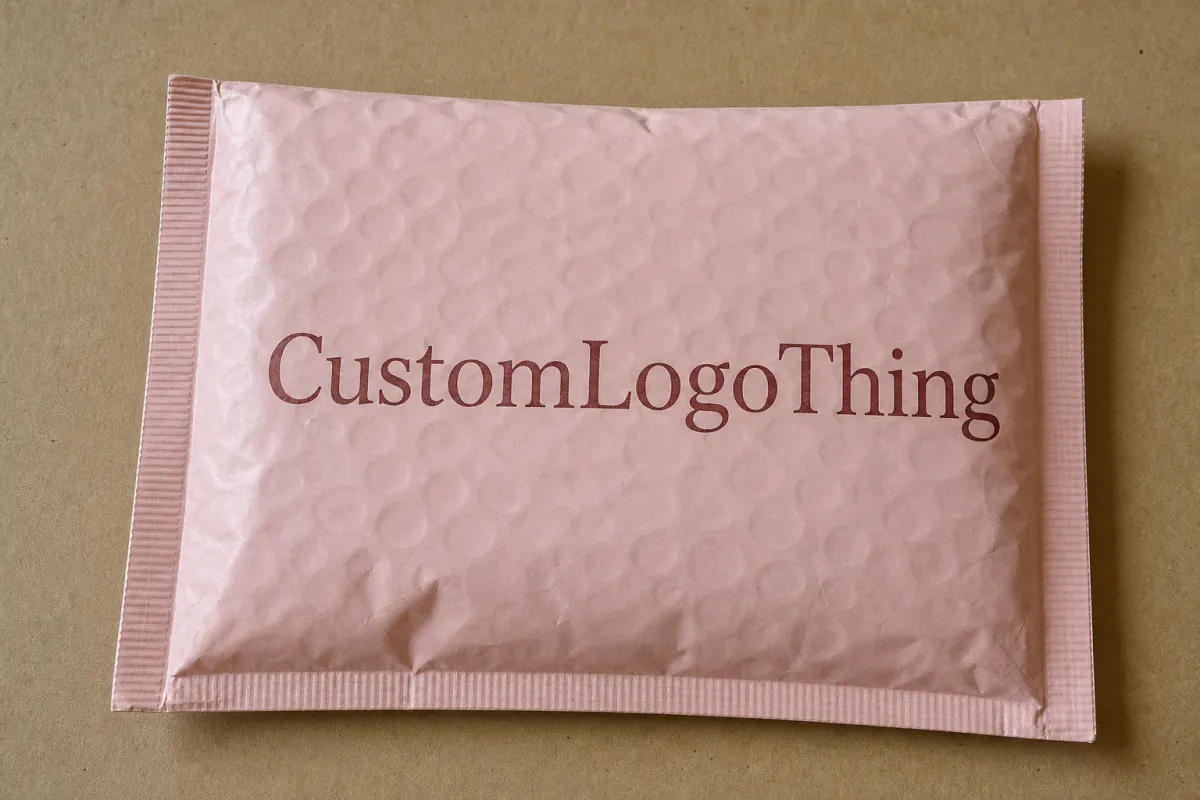
Jewelry packaging is unforgiving in a quiet way. Customers notice shifts fast. A slightly different black, a logo that lands half an inch off, a seal that feels weaker than last quarter’s run — none of that needs an expert eye to register. Packing teams notice too, because they are the ones handling the product all day.
The first order usually gets the attention. The second and third orders prove whether the process actually works. That is where a reorder plan earns its keep. A good plan keeps the mailer consistent, protects the item inside, and prevents a brand from drifting into a series of “close enough” substitutes.
There is also a margin angle, which is the part people skip until it hurts. Reorders reduce emergency freight, cut stockout risk, and avoid the premium you pay when a substitute mailer is “basically the same.” It usually is not. The tiny differences show up in labor time, shipping cost, and how the package lands on the customer’s desk.
A good reorder should feel uneventful. Same size, same construction, same artwork, same pack-out. That is what keeps jewelry shipments on schedule.
Do not treat the mailer as a side item. Jewelry brands often pack with tissue, pouches, insert cards, or rigid boxes inside the mailer. Change the outer mailer and the whole pack-out can shift. That changes pack speed, dimensional weight, and the look of the finished package. The mailer is part of the shipping system. It is not just a wrapper.
That is why the reorder file needs more than a product name. Save the approved spec, the previous PO, the print file name, the finished sample photo, and the carton pack count. If someone new has to run the order later, they should be able to match the old run without hunting through five inboxes and a folder named “final_final_v3.”
For a broader look at formats and print styles, browse our Custom Packaging Products. If your shipment mix changes often, compare the structure of Custom Poly Mailers with padded options before you commit to the next run.
Product Details: What Actually Matters in Jewelry Mailers
A custom padded mailer usually comes down to four parts: the outer layer, the padded interior, the closure, and the print surface. The outer layer may be poly, paper-faced, or a hybrid build. The padding is commonly bubble-lined or foam-backed. The closure is often a self-seal adhesive strip, and some programs add tamper-evident features for higher-value shipments.
For jewelry, the outer layer has to do two jobs at once. It should look clean enough for retail presentation and still resist punctures, scuffs, and light moisture in transit. That matters when a package is tossed into a tote, stacked with other cartons, or left near damp cardboard at a hub. A decorative mailer that looks great in a product image and fails in shipping is not a win. It is an expensive lesson.
Material choice affects both performance and cost. A standard poly outer works well for lightweight orders, especially when the jewelry sits in a box or pouch inside the mailer. A thicker film helps when you ship heavier sets, multiple pieces, or gift-ready packaging with hard corners. For paper-faced or kraft-style builds, one common structure is a 350gsm C1S artboard outer laminated to a bubble liner. If your sourcing policy cares about paper certification, check whether the board is FSC-certified. FSC certification details are available at FSC.
Print choices matter, but not every option deserves the budget. A simple one-color logo often gives the best return on spend. Full-coverage art, multiple colors, and metallic effects can look sharp, but they also add setup complexity and can push unit cost up quickly. If the goal is strong package branding without unnecessary cost, place the logo where customers see it first and stop there unless the layout truly needs more.
Finish choices change the feel of the package. Matte usually reads softer and more premium in hand. Gloss makes color pop and can hide minor scuffs better. White gives a crisp retail look. Kraft-style finishes lean more natural and less polished, which can fit artisan brands or eco-minded positioning. None of those is universally better. The right choice depends on the jewelry line, the inner box or pouch, and how much of your packaging design the outer mailer should carry.
There is a return side to this too. If your brand handles returns, exchanges, or warranty replacements, a stronger mailer with a dependable seal helps protect the product on the way back. That matters more when the jewelry is higher value, presentation-heavy, or likely to be resold. A dented box inside a weak mailer turns into a customer service issue with extra postage attached.
- Outer layer: choose for puncture resistance, appearance, and moisture protection.
- Padded interior: choose for impact control and corner protection.
- Closure: choose for seal strength, tamper resistance, and packing speed.
- Print surface: choose for logo clarity, color consistency, and branding impact.
If you also use custom printed boxes or small rigid cartons, the mailer should fit the rest of the set instead of fighting it. A matte black padded mailer with a gold-foil box inside can feel intentional. A glossy neon mailer around a restrained box can feel like two brands arguing in the same package. Pick one voice and stick with it.
Specifications That Affect Fit, Protection, and Brand Look
The spec sheet is where the money hides. Miss the numbers, miss the fit. Before approving a reorder, confirm internal size, external size, flap length, seal width, film thickness, padding thickness, and approximate weight. Those details decide whether the mailer works or arrives bulging, popping open, or costing more to ship than planned.
Jewelry SKUs do not all behave the same, which is why “small,” “medium,” and “large” are not enough. A flat ring box behaves differently from a necklace box. A pouch with a ribbon insert behaves differently from a boxed set with tissue and a card. Add a gift note or warranty card and the package size can move enough to matter. A few millimeters can change the entire pack-out.
Too tight, and the mailer bows or strains at the seal. Too loose, and you pay for extra dimensional weight while the package looks sloppy. That sloppy look hits the brand harder than people expect. Customers may not know the measurement, but they know when the fit was guessed. This is where product packaging and shipping performance meet, and one bad fit makes both look weak.
Here is the test I would use before approving a reorder:
- Pack a real order, not an empty sample insert.
- Close the mailer using the same pressure your team will use on the line.
- Shake it gently for a few seconds and check for movement.
- Press on the seal and corners to see whether anything lifts.
- Place it in your standard shipping carton and confirm clearance.
If the package looks cramped, size up. If it sits too loose, you may need a tighter internal spec or a different box inside the mailer. Do not expect the mailer to fix a bad inner pack-out. That is how brands end up paying for oversized mailers to hide a setup problem. Not a great use of budget.
Documentation matters just as much as the physical test. Save the finished spec sheet with the old PO number, print file name, approved artwork, measurement notes, and carton pack-out. Add one clear photo of the finished mailer with a ruler or sample product inside. That gives the next buyer something real to compare against instead of a vague memory.
For higher-value jewelry shipments, ask whether the mailer has been evaluated under a distribution profile such as ISTA testing or an ASTM D4169-style method. Not every order needs formal lab work, but higher-risk shipments deserve more than a guess. You can review packaging test resources at ISTA.
If there is one practical rule here, it is simple: document what was approved, save what was shipped, and test the next reorder against the original sample before you release production. That saves money every time.
Pricing, MOQ, and Unit Cost for Reorders
Pricing for Custom Padded Mailers usually breaks into five parts: base material, print setup, size, carton pack-out, and freight. Sometimes there is a proof fee or sample fee. Sometimes there is a charge for special finishes. Sometimes the quote looks low until you read the shipping line. That is normal. It is also why buyers should compare full landed cost, not just the unit price on the page.
MOQ matters because setup gets spread across the run. A smaller order usually carries a higher unit cost, not because the supplier is being dramatic, but because the same prep work gets divided by fewer pieces. Once the quantity climbs, unit cost often drops enough to justify the larger buy. The real question is whether the lower price per unit is worth the inventory sitting on your shelf.
Below is a planning table with typical ranges. These are not promises. They are realistic buying ranges for common custom padded mailer programs, and they move with size, print coverage, freight, and material choice.
| Option | Typical MOQ | Planning Unit Cost | Best For | Main Tradeoff |
|---|---|---|---|---|
| Stock size, one-color print | 3,000-5,000 pcs | $0.15-$0.24 at 5,000 pcs | Early-stage brands, simple logo branding, light jewelry orders | Less control over custom fit |
| Custom size, one-color print, standard film | 5,000 pcs | $0.22-$0.36 at 5,000 pcs | Most repeat jewelry shipments with boxes or pouches | Moderate setup cost |
| Custom size, multi-color print, matte finish | 10,000 pcs | $0.29-$0.52 at 10,000 pcs | Stronger brand presentation and higher-end retail packaging | More print and finish cost |
| Premium film, tamper-evident seal, special finish | 10,000-20,000 pcs | $0.40-$0.68 at 10,000 pcs | High-value jewelry, gift-ready shipments, resale protection | Higher unit cost and tighter MOQ planning |
The table matters because it shows where the jump happens. A 5,000-piece order and a 10,000-piece order can look close on paper, but the unit-cost gap can be big enough to change the decision. If your sales velocity supports the larger run, the savings add up. If it does not, you are paying to store confidence you do not need yet.
Here is the honest buying rule: quote the same mailer at two or three quantity breaks and compare the landed cost, not just the factory price. Add freight, samples, and any special packaging fees. Then look at how many weeks of inventory each option gives you. If the cheaper quote creates stockout risk, it is not cheaper. It is just delayed pain.
Print coverage also changes the math. One-color logo work is usually the most efficient for branded packaging. Two- or three-color layouts can still be worth it if the logo needs them, but every extra color adds complexity. Standard sizes generally cost less than fully custom dimensions because the line does not need to reset as much. Premium film, opaque builds, or specialty adhesive strips raise the price again. That is not a surprise. It is the bill showing up on schedule.
For buyers who want to see where volume helps, compare quotes at 3,000, 5,000, and 10,000 pieces. The middle number often shows whether you are crossing the point where storage is still manageable and unit cost starts to improve. That is the sweet spot many jewelry brands are trying to find.
If your team also buys in larger programs, our Wholesale Programs page is useful for planning volume-based purchases across multiple packaging formats.
Process and Timeline: From Spec Check to Delivery
A repeat order should move faster than a first order, but only if the supplier can find the old record and the buyer can confirm nothing changed. The clean workflow is simple: confirm the previous order, verify artwork, approve the current specs, release production, and schedule freight. If one of those steps gets fuzzy, the timeline stretches.
For a repeat order with no spec change, production is often 12-15 business days after proof approval. If the size changes, artwork changes, or a new sample is needed, plan more like 15-25 business days. Add freight after that. Domestic shipping may take a few days to a week. Overseas freight can take two to six weeks depending on route, mode, customs, and how much the schedule decides to cooperate.
Proofing is where avoidable delays usually appear. A digital proof works fine for confirming logo placement, color blocks, and copy. It is not enough if the buyer is changing size, closure, thickness, or finish. In those cases, ask for a sample or a pre-production check. Someone needs to sign off before the line starts, and that person should know the difference between a mockup and a production-ready sample.
Production itself has several steps, and each one can move the delivery date a little:
- Printing: artwork is applied, checked, and matched against the approved proof.
- Lamination or coating: finish is added if the spec calls for it.
- Curing or drying: ink and coatings need time before packing.
- Inspection: print alignment, seal performance, and carton count are checked.
- Packing: mailers are bundled, boxed, and labeled for shipment.
That is why reorder timing should start before stock gets critical. The safest window is usually when you still have 6 to 8 weeks of inventory left, not when the last carton is already open and the team keeps staring at the shelf like that will create more product. A buffer protects you from freight delays, holiday slowdowns, and the occasional rework that shows up for no good reason.
Packaging standards can help here too. If the order needs transit testing, ask about ISTA-based validation or at least a practical drop and compression check aligned to your product risk. For general packaging practices and sustainability context, EPA recycling guidance can help your team think through disposal and material choices, especially if your retail packaging line mixes paper, film, and adhesive components.
One more point: keep one person responsible for the reorder calendar. Not everyone. One person. The best packaging programs I see are the ones where the reorder trigger is tracked the same way inventory is tracked. Quiet, ordinary discipline. Not glamorous. Very effective.
Why Choose Us for Custom Padded Mailers
Most buyers do not need more noise. They need the same mailer to show up the same way every time. That is the real reason brands stay with one supplier after the spec is set. Consistency is the product. Printing is only one part of it.
At Custom Logo Things, the practical value is straightforward: fast retrieval of old specs, clear quotes, and direct communication when something changes. If the previous order used a certain size, closure, or film thickness, we want that on record so the next run starts from facts instead of memory. That keeps the brand from drifting into “close enough” territory, which sounds harmless until the shipping line starts paying for it.
Quality control should be plain, not theatrical. We check print alignment, seal strength, padding consistency, and carton count before shipment. If the spec calls for a certain finish, that gets checked too. If a substitution is needed, it should be flagged early, not quietly swapped into the pallet like nobody would notice. Buyers notice. Their customers usually notice first.
This matters especially for jewelry brands that reorder at different volumes. A small label might need 3,000 pieces now and 10,000 later. A larger store might reorder on a tighter cycle with exact receiving windows. Either way, the supply plan should adapt without changing the customer experience. That is where repeatable retail packaging earns its keep.
We also see many brands using several packaging formats at once. A jewelry company might need padded mailers for lightweight SKUs, branded cartons for premium items, and a different shipping format for seasonal bundles. If that sounds familiar, keep the mailer spec aligned with the rest of the system instead of treating it as an isolated item. Packaging works better that way. Less chaos, fewer surprises.
If you need a broader view of shipping options, our FAQ page covers common reorder questions, and our Custom Packaging Products catalog can help compare mailers, boxes, and other branded packaging formats side by side.
The commercial promise here is simple: fewer surprises, faster repeats, and fewer late-night emails about a missing file. Buyers do not need magic. They need a supplier who can keep the record straight and ship what was approved.
Next Steps to Lock Your Reorder Plan
If you want the next reorder to go smoothly, gather the paperwork before you ask for the quote. Pull the last purchase order, the approved artwork file, and at least one sample mailer if you still have it. If the last sample is gone, use a photo of the shipped package and note the dimensions. That is still better than starting with a blank email and a shrug.
Then check inventory honestly. Not “we think we have some left.” Count the cartons. Count the loose units. Decide where the reorder trigger should be. For most jewelry brands, that means starting the next order when stock falls to roughly 6 to 8 weeks of coverage. If your freight is slow or your receiving schedule is tight, start earlier.
Before you send the request, confirm the basics in one message:
- Mailer size and closure type
- Print file and print placement
- MOQ target and quantity breaks
- Desired delivery window
- Freight method and ship-to address
That single message cuts down back-and-forth. It also helps the supplier give a quote that reflects the real order instead of a half-described version of it. If you are comparing options, ask for two or three quantities. That lets you see where the unit cost drops enough to justify the larger buy.
Do not skip the sample check if anything changed. New size, new artwork, new finish, or new inner packaging means the old assumption no longer applies. A sample round may add a week or two, but that is cheaper than finding out the seal does not hold after production is already complete.
Finally, save the reorder plan somewhere useful. Not in one person’s inbox. Save the spec sheet, the artwork, the quantity history, the freight notes, and the date the stock should trigger the next order. A clean system makes the next purchase easier, and easier usually means cheaper.
That is the point of this custom Padded Mailers for Jewelry Packaging reorder planning guide: lock the spec, lock the timing, and make the next purchase order boring on purpose.
Frequently Asked Questions
How far in advance should I reorder custom padded mailers for jewelry packaging?
Start the reorder when you are down to roughly 6 to 8 weeks of stock, not when the last carton is already open. If artwork changed, the size changed, or the order needs a fresh sample, give yourself more time. Add a freight buffer if the mailers ship overseas or if your receiving schedule is tight.
What information do I need before requesting a reorder quote?
Have the previous size, material, print details, quantity, and shipping address ready. Share any changes to artwork, color, closure style, or packing requirements so the quote is accurate. If you can send a photo or sample of the current mailer, matching gets much easier.
What MOQ is typical for custom padded mailers for jewelry packaging?
MOQ depends on size, print complexity, and material, so there is no universal number worth pretending is fixed. Smaller MOQs usually carry a higher unit cost because setup is spread across fewer pieces. Ask for two or three quantity breaks so you can see where the price becomes efficient.
How does unit cost change with size and print options?
Larger mailers usually cost more because they use more film and padding, and they may ship in bulkier cartons. More print colors, special finishes, or custom sizing can raise setup costs and unit pricing. Standard sizes and simple print layouts are usually the cheapest path if repeatable reorder economics matter most.
Can you match my previous custom padded mailers for jewelry packaging order exactly?
In most cases, yes, if you can provide the old PO, a sample, or an exact spec sheet. Matching is easiest when the original size, print file, and material description are still available. If a component changed, the supplier should flag the difference before production so the reorder does not drift.
Good reorder planning is not fancy, and that is the point. If you keep the records clean, the size consistent, and the timing realistic, your next custom padded mailers for jewelry packaging reorder planning guide becomes a simple buying process instead of a scramble. The actionable takeaway: pull the last PO, verify one real sample against it, and set the next reorder trigger at 6 to 8 weeks of inventory so the next run happens on your schedule, not in a panic.

