Buyer Fit Snapshot
| Best fit | Printed Padded Mailers for Jewelry Packaging Audits projects where brand print, material claims, artwork control, MOQ, and repeat-order consistency need to be specified before quoting. |
|---|---|
| Quote inputs | Share finished size, material target, print colors, finish, packing count, annual reorder estimate, ship-to region, and any compliance wording. |
| Proofing check | Approve dieline scale, logo placement, barcode or warning zones, color tolerance, closure strength, and carton packing before bulk production. |
| Main risk | Vague material claims, crowded artwork, missing packing details, or unclear freight terms can make a low unit price expensive after revisions. |
Fast answer: Printed Padded Mailers for Jewelry Packaging Audits should be specified like a repeatable production item. The safest quote records material, print method, finish, artwork proof, packing count, and reorder notes in one written spec.
Production checks before approval
Compare the actual filled-product size with the drawing, then confirm tolerance on folds, seals, hang holes, label areas, and retail display edges. Reserve space for logos, QR codes, warning copy, and material claims before decorative graphics fill the panel.
Quote comparison points
Review material grade, print process, finish, sampling route, tooling charges, carton quantity, and freight assumptions side by side. A quote is only useful when the supplier can repeat the same color, closure quality, and packing count on the next order.
Printed Padded Mailers for Jewelry packaging Factory Audit Questions usually surface after the pretty part is already approved. Then the real problems show up. The mailer scuffs in transit. The seal gives under pressure. The finished size is off by a few millimeters, which sounds minor until a rigid ring box refuses to fit and the whole pack-out starts fighting back.
That is why a packaging audit is never just about appearance. Jewelry outer packaging has to protect the product, hold its shape, and still deliver the kind of branded packaging that feels intentional and premium. If the surface looks good but the structure folds badly, the factory has not passed a meaningful test. It has passed a photoshoot.
For brands sourcing outer mailers, the audit question is usually blunt: can this be made the same way every time, with the same fit, the same finish, and the same protection level? If the answer is fuzzy, the buyer inherits the risk. That is how a “simple” mailer becomes a source of delays, rework, and uncomfortable calls nobody wants.
A packaging audit should reward repeatability, not just beauty. If a mailer looks polished but folds badly, scuffs easily, or weakens under handling, it is not ready for real orders.
The rest of the process follows that logic. Jewelry, accessories, and gift items punish sloppy sourcing. The important questions are not only about artwork. They also cover structure, testing, cost, documentation, and whether the approved sample actually matches the shipment. If you also source other formats like Custom Packaging Products or Custom Poly Mailers, the same rule applies: ask what protects the product, what the printer can control, and what the factory can prove on paper.
Printed Padded Mailers for Jewelry Packaging Factory Audit Questions
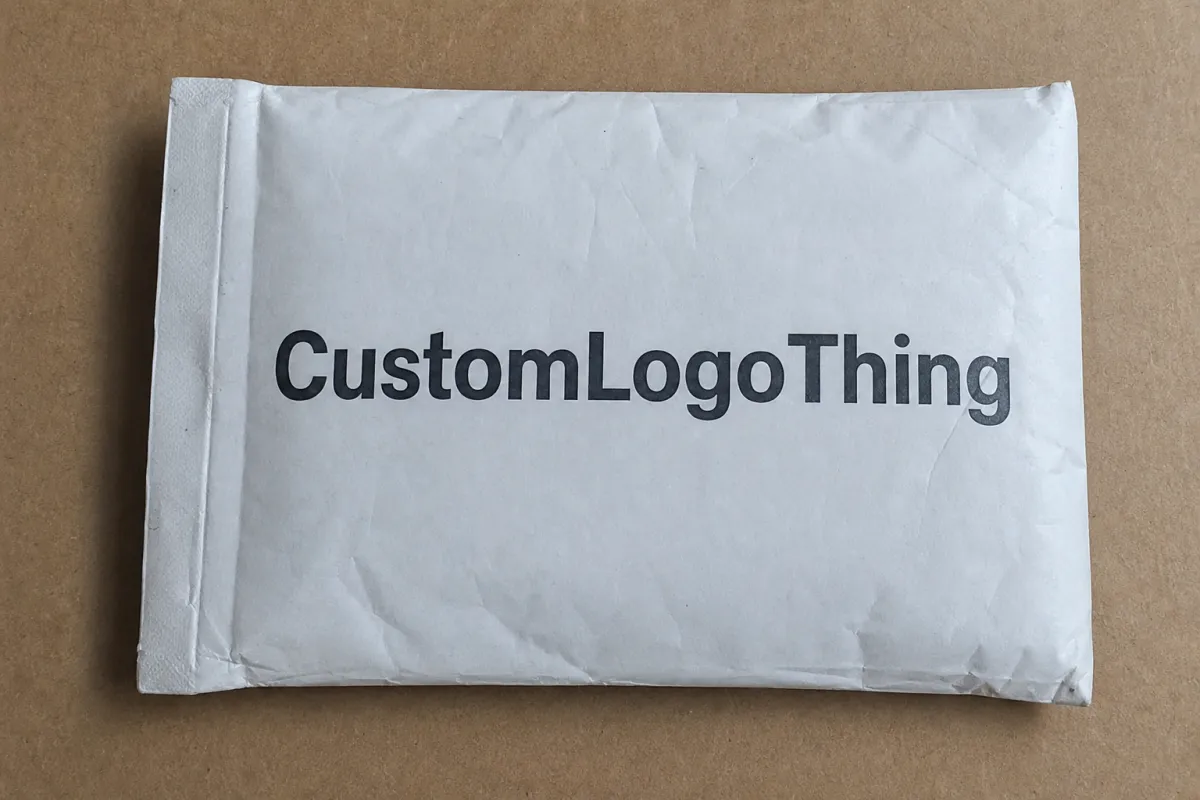
Start with the plain definition. A printed padded mailer is a lightweight outer mailer with a printable exterior, a cushioned interior, and a closure system that keeps the envelope sealed in transit. For jewelry packaging, that cushioning matters because the contents are small, rigid, and easy to mark. A ring box can bruise at the corners. A necklace case can rub against the wall of the mailer. An earring tray can shift just enough to leave a visible impression.
Auditors care because the mailer is a system, not a flat graphic. They want to know whether the construction holds up under real handling: sorting belts, tote stacking, parcel compression, drops, and the occasional rough transfer. A polished logo means very little if the seam opens, the adhesive strip weakens, or the padding collapses under pressure.
In practice, the first audit questions usually sound like this:
- Does the size match the approved jewelry box or inner carton with enough clearance to avoid bulging?
- Does the closure strip maintain bond after compression and normal warehouse handling?
- Does the printed surface resist scuffing, rubbing, and adhesive bleed?
- Are the seams straight, clean, and consistent across the run?
- Does the finished mailer protect the item without making the parcel feel overbuilt or awkwardly thick?
That is why printed Padded Mailers for Jewelry Packaging factory audit questions need to be treated as packaging design decisions, not only graphics decisions. A brand can have strong package branding and still fail an audit if the structure is too thin, the finish is too delicate, or the tolerances are too loose.
The other reason factories fail audits is mismatch. The brief says one thing, the dieline says another, and the sample lands somewhere in the middle. Once that happens, the buyer sees a logo sitting too close to a fold, a closure that feels flimsy, or a mailer that looks premium in photos but not in hand. The audit turns into a correction exercise instead of an approval step. Nobody enjoys that part, especially after the calendar has already moved.
For jewelry programs, the most common build is straightforward. Many buyers start with a 350gsm C1S artboard outer face, laminated or overwrapped for scuff resistance, paired with a 1.5mm to 2mm EPE foam or bubble-style liner. For a lower-cost line, some suppliers use 250gsm to 300gsm kraft paper with a padded interior. The right pick depends on the box weight, the shipping method, and how much abuse the outer layer needs to survive.
It also depends on the brand promise. A matte white mailer for a luxury charm line is not the same thing as a kraft mailer for a small indie studio. Same category. Very different expectations.
How the Mailer Structure and Print Layers Actually Work
A proper look at the structure clears up a lot of confusion. Most Printed Padded Mailers have four functional systems working together: the printable outer face, the cushioned interior, the seal or closure strip, and the adhesive package that keeps the envelope shut. If any one of those pieces is weak, the whole mailer gets less dependable.
The outer face may be paper, coated paper, or film, depending on the look and the performance target. Paper gives a softer, more natural finish and can pair nicely with package branding meant to feel warm or artisanal. Film can improve moisture resistance and scuff protection, though it also changes how inks sit on the surface. Some buyers prefer matte. Others want a slight sheen because it makes small logos easier to read from a distance. There is no universal winner here. There is only the right answer for a specific use case.
Inside, the cushioning can be bubble, foam, padded paper, or another lightweight liner. For jewelry, the goal is not heavy shock protection like a shipping carton for electronics. The goal is restrained movement control. You want enough compression to keep a box from sliding around inside the envelope, but not so much bulk that the mailer becomes thick, clumsy, or hard to close reliably.
Print layers matter too. A surface print may sit directly on the outer layer, which is efficient and economical, but it can show wear faster if the mailer rubs against other parcels. Lamination adds protection and can improve appearance, though it changes the feel and may hide some of the paper texture buyers want. Full-coverage artwork can create a rich visual field, but it also raises the risk of registration drift, seam distortion, and color shifts if the factory does not control the process well.
Some converters print before lamination, while others print after, depending on the substrate and the final effect. Both can work. The right choice depends on the brand's look, the shipping environment, and the budget. A soft-touch finish can feel elegant, but it may show fingerprints. A metallic detail can look premium, but it can be less forgiving on folds. A plain kraft surface can feel durable and honest, but it still needs accurate color control if the brand depends on a specific logo shade.
That is why factory auditors look at the mailer as a system. They are not only asking whether the printer can apply ink. They are asking whether the material, adhesive, padding, and conversion steps can all hold together across the batch without random variation. The more custom the structure, the more important that system view becomes.
For a concrete example, a jewelry brand shipping a slim ring box by direct-to-consumer parcel might want a 160 mm x 120 mm mailer with 25 mm to 35 mm internal depth. A gift set with a rigid box and a thank-you card may need more clearance, closer to 180 mm x 140 mm with a deeper fold. Those numbers sound boring because they are boring. Boring is good here. Boring is what keeps the pack-out from turning into a surprise fight at the packing table.
If you want a useful benchmark for shipping performance, the packaging industry often uses transport test thinking from groups like ISTA, which publishes methods for drops, vibration, and compression. For paper-based content or sustainability requirements, many buyers also check whether paper sources align with FSC chain-of-custody expectations. Those references do not replace a buyer's own spec sheet, but they help frame the conversation in objective terms.
Key Factors Auditors Check: Protection, Finish, and Consistency
Auditors usually look at five broad areas: protection, finish, dimensional accuracy, cleanliness, and repeatability. That sounds broad, but each one ties directly to the customer experience and to the factory's ability to ship without surprises.
Protection comes first. Even a jewelry package is still a shipping package, and shipping packages need to survive reasonable abuse. Auditors may check compression resistance, tear behavior, and whether the mailer stays closed after being stacked under other parcels. They are also looking for abrasion marks on the jewelry box or inner carton. A slight wrinkle on the outer mailer may be acceptable, but visible scuffing on the product packaging usually is not.
Finish is the visual layer buyers notice immediately. Print consistency matters here: logo sharpness, ink coverage, color match, metallic effect uniformity, and whether the finish changes from one side of the mailer to the other. If a brand specifies a warm gray or a specific black, that color should stay steady enough that the customer does not notice drift from batch to batch. In many print programs, a Delta E target below 2 or 3 is a practical goal for critical brand colors, though the acceptable range depends on substrate and print method.
Dimensional accuracy is the quiet audit killer. A mailer can fail simply because the internal width is too tight, the depth is inconsistent, or the closure area has too much stress. If the jewelry box is 160 mm by 120 mm by 35 mm, the mailer should not be built on guesswork. There needs to be a clear understanding of box size, insert thickness, and closure overlap. Too much extra room lets the item move. Too little creates bulging seams and stressed adhesive.
Cleanliness sounds minor until you see a rejection. Dust, loose fibers, adhesive squeeze-out, oily patches, and wrinkled corners all make a sample feel less controlled. On a jewelry package, those little defects are especially visible because buyers tend to associate jewelry with care, precision, and finish quality. If the mailer surface looks sloppy, the whole brand looks less considered.
Repeatability is where the factory audit becomes a production audit. Can the producer make the same mailer 10 times in a row, and then 10,000 times later, without changing the look? Can they keep print registration stable? Can they keep the seal consistent after the line speeds up? Can they document the approved version with a spec sheet and sample photos so the production team knows exactly what to repeat?
From a packaging buyer's point of view, that last point is often the real difference between a good vendor and a risky one. Plenty of suppliers can make a decent sample. Fewer can prove they can repeat it with the same standard on every shift. That is one reason printed padded mailers for jewelry packaging factory audit questions should include the boring details: seam width, adhesive type, acceptable color range, and the exact box the mailer is supposed to fit.
A real audit checklist also gets into the materials. Ask whether the outer face is 350gsm C1S artboard, whether the coating is gloss or matte, whether the inner padding is 2mm EPE or a bubble liner, and whether the adhesive strip is pressure-sensitive or heat-activated. If the factory cannot tell you that in plain language, they probably do not have the process under control yet.
One more detail that helps in practice: ask how they verify the finished dimensions after folding. A die line on paper is not a finished mailer. The final size after creasing, lining, and sealing is the size that matters.
Process, Timeline, and Lead Time for Sample Approval
The cleanest approval path is usually the simplest one, but it still needs discipline. A buyer should move from brief to sample in stages: confirm the size, choose the structure, lock the artwork, review a proof, build a sample, test the sample, then sign off only after the sample and the specification sheet match.
That may sound straightforward, yet time slips away in familiar places. Artwork revisions can eat days if the brand is still adjusting a logo lockup or color family. Dielines can stall if the box dimensions were never measured from a finished unit. Pantone references can be vague if the buyer sends only a screenshot instead of a defined reference. If the size changes after a sample is made, the whole cycle stretches out fast.
The biggest distinction is between a pre-production sample and a production run sample. A pre-production sample is the proof that the concept works in physical form. It confirms structure, print, and closure behavior. A production run sample is stronger evidence: it shows that the actual manufacturing process can reproduce the approved version at scale. Auditors like to see both, because a glossy one-off sample is not enough if the production floor cannot repeat it.
For simple programs, a sample can often be built and reviewed in about 7 to 12 business days after the brief is complete, especially if the supplier uses stock materials and a straightforward one-color or two-color print. Production often lands in about 12 to 15 business days from proof approval for standard runs, though that can stretch to 18 to 25 business days if the order uses a custom size, foil, lamination, or a more complex padded structure. Larger order volumes, busy seasons, and special insert requirements can add more time.
If you are asking about a fully custom jewelry mailer with a printed exterior, a matched inner liner, and a tighter fit around a rigid box, the timeline is often a bit longer. Sampling may take 2 to 3 weeks, especially if the factory needs to tune the dieline. Once approved, production commonly runs in the 3 to 5 week range after sign-off. That is normal enough to plan around. It is also normal enough for someone to “remember” later only after the launch date starts to slip.
Lead time also depends on the factory's documentation habits. If the team records the approved dieline, the shade target, the sample date, the sign-off date, and the production batch reference, later audits become much easier. If those records are scattered across email threads, the buyer often has to reconstruct the approval trail manually, which wastes time and increases the chance of a mismatch.
That is why printed padded mailers for jewelry packaging factory audit questions often turn into process questions. Can the vendor show the exact approved version? Can they identify what changed from sample to production, if anything changed at all? Can they prove the outer mailer still meets the shipping intent after the final conversion step? Those are the questions that separate a cosmetic approval from a real one.
Cost, MOQ, and Quote Variables to Compare
Cost is where many buyers get tempted into a false comparison. Two quotes may look similar until you check the material, the padding, the closure, the print coverage, and the shipping method for the finished goods. Then the lower quote is not really lower, because it may exclude the part that keeps the mailer from failing inspection.
The biggest price drivers are usually material grade, print complexity, finish type, padding weight, adhesive quality, and whether the mailer is built from an existing platform or developed as a fully custom format. A plain printed mailer with a simple logo may stay in a lower range, while a fully custom structure with multiple colors, matte lamination, and tailored dimensions will cost more because the production steps increase.
MOQ matters because setup labor gets spread across the batch. If the factory has to create plates, register colors, calibrate the line, and cut a new dieline, a 3,000-piece order will carry a higher per-unit cost than a 20,000-piece order. That does not mean the smaller order is a bad choice. It simply means the buyer should expect a premium for the first run.
For reference, a rough market range for custom printed padded mailers can sit around $0.15-$0.24 per unit at 5,000 pieces for simpler builds, depending on size and print coverage. A mailer with a one-color logo on a smaller format might sit near the low end. A larger mailer with more ink coverage, a nicer outer coating, or heavier padding can move higher. More decorative or more engineered versions often land around $0.24-$0.42 per unit, and tightly specified premium builds can push higher still if they use specialty finishes or heavier materials.
To compare quotes fairly, ask for the same size, same print coverage, same closure style, and the same packing method. A quote that bundles the mailers in a protective export carton is not directly comparable to one that assumes loose packing. A quote with a special inner liner is not the same as a quote without it. And if one supplier includes tooling while another does not, the headline number can be misleading.
| Option | Typical MOQ | Approx. Unit Cost | Strengths | Audit Risk |
|---|---|---|---|---|
| Stock padded mailer with one-color logo | 1,000-3,000 | $0.15-$0.24 | Fastest setup, lower artwork complexity, easier reorders | Moderate if size is not checked carefully |
| Semi-custom printed padded mailer | 3,000-5,000 | $0.22-$0.34 | Better branding control, more size options, stronger presentation | Lower if sample approval is documented |
| Fully custom padded mailer with special finish | 5,000-10,000+ | $0.30-$0.48 | Most control over appearance, fit, and package branding | Lowest only if testing and tolerances are tightly managed |
Hidden pricing items deserve attention too. Tooling, print plates, artwork setup, sampling fees, freight, duty, and carton packing can all change the landed cost. If the design includes a reinforcement layer, foil accent, or a specialty inner liner, ask whether that is included in the quoted unit price or listed separately. A low quote without that detail may be incomplete rather than economical.
For some buyers, the better decision is not the cheapest unit cost but the smallest audit risk. A mailer that fails inspection, needs rework, or delays launch almost always costs more in the end. That is true whether the item is sold through boutique retail packaging channels or shipped as a direct-to-consumer order with stronger branded packaging expectations.
One more practical pricing point: if a supplier quotes a 5,000-piece run at $0.19 each but refuses to specify the paper stock, the foam thickness, or the closure type, that quote is not a bargain. It is a mystery with a price tag. Audits hate mysteries.
Common Mistakes That Trigger Audit Rework
The most common mistake is approving artwork too early. If the buyer locks a logo before the dimensions are final, the print can land too close to a fold, the brand mark can stretch across a seam, or the main design element can disappear when the mailer is formed. The artwork may look fine on screen and still fail once the structure is folded and sealed.
The second mistake is skipping physical testing. Photos tell you almost nothing about seal reliability, compression behavior, or abrasion resistance. A mailer can look premium in a render and still fail a simple handling test once the adhesive is pressed, rubbed, or stacked under load. That is especially dangerous with jewelry, because small packages can be moved around a lot in sorting and packing areas.
Vague spec language is another frequent problem. If the brief says only “premium feel,” the supplier has too much room for interpretation. One factory may use a heavier paper, another may choose a smoother coating, and a third may increase the padding without improving the closure. The result is not one shared standard but three different interpretations. Define thickness, finish, target color, edge appearance, closure style, and acceptable tolerance in writing.
Mixing up sample and production versions creates a different kind of trouble. The sample may have been built slowly by a senior technician, while the production run is produced on a faster line by a different team. If the buyer never documented what was approved, the factory has no clear target. Auditors then have to ask whether the shipped version matches the sample, and that is exactly the kind of question that slows release.
There is also a packaging system mistake that appears more often than buyers expect: the mailer is sized for the jewelry box, but not for the full shipment. If the box goes inside a pouch, a card, tissue, a warranty leaflet, or a small insert, the total thickness may increase enough to strain the closure. That extra few millimeters can make the difference between a neat pack-out and a bulging envelope.
When brands also order custom printed boxes or internal cartons, the fit needs to be checked across the whole pack-out, not just the mailer by itself. Product packaging works best as a family of components. A mailer that was designed before the box was finalized can be the wrong answer even if each item looks fine on its own.
Put simply, audit rework usually comes from one of four places: inaccurate size data, unfinished artwork, weak testing, or poor documentation. Solve those, and the odds of a clean approval improve sharply.
Another common miss: forgetting how the package moves through the chain. A mailer that survives a gentle desk test may still get crushed if it rides through a sorting center under 8 to 10 kg of stacked parcels. That is exactly where the closure strip, the side seam, and the inner liner earn their keep. Pretty is fine. Pretty and durable is the point.
Expert Tips and Actionable Next Steps Before You Order
The best next move is to build a simple audit checklist before you request quotes. Keep it short, but make it specific. List the finished jewelry box size, the desired mailer size, the material type, the print method, the closure style, the color target, the acceptable seam appearance, and any performance expectations for compression or drop handling.
Ask for a finished sample, not just a flat proof. A flat proof is useful for color and layout, but it cannot tell you how the mailer feels in hand, how the seal behaves, or whether the edges stand up cleanly when the piece is folded. For a jewelry brand, those tactile details matter because they shape the customer's first impression of quality. A lot more than people admit, frankly.
Keep the paperwork together. Save the spec sheet, the artwork file, the signed approval, sample photos, and any comments that changed the design. If the factory audit happens later, that packet becomes a clean record of what was agreed. It also protects both sides if a reprint question comes up. Good documentation is one of the cheapest forms of quality control.
It also helps to think about the mailer as part of the whole branded packaging system. If the outer mailer is elegant but the insert is cheap, or the box is sturdy but the mailer tears on the way out, the customer sees inconsistency. A coherent packaging design uses each layer for a purpose, and the mailer should support the rest of the presentation rather than fighting it.
Here is a practical order path that keeps the process under control:
- Confirm the product and jewelry box dimensions with actual samples, not just drawings.
- Choose the mailer structure, outer finish, and closure style.
- Request a written quote with the same spec across every vendor.
- Review a physical sample and test the seal, fit, and surface finish.
- Approve production only after the sample, spec sheet, and artwork all match.
If you want a deeper catalog view of packaging formats, browse Custom Packaging Products. If you are comparing outer mailer options for a larger line, the structure and print ideas in Custom Poly Mailers can be a useful reference point. And if you want help sorting through common sourcing questions, the FAQ page is a good place to start.
One last practical point: do not let the sample pass because it looks close enough. Close enough is how audits slip. The right approach is to define the acceptable spec, test the finished piece, and keep the approval trail tidy enough that anyone on the production side can reproduce it without guessing. That is the simplest way to make printed padded mailers for jewelry packaging factory audit questions manageable instead of stressful.
What do auditors check first in printed padded mailers for jewelry packaging?
They usually start with fit, seal integrity, and whether the mailer protects the jewelry box from scuffs or movement. They also check print placement, color consistency, and whether the finished piece matches the approved sample. If the outer build is 350gsm C1S artboard with a 2mm foam liner, they will often check that the fold lines and closure still behave after compression.
How do printed padded mailers protect delicate jewelry packaging during shipping?
The cushioned layer reduces impact and abrasion so the outer jewelry box is less likely to dent or rub. A well-made closure strip and proper sizing keep the contents from shifting around inside the mailer. For a ring box or slim necklace case, even 3 mm to 5 mm of unnecessary movement can leave marks, so fit matters more than people want to admit.
Which print details matter most in a jewelry packaging factory audit?
Auditors look closely at logo sharpness, color match, registration, and whether finishes like matte or metallic stay uniform. They may also inspect for smudging, peeling, or surface wear after handling and basic shipping tests. If the brand color is supposed to stay within a Delta E of 2 or 3, that target should be written into the spec sheet before production starts.
What affects MOQ and unit cost for printed padded mailers?
MOQ and unit cost are driven by material type, print complexity, setup labor, and whether the design uses special finishes or custom sizes. Smaller quantities usually cost more per piece because setup and conversion work are spread across fewer mailers. A 5,000-piece order with simple print may sit around $0.15-$0.24 per unit, while heavier coverage or special finishing can push the number higher.
How long should sampling and approval take for printed padded mailers?
Simple projects can move quickly if artwork and dimensions are ready, while custom finishes, special liners, or multiple revisions extend the timeline. In many cases, a sample is ready in about 7 to 12 business days, and production often takes 12 to 15 business days from proof approval for standard runs. More custom builds usually need longer.
Can printed padded mailers be part of a larger branded packaging program?
Yes. They often work best as one layer in a coordinated system with custom printed boxes, inserts, tissue, and labels. When the outer mailer, inner carton, and print language all match, the whole package feels more intentional and more trustworthy. That is especially true when the mailer, box, and tissue all share the same finish family and color logic.
What should I ask a factory before approving production?
Ask for the final size, the exact material stack, the print method, the closure specification, and the sample approval record. If the factory can answer those questions clearly and show the approved reference, you reduce the chance of a mismatch later. I would also ask for a packing method, because loose-packed mailers and carton-packed mailers do not arrive in the same condition.
Use the mailer as both protection and presentation. Verify the size with a finished sample, write the spec down clearly, test the closure and surface, and approve only the version the factory can repeat. That is the practical answer to printed padded mailers for jewelry packaging factory audit questions, and it is the difference between a pretty sample and a shipment-ready package.


