Buyer Fit Snapshot
| Best fit | Custom Padded Mailers Unit Cost Breakdown for Boutiques projects where brand print, material claims, artwork control, MOQ, and repeat-order consistency need to be specified before quoting. |
|---|---|
| Quote inputs | Share finished size, material target, print colors, finish, packing count, annual reorder estimate, ship-to region, and any compliance wording. |
| Proofing check | Approve dieline scale, logo placement, barcode or warning zones, color tolerance, closure strength, and carton packing before bulk production. |
| Main risk | Vague material claims, crowded artwork, missing packing details, or unclear freight terms can make a low unit price expensive after revisions. |
Fast answer: Custom Padded Mailers Unit Cost Breakdown for Boutiques should be specified like a repeatable production item. The safest quote records material, print method, finish, Artwork Proof, Packing Count, and reorder notes in one written spec.
Production checks before approval
Compare the actual filled-product size with the drawing, then confirm tolerance on folds, seals, hang holes, label areas, and retail display edges. Reserve space for logos, QR codes, warning copy, and material claims before decorative graphics fill the panel.
Quote comparison points
Review material grade, print process, finish, sampling route, tooling charges, carton quantity, and freight assumptions side by side. A quote is only useful when the supplier can repeat the same color, closure quality, and packing count on the next order.
The cheapest mailer usually becomes the most expensive one. That sounds dramatic until the replacements start landing on your desk. A Custom Padded Mailers for boutique retailers unit cost breakdown should begin with landed cost, not sticker price, because the true bill includes damage, reshipments, packing labor, and the brand hit that comes with a bent or sloppy arrival. Boutique buyers often compare blank stock mailers against printed options and stop there. That misses the part that protects margin.
For a standard 5,000-piece run, a simple one-color printed padded mailer often lands around $0.15-$0.24 per unit, depending on size, liner construction, and print coverage. Larger formats, heavier artwork, and specialty finishes push that number upward. Small differences in spec can change the math faster than people expect. A wider mailer may use only a little more material on paper, then quietly pull freight, setup, and waste higher with it.
For boutiques, packaging is not decoration. It sits inside product packaging, retail packaging, and package branding all at once. A padded mailer can reduce breakage in transit, keep an order looking intentional, and make a small shipment feel complete instead of improvised. That matters whether you sell apparel, cosmetics, candles, jewelry, or gift sets. It also means the right spec is often worth more than the lowest quote.
The mistake is simple: people buy the mailer, then pay for the damage later.
If you want to compare formats before you settle on a spec, our Custom Packaging Products page is a practical starting point, and Custom Poly Mailers work well as a reference when you are weighing paper, film, and hybrid builds.
Why Boutique Retailers Overpay for Padded Mailers
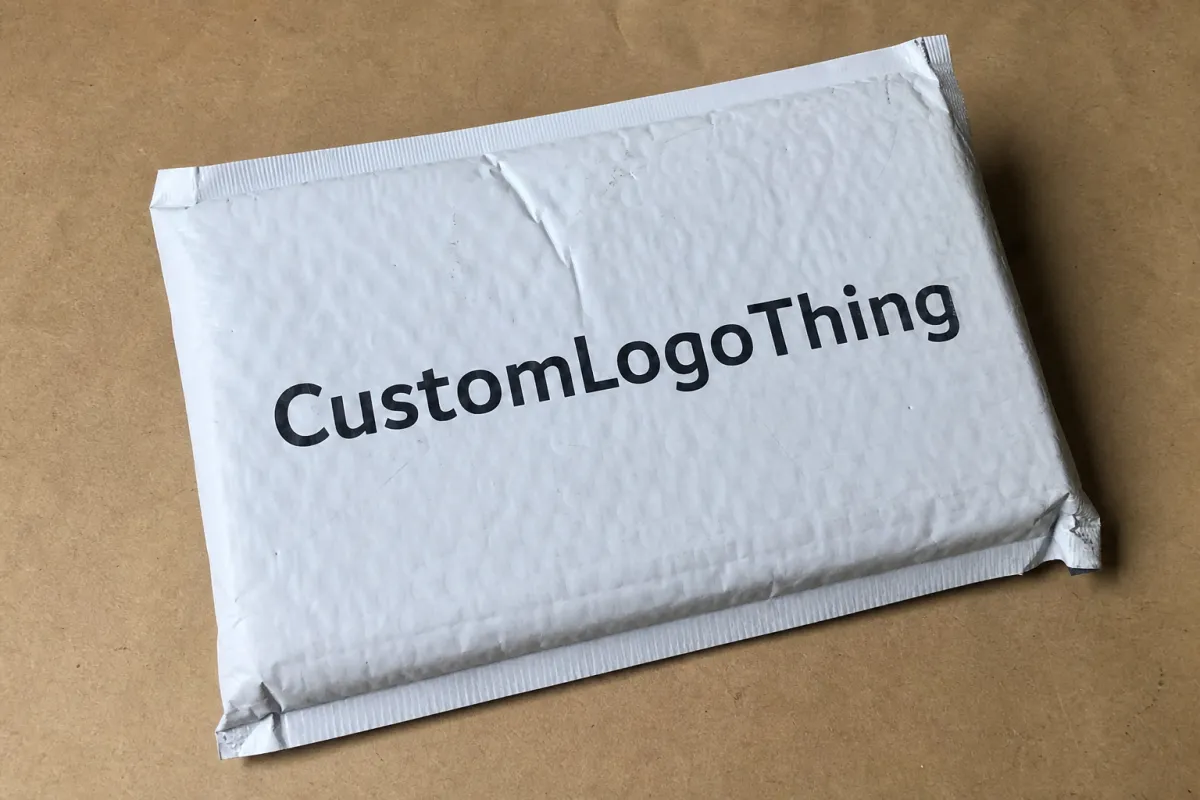
Most overpaying starts with bad comparisons. A buyer sees a blank mailer price, notices the lower number, and assumes that is the smarter purchase. It is not. Blank stock mailers can look inexpensive on paper, but once you add printed labels, tissue, extra void fill, and the occasional replacement shipment, the total gets ugly fast. One replacement parcel can wipe out the savings from dozens of cheap mailers.
For boutique retailers, the hidden cost is perception. A mailer is often the first physical touchpoint after checkout, which means it sets expectations before the customer opens the box or sleeve inside. If the outer mailer looks flimsy, mismatched, or generic, the customer reads the whole order as lower value. That is bad news for repeat purchase behavior, especially in categories where visual polish drives loyalty. Even a weak seal or a dull print can make a $60 order feel like a clearance-bin shipment.
Packaging design matters here too. A printed padded mailer can carry a logo, a color system, or a pattern that matches the rest of the product packaging. That consistency matters more than a lot of people admit. Customers notice whether the shipping layer feels connected to the brand story or like it came from a random warehouse drawer labeled "good enough." The right outer mailer should feel like part of the purchase, not an apology for it.
The smartest buying decision usually lowers the total cost per shipped order. That total includes breakage, replacement freight, packing labor, and the time your team spends answering complaints. A cheap mailer that forces a second shipment is not cheap. A better mailer can protect the order and reinforce the sale in the same move. For domestic shipments, a replacement postage bill often sits somewhere around $5-$12 before anyone counts the staff time to fix the issue.
That is why this topic is not really about padding alone. It is about whether your branded packaging supports the product or fights it.
What Custom Padded Mailers Are Made Of
Custom Padded Mailers usually have four basic parts: an outer layer, a cushioning layer, a closure system, and a print surface. The outer layer can be paper, poly film, or a hybrid construction. The cushioning layer may be bubble, paper fiber padding, or another lightweight insert structure. The closure is usually a peel-and-seal strip, though some mailers use a fold-over or adhesive flap. The print surface is where the logo, pattern, or messaging lives. On premium paper-faced mailers, a common build uses a 350gsm C1S artboard face with a kraft or bubble liner behind it, which gives a cleaner print surface and a more rigid hand feel.
Paper-based mailers feel more boutique-friendly because they tend to look natural and photograph well. They also work well for brands that care about recycling claims, but that claim is not magic. It depends on the exact build and local recycling rules. If the outer layer is paper and the inner structure is compatible, some systems handle it better than mixed-material builds. For a sourcing benchmark, FSC certification is a useful reference point for paper inputs: FSC. A paper mailer with a kraft outer and recycled fiber padding can also pair nicely with a cleaner, matte print style.
Poly-based mailers usually win on moisture resistance, tear resistance, and cost control. They are a sensible choice for apparel, lightweight accessories, and orders that need a stronger barrier against handling abuse. A lot of buyers like them because they are less likely to split during transit. They can also print sharply, especially on simple artwork with one or two colors. The tradeoff is tactile feel. Some customers read poly as less premium unless the graphics carry real presence. A 50-60 micron poly shell with a peel-and-seal flap is a common starting point for this kind of order.
Hybrid constructions sit in the middle. They can combine a paper exterior with an inner protective layer or a film exterior with a paper-facing print zone. That gives you some of the best traits of both, but not for free. Hybrid formats usually raise unit cost because the build is more complex and the manufacturing setup takes more work. If the brand sells higher-margin goods, that extra spend can make sense. If the item is low ticket and price-sensitive, probably not. A hybrid mailer also tends to make more sense when the package is handled a lot, like in busy fulfillment lanes or multi-item shipments.
Print is where costs climb faster than people expect. A one-color logo on a fixed print area is usually the lowest-cost option. Full-surface graphics, extra color stations, metallic effects, matte coatings, or interior print all increase setup and material demands. Matte finishes often feel more premium to the hand, while gloss can pop in photos. Neither is automatically better. Matte hides scuffs better. Gloss can look louder. The right choice should match the product, not a mood board someone made at midnight. If you want a realistic print target, simple spot printing on a 9 x 12 or 10 x 13 mailer usually costs less than full-bleed art across the entire outer shell.
For fragile or semi-fragile goods, the useful question is not "What does it look like?" It is "What does it survive?" A padded mailer that looks elegant but tears on the sorter belt is a bad buy. A slightly less pretty mailer that keeps its seal and protects the item is the better move. If the closure fails or the corners burst, the customer remembers that faster than the color of the logo.
Specs That Affect Fit, Protection, and Brand Feel
Before asking for quotes, gather the specs that actually change price and performance. The supplier needs the flat width, usable depth, closure type, target product dimensions, and a rough idea of the product’s weight and fragility. If you send only "needs to fit a shirt," you are making everyone guess. Guessing costs money. Guessing also leads to samples that miss the mark. A good brief should say what the item is, how it is folded, whether it ships in tissue or a box, and how much space the insert or padding needs.
Here is the sizing mistake that shows up all the time: buyers pick a mailer that is too large because they want to be safe. That sounds sensible, but the extra material adds cost and can create a loose package that shifts around in transit. The opposite mistake is worse. A mailer that is too tight stresses the seal, stretches the seams, and raises the chance of damage. Good fit is not vanity. It is shipping control. A correctly sized mailer usually looks better too, which is a nice side effect instead of the main point.
Typical boutique categories and useful starting sizes
- Apparel: Often 9 x 12, 10 x 13, or 12 x 15 inches, depending on fold style, thickness, and whether the order includes a thank-you insert or tissue.
- Jewelry: Usually 6 x 9 or 7 x 10 inches, with extra attention to seal strength, corner protection, and keeping the item from sliding.
- Cosmetics: Commonly 7 x 10, 8 x 10, or 8 x 12 inches, especially for sets, boxed items, and bottles that need a little side clearance.
- Candles: Often 8 x 10, 9 x 11, or custom gusseted builds if the jar is heavy or the box has sharp edges that can wear through the liner.
- Gift sets: Usually 10 x 13 inches and up, because inserts, tissue, secondary packaging, and any protective wrap need room without crushing the contents.
Those are starting points, not rules. A thick sweatshirt is not the same as a folded silk blouse. A candle in a rigid carton is not the same as one wrapped in tissue. The right size depends on how the item is packed, not just what it is. That is why sample fitting matters. A half-inch of extra room can be smart. Two inches of dead space usually is not.
Print coverage changes both appearance and unit cost. A small front logo keeps the price lower. A full-bleed design usually looks stronger on shelf and on social media, but it uses more ink, more setup time, and sometimes a different production process. If you are matching a broader package branding system, like custom printed boxes, the mailer should echo the same color palette or visual rhythm instead of trying to reinvent the brand from scratch. If the box is matte and the mailer is loud gloss, the system starts arguing with itself.
Performance specs matter too. Ask about puncture resistance, seal strength, moisture protection, and whether the mailer needs an insert or extra inner padding. If you are shipping brittle items or mixed-SKU bundles, ask for testing aligned with common transit protocols. ISTA 3A is a widely used test method for parcel distribution, and a lot of packaging teams use it as a reference point for drop and vibration checks: ISTA. You do not need a lab coat to care about that. You just need a package that arrives intact.
Noise and stiffness matter more than people admit. Some mailers crinkle loudly and feel cheap in hand. Others have a nicer grip and a cleaner tear when opened. That is not a luxury detail. It shapes the unboxing experience, and customers notice it immediately. A softer matte finish can feel calmer, while a slick gloss can feel louder and a little more retail-forward. Pick the one that matches the product price point.
Custom Padded Mailers for Boutique Retailers Unit Cost Breakdown
Here is the part buyers ask for first: what does it cost? The honest answer is that a custom padded mailers for boutique retailers unit cost breakdown depends on size, material, print coverage, order volume, and shipping destination. A low MOQ order can make sense for testing, but smaller runs almost always carry a higher per-unit price because setup costs are spread across fewer pieces. The good news is that pricing gets much clearer once the spec is locked down.
Below is a practical buying range for typical boutique orders. These are planning numbers, not promises. Exact pricing changes with dimensions, print colors, finish, liner type, and freight. If the spec is simple, a 5,000-piece run often lands in the sweet spot.
| Order profile | Typical unit cost | Setup or tooling | Best use case | Notes |
|---|---|---|---|---|
| 500-1,000 pieces | $0.58-$1.15 each | $180-$500 one time | Test run, launch sample, seasonal proof | Higher unit cost, but useful for fit checks and color validation |
| 2,000-3,000 pieces | $0.28-$0.58 each | $220-$650 one time | Mid-size boutique order, first reorder, campaign drop | Good balance between flexibility and price control |
| 5,000 pieces | $0.15-$0.24 each | Usually absorbed into the run | Standard production, repeat items, stable SKUs | Common range for a simple one-color print and standard size mailer |
| 10,000 pieces | $0.11-$0.19 each | Amortized across the run | High-volume repeat orders, multi-season supply | Lowest unit cost if the size and artwork are already proven |
| Premium full-coverage or specialty finish | $0.22-$0.48 each | $300-$1,000 one time | Higher-end product presentation, launch kits, heavy brand use | Matte soft-touch, spot effects, interior print, or hybrid builds usually add cost |
Those ranges matter because they show the shape of the pricing. The price drops as volume rises, but not at the same rate for every spec. The biggest cost drivers are mailer size and print coverage. A larger mailer uses more raw material, more freight space, and sometimes a more expensive die or plate structure. Heavy print coverage does the same thing on the decoration side. A 9 x 12 mailer with a small logo is not priced the same way as a 12 x 15 mailer with full-surface art.
Here is the plain-English version of the cost stack:
- Base mailer cost: the actual structure, padding, and closure.
- Print setup: plates, screens, digital setup, or tooling, depending on the process.
- Artwork cleanup: file fixes, color separation, and proof preparation.
- Packaging and packing: how the finished mailers are boxed, palletized, or bundled.
- Freight: the part many people forget, even though it can swing landed cost a lot.
That last line matters. A quote can look good until shipping shows up. The best quote survives freight. If a supplier gives you a low unit price but hides a high shipping line, the total cost can end up worse than a cleaner quote with a slightly higher base price. Always ask for a landed-cost quote, especially if the order crosses regions or ships by pallet. If you only compare ex-works pricing, you are not comparing finished packaging cost. You are comparing a number that still has homework.
MOQ is not a trick. It is math. A supplier who has to set up a print run, source the right structure, and pack the finished product cannot do that cost-free on a tiny order. For simpler constructions, boutiques might see MOQs around 1,000 to 2,000 pieces. For more custom builds, 3,000 to 5,000 pieces is common, and larger runs can make sense if the design is settled and the product line is stable. If you know the mailer will repeat, the 5,000-piece tier is often where the unit economics start to look sane.
Hidden costs deserve their own warning label. Ask about sample packs, artwork revisions, proofing, palletization, and rush freight before you approve anything. A rushed job can easily add 10% to 25% to the real total, sometimes more if the schedule is tight and inventory is already committed. A second proof round can be cheap. A missed launch date is not.
If the order will repeat, do not compare only one run. Compare the repeat cost over a few cycles. That is where some boutiques discover that a slightly higher-spec mailer actually lowers the annual packaging budget because it cuts reprints, damage claims, and operational headaches. Fancy? No. Just arithmetic.
Production Process, Timeline, and Lead Time
Most custom mailer orders follow the same basic path: inquiry, spec confirmation, artwork review, sample approval, production, packing, and dispatch. If a supplier skips any of those steps, be careful. Speed is nice. Missing approvals is how you end up with a box of the wrong blue.
- Inquiry and spec review: 1-2 business days if the buyer sends clear dimensions, quantity, print colors, and a target finish.
- Artwork cleanup and proofing: 1-3 business days, longer if the logo file is low resolution or colors need adjustment.
- Sample approval: 3-7 business days for many standard sample types, longer for fully custom structures or physical color matching.
- Production: often 12-15 business days from proof approval for standard runs, longer for specialty finishes or larger volumes.
- Packing and dispatch: 1-5 business days depending on freight method and destination.
That means a standard order can move in roughly two to four weeks after artwork approval, while a more complex order may need longer. If the project includes multiple print colors, special coatings, or a new structure, build in buffer. A buyer who plans a holiday or launch drop with no time cushion is asking the schedule to punish them. The packaging team can only move so fast before the freight truck becomes the bottleneck.
Sample lead time is not production lead time. People mix those up all the time. A sample helps confirm fit, seal strength, color, and overall feel. Full production is a separate step, and it should not start until the sample is signed off. If the sample is wrong and you push into mass production anyway, you are not saving time. You are simply postponing the mistake until the bill gets larger.
Timing also interacts with freight. Air shipping is faster and more expensive. Ocean or ground freight lowers shipping cost but adds days or weeks. For boutiques with seasonal inventory, the real scheduling decision is often whether to pay a little more on freight or risk missing the sales window. There is no heroic answer there. If the product launches on a set date, the packaging has to arrive first. That is the whole point of a schedule.
My practical rule is simple: order earlier than your instinct says. Most buyers wait until inventory gets tight, then ask for a rush. Rush production limits options and raises cost. Earlier ordering gives you room to fix color, tweak size, and avoid a last-minute markup. That is boring advice. It also saves money.
If the packaging is part of a coordinated release with tissue, inserts, labels, or custom printed boxes, the schedule should be mapped together. One weak link in the chain slows everything else down. Packaging should move as a set, not as a pile of disconnected parts.
Why Boutique Retailers Order From Us
Boutique brands do not need a generic volume seller that tosses a price sheet over the fence. They need a supplier that understands fit, visual consistency, and the practical mess of real shipping. At Custom Logo Things, the goal is to help buyers choose a mailer that works for the product, the budget, and the brand look without pretending every order has the same requirement.
What boutiques care about most is not flashy sales language. It is dependable print quality, consistent reorders, honest cost breakdowns, and a process that does not waste half the week. If the mailer is off by a quarter inch, if the logo prints muddy, or if the finish looks different on reorder, problems show up fast. Small brands feel those problems harder than big ones because they do not have a warehouse full of backup packaging. They need the first run to be right and the second run to match it.
A good supplier should also help reduce risk before production starts. That means checking dimensions, recommending a reasonable spec, and warning the buyer when a choice will inflate unit cost without improving performance. Sometimes that means steering a customer away from a premium finish that adds nothing for the product. Sometimes it means saying the cheaper option is false economy because the item needs more protection. Straight answers save money. Cute sales talk does not.
This is where the broader packaging system matters. If the brand already uses branded packaging in labels, inserts, or cartons, the mailer should fit that system instead of fighting it. When the outer shipment layer looks related to the shelf packaging, the whole purchase feels more intentional. If it looks random, the customer notices that too. They may not use packaging vocabulary, but they can tell when something feels off. If your boxed set uses a soft matte palette, the mailer should probably not show up in blinding gloss unless that contrast is deliberate.
For brands building a full package branding system, it helps to compare mailers with the rest of the line. That might mean evaluating retail packaging against outer shipping packaging, or checking whether the mailer should match the same tone as your product boxes. You do not need every surface to shout. You need the surfaces to agree with each other. A quiet, coordinated system usually reads as more expensive than a messy one with five competing finishes.
That is also why repeat-order consistency matters. A boutique can live with one small prototype mistake. It cannot live with a reorder that prints in a different shade or arrives with a different seal feel. Reliable production oversight is not glamorous. It is what keeps the brand from looking inconsistent across seasons. A one-month mismatch can become a year-long headache if the customer notices the packaging changed without warning.
From a buyer’s point of view, the best supplier removes friction. The quote is clear. The sample is useful. The timeline is believable. The reorder looks like the first order. That is the job.
What To Prepare Before Requesting a Quote
If you want accurate pricing, send complete information the first time. Start with the product dimensions, target quantity, preferred print colors, shipping destination, and any finish requirements. If you know whether the order is a test run, a seasonal run, or a long-term supply plan, say that up front. Each path changes the quote. A one-off launch pack is priced differently from a repeat monthly reorder. That should be obvious, but it is not always.
Good artwork speeds everything up. Send the logo in vector format if possible, plus any brand colors, reference packaging, or screenshots that show what you want the mailer to feel like. If you have samples of packaging design you like, send those too. They help the supplier understand print coverage, tone, and finishing expectations much faster than a vague description. If you have Pantone numbers, include them. If you do not, say whether you want CMYK output or a closer color match to an existing package.
Here is the short version of what a useful quote request should include:
- Product dimensions: packed size, not just the item size.
- Quantity: a single number and any future reorder expectation.
- Print details: one color, multiple colors, full coverage, or interior print.
- Finish preference: matte, gloss, natural paper, or something more premium.
- Shipping destination: because freight changes the landed cost.
- Deadline: launch date, seasonal start, or reorder target.
When comparing offers, do not look only at the unit price. Put unit price, MOQ, lead time, freight, sample policy, and artwork fees on the same sheet. That is the cleanest way to compare quotes side by side. If one supplier looks cheaper but charges more for freight or proofing, the quote is not actually cheaper. It is just shorter. And shorter quotes are great until the add-ons show up.
For boutiques, the biggest savings usually come from making one smart decision early: choose the right mailer size, approve a print area that fits the brand, and avoid revisions after proofing. A clean spec sheet does not just speed up the quote. It reduces the chance of an expensive mismatch later. If the packed item is 8.5 x 11.5 inches with a little thickness, say that. Do not guess and hope the carton shape behaves.
So if you are ready to move from rough idea to order, start with a spec sheet and ask for a landed quote. That is the practical way to handle a custom padded mailers for boutique retailers unit cost breakdown without guessing, and it gives you a real read on what the packaging will cost once it reaches your door.
Frequently Asked Questions
What is the average custom padded mailers for boutique retailers unit cost breakdown?
The unit cost usually depends on size, material, print coverage, and order volume. Small runs cost more per piece because setup, proofing, and freight are spread across fewer mailers, while larger runs can push the per-unit price down fast. For a simple 5,000-piece order, a common range is about $0.15-$0.24 per unit before freight, while larger formats or full-surface art can move higher. Ask for a landed-cost quote so shipping and packing are included instead of buried later.
What MOQ should boutiques expect for custom padded mailers?
MOQ varies by construction and print method, but lower-volume orders usually cost more per unit. For simple custom work, a boutique may see 1,000 to 2,000 pieces; more custom structures often start around 3,000 to 5,000 pieces. If you are testing a new design, ask for a pilot run and compare it with the pricing for a standard production order. That gives you a clean read on fit and finish before you commit to a larger buy.
Which spec changes the unit cost the most on custom padded mailers?
Mailer size and print coverage usually move pricing the fastest. Material choice matters too, especially if you move from a basic stock build to a premium or hybrid construction. A 9 x 12 mailer with one-color print is usually much easier to price than a larger 12 x 15 format with full-bleed graphics. Rush timing and freight can raise the real cost even if the base unit price looks reasonable.
How long does production take after artwork approval?
Standard production often starts after final artwork approval and sample sign-off. Many straightforward runs finish in about 12-15 business days from proof approval, but special finishes, higher quantities, or material sourcing can extend that. Build in extra time before launches, because revisions can push the schedule back quickly. If the order also needs ocean freight or a custom insert, the calendar gets longer.
Can I order samples before committing to a full run?
Yes, and you should if the size, finish, or print color matters to your brand presentation. Samples help verify fit, feel, seal strength, and print accuracy before bulk production starts. A sample fee is usually cheaper than fixing a bad full order after the fact. If the sample is off by even a little, fix it before you approve the run.
Practical Takeaway
If you are comparing custom padded mailers for boutique retailers unit cost breakdown options, stop looking at unit price alone. Build the decision around fit, protection, print coverage, freight, and reorder consistency, then ask for a landed quote based on the actual packed item. That one change filters out a lot of fake savings.
For most boutique programs, the winning move is simple: choose the smallest mailer that fits the packed product cleanly, keep the print area intentional, and test a sample before approving production. That gives you a package that protects the item, matches the brand, and avoids the expensive habit of paying for mistakes twice.

