Buyer Fit Snapshot
| Best fit | Custom Paper Bags Offset Printing projects where brand print, material claims, artwork control, MOQ, and repeat-order consistency need to be specified before quoting. |
|---|---|
| Quote inputs | Share finished size, material target, print colors, finish, packing count, annual reorder estimate, ship-to region, and any compliance wording. |
| Proofing check | Approve dieline scale, logo placement, barcode or warning zones, color tolerance, closure strength, and carton packing before bulk production. |
| Main risk | Vague material claims, crowded artwork, missing packing details, or unclear freight terms can make a low unit price expensive after revisions. |
Fast answer: Custom Paper Bags Offset Printing: Film, Print, MOQ, and Carton Packing should be specified like a repeatable production item. The safest quote records material, print method, finish, artwork proof, packing count, and reorder notes in one written spec.
Production checks before approval
Compare the actual filled-product size with the drawing, then confirm tolerance on folds, seals, hang holes, label areas, and retail display edges. Reserve space for logos, QR codes, warning copy, and material claims before decorative graphics fill the panel.
Quote comparison points
Review material grade, print process, finish, sampling route, tooling charges, carton quantity, and freight assumptions side by side. A quote is only useful when the supplier can repeat the same color, closure quality, and packing count on the next order.
Custom Paper Bags Offset Printing: A Practical Guide
A paper bag can feel surprisingly expensive, or quietly ordinary, even if the artwork on it never changes. A slightly warmer sheet, a cleaner ink density, a glossier coating, or a better handle can shift the whole impression. That is why custom paper bags offset printing deserves careful attention: the method can produce crisp logos, rich solids, and dependable color consistency, but only if the paper, finish, and converting details are planned as one system rather than handled as separate decisions.
For a packaging buyer, the order is rarely just a bag. It is a chain of technical choices that includes stock weight, handle style, print method, coating, carton packing, and freight. Miss one link and the bag still carries merchandise, but the brand message may land with less force. Retail packaging, gift packaging, and branded packaging all depend on those details. Customers register them quickly, even if they never say why one bag feels premium and another feels forgettable.
At Custom Logo Things, the real question is usually fit. Does offset printing give the right balance of quality, quantity, and lead time for this project? The answer changes with run size, color requirements, and the role the bag has to play. If the order sits alongside other printed assets such as Custom Packaging Products, or if you need a clearer picture of production options before requesting pricing, the full Manufacturing Capabilities list can sharpen the brief before it reaches a plant.
Custom Paper Bags Offset Printing: Why Small Color Choices Matter
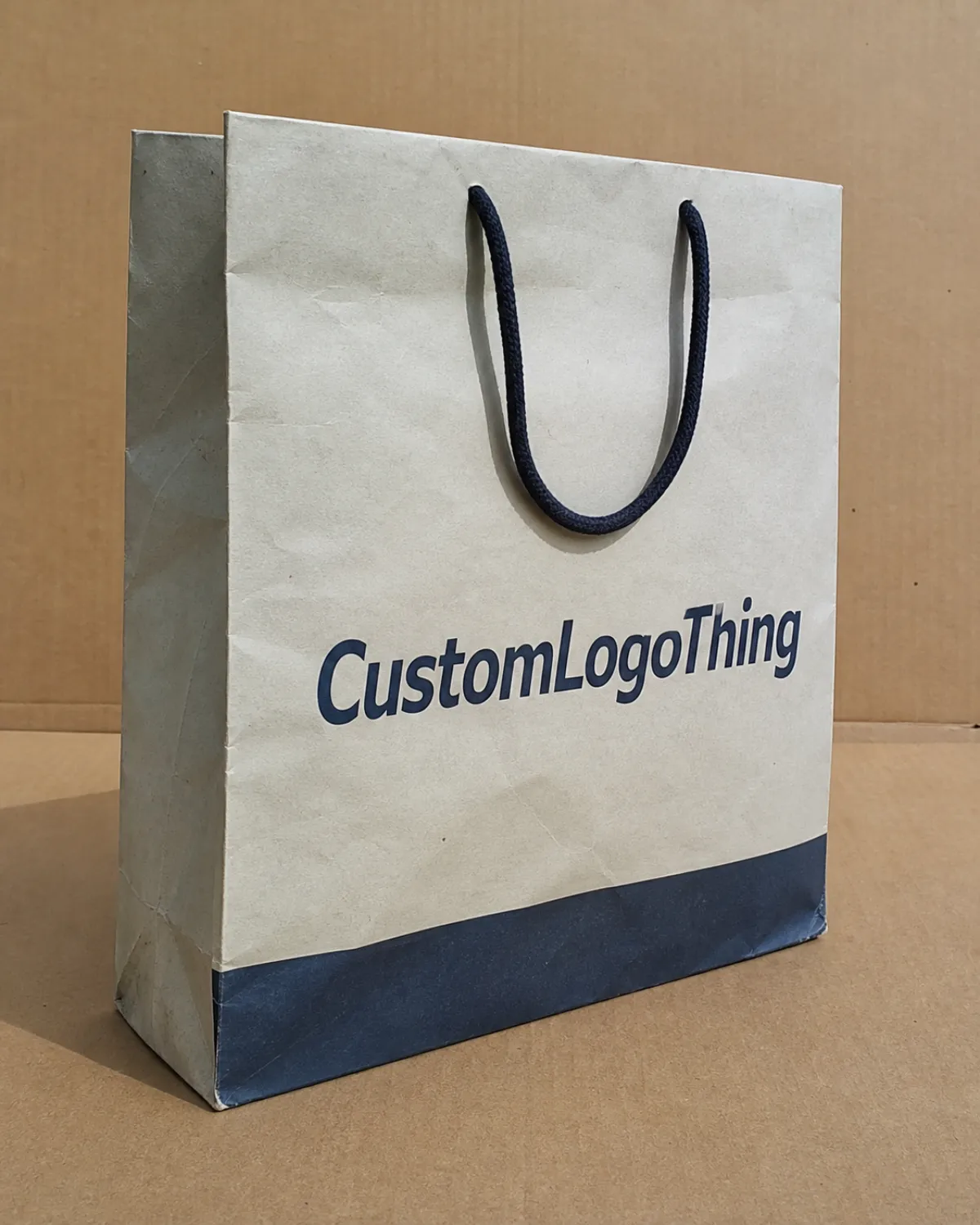
Offset printing uses plates, a blanket, and a press sequence that transfers ink to paper with tight control. In practical terms, it is built for fine type, clean logos, smooth solids, and repeatable color across a long run. That makes it a strong match for custom paper bags offset printing when a brand needs the same standard across several stores, seasonal launches, or product drops.
Paper is never neutral. A warm kraft sheet softens bright inks. A bright white coated stock sharpens them. Gloss coating can make color read more aggressively under store lighting, while an uncoated surface pushes the same artwork toward a calmer, more handmade look. These differences are not random. They come from choices that stack in the same direction.
Offset usually makes the most sense once the run is large enough to absorb setup work and when color control matters more than speed. A launch of 3,000 to 10,000 bags, a replenishment order across multiple retail locations, or a premium gift program often lands in that range. Smaller promotional runs may fit digital printing better if the artwork changes often or the quantity stays low. Even so, custom paper bags offset printing often wins when a brand wants every bag to carry the same logo, the same tone, and the same finish without drift from carton to carton.
The subtle part is that the bag itself is only one piece of the outcome. Handle construction, gusset depth, fold lines, and printable area all affect how the design lands once the bag is assembled. A logo centered on a flat proof can shift after folding and gluing. That is why the brief matters as much as the artwork. Buyers are not only ordering packaging; they are managing how a printed sheet becomes a store-ready object.
Practical rule: if the bag has to carry a premium brand impression, spend more time on stock selection and proof control than on decorative extras. A better sheet and a cleaner proof usually do more for perception than a pile of special effects.
How Offset Printing Works on Paper Bags
The production path usually begins with artwork separation and prepress review. The printer checks bleed, dielines, logo placement, reverse text, color builds, and whether the file is set for CMYK or spot colors. Plates are made, the press is calibrated, and the first sheets are run until density and registration are within tolerance. After printing, the sheets dry, pass inspection, and move to bag converting if the design was printed flat before bag formation.
The sequence sounds tidy on paper. In the plant, it often takes longer than buyers expect. A press may print a run in a few hours, but setup, proofing, drying, and converting can take more time than the actual press time. Add lamination, embossing, foil, or a specialty varnish and the schedule needs even more room. Buyers who understand that rhythm plan better and spend less time reacting to surprises.
Two color systems appear often. CMYK is the process color model and handles gradients, photos, and complex artwork well. Spot colors are pre-mixed inks used when a brand needs a specific red, navy, green, or metallic accent. For exact logo matching across multiple paper bag sizes, spot colors are often the safer choice. That matters even more when the bags are part of a wider package branding system that also includes Custom Printed Boxes, labels, and inserts.
Registration has a direct effect on how polished the bag looks. It is the alignment between each color layer. If the layers drift, type can blur and thin lines can lose their edge. Density control matters too. A design that looks clean on a monitor can look cheap if one side of the run prints too dark and another side comes out a little dry. Buyers often focus only on artwork, but press control is what separates polished retail packaging from average print.
Finishing changes the final reading of the design. Uncoated stock leaves paper texture visible and often feels more natural in hand. A varnish adds protection and helps reduce scuffing during transit. Lamination changes the tactile experience more sharply and can improve stain resistance, yet it also alters how color behaves under light. Matte film can quiet a layout. Gloss film can make it louder. Soft-touch finish has a distinct feel, though it usually makes more sense for premium gifting than for budget bag programs.
For brands with sustainability targets, paper sourcing can matter as much as the print method. FSC-certified paper is one path to review through fsc.org, especially when the bags sit inside a broader retail packaging or corporate gift program with sourcing requirements. If distribution durability matters, transit testing references from ista.org can help frame how cartons and packed bags should hold up in transit.
Key Factors That Shape Print Quality, Materials, and Finish
Paper weight is one of the first decisions that changes both feel and print behavior. Lighter stock may work for giveaways or low-load merchandise. Heavier stock suits retail carryout and a more premium presentation. Many paper bag programs sit somewhere in the 120gsm to 250gsm range, with the higher end often chosen when the bag needs more body or better fold memory. The right choice depends on bag size, what the bag will carry, and the feeling you want the customer to connect with the brand.
Paper surface matters almost as much as weight. A smoother sheet usually holds halftones and small type more cleanly. A rough kraft stock can feel more natural, but it may soften the sharpness of fine text. If the design includes thin rules, a QR code, or reversed copy inside a colored block, a smoother surface usually gives the best margin for error. Buyers often see that difference only after a test proof, which is why proofing earns its keep.
Design complexity raises both risk and cost. Full-bleed backgrounds need tighter color control. Gradients demand steadier press behavior than a flat two-color logo. Fine lines and tiny reversed text are sensitive to gain and registration drift. If the artwork also needs foil or embossing, the printer has to balance several finishing layers without crushing the paper or warping the bag structure. Simple design is not a compromise. It is often the smartest way to protect a brand mark.
Structure matters too. Flat-handle bags, twisted-handle bags, and rope-handle bags all change the printable area and interrupt the artwork in different places. Gusset depth affects whether a side panel can carry messaging or whether that message disappears on a crease. Some buyers learn too late that the bag spec they selected limits logo placement more than expected. That is a packaging design issue, not just a print issue, and it belongs in the brief from the start.
Here is a useful way to think about finish choices:
- Matte varnish: better for understated retail packaging and a softer color tone.
- Gloss varnish: stronger color pop and more contrast under store lighting.
- Soft-touch lamination: premium hand feel, often chosen for gift packaging or luxury product packaging.
- Embossing: useful when the brand mark needs tactile distinction without adding more ink.
- Foil: useful for accent logos, though it should stay restrained because it raises both cost and production complexity.
A practical rule helps here: choose the finish that supports the message, not the one that sounds most dramatic in a quote. A heavy coating can help a busy design. A restrained finish can make a simple logo feel more expensive than a crowded layout ever will.
Offset Printing Process, Timeline, and Lead Time for Paper Bags
A realistic schedule starts with the brief. Clear specs move a project from quote to proof to production with less friction. Vague specs create delays. The normal workflow includes dimensions, paper choice, handle style, artwork prep, proofing, plate making, press setup, the press run, converting, inspection, packing, and shipment. Each stage can look manageable on its own, but the handoffs between stages are where most delays begin.
For many custom paper bag orders, the press time is not the bottleneck. Approval time is. A proof may sit for days while marketing, sales, and procurement each weigh in. Then a file revision comes back with a changed logo size, a revised tagline, or a new brand color. If the order supports a store opening or launch event, the schedule should be built backward from the delivery date rather than forward from the order date.
As a working range, many offset paper bag projects move in roughly 12 to 20 business days after final proof approval, although finishing, sourcing, and freight can extend that. Simple one- or two-color bags may move faster if the paper is in stock. Premium stock, special handles, and foil usually take longer. If the bags arrive alongside matching custom printed boxes, the lead time needs even more protection because one late component can hold up the full program.
Where do delays usually show up?
- Artwork issues: missing bleed, low-resolution images, unconverted fonts, or incorrect dielines.
- Color revision: a logo looks different on paper than on screen, so the proof needs another pass.
- Paper sourcing: the selected stock is not on hand, especially for textured or certified materials.
- Finishing requests: embossing, foil, or lamination needs more coordination than plain print.
- Freight planning: cartons may finish on time and still miss the launch window if transit is not booked early enough.
One useful discipline is to treat proof approval as a gate, not a casual comment thread. After the proof is approved, the run should move with as few changes as possible. If another edit is likely, account for it before the printer locks the plates. That habit reduces waste, protects color consistency, and makes the whole custom paper bags offset printing process more predictable.
For brands managing multiple locations, the schedule should also include carton count and warehouse receipt timing. A run of 5,000 bags may print quickly, but if the bags are packed in master cartons and shipping to a distribution center, receiving windows matter just as much as press time. A delivery that lands two days early helps. One that lands on launch day does not.
Custom Paper Bags Offset Printing Costs, MOQ, and Quote Factors
Offset printing has a setup-cost structure that differs from digital printing. Plates, color separation, make-ready, and press calibration all happen before the first saleable bag comes off the line. That is why short runs can carry a surprisingly high unit cost. As the run grows, those fixed costs spread across more pieces and the per-bag price becomes more competitive.
As a rough market pattern, many suppliers quote offset paper bags in quantity bands rather than a single exact number. A small run may sit in a higher price bracket, while a larger run with the same artwork may drop noticeably in unit cost. A simple two-color bag might cost materially less per unit at 5,000 pieces than at 1,000 pieces, even before freight is added. Premium paper, specialty finishes, and complex handle construction push the price upward. There is no neat way around that.
The main price drivers tend to repeat across suppliers:
- Bag size: more paper means more material and more converting time.
- Paper grade: coated art paper, kraft, and specialty stocks vary in cost and print behavior.
- Print colors: more colors mean more setup and more press attention.
- Finishing: varnish, lamination, foil, and embossing add labor and material cost.
- Handle style: rope, ribbon, twisted paper, and flat handles do not cost the same to make.
- Packaging method: inner wrap, carton strength, and palletization can all change freight and labor.
MOQ matters because setup cost has to be recovered somewhere. If a printer has to create plates, align the press, and inspect color, that fixed effort is easier to spread across 5,000 pieces than across 500. A higher MOQ usually lowers the unit price. Some buyers read that as a penalty. In practice, it is a spread problem: the same fixed work is divided differently.
| Print Method | Best Fit | Typical MOQ Feel | Cost Tendency | Quality Notes |
|---|---|---|---|---|
| Offset printing | Mid-to-large runs, exact color, premium retail packaging | Usually stronger economics at 1,000 to 5,000+ pieces | Higher setup, lower unit cost at volume | Sharp detail, strong color consistency, clean solids |
| Digital printing | Short runs, variable artwork, urgent launches | Often more flexible for low quantities | Lower setup, higher unit cost at scale | Fast and flexible, but color matching can be less stable across large batches |
| Flexographic printing | Simple graphics on certain paper or film structures | Best for repeatable, large-volume programs | Efficient at scale, depends on substrate | Good for straightforward art, but not always the first choice for premium presentation |
When you compare quotes, check what is actually included. Some estimates cover plates and printing but leave out proofing, cartons, freight, or special ink matching. Others bundle those pieces in. A cheaper quote can become expensive quickly if it skips a necessary step. Ask for line items or at least a plain note about inclusions. That one habit makes supplier comparisons much easier and keeps the conversation tied to reality rather than headline price.
If the bag project sits inside a broader branded packaging rollout, ask whether the printer can coordinate with the other packaging components. A consistent program across bags, labels, inserts, and custom printed boxes can simplify planning and avoid mismatched color stories between product packaging elements. That is where good package branding starts to behave like a system rather than a pile of unrelated items.
Common Mistakes That Create Reprints, Delays, and Waste
The most expensive mistakes usually happen before production starts. A low-resolution logo file can look fine on a screen and fail on press. Missing bleed can leave a white edge after trimming. Fonts that were not outlined can shift or substitute unexpectedly. If the artwork was never matched to the correct dieline, the printer has to guess where folds and seams will land. Those errors are preventable, and they are one of the easiest ways to avoid reprints.
Another common problem is designing the bag without checking the printable area first. A logo placed too close to a fold can disappear once the bag is assembled. A QR code too near a gusset can become hard to scan. Taglines that look clean on a flat sheet may land on a seam after gluing. That is not a minor technical detail. It is the difference between packaging design that supports the sale and packaging design that weakens it.
Over-specifying the project is another trap. A second foil layer, a special coating, a metallic ink, and a multi-step finish can turn a practical bag into a production headache. The question is not whether those effects look attractive. The question is whether they improve customer perception enough to justify the extra cost and risk. Sometimes one strong logo on a clean stock beats four finishes trying to impress the same buyer.
Compressed timelines create a different kind of waste. A rush order with no buffer pushes every stage harder: proofing becomes hurried, color correction gets less attention, and the cartons may be packed before the team has fully checked them. That is how small avoidable errors become expensive compromises. If the launch date is fixed, protecting the proof window early is smarter than trying to rescue the schedule later.
Here is a practical way to reduce risk:
- Use press-ready files: CMYK or spot-color artwork, outlined fonts, and correct bleed.
- Confirm the dieline: verify folds, gussets, and handle placement before design sign-off.
- Request a proof: ask for a physical sample or a color-managed proof when color matters.
- Review the quote line by line: make sure finishing, freight, and plates are included or clearly excluded.
- Build a buffer: leave enough time for one correction round without threatening the launch.
That last point is the quiet one. Many buyers know what good print looks like. Fewer budget enough time to get there. The paper bag may look simple, but the coordination behind it rarely is.
Expert Tips and Next Steps for a Better Order
The fastest way to get a cleaner quote is a one-page brief. Include dimensions, target quantity, paper preference, handle style, number of colors, finishing, delivery destination, and the date the bags must arrive. If you can note whether the bags are for retail packaging, gift packaging, trade show giveaways, or product packaging, the printer can usually recommend a better structure and a more realistic lead time.
For color-critical programs, ask for a physical sample or a controlled proof. That matters even more if your brand carries a signature red, a dark navy, or a neutral tone that has to match other packaging materials. Offset printing can be very consistent, but the proof is where assumptions get corrected. A small sample is cheaper than 5,000 bags that miss the mark.
Design hierarchy helps more than many teams expect. One primary message. One logo moment. Clean spacing. Moderate typography. That is enough for most paper bags, and it lets the print quality do the work. If the layout is crowded, the eye has too many places to land and the bag stops feeling premium. Simple is not lazy. Simple is controlled.
If you are comparing suppliers, ask these questions before signing:
- What exactly is included in the quote?
- What is the MOQ for this size and artwork?
- How long after proof approval will the run ship?
- Can I see a sample of the paper or finish?
- What happens if the color drifts on press?
One more practical point: do not compare offset printing with digital printing only on unit price. Compare the full outcome. If the job needs precise brand color, a premium feel, and repeatability across multiple locations, offset may be the better business choice even when the first quote is higher. If the project is short, variable, or highly time-sensitive, digital may win. The right answer depends on what the bag has to do for the brand, not just what it costs to make.
For buyers who want the simplest path, the best next step is to gather two quotes, verify the included services, and approve a proof only after the bag dimensions and print area are confirmed. That keeps the schedule under control and protects the visual standard that custom paper bags offset printing is meant to deliver.
FAQ
How does offset printing on custom paper bags compare with digital printing?
Offset is usually better for consistent brand color, crisp detail, and medium-to-large quantities. Digital can be faster for short runs and easier for last-minute changes, but it may not match offset on cost efficiency at scale. If the design uses solid backgrounds, exact spot colors, or a premium retail presentation, offset often gives the cleaner result.
What kind of paper works best for custom paper bags offset printing?
Smoother, more stable stocks usually hold ink more evenly and make logos look sharper. The best paper depends on the load the bag must carry, the desired finish, and whether the look should feel matte, glossy, natural, or luxury-oriented. Ask the printer for a recommended stock that balances print quality, durability, and budget.
How long does the offset printing process usually take for paper bags?
Timing depends on artwork readiness, proof approval, finishing, and material availability. The actual press run may be short, but prepress, drying, converting, and packing often take the most coordination. If the bags are tied to a launch date, build in enough approval time so one revision does not derail the schedule.
Why do MOQ and setup costs matter so much in offset printing quotes?
Offset requires plates, press setup, and calibration, so small orders can carry a high unit cost. A higher MOQ usually lowers the per-bag price because setup costs are spread across more pieces. Always ask whether the quote includes plates, proofs, freight, and finishing so you can compare quotes fairly.
Can I use custom paper bags offset printing for a small promotional run?
Yes, but the economics may be weaker than digital printing unless the branding requirements are strict. Small runs make the most sense when color accuracy, premium presentation, or retail consistency matters more than the lowest unit cost. If the quantity is low, get both offset and digital quotes before choosing the production method. For many buyers, that comparison is what turns custom paper bags offset printing from a guess into a clear purchasing decision.
Final takeaway: the best paper bag is the one that matches the brand, the budget, and the schedule without forcing last-minute compromises. If you brief the job clearly, confirm the proof carefully, and choose the print method with the end use in mind, custom paper bags offset printing can deliver branded packaging that looks intentional from the first store visit to the last bag in the carton.

