Buyer Fit Snapshot
| Best fit | Custom Paper Sleeves with Foil Stamping projects where brand print, material claims, artwork control, MOQ, and repeat-order consistency need to be specified before quoting. |
|---|---|
| Quote inputs | Share finished size, material target, print colors, finish, packing count, annual reorder estimate, ship-to region, and any compliance wording. |
| Proofing check | Approve dieline scale, logo placement, barcode or warning zones, color tolerance, closure strength, and carton packing before bulk production. |
| Main risk | Vague material claims, crowded artwork, missing packing details, or unclear freight terms can make a low unit price expensive after revisions. |
Fast answer: Custom Paper Sleeves with Foil Stamping: Material, Print, Proofing, and Reorder Risk should be specified like a repeatable production item. The safest quote records material, print method, finish, artwork proof, packing count, and reorder notes in one written spec.
Production checks before approval
Compare the actual filled-product size with the drawing, then confirm tolerance on folds, seals, hang holes, label areas, and retail display edges. Reserve space for logos, QR codes, warning copy, and material claims before decorative graphics fill the panel.
Quote comparison points
Review material grade, print process, finish, sampling route, tooling charges, carton quantity, and freight assumptions side by side. A quote is only useful when the supplier can repeat the same color, closure quality, and packing count on the next order.
Custom Paper Sleeves with Foil Stamping: Design Basics
Custom paper sleeves with foil stamping can change a plain carton, jar, or folding tray into packaging that reads premium almost instantly. That matters because shoppers do not spend long studying a shelf; several retail studies put the decision window at under seven seconds, and in a crowded aisle a small metallic detail can do more work than a full-color illustration. I have seen brands pour money into a beautiful box, then get a stronger response after adding custom paper sleeves with foil stamping to the same base pack. Funny how that works, but it does.
The mechanics are pretty simple. Foil catches light, creates contrast, and gives the eye one obvious place to land. On a shelf packed with similar products, that visual cue can separate one item from the row beside it. For brands balancing presentation goals with budget discipline, custom paper sleeves with foil stamping often sit in a practical middle zone: more elevated than a basic label, less expensive than a completely bespoke printed box.
That middle zone is where the real planning starts. A sleeve can add branded packaging without replacing the primary container, which makes it useful for cosmetics, candles, food gifts, wellness items, and seasonal promotions. It also adds extra production steps, so design, file setup, and lead time carry more weight than many buyers expect. If the file is sloppy, the finish is gonna punish you.
What Custom Paper Sleeves with Foil Stamping Are
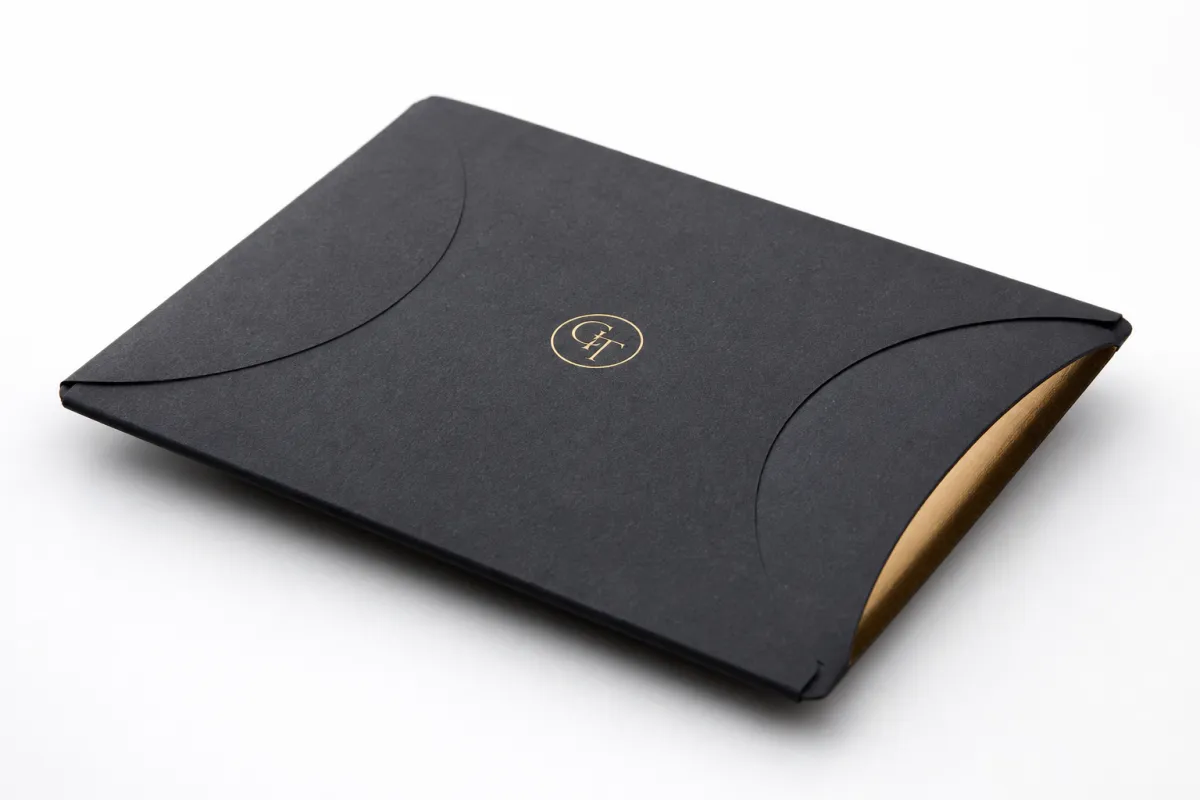
At the simplest level, a paper sleeve is an outer wrap or band that sits around a product or its base package. It does not replace the main box or jar. Instead, it adds branding, messaging, and sometimes a bit of structure. Custom paper sleeves with foil stamping are popular because they let a brand refresh a line quickly without redesigning the whole system. That makes them useful for short campaigns, multi-SKU ranges, and packaging that needs to stay adaptable without becoming visually generic.
Foil stamping changes the perceived value of that sleeve in a way ordinary ink often cannot. Metallic foil reflects ambient light, so the logo or product name stands out even from a distance. Paired with embossing, it can also create a tactile shift that makes the sleeve feel more deliberate in hand. On a crowded shelf, custom paper sleeves with foil stamping can make the difference between “another item” and “worth picking up.”
There is a practical side too. If a brand sells the same base product in several scents, flavors, or sizes, sleeves are easier to vary than fully Custom Printed Boxes. One core box can stay consistent while custom paper sleeves with foil stamping communicate the differences. That reduces complexity in packaging design and inventory planning, especially when order volumes are uneven across SKUs.
That said, sleeves are not a universal answer. A label may be better for simple compliance copy. A full carton may be better if the package needs rigidity, tamper evidence, or structural protection. Custom paper sleeves with foil stamping make the most sense when the brand wants visible upgrade value without redesigning the core pack every time the artwork changes.
Here is the tradeoff in plain language: custom paper sleeves with foil stamping raise shelf impact, yet they also add setup, proofing, and finishing complexity. If the design is strong, the payoff is real. If the design is crowded or the artwork is weak, the sleeve can become more expensive without becoming more effective.
A sleeve is not “just a wrapper.” If it is designed well, it becomes a signal: this product is deliberate, premium, and worth a closer look.
For brands still comparing formats, it often helps to review other Custom Packaging Products alongside sleeve options. That comparison usually makes it easier to judge whether a sleeve, a label, or a full carton is the right commercial move.
One more point gets missed a lot: custom paper sleeves with foil stamping are not only about aesthetics. They can support seasonal packaging, limited editions, and retailer-specific promotions without forcing a complete packaging redesign. That flexibility is part of the economic argument, not just the design argument.
For buyers thinking about print strategy, the sleeve is often the fastest visible upgrade in the packaging system. It does not need to do every job. It just needs to do the right ones: signal value, protect the message, and make the product easier to choose.
How Custom Paper Sleeves with Foil Stamping Are Made
The production path starts with a dieline. That flat template shows the finished size, folds, glue areas if needed, and safe zones for artwork. From there, custom paper sleeves with foil stamping are prepared either as a printed sheet or as a mostly blank stock with selective foil. The foil areas are separated into their own layer so the production team can build the tooling correctly.
Hot foil stamping is the classic method. A heated die presses foil onto the paper stock with enough pressure to transfer the metallic film cleanly. Digital foil effects exist too, and they can help with variable jobs or smaller runs, but they do not always match the crisp, dense finish of true stamping. For custom paper sleeves with foil stamping, the right method depends on order size, artwork complexity, and the look the brand wants.
Substrate choice matters more than many non-specialists realize. Smooth coated paper tends to produce sharper foil edges and stronger shine. Textured paper can look more artisanal, but the foil may break slightly across the grain or dips in the surface. Recycled paper can work well, especially if the brand wants a lower-plastic message, but it should be tested first because surface texture can soften the detail of custom paper sleeves with foil stamping.
Die cutting is another piece of the puzzle. The sleeve must be cut cleanly so folds line up, edges sit square, and the wrap stays aligned around the product. If the die is off, even by a small amount, the foil may look misregistered. That is especially noticeable on fine typography, hairline borders, or tiny icons. For that reason, custom paper sleeves with foil stamping usually need tighter artwork prep than a plain printed band.
In some projects, finishing layers are added after the foil or before the final cut. Embossing can lift a logo off the surface. Spot UV can put gloss on top of matte stock. Soft-touch lamination can mute the background so the foil reads even brighter. Each choice changes the balance. Too many effects can make custom paper sleeves with foil stamping look busy instead of premium.
Think of the sleeve as a stage, and foil as the spotlight. If every element on the stage is competing for attention, the spotlight loses its force.
- Hot foil stamping works well for crisp logos, seals, and small text with strong contrast.
- Digital foil can help with flexible layouts and lower-volume runs, though the finish may vary by supplier.
- Embossing plus foil often gives the richest feel, but it adds setup and registration demands.
- Textured or recycled stock can support sustainability messaging, but should be sampled before full production.
If you are building a broader packaging system, custom paper sleeves with foil stamping often pair well with custom printed boxes, insert cards, or outer shippers. The key is consistency: same logo treatment, same color logic, same brand hierarchy. That is what makes package branding feel intentional rather than assembled from separate parts.
For standards-minded buyers, testing and material selection should not be treated casually. Transit testing under ISTA guidelines can help confirm that the sleeve stays in place and the outer pack survives handling. If the project also needs responsibly sourced paper, FSC-certified paper is worth asking about early, before artwork is locked.
At this stage, a production sample is often more useful than a long email thread. A good sample shows how custom paper sleeves with foil stamping behave on the real substrate, under real light, with the actual product inside. I have sat at press checks where a logo looked perfect on screen and slightly dull on press because the stock had more tooth than expected. That tiny difference can decide whether the finish feels refined or merely shiny.
Cost, Pricing, and MOQ Factors for Custom Paper Sleeves with Foil Stamping
Pricing for custom paper sleeves with foil stamping is shaped by a handful of predictable variables: sleeve size, paper stock, foil area, number of foil colors, print coverage, die complexity, and quantity. That sounds straightforward, yet many buyers still compare quotes as if all sleeves were interchangeable. They are not. A small logo hit on coated paper is a very different job from a full wrap with multiple foil passes and a specialty die.
On the low end, small runs often carry higher unit costs because setup is spread over fewer pieces. In many supplier quotes, that means a sleeve might land in the range of roughly $0.20 to $0.60 each at lower quantities, with setup fees, plates, and proofing adding meaningful cost. At larger quantities, the unit price can drop into a lower band, sometimes around $0.08 to $0.22 depending on stock and coverage. Those are directional ranges, not promises, because custom paper sleeves with foil stamping can vary a lot by region, machine type, and finishing method.
MOQ is usually tied to production efficiency. A printer may need a certain sheet count to justify the press setup. A foil supplier may want enough area to make the die worthwhile. A cutting house may impose a minimum because die cutting also has a fixed setup burden. So when a quote feels high, the real question is not only “What is the minimum?” but “What is driving the minimum?”
Foil placement has a direct impact too. A small stamped logo in one location is usually less expensive than a large foil band running across multiple panels. Multiple foil colors can raise cost again, because each color may require its own pass or its own setup. The same is true for complicated artwork that needs tighter registration. Custom paper sleeves with foil stamping reward restraint. The more focused the metallic accent, the easier it is to keep the budget under control.
The table below gives a practical comparison of common options. Exact pricing still depends on the supplier, but the relative cost and complexity tend to follow this pattern.
| Option | Visual Effect | Typical Setup Load | Relative Cost | Best Fit |
|---|---|---|---|---|
| Uncoated sleeve, no foil | Natural, understated | Low | Lowest | Simple retail packaging, compliance-heavy packs |
| Coated sleeve, small foil logo | Clean, premium accent | Moderate | Moderate | Most custom paper sleeves with foil stamping orders |
| Textured stock, foil plus embossing | Rich, tactile, boutique | Higher | Higher | Gift sets, luxury branded packaging |
| Large foil panel or multi-pass foil | High shine, strong presence | Highest | Highest | Limited editions, premium launches |
One useful pricing lens is shelf life. If the sleeve supports a two-month promotion, a high-cost finish may not be smart unless the campaign is expected to move volume quickly. If the same design is going to be reused across several replenishment cycles, the initial cost starts to make more sense. Custom paper sleeves with foil stamping are often judged too narrowly on unit price and not enough on brand lift, campaign duration, and reuse potential.
It also helps to compare the sleeve against alternative forms of product packaging. Sometimes a lower-cost band plus a good box wins. Sometimes custom printed boxes are justified because the sleeve would have to do too much work. A good quote conversation should clarify material, finishing, freight, and artwork prep separately. That way the buyer can see where the money is actually going.
For brands with tighter budgets, ask for two or three versions at the quoting stage. A plain printed sleeve, a sleeve with a small foil logo, and a version with foil plus embossing often reveal where the value actually sits. That comparison can be more useful than a single price point because it turns custom paper sleeves with foil stamping into a design decision, not just a purchasing decision.
There is also an opportunity cost if the MOQ is too high. Buying more sleeves than needed can lead to waste, storage costs, or outdated artwork if the promotion changes. Buying too few can force a rushed reorder, which usually hurts both price and lead time. The sweet spot is a quantity that matches the launch calendar and the expected reorder cadence.
Production Process and Timeline: From Quote to Delivery
The workflow for custom paper sleeves with foil stamping usually starts with a brief. The supplier needs finished size, quantity, stock preference, foil color, target date, and the product that the sleeve must fit. If the brief is vague, the quote will be vague too. A clear brief is faster, and it reduces the chance of expensive revisions later.
After the quote comes artwork setup. This is where the dieline is matched to the design, foil areas are isolated, bleed is checked, and text is reviewed for readability. Missing dielines are one of the most common reasons sleeves stall. So is artwork that is not vector-ready. A file that looks fine on screen may still fail in production because the foil boundary is too thin or the font is too delicate.
Proofing is where many buyers should slow down. A PDF proof can catch obvious problems, but a physical proof is better when the artwork includes fine text, borders, or exact fit requirements. If the sleeve wraps a box, jar, or tray, the real object matters. Custom paper sleeves with foil stamping can look perfect in the file and still shift slightly in assembly if the tolerance is not checked against the actual pack.
From there, the supplier produces plates or dies, schedules the foil pass, trims the sheets, and folds or glues the finished sleeves as required. Packaging and shipment follow. That sounds straightforward, but specialty finishing adds time. A simple printed sleeve may move relatively quickly. A custom paper sleeve with foil stamping usually needs extra lead time because of tooling, registration checks, and approval cycles.
As a planning rule, simple orders may take around 10-15 business days after proof approval, while foil-heavy or complex jobs often run longer. If artwork changes late, add more time. If the project is tied to a retail reset, seasonal launch, or trade event, build in a buffer. Production time is not the same as delivery time, and freight can easily add several days depending on distance and mode.
Here is a practical sequence that helps keep the schedule under control:
- Send a complete brief with size, quantity, and target date.
- Review the dieline before finalizing artwork.
- Ask for a print or digital proof, then a physical sample if the fit is tight.
- Approve foil placement only after checking the artwork on the real substrate.
- Confirm production time and freight time separately.
That sequence sounds basic, yet it saves real time. Most delays in custom paper sleeves with foil stamping do not come from the foil machine itself. They come from missing information, unclear approvals, or a late decision about finish level.
Buyers should also think about how sleeves move through the line after delivery. Are they applied by hand? Packed flat? Stored in humidity? Shipped to a co-packer? Those details affect the spec, because a sleeve that arrives beautiful but hard to assemble can slow the whole operation. That is where packaging design intersects with manufacturing reality.
If the supplier offers both sleeve work and other items, there can be an efficiency gain from coordinating a broader order. Some brands bundle custom paper sleeves with foil stamping with insert cards or related Custom Packaging Products to simplify timing and artwork control. That is not always the right choice, but it is often worth comparing.
Key Design Factors That Affect Shelf Impact
The strongest custom paper sleeves with foil stamping usually rely on restraint. That surprises some people. They assume more foil means more luxury. In reality, selective shine often feels more premium than a full metallic flood because the eye needs contrast to register value. A sleeve with one well-placed foil logo can outperform a sleeve that uses foil everywhere and leaves no visual breathing room.
Typography is a major factor. Thin fonts can look elegant, but they can also fail if the lines are too fine for the stamping die. Dense type can become muddy if the foil is crowded. The best results usually come from a clear hierarchy: product name first, supporting detail second, secondary copy third. Custom paper sleeves with foil stamping work best when the foil supports the hierarchy instead of trying to replace it.
Color pairing matters just as much. Gold foil on deep navy, black, or forest tones often reads rich because the contrast is strong. Silver foil can feel more modern on white or cool gray stock. Rose-gold tones can warm up cosmetics and gift sets, though they should be used carefully if the broader package branding already leans warm. The same metallic can feel expensive in one setting and noisy in another.
Negative space deserves more credit than it gets. A sleeve does not need to be covered from edge to edge. Leaving room around the logo lets the foil catch the eye more cleanly and keeps the design from feeling crowded. That matters for retail packaging because shoppers often interpret emptiness as confidence. A busy sleeve may signal effort. A disciplined sleeve often signals quality.
Fit and proportion are also critical. If the sleeve shifts during transport or assembly, the design loses trust. If the sleeve hides the barcode, ingredients, directions, or warning copy, it can create a practical problem. Custom paper sleeves with foil stamping should never sacrifice legibility for decoration. The best packaging design is attractive and easy to use.
Sustainability messaging belongs in this conversation too. Buyers increasingly ask about recycled content, FSC sourcing, and reduced plastic use. Foil does not automatically conflict with those goals, but it should be discussed honestly. If the brand wants a greener story, the sleeve stock, coating, and adhesive choices should support that message, not undermine it.
For brands that also sell a broader line of packaging, it can help to think of the sleeve as part of a system rather than a one-off piece. A foil-stamped band might echo a logo treatment used on custom printed boxes or a gift carton. That consistency makes the shelf presentation feel deliberate, and it helps customers recognize the brand faster across categories.
Common design questions worth answering early include:
- What is the single focal point on the sleeve?
- Does the foil support the product name, logo, or seal?
- Is the background matte enough to let the foil stand out?
- Will the copy remain readable after folding and wrap tension?
Custom paper sleeves with foil stamping are at their best when they solve a communication problem, not just a decoration problem. If the sleeve makes the product easier to spot, easier to understand, and easier to trust, the finish has done its job.
Common Mistakes with Custom Paper Sleeves with Foil Stamping
The first mistake is over-foiling. A sleeve covered in metallic elements can lose the sense of hierarchy that makes foil powerful in the first place. It can also drive cost up without adding proportional shelf impact. If the goal is premium positioning, custom paper sleeves with foil stamping usually work better as an accent than as a blanket treatment.
The second mistake is poor file prep. Low-resolution images, missing bleed, incorrect foil layers, and unlabeled spot colors can all create avoidable delays. If the foil shape is not set as a clean vector, the edges can look rough or register poorly. For custom paper sleeves with foil stamping, the production file is not just a creative file. It is a manufacturing instruction.
The third mistake is skipping proofs. I would strongly recommend both a digital proof and, when possible, a physical sample if the artwork is detailed or the fit is tight. Fine type, tiny seals, and narrow foil lines behave differently once they are on real stock. A screen view can flatter the artwork. A sample tells the truth.
Stock mismatch is another common issue. A brand may choose a textured paper because it feels artisanal, then discover that the foil loses sharpness across the surface. Or it may choose a thin sheet that wrinkles during assembly. Custom paper sleeves with foil stamping need a stock that matches both the visual goal and the way the sleeve will be handled.
There is also a production-line mistake that gets overlooked: ignoring how the sleeve will be applied, stored, and shipped. If the sleeves are packed too tightly, they may scuff. If they sit in humidity, they may curl. If the wrap tension is inconsistent, the design can drift out of position. The finishing choice is only part of the answer. The logistics matter too.
Another quiet problem is compliance. A sleeve that looks beautiful but hides ingredient lists, warnings, or barcodes creates friction later. That can be more costly than the foil itself. Custom paper sleeves with foil stamping should be reviewed with both the marketing and operations teams, because what looks great on a mockup may not survive a real packaging workflow.
The fastest way to make foil look expensive is not to use more of it. It is to give it a reason to exist.
Before a full run, it is smart to check whether the sleeve complements the other pieces in the system. Does it align with the carton? Does it clash with the label? Does it make the pack feel like one family, or like three separate design decisions? Those questions sound small, but they often separate strong branded packaging from forgettable product packaging.
Brands that avoid these mistakes usually think one step ahead: from artwork, to fit, to assembly, to shelf display. That mindset is why custom paper sleeves with foil stamping can look premium without becoming impractical.
Expert Tips and Next Steps for Ordering Custom Paper Sleeves with Foil Stamping
Start with a one-page spec sheet. Include the finished size, substrate preference, foil area, quantity, target delivery date, and the packaging format the sleeve will wrap. That simple document reduces back-and-forth and helps the supplier quote custom paper sleeves with foil stamping more accurately. It also forces the buyer to make a few useful decisions early, before design momentum gets ahead of production reality.
Ask for at least two or three material-and-foil combinations. A coated stock with gold foil may feel polished, while a textured stock with silver foil could read more editorial or artisanal. Seeing the options side by side is useful because shine, texture, and contrast all interact. What looks best on a PDF is not always what looks best in hand.
Review proofs against the actual product. Not a photo. Not just a monitor. The real item. If the sleeve wraps a carton, place the proof over the carton. If it wraps a jar, set the jar on the table and check the seam line. Custom paper sleeves with foil stamping are sensitive to alignment, and the human eye catches off-center details very quickly.
Plan inventory around reorder cadence, not hope. If the sleeve supports a short campaign, do not overbuy. If it supports an evergreen SKU, make sure the stock and foil treatment can survive multiple reorder cycles. The smartest buyers treat custom paper sleeves with foil stamping as an inventory decision as much as a design decision.
It also helps to look at the sleeve as part of a packaging family. A product launch may need the sleeve, the primary carton, and the outer shipper to feel aligned. If that is the case, a coordinated order of Custom Packaging Products can be more efficient than piecing everything together later. A single visual system is usually easier to maintain than three disconnected ones.
From a procurement point of view, ask these questions before you approve anything:
- Is the foil supporting the main sales message?
- Will the sleeve fit the actual pack with tolerance to spare?
- Does the stock match the brand position and handling needs?
- Are the setup fees justified by the expected sales window?
One practical habit saves a lot of trouble: mark the foil layer clearly in the artwork file and keep the dieline locked. That reduces production confusion and helps avoid the kind of registration mistakes that turn a polished design into a reprint. With custom paper sleeves with foil stamping, clarity in the file usually pays back at press time.
For brands that care about environmental messaging, it is worth asking about paper sourcing and shipping efficiency at the same time. A sleeve made with responsibly sourced stock, sensible coverage, and minimal waste often tells a cleaner story than a louder finish with no substance behind it. Packaging buyers notice that. So do customers.
My honest view is that custom paper sleeves with foil stamping work best when the brief is disciplined. Not sparse. Disciplined. There is a difference. The sleeve should have one job, maybe two: announce the product, and make it feel worth opening. If it does those things well, the rest of the system can stay simpler.
That is the real appeal of custom paper Sleeves with Foil Stamping: they give brands a visible premium cue without forcing a full packaging rebuild. Used thoughtfully, they make branded packaging look more coherent, more saleable, and more memorable.
FAQ
How much do custom paper sleeves with foil stamping usually cost?
Pricing depends on sleeve size, stock, foil coverage, and order quantity, so small runs often carry higher unit costs. In many quote sheets, setup items such as dies, plates, and proofing matter more on low-volume orders than on larger runs. Ask suppliers to break out material, finishing, and freight so you can compare the real cost of custom paper sleeves with foil stamping instead of only the headline unit price.
What file format should I use for foil stamping artwork?
Vector files are usually best because foil areas need clean edges and precise placement. Keep the foil layer clearly labeled and separate from print art so the production team can map it correctly. Always request dieline specs before finalizing design, since even a small shift can affect registration on custom paper sleeves with foil stamping.
How long is the typical turnaround for custom paper sleeves with foil stamping?
Timing depends on proofing, die or plate creation, production slot availability, and shipping distance. Straightforward orders may move faster, but foil jobs usually need extra lead time for setup and approval. Build in buffer time if the sleeves are tied to a launch date, retail reset, or seasonal promotion, because custom paper sleeves with foil stamping rarely behave like a plain print-only order.
Can custom paper sleeves with foil stamping be made on recycled paper?
Yes, many sleeves can use recycled or FSC-style paper options, depending on the supplier and finish requirements. Test the foil on the chosen stock first, because texture and coating can affect brightness and detail. If sustainability matters, balance recycled content with the brand’s need for a clean metallic effect, especially if custom paper sleeves with foil stamping are part of a larger eco-focused message.
What is the best way to keep foil-stamped sleeves from looking crowded?
Use foil as an accent, not a blanket, so the shine has room to stand out. Prioritize one focal point such as a logo, seal, or product name instead of several competing foil elements. Leave enough negative space for the sleeve to feel premium and for key copy to stay readable. That restraint is often what makes custom paper sleeves with foil stamping look expensive rather than loud.

