Buyer Fit Snapshot
| Best fit | Custom Pillow Boxes Wholesale projects where brand print, material claims, artwork control, MOQ, and repeat-order consistency need to be specified before quoting. |
|---|---|
| Quote inputs | Share finished size, material target, print colors, finish, packing count, annual reorder estimate, ship-to region, and any compliance wording. |
| Proofing check | Approve dieline scale, logo placement, barcode or warning zones, color tolerance, closure strength, and carton packing before bulk production. |
| Main risk | Vague material claims, crowded artwork, missing packing details, or unclear freight terms can make a low unit price expensive after revisions. |
Fast answer: Custom Pillow Boxes Wholesale: Pricing, Specs, and Ordering should be specified like a repeatable production item. The safest quote records material, print method, finish, artwork proof, packing count, and reorder notes in one written spec.
Production checks before approval
Compare the actual filled-product size with the drawing, then confirm tolerance on folds, seals, hang holes, label areas, and retail display edges. Reserve space for logos, QR codes, warning copy, and material claims before decorative graphics fill the panel.
Quote comparison points
Review material grade, print process, finish, sampling route, tooling charges, carton quantity, and freight assumptions side by side. A quote is only useful when the supplier can repeat the same color, closure quality, and packing count on the next order.
Custom Pillow Boxes Wholesale: Pricing, Specs, and Ordering
A brand can lose time and storage space to packaging that looks polished only after it has already been assembled, stacked, and moved into the back room. Custom pillow boxes wholesale solve a very practical problem: they ship flat, take up less room on the receiving dock, and still create a tidy retail presentation once they are folded and filled.
That matters more than many buyers realize. A well-made pillow box does more than hold a product; it supports branded packaging, keeps the packing area orderly, and gives a small item a clear footprint on shelf or inside a gift kit. For teams dealing with storage pressure, seasonal launches, and repeat replenishment, custom pillow boxes wholesale can be one of the cleanest ways to improve product packaging without stepping into a more expensive structural format.
Custom Pillow Boxes Wholesale: Why Flat-Packed Packaging Wins
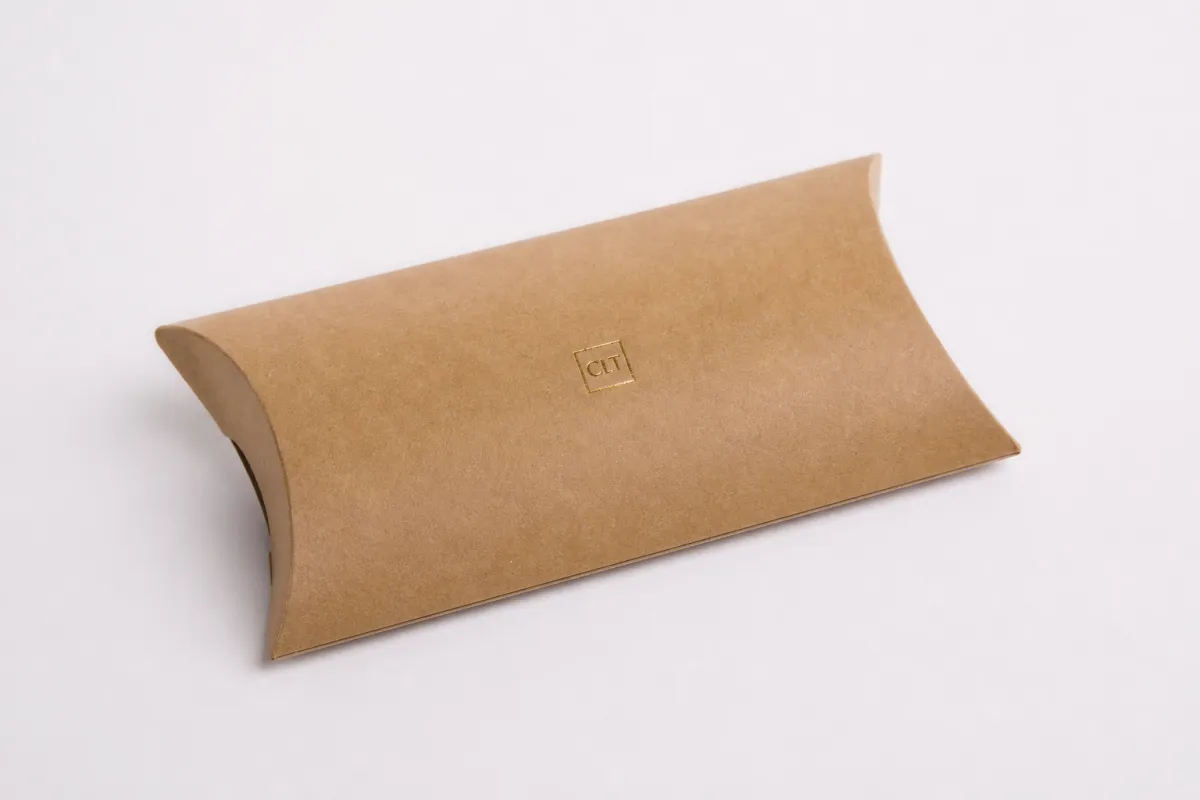
Flat-packed packaging starts saving space from the first carton. That is the clearest operational advantage of custom pillow boxes wholesale, especially for brands that do not want pre-formed boxes filling shelves, bins, or pallet positions before they are used. A flat pillow box stacks neatly in transit, trims inbound freight volume, and keeps back-of-house storage tidier than many rigid or fully assembled options.
From a packaging buyer's point of view, the appeal is easy to understand. The box gives you a premium enough shape for gifting and retail, while avoiding heavy board structures or complicated setup work that raise handling costs. It opens with curved side panels and a tuck closure, so it feels more refined than a plain sleeve, yet it still folds by hand in seconds. For short runs, trial launches, pop-up shops, and replenishment orders, that speed matters.
Custom pillow boxes wholesale fit best in product categories where the item is small, light, and presentation-driven. Common uses include:
- Jewelry and accessory items
- Cosmetics and beauty samples
- Gift cards, promotional inserts, and event giveaways
- Apparel accessories like ties, socks, and small textiles
- Seasonal retail packaging for holiday sets or limited editions
- Subscription box add-ons and direct-to-consumer insert kits
Consistency is another real advantage. Once a buyer knows the product size, target weight, and finish preference, custom pillow boxes wholesale can be ordered with far less structural back-and-forth than a folded carton or a rigid set-up box. That helps when packaging design needs to stay flexible. If the dimensions are close to final and the artwork direction is already clear, whether the print should feel matte, glossy, foil-accented, or pared back, the buying process stays smoother and the sample stage stays focused.
Wholesale ordering works best when the product dimensions are close to final. A pillow box that is too loose can let the contents shift, while one that is too tight can slow hand assembly and make the closure feel stressed. In practical terms, custom pillow boxes wholesale rewards buyers who can share realistic information early, even if the artwork is still being refined.
Custom Pillow Boxes Wholesale Product Details and Use Cases
A pillow box gets its name from its curved silhouette. The side panels arch inward, and the ends fold into a compact tuck closure that creates the familiar pillow-like profile. That structure gives custom pillow boxes wholesale a distinctive look without adding much bulk, which is why they show up so often in retail packaging and branded gift presentation.
The shape protects lightweight products that need a neat exterior more than a heavy-duty shell. A lip balm set, a small candle accessory, a pair of earrings, a folding card, or a sample-size beauty item can sit well inside a properly sized box. For those kinds of product packaging, the box is less about load-bearing strength and more about keeping form, controlling presentation, and giving the buyer a clean first impression.
Branding options stay flexible. A box can be printed in full color for strong shelf impact, or it can remain simple with a one-color logo and plenty of white space. Many brands use custom printed boxes in this format because the curved panels and front face give enough visible area for logo placement, messaging, and small product details. Soft-touch coating, spot UV, foil accents, and embossing can all be used, but the best choice depends on the product line and the retail setting.
From a package branding perspective, less can do more. A clean kraft box with a single ink color can feel more honest and artisanal than a busy graphic layout. A luxury cosmetic line may want metallic foil and a richer board finish to signal a higher price point. The box should match the selling story, not compete with it.
Custom pillow boxes wholesale also work well for hybrid programs. A brand may use them for in-store retail display, then place them inside outer mailers for direct-to-consumer orders. That setup works best when the product is lightweight and the pillow box serves as part of the presentation rather than the only layer of protection. If the item is fragile, heavy, or unusually shaped, a stronger rigid box or corrugated mailer often makes more sense.
There is another detail that gets overlooked. Pillow boxes can help teams move faster at the packing table. A simple hand-folded structure reduces the time between pick, pack, and ship, which helps during launches where the team may be handling a limited run, a promotional window, or an event deadline. For smaller operations, that can cut labor friction. For larger operations, it can improve consistency across shifts.
I have seen that play out in press checks and sample reviews more than once: the box that looked nicest on screen was not always the one that packed fastest in real life. That kind of detail sounds small, but it changes the day-to-day rhythm of a shipping table pretty quickly.
If your brand is comparing formats, think in plain terms: does the package need to impress, fit, and move quickly, or does it need to carry real structural weight? Custom pillow boxes wholesale works best in the first category. It is not the answer for everything, and that honesty helps buyers choose better.
Sizes, Materials, Finishes, and Insert Options
Size is the first decision that shapes everything else. With custom pillow boxes wholesale, the length, width, and depth should come from the product itself plus any tissue wrap, card insert, or protective padding you want to include. A box holding a slim jewelry card may only need a shallow profile, while a small apparel accessory may need more clearance to avoid creasing or pressure on the closure. A few millimeters can change how the box folds and how the product sits inside.
Material choice matters just as much. Most buyers compare paperboard options such as SBS, coated stock, kraft board, or other premium folding-carton grades. SBS usually prints very cleanly and gives a bright, polished appearance. Kraft board brings a more natural, earthy feel that fits handmade or sustainability-focused branding. Heavier board improves stiffness, but it can also raise cost and make folding slightly less forgiving. For custom pillow boxes wholesale, the best stock is the one that balances print quality, hand feel, and practical assembly.
Finishes give the package its final character. Matte lamination creates a softer, more subdued look. Gloss can sharpen colors and make retail graphics stand out under store lighting. Soft-touch coating adds a velvety texture that feels more premium in hand, though it is not always the best choice if the brand expects scuff-prone handling. Foil stamping, embossing, and debossing can all be used, but each one adds complexity and should be matched to the order quantity. If the run is small, too many decoration layers can push the unit cost up faster than the buyer expects.
Insert options are worth considering even for a simple box. A small card insert can improve presentation, hold a sample item steady, or create room for a message. Lightweight trays or retainers may help with products that shift during shipping. For custom pillow boxes wholesale, inserts usually stay simple because the format is meant to remain economical and quick to assemble. The goal is support without turning the box into a more expensive structure.
Before final production, request dieline confirmation. That step is easy to skip, but it is one of the most important parts of packaging design. The dieline controls where artwork lands, how much bleed is needed, where the closure falls, and which areas are safest to keep free of critical text. If the graphic extends too far into a fold or tuck zone, the final box can look off-center even if the art file itself is perfect. For custom pillow boxes wholesale, dieline review helps prevent avoidable reprint headaches.
Here is a practical comparison to help buyers think through material and finish choices:
| Build Option | Typical Use | Relative Unit Price at 5,000 pcs | What It Delivers |
|---|---|---|---|
| 250-300gsm SBS with one-color print | Samples, gift inserts, light retail items | $0.18-$0.28 | Clean print, low complexity, efficient for basic custom pillow boxes wholesale |
| 300-350gsm coated board with matte aqueous | Cosmetics, jewelry, branded retail sets | $0.22-$0.34 | Balanced stiffness, better shelf presence, still manageable on cost |
| Kraft board with simple ink coverage | Natural, artisanal, or eco-led packaging | $0.20-$0.33 | Warm texture, strong brand cue, good for minimalist package branding |
| Soft-touch with foil accent | Premium beauty, luxury gifts, seasonal lines | $0.32-$0.55 | High tactile value, better unboxing feel, higher decoration cost |
The table is a starting point, not a rulebook. Real pricing depends on size, quantity, print coverage, and whether the job needs specialty finishing or extra setup. Even so, it gives buyers a useful way to compare custom pillow boxes wholesale options without guessing at what drives the price.
Cost, Pricing & MOQ for Custom Pillow Boxes Wholesale
Price is usually shaped by five main factors: box size, stock thickness, print coverage, finish complexity, and quantity. That sounds obvious, yet buyers often underweight the hidden parts of a quote, such as prepress work, setup time, specialty tooling, or the need for inserts. With custom pillow boxes wholesale, the base structure may be simple, while the decoration choices can change the cost far more than the shape itself.
MOQ, or minimum order quantity, has a direct effect on unit price. A larger run spreads setup and production costs across more pieces, which is why the per-box price tends to fall as the quantity rises. A 1,000-piece order may carry a noticeably higher unit cost than a 5,000-piece order because the same proofing and machine setup are supporting fewer boxes. That does not mean smaller runs are a bad fit. It just means custom pillow boxes wholesale is usually most economical once a brand has a clear product plan and a realistic forecast for reorder volume.
Buyers should compare quotes carefully. Two prices can look similar on paper and still mean very different things in practice. One supplier may include digital proofing, while another may treat proof changes as an extra charge. One quote may include freight to a business dock, while another assumes pickup. One may package boxes in master Cartons With Clear counts; another may not specify carton configuration at all. For custom pillow boxes wholesale, the most useful quote is the one that states exactly what is included, what is not, and how the boxes will be delivered.
There are also ways to keep pricing under control without giving up presentation. Simplifying the artwork to two or three colors can reduce complexity. Choosing a standard board rather than a specialty stock can improve consistency and availability. Using matte aqueous instead of multiple decorative layers often keeps the box looking premium while avoiding extra finishing passes. Those decisions matter in real production, especially if the order is recurring. The best custom pillow boxes wholesale programs are not always the flashiest; they are the ones that combine controlled cost with dependable appearance.
Here is a simple pricing lens that most buyers find useful:
- Start with dimensions so the supplier can match the dieline and estimate material usage.
- Define quantity so setup cost can be spread realistically across the run.
- Choose stock and finish before requesting the final quote, because those choices can move the price more than the print file.
- Ask for carton counts and freight assumptions so shipping does not become a surprise later.
If your project includes other formats, our Custom Packaging Products page can help you compare structure types, and our Wholesale Programs page explains how recurring purchasing is handled for larger accounts. That kind of comparison is useful because custom pillow boxes wholesale is only one part of a broader packaging line for many brands.
For reference, a quote for custom pillow boxes wholesale should be detailed enough that a buyer can answer these questions without a second email: What is the exact board grade? How many units per carton? Is there a setup or plate charge? Does the price include one proof cycle or more? What is the freight estimate, and where does it deliver? A clear quote saves time on both sides.
Process, Timeline, and Lead Time for Wholesale Orders
The order path is usually straightforward, but the details matter. A standard custom pillow boxes wholesale project moves through inquiry, quote review, artwork or dieline confirmation, proofing, production, finishing, quality check, packing, and shipment. The timeline depends less on the box shape itself and more on how ready the buyer is when the job starts.
Artwork readiness can save several days. Organized files, correct fonts, linked images, and a clearly marked dieline reduce revision cycles. If the file is not fully prepared, the proofing stage can stretch out because every small change needs another round of review. For custom pillow boxes wholesale, that means the clock is often controlled by the customer side as much as by the production line.
Lead time usually starts after final approval and deposit, not from the first inquiry. That distinction matters. A buyer may feel that a quote request happened “two weeks ago,” but if the proof was approved only yesterday, production has just begun. Simple orders move faster. Jobs with foil, embossing, multiple coatings, or custom inserts usually take longer because each extra step adds a checkpoint. In many wholesale packaging runs, a realistic window is often around 12-15 business days after approval for a straightforward order, while more complex custom pillow boxes wholesale projects may run longer depending on plant load and finishing.
Clear communication makes a difference at this stage. A supplier should explain where delays can happen, whether the issue is file preparation, stock availability, or finishing sequence. Buyers should not have to guess. From a packaging buyer's point of view, predictability matters as much as unit cost because a late box can hold back a launch, a retail reset, or a promotional calendar.
“A good wholesale order is the one that moves from file to proof to production without guessing.” That mindset keeps custom pillow boxes wholesale projects on schedule and helps both sides avoid rework.
For brands that care about transit performance, it can also be smart to ask whether the pack should be evaluated against ISTA test standards. That is especially useful if the box will travel inside a larger shipping system or appear in e-commerce fulfillment. If the product needs sustainability documentation, sourcing from FSC-certified paperboard can support chain-of-custody requirements. Those references do not replace practical testing, but they do help buyers make better production decisions.
Seasonal planning deserves attention too. If the box will support holiday retail, a limited-time kit, or a coordinated restock, build extra time into the schedule. Even a well-run custom pillow boxes wholesale program can slow down if artwork approval, freight timing, or a stock substitution leaves too little margin.
Why Choose Us for Custom Pillow Boxes Wholesale
Choosing a supplier should feel practical, not theatrical. The value of custom pillow boxes wholesale lives in fit, print accuracy, and dependable fulfillment. That is the standard that matters. A packaging partner should help you Choose the Right board, confirm the closure fit, and keep file setup clean so the final box reflects the brand without introducing production problems.
Support during production makes a real difference. Oversized artwork can drift into folds. Weak closures can make the box feel sloppy in hand. A stock that is too thin can crush under light pressure, while one that is too stiff may be harder to form quickly on the packing line. Good guidance prevents those problems before they reach the floor. In practice, the best custom pillow boxes wholesale outcome is not just a pretty proof; it is a box that performs the same way on the thousandth unit as it did on the first.
Clear communication matters too. Buyers Should Know what is happening with specs, approvals, shipment terms, carton packing, and delivery timing. That may sound basic, but it's kinda the difference between a job that feels controlled and one that keeps generating questions. When brands are scaling retail packaging, consistency becomes part of the product itself. If a customer expects the same look across a family of custom printed boxes, the supplier has to protect that expectation.
Repeat orders are where quality becomes visible. If the first production run looked right but the second one shifts in color, board feel, or finish tone, the brand pays for it in inconsistency. That is why dependable custom pillow boxes wholesale work should be judged not only on price, but on how well the spec is repeated. For subscription programs, seasonal gift sets, and ongoing SKU lines, repeatability is a major part of trust.
We also treat the packaging as a system, not an isolated box. Does the art align with the outer mailer? Does the size support the product without overfilling? Is the finish appropriate for the brand story? Those questions matter because package branding should feel intentional from the first touch point through the final unboxing. A good box is not loud for the sake of being loud. It supports the item and makes the sale feel complete.
Custom pillow boxes wholesale should deliver three things at once: a polished look, efficient storage, and reliable production at scale. That is a fair standard, and it is the one we work from.
Next Steps for Custom Pillow Boxes Wholesale Orders
If you are ready to request pricing, gather three essentials first: product dimensions, target quantity, and branding or finish preferences. Those three details give the supplier enough information to estimate material usage and suggest a workable structure for custom pillow boxes wholesale. If the artwork is still in flux, send a reference image or a rough sketch. That is often enough to begin the conversation without slowing the quote.
Confirm the decision points early. Stock, coating, print method, and MOQ should all be understood before the proof is approved. That keeps the order moving and reduces revision loops. For many buyers, the real challenge is not getting a quote; it is getting a quote that reflects the actual plan rather than a placeholder spec. With custom pillow boxes wholesale, a little clarity at the start saves time across the entire project.
It also helps to think about the reorder path before the first production run is complete. If the box will support an ongoing retail program, subscription kit, or seasonal promotion, decide how much safety stock you want and whether the art will stay stable for the next run. That is where wholesale packaging becomes easier to manage, because the same structure can support multiple campaigns without rethinking the basics every time.
From a packaging buyer's point of view, the best action is simple: compare specs, ask for a detailed estimate, and approve only after the first proof matches both the product and the brand goals. The strongest custom pillow boxes wholesale orders are the ones where the box fits the item, the printing fits the brand, and the production plan fits the schedule.
Frequently Asked Questions
What is the usual MOQ for custom pillow boxes wholesale?
MOQ depends on size, stock, print coverage, and finishing choices. Standard runs are often set so setup costs stay efficient for the buyer, but the exact minimum can change by specification. Ask for the MOQ tied to your actual custom pillow boxes wholesale build, not a general estimate.
How do I estimate pricing for custom pillow boxes wholesale orders?
Start with the box dimensions, quantity, stock choice, and decoration method. Finishes like foil or embossing raise cost more than simple print changes, and freight can change the final number as well. A written quote for custom pillow boxes wholesale should show unit price, setup assumptions, and shipping separately.
What file format should I send for custom pillow boxes wholesale artwork?
Vector files are preferred for clean logos, text, and dieline alignment. Confirm bleeds, safe areas, and the exact template before finalizing design, because even a strong artwork file can misregister if the dieline is not matched correctly. For custom pillow boxes wholesale, proof review is worth the time.
How long does production usually take for custom pillow boxes wholesale?
Lead time depends on proof approval, material availability, and finishing complexity. Simple orders move faster than jobs with multiple coatings or specialty decoration, and the clock usually starts after approval and deposit. Ask when timing begins so custom pillow boxes wholesale delivery expectations are clear.
Are custom pillow boxes wholesale good for lightweight retail products?
Yes, they work well for lightweight items that benefit from a premium presentation. They are best when the product fits the box closely and does not need heavy structural support. For fragile or heavier goods, a stronger rigid or corrugated option may be better than custom pillow boxes wholesale.
What should I send first if I want a quote for custom pillow boxes wholesale?
Send the product size, target quantity, stock preference if you already have one, and any finish ideas such as matte, gloss, foil, or embossing. If you have a dieline or even a rough mockup, include that too. That small bundle of details usually gets the quote moving without a lot of back-and-forth.
Actionable takeaway: if you want a clean, accurate quote for custom pillow boxes wholesale, start with exact product dimensions, realistic order quantity, and the finish level you can actually repeat on future runs. That combination gives you the best chance of getting a box that fits well, prints well, and holds its shape through production and packing.

