Buyer Fit Snapshot
| Best fit | Custom Pizza Boxes Supplier Quote projects where brand print, material claims, artwork control, MOQ, and repeat-order consistency need to be specified before quoting. |
|---|---|
| Quote inputs | Share finished size, material target, print colors, finish, packing count, annual reorder estimate, ship-to region, and any compliance wording. |
| Proofing check | Approve dieline scale, logo placement, barcode or warning zones, color tolerance, closure strength, and carton packing before bulk production. |
| Main risk | Vague material claims, crowded artwork, missing packing details, or unclear freight terms can make a low unit price expensive after revisions. |
Fast answer: Custom Pizza Boxes Supplier Quote: Pricing and Ordering should be specified like a repeatable production item. The safest quote records material, print method, finish, artwork proof, packing count, and reorder notes in one written spec.
Production checks before approval
Compare the actual filled-product size with the drawing, then confirm tolerance on folds, seals, hang holes, label areas, and retail display edges. Reserve space for logos, QR codes, warning copy, and material claims before decorative graphics fill the panel.
Quote comparison points
Review material grade, print process, finish, sampling route, tooling charges, carton quantity, and freight assumptions side by side. A quote is only useful when the supplier can repeat the same color, closure quality, and packing count on the next order.
If you need a Custom Pizza Boxes supplier quote, do not start with the lowest number you can find. Start with the box that actually fits the pizza, the route, and the brand. Two cartons that look almost identical on a screen can land in very different price bands once board grade, print coverage, packing format, and freight terms are added into the mix.
That mistake shows up a lot. Buyers send a logo and a size, get three quotes back, and assume the biggest spread means somebody is overcharging. Usually it means the requests were not comparable. Pizza boxes sit at the intersection of food packaging, shipping packaging, and brand packaging. The box has to hold heat, resist grease, stack in delivery bags, and still look presentable when it lands at the table or on a customer’s phone camera. Weak packaging does not stay hidden for long.
Custom Logo Things works with buyers who want plain answers, not packaging theater. A quote only helps if the specs are real. Otherwise you are comparing a finished carton against a guess in a spreadsheet, and that is a ridiculous way to buy custom printed boxes.
Why Pizza Box Quotes Swing More Than You Think
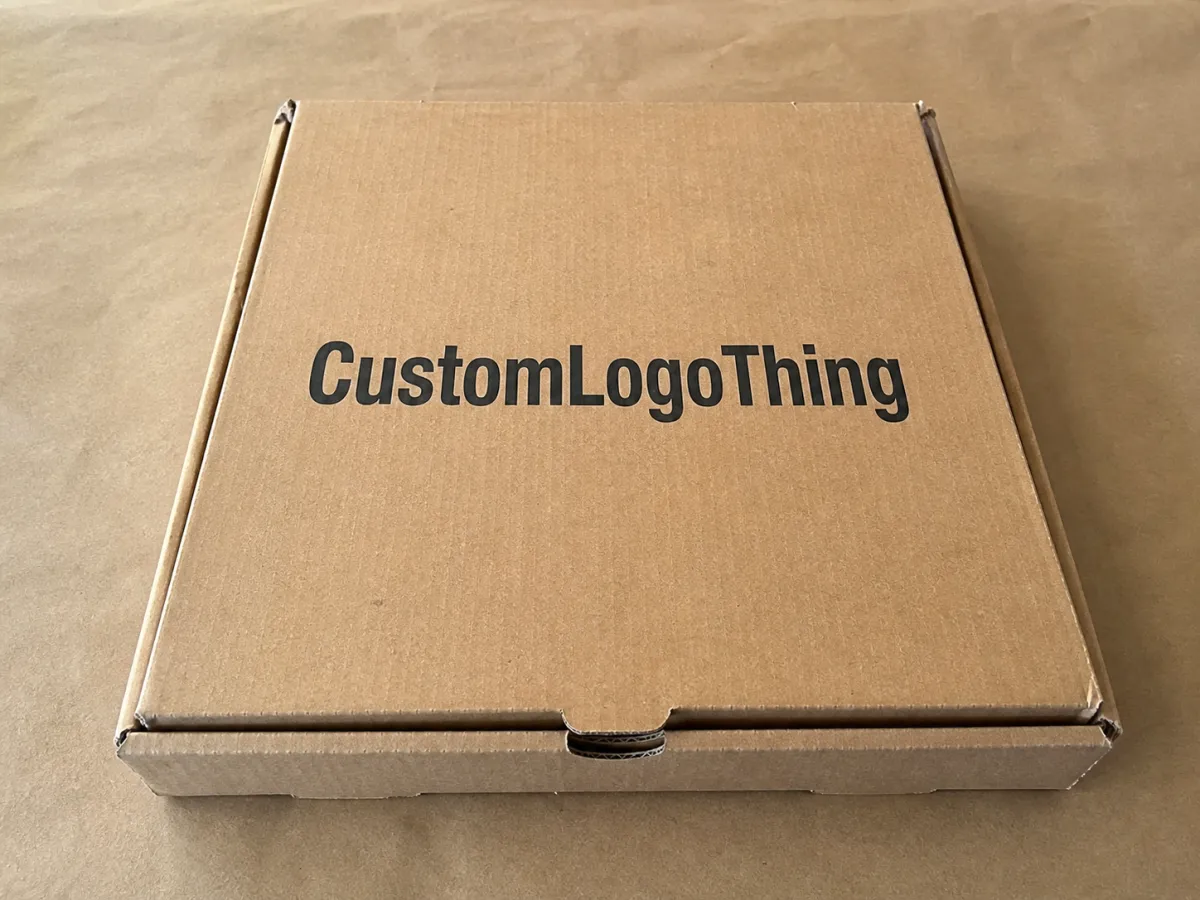
Pizza box pricing is not driven by size alone. A plain kraft box with one-color print sits in a very different cost bucket than a white coated box with full-color graphics, a custom die, venting, and heavier board. Same general shape. Different production reality.
From a packaging buyer’s point of view, the quote usually moves on five levers: board weight, print coverage, structure, quantity, and freight. Thicker board costs more. Printing both inside and outside costs more. Special closures, cutouts, or embossing cost more. Flat-packed cartons are easier to ship than odd pack-outs, but even that choice changes warehouse handling and shipping math.
There is another cost layer people miss. The supplier is not only pricing raw material. They are pricing setup time, press time, cutting, folding, packing, and quality checks. That is why a lower headline number can turn into a higher landed cost once freight, sampling, and rework are added back in. Cheap on paper is not the same as cheap in the dock.
- Thicker board improves stack strength, but it raises material cost and adds volume in transit.
- More print coverage improves branded packaging, but it adds ink, setup, and press time.
- Special structures like vent holes, locking tabs, or embossing increase tooling and die-cut complexity.
- Sampling and proofs are worth paying for when the box has to fit a specific pie or menu format.
- Freight assumptions can make two quotes look close while the delivered totals are nowhere near each other.
That is why the cheapest quote is often the most expensive one later. It can mean thinner board, weaker glue, poor print registration, or a carton that arrives crushed because the pack-out plan was vague. If the box fails in the field, the savings disappear fast. Hot pizza has a short memory.
If the supplier cannot tell you the board grade, print method, and packing format in the quote, the number is not a quote. It is a guess with letterhead.
For buyers who want a stronger baseline on sustainable materials and packaging standards, the FSC certification system is worth understanding, especially if your brand wants responsibly sourced paperboard. For shipping performance, the ISTA testing standards are a solid reference point for package handling and transit abuse. Neither replaces a real spec sheet, but both help you ask better questions.
Product Details That Change the Box You Receive
Before any serious supplier prices the job, they need the product details. That sounds obvious. A lot of buyers still send a logo and a rough size, then wonder why the quote feels loose. A pizza box looks simple until the details start stacking up.
The first decision is the board. Single-wall corrugated, heavier board, kraft finish, white finish, recycled content, grease-resistant liner, or a premium coated surface all deliver different results. Kraft gives a natural look and hides scuffs well. White gives stronger print contrast and feels closer to retail packaging than takeout packaging. Heavier board improves stiffness, but not every menu item needs it.
Size is next. Diameter matters, but depth matters just as much. A box that fits the pizza diameter but not the toppings will crush cheese into the lid. Deep-dish pies, layered specialty pizzas, or boxes that carry slices plus dipping cups need room for both the food and the reality of delivery. A box that looks fine in a flat drawing can still fail once a loaded pie closes the lid.
Print decisions matter just as much. One-color logo printing on kraft board is usually the most cost-efficient route. Spot color works well if the brand has one or two signature tones. Full-color artwork looks strong only if the design was built for the carton. Busy graphics can turn muddy on absorbent board, and then the package reads like a printing mistake instead of a brand choice.
Food-contact and compliance questions belong at the front of the process. Ask whether the inks are food-safe, whether the substrate is recyclable, and whether the box needs to support any local compostable or recycling claims. If the team wants to make environmental statements, get proof before the claim goes to print. Marketing language should match the material, not the mood board.
Useful details to lock before quoting:
- Exact box dimensions, including depth and any tab or flap allowance
- Board type and thickness
- Outer finish: kraft, white, matte, or coated
- Number of print colors and print location
- Need for venting, grease resistance, or stack reinforcement
- Packaging format: flat, nested, or pre-folded
- Artwork file status and whether a dieline already exists
If you do not know all of that yet, that is fine. A decent supplier can still help. Vague inputs just widen the pricing spread. Nobody enjoys a quote built on half a spec sheet and hope.
Custom Pizza Box Specifications That Affect Fit and Performance
Fit is not cosmetic. It changes how the box performs. A box that is too loose lets the pizza slide and tilt. A box that is too tight can mark the crust, smear toppings, or deform the cheese layer when the lid closes. In pizza packaging, a few millimeters can be the difference between a clean delivery and a carton that looks like it lost a fight.
That is why the supplier needs exact specifications. The more precise the inputs, the more accurate the custom pizza boxes supplier quote becomes. The core specs are simple, but each one can change the manufacturing method.
- Dimensions: length, width, depth, and any insert pocket size
- Board thickness: standard versus heavier gauge for stacking strength
- Closure style: tuck-in, lock corner, or fold-over lid
- Venting: perforations or cut vents to reduce steam buildup
- Finish: kraft, white, matte, or coated for presentation
- Print area: top only, outside wrap, inside print, or full coverage
- Special features: window cutouts, embossing, grease barrier, or add-on compartments
Heat retention matters, but moisture control matters too. A tightly sealed box traps steam, which helps on a short trip and hurts the crust if the route drags on. That tradeoff is why vent holes show up so often. They reduce sogginess, but too much venting lets heat escape. There is no magic answer. The right choice depends on route time, menu style, and how often customers complain about soft bottoms.
Stack strength is the next issue. Pizza boxes ride in delivery bags, on shelves, and in piled takeout orders. Weak board or poor folding geometry creates sagging lids and crushed corners. If the box is meant for heavy topping loads or longer delivery routes, ask for a board spec that can carry the weight without buckling.
Then there is the dieline. If the supplier is creating a new die, the cost will be higher than a stock print run. If a standard shape already fits the pizza, that can save money and shorten lead time. If you want a custom die with special tabs, rounded corners, or a window, expect to pay for the tool. That is normal manufacturing, not a trick.
For brands that want a cleaner sustainability story, ask whether the board can be FSC-certified and whether the carton is recyclable in your target market. Not every local recycling stream treats the same materials the same way, so keep the claim honest. If you need the chain-of-custody side, FSC lays out the certification framework clearly.
One more practical point: if you want inserts for side items, dessert slices, or sample packs, say so before the quote. A pizza box built for a single pie is not automatically suitable for add-ons. The carton may need extra depth, a reinforced base, or a different closure to keep everything in place.
Custom Pizza Boxes Supplier Quote: Cost, Pricing, MOQ, and Unit Cost
This is the part buyers usually care about first. Fair enough. Price matters. Just do not confuse unit cost with the full cost of ownership. A quote that looks low at the carton level can be misleading if setup charges, freight, and samples are left out.
Most suppliers price pizza boxes using a mix of one-time and recurring charges. The one-time side often includes artwork setup, dieline work, toolmaking, or plate charges if the print method needs them. The recurring side includes the box itself, printing, cutting, folding, and packing. When MOQ is low, those fixed costs sit on fewer units, so unit price climbs. That is arithmetic, not greed.
Here is a practical way to think about it:
| Specification | Typical Use | Approx. Unit Cost at 1,000 | Approx. Unit Cost at 5,000 | Main Tradeoff |
|---|---|---|---|---|
| Plain kraft, one-color logo | Basic branded packaging for standard pies | $0.60-$1.10 | $0.28-$0.55 | Lowest print cost, limited visual impact |
| White board, one to two colors | Cleaner retail packaging look | $0.75-$1.35 | $0.35-$0.70 | Better print contrast, usually higher material cost |
| Heavier board with grease resistance | Longer delivery routes or loaded pies | $0.90-$1.60 | $0.45-$0.85 | Improved performance, added material expense |
| Full-color custom printed boxes | Premium product packaging and strong shelf presence | $1.20-$2.40 | $0.65-$1.30 | Best branding impact, highest setup and print cost |
Those are working ranges, not a promise. Final pricing depends on the exact board, print method, artwork coverage, quantity, packing format, and shipping terms. Even so, the pattern is clear: more customization usually means a higher start-up cost and a lower per-unit cost once the order gets larger.
MOQ is the other major factor. A run of 500 boxes is almost always expensive per unit because the machine setup, plate work, and folding labor stay mostly the same. At 3,000 or 5,000 units, the unit cost usually drops enough to matter. If cash flow is tight, ask for three tiers: a starter run, a middle volume, and a better-price run. That shows the actual break points instead of forcing you to guess.
Ask the supplier to separate these line items in the quote:
- Box price: the unit cost for the carton itself
- Setup or tooling: die, plates, or artwork preparation fees
- Samples or proofs: prototype, digital proof, or press proof charges
- Freight: shipping from factory to your warehouse or fulfillment point
- Taxes or duties: if the shipment crosses borders or customs zones
- Rush fee: any surcharge for compressed timelines
If a supplier gives you only one total number, ask for a line-by-line version. Otherwise you will not know whether you are paying for the carton, the setup, or the shipping. That matters a lot if you are comparing several custom printed boxes vendors.
Freight deserves special attention. Pizza boxes ship flat, which helps, but carton volume still adds up fast. A heavier board or nested pack-out can change freight cost more than buyers expect. If you are importing, ask whether the quote is EXW, FOB, or delivered, because the terms change who pays what and when. Small wording changes can swing the final number enough to wreck a budget.
Hidden costs to confirm in writing:
- Artwork revisions beyond the first round
- Additional proofs or physical samples
- Custom die creation
- Rush production or priority scheduling
- Import duty, brokerage, or customs handling
- Damage claims process if cartons arrive crushed
One simple rule saves a lot of pain: compare quotes only after the spec sheet matches. Same dimensions. Same board. Same print count. Same freight assumption. If not, the lower price is probably hiding a weaker carton or a missing cost. That is how people get burned.
Process, Timeline, and Lead Time: From Quote to Delivery
The quoting process should be straightforward. If it turns into a scavenger hunt, the supplier is probably underprepared. A proper workflow starts with your request for quote, followed by a spec review, artwork check, pricing confirmation, proof approval, production, and delivery.
In a clean run on custom pizza boxes, things can move fairly quickly. Simple orders with known dimensions and existing artwork often take about 10-15 business days after proof approval before shipment is ready, depending on factory load and packing format. Add a few more days if the boxes need custom printing across multiple panels or a new die. Imported cartons add another layer, and shipping time should be tracked separately.
Sample timelines are not the same as production timelines. A digital proof may come back in a day or two. A physical sample can take a week or more. A pre-production sample is worth the wait if you are testing fit, grease behavior, or print visibility. A bad sample is cheaper than a bad production run. That is just common sense with a purchase order attached.
Here is where delays usually show up:
- Artwork is incomplete or the logo file is too low resolution
- The dieline is not confirmed and the box proportions are still moving
- The sample cycle goes through too many revisions
- The supplier queue is full and the job waits for press time
- Shipping distance is longer than the buyer expected
Rush work is possible, but not everything can be sped up. Production can sometimes be moved ahead in the queue, and digital proofs can move quickly. Tooling, print plate creation, and freight do not care about your launch date unless you pay for priority handling. If the project is time-sensitive, say that upfront. Do not mention it three days after the quote is approved.
Another useful habit: ask for a timeline that separates sample lead time, production lead time, and shipping lead time. That simple split keeps everyone honest. A supplier who quotes "two weeks" without saying what part of the process is covered is not giving you a date. They are giving you a mood.
For buyers who need transit-oriented packaging checks, ISTA standards are a useful reference for distribution testing and package performance. A pizza box is not a parcel mailer, but the same basic idea applies: if the carton will be handled, stacked, loaded, and moved around, ask how it behaves under real stress, not just on a drawing.
Why Choose Us for a Custom Pizza Boxes Supplier Quote
Most suppliers can print a logo on a box. Fewer can help you Choose the Right carton for the pizza, the route, and the brand. That difference matters. A good supplier should not just sell a box. They should help you avoid expensive nonsense.
At Custom Logo Things, the goal is simple: give buyers a clear, line-by-line custom pizza boxes supplier quote that explains what changes the price and what does not. No fog. No fake urgency. No pushing the highest-margin spec because it sounds nice on a sales call.
What buyers usually need most is practical guidance on three things: fit, print, and quantity. Fit keeps the pizza presentable. Print keeps the branding readable. Quantity keeps the unit cost from wandering into stupid territory. A supplier who understands all three can save you more than a supplier who only understands one.
Strong suppliers also protect consistency. If one carton batch is 1 mm off on fold alignment, you see it immediately in the lid closure and stack behavior. If the glue fails, the box opens badly in delivery. If the board varies too much, the print looks uneven. Those are not abstract defects. They are problems that show up in kitchens, delivery bags, and customer photos.
That is why we pay attention to the boring details: print registration, board consistency, adhesive performance, and dimensional accuracy. Boring is good. Boring means repeatable. Repeatable means fewer complaints.
If you want to compare options before locking a spec, you can review Custom Packaging Products to see broader packaging formats and material directions. If you already have quantities, artwork, or a ship-to destination, send the details through Contact Us and ask for a quote that separates carton cost, setup, and freight. That is the fastest way to get something useful back.
Low-MOQ support also matters for new brands. A test run of 500 or 1,000 units can be the right move for a fresh menu launch, seasonal campaign, or limited-time promotion. It will cost more per box, sure. But that is still cheaper than sitting on 20,000 cartons with the wrong artwork because someone rushed the order to save a few cents.
What to Send Next for an Accurate Custom Pizza Boxes Supplier Quote
If you want a number that means something, send the supplier a clean brief. Not a vibe. Not a logo and a shrug. A proper request makes the quote tighter, the timeline clearer, and the risk lower.
Use this checklist before you ask for a custom pizza boxes supplier quote:
- Exact box dimensions
- Estimated order quantity and preferred quantity tiers
- Board type and thickness, if you already have a preference
- Print colors and artwork placement
- Surface finish: kraft, white, matte, coated, or specialty
- Need for grease resistance, venting, or stack reinforcement
- Target delivery date
- Ship-to address or destination country
- Logo or artwork file
- Existing dieline or sample carton, if available
Then ask the supplier to quote three things separately: unit price, setup cost, and freight. If they can include sample cost too, even better. That way you can see the real order value instead of the cosmetic price. A headline number without context is just bait.
It also helps to ask for a spec comparison if you are unsure about material choices. A standard kraft box might be fine for short local delivery, while a heavier board makes more sense for longer routes or loaded pies. A white premium carton may support a retail packaging look better if the box sits on shelves or appears in photos. The right answer depends on menu, route time, and brand positioning.
One more useful move: ask the supplier to confirm what changes the quote if the spec shifts. If moving from one-color to full-color artwork adds $0.18 per unit, you should know that before approving the design. If a deeper carton pushes the board usage into a higher price band, say so early. That is how buyers keep control of product packaging costs instead of discovering them late.
To keep the process clean, compare every quote against the same sheet. Same dimensions. Same quantity. Same print coverage. Same freight terms. That is the only fair comparison. If the numbers still differ after that, then you have a real choice to make about cost, quality, and lead time. If not, you are just staring at different math in different clothes.
The practical takeaway is simple: send one complete spec sheet, ask for a line-by-line quote, and compare only like for like. Do that, and the custom pizza boxes supplier quote stops being a moving target and starts being a useful buying tool. Get the details right once, and the rest gets easier.
FAQ
What do I need to request a custom pizza boxes supplier quote?
Send exact box dimensions, estimated quantity, print colors, finish, and whether you need grease resistance or ventilation. Include artwork files or at least a logo so the supplier can catch print issues before pricing. Add the ship-to location and target delivery date because freight and timing can move the final number fast.
How does MOQ affect a custom pizza box quote?
MOQ sets the minimum run size the factory will make, and smaller runs usually cost more per box. A higher MOQ often lowers unit cost because setup and cutting costs are spread over more cartons. If cash flow matters, ask for multiple tiers so you can see where the price breaks actually happen.
Why do two custom pizza box quotes for the same size differ so much?
Suppliers may be quoting different board grades, print coverage, coatings, or freight assumptions. One quote may include setup, proofs, or samples while another leaves those out, which makes direct comparison useless. Ask both vendors to quote the same spec sheet and the same delivery terms before judging price.
How long does it take to get custom pizza boxes made after quote approval?
Simple orders move faster; custom artwork, new dies, or sample revisions add time. The quote-to-delivery path usually includes proof approval, production, quality checks, and shipping. If you need a firm date, confirm lead time in writing before you approve the order.
Can I get a low-MOQ custom pizza boxes supplier quote for a new brand?
Yes, but the per-box price is usually higher because the setup cost is spread over fewer units. Low-MOQ runs are useful for testing a menu launch, but they are not the cheapest route for long-term volume. Ask for a starter run plus a scale-up price so you know what happens when demand grows.

